Showing posts with label topical. Show all posts

Monday, November 17, 2014

stealing fire


Bruce Cockburn kicked at the darkness 'til it bled with the vitriol and vision of this pyrotechnic polemical poetry.  The Canadian singer/songwriter had already released twelve albums by the time he came to record 'Stealing Fire'.  Much of the political content of the album was inspired by a visit to Mexico:  "My brother, who’d been doing solidarity work with Salvadoran rebels, had been trying to interest me in Central American politics for years. I was sympathetic to what hewas doing, but I was absorbed in other things. Eventually he told me things about the Nicaraguan revolution of 1979 that didn’t conform to my stereotype of a banana-republic revolution. There had been no blood bath, but rather this enlightened behavior on the part of the Sandinista revolutionaries. What did it mean? I was curious to see it for myself. A couple of months later, Oxfam asked me to go to Mexico and Central America on its behalf. It was a perfect opportunity ... It was pretty amazing. We’re in the middle of all this trouble and having fun. I’ve had that experience in other places such as Nicaragua in the ‘80s. There was suffering going on but the people wanted to have fun, even in those situations. You’d show up with a guitar and people would want to hear music. It sounds oxy-moronic to talk about having fun in a war zone, but in fact, wherever possible people do have fun in war zones. So, that was another stretch of that experience for me."
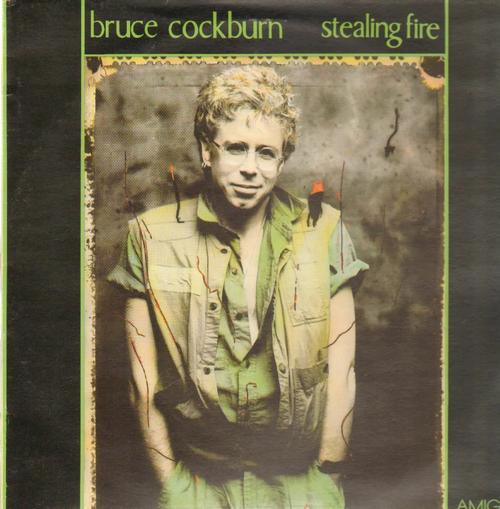


 'Stealing Fire' was recorded at Manta Sound in Toronto, Ontario with producers Jon Goldsmith and Kerry Crawford and features Bruce Cockburn on guitar and vocals;  Jon Goldsmith on keyboards and background vocals;  Fergus Marsh on bass and stick;  Miche Pouliot on drums;  Chi Sharpe on percussion;  Rick Shurman on ground effects;  Vein Dorge, Jerry Johnson, Mike Malone, Rick Tait on horns;  Joel Feeney, Paul Henderson, Shawne Jackson, Carole Pope, Leroy Sibbles, Tim Ryan, Judy Cade, Kerry Crawford, Colina Phillips, and Sharon Lee Williams on background vocals.   Blair Dawson did the cover painting.  Engineer John Naslen won a Juno Award for his work on the album, while  Goldsmith and Crawford were nominated for Producer of the Year.  


http://brucecockburn.com/


"If I Had a Rocket Launcher" was his first explicitly political song to be released as a single.  It went to number eighty-eight in the US and forty in Canada.   Cockburn reflects:   “Rocket Launcher” fits that...category...of trying to capture a moment. It was how I felt when I experienced a particular...the sense of being with those refugees who had experienced those things.  I don’t rationalize that much before I write a song. After the fact I can kind of tell what, if any, category it belongs in. But when I’m writing a song, I’m thinking about whatever feelings I have that want to be written down. Sometimes it’s anger, sometimes it’s hope, sometimes it’s fun, sometimes it’s sex, sometimes it’s encounters with the Divine, which certainly qualify as expressions of a moment because the contact generally doesn’t last long. I write all of the songs the same way, the mechanism’s the same. Different feelings come up, different triggers switch that get those feelings moving ... Aside from airing my own experience, which is where the songs always start, if we're ever going to find a solution for this ongoing passion for wasting each other, we have to start with the rage that knows no impediments, an uncivilized rage that says it's okay to go out and shoot some one...I can't imagine writing it under any other conditions...The idea was to reach a different audience than the politicians by having us go and observe, using the relative visibility that we have to educate the Canadian public to what we had seen and to raise money for projects that OXFAM has in the region...I don't consciously or not consciously write certain kinds of songs," Cockburn says. "In fact, I almost didn't put 'Rocket Launcher' on the album because of the ease with which it could be misinterpreted...The thing is, the weird thing about it is they stop looking like people because of what they're doing. I guess that's what makes it so easy to want to shoot them down because they [snickers] make- - -they make you feel like they forfeited their humanity somehow. But they're pawns in it. Anyway, this song is all about that. The one thing I must stress in case anybody's under any delusion that this is so, is that this is not a call to arms. This is, this is a cry ... I can't say I'm really surprised by the fact that it's still relevant," he says. "It's the sort of thing one hopes would become out-of-date or become a piece of history instead of having any current relevance. But obviously there's a lot of that kind of stuff going on. I was going to say it gets worse and worse but that's not really true, it's always been worse. It's who gets to be the victim and who doesn't. For the victims, each one of these horrors is just as bad as the rest."
https://www.youtube.com/watch?v=O9HFjErMMlA


Here comes the helicopter -- second time today
Everybody scatters and hopes it goes away
How many kids they've murdered only God can say
If I had a rocket launcher... I'd make somebody pay

I don't believe in guarded borders and I don't believe in hate
I don't believe in generals or their stinking torture states
And when I talk with the survivors of things too sickening to relate
If I had a rocket launcher...I would retaliate

On the Rio Lacantun, one hundred thousand wait
To fall down from starvation -- or some less humane fate
Cry for Guatemala, with a corpse in every gate
If I had a rocket launcher... I would not hesitate

I want to raise every voice -- at least I've got to try
Every time I think about it water rises to my eyes.
Situation desperate, echoes of the victims cry
If I had a rocket launcher... Some son of a bitch would die


"Maybe the Poet"
Cockburn says:   "At the time I wrote that I was aware of the phenomenon in the Soviet Union of dissidents being incarcerated in psychiatric institutions, which, of course, is utterly sinister. An evil way of treating dissidents. And, of course, poets tend to be dissidents if they’re saying anything truthful because the truth is always inimical to authoritarian regimes and to people who like power, generally. So you go telling the truth and you get in trouble.   In the Soviet Union they were institutionalizing people and really fucking them over, but in North America we don’t do that. We just buy them off. Or bury them under layers of the commercially available substitute. And so you take someone like Allen Ginsburg, who was as much a prophet as anyone in the Bible. Here’s a guy who is really saying what people need to hear, and some people are listening but not the majority. Of course, there are far more poets, and Ginsberg was good enough and lucky enough to get some sort of public profile early on and to keep it, to a certain degree. But there are all those people trying to tell the truth as they understand it.   Nobody makes a living being a poet. [laughs] You do something else, and you do that on the side. Or you do something on the side to put food on the table. That’s where I was coming from [in “Maybe the Poet”]. Illustrations of how we shut out people who are trying to tell the truth."
https://www.youtube.com/watch?v=WcUiOADXfsI


"Lovers in a Dangerous Time" went to number twenty-four on the Canadian pop chart and eight on the Canadian adult contemporary chart.  
https://www.youtube.com/watch?v=8dGNDUdtNh8


 'Stealing Fire'
full album:

https://myspace.com/officialbrucecockburn/music/album/stealing-fire-8105277

https://www.youtube.com/playlist?list=ALBTKoXRg38BDRiBHEsTj06_FfM7SzlgDV


All songs written by Bruce Cockburn except as noted.

"Lovers in a Dangerous Time" – 4:06
"Maybe the Poet" (Cockburn, Jon Goldsmith, Fergus Marsh) – 4:51
"Sahara Gold" – 4:30
"Making Contact" – 4:47 
"Peggy's Kitchen Wall" – 4:46
"To Raise the Morning Star" (Cockburn, Marsh) – 5:51
"Nicaragua" – 4:44
"If I Had a Rocket Launcher" – 4:58
"Dust and Diesel" – 5:24

bonus tracks:
 "Yanqui Go Home"
"Call It the Sundance"


Sunday, November 16, 2014

setting sons


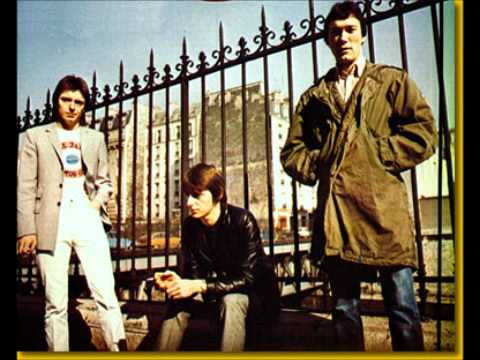
The Jam pushed their sound even further with the conceptual wasteland of this bleak and brilliant revolutionary symphony.  With the increasing sophistication of their music from punk mod roots of 'In The City' and 'This Is The Modern World' to the artistic triumph of 'All Mod Cons', the band were pressured to top themselves.

Weller would express at the time:   "The trouble is that this All Mod Cons has proved to be...dunno...proved to be a bit of an albatross round our necks-type thing. I get paranoid now when I write songs, 'cos I think 'That's not up to standard', so I throw the song away. To me, like, the standard of songs on that album is so high that I throw a couple of songs away that maybe would be okay. Everyone's praisin' us and saying, 'Great album, but can they follow it?' – so I do tend to get paranoid about it. I think the best thing for us is to go back to doin' something really simple, even more simplistic than we've done in the past, towards the old R&B roots of the stuff we was doin'...To me, takin' a really objective view of All Mod Cons, I would say that our next step is to advance even more, you know, which could be a bit silly really. We could end up soundin' like Genesis or somebody in three years' time. I wanna keep it simple all the time. But you're right, too. You can't suppress progression. I wouldn't suppress nothin', cos it's pointless...I'd like to do a concept album. The term has an awful sorta sound to it. It makes you think of Jethro Tull an' that, but I'd like to do something in that direction. I've been thinkin' of doin' a 45, you know...a concept single, havin' an A-side and then turn it over to the B-side and have a continuation ... I’m never really happy wherever I am...I never see life as being steady. I’ve always been uncertain. I’ve never felt I could sit back and relax – there’s just too much going on...I’m sitting there in front of the TV moaning on about world politics saying ‘Look at these bastards’ and Gill just says, ‘Yeah, shall we start tea then?’ And she’s quite right...Maybe I’m only an armchair radical. But every night I watch the news and I get so frustrated. I write it all down then in the morning throw it away because it’s rubbish, just paranoid rantings and ravings. Still, after six or seven pints I do start to cheer up a bit. That’s basic philosophy for you. Yeah, I think lager should be on the National Health."


The sessions for 'Setting Sons' were produced by Vic Coppersmith-Heaven at Townhouse Studios in London with Bruce Foxton on bass and vocals, Rick Buckler on drums, and Paul Weller on guitar, keyboards, and vocals;  with cello, timpani, and recorder credited to The Jam Philharmonic Orchestra, piano by Merton Mick, saxophone by Rudi, and strings by Pete Solley.

Foxton looks back:   “It was hard work. A lot of it was written in the studio, the Townhouse in Goldhawk Road, Shepherd’s Bush.  Certainly, some of the songs were just sketched ideas where Paul would lay down the bones of it during the day, then Rick and myself would stay up in the studio rooms – where you could crash out – and where we would work out what we thought would work on a track overnight. Then we’d all crack on, kick it around the next day and record it. There wasn’t as much pre-production, like going into rehearsals and knocking them all into shape before you recorded songs.  It wasn’t a cheap way of doing it, but I think we came out with a good record... It was a very exciting time, and I don’t think we ever sat back on our laurels. We always looked to push on rather than stick with a proven formula. All three of us challenged ourselves in respect of what we did and what we played. With every record we tried something new, something experimental, to see how it would turn out...I can understand why certain people would say it was a concept album, but I wasn’t really that aware of that at the time.  Three or four songs link together, but I don’t recall anything more." 

 'Setting Sons' became their biggest album yet, breaking them in Canada and New Zealand (peaking at seventy-five and fourteen, respectively) and going to one hundred and thirty-seven in the US and four in the UK.


http://www.FromTheJam.co.uk/

https://www.facebook.com/FromTheJam


http://www.paulweller.com/thejam.php


http://www.RussellHastings.co.uk/

http://www.BruceFoxton.com/ 

http://www.thejamfan.net/


"Eton Rifles" became their first top ten hit in the UK, peaking at number four.  The song was inspired by a Right to Work march in which Socialist Workers Party demonstrators converged with Rock Against Racism punks in front of prestigious Eton College, whose cadet core was called the Eton Rifles.

https://www.youtube.com/watch?v=lG0L86DRuC8


Sup up your beer and collect your fags,

There's a row going on down near slough,
Get out your mat and pray to the west,
I'll get out mine and pray for myself.
Thought you were smart when you took them on,
But you didn't take a peep in their artillery room,
All that rugby puts hairs on your chest,
What chance have you got against a tie and a crest.

Hello-hurray, what a nice day, for the Eton rifles,

Hello-hurray, I hope rain stops play, with the Eton rifles.

Thought you were clever when you lit the fuse,

Tore down the house of commons in your brand new shoes,
Compose a revolutionary symphony,
Then went to bed with a charming young thing.

Hello-hurray, cheers then mate, its the Eton rifles,

Hello-hurray, an extremist scrape, with the Eton rifles.

What a catalyst you turned out to be,

Loaded the guns then you run off home for your tea,
Left me standing, like a guilty (naughty) schoolboy.

We came out of it naturally the worst,

Beaten and bloody and I was sick down my shirt,
We were no match for their untamed wit,
Though some of the lads said they'll be back next week.

Hello-hurray, there's a price to pay, to the Eton rifles,

Hello-hurray, I'd prefer the plague, to the Eton rifles.
Hello-hurray, there's a price to pay, to the Eton rifles,
Hello-hurray, I'd prefer the plague, to the Eton rifles.


 'Setting Sons' 
full album:

https://www.youtube.com/watch?v=1z6RLC2tekc


All songs by Paul Weller except as noted.

Side one
"Girl on the Phone"
"Thick as Thieves"
"Private Hell"
"Little Boy Soldiers"
"Wasteland"
Side two
"Burning Sky"
"Smithers-Jones" (Bruce Foxton)
"Saturday's Kids"
"The Eton Rifles"
"Heat Wave" (Holland-Dozier-Holland)

Monday, October 13, 2014

bitter tears: ballads of the american indian


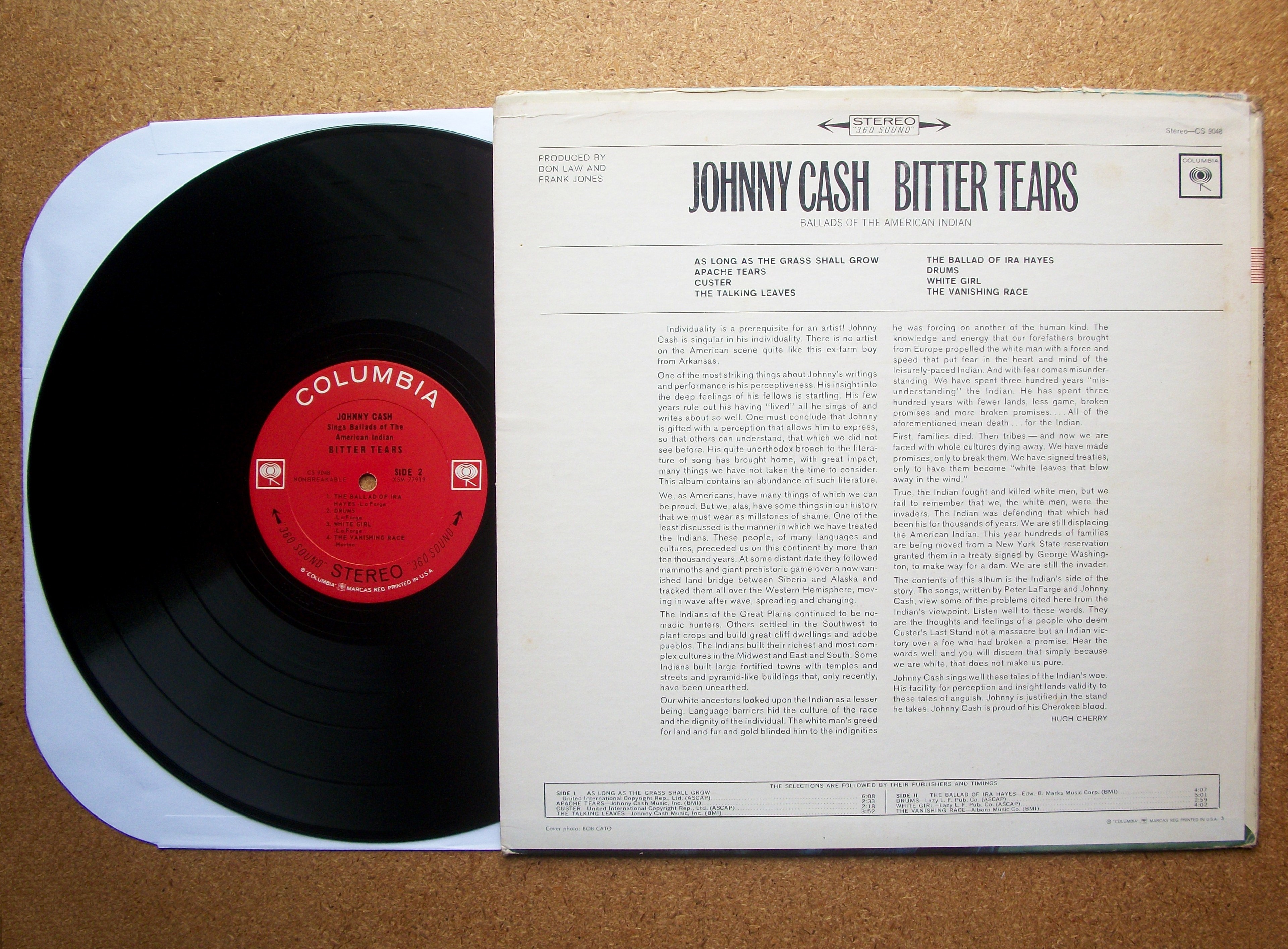
Johnny Cash put it all on the line with this socially conscious concept album that spoke from the perspective of Native Americans.  The success of number one country singles like 'Ring of Fire' and 'Understand Your Man', Cash was in a position to make the topical 'Bitter Tears: Ballads of the American Indian'.  The sessions were produced by Don Law and Frank Jones and featured Johnny Cash on vocals and guitar;  with Luther Perkins, Norman Blake, and Bob Johnson on guitar;  Marshall Grant on bass;  W.S. Holland on drums;  and vocal accompaniment by The Carter Family.  


For the album, Cash recorded five songs from the songbook of Pima-Indian and Korean War veteran, Peter LaFarge. LaFarge died the same month that the album was released on October 27, 1964, making the album seem like a tribute.  The songs tell true stories of broken treaties, re-education, and brutal discrimination; not an easy sell for Colombia Records.  When they refused to promote the single "The Ballad of Ira Hayes", Cash took out a full page ad in Billboard criticizing the DJ's for not playing the song.  He also paid an independent promotional firm to push the single to the radio stations.  The result was that the song went to number three on the US country singles chart.  


Cash would reveal:   "I read a book when I was about 12 years old about an Indian named Lone Bull. Lone Bull had tried to go out and kill a buffalo. He slipped out of the village, against his father's wishes and went out. He was going to be a hero and kill a buffalo and bring it back to the village, so his family and the other people could have meat. And the elders of the village knew about the buffalo herd. They knew it was there, and they were making plans to cut into the heard and cut off some buffalo and kill them and have meat for the whole winter and into the next spring. Lone Bull wanted to be a hero. He went out with his bow and arrow and killed a calf, and ran the herd off into the next state. He drug this calf home, his family was fed, but they were ostracized from the village. They had to leave the village. Lone Bull became a wanderer, until he found a village that would take him in. In that next village where he was taken in, he organized the buffalo hunt that winter, and they had more meat than this village had ever had before. So, I learn from my mistakes. It's a very painful way to learn, but without pain, the old saying is, there's no gain. I found that to be true in my life. You miss a lot of opportunities by making mistakes, but that's part of it: is knowing that you're not shut out forever, and that there's a goal there that you still can reach. Lone Bull's philosophy was, "I'm kicked out of this village, but I will grow up and I'll come into another one and I will do what I set out to do, that was feed the people." So I'm feeding my people right now...You build on failure. You use it as a stepping stone. Close the door on the past. You don't try to forget the mistakes, but you don't dwell on it. You don't let it have any of your energy, or any of your time, or any of your space. If you analyze it as you're moving forward, you'll never fall in the same trap twice, which I can't say that I haven't been guilty of doing. But my advice is, if they're going to break your legs once when you go in that place, stay out of there." 


 'Bitter Tears: Ballads of the American Indian' went to number forty-seven on the US album chart and number two on the US country album chart.  


http://www.johnnycash.com/


"As Long as the Grass Shall Grow"

https://www.youtube.com/watch?v=HSdNDFj5zJQ


"Apache Tears" 

https://www.youtube.com/watch?v=Q4StneDiV30


"Custer" 

https://www.youtube.com/watch?v=f2Xmn954tVQ


"The Talking Leaves" 

https://www.youtube.com/watch?v=wLsE5JeAnL0


"The Ballad of Ira Hayes" 

https://www.youtube.com/watch?v=UKDLQWEvubc


"Drums" 

https://www.youtube.com/watch?v=AFcDFr2YIU8


 'Bitter Tears: Ballads of the American Indian'
full album:


1. "As Long as the Grass Shall Grow"   Peter La Farge 6:10
2. "Apache Tears"   Cash 2:34
3. "Custer"   La Farge 2:20
4. "The Talking Leaves"   Cash 3:55
5. "The Ballad of Ira Hayes"   La Farge 4:07
6. "Drums"   La Farge 5:04
7. "White Girl"   La Farge 3:01
8. "The Vanishing Race"   Cash, Johnny Horton 4:02


For As Long As The Grass Grows


Individuality is a prerequisite for an Artist! Johnny Cash is singular in his individuality. There is no artist on the American scene quite like this ex- farm boy from Arkansas.


One of the most striking things about Johnny's writings and performance is his perceptiveness. His insight into the deep feelings of his fellows is startling. His few years rule out his having "lived" all he sings of and writes about so well. One must conclude that Johnny is gifted with a perception that allows him to express, so that others understand, that which we do not see before. His quite unorthodox broach to the literature of song has brought home, with great impact, many things we have not taken the time to consider. This album contains an abundance of such literature.


We, as Americans have many things of which we can be proud. But we, alas have some things in our history that we must wear as millstones of shame. One of the least discussed is the manner in which we have treated the Indians. These people of many languages and cultures, preceded us on this continent by more than ten thousand years. At some distant date they followed mammoths and giant prehistoric game over a now vanished land bridge between Siberia and Alaska and tracked them over the Western Hemisphere, moving in wave after wave, spreading and changing. The Indians of the Great Plains continued to be nomadic hunters. Others settled in the Southwest to plant crops and build great cliff dwellings and adobe pueblos. The Indians built their richest and most complex cultures in the Midwest and East and South. Some Indians built large fortified towns with temples and streets and pyramid-like buildings that , only recently, have been unearthed.


Our white ancestors looked upon the Indian as a lesser being. Language barriers hid the culture of the race and the dignity of the individual. The white man's greed for land and fur and gold blinded him to the indignities he was forcing on another of the human kind. The knowledge and energy that our forefathers brought from Europe propelled the white man with a force and speed that put fear in the heart and mind of the leisurely-paced Indian. And with fear comes misunderstanding.


We have spent three hundred years "misunderstanding" the Indian. He has spent three hundred years with fewer lands, less game, broken promises and more broken promises . . . All of the aforementioned mean death ... for the Indian. First, families died. Then tribes and now we are faced with whole cultures dying away. We have made promises, only to break them. We have signed treaties, only to have them become "white leaves that blow away in the wind." True, the Indian fought and killed white men, but we fail to remember that we, the white men, were the invaders. The Indian was defending that which had been his for thousands of years. We are still displacing the American Indian. This year (Note, early 1960's) hundred of families are being moved from a New York State Reservation granted them in a treaty signed by George Washington, to make way for a dam. We are still the invader.


The contents of this album is the Indian's side of the story. The songs, written by Peter LaFarge and Johnny Cash, view some of the problems cited here from the Indian's viewpoint. Listen well to these words. They are the thoughts and feeling of a people who deem Custer's Last Stand not a massacre but an Indian Victory over a foe who had broken a promise. Hear the words well and you will discern that simply because we are white , that does not make us pure.


Johnny Cash sings well these tales of the Indian's woe. His facility for perception and insight lends validity to these tales of anguish. Johnny is justified in the stand he takes. Johnny Cash is proud of his Cherokee Blood.


Hugh Cherry


Friday, August 29, 2014

the holy bible


The Manic Street Preachers brought the pain from purgatory's circle and recognized truth in acedia's blackest hole.  The Welsh group had made a name for themselves with their earnest and ambitious double album debut 'Generation Terrorists'; but the overly produced followup 'Gold Against The Soul' was considered a compromise of their beliefs.  Eschewing the luxurious Outside Studios where they recorded their second album, the band decided to record their third in the spartan Sound Space Studios in Cardiff, Wales.  The sessions for 'The Holy Bible' featured James Dean Bradfield on lead vocals, lead and rhythm guitar, and production;  Richey Edwards (Richey James) on rhythm guitar, sleeve design, and production;   Nicky Wire on bass guitar and production;  and Sean Moore on drums and production.  All of lyrics were written by Edwards and Nicky Wire, while all of the music was composed by James Dean Bradfield and Sean Moore.


Edwards would recount:  "We started writing it last summer; some of the early songs were written quite a while ago. I think it was a difficult time for everybody really. Especially the way we did it; going to Cardiff every day, I picked everybody up in the morning and we went down and then we went back home. We just kept concentrating on the words, trying to get them like we wanted. Trying to make them better. I don't think it's being a perfectionist, I just think it's trying to hone it down, do it properly. There was lots of things happening outside the band, personally. But I think it's our most complete album, by a long way...Nick had lots going on in his personal life at the time as well. I'm on my own, I'm very selfish. 'Self disgust is self-obsession' - that's the truest line on there, probably...I don't think we've ever made happy records. Maybe we've had uplifting moments, but I don't think lyrically we've ever been particularly joyous. Right from the start. I know what people think about me. But if you look at our lyrics, they've developed and got better, but thematically they're pretty much the same; what's going on in mine and Nick's head...I would like to be able to write, 'I'm feeling supersonic, give me gin and tonic', but I just can't do it. I think that it's a brilliant lyric, but whatever ability that is, I haven't got the ability to write that line. I don't feel that way, you know. The last time I felt supersonic was when I was about ten years old, I expect...At the same time, there's lots of bands with angst-ridden lyrics, and I just really can't believe most of them, because they seem so happy when they're singing them on stage. It's like, this is what you're supposed to do. Whatever you think about our lyrics, at least they're true ... The way religions choose to speak their truth to the public has always been to beat them down. I think that if a Holy Bible is true, it should be about the way the world is and that's what I think my lyrics are about. The album doesn't pretend things don't exist."


Wire calls the album "gothic with a small 'g'. It's not Cranes, but it is quite a morbid album. We've rejected our past in a lot of ways with this album. There's a bit of early Joy Division on it, and a few PiL basslines...Last year we visited Dachau, Belsen and the Peace Museum at Hiroshima, and those places had quite an intense influence on us, and on the whole album. Dachau is such an evil, quiet place. There's no grass, and you don't even see a worm, let alone any birds. All you can hear is this humming of nothing."


During the recording of 'The Holy Bible', Edwards was challenged by depression, anorexia, self-mutilation, and alcohol abuse.  During a tour in Thailand, he cut his chest with a knife before a show and had to be hopitalized.  After the album was released, he checked into a psychiatric hospital and then a private rehab clinic:   "If you're hopelessly depressed like I was, then dressing up is just the ultimate escape. When I was young I just wanted to be noticed. Nothing could excite me except attention so I'd dress up as much as I could. Outrage and boredom just go hand in hand ... Gets to a point where you really can't operate any more as a human being – you can't get out of bed, you can't...make yourself a cup of coffee without something going badly wrong or your body's too weak to walk."


The band continued to promote the new album without Edwards and, when he was finished, they did a tour with him that ended in a show at the London Astoria where Edwards initiated the smashing of equipment and stage lighting at the end of their set.  Wire remembers:  "From Thailand to the smashing up of the Astoria, it was hospitalization, no money, drudgery, hateful, miserable, awful.  It felt like Richey was drifting away. I'd just lost him. Couldn't talk about rugby or cricket or football. He'd call you up at strange times about some documentary he'd just seen or something he'd tracked down. It was hard work, it was baffling at times. He was finding it really hard to sleep. When people talk about the wounds or the blood, the only real tragedy is when you lose someone kinetically, someone you've known since he was five, you've done all those things with and you feel you can't communicate. It was terrible. But in the last three weeks, there was a serene calmness to Richey, he was laughing more, the pathos and the irony were back. Maybe that's because he had reached some conclusions and he just felt some inner peace. We did a recording session and came up with some great tracks. So the Daily Telegraph and the Mars bar, I just saw it as a little 'Things are going to be OK'. Which maybe, in his mind, that's what it was.  But different meanings of OK, I guess."

On February 1, 1995 Edwards disappeared just before a US promotional tour.  His car was found abandoned near the Severn Bridge two weeks later, leading to speculation that he had committed suicide.  His body has not been found, and, despite reports of sightings around the world, he was declared legally dead thirteen years later.  


'The Holy Bible' only charted at number fifty in Japan and six in the UK; but it has gone on to sell over six hundred thousand copies.  The harrowing personal and political lyrical reflections have led many to consider it the darkest album of all time.  


http://manicstreetpreachers.com/


'Faster' performance on Top of the Pops that was controversial for Bradford's military style mask

Manic Street Preachers - Faster (Live on Top of... by marshare


'Revol'


'She Is Suffering'
https://www.youtube.com/watch?v=FQNMg1d23Ak

https://www.youtube.com/watch?v=cHXGqkNv9lE


'The Holy Bible' 
full album:  US mix


1. "Yes" 5:19
2. "Ifwhiteamericatoldthetruthforoneda­yit'sworldwouldfallapart" 3:43
3. "Of Walking Abortion" 4:07
4. "She Is Suffering" 4:57
5. "Archives of Pain" 5:30
6. "Revol" 3:05
7. "4st 7lb" 5:10
8. "Mausoleum" 4:13
9. "Faster" 3:53
10. "This Is Yesterday" 3:58
11. "Die in the Summertime" 3:07
12. "The Intense Humming of Evil" 6:14
13. "P.C.P" 3:57
14. "Die in the Summertime" (demo) 2:26
15. "Mausoleum" (demo) 3:29
16. "Of Walking Abortion" (Radio 1 Evening Session) 3:39
17. "She Is Suffering" (Radio 1 Evening Session) 4:25
18. "Yes" (Radio 1 Evening Session) 4:40


live at the Astoria in 1994
'You Love Us' 
https://www.youtube.com/watch?v=dzqs7CTCfAg

https://www.youtube.com/watch?v=VtjgrGUzqBc


0:00 P.C.P. 
3:40 From Where To Despair 
6:54 Faster 
10:27 She Is Suffering 
14:48 La Tristesse Durera 
18:42 Slash N' Burn 
22:16 Motorcycle Emptiness 
28:03 New Art Riot 
31:02 Life Becoming A Landslide 
34:56 Revol 
37:41 4st 7lb 
42:35 This Is Yesterday 
45:23 Motown Junk