Simple Minds worked through their troubles and doubts to achieve their greatest success with the adolescent angst of this artful anamnesis. The Scottish group had developed over a half dozen albums ( Life in a Day and Real to Real Cacophony in 1979, Empires and Dance in 1980, Sons and Fascination/Sister Feelings Call in 1981, New Gold Dream (81/82/83/84) in 1982, and Sparkle in the Rain in 1984) from post punk to experimental art rock to electronic dance to new wave with increasing visibility and sales in Europe and Australia; but they had failed to break through in the United States.
Lead singer Jim Kerr says the band was at "a crossroads. There's loads of reasons why, but you just can't compare 1981 to the age of MTV. The game had changed and so had we. Once we'd gone to America there was a sense of: 'You know what, why don't we just break it here? Why can't we?'"
The opportunity afforded itself with a song written by producer Keith Forsey and arranger Steve Schiff, who had worked together on Nina Hagen's Angstlos / Fearless Donna Summer's Bad Girls , had produced Billy Idol 's first two albums, and co-wrote the smash hit "Flashdance... What a Feeling" . Cy Curnin , Bryan Ferry , and Billy Idol were all approached to record "Don't You (Forget About Me)" for the soundtrack to John Hughes' coming-of-age film The Breakfast Club
Kerr reveals: "We were not [keen to record it]. It was presented in the wrong fashion. This cassette came our way. The song wasn't bad. It didn't resemble in any way the record that you know, but the melody was there, the words were there. It wasn't bad. But I've got to be honest, it didn't feel up to scratch with what we were working on of our own stuff ... So we turned it down a couple of times, and they kept coming back at us, the record company, the film company. And then once we met both the producer, Keith Forsey, and the director, John Hughes, and spoke to them, we then understood the context of it and were a lot more free to the idea of doing it ... The big bad record company - were saying, 'You don't understand, this is going to be the movie of a generation, and he's the Zeitgeist and all that'. We were like, 'Really?' ...It wasn't that even they cajoled us, because we were sticking to our ground. But the fellow who produced the song, Keith Forsey, he came up to Glasgow and said, 'I know you're not going to do it, but can I hang out, because I'm a fan of the band, and maybe we'll work together in the future?' ...We said sure - we were working, he said, 'Let me hang out for a week'. We liked Keith more than we liked his song. You know when you like someone and you're in the pub... He was very clever. He said, 'Why don't we do it... if it's good, great, if it's not, it'll get the record company off your back'. So we did in a drafty studio in an afternoon, and thank God we did. "
"Don't You (Forget About Me)" became an international smash hit going to number seven in the UK; six in Australia; four in Germany; three in Ireland and New Zealand; two in Belgium and Italy; and number one in Canada, the Netherlands, and the US. The song was not included on their album Once Upon a Time
Kerr considers: "I'd hate to seem begrudging of success, but at the same time I'd like to be honest enough to say maybe we shouldn't have cashed in all the chips. It's a bit overwhelming when your band is no longer your own, you become an industry within an industry, but I'm very wary of going 'poor us'. C'mon, it's what you dream of. We wanted to be a great band and take it around the world, that's still what we work for ... I've got to say that ["Don't You (Forget About Me)"] fit beautifully [with the movie]. I don't know if it was coincidence or what, but you've got to say that it really worked. I mean, the song and the film are almost iconic to certain generations, especially in America. So it's great when things come together and work so well. It's been a pleasure to see how much joy that song gives to a lot of people ... But musically I think when you hear it coming on the radio, I think we put our Simple Minds heart into it. It'll never be one of ours, but in a way it's a song that belongs to everybody now. It's not bad to have one of them either."
http://www.simpleminds.com/ Don't You (Forget About Me) VIDEO Hey, hey, hey ,hey
Oh
Won't you come see about me?
I'll be alone, dancing you know it baby
Tell me your troubles and doubts
Giving me everything inside and out and
Love's strange so real in the dark
Think of the tender things that we were working on
Slow change may pull us apart
When the light gets into your heart, baby
Don't You Forget About Me
Don't Don't Don't Don't
Don't You Forget About Me
Will you stand above me?
Look my way, never love me
Rain keeps falling, rain keeps falling
Down, down, down
Will you recognise me?
Call my name or walk on by
Rain keeps falling, rain keeps falling
Down, down, down, down
Hey, hey, hey, hey
Oh
Don't you try to pretend
It's my feeling we'll win in the end
I won't harm you or touch your defenses
Vanity insecurity
Don't you forget about me
I'll be alone, dancing you know it baby
Going to take you apart
I'll put us back together at heart, baby
Don't You Forget About Me
Don't Don't Don't Don't
Don't You Forget About Me
As you walk on by
Will you call my name?
As you walk on by
Will you call my name?
When you walk away
Or will you walk away?
Will you walk on by?
Come on, call my name
Will you call my name?
I say
La
la la la la
la la la la
la la la la la la la la la la
VIDEO extended remix
VIDEO Live Aid in Philadelphia with new bassist John Giblin
VIDEO
The Breakfast Club trailer
VIDEO
four minutes
VIDEO opening
VIDEO full soundtrack
VIDEO 1. Don't You (Forget About Me) - Simple Minds
2. Waiting – E.G. Daily
3. Fire in the Twilight – Wang Chung
4. I'm the Dude (instrumental) – Keith Forsey
5. Heart Too Hot to Hold – Jesse Johnson & Stephanie Spruill
6. Dream Montage (instrumental) – Gary Chang
7. We Are Not Alone – Karla DeVito
8. Reggae (instrumental) – Keith Forsey
9. Didn't I Tell You? – Joyce Kennedy
10. Love Theme (instrumental) – Keith Forsey
Love and Rockets saw beyond the outside and found their path in the seminal spark of this hypnotized and haunted quicksilver chemistry. The trio of Daniel Ash, David John Haskins "David J", and his brother Kevin Michael Dompe "Kevin Haskins" had played together since their youth in various bands. Their diverse work with Peter Murphy in Bauhaus over four albums (In the Flat Field Mask The Sky's Gone Out Burning from the Inside Tones on Tail before getting back with David J (who had released two solo albums and produced two more with The Jazz Butcher) to form Love and Rockets, taking the name from the independent comic series by the Hernandez brothers: Gilbert, Jaime, and Mario.
Haskins harkens back: "[I first started playing music when] I was 13. David formed a band and they needed a drummer. I never thought about drumming before. Since they needed a drummer it spurred me on. Luckily I have some talent at it. That was a great experience for me...I suppose because we grew up in the same town, same culture, kept us together. But there are clashes. I think it's the music at the end of the day. We're writing together, in the studio, playing a show and it all goes well, that's what keeps us together ... After Bauhaus, the three of us (Kevin, David J, Daniel Ash) went on and did Love and Rockets for actually like a decade and a half. I feel we have this intuition now that was born from that period of time of working together — almost a psychic connection in a way."
Ash asserts: "Myself, David, and Kevin were in about three or four different groups in Northampton where we come from...Going back to 1978...There was a group called The Craze...Then '79 I contacted Peter Murphy...We used to go to school together...Asked him if he fancied starting a group or whatever. So we both went at a rehearsal together and within about a half hour it started to really work; so then the other two came in automatically...Bauhaus carried on for about four years...That's just the basic story. It was us playing in pubs like everybody does when they first start out. And then we started Love and Rockets...although there were things in between: Tones on Tail, David solo things, and him working with The Jazz Butcher...Kevin had the idea of recording Ball Of Confusion, with that group anyway, but we split up. But as we were driving over, we had a cassette of it; so we were just playing it in the car. And we thought it would be a good starting off point with this particular group. Something just to start working together with. And within about three or four hours after reworking it - In effect, it took about four weeks to rework it so it sounded relevant for 1985,"
They recorded their debut album that same year at Woodbine Street Recording Studios and Royal Leamington Spa with co-producer John A. River. 'Seventh Dream of Teenage Heaven'
David J: "I didn’t really get into psychedelics until ’85. It was the time of the first Love and Rockets album. In fact, the collage that’s on the inside of the gatefold sleeve—that was finished on LSD, on the day of my first trip. I remember being quite delighted with it! I remember sitting on the floor, looking at Daniel’s antique furniture and thinking how sexy the legs of the furniture were, and remarking on this! [Laughs] The curvature of the furniture, and Daniel just smiling ... I think we were really ahead of our time. We were provocateurs. We knew were winding people up, and we delighted in that actually. But we still were just being true to ourselves and making music that we thought was just bloody good. And yeah it was kind of going against the grain of the time...Post punk, there was an attitude of being sort of humble and unpretentious and working class and meat and potatoes, whereas we delighted in being pretentious. But in being pretentious we were being ourselves. You know, it’s the lie that tells the truth. Like how camp is the lie that tells the truth. We were being truer to our real selves by being that glam and that avant-garde and outside the meat and potatoes...But musically we were just ahead. And that’s been borne out by the number of bands influenced by Bauhaus. They’ve told me personally that they have, and that’s really gratifying. I hear the influence coming through a lot. And Love and Rockets. In America certainly. We focused on America. We turned down tours in Europe and Australia and focused on America and Canada...I think it’s the appeal of the alien. In England, we liked the American bands. They were exotic to us: Television, Talking Heads, Patti Smith Group. Huge in England. The appeal was so exotic. The Englishness of Love and Rockets—and we were very English—I think was appealing to Americans."
http://www.davidjonline.com/ https://twitter.com/danielashmusic https://www.facebook.com/Kevin-Haskins-Official-174176679267103/ "The Dog-End of a Day Gone By" VIDEO There's a man on the corner
Coming on like Moses
Found a new religion
that rebuts your plastic roses
He's found his path
To the living heart of Jesus
You tell him
You've found yours
Been to the future
You've never made
There is nothing less than music
Then the amusement arcade
In a city without a soul
Newspaper boys selling you the hard truth
Lucifer employs by the hands of malady
Stuck at the dog-end of a day gone by, boy
Stuck at the dog-end of a day gone by
Stuck at the dog-end of a day gone by, boy
Don't let the smoke get in your eyes
Well the drunk outside the Wendy's
Is becoming less than friendly
A dog is barking at the moon
The drunk outside the windy
Is becoming less than friendly
A dog is barking at the moon
You want to get away
From the city of light
Then when you've gone
You want to get back
It is some strange addiction
When you need to put yourself
Back in your eye
Stuck at the dog-end of a day gone by, boy
Stuck at the dog-end of a day gone by
Stuck at the dog-end of a day gone by, boy
Don't let the smoke get in your eye
Stuck at the dog-end of a day gone by, boy
Stuck at the dog-end of a day gone by
Stuck at the dog-end of a day gone by, boy
Don't let the smoke get in your...
Stuck at the dog-end of a day gone by, boy
"If There's a Heaven Above" VIDEO "Ball of Confusion" VIDEO 'Seventh Dream of Teenage Heaven' full album: VIDEO All songs written and composed by Love and Rockets (Daniel Ash, David J, Kevin Haskins).
Side A
1. "If There's a Heaven Above" Ash, J 4:57
2. "A Private Future" Ash 5:06
3. "The Dog-End of a Day Gone By" J 7:38
4. "The Game" Ash 5:09
Side B
1. "Seventh Dream of Teenage Heaven" 6:37
2. "Haunted When the Minutes Drag" 8:03
3. "Saudade" 5:00
bonus
8 Ball Of Confusion (UK Mix)
9 Inside the Outside
10 If There's a Heaven Above (12" Mix)
11 God and Mr. Smith
12 Haunted When the Minutes Drag (USA Edit)
13 If There's a Heaven Above (Canada Mix)
Japan took a chance on a new design, moving on ahead in leaps and bounds and catching their breath with the taste of country air like a whisper in the wind.
Brothers David Sylvian (David Alan Batt) and Steve Jansen (Stephen Batt) started the group with school chums Richard Barbieri and Mick Karn in 1974. Rob Dean joined the band a year later and they were signed to the German Hansa-Ariola label after winning a talent contest. Their first single in 1977 was "State Line" b/w "Don't Rain on My Parade" . After recording two albums in 1978 with producer Ray Singer (Adolescent Sex Obscure Alternatives Quiet Life Roxy Music producer John Punter in 1979.
Jansen says that comparisons to Roxy Music were unavoidable: “We had the same producers, we were in the same field of electronics and so forth – and it wasn’t until “Gentlemen take polaroid’s” and the Tin Drum album we really started to push our boundaries into new directions”.
Mick Karn: ‘Certain bands were beginning to be classed together that had little to do with each other, such as Adam and the Ants, OMD, Spandau Ballet, collectively tied together by the slender threads of fashion…perhaps I was missing something, I wasn’t exactly paying attention to current trends’
It was at this point that Peter Meisel at Hansa told the band that they were being dropped. Their manager Simon Napier Bell arranged a deal with Simon Draper at Virgin Records; but by this point Peter's wife Trudi Meisel (who disagreed with his decision) had filed a suit against them leaving Hansa. The case was settled out of court. Richard Barbieri says: ‘The period between Hansa and Virgin didn’t feel fractious. We were quite confident and it didn't seem long before Virgin took us on. They had started to show an interest in the band because we were selling out residencies at (what was then) the Music Machine in Camden’.
Sessions for their next album took place in London, beginning at AIR Studios and continuing at Townhouse Studios when things got too tense. 'Gentlemen Take Polaroids' features David Sylvian on vocals, synthesizers (ARP Omni, Oberheim OB-X, Minimoog, Roland System 700), piano, and electric guitar; Mick Karn on fretless bass guitar, oboe, saxophone, and recorder; Steve Jansen on drums, synthesizer (Roland System 700, Sequential Circuits Prophet 5), and percussion; Richard Barbieri on synthesizers (Roland System 700, Micromoog, Polymoog, Prophet 5, Oberheim OB-X, Roland Jupiter 4), sequencer, and piano; and Rob Dean on guitar and ebow; with Ryuichi Sakamoto on synthesizers; Simon House on violin for "My New Career"; Cyo on vocals for "Methods of Dance"; Barry Guy on double bass; and Andrew Cauthery on oboe. John Punter handled production, mixing, recording, and engineering with additional recording and engineering by Colin Fairley, Nigel Walker, and Steve Prestage.
Rob Dean considers his diminishing role in the band: "It was true that I found less space to create on [ Gentlemen Take Polaroids ] and although I’m not sure how much I was aware of it, my own creative goals were drifting apart from the rest of the group, which in turn made it increasingly difficult to come up with parts that I was happy with. The band was moving more towards electronic music with YMO,Eno and Kraftwerk as perhaps the strongest influences and a distorted guitar was feeling more intrusive than complementary on a fair bit of the material ...Guitar-wise during this period, the heaviest influence was Fripp's work which often sounded decidedly un-guitar-like and as a result I used a good deal of e bow,as I had on 'Quiet Life' ...To be honest I wasn't entirely in love with the direction Japan was moving into and so naturally it became a struggle ... The working process for [ Gentlemen Take Polaroids ] was somewhat different to the albums that preceded it, in that some of the material was created and constructed in the studio rather than in rehearsal, and David was probably more in charge than before. He wanted to move further away from the obvious Roxy Music influence which pervaded his writing on 'Quiet Life’ [ Gentlemen Take Polaroids ] was created a year too soon."
David Sylvian admits: "I tend to be too much of a perfectionist. I want everything to be that much in tune…and you know, I find that limiting in my music…I’ve never really been that strict about what they should and shouldn’t play. It caused a lot of problems in the studio, not just with the band but with the producer John Punter. I was getting involved in the production side of it as well ... With Rob, the basic thing was that on Polaroid’s and even ‘Quiet Life’ ...I find that more and more interesting, actually, to work with other people…it was really nice to get outside people working with us, to get their reaction to what we’re doing ... I was going through many musical changes’ explained Sylvian. ‘I wanted to get away from ‘Quiet Life’ ‘Polaroid' s’. We had to take a break…I wrote on keyboards instead of guitar which caused difficulties ...I don’t think it’s the best thing we’ve done…It was a very hard album to make because there was a lot of strain in the studio…feeling between members of the band wasn’t too good, because I was putting limitations on them, because I was after a certain sound. I’ve never done that before… I'm happy with how it sounds – the thing is that I was growing out of it before we'd finished it; we worked on it for too long. I'd already begun to pull away from ‘muzak’.’ Napier-Bell:’ I don’t consider it necessary to be a fan of the music the group made. I came to like it, but was not its biggest fan. But I was a fan of the group. I loved them - the best bunch of people I ever managed - sharp, funny, intelligent and very good to be with."
'Gentlemen Take Polaroids' became their first album to chart in the UK at number fifty-three. It also went to number twenty-four in Japan.
http://www.nightporter.co.uk/ http://www.davidsylvian.com/ http://mickkarn.net/ "Nightporter"
VIDEO "Swing"
VIDEO 'Gentlemen Take Polaroids' full album:
VIDEO All tracks written by David Sylvian, except as noted.
Side A
1. "Gentlemen Take Polaroids" 7:08
2. "Swing" 6:23
3. "Burning Bridges" 5:23
4. "My New Career" 3:52
Side B
1. "Methods of Dance" 6:53
2. "Ain't That Peculiar" Smokey Robinson, Warren "Pete" Moore, Marvin Tarplin, Bobby Rogers 4:40 3. "Nightporter" 6:57
4. "Taking Islands in Africa" Ryuichi Sakamoto, Sylvian 5:12
Rockpile finally recorded an album together before the creative tension buried them. Dave Edmunds had been in The Human Beans and Love Sculpture before he had a solo number one hit in the UK with his cover of "I Hear You Knocking" in 1970. That song was included on his solo album Rockpile . He moved on to producing and worked with Nick Lowe's band Brinsley Schwarz on their 1974 album New Favourites of... Brinsley Schwarz which included "(What's So Funny 'Bout) Peace, Love, and Understanding" . When Brinsley Schwarz disbanded, Lowe starting doing session work with Edmunds on his 1975 album Subtle as a Flying Mallet and his 1977 album Get It .
In 1978, they decided to form Rockpile. Edmunds reveals: "I just thought of the name Rockpile for the album. And years later the band, ya know, we needed a name..so we called it Rockpile...I got together with Nick a few years ago when I moved from Wales up to London...and umm...we got the band together, and with the help of Jake Riveria, and Terry Williams on drums and Billy Bremner on guitar and Nick Lowe on bass...ahh...it's a lot more fun than it ever used to be...[Nick and I are] very good friends indeed, but we don't live in each other's pockets, you know, none of us do actually. Ummm...not because we don't want to, it's just wiser not to. We work, rehearse, record...and it's great, I mean....Nick is the writer. I never considered myself a songwriter, but now since I've been working with him, I am contributing to an extent. But I'm the guitarist and he's not, so we compliment each other in a way ... Nick had signed to Columbia and I was signed to Atlantic through Swan Song, Led Zeppelin’s label so we couldn’t release records together. See, we didn’t put Rockpile together with any career goal. It was simply that all of the people involved had finished with their bands; Nick had finished with Brinsley Schwarz, Terry (Williams) had finished with Man and Billy (Bremner) with whatever band he was in and we were at a loose end. We got together to just do a few pub gigs in London. Then Peter Grant, Zep’s manager, offered me a tour of America opening for Bad Company. So next thing we were doing stadiums and arenas. It was only a stop gap while Nick got on his feet and figured out what he was gonna do ‘case he’d been in Brinsley Schwarz for years and years and they never really got anywhere in terms of record sales. So Rockpile was a stop gap thing that went on longer than any of us expected. It was never destined to last because Nick is not a sideman. Nick is not really a rock and roller. He’s more of a songwriter and a brilliant wordsmith and songwriter and I think he’s better as a solo performer. "
Rockpile was an on-again, off-again venture that developed a reputation for their raucous live performances. While they were together, they recorded together on Lowe's 1978 debut solo album (released in the UK as Jesus of Cool Pure Pop for Now People as well as Edmunds’ Trax on Wax 4 Repeat When Necessary Labour of Lust Micky Jupp’s Juppanese and on Lowe's wife Carlene Carter's (Johnny Cash’s stepdaughter) Musical Shapes . During that time, Lowe would produce Elvis Costello’s Armed Forces Get Happy!!
Lowe laments: "We had a real fame phobia. We just didn't want to make it, and the longer we held it off and sort of killed our own career, we had more and more fun. I mean, the best time to be in the music business is that time when you're just about to make it. Not when you do make it, because that's when it gets really boring and dull. And traveling around playing for pats on the back, crammed into a little van, is no fun either, unless you're really young and enthusiastic. But that time when you're just on the cusp, that's when you have the most fun, and we managed to keep that time going longer than almost anybody else, until we just ran out of steam. We opened for a lot of big acts, and had so much more fun than they did. We'd look around at these hideous stadiums that we were playing in, and the headliners would do the same act every night, and everything happened on cue, and we just sort of said, "Do we really want to do this and have some young kids come up and blow us off the stage?" No, thank you. So we sort of killed ourselves off, really. "
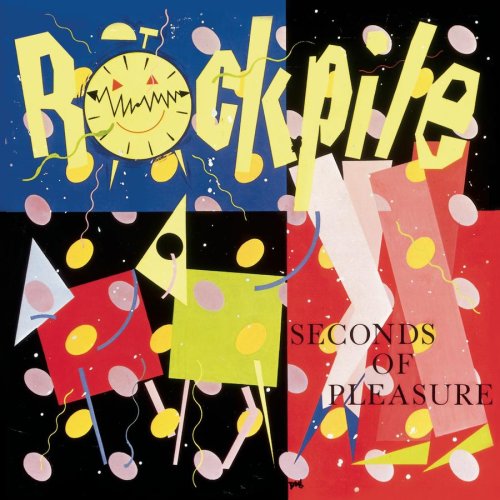
Rockpile had success in 1979 with Edmunds' "Girls Talk" (a top 20 hit in both the UK and Canada) and Lowe's "Cruel to Be Kind" (top 20 in the UK, Canada and the US). The next year, Edmunds finished his contract with Swan Song with the solo album Twangin... , which freed Rockpile to record a under their own name for the first time on Jake Riviera's new label F-Beat Records. The sessions for 'Seconds of Pleasure' were produced by Nick Lowe and Rockpile at Eden Studios, Chiswick with Billy Bremner on guitar and vocals; Dave Edmunds on guitar, vocals, piano, and organ; Nick Lowe on bass and vocals; and Terry Williams on drums. Aldo Bocca was the engineer.
Edmunds says: "We had a manager (Jake Rivera) who was a bit of a hot head and he suddenly gave us three weeks to make an album. He just said, 'You’ve got three weeks and then you’re going on tour!' We had no material so I just started flicking through my record collection of 45 singles. I had a big collection of 45 RPM’s and I came across the Joe Tex one If Sugar Was As Sweet As You and Oh What A Thrill by Chuck Berry. We did them really because we had nothing else to do and no time to find anything different. We did that Seconds of Pleasure album with Rockpile and I’ve never heard it since. I am not happy with it at all; I wasn’t happy with it when we were recording it but sometimes you just go to your record collection and see what’s there. " 'Seconds of Pleasure' hit thirty-four in the UK, twenty-nine in Canada, twenty-seven in the US, and number eight in Sweden.
http://nicklowe.com/ https://www.facebook.com/DaveEdmundsOfficial "Teacher Teacher" went to number fifty-one in the US and thirty-one in Canada. VIDEO live 1979 VIDEO live 1980 VIDEO 'Seconds of Pleasure' full album:
https://itunes.apple.com/us/album/seconds-of-pleasure/id158682857 https://www.youtube.com/playlist?list=PLbIWNPRshAZd_xtP53p2iZxMhLPsMxqbE VIDEO All songs written by Nick Lowe and Rockpile, unless otherwise indicated.
Side one
"Teacher Teacher" (Kenny Pickett, Eddie Phillips) – 2:36 lead vocals: Lowe
"If Sugar Was As Sweet As You" (Joe Tex) – 2:35 lead vocals: Edmunds
"Heart" – 2:38 lead vocals: Bremner
"Now and Always" – 1:58 lead vocals: Lowe
"A Knife and a Fork" (Kip Anderson, Isaiah Hennie, Charles Derrick) – 3:18 lead vocals: Edmunds
"Play That Fast Thing (One More Time)" (Lowe) – 4:13 lead vocals: Lowe
Side two
"Wrong Again (Let's Face It)" (Chris Difford, Glenn Tilbrook) – 2:23 lead vocals: Edmunds
"Pet You and Hold You" – 3:13 lead vocals: Lowe
"Oh What a Thrill" (Chuck Berry) – 3:06 lead vocals: Edmunds
"When I Write the Book" – 3:17 lead vocals: Lowe
"Fool Too Long" – 2:51 lead vocals: Edmunds
"You Ain't Nothin' But Fine" (Sidney Semien, Floyd Soileau) – 2:54 lead vocals: Bremner
bonus EP tracks (Nick Lowe & Dave Edmunds Sing The Everly Brothers
produced by Nick Lowe & Dave Edmunds
"Take a Message to Mary" (Felice Bryant, Boudleaux Bryant) – 2:28
"Crying in the Rain" (Howard Greenfield, Carole King) – 2:04
"Poor Jenny" (F. Bryant, B. Bryant) – 2:28
"When Will I Be Loved" (Phil Everly) – 2:14
'Born Fighters' VIDEO