Showing posts with label country. Show all posts

Thursday, June 16, 2016

incidental lightshow


The Armoires reveal a great big musical world with the haunting heartfelt harmonic convergence of this eclectic power pop diary.   Originally brought together as part of a Talking Heads cover band that never happened, lead singers Rex Broome and Christina Bulbenko began to work on songs that Rex had written over the years.  This 'coffee house' duo expanded when Christina's son Ian began helping them record a demo.  As the sessions progressed, the band gained confidence; but after their first public performance, Ian was killed in a car accident.  In the aftermath of the tragedy, the band decided to continue with the recordings in his memory with Christina's daughter Larysa contributing viola and vocals; her bandmate Sean Barillas from symphonic metal band Mantis (referenced in "Playing With The Lights") on drums; multi-instrumentalist Nate Myer adding guitar, bass, keys, drums, and vocals; plus Derek Hanna and Clifford Ulrich who played with Rex in Skates & Rays (who get name dropped in "Doubtful Sound") on drums and on bass (and vocals) respectively.  Three of the songs ("Fort Ashby", "Unhaunted", and "Norma Corona, What Have You Done?") retain performances by Ian on drums.  Christina plays keyboards and Rex plays guitar, harmonica, and mandolin.  Recording took place at Burbank Music Academy Sound Studio, Causality Studios in North Hollywood, Roundhouse Recording in Encino (where producer Glen Laughlin sat in on guitar and bass), and "at home" in Burbank.  Much of the final mix for 'Incidental Lightshow' was done in Toronto by Alan Fraser.  


The Armoires have developed a network of likeminded musicians in the Burbank area with their monthly showcase “Big Stir: Power Pop and More” at the California Institute of Abnormalarts in North Hollywood, featuring some of the folks that helped to create their debut album and who share their genre defying mindset.  Christina considers: “We didn’t know how to start, and we didn’t know if we could go on after losing Ian.  In the end we had to. And now we’ve found ourselves welcomed into this beautiful community of amazing musicians and songwriters who get what we were trying to do all along. We’re flabbergasted, humbled, and happy to be home.”


The myriad musical styles in this mellifluous wardrobe run the gamut through Americana, sunshine pop, garage, throwback psychedelia, blue eyed soul, surf rock, new wave, shoegaze, and country.  Sometimes within a song. 'Incidental Lightshow' gets its title from the emotional centerpiece of the album, "Playing With The Lights", a touching tribute to Ian and the synchronous signs that the band experienced after his passing.  Mysterious dancing lights and mantis appearances leading to the question:  "Are you laughing in the stars and playing with the lights?".  Christina helped to compose the lyrics and Nate contributed the song's exploratory bridge.  


Each song has an emotional resonance that ties a thread through the entire album.  What are obviously very personal references seem somehow universal.  Although the lines are often blurred with alternately poignant and priceless phrases, there is a sense of a grieving process.  There is denial ("No one is to blame because no one is responsible at all") in the new wave powerpop of "Responsible", anger ("Violent revolution on behalf of the non-famous people!") in the surf rock complaints of "Norma Corona, What Have You Done?", bargaining ("Hearts might heal, but you can’t unbreak a home") in the domestic drama of "What You Don't Wish For", sadness ("Doesn’t get much lower than the waterline at Doubtful Sound") lurking under the surface of a doomed romance (or perhaps a new musical venture?) with a Mustang-less Sally, and acceptance ("Sometimes you feel like you get what you’re wishing for; sometimes you don’t even know") in the fleeting pop of the sweet album closer "Double Blades".       

Rex reveals:  “Our songs are stories.  Whether they’re dreamlike or straightforward, they always revolve around some kind of narrative, and above all, characters. The way Christina and I trade off lead vocals and come together for harmonies really allows us to bring those characters to life. There’s so much untapped potential in that male/female vocal approach. For all the classic duets in pop music, you don’t hear it much in bands. The New Pornographers are a big inspiration. Fleetwood Mac and X, as different as they are, both did it brilliantly. Those bands dig into multiple perspectives within a single song, and do it magically. That’s the starting point for The Armoires.”

In case you don't know, an armoire is a type of fancy cabinet with lots of drawers and compartments.  The songs themselves are thick with metaphors and layers of meaning that reveal more with each listen.  Although you can look too deep.  Is the "Wire Girl" an art piece, an old sketch, or a dilapidated ship?  I originally thought "Newberry Spectacle" was a reference to the matching glasses that Rex and Christina wear (instead of some kind of art contest?), or that Norma Corona might be a reference to the murdered Mexican activist.  I still like to think that the crass countrified capitulation of  "Live And Direct" could be subtitled "The Chronicles of Ventura".  And that line "he can't keep it up, she can't keep it down" is too perfect.  


The first time I ever heard of an armoire was in the famous "Soup Nazi" episode of 'Seinfeld'.  As with the many wonderful recipes that the titular character had stashed away in his armoire, you'll be amazed at the variety of musical flavors; and like armoire-stealing "street toughs" Bob and Ray, you'll be intrigued by the gorgeous inlay and insist on taking it home for yourself.  And that's all there is to it.  


http://www.thearmoires.com/


lyrics


"Fort Ashby" opens the album with a flood of childhood memories of the Mineral Country Fair in West Virginia.  


Out-of-tune piano, cylinder gramophone
Katydids, calliopes, big machines that buzz and groan
Down at the County Fair
There’s music in the air
It’s like a Tom Waits tune but with a different singer
It’s a great big world and it seems to me (it’s coming back to me)
It’s much bigger and it’s so much smaller than it
Ever used to be
In my grandma and grandfather’s backyard
They built a forty-foot slide
All I remember is the light
There’s a funhouse called Star Warz, it’s spelled with a “z”
Copyright infringement, it’s all coming back to me
Here comes a big bass drum
To rock my skeleton
There’s candy in the air, it’s slipping through my fingers
It’s a great big world and it seems to me
It’s much bigger and it’s so much smaller than it
Ever used to be
Now they tell me that it’s monster trucks and
Tractor pulls in the night
All I remember is the light
Put me in the moonwalk, I can’t even stand
Take me to the stage to see Daddy in a country band
Some kid who’s half my size
She won the livestock prize
She had a little lamb
And then the lamb got bigger
It’s a great big world and it seems to me
It’s much bigger and it’s so much smaller than it
Ever used to be
Got my baby beside me going eastbound
On a cross-country flight
All I can think of is the light
It’s coming back to me…


"Unhaunted" describes someone obsessed with the memory of a departed love.  


Empty house on my street with the doors chained up tight
And a window with candles that burn late at night
Children quicken their pace as they walk on by
From all the stories they’ve heard and they’re too young to die
And I miss her so badly I wish I were there
To see the spectral lights and feel the chill in the air
Empty bottle of wine and nobody to toast
I’m so jealous of other people’s ghosts
When I want her to haunt me she leaves me alone
No creaking floor, no flickering flame
Black candelabra and black cat bone
No disembodied voice to breathe my name
Got a box with a lock of her hair that I saved
And a bag filled with dirt that I took from her grave
Halloween once again and I’m here by myself
While her ghost is out haunting somebody else
When I want her to haunt me she leaves me alone
No creaking floor, no flickering flame
Black candelabra and black cat bone
No disembodied voice to breathe my name
Unhaunted
She’s leaving me
Unhaunted
Don’t want to be
Unhaunted
And she had such faith in the world beyond
But I’m truly afraid that she’s truly gone
She won’t come to me as some tender wraith
In a column of vapor with her face
When I want her to haunt me she leaves me alone
No creaking floor, no flickering flame
Black candelabra and black cat bone
No disembodied voice to breathe my name
It’s November the First under a hangover sky
She’s bound to leave me unhaunted whatever I try
All my breaking and entering won’t raise the dead
And I’ll still be unhaunted tonight in her bed
All the leaves on the ground blow around in the wind
Like a family of rodents relieved of their skin
Halloween on a dirt road, 1983
I believed it was real, it could happen to me


The careening groove of "Caterwaul" could fuel a rave.  


Come down, catercorner
Carry me across the square
Come down, catastrophic
Crushed and quite beyond repair
Come down, calla lilies
Cold and lovely in a vase
Come down, cantilever
Can you lever me in place?
But if it’s not your time
You can’t make it your time
If it’s not your time
Come down, cat o’ nine tails
Count again, it’s more like ten
Come down, catatonic
Cannot wake her up again
And if it’s not her time
You can’t make it her time
Can’t make it her time
Come down, Cosa Nostra
Clarity and Claritin
Come down, catalytic
Car exhaust to do you in
Come down, cantaloupe and
Honey, do it while you can
Come down, caterwaul and
Honey can I be your man?
And if it’s not your time
You can’t make it your time
If it’s not your time
Caterwaul, catewaul, caterwaul


'Incidental Lightshow'
full album:


Fort Ashby
Caterwaul
Responsible
Unhaunted
What You Don't Wish For
Playing With The Lights
Wire Girl
Doubtful Sound
Live And Direct
Newberry Spectacle
Norma Corona, What Have You Done?
Double Blades


Velvet Ties interview:


Saturday, December 19, 2015

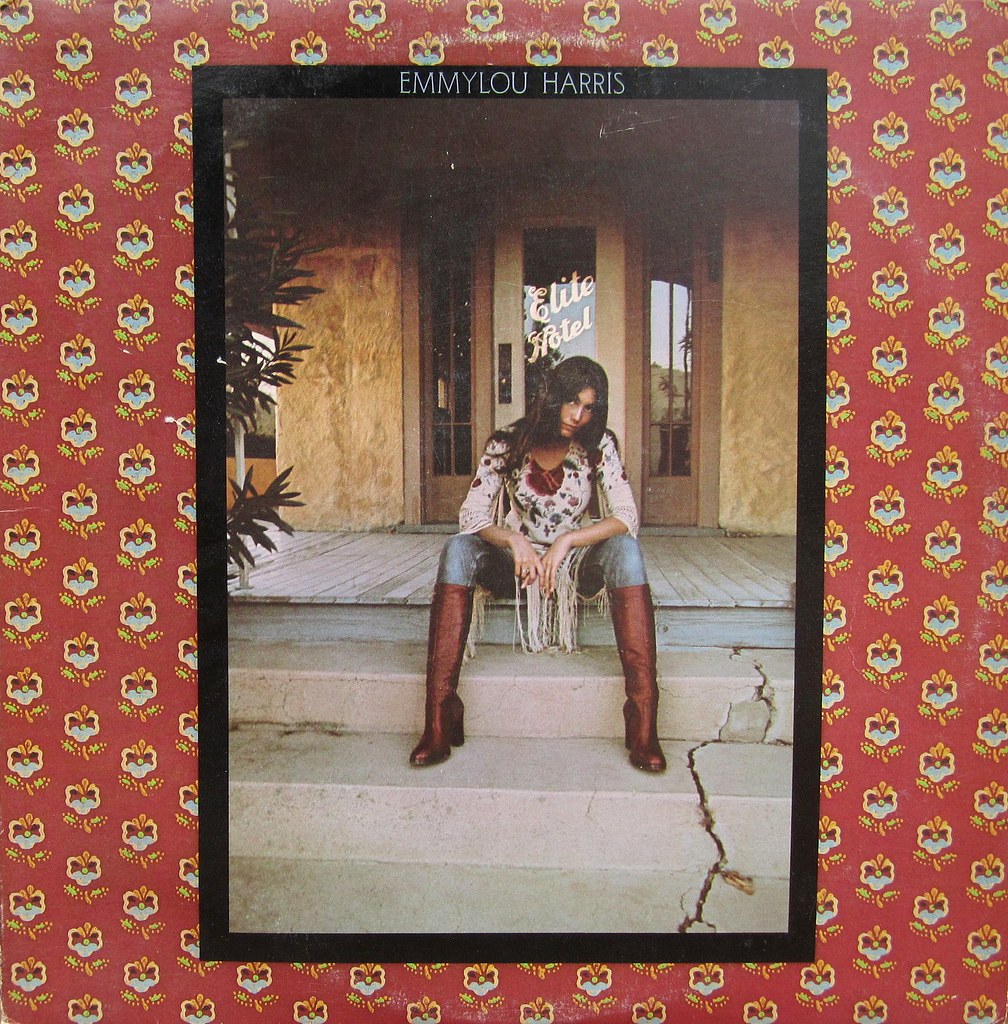
elite hotel


Emmylou Harris and The Hot Band were hooked in the first degree on sin and salvation and gone like the wayward wind walking the long way home just to think of an alibi.   Elite Hotel came out less than a year after her acclaimed Pieces of the Sky album. It was a busy year during which she made appearances on  Heart Like a Wheel   and  Prisoner in Disguise  with Linda Ronstadt, Home Plate  with Bonnie Raitt,    Two Lane Highway  with Pure Prairie League,    All I Can Do  with Dolly Parton,  Desire  with Bob Dylan,   Mike Auldridge  with Mike Auldridge,  Sleepless Nights  with The Flying Burrito Brothers,   Starland Vocal Band  with Starland Vocal Band,   and   Texas Cookin' with Guy Clark.   


Warner Brothers executives agreed to record her next album as long as she got herself "a hot band".  She brought in a revolving cast of studio aces, including guitarist James Burton and pianist Glen Hardin from Elvis Presley's touring band.    Elite Hotel was recorded during June with producer  Brian Ahern and engineers Bradley Hartman, Rudy Hill, Stuart Taylor, and Miles Wilkinson.   The Hot Band included:     Brian Ahern on acoustic guitar and bass;   Mike Auldridge on dobro;   Byron Berline on fiddle and mandolin;   Dianne Brooks on backing vocals;   James Burton electric guitar;   Rodney Crowell on  electric guitar and backing vocals;   Rick Cunha on acoustic guitar;  Nick DeCaro on string arrangements;  Hank DeVito on pedal steel;   Jonathan Edwards on backing vocals;  Amos Garrett on electric guitar;   Emory Gordy, Jr. on bass  and backing vocals;   Glen D. Hardinon piano, electric piano, and string arrangements;  Emmylou Harris vocals and acoustic guitar;   Ben Keith on pedal steel;   Bernie Leadon acoustic guitar and backing vocals;   Bill Payne on piano;   Herb Pedersen on acoustic guitar, banjo, and backing vocals;   Mickey Raphael and harmonica;   Linda Ronstadt on backing vocals;   Fayssoux Starling on backing vocals;   John Starling on acoustic guitar and backing vocals;   Ron Tutt on drums;   and  John Ware on drums.    


Harris says the album and tour with The Hot Band made her reputation; but left her $250,000 in debt:    "Well, we were damn good, but [the name of the band] was slightly tongue-in-cheek.  It came about because someone at the record company – and this was the early 1970s, remember – decided, 'We gotta put the chick singer together with a hot band.' ... I made it all back in record sales – so it turned out to be a smart business move. That was something else I learned from Gram, 'If you pay the best, you'll play with the best.'...Right at the beginning, the Hot Band was just me and Rodney [Cromwell], sitting late into the night, singing harmony and strumming guitars,"

The eclectic mix of songs on the album set her apart from other country artists at the time:    “Elite Hotel had country hits with ‘One Of These Days’, ‘Together Again’ and ‘Sweet Dreams’, remakes of hits by serious country artists [George Jones, Buck Owens and Patsy Cline, respectively]. ‘Satan’s Jewel Crown’ was there to celebrate the Louvins. The hits themselves were classic country, but the LP had a Beatles song [‘Here, There And Everywhere’], so there were murmurings from country purists, and I started to wonder: ‘Am I being true to Gram? Is this what I set out to do?’ I wanted to be a country artist. But I was being true to who I was, greatly influenced by The Beatles and Dylan. I was a child of my generation who’d discovered country, which became the Big Bang for me, but all these other elements were still swirling around in there. So the eclecticism of those early records was very real for me as I was finding my voice. I needed to do that to get to the point where I could narrow my parameters.”


Elite Hotel  became her first number one album on the country chart riding the wave of two number one country singles.  Harris would admit:   “I know what’s happening but it hasn’t really hit me yet...I guess it’s just been a kind of long hard road. In a way I’ve been at this for almost ten years on almost all kinds of levels – from waiting tables to playing in New York clubs and not having anybody listen to me, to making a terrible first record for a bankrupt company to working with Gram.  I suppose working with Gram was the most amazing thing that ever happened to me. There was just something very magical about the experience. It was so much fun to just get up there, sing with him, and not worry about carrying a show myself. Everyone paid all this attention to me and told me how good I was and all that. It was really like being some kind of fairytale princess. Somehow that affected me more than all this that’s happening now...Maybe I’m on time delay.”


http://www.emmylouharris.com/


lyrics:
http://genius.com/albums/Emmylou-harris/Elite-hotel


"Together Again" 


"Sweet Dreams"


"One of These Days"


Elite Hotel 
full album:


"Amarillo" (Emmylou Harris, Rodney Crowell) – 3:05
"Together Again" (Buck Owens) – 3:56
"Feelin' Single, Seein' Double" (Wayne Kemp) – 2:34
"Sin City" (Gram Parsons, Chris Hillman) – 3:57
"One of These Days" (Earl Montgomery) – 3:03
"Till I Gain Control Again" (Rodney Crowell) – 5:40
"Here, There and Everywhere" (John Lennon, Paul McCartney) – 3:59
"Ooh Las Vegas" (Gram Parsons, Ric Grech) – 3:47
"Sweet Dreams" (Don Gibson) – 4:03
"Jambalaya (On The Bayou)" (Hank Williams) – 3:05
"Satan's Jewel Crown" (Edgar L. Eden) – 3:13
"Wheels" [with Jonathan Edwards] (Chris Hillman, Gram Parsons) – 3:13

bonus tracks:
"You're Running Wild" [with Rodney Crowell] (Ray Edenton, Don Winters) – 1:44

"Cajun Born" [with Jo-El Sonnier] (Jo-El Sonnier, Kermit Goell) – 3:19


Thursday, October 29, 2015

tumbleweed connection


Elton John and Bernie Taupin burned down the mission to find country comfort in this tribute to the spirit of the American frontier.  The British songwriting duo of lyricist Taupin and pianist John (Reginald Kenneth Dwight) had graduated quickly from staff writers for DJM Records to making their own albums.  After recording two albums  ('Empty Sky'  in 1969 and  'Elton John' in early 1970), they returned to Trident Studio in London with producer Gus Dudgeon to record 'Tumbleweed Connection' before the second album was even released.  The album features Elton John on piano, organ, keyboards, and vocals;   Caleb Quaye on guitars;  Roger Pope and Barry Morgan on drums;  Dave Glover and Jason Barnhart on bass guitar and backing vocals;  Herbie Flowers and Dee Murray on bass guitar;  Nigel Olsson on drums and backing vocals;   Gordon Huntley on steel guitar;  Brian Dee on organ;  Ian Duck on harmonica;  Lesley Duncan on acoustic guitar on backing vocals;   Mike Egan on acoustic guitar;   and   backing vocals by Kay Garner, Tammi Hunt, Tony Burrows, Dusty Springfield,  and  Madeline Bell.   Paul Buckmaster was the conductor and arranger;  Robin Geoffrey Cable the engineer,  and Bernie Taupin the  lyricist.  


Taupin:   "We never really did studio recordings with the original trio. It was always much more a band situation. On things like Madman Across the Water,
  Tumbleweed and especially Elton John, which had a full-on orchestra on it, those records were more band-oriented records...Everybody thinks that I was influenced by Americana and by seeing America first hand, but we wrote and recorded the album before we’d even been to the States. It was totally influenced by The Band’s album, ‘Music From Big Pink’, and Robbie Robertson’s songs. I’ve always loved Americana, and I loved American Westerns. I’ve always said that ‘El Paso’ was the song that made me want to write songs, it was the perfect meshing of melody and storyline, and I thought that here was something that married rhythms and the written word perfectly...When I got here, it really was a case of thinking 'I've come home'...I wanted to be a cowboy.  I wanted to really just bury myself in that whole lifestyle, not as a plaything."


John:    "If you listen to the album, if ya dig it, you should know its Steve Brown as much as me, Gus Dudgeon as much as me, Paul Buckmaster as much as me, it's a team effort, God knows, I'm so untogether, it has to be ...  My roots are ... listening to records. All the time. I live, eat, sleep, breathe music. Neil Young, the Band, the Springfield, the Dead, the Airplane. I feel more American than British. Really...Over here the scene is all these people slaggin' Ten Years After week after week for makin' so much money and being no good. I don't like them myself but they must get pretty pissed off after a while...The States is a whole other feeling. Leon Russell is my idol – ever since the Delaney and Bonnie albums. He came to see us and I went to his house in L.A. He's got a whole recording studio there, and he told me he wanted to record Burn Down The Mission. His house is called the mission and his record company won't grant him insurance on it because it's in a fire area. So I don't think he'll be recording it soon...This album, Tumbleweed Connection, is the funky one. Wait till you see the clothes I'll be wearing this tour. I'm glad it's out of the way. They wanted me to do another one with an orchestra but I said no, the country one comes first. The next one is going to be more classical and orchestral."


At the same time that 'Tumbleweed Connection' was released, the second single from "Take Me To The Pilot" came out; but it was the b-side that DJ's preferred, resulting in a top ten hit with "Your Song" on both sides of the pond.  Both albums sold well, with 
'Tumbleweed Connection' going to number five in the US, four in Australia and Canada, and number two in the UK, without any chart singles.  'Tumbleweed Connection' has been certified platinum in the US.  


lyrics:
http://genius.com/albums/Elton-john/Tumbleweed-connection


"Burn Down the Mission" 


full BBC show


Your Song  0:00 - 3:53      
Border Song  4:16 - 7:35      
Sixty Years On  8:10 - 12:05          
Take Me To The Pilot  12:17 - 15:44        
Bernie Intro  16:08 - 16:25        
The Greatest Discovery  16:41 - 20:16       
I Need You To Turn To   20:36 - 22:40        
Burn Down the Mission   23:33 - 28:01           


'Tumbleweed Connection'
full album:


All songs written by Elton John and Bernie Taupin, except where noted.

Side one
"Ballad of a Well-Known Gun" – 4:59
"Come Down in Time" – 3:25
"Country Comfort" – 5:06
"Son of Your Father" – 3:48
"My Father's Gun" – 6:20
Side two
"Where to Now St. Peter?" – 4:11
"Love Song" (Lesley Duncan) – 3:41
"Amoreena" – 5:00
"Talking Old Soldiers" – 4:06
"Burn Down the Mission" – 6:22


Saturday, October 17, 2015

american III: solitary man


Johnny Cash faced the darkness and didn't back down with the ravaged reinvention and singular storytelling of this wild wayfaring merciful measure of truth.  After thirty-six albums in nearly thirty years, Columbia Records dropped Cash from their roster in 1987.  He spent the next five years with Mercury Records, who also let him go.  It was around this time that he connected with producer Rick Rubin, who convinced Cash to sign with his American Recordings label.  Their first project together American Recordings was recorded primarily in his living room with just his guitar.   It became a huge success and won a Grammy for Best Contemporary Folk Album.  

The next collaboration American II: Unchained  featured Tom Petty and the Heartbreakers as his backing band and went on to win the Best Country Album Grammy.  It was around this time that 'The Man In Black' began to suffer from a degenerative nerve disorder that affected his ability to perform.   Cash would later reveal:  "I have had some tough times. I have had pneumonia three times in the last three years -- four times in the last three years. And it debilitates you. It takes the strength away. Took the life out of my legs and I can walk, but not very well...Autonomic neuropathy...it's kind of -- the way I understand it, it's a deadening of the nerve cells of the nerve endings in the lower extremities and sometimes the hands and other extremities.  And for me that's really about the only thing it's really affected a lot. I'm not sure that it's affected my lung power but I don't have the lung power I did. But of course, pneumonia will take that away too...It was 1993 and I was hospitalized with a -- I went into a coma and I was there for 12 days. They all thought I was dying and they couldn't diagnose what was wrong with me. They finally came up with a diagnosis of Shydreger (ph) Syndrome. It was few months later they realized I didn't have that so it was Parkinson's. And then it was not that.  Then finally it was autonomic neuropathy...Finally got it right. And I'm pretty well resolved to the fact that that's what it is. And it's a slow process of the nerve endings...I don't think [there's a cure]. But that's all right. There's no cure for life either...I don't go out and sing. I don't do concerts any more because the physical thing of going out there and doing concerts and the planes and the cars and the hotels and all that. And the backstage is where it's so dark I have a hard time.  My vision is -- my vision is over. I'd probably say 60 percent gone because of the neuropathy. And the diabetes...I can still record, yes. I have been in the studio a lot. I have focused my energies from the road to the studio and it really feels good. I'm really enjoying it...I'm not bitter. Why should I be bitter? I'm thrilled to death with life. Life is -- the way God has given it to me was just a platter -- a golden platter of life laid out there for me. It's been beautiful...Things have been good. And things will get better all time...No regrets."


Rubin remembers:   "I know he wanted to be able to do more than he was physically able to do. He couldn’t understand why one day he would come in and be able to sing great, and feel good, and then the next day he would come in and not be able to catch his breath, or would have to lie down between takes. He was suffering a lot. Actually, he had suffered for a lot of years, and yet he could still get the job done whenever he wanted to. But now, for the first time, he was experiencing times when he wanted to be working, and the frustration of either physically not being able to do it, or mentally not being able to stay focused, or voice-wise, not being of strong voice. This was all new to him, and it was very difficult for him to deal with...I know there were times when he wished his voice was better. Sometimes he felt embarrassed, and it really took the people around him to say, 'This is beautiful, and we love it.' And again, he trusted the people who were saying that, because we really did feel that way. But there were times, I know, when he felt a little insecure about his voice and wished he sounded stronger...[He had an ability to inhabit other people's songs completely.]  I think part of it has to do with just what a bright and wise person he was. Putting aside singing songs, if he just told you a story, he was able to explain things in such a way that you really understood them. And he knew so much about so much, and had lived so much in his life; the wisdom that came along with that showed up whenever he spoke. That transferred into his storytelling in his songs. He just had that power. When he said it, you believed it. It’s an unusual gift."

The third installment of his partnership with Rubin American III: Solitary Man combined the stripped down approach of American Recordings with the collaboration of American II: Unchained  and included the vocal talents of June Carter Cash, Sheryl Crow, Merle Haggard, Will Oldham, and Tom Petty.  Haggard, Norman Blake, Mike Campbell, Larry Perkins, Randy Scruggs, and Marty Stuart also contributed guitar.  

American III: Solitary Man became his highest charting album in nearly twenty-five years, going to number eighty-eight on the pop album chart and number eleven on the country album chart.  


http://www.johnnycash.com/


"The Mercy Seat"


American III: Solitary Man
full album:


"I Won't Back Down" (Tom Petty/Jeff Lynne) – 2:09
Originally recorded by Petty for Full Moon Fever (1989)
"Solitary Man" (Neil Diamond) – 2:25
Originally recorded by Diamond as a single (1966)
"That Lucky Old Sun (Just Rolls Around Heaven All Day)" (Haven Gillespie/Beasley Smith) – 2:35
Originally a hit for Frankie Laine (1949)
"One" (Bono, Adam Clayton, The Edge, Larry Mullen) – 3:53
Originally recorded by U2 for Achtung Baby (1991)
"Nobody" (Egbert Williams) – 3:14
Originally recorded by Williams in 1906
"I See a Darkness" (Will Oldham) – 3:42
Originally recorded by Oldham for I See a Darkness (1999)
"The Mercy Seat" (Nick Cave/Mick Harvey) – 4:35
Originally recorded by Cave for Tender Prey (1988)
"Would You Lay with Me (In a Field of Stone)" (David Allan Coe) – 2:41
Originally recorded by Tanya Tucker for the album of the same name (1974)
"Field of Diamonds" (Cash, Jack Routh) – 3:15
Originally recorded by Cash and Waylon Jennings for Heroes (1986)
"Before My Time" (Cash) – 2:55
"Country Trash" (Cash) – 1:47
Originally recorded by Cash for Any Old Wind That Blows (1973)
"Mary of the Wild Moor" (Dennis Turner) – 2:32
Originally recorded by The Louvin Brothers for Tragic Songs of Life (1956)
"I'm Leavin' Now" (Cash) – 3:07
Originally recorded by Cash for Rainbow (1985)
"Wayfaring Stranger" (Traditional) – 3:19
Old folk song previously recorded by countless artists


American Recordings
1994


American II: Unchained
1996


American III: Solitary Man
2000


American IV: The Man Comes Around
2002


American V: A Hundred Highways
2006


American VI: Ain't No Grave
2010


Unearthed
2003