Showing posts with label 1964. Show all posts

Monday, December 22, 2014

point of departure


Andrew Hill reached the pinnacle of his powers and surveyed the full spectrum of jazz on this dense and dissonant discovery.  In his first year recording with Blue Note Records, Hill had already put out two masterful records:  'Black Fire' and 'Judgement'.  His next record would top them both.  

'Point of Departure' features Andrew Hill on piano with an all star lineup of horn players, Kenny Dorham on trumpet;  Eric Dolphy on alto saxophone, bass clarinet, and flute;  and Joe Henderson on tenor saxophone;  with a killer rhythm section of Richard Davis on double bass and Tony Williams on drums.  The session took place at Van Gelder Studio in Englewood Cliffs, New Jersey with Alfred Lion on production and Rudy Van Gelder on recording and engineering.  


Hill would remember:  "This was still in the first year of my Blue Note recording contract. Eric (Dolphy) was playing at the Five Spot with Charlie Mingus. I thought I would get together with him and talk music and he was kind enough to work a few jobs with me and so I presented the idea to Blue Note and they bought it. At first Charles Lloyd was going to play tenor, but for reasons beyond anyone's control, except Charles, he couldn't make it. So consequently, Joe became tenor saxophonist. And Kenny Dorham, who could play almost anywhere, was good. And then, Tony Williams had come to town and everyone was talking about him. All of a sudden, there was a nucleus formed for the band and we just made two Blue Note rehearsals and went on and did the session...It wasn't an isolated, academic situation because there was a synergy with the jazz audiences at that time. There were no limitations. They give bebop more credit than it deserves, because bebop was not an academic situation. It was just something that the people could feel."


http://www.andrewhilljazz.com/


'Point of Departure' 
full album:
https://www.youtube.com/playlist?list=PLAC3DD5DD7E985B81


All music composed by Andrew Hill.


1. "Refuge"   12:16
2. "New Monastery"   7:05
3. "Spectrum"   9:47
4. "Flight 19"   4:18
5. "Dedication"   6:45


Monday, December 15, 2014

jazz long playing


Jean-Luc Ponty took a chance on jazz and left his day job with a major symphony orchestra to pursue a unique horny violin sound on this daring debut.    Born in Avranches, France to a father that taught violin and a mother that taught piano; he was accepted to the Conservatoire National Supérieur de Musique de Paris at the age of sixteen. Graduating two years later with the prestigious Premier Prix, he took a position as a violinist with the Concerts Lamoureux sympony orchestra in Paris.  At the same time, he developed a passion for jazz music and began performing in clubs around the city at night while working for the orchestra during the day.  He even dabbled with playing the clarinet and the saxophone until he decided to focus his primary instrument on jazz.  His method of playing was more influence by jazz horn players that by typical violin technique.  It only took a year for his unique style to catch on, and he recorded his debut album in June and July of 1964 with producer Daniel Richard for the Philips label.  'Jazz Long Playing' features Jean-Luc Ponty on violin;   Michel Portal on flute;  Eddy Louiss on piano;  Gilbert Rovere and Guy Pedersen on double bass;  and Daniel Humair on drums.   

Ponty says:   "Naturally, I had to make a choice, so I took a chance with jazz ...  I started as a rather sophisticated musician when I started playing jazz. It very quickly became modern and avant-garde jazz,  I was happy about the reissue [on CD of Jazz Long Playing] because I forgot how I used to play. The record really sounds like it has a bebop violinist on it. I only played jazz for three or four years at that time. I had a vinyl copy which I could not play anymore because it was so scratched. It came as a surprise when the jazz label at Universal in Paris found it—probably in a closet somewhere. They sent me a few copies of the CD and I was happy because I rediscovered my playing from that era. It was also interesting for me because Life Enigma found me once again developing my sound and working with new instruments as I did following Jazz Long Playing. I've sort of come full circle...People who choose to pick up the instrument tend to be different as individuals because of the posture that needs to be adopted and the discipline and dedication required. I guess I was eccentric when I was a young guy. [laughs] I don't really see myself as eccentric, but I can be at times and yes, Nigel Kennedy is eccentric. But behind any eccentricity is a discipline. That eccentricity cannot exist 100 percent of the time. The dedication, concentration and discipline of practicing the instrument is absolutely necessary throughout the whole life of a violinist. To this day, if I'm away from my instrument for a few days, I feel a little bit rusty when I play it again. It's the most difficult instrument in the world to play in tune. So, even if a violinist appears to be eccentric, you're likely seeing a good violinist who is a very serious personality that has something deep going on inside them."


http://ponty.com/


"Au Privave"
https://www.youtube.com/watch?v=Kx6qrGY_AS0


'Jazz Long Playing' 
full album:


https://play.spotify.com/album/04zgndVRTh4MpMZzJYDhBu

https://itunes.apple.com/ca/album/jazz-long-playing/id446014084

https://www.youtube.com/playlist?list=PLpQjJS5RnmCsg3bkKf3SSy-NxKiaihrdS

https://www.last.fm/music/Jean-Luc+Ponty/Jazz+In+Paris+-+Jazz+Long+Playing

https://tidal.com/browse/album/335098


"Une nuit au violin" (Martial Solal) - 4:43
"Modo Azul" (Jef Gilson) - 4:38
"Spanish Castels" (George Gruntz) - 3:40
"Sniffin' the Blues" (Jef Gilson) - 3:28
"Postlude in C" (Raymond Fol) - 3:21
"Au Privave" (Charlie Parker) - 3:45
"Manoir de mes rêves" (Django Reinhardt) - 3:05
"YTNOP Blues" (Jean-Luc Ponty) - 3:10
"I Want To Talk About You" (Billy Eckstine) - 3:48
"A Night in Tunisia" (Dizzy Gillespie) - 3:02
"Satin Doll" (Duke Ellington) - 4:20


Wednesday, December 10, 2014

jazz impressions of "a boy named charlie brown"


Vince Guaraldi found his most enduring success with the music he initially composed for a documentary about Charles Shultz.  After playing in bands with Cal Tjader and Stan Getz, Guaraldi had an unexpected hit with the b-side "Cast Your Fate To The Wind"from the single "Samba de Orpheus" off of the album 'Jazz Impressions of Black Orpheus', earning himself a Grammy Award for Best Original Jazz Composition.  

It was this song that producer Lee Mendleson heard in a taxi cab that prompted him to contact Guaraldi to compose music for a documentary about Charles Shultz, the creator of the 'Peanuts' comic strip.  The documentary aired once and was shelved; but the music would be released in 1964 as 'Jazz Impressions of A Boy Named Charlie Brown' on the Fantasy Jazz label featuring music by the Vince Guaraldi Trio of Vince Guaraldi on piano, Monty Budwig on bass, and Colin Bailey on drums.  Some of the music would be utilized in the 'Peanuts' animated television specials starting with 'A Charlie Brown Christmas'.  In 1969, a full length feature film, 'A Boy Named Charlie Brown' was released as well, with its own soundtrack.  


http://www.vinceguaraldi.com/


"Linus and Lucy" was the first song Guaraldi composed for Mendleson's project.  It has become his most famous song.  
https://www.youtube.com/watch?v=80vORCMhJeA


"Charlie Brown Theme" 
https://www.youtube.com/watch?v=4UQ2jhe_JO0


'Jazz Impressions of A Boy Named Charlie Brown'
full album:

https://www.youtube.com/playlist?list=PL0796D78EDBF57B8F


https://www.youtube.com/playlist?list=PL887733908B7EAEFB


Oh, Good Grief 2:21
Pebble Beach 2:47
Happiness Is 3:37
Schroeder 1:51
Charlie Brown Theme 4:20
Linus and Lucy 3:03
Blue Charlie Brown 7:26
Baseball Theme 3:13
Freda (With the Naturally Curly Hair) 4:31

bonus
Fly Me to the Moon 8:56


'A Boy Named Charlie Brown'
full movie 1969
http://www.hulu.com/watch/431387


soundtrack to 1969 feature film
part one
https://www.youtube.com/watch?v=jLvisLt3uIY

part two
https://www.youtube.com/watch?v=k7DpvOF7-d4


Monday, December 8, 2014

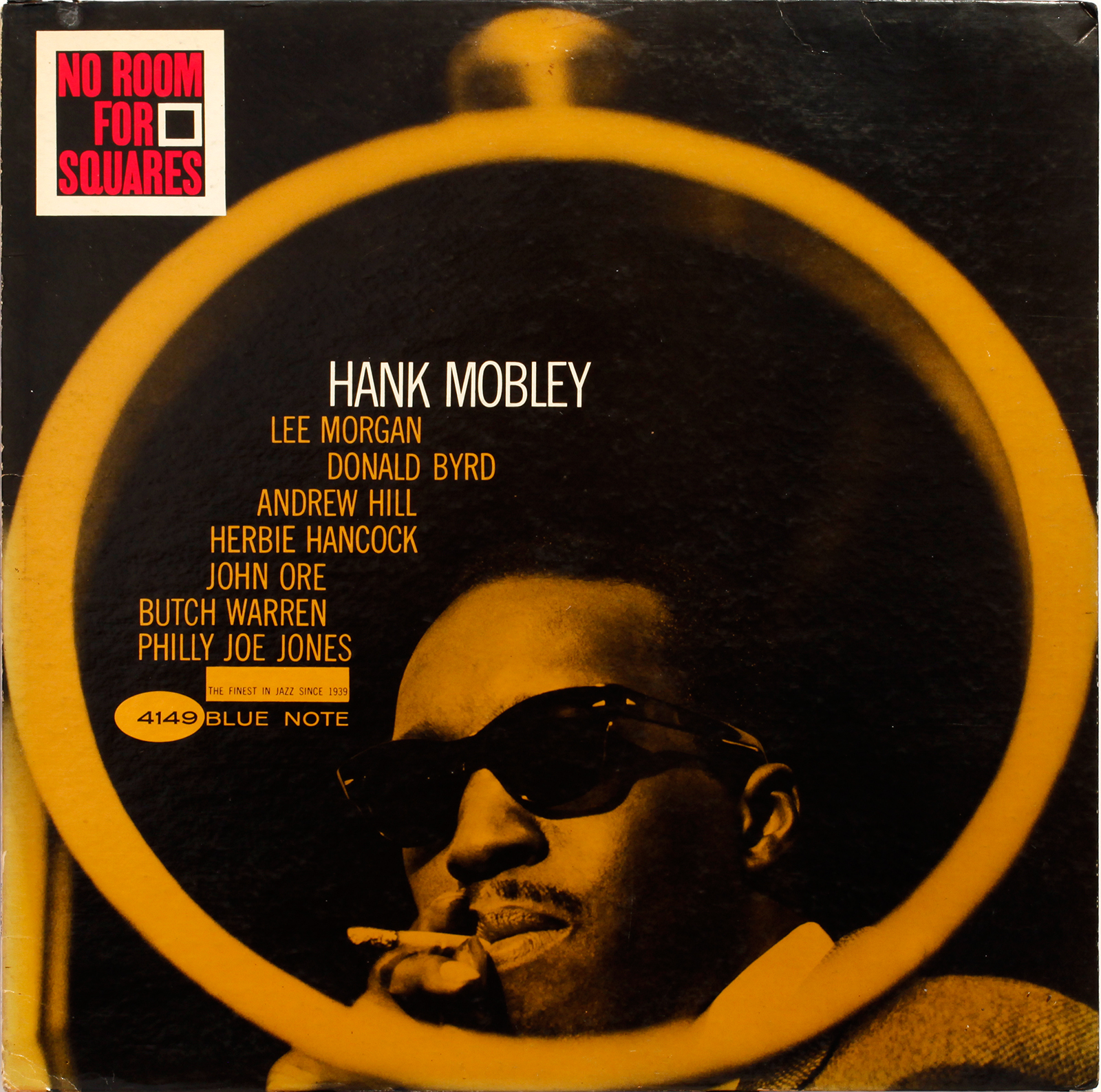
no room for squares


Hank Mobley carved out his own shapely sound with the fierce fluidity of these modal hardbop blues. Mobley had taught himself to play saxophone when he was a teenager and worked with Paul Gayten, Max Roach, and Dizzy Gillespie before taking part in the seminal hardbop sessions that produced  'Horace Silver and the Jazz Messengers'.  As a bandleader, he recorded with his quartet, quintet, and sextet; as well as with His All Stars before an arrest for drugs sidelined him for a couple of years.  He rejoined the Jazz Messengers briefly before embarking on a string of hard bop classics:    'Soul Station', 'Role Call', and 'Workout'.  Around this same period he joined Miles Davis' quintet as a replacement for John Coltrane on 'Someday My Prince Will Come'.  (as well as two live albums:  'In Person Friday and Saturday Nights at the Blackhawk' and 'Miles Davis at Carnegie Hall')

Mobley would recall:  “I had the knowledge. When I got strung out it was my own fault. A person getting strung out at age 18; that’s a problem. He doesn’t even have a chance to learn what life is about. By the time I got strung out I had learned my instrument, I was making money...I told Miles ‘I never played with somebody who plays like Art Tatum on the saxophone.’ Miles said, ‘That’s why I hired you. I want to put your interpretation with his.'...But when I left Miles, I was so tired of music, the whole world, man, I just went back to drugs.” 


Mobley's next wave would be even more daring.  'No Room For Squares' was recorded for Blue Note Records at the Van Gelder Studio, Englewood Cliffs, New Jersey.  The album is culled from two sessions with different lineups.   On March 7, 1963 he recorded "Up a Step" and "Old World, New Imports" (more tracks from this session would be released later on 'The Turnaround') with Donald Byrd on trumpet, Herbie Hancock on piano, and Butch Warren on bass;  while October 2, 1963 his band featured Lee Morgan on trumpet, Andrew Hill on piano, and John Ore on bass.  Both sessions feature Hank Mobley on tenor saxophone with Philly Joe Jones on drums.  

Mobley would describe his own style thusly:   “not a big sound, not a small sound, just a round sound”.    


http://hankmobley.blogspot.com/

http://hankmobley.jazzgiants.net/


"No Room For Squares"
https://www.youtube.com/watch?v=KZu42x8LWVM


"Carolyn"
https://www.youtube.com/watch?v=n2PPbeBVHwQ


'No Room For Squares' 
full album:

https://myspace.com/hankmobleymusic/music/album/no-room-for-squares-the-rudy-van-gelder-edition-18989476


https://www.youtube.com/watch?v=Xcq_zg-Zw5k&list=PLFBADE21A3C6C7A53


All compositions by Hank Mobley except as indicated

"Three Way Split" – 7:49
"Carolyn" (Morgan) – 5:30
"Up a Step" – 8:31
"No Room for Squares" – 6:57
"Me 'N You" (Morgan) – 7:17
"Old World, New Imports" – 6:08

bonus
"Comin' Back"
"Syrup and Biscuits"


Thursday, December 4, 2014

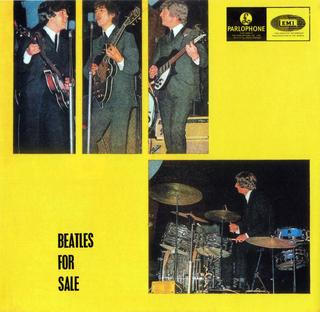
beatles for sale


The Beatles followed the sun and got dark and bluesy for the introspective importunity of their fabulous fourth.  In the height of Beatlemania, the group went into the studio again only a week after they wrapped up the soundtrack album to their first feature film, 'A Hard Day's Night'.  The sessions took place at EMI Studios in London in between touring dates.  Much of the material was written in the studio.  'Beatles for Sale' features John Lennon on lead, harmony and backing vocals, rhythm and acoustic guitars, piano, harmonica, tambourine, handclaps; and 12-string lead guitar on "Every Little Thing";   Paul McCartney on lead, harmony and backing vocals, bass guitar, acoustic guitar, piano, Hammond organ, and handclaps;   George Harrison on harmony and backing vocals, lead vocals on "Everybody's Trying to Be My Baby", lead, acoustic and 12 string guitars, African drum, and handclaps;   and Ringo Starr on drums, tambourine, maracas, timpani, cowbell, packing case, bongos, and lead vocals on "Honey Don't";   with George Martin on piano and production.    Martin recalled:   "They were rather war-weary during Beatles for Sale. One must remember that they'd been battered like mad throughout '64, and much of '63. Success is a wonderful thing, but it is very, very tiring."

McCartney looks back:   "We would normally be rung a couple of weeks before the recording session and they'd say, 'We're recording in a month's time and you've got a week off before the recordings to write some stuff.' You'd say, 'Oh, great, fabulous.' So I'd go out to John's every day for the week, and the rest of the time was just time off. We always wrote a song a day, whatever happened we always wrote a song a day... Mostly it was me getting out of London, to John's rather nice, comfortable Weybridge house near the golf course. I'd often wake him up, so I'd be coming in a little fresher than he was, but after a coffee or a cup of tea he woke up and we nearly always went up to his little music room he'd built at the top of the house... So John and I would sit down, and by then it might be one or two o'clock, and by four or five o'clock we'd be done. Three hours is about right-- you start to fray at the edges after that. But that's good too because you think, 'We've got to get this done!'...Whenever the 'red light' was on... that was it, we had to go, that was our signal. Now it's very relaxed. I've got my own studio now and we hardly ever put the light on. These days you go to a recording studio and you tend to see other groups, other musicians, because that's what the industry is now... that's where the money is. But then you'd see Sir Tyrone Guthrie, Barenboim. There'd be alot of 'acting.' You'd see classical sessions going on in 'number one.' We were always asked to turn down because a classical piano was being recorded in 'number one' and they could hear us...We used to listen to alot of country and western songs and they were all about sadness and 'I lost my truck' so it was quite acceptable to sing 'I'm a loser.' You really didn't think about it at the time, it's only later you'd think, God! That was pretty brave of John. 'I'm a Loser' was very much John's song and there may have been a dabble or two from me."


Lennon would reveal:    "That's me in my Dylan period. Part of me suspects I'm a loser, and part of me thinks I'm God almighty." (laughs) ... I remember (Beatles music publisher) Dick James coming up to me after we did this ['No Reply'] and saying, 'You're getting better now-- that was a complete story.' Apparently, before that, he thought my songs wandered off... It was sort of my version of 'Silhouettes.' (sings) 'Silhouettes, silhouettes, silhouettes...' I had that image of walking down the street and seeing her silhouetted in the window and not answering the phone, although I never called a girl on the phone in my life. Because phones weren't part of the English child's life."


Harrison considered:    "Our records were progressing. We'd started out like anyone spending their first time in a studio—nervous and naive and looking for success. By this time we'd had loads of hits and were becoming more relaxed with ourselves, and more comfortable in the studio ... we were beginning to do a little overdubbing, too, probably to a four-track ...  We put all the songs together into an album form-- I'm talking about English albums now, because in the states we found later that for every two albums we had, they (Capitol) would make three... because we put fourteen tracks on an album and we'd also have singles that weren't included on albums in those days. They'd put the singles on, take off a bunch of tracks, change all the running order, and then they'd make new packages... just awful packages."

'Beatles For Sale' went to number one in Australia, Germany, and the UK.  The US releases that contained the songs from 'Beatles For Sale' ('Beatles '65' and 'Beatles VI') both went to number one in the US.


http://www.thebeatles.com/


"Eight Days a Week" was a top ten hit around the world, going to number one in Canada and the US. 
Lennon:   "Both of us wrote it. I think we wrote this when we were trying to write the title song for 'Help!' because there was at one time the thought of calling the film, 'Eight Arms To Hold You.'"
McCartney: "Yeah, he (Ringo) said it as though he were an overworked chauffeur: (in heavy accent) 'Eight days a week.' (Laughter) When we heard it, we said, 'Really? Bing! Got it!'" (Laughs)


"I'll Follow the Sun"  
McCartney:   "I wrote that in my front parlour in Forthlin Road. I was about 16. There was a few from then-- 'Thinking Of Linking,' ever heard of that one? So 'I'll Follow The Sun' was one of those very early ones. I seem to remember writing it just after I'd had the flu... I remember standing in the parlour looking out through lace curtains of the window and writing that one. We had this hard R&B image in Liverpool, so I think songs like 'I'll Follow The Sun,' ballads like that, got pushed back to later."


"Rock and Roll Music"


"Honey Don't"
Starr:    "We all knew Honey Don't; it was one of those songs that every band in Liverpool played. I used to love country music and country rock. I'd had my own show with Rory Storm, when I would do five or six numbers. So singing and performing wasn't new to me; it was a case of finding vehicles for me with The Beatles. That's why we did it on Beatles For Sale. It was comfortable. And I was finally getting one track on a record: my little featured spot."


"Everybody's Trying to Be My Baby"
Harrison:   "For this album we rehearsed only the new ones. Songs like Honey Don't and Everybody's Trying To Be My Baby, we'd played live so often that we only had to get a sound on them and do them."


"She's A Woman" was the b side to "I Feel Fine" and was put on the US release  'Beatles '65'.  
Lennon:   "That's Paul with some contribution from me on lines, probably. We put in the words 'turns me on.' We were so excited to say 'turn me on' --you know, about marijuana and all that... using it as an expression."
McCartney: "This was my attempt at a bluesy thing... instead of doing a Little Richard song, whom I admire greatly, I would use the (vocal) style I would have used for that but put it in one of my own songs."


"I Feel Fine" was a worldwide number one smash.  In the UK, it was only available as a single; but in the US it was released on the album 'Beatles '65'.  
Lennon:    "This was the first time feedback was used on a record. It's right at the beginning...I wrote this at a recording session. It was tied together around the guitar riff that opens it...George and I play the same bit on the guitar together-- that's the bit that'll set your feet a-tapping, as the reviews say. The middle-eight is the most tuneful part, to me, because it's a typical Beatles bit...That's me completely. Including the guitar lick with the first feedback anywhere. I defy anybody to find a record... unless it is some old blues record from 1922... that uses feedback that way. So I claim it for the Beatles. Before Hendrix, before the Who, before anybody. The first feedback on record."

McCartney:  "John had a semi-acoustic Gibson guitar. It had a pick-up on it so it could be amplified... We were just about to walk away to listen to a take when John leaned his guitar against the amp. I can still see him doing it... and it went, 'Nnnnnnwahhhhh!" And we went, 'What's that? Voodoo!' 'No, it's feedback.' Wow, it's a great sound!' George Martin was there so we said, 'Can we have that on the record?' 'Well, I suppose we could, we could edit it on the front.' It was a found object-- an accident caused by leaning the guitar against the amp. The song itself was more John's than mine. We sat down and co-wrote it with John's original idea. John sang it, I'm on harmonies."


The Beatles - I Feel Fine by malhanga


'Beatles For Sale' 
full album:


All songs written and composed by Lennon–McCartney, except where noted. 


Side one
1. "No Reply"   Lennon with McCartney 2:15
2. "I'm a Loser"   Lennon with McCartney 2:31
3. "Baby's in Black"   McCartney and Lennon 2:02
4. "Rock and Roll Music" (Chuck Berry) Lennon 2:32
5. "I'll Follow the Sun"   McCartney 1:46
6. "Mr. Moonlight" (Roy Lee Johnson) Lennon 2:33
7. "Kansas City/Hey-Hey-Hey-Hey!" (Jerry Leiber and Mike Stoller/Richard Penniman) McCartney 2:33
Side two
1. "Eight Days a Week"   Lennon 2:44
2. "Words of Love" (Buddy Holly) Lennon and McCartney 2:12
3. "Honey Don't" (Carl Perkins) Starr 2:55
4. "Every Little Thing"   Lennon and McCartney 2:01
5. "I Don't Want to Spoil the Party"   Lennon with McCartney 2:33
6. "What You're Doing"   McCartney 2:30
7. "Everybody's Trying to Be My Baby" (Perkins) Harrison 2:23


'Beatles '65'
full album:

http://uploadstars.com/video/U684NH5579UR


All tracks written by John Lennon and Paul McCartney, except where noted.

Side one
1. "No Reply"   John with Paul 2:15
2. "I'm a Loser"   John with Paul 2:31
3. "Baby's in Black"   John and Paul 2:02
4. "Rock and Roll Music" (Chuck Berry) John 2:32
5. "I'll Follow the Sun"   Paul 1:46
6. "Mr. Moonlight" (Roy Lee Johnson) John 2:35
Side two
1. "Honey Don't" (Carl Perkins) Ringo 2:56
2. "I'll Be Back"   John and Paul 2:22
3. "She's a Woman"  Paul 2:57
4. "I Feel Fine" John with Paul 2:20
5. "Everybody's Trying to Be My Baby" (Carl Perkins) George 2:24


'Beatles VI'

http://uploadstars.com/video/GOHRHB5BW3W8

All songs written and composed by Lennon–McCartney, except where noted. 

Side one
1. "Medley: "Kansas City"/"Hey, Hey, Hey, Hey" (Jerry Leiber, Mike Stoller/Richard Penniman) McCartney 2:30
2. "Eight Days a Week"   Lennon with McCartney 2:43
3. "You Like Me Too Much" (George Harrison) Harrison 2:34
4. "Bad Boy" (Larry Williams) Lennon 2:17
5. "I Don't Want to Spoil the Party"   Lennon with McCartney 2:33
6. "Words of Love" (Buddy Holly) Lennon and McCartney 2:10
Side two
1. "What You're Doing"   McCartney 2:30
2. "Yes It Is"   Lennon with Harrison and McCartney 2:40
3. "Dizzy Miss Lizzie" (Williams) Lennon 2:51
4. "Tell Me What You See"   McCartney with Lennon 2:35
5. "Every Little Thing"   Lennon with McCartney 2:01