Tangerine Dream crossed into a new paradigm with the threefold divergences of studio sophistication, improvisational expressiveness, and cinematic soundscapes. After four albums (Electronic Meditation Alpha Centauri Zeit Atem Phaedra
Edgar Froese: "When the band walked into the Manor for the second time, we were weighed down by the success of 'Phaedra' 'Rubycon' 'Phaedra' 'Phaedra' 'Phaedra' ...I had orchestral instruments recorded by the BBC for my mellotron, at the time a very luxurious thing to do. One can hear an oboe on 'Rubycon Part 2' as well as numerous string sections and horns. The biggest problem, however, was the inconstant power supply at the Manor. At the time there were electrical problems throughout the Oxford region and sometimes the power was cut off for two to three hours at a time. We had to interrupt recording sessions when this happened or conect our synths to electrical generators. Chris's Moog often played completely random sequences because of the unstable electrical current driving the oscillators. It was a crazy situation. When we finished recording there were twelve hours of music from which to mix the final master."
Rubycon full album:
VIDEO "Rubycon, Part One" – 17:18
"Rubycon, Part Two" – 17:35
4th October 1975, Coventry Cathedral VIDEO VIDEO
Their first live album 'Ricochet' "The concerts were much too long to use in one context. We had to edit about forty or fifty hours of music, kilometres of tape to find the most important parts, the most typical things of us. We were very satisfied with the results ...Ricochet Ricochet Ricochet
Ricochet full album:
VIDEO 1. "Ricochet, Part One" 17:02
2. "Ricochet, Part Two" 21:13
Much of "Ricochet, Part Two" was taken from this show:
October 23, 1975 Fairfield Halls (Croydon) VIDEO 00:00 - Part One (20.31)
20:35 - Part Two (30.15)
50:50 - Part Three (10.54)
At the end of the year, they also began working on their first movie soundtrack, marking the beginning of one of their primary creative outlets.
Froese recalls: "Sorcerer
"William Friedkin had heard our music in Los Angeles. He rang up and said he liked it, that it was innovative and new, and that he'd like to do a film with it. He was interested in having the music playing for the actors on set. We felt very independent -- it was just us in a room in Berlin, with an 8-track and the script". Sorcerer full album
VIDEO All songs written and composed by Edgar Froese, Christopher Franke, Peter Baumann.
1. "Main Title" 5:28
2. "Search" 2:54
3. "The Call" 1:57
4. "Creation" 5:00
5. "Vengeance" 5:32
6. "The Journey" 2:00
7. "Grind" 3:01
8. "Rain Forest" 2:30
9. "Abyss" 7:04
10. "The Mountain Road" 1:53
11. "Impressions Of Sorcerer" 2:55
12. "Betrayal (Sorcerer Theme)" 3:38
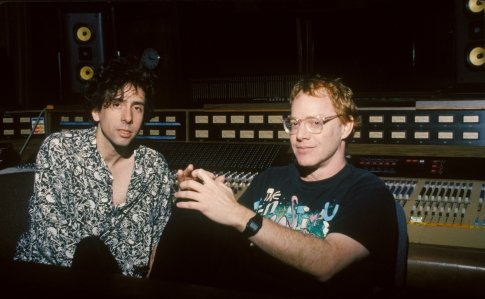
Tim Burton and Danny Elfman collaborated to create a cartoonish catharsis in the surreal suburban shrubbery of this this magical musical romantic fable. Tim Burton collaborated with screenwriter Caroline Thompson to bring a story he conceived about his childhood in Burbank, California. Despite the massive success of his previous film Batman 'Edward Scissorhands'
Burton would express: "It's harder because it's something I'm completely connected with. I feel more volatile. I feel myself in weirder moods. I'm more interiorized. Emotionally, it's harder, but it's more satisfying...The problem I have with some of the things I've done is that because they have such strong surface level images, I don't know if people see below that. In Edward Scissorhands ...The character is both simple and complicated Both beautiful and off-putting, both creative and horrifically clumsy ...They're an interesting invention; they cut through things...I mean, scissors are both simple and complicated. They're a very simple design. But I remember as a kid I could never figure out how they worked."
Burton had orginally conceived of the project as a musical. From the beginning he worked with Oingo Boingo frontman Danny Elfman, who had done the music for each of his previous films: Pee-wee's Big Adventure Beetlejuice Batman "It has gotten easier for [Elman and I] to work together, but I don't think we have had to work at it too much. I used to go see Danny in clubs, before I knew him. I just always connected with him and Oingo Boingo's music, even though it had nothing to do with film ."
Elfman admits: "You search and search for compatible relationships. It's so rare that when you find it, you want to stick with it ...It's getting harder, and that's why I am starting to pull back a little bit, touring less and doing fewer films. It was easier to pass between the two worlds in the beginning because I rarely spent more than four weeks on a film. But for the last couple of years, I've been getting so deep into it that it's become a barrier in both directions, and I really have to push through. When I'm in the middle of a film score, it's inconceivable for me to think about performing live or writing songs ...But it's unheard of for a composer not to have formal musical training and write an orchestral score. Guys like me are supposed to write synthesizer-based scores or pop scores; we're not supposed to dive into the sacred well. I made the mistake of being honest early on and saying I had no training, and I know there are people who have a low opinion of me for that reason ... Tim opened every door for me. Every score for the next 10 years opened up a new side of my career. “Pee-wee’s Big Adventure Beetle Juice. Batman Edward Scissorhands Pee-wee
Elfman recorded the soundtrack with a 79-piece orchestra: [Burton] can be very intense while working on the scores but he gets very fun and jokey when we're recording later in the studio. But his process can be very tortured and torturous — and isn't easy at all. People think, "Oh, I know what he's gonna like. I'll write something. He's gonna love this." I never have any idea what he's gonna like...It's always a mystery to me...Very little [direction]. Less than most directors. He'll tell me how he feels about a movie, but until I have music to play back, he's not gonna say, "Do it like this or like that." Often I think he has to learn what he's responding to by hearing. I can tell by his body language what he likes. But then, as intense as it can be developing the music, when we're actually recording, he can be hysterical and funny. It's almost like the pressure of the whole thing is now on my shoulders and he enjoys the fact that he doesn't have a lot of responsibility now. It's like I have to suffer...On Edward Scissorhands
Burton considers: "That [notion of chronicling my own uneasiness in the world] freaks me out too much. I wouldn't have approached a film like that. I don't want to get so interiorized that it's just . . . I'm hoping the feelings are fairly universal. It is not a new story. It's 'Frankenstein 'Phantom of the Opera.' 'Hunchback of Notre Dame 'King Kong ' 'Creature From the Black Lagoon ... Well, being a big monster-movie fan, the Universal monster movies and the Japanese science-fiction movies, like the ones by Ishir¯o Honda [ had the greatest impact on me]. Then there were the Italians, like Mario Bava...The thing I love about the old monsters is that they had such a strong, immediately identifiable image. I find that a lot of monsters today are just so busy. They have so many little tentacles and flaps and whatever else that they don’t have the kind of strength in their images that the old monsters had. It’s also due to the CGI heaviness. You’re missing the human element—like Boris Karloff, who actually played the monsters. Even in Creature From the Black Lagoon
'Edward Scissorhands' 'Edward Scissorhands' trailer
VIDEO 'Edward Scissorhands' full soundtrack: VIDEO 1. Introduction (Titles) 0:00
2. Storytime 2:36
3. Castle On The Hill 5:11
4. Beautiful New World/Home Sweet Home 11:35
5. The Cookie Factory 13:43
6. Ballet De Suburbia (Suite) 15:55
7. Ice Dance 17:12
8. Edward Meets the World: Etiquette Lesson 18:58
9. Edwardo The Barber 20:35
10. Esmeralda 23:53
11. Death! 24:20
12. The Tide Turns (Suite) 27:50
13. The Final Confrontation 33:21
14. Farewell... 35:38
15. The Grand Finale 38:22
16. The End 41:50
17. With These Hands - Tom Jones 46:35
'Edward Scissorhands' full film: VIDEO
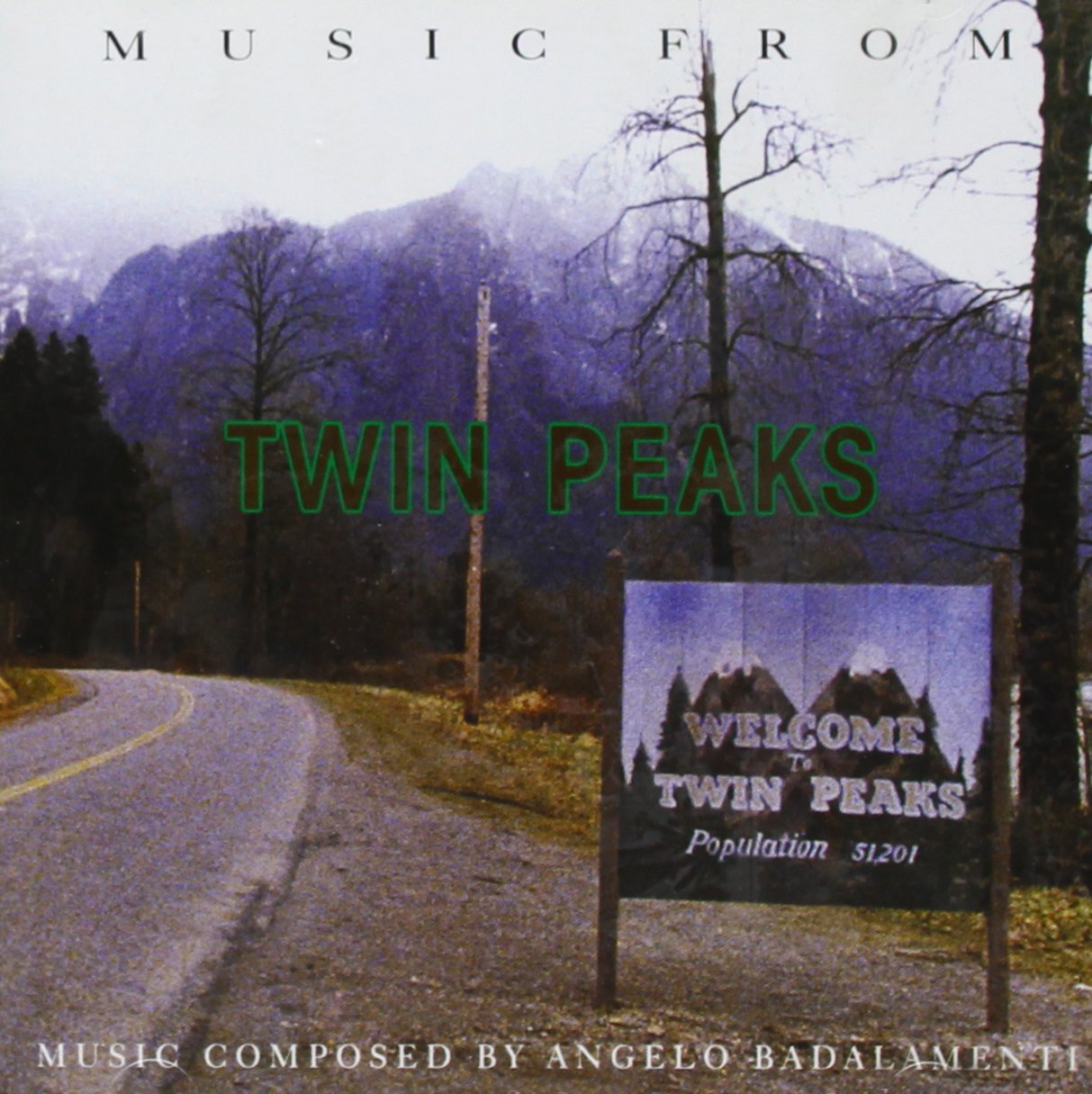
Angelo Badalamenti and David Lynch collaborated to create the lush soundscapes of this tragically beautiful television soundtrack. Badalamenti was born in Brooklyn who learned piano at an early age and worked playing for singers in the Catskills during the summers when he was a teenager. He got his Bachelor of Arts from the Eastman School of Music and his Master of Arts from the Manhattan School of Music.
Lynch had moved all over the country as a child. He started out studying painting at the School of the Museum of Fine Arts in Boston and the Pennsylvania Academy of Fine Arts; but made the transition to film when he wanted to make his paintings move. He moved to Los Angeles to study at the American Film Institute Conservatory. His first film Eraserhead The Elephant Man 'Dune' 'Blue Velvet'
It was for 'Blue Velvet' This Mortal Coil cover of the Tim Buckley song Song to the Siren became cost prohibitive, Lynch collaborated with Badalamenti to create the song "Mysteries of Love" featuring singer Julee Cruise. The pair also produced Cruise's album 'Floating Into the Night'
in 1989.
When Lynch became involved with 'Hill Street Blues' writer Mark Frost on a new television drama 'Twin Peaks' , he brought Badalamenti in to compose the music: "After Blue Velvet, we had such a beautiful relationship, and every other film we did together, David would sit next to me at a keyboard and, speaking very softly, painting a verbal picture, while setting a mood. Most of my other film projects have been more traditional. I grew up in the early days of improvising, so I could just sit at a keyboard and you could just talk to me or I could just take a look at a screen and put my fingers on the keyboard and a lot of the times they seemed to fall in the right places ...David said, 'Start it off foreboding, like you're in a dark wood, and then segue into something beautiful to reflect the trouble of a beautiful teenage girl. Then, once you've got that, go back and do something that's sad and go back into that sad, foreboding darkness. Maybe it was luck, but literally, in one take, I translated those words into music ... The thing about Twin Peaks music is it runs the gamut of styles. It also incorporates pop, blues, some country, soft rock, film noir – no question about that – nightmarish stuff ... [ 'Twin Peaks' ] was really off the wall. I thought it was either going to sink violently down the drain or, hopefully, capture the intrigue of enthusiastic people conversing by the office water cooler on a Monday morning."
The show became an instant hit with critics and viewers; but declining ratings during the second season led to the show being cancelled, when the writers refused to reveal the identity of Laura Palmer's killer. They took the story to the big screen with the prequel/sequel 'Twin Peaks: Fire Walk With Me'
http://welcometotwinpeaks.com/ http://www.angelobadalamenti.com/ http://www.davidlynch.com/ https://myspace.com/juleecruise The main theme song won a Grammy Award for Best Pop Instrumental Performance at the 1991 Grammy Awards.
https://www.youtube.com/watch?v=JmqpNIejErA VIDEO "Falling"
https://www.youtube.com/watch?v=srqIymNRVYc VIDEO 'Twin Peaks' full soundtrack:
https://www.youtube.com/watch?v=dTp6d7Bw79A VIDEO 00:00 - "Twin Peaks Theme"
05:03 - "Laura Palmer's Theme"
09:05 - "Audrey's Dance"
14:38 - "The Nightingale" (vocal by Julee Cruise)
19:48 - "Freshly Squeezed"
23:36 - "The Bookhouse Boys"
27:03 - "Into the Night" (vocal by Julee Cruise)
31:40 - "Night Life in Twin Peaks"
34:49 - "Dance of the Dream Man"
38:42 - "Love Theme from Twin Peaks"
43:00 - "Falling" (vocal by Julee Cruise)
soundtrack playlist
https://www.youtube.com/playlist?list=PLA41308B15D3AA9EF 'Twin Peaks' pilot episode
http://www.hulu.com/watch/278238 'Fire Walk With Me' soundtrackhttps://www.youtube.com/watch?v=tqg-vJFLtts 1. Theme from Twin Peaks - Fire Walk With Me Angelo Badalamenti (0:00- )
2. The Pine Float Angelo Badalamenti (6:47- )
3. Sycamore Trees Angelo Badalamenti (10:51- )
4. Don't Do Anything (I Wouldn't Do) Angelo Badalamenti ( 14.50- )
5. A Real Indication Thought Gang (22:09- )
6. Questions In a World of Blue Angelo Badalamenti (27:47- )
7. The Pink Room David Lynch ( 32:41- )
8. The Black Dog Runs At NightThought Gang (36:47- )
9. Best Friends David Lynch (38:35- )
10. Moving Through Time Angelo Badalamenti (40:52- )
11. Montage from Twin Peaks: Girl Talk / Birds In Hell / Laura Palmer's Theme / Falling
Angelo Badalamenti (47:36- )
12. The Voice of Love Angelo Badalamenti (53:06- )
The Beatles had a ticket to ride and opened up the doors to new studio sophistication with this soundtrack symbiosis. Following close on the heels of 'Hard Day's Night' 'Beatles For Sale' 'Eight Arms to Hold You' 'Hard Day's Night' "Love Me Do" . It was also the first time that four tracks were not enough for their purposes. In order to get the sound they wanted for the title track, they transferred the initial four track recording down to another four track tape so that they could add more. The album also demonstrated a dramatic turn to more personal lyrical content.
John: "I was in Kenwood and I would just be songwriting. The period would be for songwriting and so every day I would attempt to write a song, and it's one of those that you sort of sing a bit sadly to yourself, 'Here I stand, head in hand...' I started thinking about my own emotions - I don't know when exactly it started, like I'm A Loser or Hide Your Love Away or those kind of things - instead of projecting myself into a situation. I would try to express what I felt about myself which I'd done in me books. I think it was Dylan helped me realise that - not by any discussion or anything but just by hearing his work - I had a sort of professional songwriter's attitude to writing pop songs; he would turn out a certain style of song for a single and we would do a certain style of thing for this and the other thing. I was already a stylized songwriter on the first album. But to express myself I would write Spaniard In The Works or In His Own Write, the personal stories which were expressive of my personal emotions. I'd have a separate songwriting John Lennon who wrote songs for the sort of meat market, and I didn't consider them - the lyrics or anything - to have any depth at all. They were just a joke. Then I started being me about the songs, not writing them objectively, but subjectively ... We were smoking marijuana for breakfast during that period. Nobody could communicate with us because it was all glazed eyes and giggling all the time. In our own world ... If you play our early records and the late-- even though we haven't made all that many-- there's alot of difference. Even recording technique. If you improve that slightly-- your sound changes, basically."
Paul: "I don't know. I just don't think anybody will want to hear a song called, 'Eight Arms To Hold You.' So it was a crummy title I think. It was ok... we were getting a bit desperate for titles, and then Ringo said, 'Eight Arms To Hold You' ... We just write songs, and they are fitted into the film. That's what we did last time. We're not like other songwriters who get suggestions from certain lines in a movie script. Often we write the tunes first, without having a title. We'll get that later ... John would often have the melody and the lyrics to one verse, and the trickiest thing is making any more of it. The second verse is nearly always the killer because you've often said it all in the first verse, but by pushing yourself you can actually get a second verse better than your first. It's always more difficult because you mustn't repeat yourself-- you've got to take the idea somewhere else, but it has to have the same metre and the same melody. That was often where he or I needed help. There tended to be four verses in our songs, one chorus that repeated endlessly, and a middle-eight. So if it was John's idea, generally I would come in at the second verse. The first verse was always good to finish with-- it was like, 'Remember what I told you at the beginning of this song? I'm going to reiterate it now.' That was always a good little trick."
George: "We were always kind of, you know, a little nervous before each step we went up the ladder, but we always had that confidence and that was the good thing about being four together - we all shared the experience ... I had these two guys who used to write songs whenever we needed some. I think we just called them up and said, 'Look, we'll be doing a movie now lads, will you come up with a couple of catchy hits?' ... We are always worried with each record. With 'Ticket To Ride' we were even more worried. There's bound to be a time when we come in at 19 (on the charts). But this 'number one' business doesn't seem to stop-- great while it lasts-- but now we'll have to start all over again and people will start predicting funny things for the next one."
Ringo: " I sang Act Naturally in Help! I found it on a Buck Owens record and I said, 'This is the one I am going to be doing,' and they said 'OK'. We were listening to all kinds of things. John sang Dizzy Miss Lizzy. We were all listening to that, too. Paul, of course, had written his Yesterday; the most recorded song in history. What a guy! ... A hell of a lot of pot was being smoked while we were making the film. It was great. That helped make it a lot of fun ... In one of the scenes, Victor Spinetti and Roy Kinnear are playing curling: sliding along those big stones. One of the stones has a bomb in it and we find out that it's going to blow up, and have to run away. Well, Paul and I ran about seven miles, we ran and ran, just so we could stop and have a joint before we came back. We could have run all the way to Switzerland. If you look at pictures of us you can see a lot of red-eyed shots; they were red from the dope we were smoking. And these were those clean-cut boys! Dick Lester knew that very little would get done after lunch. In the afternoon we very seldom got past the first line of the script. We had such hysterics that no one could do anything. Dick Lester would say, 'No, boys, could we do it again?' It was just that we had a lot of fun – a lot of fun in those days."
'Help!' went to number one in Australia, Germany, the UK, and the US; although the US version only included the seven songs from the film augmented with instrumental bits from the movie soundtrack. Some songs would appear on US releases of 'Yesterday...And Today' 'Rubber Soul' The band would express:
Ringo: "The English album is 14 tracks, and they're all our numbers. And on the American one-- I don't know how many tracks are on it, but then you've got some..." Paul: "There's seven of ours." George: "The thing is, Capitol issue all sort of mad stuff, you know. It's nothing to do with us. We take fourteen tracks to be put out, but they keep a couple and put them out later." Paul: "But it's a drag, because the album-- We make an album to be like an album, and to be a complete thing." John: "We plan it, and they wreck it." (laughter) Paul: "No offense, Capitol-- but we send it over here and they put the (movie score) soundtrack on. And, you know, if someone is gonna buy one of our records I think they want to hear us and not soundtrack." http://www.thebeatles.com/ "Help!" became another chart topper for the band.
John: "The whole Beatle thing was just beyond comprehension. I was eating and drinking like a pig and I was fat as a pig, dissatisfied with myself, and subconsciously I was crying for help... When 'Help' came out, I was actually crying out for help. Most people think it's just a fast rock 'n roll song. I didn't realize it at the time; I just wrote the song because I was commissioned to write it for the movie. But later, I knew I really was crying out for help. So it was my fat Elvis period. You see the movie: He -- I -- is very fat, very insecure, and he's completely lost himself. And I am singing about when I was so much younger and all the rest, looking back at how easy it was. Now I may be very positive... yes, yes... but I also go through deep depressions where I would like to jump out the window, you know. It becomes easier to deal with as I get older; I don't know whether you learn control or, when you grow up, you calm down a little. Anyway, I was fat and depressed and I was crying out for help."
https://www.youtube.com/watch?v=yWP6Qki8mWc VIDEO "Ticket To Ride" was a number one hit in seven countries.
Paul; "I think it was largely John's - the actual Ticket To Ride bit. We wrote it together you see, with John and I. Certain songs would nearly always be the idea of one of us. One of us had actually said, 'Ticket To Ride would be good', the other one would say, 'Okay, that's what we'll write today' ... I think the interesting thing is the crazy ending-- instead of ending like the previous verse, we changed the tempo. We picked up one of the lines, 'My baby don't care,' but completely altered the melody. We almost invented the idea of a new bit of a song on the fade-out with this song... It was quite radical at the time."
VIDEO
"Yesterday" was another number one smash. The song was basically Paul solo with a string quartet and the rest of the band thought it was too much of a departure from their sound. It got buried near the end of the album; but the effect of the song (in my opinion) is spoiled by the album closer. Paul: "I just started playing it and this tune came, 'cuz that's what happens. They just, sort of-- they COME, you know. It just came and I couldn't think of any words to it, so originally it was just, 'Scrambled Egg.' It was called 'Scrambled Egg' for a couple of months, until I thought of 'Yesterday.' And that's it. True story. ..It fell out of bed. I had a piano by my bedside and I... must have dreamed it, because I tumbled out of bed and put my hands on the piano keys and I had a tune in my head. It was just all there, a complete thing. I couldn't believe it. It came too easy. In fact, I didn't believe I'd written it. I thought maybe I'd heard it before, it was some other tune, and I went around for weeks playing the chords of the song for people, asking them, 'Is this like something? I think I've written it.' And people would say, 'No, it's not like anything else, but it's good.'"
VIDEO
'Help!' full album:
http://uploadsociety.com/video_v164944 https://www.youtube.com/playlist?list=PLF1FA75D563EC566C VIDEO All songs written and composed by Lennon–McCartney, except where noted.
Side one
1. "Help!" Lennon 2:18
2. "The Night Before" McCartney 2:33
3. "You've Got to Hide Your Love Away" Lennon 2:08
4. "I Need You" (George Harrison) Harrison 2:28 5. "Another Girl" McCartney 2:05
6. "You're Going to Lose That Girl" Lennon 2:17
7. "Ticket to Ride" Lennon with McCartney 3:10
Side two
1. "Act Naturally" (Johnny Russell, Voni Morrison) Starr 2:29 2. "It's Only Love" Lennon 1:54
3. "You Like Me Too Much" (George Harrison) Harrison 2:35 4. "Tell Me What You See" McCartney and Lennon 2:36
5. "I've Just Seen a Face" McCartney 2:04
6. "Yesterday" McCartney 2:03
7. "Dizzy Miss Lizzy" (Larry Williams) Lennon 2:53 John Lennon - lead, harmony, and background vocals; rhythm guitar; electric piano
Paul McCartney – lead, harmony and background vocals; lead and bass guitars; electric and acoustic pianos; güiro
George Harrison – harmony and background vocals; lead and rhythm guitars; lead vocals on "I Need You"
Ringo Starr – drums and miscellaneous percussion; lead vocals on "Act Naturally"
Additional musicians
George Martin – producer, piano on "You Like Me Too Much"
John Scott – tenor and alto flutes on "You've Got to Hide Your Love Away"
String quartet on "Yesterday", arranged by Martin in association with McCartney
'Help!' full film:
Ringo: "Uhh, yeah. Yeah. I can't tell you what the plot is, but here are some of the questions that we answered. (reads) 'Why were the high priests of the terrible goddess of Kaili interested in the Beatles? What did they want of him? They weren't fans. Two leading scientists hope to rule the world. Paul is threatened by a Beetle-- B, double-E, T, L, E.' ...I'm chased by a gang of thugs all the way through it actually."
trailer
VIDEO