Showing posts with label chamber pop. Show all posts

Thursday, June 16, 2016

incidental lightshow


The Armoires reveal a great big musical world with the haunting heartfelt harmonic convergence of this eclectic power pop diary.   Originally brought together as part of a Talking Heads cover band that never happened, lead singers Rex Broome and Christina Bulbenko began to work on songs that Rex had written over the years.  This 'coffee house' duo expanded when Christina's son Ian began helping them record a demo.  As the sessions progressed, the band gained confidence; but after their first public performance, Ian was killed in a car accident.  In the aftermath of the tragedy, the band decided to continue with the recordings in his memory with Christina's daughter Larysa contributing viola and vocals; her bandmate Sean Barillas from symphonic metal band Mantis (referenced in "Playing With The Lights") on drums; multi-instrumentalist Nate Myer adding guitar, bass, keys, drums, and vocals; plus Derek Hanna and Clifford Ulrich who played with Rex in Skates & Rays (who get name dropped in "Doubtful Sound") on drums and on bass (and vocals) respectively.  Three of the songs ("Fort Ashby", "Unhaunted", and "Norma Corona, What Have You Done?") retain performances by Ian on drums.  Christina plays keyboards and Rex plays guitar, harmonica, and mandolin.  Recording took place at Burbank Music Academy Sound Studio, Causality Studios in North Hollywood, Roundhouse Recording in Encino (where producer Glen Laughlin sat in on guitar and bass), and "at home" in Burbank.  Much of the final mix for 'Incidental Lightshow' was done in Toronto by Alan Fraser.  


The Armoires have developed a network of likeminded musicians in the Burbank area with their monthly showcase “Big Stir: Power Pop and More” at the California Institute of Abnormalarts in North Hollywood, featuring some of the folks that helped to create their debut album and who share their genre defying mindset.  Christina considers: “We didn’t know how to start, and we didn’t know if we could go on after losing Ian.  In the end we had to. And now we’ve found ourselves welcomed into this beautiful community of amazing musicians and songwriters who get what we were trying to do all along. We’re flabbergasted, humbled, and happy to be home.”


The myriad musical styles in this mellifluous wardrobe run the gamut through Americana, sunshine pop, garage, throwback psychedelia, blue eyed soul, surf rock, new wave, shoegaze, and country.  Sometimes within a song. 'Incidental Lightshow' gets its title from the emotional centerpiece of the album, "Playing With The Lights", a touching tribute to Ian and the synchronous signs that the band experienced after his passing.  Mysterious dancing lights and mantis appearances leading to the question:  "Are you laughing in the stars and playing with the lights?".  Christina helped to compose the lyrics and Nate contributed the song's exploratory bridge.  


Each song has an emotional resonance that ties a thread through the entire album.  What are obviously very personal references seem somehow universal.  Although the lines are often blurred with alternately poignant and priceless phrases, there is a sense of a grieving process.  There is denial ("No one is to blame because no one is responsible at all") in the new wave powerpop of "Responsible", anger ("Violent revolution on behalf of the non-famous people!") in the surf rock complaints of "Norma Corona, What Have You Done?", bargaining ("Hearts might heal, but you can’t unbreak a home") in the domestic drama of "What You Don't Wish For", sadness ("Doesn’t get much lower than the waterline at Doubtful Sound") lurking under the surface of a doomed romance (or perhaps a new musical venture?) with a Mustang-less Sally, and acceptance ("Sometimes you feel like you get what you’re wishing for; sometimes you don’t even know") in the fleeting pop of the sweet album closer "Double Blades".       

Rex reveals:  “Our songs are stories.  Whether they’re dreamlike or straightforward, they always revolve around some kind of narrative, and above all, characters. The way Christina and I trade off lead vocals and come together for harmonies really allows us to bring those characters to life. There’s so much untapped potential in that male/female vocal approach. For all the classic duets in pop music, you don’t hear it much in bands. The New Pornographers are a big inspiration. Fleetwood Mac and X, as different as they are, both did it brilliantly. Those bands dig into multiple perspectives within a single song, and do it magically. That’s the starting point for The Armoires.”

In case you don't know, an armoire is a type of fancy cabinet with lots of drawers and compartments.  The songs themselves are thick with metaphors and layers of meaning that reveal more with each listen.  Although you can look too deep.  Is the "Wire Girl" an art piece, an old sketch, or a dilapidated ship?  I originally thought "Newberry Spectacle" was a reference to the matching glasses that Rex and Christina wear (instead of some kind of art contest?), or that Norma Corona might be a reference to the murdered Mexican activist.  I still like to think that the crass countrified capitulation of  "Live And Direct" could be subtitled "The Chronicles of Ventura".  And that line "he can't keep it up, she can't keep it down" is too perfect.  


The first time I ever heard of an armoire was in the famous "Soup Nazi" episode of 'Seinfeld'.  As with the many wonderful recipes that the titular character had stashed away in his armoire, you'll be amazed at the variety of musical flavors; and like armoire-stealing "street toughs" Bob and Ray, you'll be intrigued by the gorgeous inlay and insist on taking it home for yourself.  And that's all there is to it.  


http://www.thearmoires.com/


lyrics


"Fort Ashby" opens the album with a flood of childhood memories of the Mineral Country Fair in West Virginia.  


Out-of-tune piano, cylinder gramophone
Katydids, calliopes, big machines that buzz and groan
Down at the County Fair
There’s music in the air
It’s like a Tom Waits tune but with a different singer
It’s a great big world and it seems to me (it’s coming back to me)
It’s much bigger and it’s so much smaller than it
Ever used to be
In my grandma and grandfather’s backyard
They built a forty-foot slide
All I remember is the light
There’s a funhouse called Star Warz, it’s spelled with a “z”
Copyright infringement, it’s all coming back to me
Here comes a big bass drum
To rock my skeleton
There’s candy in the air, it’s slipping through my fingers
It’s a great big world and it seems to me
It’s much bigger and it’s so much smaller than it
Ever used to be
Now they tell me that it’s monster trucks and
Tractor pulls in the night
All I remember is the light
Put me in the moonwalk, I can’t even stand
Take me to the stage to see Daddy in a country band
Some kid who’s half my size
She won the livestock prize
She had a little lamb
And then the lamb got bigger
It’s a great big world and it seems to me
It’s much bigger and it’s so much smaller than it
Ever used to be
Got my baby beside me going eastbound
On a cross-country flight
All I can think of is the light
It’s coming back to me…


"Unhaunted" describes someone obsessed with the memory of a departed love.  


Empty house on my street with the doors chained up tight
And a window with candles that burn late at night
Children quicken their pace as they walk on by
From all the stories they’ve heard and they’re too young to die
And I miss her so badly I wish I were there
To see the spectral lights and feel the chill in the air
Empty bottle of wine and nobody to toast
I’m so jealous of other people’s ghosts
When I want her to haunt me she leaves me alone
No creaking floor, no flickering flame
Black candelabra and black cat bone
No disembodied voice to breathe my name
Got a box with a lock of her hair that I saved
And a bag filled with dirt that I took from her grave
Halloween once again and I’m here by myself
While her ghost is out haunting somebody else
When I want her to haunt me she leaves me alone
No creaking floor, no flickering flame
Black candelabra and black cat bone
No disembodied voice to breathe my name
Unhaunted
She’s leaving me
Unhaunted
Don’t want to be
Unhaunted
And she had such faith in the world beyond
But I’m truly afraid that she’s truly gone
She won’t come to me as some tender wraith
In a column of vapor with her face
When I want her to haunt me she leaves me alone
No creaking floor, no flickering flame
Black candelabra and black cat bone
No disembodied voice to breathe my name
It’s November the First under a hangover sky
She’s bound to leave me unhaunted whatever I try
All my breaking and entering won’t raise the dead
And I’ll still be unhaunted tonight in her bed
All the leaves on the ground blow around in the wind
Like a family of rodents relieved of their skin
Halloween on a dirt road, 1983
I believed it was real, it could happen to me


The careening groove of "Caterwaul" could fuel a rave.  


Come down, catercorner
Carry me across the square
Come down, catastrophic
Crushed and quite beyond repair
Come down, calla lilies
Cold and lovely in a vase
Come down, cantilever
Can you lever me in place?
But if it’s not your time
You can’t make it your time
If it’s not your time
Come down, cat o’ nine tails
Count again, it’s more like ten
Come down, catatonic
Cannot wake her up again
And if it’s not her time
You can’t make it her time
Can’t make it her time
Come down, Cosa Nostra
Clarity and Claritin
Come down, catalytic
Car exhaust to do you in
Come down, cantaloupe and
Honey, do it while you can
Come down, caterwaul and
Honey can I be your man?
And if it’s not your time
You can’t make it your time
If it’s not your time
Caterwaul, catewaul, caterwaul


'Incidental Lightshow'
full album:


Fort Ashby
Caterwaul
Responsible
Unhaunted
What You Don't Wish For
Playing With The Lights
Wire Girl
Doubtful Sound
Live And Direct
Newberry Spectacle
Norma Corona, What Have You Done?
Double Blades


Velvet Ties interview:


Sunday, February 14, 2016

o


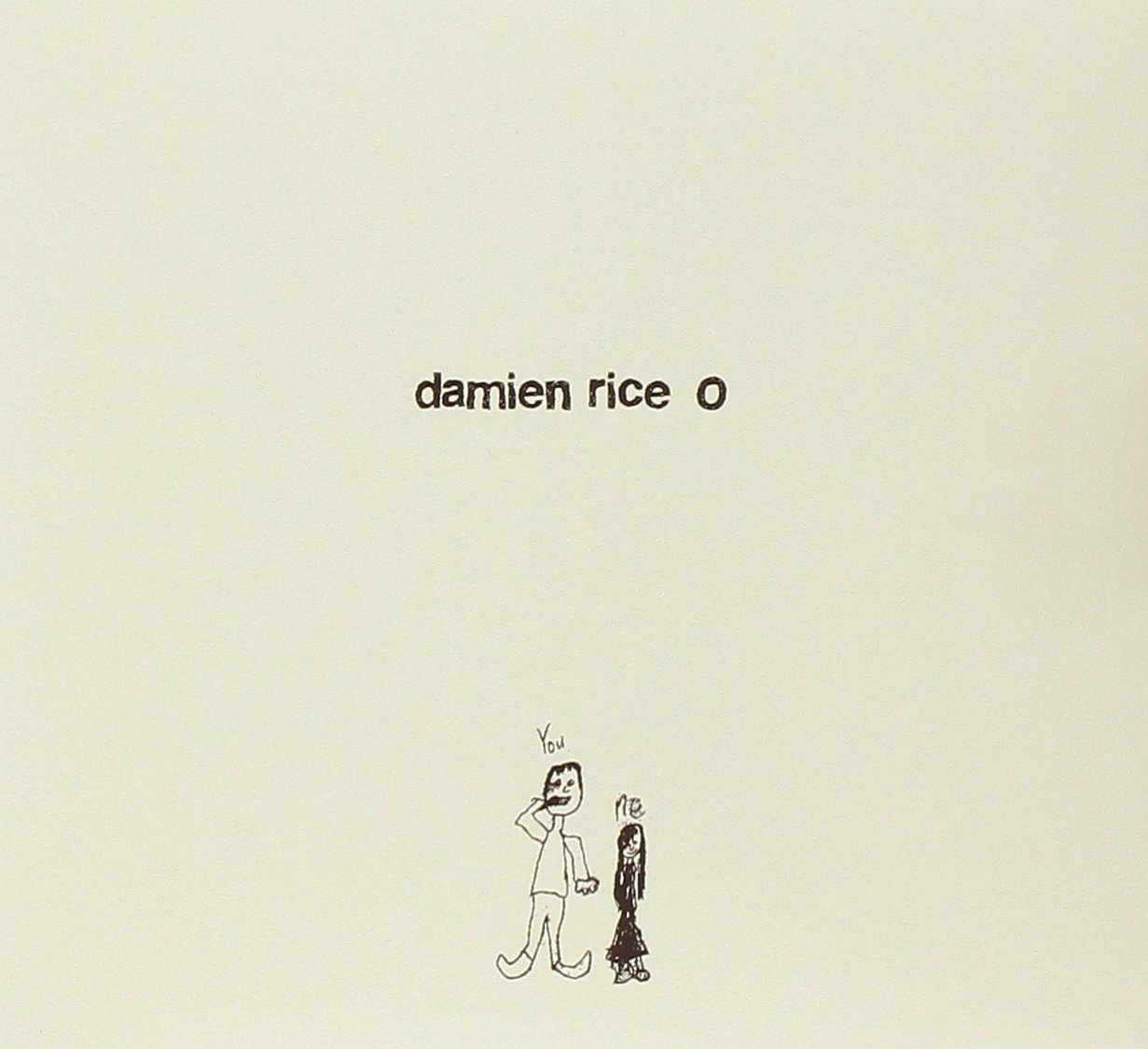
Damien Rice found success on his own terms through miles of mountains in the colder water of this cathartic cannonball.   'O' began as some demos until Rice was able to get some proper recording equipment through his second cousin David Arnold.  Rice says:   "We recorded all over the place. Which I liked: I was really particular at the time about where to record things. Like, I knew I wanted to record Eskimo in my friends' apartment in Paris because they loved the song so much. So I took my little mobile studio and went to Paris. I went through the metro with all of these microphone stands hanging off me and recording gear, sweating by the time I got to their house, and just recorded it there, and then came home. So it was recorded in lots of bits and places, but basically houses, places I was living or friend's houses. Dublin, mostly".

'O' features Damien Rice on vocals, piano, guitar, percussion, clarinet, and production;  Lisa Hannigan on backing vocals, lead vocals on "Silent Night", and piano;  Vyvienne Long on cello;  Mark Kelly on electric guitar, and production;  Shane Fitzsimons on bass guitar;  Tom Osander aka Tomo on percussion and drums;  Caroline "Caz" Fogerty on djembe;  Doreen Curran on mezzo soprano vocals on "Eskimo";  Nicholas Dodd on conducting;  Colm Mac Con Iomaire on violin;  Conor Donovan on timpani and percussion;  and  Jean Meunier on improvisation and piano.  


Rice released 'O' independently on his own label DRM and it debuted at number seven on the Irish album chart.  It reached the top ten in Norway and the UK and peaked at number two in Ireland, where it has been certified platinum ten times over.  In the US, it has been certified gold, despite only charting at number one hundred and fourteen.  


http://www.damienrice.com/


"The Blower's Daughter"


"Volcano"


'O'
full album:


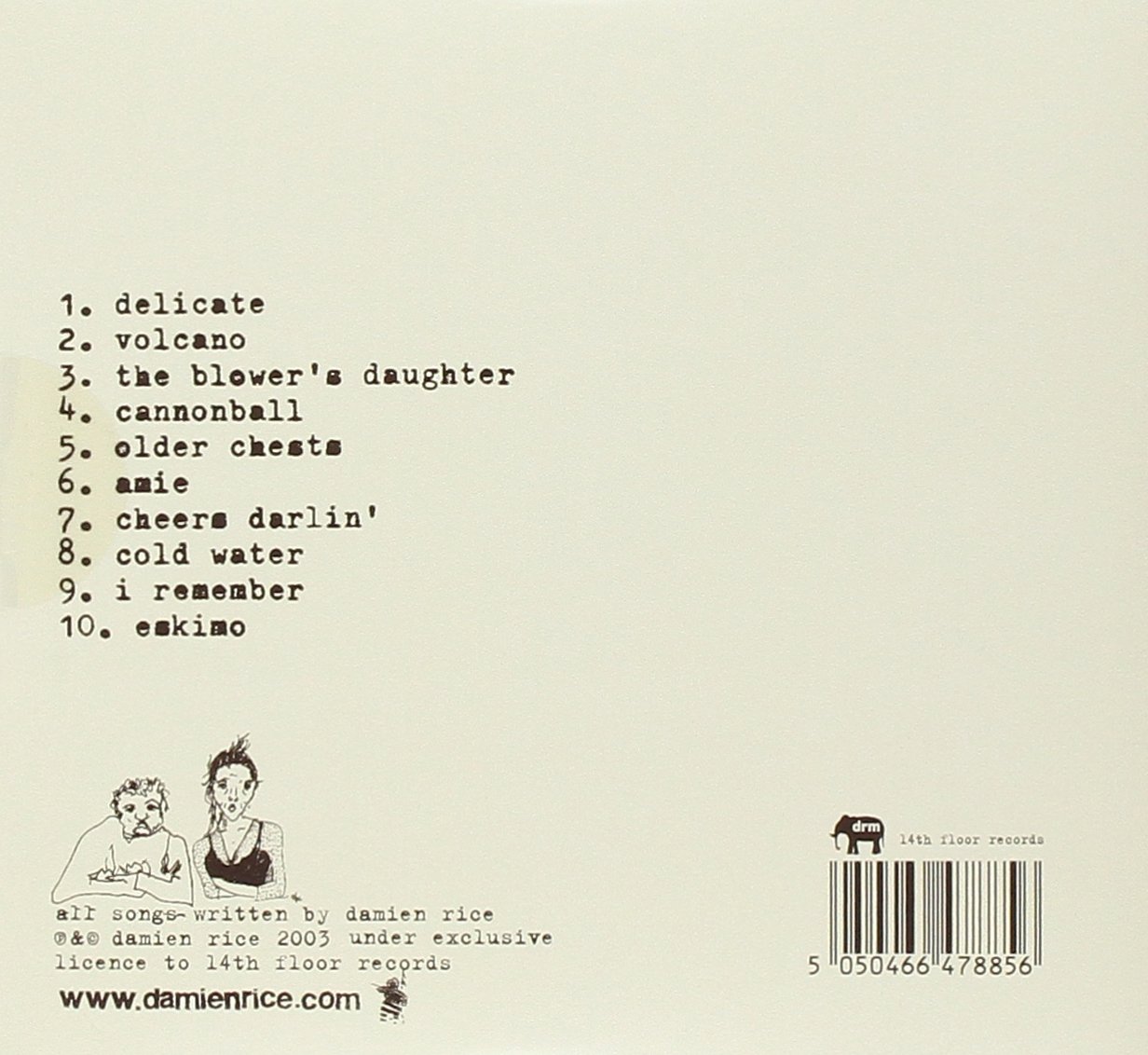
All songs written and composed by Damien Rice. 

01. "Delicate" - 0:00
02. "Volcano" - 5:10
03. "The Blower's Daughter" - 9:48
04. "Cannonball" - 14:33
05. "Older Chests" - 19:42
06. "Amie" - 24:27
07. "Cheers Darlin'" - 29:03
08. "Cold Water" - 34:53
09. "I Remember" - 39:51
10. "Eskimo" - 45:23
11. "Prague" - 52:28
12. "Silent Night" - 59:30


Friday, December 4, 2015

december's children (and everybody's)


The Rolling Stones had their heads in the clouds and were ready to move on as they cobbled together this collection of outtakes and singles to capitalize on their new success.   In the months following their smash single "(I Can't Get No) Satisfaction" and  the album  Out of our Heads, the band were in a position to change things up.  Keith Richards remembers:   "It's difficult to realise what pressure we were under to keep on turning out hits.  Each single you made in those days had to be better and do better.  If the next one didn't do as well as the last one, everyone told you you were sliding out.  After 'Satisfaction', we all thought, 'Wow, lucky us. Now for a good rest...'  And then in comes Andrew Oldham saying, 'Right, where's the next one?'  It got to be a state of mind.  Every eight weeks, you had to come up with a red-hot song that said it all in about two minutes, thirty seconds."

In July of 1965, the band replaced manager Eric Easton with Allen Klein who renegotiated their contract with Decca Records with advances for the rights in the UK, US, and foreign markets in excess of two million pounds.  Klein set up a whirlwind tour of the US and assembled an album of outtakes and new songs to be released concurrently.   The new sessions took place in September of 1965 over two days, while other tracks were recorded in 1963, 1964, and earlier in 1965.  


December's Children (And Everybody's) was produced by Andrew Loog Oldham  with  Mick Jagger on lead vocals, harmonica on "I'm Moving On", and percussion;    Keith Richards on guitars and backing vocals;   Brian Jones on guitars, backing vocals, harmonica on "Look What You've Done", piano, and organ;    Charlie Watts on drums and percussion;   and   Bill Wyman \on bass guitar and backing vocals;    with  string arrangement by Mike Leander;  Ian Stewart adding piano and organ;   and   Jack Nitzsche contributing organ and percussion.    

Jagger says:   "[December’s Children (and Everybody’s)] was our manager’s [Andrew Loog Oldham] idea of hip, Beat poetry ... I used to listen to Hank Snow.  They (country artists) made records that were very popular, you know? They were pop hits. We used to do covers of them when we used to rehearse, George Jones and these kinds of people. ... Everyone heard these records, including us, and they were songs that everyone knew. So it was very hard to avoid the influence of country music in the early days of rock."


Oldham opines:  “They were incredible musicians...All those other early British bands had a terrible time with radio play and commercial success.  Look at the Yardbirds. They practically broke up over ‘For Your Love’ because they felt it was too pop and commercial.  Bands like Manfred Mann always said they made two kinds of music — their ‘real’ music on their albums and then the singles for radio.  With the Stones, there was no difference. There was no dividing line. Their albums and singles were the same music.”

Three of the songs came from previously released EP's.   To add to the confusion, not only were four of the songs taken from the British version of   Out of our Heads;  December's Children (And Everybody's) also appropriated the photograph taken by Gered Mankowitz that was used for the British release.   December's Children (And Everybody's) went to number four on the US album chart.  


http://www.rollingstones.com/


lyrics
http://genius.com/albums/The-rolling-stones/December-s-children-and-everybody-s


"Get Off of My Cloud" was the follow up single to "Satisfaction" and another chart topper in the UK and the US.
Jagger:  "That was Keith’s melody and my lyrics... It’s a stop-bugging-me, post-teenage-alienation song. The grown-up world was a very ordered society in the early ‘60s, and I was coming out of it. America was even more ordered than anywhere else. I found it was a very restrictive society in thought and behavior and dress... ‘64, ‘65, yeah. And touring outside of New York. New York was wonderful and so on, and L.A. was also kind of interesting. But outside of that we found it the most repressive society, very prejudiced in every way. There was still segregation. And the attitudes were fantastically old-fashioned. Americans shocked me by their behavior and their narrow-mindedness.
It’s changed fantastically over the last 30 years. But so has everything else [laughs]."


"As Tears Go By"

Jagger:    "I wrote the lyrics, and Keith wrote the melody. But in some rock, you know, there’s no melody until the singer starts to sing it. Sometimes there’s a definite melody, but quite often it’s your job as the singer to invent the melody. I start with one melody, and I make it another melody, over the same chord sequence..It’s a very melancholy song for a 21-year-old to write: “The evening of the day, watching children play....” It’s very dumb and naive, but it’s got a very sad sort of thing about it, almost like an older person might write. You know, it’s like a metaphor for being old: You’re watching children playing and realizing you’re not a child. It’s a relatively mature song considering the rest of the output at the time. And we didn’t think of doing it [initially], because the Rolling Stones were a butch blues group. But Marianne Faithfull’s version was already a big, proven hit song...Well, it was already a hit, so, you know [laughs], and Andrew was a very simple, commercial kind of guy. A lot of this stuff is done for commercial reasons... It was one of the first things I ever wrote. I see songwriting as having to do with experience, and the more you’ve experienced, the better it is. But it has to be tempered, and you just must let your imagination run.  You can’t just experience something and leave it at that. You’ve got to try and embroider, like, any land of writing. And that’s the fun part of it. You have this one experience looking out of a window, seeing children. Well, you might not have felt anything, but then you just let your mind drift and dream, and you imagine an older person doing that. You put yourself in their point of view, and you start to write other things, and all this is a very subconscious thing. Out of that comes a mature thought, out of a young person.
I was reading Pushkin, and his stories are autobiographical. But not totally, because he was never in Siberia – but his friends were, so he uses it. You use your own experience, and then you spice it up with your friends’ observations and your imagination."


Charlie Is My Darling
trailer


CBS interview, 1965


December's Children (And Everybody's)
full album:


All songs written and composed by Mick Jagger and Keith Richards, unless otherwise noted. 

Side one
1. "She Said Yeah" (from UK version of "Out of Our Heads") Sonny Bono/Roddy Jackson 1:34
2. "Talkin' About You" (from UK version of "Out of Our Heads") Chuck Berry 2:32
3. "You Better Move On" (from UK release "The Rolling Stones EP") Arthur Alexander 2:41
4. "Look What You've Done"   McKinley Morganfield 2:16
5. "The Singer, Not the Song" (UK b-side of "Get Off of My Cloud")   2:22
6. "Route 66" (from UK release "Got Live If You Want It! EP" (Live)) Bobby Troup 2:39
Side two
7. "Get Off of My Cloud" (single)   2:54
8. "I'm Free" (from UK version of "Out of Our Heads")   2:23
9. "As Tears Go By" (single) Jagger/Richards/Andrew Loog Oldham 2:45
10. "Gotta Get Away" (from UK version of "Out of Our Heads")   2:06
11. "Blue Turns to Grey"     2:30
12. "I'm Moving On" (from UK release "Got Live If You Want It! EP") (Live) Hank Snow 2:13


Friday, October 30, 2015

different class


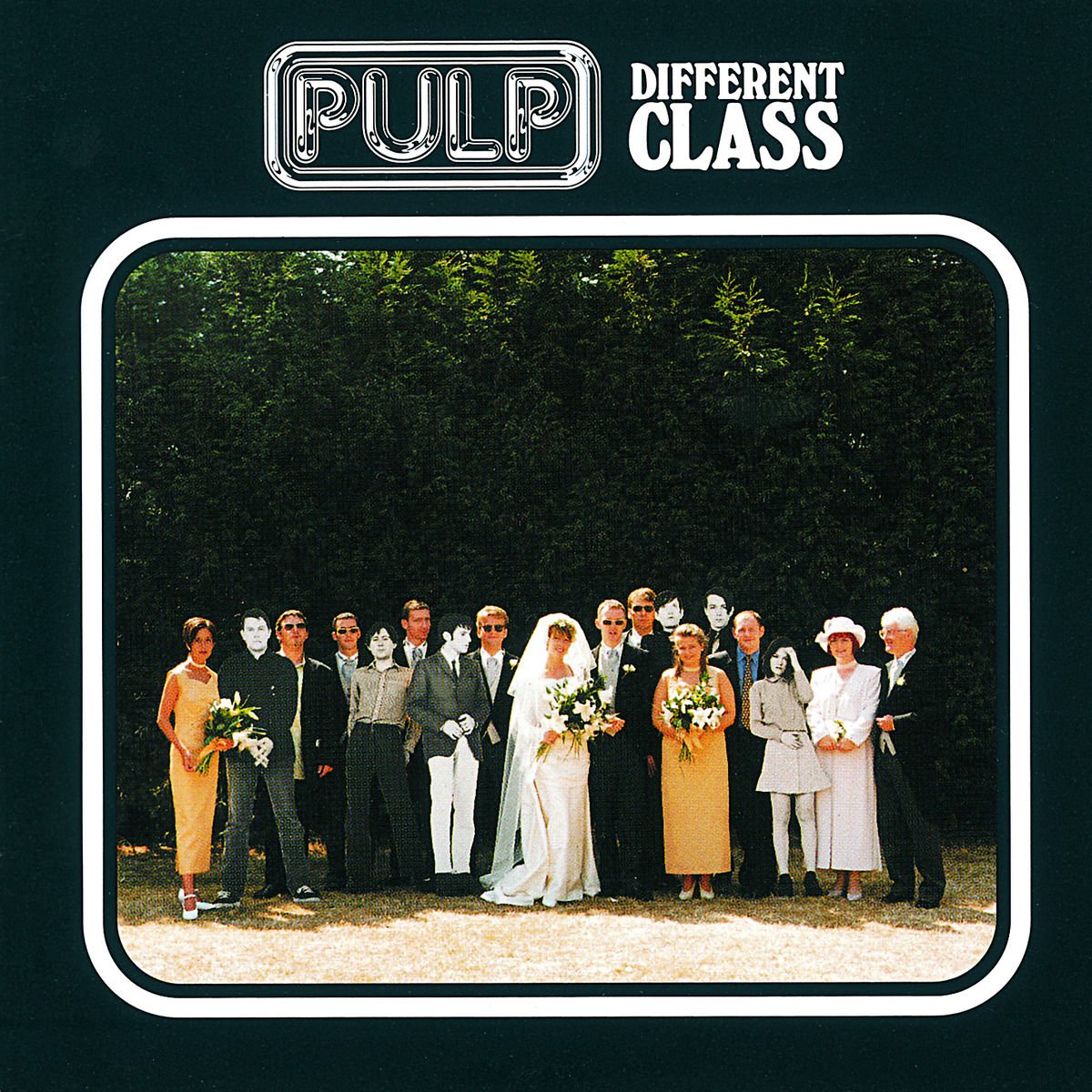
Something changed when Pulp came out of the side-lines with a thirst for knowledge to sort out a case of haves against haven'ts in the triumphant glam mess of this semi-naked misfit manifesto .  After more than a decade of struggles releasing three albums  (It in 1983,   Freaks in 1987,   and   Separations in 1992) with three different lineups, the band had found success with His 'n' Hers in 1994, riding the rising wave of Britpop.  


Front man Jarvis Cocker came up with a dramatic new song that would catapult them further:   "I realised that we had written something that had pretensions to being anthemic.  It was an anthem. A class anthem...It all started with me getting rid of a lot of albums at the Record And Tape Exchange in Notting Hill. With the store credit I went into the second-hand instrument bit and bought this Casio keyboard. When you buy an instrument, you run home and want to write a song straight away. So I went back to my flat and wrote the chord sequence for 'Common People', which isn’t such a great achievement because it’s only got three chords. I thought it might come in handy for our next rehearsal...Part of the tension in that song is that I might have been repelled by what she was saying, but I was sexually attracted to her and wanted to cop off with her. I never did make a move. But I changed the song so she was attracted to me and wanted to sleep with me. Which was, you know, a lie. It was an anthem. We wanted to find someone to produce it who would give us a big sound but not make us sound like twats. Which is what brought us to Chris Thomas. He produced the Sex Pistols."


The song took nine days to finish and the band convinced Island Records to put it out as a single immediately.  It was released in May of 1995 and became a runaway hit, going to number two on the UK singles chart.  Mark Webber:   "When we recorded that song, it had become inevitable that what we did next would be really successful, and that continued right through that album. There was this feeling of urgency within the group."


As the sessions for  'Different Class' continued at The Town House in London, the band was tapped to replace The Stone Roses at the Glastonbury Music Festival in June.  Candida Doyle:   "We heard that John Squire had been injured. We were recording Different Class at the time, so we went that day and stayed that night. And we had to stay in tents, because we’d turned up so late. It was like, 'God, we’ve made it'.”


The show was a triumph; and the momentum carried them through the remainder of the album.   'Different Class' features  Jarvis Cocker on vocals, vox marauder guitar, ovation 12 string guitar, sigma acoustic guitar, roland vocoder plus vp-330, roland sh-09, mellotron, micromoog, and synare;    Russell Senior on fender jazzmaster guitar and violin;    Candida Doyle on farfisa compact professional ii organ, ensoniq asr 10, korg trident ii, minimoog, fender rhodes piano, roland juno 6, and roland sh-09;    Steve Mackey on musicman sabre bass;    Mark Webber on gibson es 345 guitar, gibson les paul guitar, gibson firebird guitar, sigma acoustic guitar, casio tonebank ct-470, fender rhodes piano, and roland juno 6;   and Nick Banks on yamaha drums, zildjian cymbals, and percussion;     with   programming by Matthew Vaughan and Olle Romo,  additional programming by Anthony Genn and Mark Haley;   additional guitar and keyboards by Chris Thomas;    orchestral arrangement and conducting by Anne Dudley;   and Gavyn Wright as orchestra leader.


Banks:   "A lot of the lyrics at that time were about a class divide. “Common People” was the pinnacle of that idea. And you thought, ‘It’s reaching out to people who do feel pissed off you get these poncey knobs poncing about. The audience are getting into that angry, us and them feeling, that idea of upstarts working their way up’."


When it was released in late October,  'Different Class'  went straight to number one in the UK.  The album also charted around the world at number ninety-one in Japan, seventy-one in Germany, sixty-nine in the Netherlands, forty-seven in Belgium, forty-four in Australia, thirty-seven in Finland, thirty-six in Canada, thirty-four on the US heatseekers album chart, twenty-four in Austria, nineteen in Norway, seventeen in New Zealand, and number seven in Sweden.     'Different Class' went on to win The Mercury Prize the next year.


Cocker contends:   "It's quite strange when suddenly you feel locked into synch.  I always think it's like - I haven't got my watch on, so I can't do a mime - people say, 'Your watch has stopped', at least it's right twice a day. It's like that. Somehow there's a congruency or whatever the proper word is, and for two or three months you're in tune with the times. It's funny, because for a long time we were completely out of step with what was going on. Painfully so...It's what I always wanted, right back to the time when I felt I was marginalised," he says with some relief. "For a start, it makes you feel that you haven't wasted the last 15 years of your life, that you were right to have carried on. It makes you feel you weren't mentally ill at that time."


http://www.acrylicafternoons.com/


lyrics:
http://genius.com/albums/Pulp/Different-class


"Common People" 


"Sorted for E's & Wizz"


"Disco 2000" 


"Mis-Shapes"


"Something Changed"


 'Different Class' 
full album:


All lyrics by Jarvis Cocker, all music written by Pulp (Cocker, Nick Banks, Steve Mackey, Russell Senior, Candida Doyle and Mark Webber), except tracks 3 and 10 music by Cocker, Banks, Mackey, Senior, Doyle.

"Mis-Shapes" – 3:46
"Pencil Skirt" – 3:11
"Common People" – 5:50
"I Spy" – 5:55
"Disco 2000" – 4:33
"Live Bed Show" – 3:29
"Something Changed" – 3:18
"Sorted for E's & Wizz" – 3:47
"F.E.E.L.I.N.G.C.A.L.L.E.D.L.O.V.E" – 6:01
"Underwear" – 4:06
"Monday Morning" – 4:16
"Bar Italia" – 3:42


Glastonbury 1995


Do You Remember the First Time? 
Razzmatazz 
Monday Morning 
Underwear 
Sorted for E's & Wizz (Live Debut)
Disco 2000 (Live Debut)
Joyriders 
Acrylic Afternoons 
Mis-Shapes (Live Debut)
Pink Glove 
Babies 

Common People