Tangerine Dream crossed into a new paradigm with the threefold divergences of studio sophistication, improvisational expressiveness, and cinematic soundscapes. After four albums (Electronic Meditation Alpha Centauri Zeit Atem Phaedra
Edgar Froese: "When the band walked into the Manor for the second time, we were weighed down by the success of 'Phaedra' 'Rubycon' 'Phaedra' 'Phaedra' 'Phaedra' ...I had orchestral instruments recorded by the BBC for my mellotron, at the time a very luxurious thing to do. One can hear an oboe on 'Rubycon Part 2' as well as numerous string sections and horns. The biggest problem, however, was the inconstant power supply at the Manor. At the time there were electrical problems throughout the Oxford region and sometimes the power was cut off for two to three hours at a time. We had to interrupt recording sessions when this happened or conect our synths to electrical generators. Chris's Moog often played completely random sequences because of the unstable electrical current driving the oscillators. It was a crazy situation. When we finished recording there were twelve hours of music from which to mix the final master."
Rubycon full album:
VIDEO "Rubycon, Part One" – 17:18
"Rubycon, Part Two" – 17:35
4th October 1975, Coventry Cathedral VIDEO VIDEO
Their first live album 'Ricochet' "The concerts were much too long to use in one context. We had to edit about forty or fifty hours of music, kilometres of tape to find the most important parts, the most typical things of us. We were very satisfied with the results ...Ricochet Ricochet Ricochet
Ricochet full album:
VIDEO 1. "Ricochet, Part One" 17:02
2. "Ricochet, Part Two" 21:13
Much of "Ricochet, Part Two" was taken from this show:
October 23, 1975 Fairfield Halls (Croydon) VIDEO 00:00 - Part One (20.31)
20:35 - Part Two (30.15)
50:50 - Part Three (10.54)
At the end of the year, they also began working on their first movie soundtrack, marking the beginning of one of their primary creative outlets.
Froese recalls: "Sorcerer
"William Friedkin had heard our music in Los Angeles. He rang up and said he liked it, that it was innovative and new, and that he'd like to do a film with it. He was interested in having the music playing for the actors on set. We felt very independent -- it was just us in a room in Berlin, with an 8-track and the script". Sorcerer full album
VIDEO All songs written and composed by Edgar Froese, Christopher Franke, Peter Baumann.
1. "Main Title" 5:28
2. "Search" 2:54
3. "The Call" 1:57
4. "Creation" 5:00
5. "Vengeance" 5:32
6. "The Journey" 2:00
7. "Grind" 3:01
8. "Rain Forest" 2:30
9. "Abyss" 7:04
10. "The Mountain Road" 1:53
11. "Impressions Of Sorcerer" 2:55
12. "Betrayal (Sorcerer Theme)" 3:38
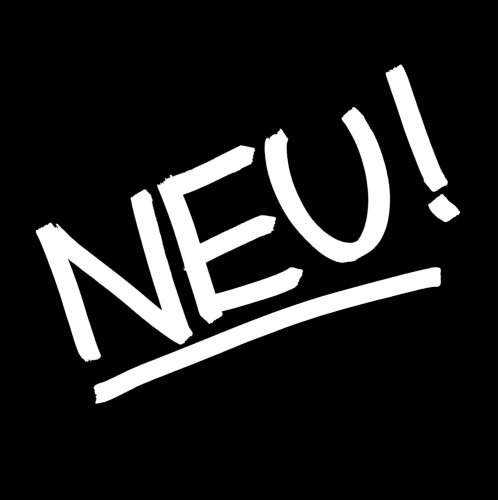
Neu! brought their divergent musical streams together to craft this ambient motorik proto-punk amalgam. Michael Rother and Klaus Dinger started the project after a brief stint with Kraftwerk in 1971. They recorded two experimental albums ( 'Neu' and 'Neu 2' ) before taking a brief hiatus. During the recording of the second album, they ran out of money and used remixed versions of singles from the album to flesh out side two. Michael Rother left Düsseldorf to form Harmonia with Dieter Moebius and Hans-Joachim Roedelius in Forst/Weserbergland; while Klaus Dinger started his own label Dingerland which soon went bankrupt.
Dinger: "I studied architecture for three years and gave that up and jumped into a black hole, and, ja, let’s say this official way of life was gone at that time, so somehow I had to express myself, or together with Michael, but still myself — or himself. I also was very, I mean I believed in his originality from the beginning. It was very obvious. So, ja, what else, what more can you ask for? But, ja, self-consciousness, I think that is a very individual thing ... Neu! 75 happened in December 74, and, ja, in this year, early 74, I made my own label, and had produced another group, called Lilac Angels...I spent a lot of money on that and I didn’t get the response I wanted from the industry...Anyway, the deal didn’t happen and I was very angry, bankrupt for the first time in my life, lots of debts for my experience so far at that time, it was about 50,000 marks. And I made two more attempts to get this label going, and organised, and also borrowed money to finance two free concerts in 74, which happened in a place quite close to Düsseldorf. And also then nobody appeared from the industry, and, ja, I think at that time I already had a quite bad image — which didn’t get much better in the meantime over the years ... My then girlfriend, which you find one way or the other in many songs, “Lieber Hönig”, for instance, that is this one, or the one who sat with me in this rowing boat you can hear on the first album. This was a bit difficult relation, because she had to go to Norway with her parents, and during the whole Neu!, this whole time, these three years, we nearly never met, or so on, somehow strange to believe today, ne?, how this can happen, and in 74, in this year when all these things didn’t happen, also this relationship finished, and all these bad feelings and, ja, not so much perspective, I must say, at that time, the only chance was to, OK, there was one more record to make for Metronome, and we did that. But as you can hear... it’s maybe quite interesting to really write it down these “Hero” words..."
'Neu '75' was recorded and mixed at Conny Plank's studio between December 1974 and January 1975 with Konrad "Conny" Plank acting as producer and engineer. The sessions featured Michael Rother on guitar, keyboards, and vocals; and Klaus Dinger on drums for side 1, and guitar and vocals for side 2; with Thomas Dinger and Hans Lampe playing drums on side 2.
Rother relates: "With Klaus Dinger, it was possible for me to record music, it was a very successful combination. Klaus Dinger had the qualities I lacked, and I guess it was also the other way around, and so we managed to record the music we did. However, as a duo, with Klaus Dinger playing the drums and me playing guitar, in a live situation there was not enough depth in music, on our 2 instruments we could not create enough details, and so we tried several musicians and, looking back, it's quite clear that it couldn't work because our vision of music was different from, and that was also the idea behind the music, was different from what every other musician had in his mind, and so we more or less stopped looking for other musicians."
'Neu '75' full album:
https://www.youtube.com/watch?v=GT0f1Tw3YXM VIDEO All songs written and composed by Klaus Dinger and Michael Rother.
Side one
00:00 "Isi" 5:06
05:06 "Seeland" ("Sea Land") 6:54
12:01 "Leb' Wohl" ("Farewell") 8:50
Side two
20:52 "Hero" 7:11
28:03 "E-Musik" ("Ernste Musik") 9:57
38:01 "After Eight" 4:44
The Can carved out an inner space at a German castle and sculpted a monstrous new music out of scraps of avante rock noise and experimental improvisational minimalism.
The group was born out of the experience of Irmin Schmidt when he visited the United States and was corrupted by the velvety music underground: In 1966, I came to New York for the first time. I was sent by my professors for a conducting contest. But right at the start, I met Terry Riley. He had this strange little grotto in the Bowery. We sat there night after night, and he made me play “de dah de dah de dah de”... me on the piano and him on the sax. At first I thought this was totally stupid. The result was that I was thrown out of the contest, because I missed certain rehearsals. I met Steve Reich, and he was also doing the “de dah de dah de”... but he was different, he had just finished a tape-loop piece. I was fascinated. ..When I founded the group I was a classical composer and conductor and pianist making piano recitals, playing a lot of contemporary music but also Brahms, Chopin and Beethoven and everything. And when we got together I wanted to do something in which all contemporary music becomes one thing. Contemporary music in Europe especially, the new music was classical music was Boulez, Stockhausen and all that. I studied all that, I studied Stockhausen but nobody talked about rock music like Sly Stone, James Brown or the Velvet Underground as being contemporary music. Then there was jazz and all these elements were our contemporary music, it was new. It was, in a way, much newer than the new classical music which claimed to be 'the new music'. "
The collective initially included Holger Czukay on bass and tapes; David Johnson on flute and tapes; Michael Karoli on guitar; Jaki Liebezeit on drums, flute, and percussion; and Irmin Schmidt on organ and piano. They called themselves Inner Space and played their first gig with guest vocalist Manni Lohe at Schloss Nörvenich, 14th-century castle in North Rhine-Westphalia, near Cologne, Germany. It was documented in the 1984 release 'Prehistoric Future'
Schmidt says: "We had to be [a rock band], it was destiny. When we started, we knew we wanted to do something spontaneous together. And it was necessary for music like this to make sense to have a rhythm. It was Jaki who created the rhythm. And once you have a rhythm, it became rock. And then one day, this friend of a friend, a painter and sculptor who was a friend of the composer Tcherepnin, we met in Paris, and we said, come visit us in Cologne. This was Malcolm Mooney. When he showed up, I just said, come with me to the studio, we are making music there. All of a sudden he took the mike and started singing. And this was like the ignition -- this gave the last kick toward rock. Between him and Jaki, who had already started to establish this hypnotic rhythm, all of a sudden Malcolm directed all this undecided energy in the group to this rhythm. He focused us all on Jaki’s rhythm. It was clear in this moment that this is where we had to go. ..We embraced it! This was ‘Father Cannot Yell’, the first piece. "
The group had by this point adopted the name The Can which Liebezeit later considered to be an acronym for "communism, anarchism, nihilism". They built a recording studio at Schloss Nörvenich and called it Inner Space. 'Monster Movie' was produced by the band and features Holger Czukay on bass [Red Armed Bass], and as technician [Technical Laboratory Chief]; Irmin Schmidt as coordinator [Adminaspace Co-Ordinator], and on organ [Organ Laser]; Jaki Liebezeit on drums, engineering [Propulsion Engineer], and other [Mystic Spale Chart Reader]; Michael Karoli on guitar [Sonar & Radared Guitar Pilot]; and Malcolm Mooney on vocals [Linguistic Space Communicator]. Some of the sessions were later released in 1981 as 'Delay 1968' .
Much of the music they created was done spontaneously with extended jam sessions that would later be edited. Czukay considers: "What we did was not improvisation in the classical jazz sense, but instant composition. Like a football team. You know the goal, but you don’t know at any moment where the ball is going. Permanent surprise. Editing, on the other hand, is an act of destroying. And you should not destroy something if you don’t have a vision to establish it afterwards. If you have that vision you can go ahead and do that. Can was a band. The editing had to handled carefully, because it could destroy the character of the band. "
Mooney revealed that the twenty minute piece 'Yoo Doo Right' that comprises the second side of the album was culled from twelve hours of tape: "The recording, which started at about eleven a.m., ended at eleven p.m.. It was quite a session. I left the studio at one time for lunch, when I returned the band was still playing the tune and I resumed where I left off. "
'Monster Movie' has the subtitle "Made in a castle with better equipment". Their creation was a unique sound that prefigured later trends in music such as electronic, gothic, industrial, progressive, and punk. At the time, they struggled for recognition, as Liebezeit would later recount: "Can back then was not really noticed. We were considered not to be as good as English bands. It was difficult in Germany in the beginning - they thought of us as a band that was trying to make rock music because they 'Can't'. You see? Can. Can't. What we were doing was simply not recognized as rock music. But that was the idea. Not to copy English or American bands; but to find our own way, which differs from other countries. In England, when we first played, they enjoyed it for that. In Germany, they thought the same thing, 'It doesn't sound English!' and hated it!" http://www.spoonrecords.com/ http://www.czukay.com/ http://www.irminschmidt.com/ http://www.malcolmmooney.com/ 'Monster Movie' full album:
VIDEO
All songs written and composed by Holger Czukay, Michael Karoli, Jaki Liebezeit, Malcolm Mooney, and Irmin Schmidt.
Side one
1. "Father Cannot Yell" 7:06
2. "Mary, Mary So Contrary" 6:21
3. "Outside My Door" 4:11
Side two
4. "Yoo Doo Right" 20:27
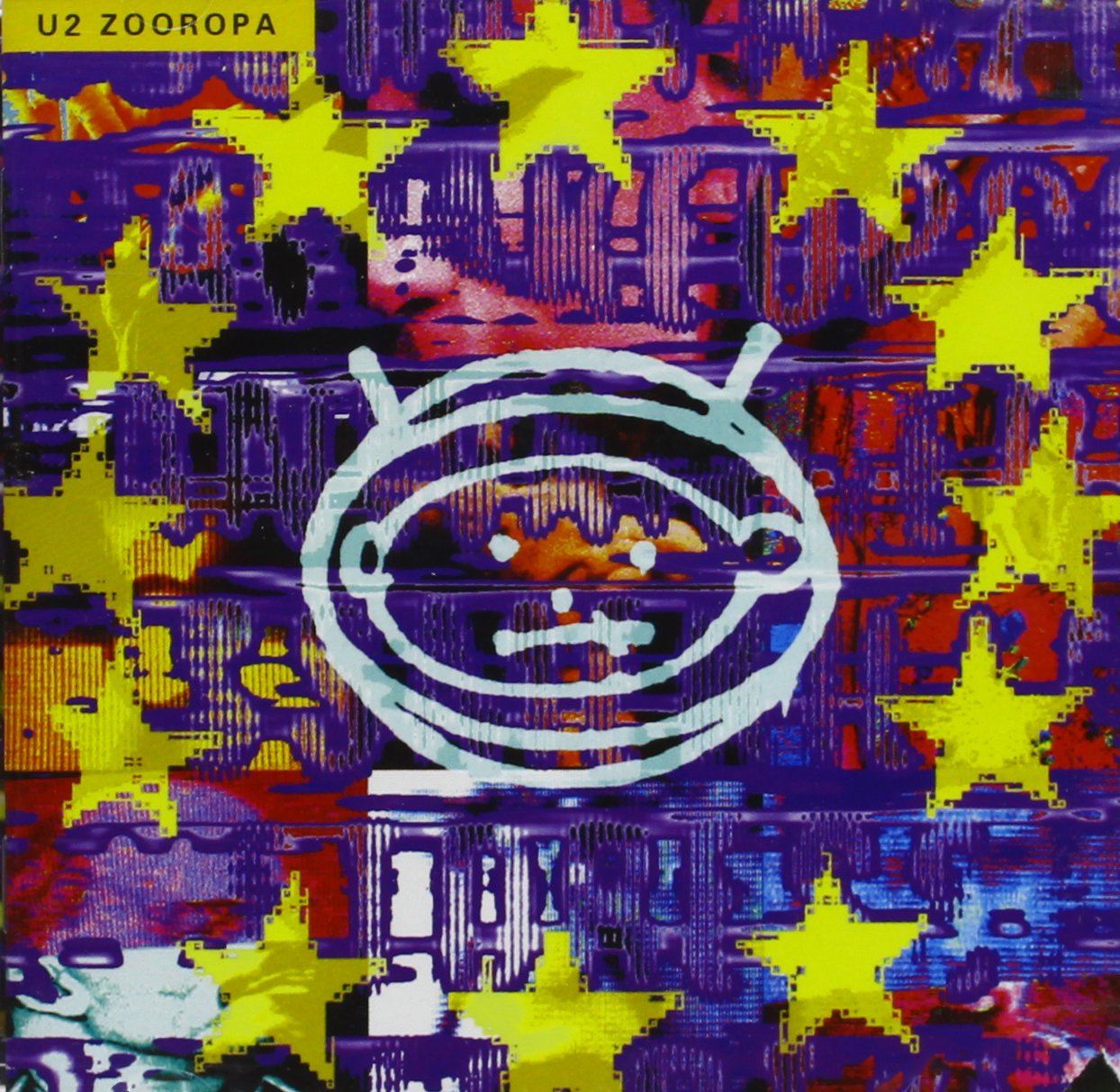
U2 quickly recorded the experimental dance grooves and ambient art rock textures of this technocratic concept album during a break on their ZooTV world tour. With the massive critical and commercial success of 'Achtung Baby' the band launched an ambitious world tour that featured multi-media satire that sought to illustrate the sensory overload of our consumerist culture. When the first leg of the tour ended in late November of 1992, the band decided to record an EP.
Bono describes the spirit with which the band started the sessions: "We thought we could live a normal life and then go back on the road. But it turns out that your whole way of thinking, your whole body has been geared toward the madness of Zoo TV... So we decided to put the madness on a record. Everybody's head was spinning, so we thought, why not keep that momentum going...?" Edge elaborates: "We've got a bit of time off. We've got some ideas hanging around from the last record, let's do an EP, maybe four new songs to spice the next phase of the tour up a bit. It'll be a fan thing. It'll be cool...Some of the ideas we started out with on 'Achtung Baby' 'Zooropa' Mullen recalls the whirlwind of activity: "The show would finish at eleven. As soon as we left the stage it was straight down into the cars, straigh to the airport, take off. Because the shows were in Europe, normally they were an hour or two ahead, so we'd arrive back in Ireland about midnight, go straight into the studio, do a couple of hours work, go home, go to bed. There were often a couple of days between shows, so we'd go into the studio in the afternoon, work into the night, get up the next day, head to the airport and fly to the next city. There was a month of that. It was mad, but it was mad good as opposed to mad bad." Clayton considers: "After being on the road for a year we wanted something a bit quieter...It occured to me...look at the history of the band and then the 'Zooropa' album... and looking at the history of The Beatles, and everything they'd done and learned, and then suddenly...'Sergeant Pepper' 'Zooropa'
Edge says: "We were very inspired by what was happening in dance music and hip-hop. Technology has always been a very important dynamic in pushing music forward. You can point to almost every important developments in music and see a technology that went with it. The fuzzbox launched rock and roll into the '60s. So for us, it seemed perfectly natural to be up to speed with the state-of-the-art technology happening in the dance culture. In that blend, we hoped we could hold on to the essence of what U2 is about. That's been, at times, a fine line you draw ... We don't worry about borrowing things from other groups. On the other hand, as soon as we notice that we are back to the U2 sound, we stop everything...It's also at the point that when people say to us that we can't do this or that because we're U2, that makes us want to do it even more. Because we think that the spirit of the group is so strong that it can use any style and still be U2. From the past and what's being done today we are trying to build a future. William Burroughs said I think, 'You cut up the past to find the future'. We're at exactly that point at the moment: if we keep our interest awake our music will be alive. Whereas if you're too sure of what you're doing, you come to a dead end...We had pieces which might give birth to songs, but which have lost their interest through familiarity: too structured. Musically, we tend not to give in to logic any more. Mystery gives the tempo, the emotion and the setting." Bono muses: " People have lost all confidence in images. Same thing in music. The polish of over-produced work ends up as smooth and glossy surface. That's why a large part of this album is improvised. It's just the four members of the group shut in a room playing together taking risks for six weeks...It's easy to be complacent with oneself about this idea but I think that when you know what you're doing, everything else must be swept away. It's difficult to experience, but we struggle on. You always want to keep your hands on the wheel, you don't want God to drive. Yet all the best U2 songs have been written by accident. And all the worst have been written by us...We are coming to a really interesting time in music where it seems as though classic guitar-based rock is short of ideas. For five years we've heard that rock is dead. We've never really thought of ourselves as a rock group but one feels that there are so many uncertainties that in fact anything is possible. One of the main interests in music is combining everything which has become part of the everyday background like TV programmes or cinema. Anything could happen in music today and that's what we're trying to do. We're living in a kind of transformation where video games sell more than records, and where audiovisual formats are taking precedence over music. Most showbiz people are shit scared. We find it stimulating. With the Zoo TV Tour we are getting near this point of transformation, and this overload of images you refer to is precisely the language of Zoo TV. Richard Kearney, an Irish philosopher, deals with the death of images in his book ('The Awakening of the Imagination'
Twenty songs were recorded during the six weeks, from which they chose ten for 'Zooropa'
'Zooropa' http://www.u2.com/ "Lemon"
http://www.youtube.com/watch?v=GvEfUf1Ux20 "Stay (Faraway, So Close!)"
VIDEO
full album:
VIDEO All music composed by U2.
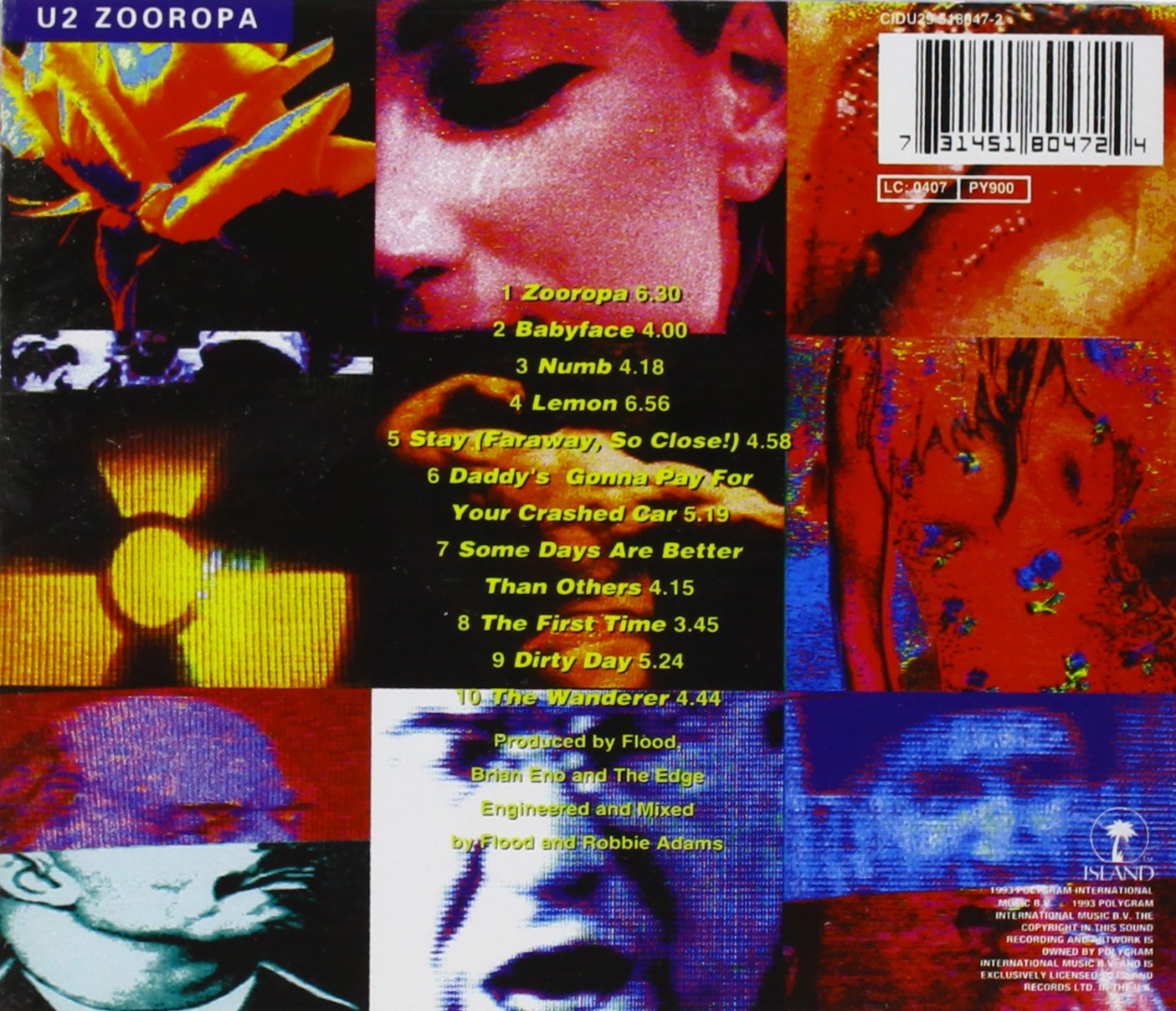
1. "Zooropa" Bono Flood 6:31 2. "Babyface" Bono Flood 4:01 3. "Numb" The Edge Robbie Adams 4:204. "Lemon" Bono Flood 6:585. "Stay (Faraway, So Close!)" Bono Flood 4:58
6. "Daddy's Gonna Pay for Your Crashed Car" Bono Flood 5:20
7. "Some Days Are Better Than Others" Bono Robbie Adams 4:178. "The First Time" Bono Flood 3:45 9. "Dirty Day" Bono and The Edge Robbie Adams 5:24 10. "The Wanderer" (featuring Johnny Cash) Bono Flood, Robbie Adams 5:41Total length: 51:15
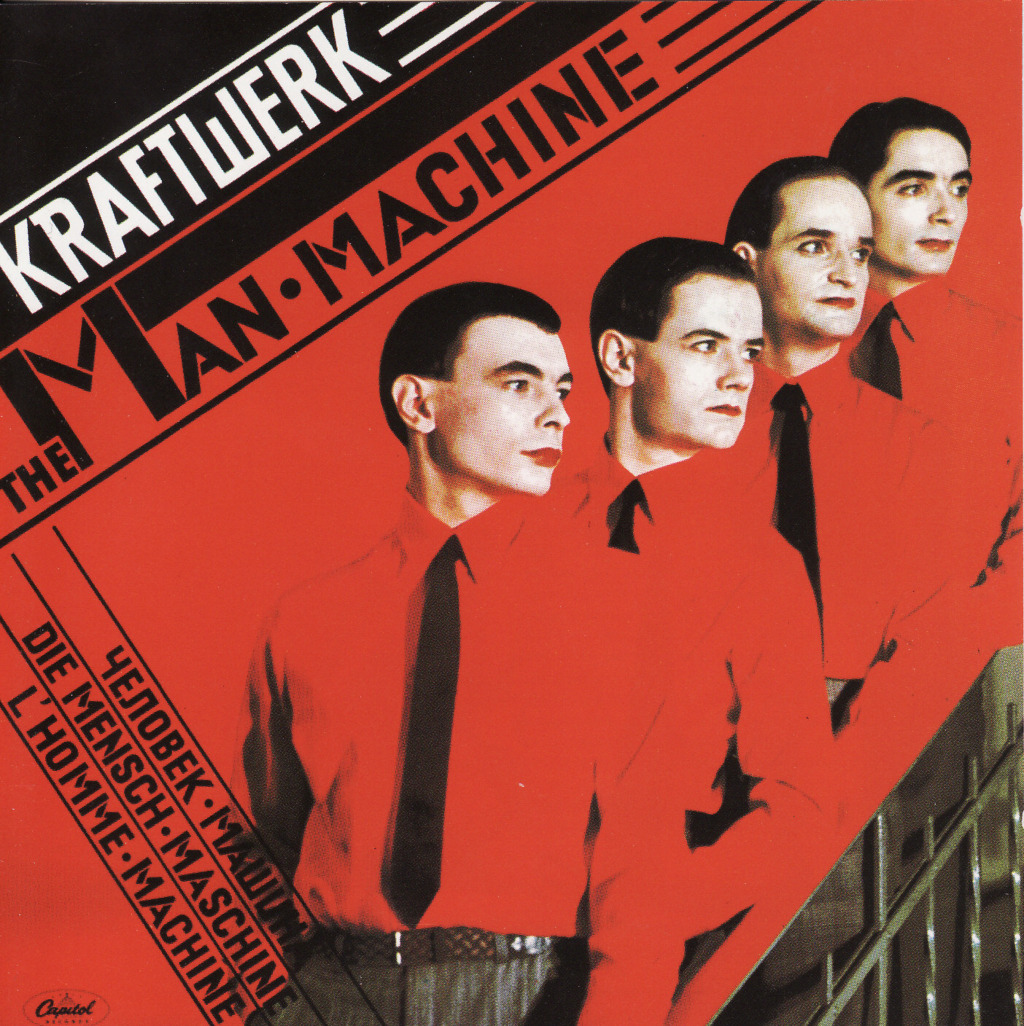
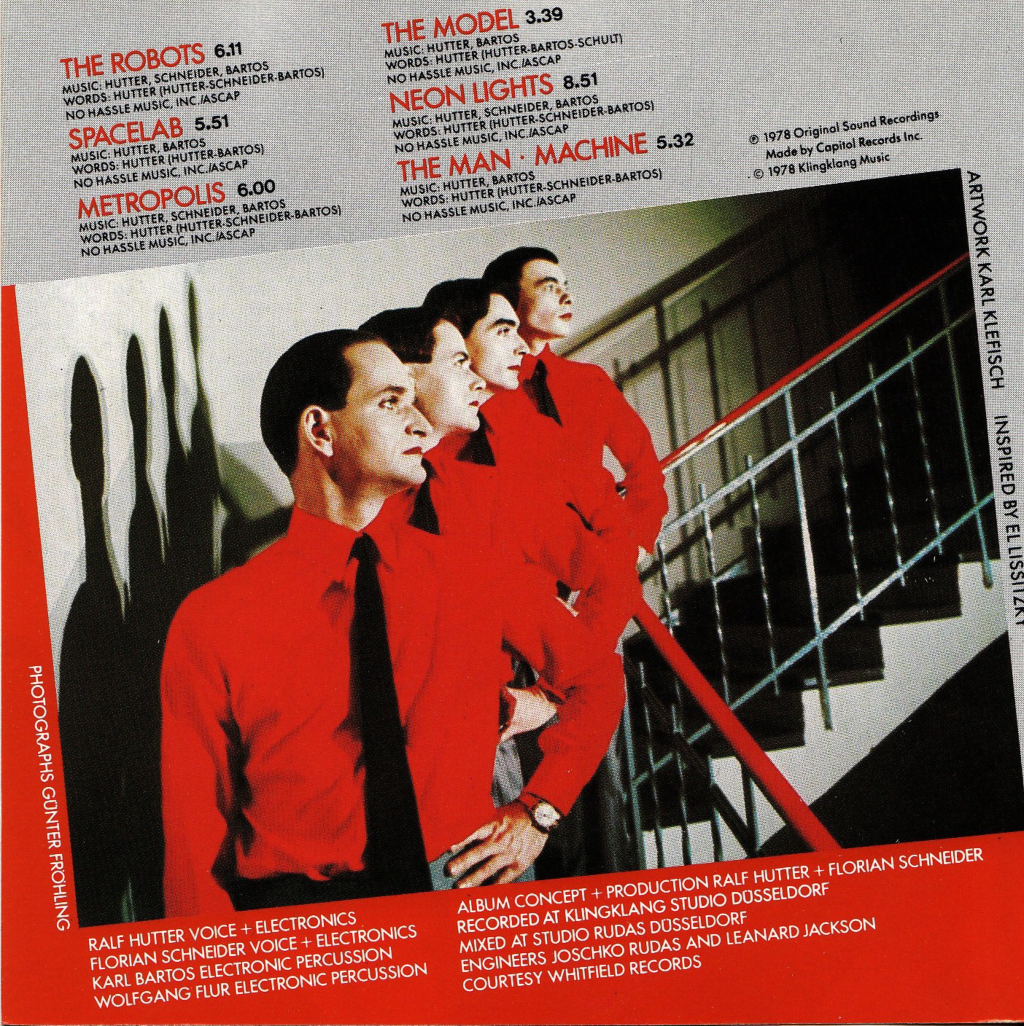
Kraftwerk invented synthpop with the hypnotic science fiction sheen of this conceptual electronic landmark. Building on the advances of 'Trans Europe Express' the band moves closer to pop music with the straightforward sound of ' The Man-Machine' ('Die Mensch-Maschine') . The album was produced by Ralf Hütter and Florian Schneider at Kling Klang Studio in Düsseldorf, Germany with Ralf Hütter on voice, vocoder, synthesizer, keyboards, orchestron, synthanorma sequenzer, electronics, and art direction; Florian Schneider on vocoder, votrax, synthesizer, electronics , Prophet 5 , Prophet 10, and Yamaha CS-80; and Karl Bartos and Wolfgang Flür on electronic drums.
Schneider explains the concept behind the title: "It’s rather a more sophisticated relationship. There is an interaction. Interaction on both sides. The machine helps the man, and the man admires the machine. (Showing the Sony tape recorder) This is the extension of your brain. It helps you remembering. It’s the third man sitting at this table. As for ourselves, we love our machines. We have an erotic relationship with them...The man machine has a hyper-ego...We say “blank tape” for the brain. A blank tape, and a microphone in each ear. In music, it’s important to develop an art of listening based on emptyness...It’s a movie theater for us. Everyone is a star. The spotlights search the stars... for a few seconds only...the stars that spotlights reveal and then abandon...In german, there’s an expression: to walk beside yourself. It means that you’re absent and conscious of it. The image is here, and the camera is there." Hütter considers: "For me, the music is immaterial: It is sounds and visions. We have gone through many different formats, from vinyl to audiocassettes to 8-tracks to CDs and now downloads. And of course, live Kraftwerk. 'The Man-Machine' 'Autobahn' The Man-Machine' ('Die Mensch-Maschine') went to number one hundred and thirty in the US, fifty-six in Australia, twenty-nine in the Netherlands, twenty-four in Sweden, fifteen in Austria and Italy, fourteen in France, twelve in Germany, and number nine in the UK. Three years later, 'The Model' was re-released as a single by EMI and went to number one on the UK charts. The album went on to influence a whole generation of musicians in the development of synthpop and electronica: "vorsprung durch technik".
http://www.kraftwerk.com/ 'The Man-Machine' ('Die Mensch-Maschine') full album:
VIDEO
1. The Robots: 0:00
2. Spacelab: 6:12
3. Metropolis: 12:09
4. The Model: 18:13
5. Neon Lights: 21:58
6. The Man-Machine: 30:55
bonus:
7 - The Robots (Single Version) [36:19]
8 - Spacelab (Single Edit) [40:03]
9 - Neon Lights (Single Edit) [43:37]
10 - The Man-Machine (Promo Edit) [47:07]
11 - The Man-Machine (Remix) [50:53]