Showing posts with label folk rock. Show all posts

Sunday, August 2, 2015

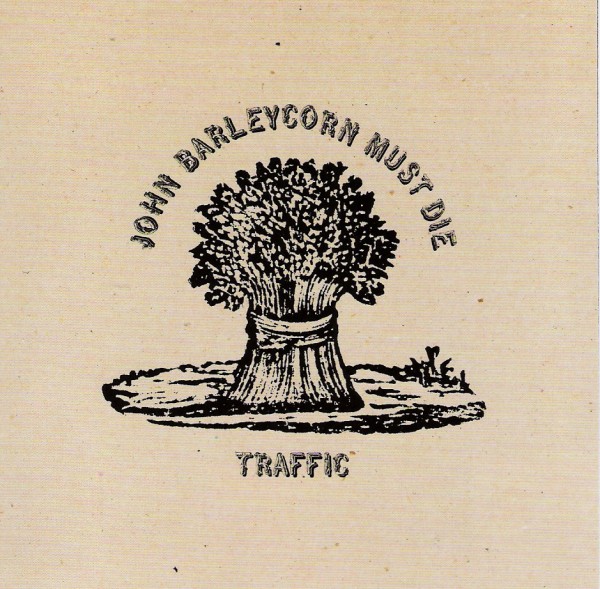
john barleycorn must die


Traffic gladly gathered up the bits and came back together centered 'round the same old fire, their fortunes for to try.   The group had disbanded after two albums ( 'Mr. Fantasy' and 'Traffic' ) when Steve Winwood left to record  'Blind Faith' with Eric Clapton, Ginger Baker, and Rick Grech.  That group only lasted a year, after which Winwood and Chris Wood both played with Ginger Baker's Air Force.  In the meantime, Wood and Jim Capaldi had played with Mason, Capaldi, Wood and Frog (Wooden Frog) for a brief period.   Winwood began working on a solo album 'Mad Shadows' with producer Guy Stevens; but, after recording a couple of tracks, decided to invite his former bandmates to join him, effectively reuniting Traffic.   

'John Barleycorn Must Die' was recorded in London at Island Studios and Olympic Studios with Winwood, Stevens, and Chris Blackwell producing.  The sessions featured  Steve Winwood on vocals, Hammond organ, piano, electric piano, bass,  acoustic guitar, electric guitar, and percussion;     Chris Wood on saxophone, flute, Hammond organ, and percussion;    and  Jim Capaldi on vocals, drums, and percussion.     


Winwood looks back:  "There are no oaths of allegiance. If you feel your life will be better served by splitting up the group, you've got to do it - but of course it does cause problems. It caused problems when I left the Spencer Davis Group and joined Traffic. It caused problems with Traffic when I joined Blind Faith. But at the end of the day, I believe it was all in the cause of better music ...  I think I did prefer the freedom of the trios sound. It was very fluid and loose- its a very wonderful thing to work within a trio... It was Chris Wood who came up with the idea of doing John Barleycorn. He found the song, which is an Oxfordshire version from the 16th century. Chris came up with the idea; he was always introducing us to very different styles of music  ...  Most of the Traffic stuff stands the test of time pretty well. All of those albums are like my children, so I really can’t pick a favourite, but in many ways, John Barleycorn is the core of what Traffic is, and it could be the most definitive album we did."


http://www.stevewinwood.com/

http://chriswood-lunarmusic.com/

http://www.jimcapaldi.com/


'John Barleycorn Must Die'
full album:

https://www.youtube.com/watch?v=li-3B6ofyTc


Side one
"Glad" (Winwood) 6:59
"Freedom Rider" (Winwood/Capaldi) 6:20
"Empty Pages" (Winwood/Capaldi) 4:47
Side two
"Stranger to Himself" (Winwood/Capaldi) 4:02
"John Barleycorn" (traditional-arr. Winwood) 6:20
"Every Mother's Son" (Winwood/Capaldi)  7:05


Wednesday, July 29, 2015

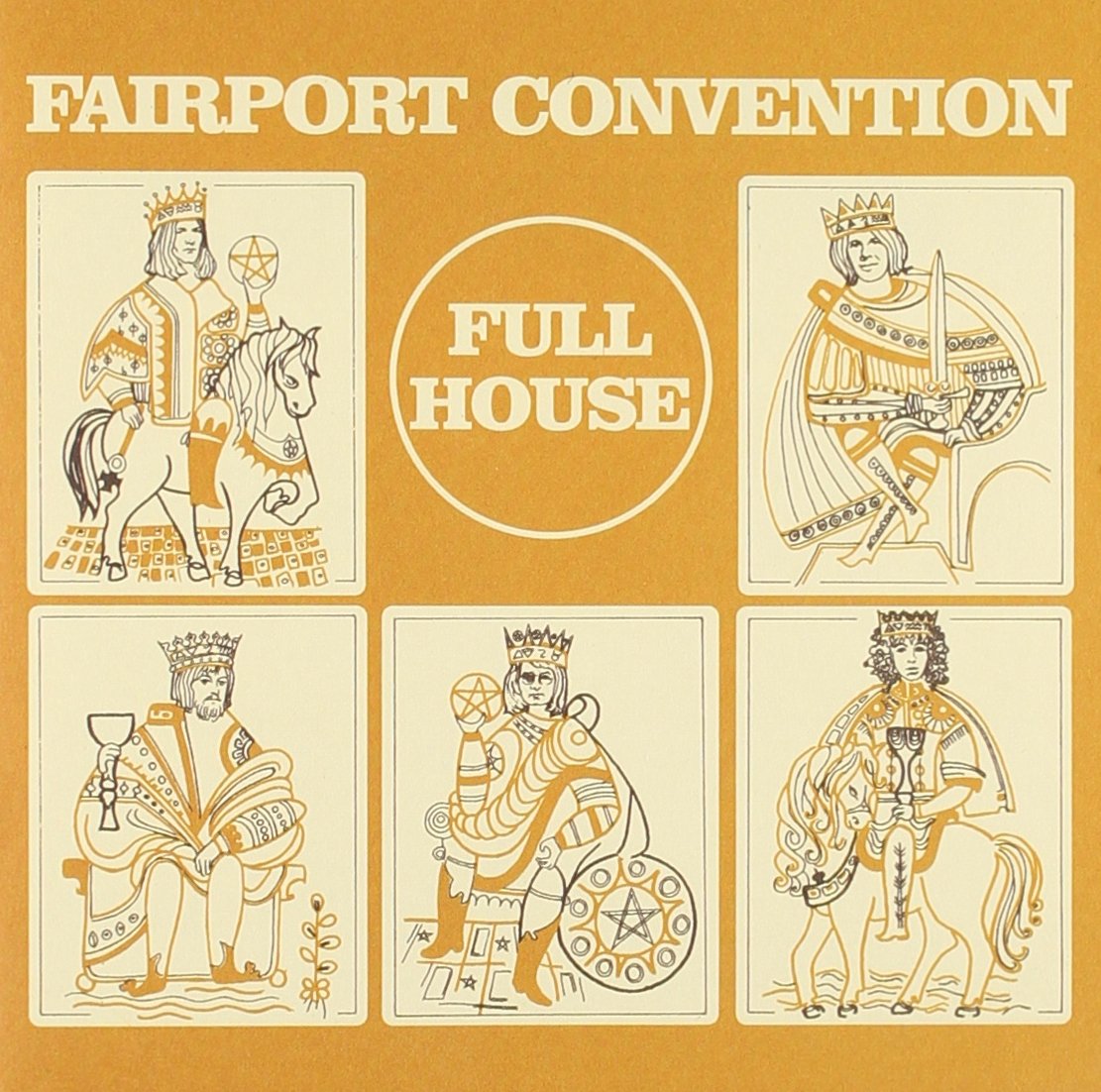
full house


Fairport Convention carried on with this powerful and exciting traditional folk rock hybrid.    They had gone through several lineup changes after their debut Fairport Convention in 1968, with Sandy Denny replacing departing singer Judy Dyble for three groundbreaking albums released in 1969:     What We Did on Our Holidays,  Unhalfbricking,  and  Liege & Lief .   After that Ashley Hutchings went on to form Steeleye Span and Sandy Denny left the band as well.  


Simon Nicol reveals:    "We were without a singer. No one was willing: no-one wanted to be the first bus out of the garage. I suppose that Swarb was more used to being in front, in the limelight, than the rest of us. Richard and I were both more shy. So Swarb got pushed out there by default. And as Richard's song-writing became more central to what we were doing, so he came forward more too. It's natural that a writer should present their own songs. I just joined in for variety. Of course, Richard and I had sung backing vocals before - even though you couldn't hear them.    I can't remember who decided that we should all live together although, of course, we'd done that successfully in Winchester the previous summer. But it was Robin Gee, our road manager, and I who were saddled with finding somewhere for the band to live and rehearse. After we'd looked at the Angel in Little Hadham - twice if I recall - I remember phoning round everyone to tell them it was too bleak, too spartan, grubby, damp, inadequate bathrooms and so on. But by the time we decided the Angel would be no good, Swarb and his family was on the way there from Milford Haven in a removal van.    As things turned out, the Angel was OK even though it was pretty basic and freezing cold. It ended up as quite a headcount there. Robin and Richard were the only singles at first, though another roadie called David Harry joined us later. The rest of us were married - DM and his missus, me and mine, Swarb with his wife and stepdaughter, and Peggy and Chris with their baby daughter. One bathroom, one sink, one kettle for all of us! But everybody was happy and it worked socially. We were remarkably tolerant of one another: 'Who's had my bleedin' cornflakes?' Nobody would do the washing up though - it would mount up until Chris Pegg put on her marigolds and put us to shame.    Musically, it was hugely important. We were still incorporating Peggy and we were working on a lot of new repertoire, and putting the older material into the perspective of what was effectively a new band. To do that fairly quickly obviously meant a lot of songwriting and a lot of rehearsal. We'd work hard all afternoon then toddle down to the Nags Head about seven or whenever it opened. Life went on pretty evenly really - mind you, it was a bit of a shock when the building got half demolished by a truck."


'Full House' was produced by Joe Boyd and engineered by John Wood at Sound Techniques in London during February and March of 1970 with vocals recorded at Vanguard Studios in New York City in April of 1970.   The sessions featured  Dave Swarbrick on vocals, fiddle, viola, and mandolin;   Richard Thompson on vocals and electric guitar;   Dave Pegg on vocals, bass guitar, and mandolin;   Dave Mattacks on drums, percussion, harmonium, and bodhran;   and  Simon Nicol on vocals, electric & acoustic guitars, bass guitar, and electric dulcimer.   


Thompson looks back:   "I suppose it’s what they call roots music these days. Some musicians, myself included, feel connected to a tradition that we can go back to for a long, cool drink of water occasionally. You may get “modern” from time to time, but the modes and harmonies of the old music always ring through. They talk about this a lot in classical music—Debussy told Stravinsky that he had to make his music more “Russian.” And of course all those English composers like Britten, Delius, and Vaughan Williams were always recycling the past. In Fairport, we felt real resonance in the music—it was giving back the tradition to the British audiences. I’m still plowing the same field, but it’s a very large field, and I haven’t seen the end of it yet."


http://www.fairportconvention.com/


'Full House' 
full album:

https://www.youtube.com/watch?v=EDzyOV-nb8g


Side one
"Walk Awhile" (Richard Thompson, Dave Swarbrick) – 3:57
"Doctor of Physick" (Richard Thompson, Dave Swarbrick) – 3:37
"Dirty Linen" (Traditional, arrangement by Dave Swarbrick) – 4:17
"Sloth" (Richard Thompson, Dave Swarbrick) – 9:19
Side two
"Sir Patrick Spens" (Trad. arr. Fairport Convention) – 3:30
"Flatback Caper" (Ronald Cooper, Trad. arr. Fairport Convention, O'Carolan) – 6:24
"Poor Will and the Jolly Hangman" (Richard Thompson, Dave Swarbrick) – 5:31
"Flowers of the Forest" (Trad. arr. Fairport Convention) – 4:04

bonus
"Now Be Thankful" (the original mono mix) (Swarbrick/Thompson) - 2:24
"Sir B. McKenzie's Daughter's Lament for the 77th Mounted Lancers Retreat from the Straits of Loch Knombe, in the Year of Our Lord 1727, on the Occasion of the Announcement of Her Marriage to the Laird of Kinleakie" (Trad. arr. Fairport Convention) - 2:52
"Bonny Bunch of Roses" (Trad. arr. Fairport Convention) - 10:48
"Now Be Thankful" (a new stereo mix) - 2:24


Tuesday, June 30, 2015

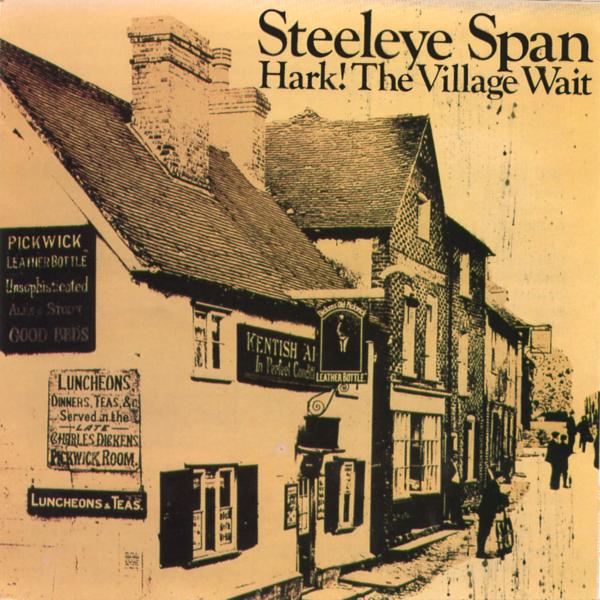
hark! the village wait


Steeleye Span harkened back to the sound of British townships with their folk rock interpretations of traditional medieval melodies.  Ashley Hutchings had recorded four albums with Fairport Convention including their eponymous debut and three classic albums in 1969 (What We Did on Our Holidays, Unhalfbricking, and Liege & Lief) before deciding to leave the band. A fatal accident was the impetus for the change:   "We were totally fractured, in more ways than one. People were asking us about the future, but we couldn't conceive of planning one."

Hutchings formed Steeleye Span with the intention of pursuing a more traditional folk sound.   Maddy Prior looks back:  "Terry and Gay Woods were looking to form a band with Ashley Hutchings. They were staying in the same house Tim and I were living in, and they asked ‘Do you want to join the band?’ We had some rehearsals and thought, ‘Let’s give it a go’, but it’s not always a good idea to get involved with people you don’t really know. Ashley had just left Fairport after being in a bad car crash and was still struggling with it. He was like the referee between two couples - and the ref was poorly - but we did get on well, but then Terry and Gay did leave, so maybe we didn’t!”


Taking their name from the traditional song Horkstow Grange, they recorded their debut album 'Hark! The Village Wait' at Sound Techniques in London with producer Sandy Roberton.   The sessions featured  Tim Hart on lead vocals, vocals, electric guitar, 5 string banjo, electric dulcimer, fiddle, and harmonium;    Ashley Hutchings on electric bass;    Maddy Prior on lead vocals, vocals, 5 string banjo, and step dancing;    Gay Woods on lead vocals, vocals, auto-harp, concertina, bodhran, and step dancing;    Terry Woods on vocals, mandola, electric guitar, 5 string banjo, concertina, and  mandolin;   with  Gerry Conway and  Dave Mattacks on drums.   


Gay Woods remembers:   "It would have been late ‘69. I remember because it was wintertime and it was snowing and all the rest of it...I was married to Terry Woods then and he went over to England and met Ashley Hutchings and Ashley was wanting to form another band after Fairport because he had left them and wanted to do his own thing and Terry joined up. I went over to get a job as a typist - the old story so Terry said that I could sing, because I had always sung here in Ireland with my brothers and with Terry. I came from a singing family so they said, ”Oh well, do you want to sing?". It was all very casual, there was no record deal, nothing. We just did it - like the way kids do nowadays. We had to set up in Ashley Hutching’s bedroom and sing a few songs and see what we wanted. Then Tim and Maddy were asked and they decided to give it a go and that was how it formed. Terry Woods and me moved down to a place in Wiltshire and Ashley moved down south and Tim and Maddy came into it whilst they were doing the folk club gigs...There was definitely a project. Ashley Hutchings and Terry Woods were the mainstay - Terry had a huge repertoire of songs and a huge energy as well for playing. He was really into it. So was Ashley - he was the sort of driving force - the English connection. So we got a record producer and we got a deal - RCA and we were just astonished. I got a job as a typist and I had it about a week but I think that was the catalyst. When I went off to work down in London, they got the deal. I got a lovely phone call one day saying 'Gay, we’ve got the deal- you’ve got the job'. I was out there like a bullet!...Well it was very folk clubby, although Fairport had done ‘Liege and Lief’ but before that in Ireland ‘Sweeney’s Men’ had brought in Henry McCulloch to play electric guitar with them. I had been to the Cambridge Folk Festival in 1968 to watch them and they were booed off the stage for applying an electric guitar but they got on and they did their short set but audiences were certainly reluctant to see electric music going into traditional folk music stuff...I think it has a certain identity about it that no one else captured at that time certainly. It has to do with the songs we chose how Ashley Hutchings plays the bass - I love bass playing. I think it’s an integral part in that change of how traditional music was carried on, particularly with the instruments Terry Woods used. As well as that the two women singing - the collision of nasally English singing and throaty Irish singing - just a big bowl of ingredients that made it sound like it did with traces of sweetness. Although I have to say the people weren’t sweet to each other whilst they did it...Then the fighting started because there were some clashes of personality so that was the end of that!"


http://steeleyespan.org.uk/


'Hark! The Village Wait' 
full album:

https://www.youtube.com/watch?v=tkUQ0I_qc7o


1 A Calling-On Song 1:12 (Hutchings)
2 The Blacksmith 3:40  (Traditional)
3 Fisherman's Wife 3:14 (MacColl)
4 Blackleg Miner 2:47  (Traditional)
5 Dark-Eyed Sailor 5:58  (Traditional)
6 Copshawholme Fair 2:34  (Traditional)
7 All Things Are Quite Silent 2:39  (Traditional)
8 The Hills of Greenmore 4:01  (Traditional)
9 My Johnny Was a Shoemaker 1:11  (Traditional)
10 Lowlands of Holland 6:00  (Traditional)
11 Twa Corbies 2:06  (Traditional)
12 One Night as I Lay on My Bed 3:30  (Traditional)


Sunday, June 28, 2015

tonight's the night


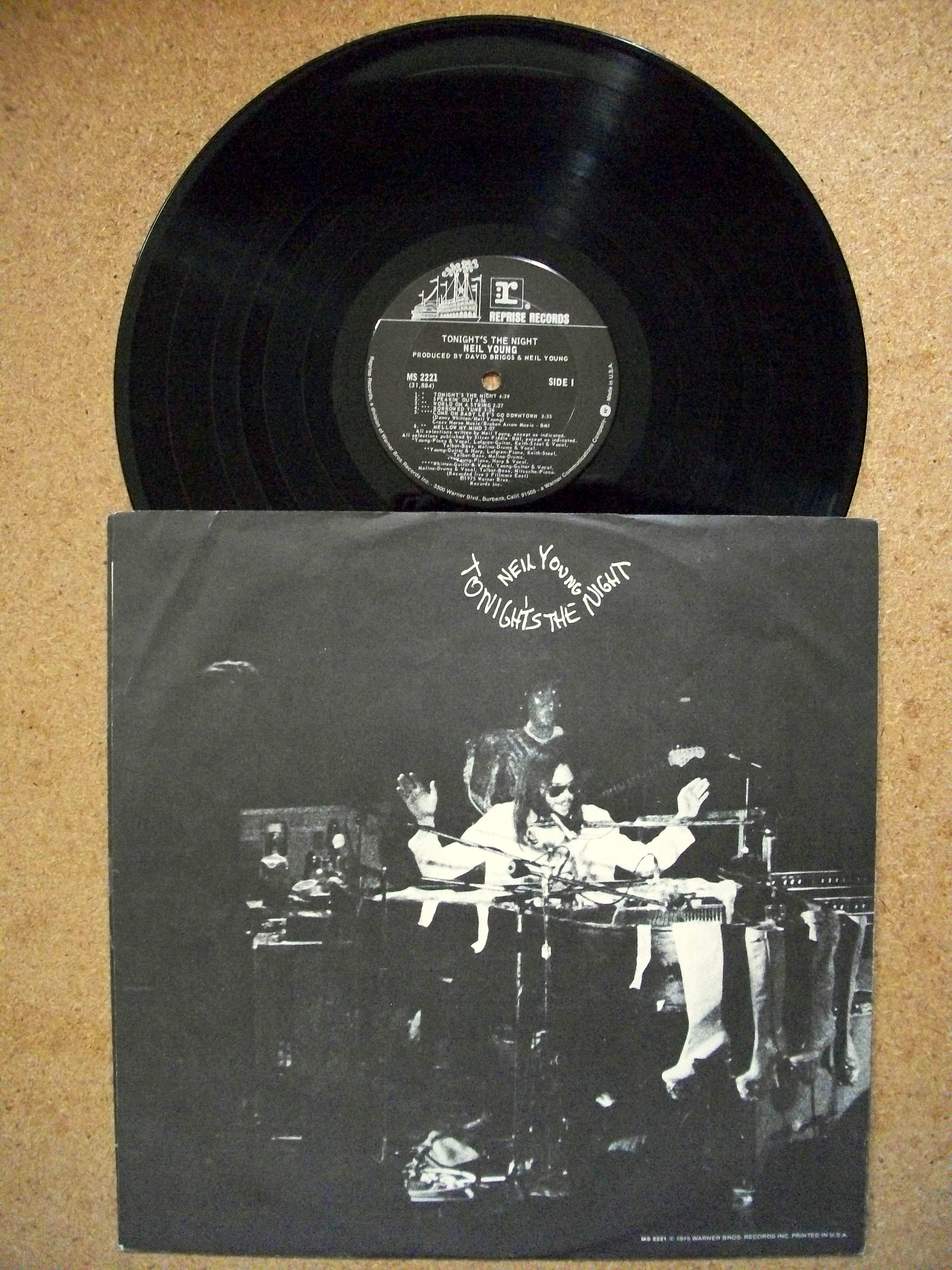
Neil Young opened up tired eyes and sent chills up and down the spine standing on the sound of this shaky searching salutation.  In the wake of the deaths of Crazy Horse guitarist Danny Whitten on November 18, 1972 and roadie Bruce Berry on June 4, 1973, Young recorded a live album of new material called 'Time Fades Away' during the tour for his blockbuster album 'Harvest'.  His next project directly dealt with the deaths of his friends.  Most of the album was recorded during August and September of 1973 at Studio Instrument Rentals in Hollywood' with The Santa Monica Flyers (Ben Keith, Nils Lofgren, and the Crazy Horse rhythm section of Billy Talbot and Ralph Molina).   "Come on Baby Let's Go Downtown" was recorded live with Crazy Horse at the Fillmore East in New York in March of 1970; and "Lookout Joe" and "Borrowed Tune" laid down at Broken Arrow Ranch in December 1972 and  December 1973, respectively.  "Lookout Joe" features his 'Harvest' band The Stray Gators (Jack Nitzsche, Tim Drummond, Ben Keith, and Kenny Buttrey) while "Borrowed Tune" is Neil solo.   The album was produced by David Briggs and Neil Young with Tim Mulligan.  


'Tonight's The Night' credits  Neil Young on vocals, guitar,  piano, harmonica, and vibes;    Ben Keith on pedal steel guitar, vocals, and slide guitar;   Nils Lofgren on piano, vocals, and guitar;   Danny Whitten on vocals and electric guitar;   Jack Nitzsche on electric piano and piano;   Billy Talbot and Tim Drummond on bass;   Ralph Molina on drums and vocals;  Kenny Buttrey on drums;  and  George Whitsell on vocals.    Reprise was not happy with the dark tone of the album and did not want to release it.  In the meantime, Young recorded and released 'On The Beach' , but continued to pressure the record company to put out 'Tonight's The Night', which they finally did in June of 1975.    The album went to number sixty-one in Canada, forty-eight in the UK, forty-two in Australia, and twenty-five in the US.  Along with  'Time Fades Away'  and  'On The Beach' , it is part of what is called Young's "Ditch Trilogy".  


Young would confess:     "The album 'Tonight's the Night' is the best I have ever made. It's recorded live. On one side there are four songs recorded in one take without stopping. In a hall belonging to Studio Instrument Rentals in LA. The owner of the firm, Ken Berry, is the brother of the former roadie Bruce and he let me use that hall. The atmosphere was so relaxed that we began recording immediately. And it's the most honest thing I have ever done. The guys I'm playing with at the moment make me feel relaxed and that's why I can be so honest. But I think the public thinks I'm trying to trick them ... Tonight's the Night is like an OD letter. The whole thing is about life, dope, and death. When we played that music we were all thinking of Danny Whitten and Bruce Berry, two close members of our unit lost to junk overdoses. We played Bruce and Danny on their way all through the night ... All of these things happen to people, so I figured it happened to me so I'll write about this, and I'll just write from my heart, and if other people have this happen to them they'll relate to this."


"It's odd.  I don't know why, it was a subconscious move, I think Tonight's the Night is the most grand example of that resistance [to success]. It was actually recorded in August of '73 at SIR [LA's Studio Instrument Rentals], where we had the party last night. Everything on Tonight's the Night was recorded and mixed before On the Beach was started, but it was never finished or put into its complete order till later. Everybody said that Harvest was a trip. To me I'd happened to be in the right place at the right time to do a really mellow record that was really open, 'cause that's where my life was at the time. But that was only for a couple of months. If I'd stayed there, I don't know where I'd be right now, if I'd just stayed real mellow. I'm just not that way anymore. I think Harvest was probably the finest record that I've made, but that's really a restricting adjective for me. It's really fine, but that's it."

 "Tonight's the Night didn't come out right after it was recorded because it wasn't finished. It just wasn't in the right space, it wasn't in the right order, the concept wasn't right. I had to get the colour right, so it was not so down that it would make people restless. I had to keep jolting every once in a while to get people to wake up so they could be lulled again. It's a very fluid album. The higher you are, the better it is. And it really lives up to that, a lot of records don't … you should listen to it late at night...Those mixes were a little unorthodox. Like it's real music. Sometimes I'd be on mic and sometimes I'd be two feet off it. Sometimes I'd be lookin' around the room and singin' back off mic…we'd have to bring it way back up in the mix to get it. And you can hear the echo in the room. We were all on stage at SIR just playing, with the PA system and everything, just like a live thing.


"I got tired of … I think what was in my mind when I made that record was I just didn't feel like a lonely figure with a guitar or whatever it is that people see me as sometimes. I didn't feel that laid back – I just didn't feel that way. So I thought I'd just forget about all that … wipe it out. Be as aggressive and as abrasive as I could to leave an effect, a long-term effect, that things change radically sometimes, it's good to point that out ... At SIR, when we were playing, and these two cats [Berry and Whitten] who had been a close part of our unit, our force, our energy, were both gone to junk, both of them OD'd. And now we're playing in a place where we're getting together to make up for what is gone and try to make ourselves stronger and continue. Because we thought we had it with Danny Whitten. At least I did. I thought that a combination of people that could be as effective as groups like the Rolling Stones had been … just for rhythm, which I'm really into. I haven't had that rhythm for a while and that's why I haven't been playing my guitar: because without that behind me I won't play. I mean, you can't get free enough. So I've had to play the rhythm myself ever since Danny died. Now I have someone who can play rhythm guitar, a good friend of mine...Nils is a lead player, basically. And when I use Nils – like on Tonight's the Night I used him for piano, and I played piano on a couple of songs and he played guitar. In the songs where he plays guitar he's actually playing the way Bruce Berry played guitar. The thing is I'm talking about him and you can hear him. So Nils just fits in – he plays that hot rock'n'roll-style guitar...It's just that there was a lot of spirit flyin' around when we were doin' it. It was like a tribute to those people, you know? Only the ones we chose no one had really heard of that much, but they meant a lot to us. That's why it gets spooky. 'Cause we were spooked. If you felt that I'm glad because it was there...The first horror record, a horror record …"


'Tonight's The Night'
full album:

https://www.youtube.com/playlist?list=PL94gOvpr5yt3Gz94uu1UztA5cD_iIq_k-


All songs written by Neil Young except where noted. 

Side one
1. "Tonight's the Night" (with the Santa Monica Flyers) 4:39
2. "Speakin' Out" (with the Santa Monica Flyers) 4:56
3. "World on a String" (with the Santa Monica Flyers) 2:27
4. "Borrowed Tune" (Mick Jagger, Keith Richards, Neil Young) 3:26
5. "Come on Baby Let's Go Downtown" (live from the 1970 tour with Crazy Horse) Neil Young, Danny Whitten 3:35
6. "Mellow My Mind" (with the Santa Monica Flyers) 3:07
Side two
1. "Roll Another Number" (with the Santa Monica Flyers) 3:02
2. "Albuquerque" (with the Santa Monica Flyers) 4:02
3. "New Mama"   2:11
4. "Lookout Joe" (with The Stray Gators) 3:57
5. "Tired Eyes" (with the Santa Monica Flyers)  4:38
6. "Tonight's the Night" (with the Santa Monica Flyers) 4:52


Saturday, June 20, 2015

mr. tambourine man


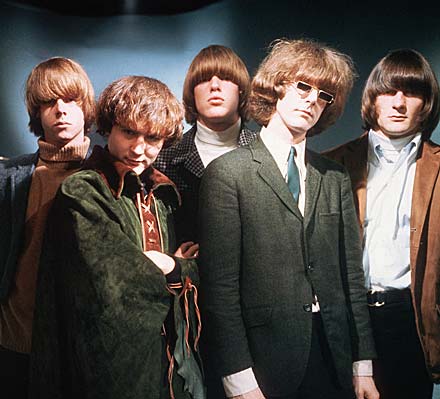
The Byrds spearheaded the folk rock movement with the jingle jangle sound of this proto-psychedelic classic.   The group formed when acoustic folk regulars Jim McGuinn, Gene Clark, and David Crosby  came together onstage.  Clark remembers:   "McGuinn and I started picking together in The Troubadour bar which was called 'The Folk Den' at the time ... We went into the lobby and started picking on the stairway where the echo was good and David came walking up and just started singing away with us doing the harmony part ... We hadn't even approached him."


After a one-off single on Elektra Records, ("Please Let Me Love You" with "Don't Be Long") the band signed with Columbia Records.  Their debut album 'Mr. Tambourine Man' was recorded during the first four months of 1965 at Columbia Studios in Hollywood with producer Terry Melcher.   "Mr. Tambourine Man" and  "I Knew I'd Want You" were recorded with musical backing of The Wrecking Crew session team:  Jerry Cole on rhythm guitar, Larry Knechtel on electric bass,  Leon Russell on electric piano, and  Hal Blaine on drums.   McGuinn played guitar and sang and Clark and Crosby did the harmonies.  The rest of the album featured Jim McGuinn on lead guitar and vocals;   Gene Clark on rhythm guitar, tambourine, and vocals;   David Crosby on rhythm guitar and vocals;   Chris Hillman on electric bass;   and  Michael Clarke on drums.   The album would peak at number seven in the UK and six in the US.   


'Mr. Tambourine Man'  featured four songs written by Bob Dylan.  Crosby considers:    "[Dylan] changed my head the way he changed everybody's head, because he elevated the dialogue. lt wasn't, 'Ooh baby', it was, 'It's all right ma, l'm only bleeding'. It was the important stuff, and that stuck with me. When we had a chance to do Mr.Tambourine Man later, I was all for it...When Dylan came to the studio in LA to hear what we were doing with his song, he heard that there was something going on. When he listened to it you could hear the gears whirring in there. He was strongly impressed. I mean, Roger McGuinn is enormously talented; he took Mr. Tambourine Man and turned it into a great record. I did a good harmony but he's the one that made that record what it was. And it was the first time that I know about that anybody put good poetry on the radio. Shortly thereafter, possibly within days, Bob had an electric band and was offending people at the Newport Folk Festival. He knew exactly what he'd heard and I think he was pleased by it and I think his reaction was, 'Give me an electric guitar.'"


'Mr. Tambourine Man'  was hugely influencial in the development of folk rock.  McGuinn describes the Byrds' legacy:  "I guess you’d have to focus on the main points, which would be that jingle-jangle sound of the Rickenbacker electric twelve-string, the pretty harmonies, the melodies—the folk-based melodies—and combining the folk songs or style of folk songs with the energy of the Beatles, kind of combining the two because that had not been done prior to “Mr. Tambourine Man”. Now some people say it was the Animals, but that was a blues song, but (jokingly pauses), ok, anyway ... We were doing it, then exploring different territories, like country and jazz, and what they called psychedelia, which was really our jazz exploration."


http://www.thebyrds.com/


The single "Mr. Tambourine Man" was a number one smash in the UK and the US.    McGuinn reveals:    "To get that sound, that hit sound, that 'Mr. Tambourine Man' sound, we just ran it through the electronics which were available to us at that time, which were mainly compression devices and tape delay, tape-sustain. That's how we got it, by equalizing it properly and aiming at a specific frequency.   For stereo-buffs out there who noticed that 'Mr. Tambourine Man' in stereo isn't really stereo, by the way, that's because when Terry Melcher, the producer, first started mixing records he didn't know how to mix stereo, and so he made all the singles up to 'Turn Turn Turn' mono. The label is misrepresentative. See, when Columbia Records signed us, they didn't know what they had. So they gave production to someone low on the totem-pole-which was Terry Melcher who was Doris Day's son who was getting a token-job-in-the-mailroom sort of thing. They gave him the Byrds and the Byrds were supposed to flunk the test."

https://www.youtube.com/watch?v=uPqAvgN6Tyw
https://www.youtube.com/watch?v=pJO4KAv-GiY

https://www.youtube.com/watch?v=B6klDcGNpLk


"The Bells of Rhymney"
https://www.youtube.com/watch?v=B8gBysv5gYQ


'Mr. Tambourine Man' 
full album:

https://www.youtube.com/playlist?list=PLEvr99j7ruPzm5z-OyEIm_TkmunNDruK6


Side 1
"Mr. Tambourine Man" (Bob Dylan) – 2:29
"I'll Feel a Whole Lot Better" (Gene Clark) – 2:32
"Spanish Harlem Incident" (Bob Dylan) – 1:57
"You Won't Have to Cry" (Gene Clark, Jim McGuinn) – 2:08
"Here Without You" (Gene Clark) – 2:36
"The Bells of Rhymney" (Idris Davies, Pete Seeger) – 3:30
Side 2
"All I Really Want to Do" (Bob Dylan) – 2:04
"I Knew I'd Want You" (Gene Clark) – 2:14
"It's No Use" (Gene Clark, Jim McGuinn) – 2:23
"Don't Doubt Yourself, Babe" (Jackie DeShannon) – 2:54
"Chimes of Freedom" (Bob Dylan) – 3:51
"We'll Meet Again" (Ross Parker, Hughie Charles) – 2:07


Sunday, June 14, 2015

workingman's dead


The Grateful Dead went back to their roots and played to the tide with the acoustic country rock notions of this harmonic high time.   Even as the band had reached the apex of their psychedelic experimentation with 'Live / Dead', they were beginning to explore more traditional sounds.    The move from San Francisco’s Haight-Ashbury district across the Golden Gate Bridge to rustic Larkspur in Marin County inspired songwriters Jerry Garcia and Robert Hunter over the course of several months to create some of their most enduring songs as they harkened back to the country blues sound of their days as Mother McCree’s Uptown Jug Champions.  


Hunter reveals:   “The direction [Robbie Robertson] went with the Band was one of the things that made me think of conceiving Workingman’s Dead. I was very much impressed with the area Robertson was working in. I took it and moved it to the West, which is an area I’m familiar with…regional but not the South, because everyone was going back to the South for inspiration at that time.”


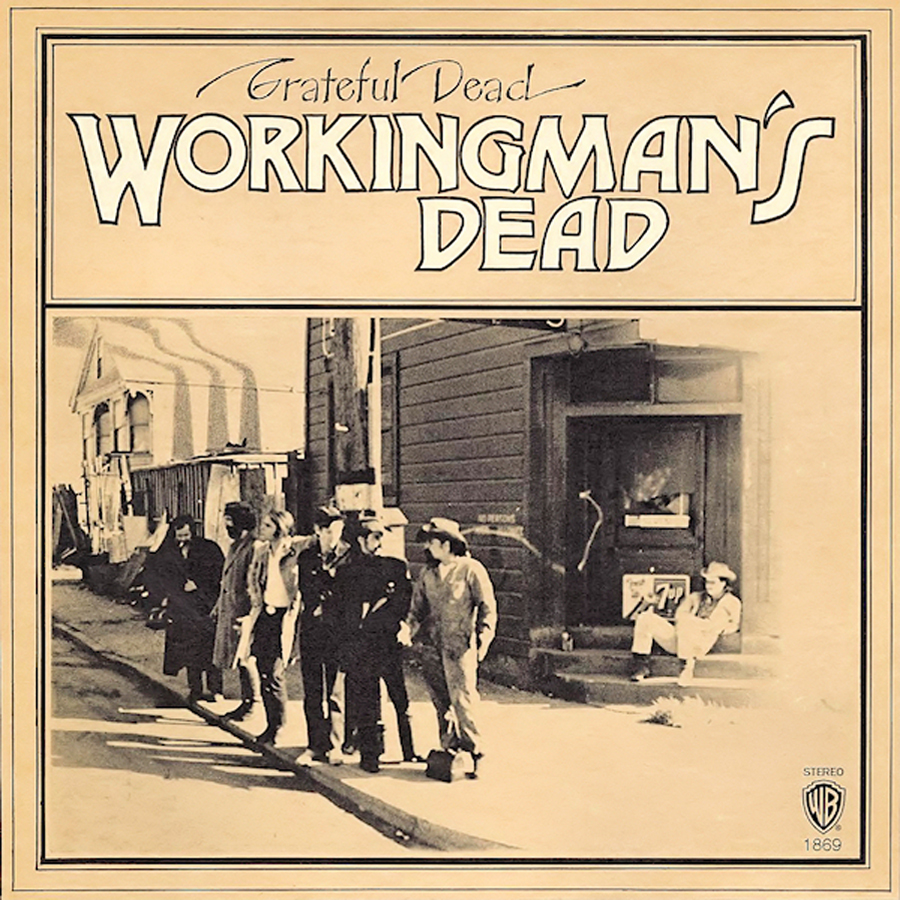
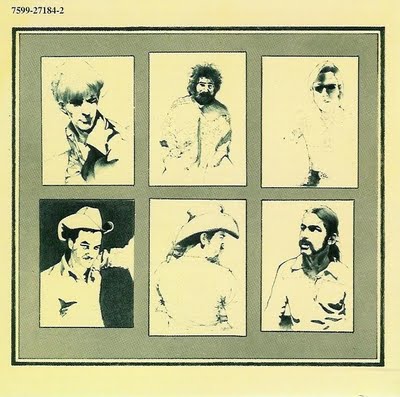
'Workingman's Dead' was recorded over nine days in San Francisco at Pacific High Recording Studio with  Jerry Garcia on lead guitar, pedal steel guitar, banjo, and vocals;   Bob Weir on guitar and vocals;   Pigpen (Ron McKernan) on keyboards, harmonica, and vocals;  Phil Lesh on bass and vocals;  and  Bill Kreutzmann and Mickey Hart on drums;    with  David Nelson playing acoustic guitar on "Cumberland Blues"  and  Tom Constanten contributing keyboards on reissue live bonus tracks "Dire Wolf", "Black Peter", "Easy Wind", "Cumberland Blues", and "Mason's Children".   The sessions were produced by Bob Matthews, with Betty Cantor, and the Grateful Dead;  and engineered by Alembic.   The album credits  Ramrod, Rex Jackson, and S. Heard as the equipment crew;   Jon McIntire as Big nurse;  Sam Cutler as Executive nanny;  Cosmic Gail as Lady in waiting;  David Parker and Bonnie Parker as Guardians of the vault;   Mouse Studios, with Toon N Tree for Cover photo, art, and design;  and gives special thanks to John Dawson.   The shadows of a drug bust that January in New Orleans, manager Lenny Hart taking off with most of their money, and the huge recording cost of 'Aoxomoxoa' the year before gave the proceedings a sense of urgency.  


Matthews says:  “Workingman’s Dead was done very quickly,..We went into the studio first and spent a couple of days rehearsing—performing—all the tunes, recording them onto two-track. When that was done, I sat down and spliced together the tunes—beginning of side one to end of side one, beginning of side two to end of side two. I got that idea from Sgt Pepper’s: ‘Before we even start, let’s have a concept of what the end product is going to feel like, sequencing-wise.’


'Workingman's Dead' was their biggest album yet, going to number twenty-seven on the US album chart and became their first to be certified platinum.  Along with their next album 'American Beauty' recorded just months later it is considered to be the pinnacle of their studio work. 


Garcia would expound:   “Workingman’s Dead was our first true studio album, insofar as we went in there to say ‘These are the limitations of the studio for us as performers; let’s play inside those limitations.’ That is we decided to play more or less straight-ahead songs and not get hung up with effects and weirdness. For me, the models were music that I’d liked before that was basically simply constructed but terribly effective – like the old Buck Owens records from Bakersfield. Those records were basic rock & roll: nice, raw, simple, straight-ahead music, with good vocals and substantial instrumentation but nothing flashy.  Workingman’s Dead was our attempt to say, ‘We can play this kind of music – we can play music that’s heartland music. It’s something we do as well as we do anything’  ...  We were into a much more relaxed thing at that time. We weren’t feeling like an experimental music group, but were feeling more like a good old band  ...  I liked all those tunes. I loved them all, to give you the absolute and unashamed truth. I felt that they were all good songs. They were successful in the sense you could sing ‘em and get off and enjoy singing ‘em. Uncle John’s Band was a major effort, as a musical piece. It’s one we worked on for a really long time, to get it working right. Cumberland Blues was also difficult in that sense  ...  Hunter and I always had this thing where we liked to muddy the folk tradition by adding our versions of songs to the tradition...We had our ‘Casey Jones’ song. We had our ‘Stagger Lee’ song. ‘Dupree’s Diamond Blues’ is another of those. It’s the thing of taking a well-founded tradition and putting in something that’s totally looped.  It has a kind of carnival or medicine show kind of feel, and also a ragtime feel.”


http://www.dead.net/


'Workingman's Dead' 
full album:


All songs written by Jerry Garcia and Robert Hunter, except where noted.

Side one 
1. "Uncle John's Band" 0:00
2. "High Time" 4:44
3. "Dire Wolf" 10:00
4. "New Speedway Boogie" 13:13
Side two 
5. "Cumberland Blues" (Garcia, Hunter, and Phil Lesh) 17:20
6. "Black Peter" 20:37
7. "Easy Wind" (Hunter) 26:21
8. "Casey Jones" 31:19

reissue bonus tracks 
9. "Dire Wolf" 36:00 recorded at Santa Rosa Veteran's Memorial Hall on 6/27/1969
10 "Black Peter" 38:30 recorded at Golden Hall Community Concourse in San Diego on 1/10/1970
11 ."Easy Wind" 47:37 recorded at Springer's Ballroom in Portland on 1/16/1970
12. "Cumberland Blues" 55:50 recorded at the Oregon State University Gym on 1/17/1970
13. "Mason's Children" 1:00:37 recorded at the Civic Auditorium in Honolulu on 1/24/1970
14. "Uncle John's Band" 1:07:17 recorded at Winterland on 10/04/1970


'Workingman's Dead' 
live:  


Side one 
1. "Uncle John's Band" 0:00 
2. "High Time" 6:51 Dead Set -1981
3. "Dire Wolf" 15:32 Workingman'sDead Re-Issued Bonus Tracks-Santa Rosa Veteran's Memorial Hall in Santa Rosa CA on 6/27/1969
4. "New Speedway Boogie" 18:04 7/3/70 Canada
Side two 
5. "Cumberland Blues" 24:41  9-26-1972 Stanley Theatre, Jersey City NJ
6. "Black Peter" 31:36 9-10-1972 Hollywood Palladium, Hollywood CA
7. "Easy Wind" 40:21  From The Vault 1-3\Three From The Vault
8. "Casey Jones" 48:40 9-9-1972 Hollywood Palladium, Hollywood CA


Live - February 14, 1970 - Fillmore East, NY 


Dark Star
Hard To Handle
I've Been All Around This World
Me & My Uncle
Not Fade Away
Mason's Children