Showing posts with label jazz rock. Show all posts

Sunday, August 2, 2015

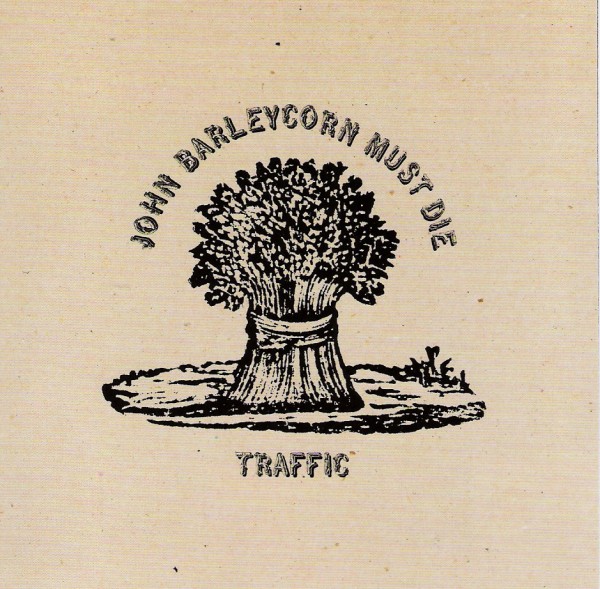
john barleycorn must die


Traffic gladly gathered up the bits and came back together centered 'round the same old fire, their fortunes for to try.   The group had disbanded after two albums ( 'Mr. Fantasy' and 'Traffic' ) when Steve Winwood left to record  'Blind Faith' with Eric Clapton, Ginger Baker, and Rick Grech.  That group only lasted a year, after which Winwood and Chris Wood both played with Ginger Baker's Air Force.  In the meantime, Wood and Jim Capaldi had played with Mason, Capaldi, Wood and Frog (Wooden Frog) for a brief period.   Winwood began working on a solo album 'Mad Shadows' with producer Guy Stevens; but, after recording a couple of tracks, decided to invite his former bandmates to join him, effectively reuniting Traffic.   

'John Barleycorn Must Die' was recorded in London at Island Studios and Olympic Studios with Winwood, Stevens, and Chris Blackwell producing.  The sessions featured  Steve Winwood on vocals, Hammond organ, piano, electric piano, bass,  acoustic guitar, electric guitar, and percussion;     Chris Wood on saxophone, flute, Hammond organ, and percussion;    and  Jim Capaldi on vocals, drums, and percussion.     


Winwood looks back:  "There are no oaths of allegiance. If you feel your life will be better served by splitting up the group, you've got to do it - but of course it does cause problems. It caused problems when I left the Spencer Davis Group and joined Traffic. It caused problems with Traffic when I joined Blind Faith. But at the end of the day, I believe it was all in the cause of better music ...  I think I did prefer the freedom of the trios sound. It was very fluid and loose- its a very wonderful thing to work within a trio... It was Chris Wood who came up with the idea of doing John Barleycorn. He found the song, which is an Oxfordshire version from the 16th century. Chris came up with the idea; he was always introducing us to very different styles of music  ...  Most of the Traffic stuff stands the test of time pretty well. All of those albums are like my children, so I really can’t pick a favourite, but in many ways, John Barleycorn is the core of what Traffic is, and it could be the most definitive album we did."


http://www.stevewinwood.com/

http://chriswood-lunarmusic.com/

http://www.jimcapaldi.com/


'John Barleycorn Must Die'
full album:

https://www.youtube.com/watch?v=li-3B6ofyTc


Side one
"Glad" (Winwood) 6:59
"Freedom Rider" (Winwood/Capaldi) 6:20
"Empty Pages" (Winwood/Capaldi) 4:47
Side two
"Stranger to Himself" (Winwood/Capaldi) 4:02
"John Barleycorn" (traditional-arr. Winwood) 6:20
"Every Mother's Son" (Winwood/Capaldi)  7:05


Thursday, May 26, 2011

miles davis


Miles Dewey Davis III

(May 26, 1926 – September 28, 1991)


Controversial and influential icon of jazz and rock whose unique and haunting work on the trumpet played a key part in bebop, cool jazz, modal, and fusion.


He learned music from his mother during his youth in St. Louis. When his father sent him to the Juilliard School of Music in New York, Davis sought out saxophonist Charlie Parker.  He dropped out of school and began playing professionally in clubs and recording studios, leading his own group within a year.  


https://www.milesdavis.com/


'Now's The Time' was one of the songs recorded during the first of the legendary Savoy Sessions 1945 with a nineteen year old Davis playing trumpet with Charlie Parker on alto sax, Curley Russell on bass, Max Roach on drums and "Hen Gates" (Dizzy Gillespie) playing piano.


'Boplicity' came from his groundbreaking 'Birth of the Cool' compilation that marked his turn from the hard edge of bop to a more introspective sound. It was recorded in 1949 and 1950; but not released until 1957. The song was credited to Cleo Henry and Gil Evans. Henry was a pseudonym based on his Davis' mother's maiden name that he never used again.


'Doxy' was composed by Sonny Rollins. It first appeared on Davis' 'Bags' Groove', performed with Davis on trumpet, Rollins on tenor saxophone, Horace Silver on piano, Percy Heath on bass, and Kenny Clarke on drums.


''Round Midnight' was the centerpiece of Davis' debut on Columbia Records 'Round About Midnight' recorded in 1955. The song was composed by Thelonious Monk and features a saxophone solo from John Coltrane.


'Milestones' was originally called 'Miles' when the album 'Milestones' came out in 1958. It was his first foray into modal jazz. It features Miles on trumpet, Cannonball Adderley on alto saxophone, Red Garland on piano, Paul Chambers on double bass, Philly Joe Jones on drums,
and a fabulous solo from John Coltrane on tenor saxophone.


The impressionistic modal jazz of 'So What' opens his seminal 1959 'Kind of Blue' album.


The title track to his 1963 'Seven Steps To Heaven' was co-written with pianist Victor Feldman, who Davis replaced with Herbie Hancock for the album. It includes George Coleman on tenor saxophone, Ron Carter on double bass, and Tony Williams on drums.


'Footprints' appeared on his 1967 album 'Miles Smiles'. It was composed by saxophonist Wayne Shorter.


'Spanish Key' is from his 1970 jazz fusion double album 'Bitches Brew' featuring what Miles called "the best damn rock and roll band in the world."


'Black Satin' is from his 1973 album 'On The Corner' which saw Davis experimenting with funk and electronic music.


The title track to his 1986 album 'Tutu' was written by bassist Marcus Miller, and dedicated to Archbishop Desmond Tutu.