Showing posts with label fairport convention. Show all posts

Wednesday, July 29, 2015

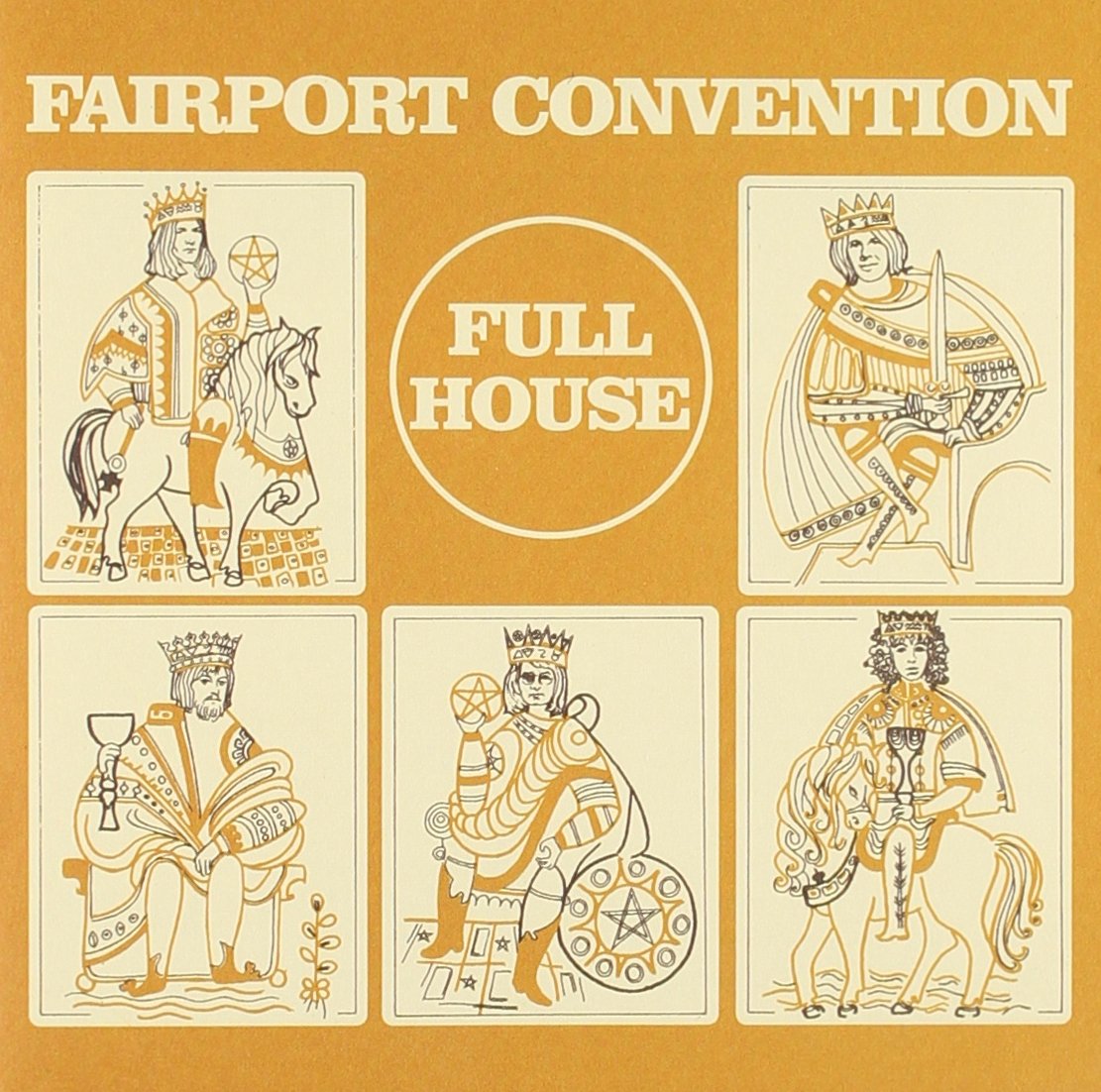
full house


Fairport Convention carried on with this powerful and exciting traditional folk rock hybrid.    They had gone through several lineup changes after their debut Fairport Convention in 1968, with Sandy Denny replacing departing singer Judy Dyble for three groundbreaking albums released in 1969:     What We Did on Our Holidays,  Unhalfbricking,  and  Liege & Lief .   After that Ashley Hutchings went on to form Steeleye Span and Sandy Denny left the band as well.  


Simon Nicol reveals:    "We were without a singer. No one was willing: no-one wanted to be the first bus out of the garage. I suppose that Swarb was more used to being in front, in the limelight, than the rest of us. Richard and I were both more shy. So Swarb got pushed out there by default. And as Richard's song-writing became more central to what we were doing, so he came forward more too. It's natural that a writer should present their own songs. I just joined in for variety. Of course, Richard and I had sung backing vocals before - even though you couldn't hear them.    I can't remember who decided that we should all live together although, of course, we'd done that successfully in Winchester the previous summer. But it was Robin Gee, our road manager, and I who were saddled with finding somewhere for the band to live and rehearse. After we'd looked at the Angel in Little Hadham - twice if I recall - I remember phoning round everyone to tell them it was too bleak, too spartan, grubby, damp, inadequate bathrooms and so on. But by the time we decided the Angel would be no good, Swarb and his family was on the way there from Milford Haven in a removal van.    As things turned out, the Angel was OK even though it was pretty basic and freezing cold. It ended up as quite a headcount there. Robin and Richard were the only singles at first, though another roadie called David Harry joined us later. The rest of us were married - DM and his missus, me and mine, Swarb with his wife and stepdaughter, and Peggy and Chris with their baby daughter. One bathroom, one sink, one kettle for all of us! But everybody was happy and it worked socially. We were remarkably tolerant of one another: 'Who's had my bleedin' cornflakes?' Nobody would do the washing up though - it would mount up until Chris Pegg put on her marigolds and put us to shame.    Musically, it was hugely important. We were still incorporating Peggy and we were working on a lot of new repertoire, and putting the older material into the perspective of what was effectively a new band. To do that fairly quickly obviously meant a lot of songwriting and a lot of rehearsal. We'd work hard all afternoon then toddle down to the Nags Head about seven or whenever it opened. Life went on pretty evenly really - mind you, it was a bit of a shock when the building got half demolished by a truck."


'Full House' was produced by Joe Boyd and engineered by John Wood at Sound Techniques in London during February and March of 1970 with vocals recorded at Vanguard Studios in New York City in April of 1970.   The sessions featured  Dave Swarbrick on vocals, fiddle, viola, and mandolin;   Richard Thompson on vocals and electric guitar;   Dave Pegg on vocals, bass guitar, and mandolin;   Dave Mattacks on drums, percussion, harmonium, and bodhran;   and  Simon Nicol on vocals, electric & acoustic guitars, bass guitar, and electric dulcimer.   


Thompson looks back:   "I suppose it’s what they call roots music these days. Some musicians, myself included, feel connected to a tradition that we can go back to for a long, cool drink of water occasionally. You may get “modern” from time to time, but the modes and harmonies of the old music always ring through. They talk about this a lot in classical music—Debussy told Stravinsky that he had to make his music more “Russian.” And of course all those English composers like Britten, Delius, and Vaughan Williams were always recycling the past. In Fairport, we felt real resonance in the music—it was giving back the tradition to the British audiences. I’m still plowing the same field, but it’s a very large field, and I haven’t seen the end of it yet."


http://www.fairportconvention.com/


'Full House' 
full album:

https://www.youtube.com/watch?v=EDzyOV-nb8g


Side one
"Walk Awhile" (Richard Thompson, Dave Swarbrick) – 3:57
"Doctor of Physick" (Richard Thompson, Dave Swarbrick) – 3:37
"Dirty Linen" (Traditional, arrangement by Dave Swarbrick) – 4:17
"Sloth" (Richard Thompson, Dave Swarbrick) – 9:19
Side two
"Sir Patrick Spens" (Trad. arr. Fairport Convention) – 3:30
"Flatback Caper" (Ronald Cooper, Trad. arr. Fairport Convention, O'Carolan) – 6:24
"Poor Will and the Jolly Hangman" (Richard Thompson, Dave Swarbrick) – 5:31
"Flowers of the Forest" (Trad. arr. Fairport Convention) – 4:04

bonus
"Now Be Thankful" (the original mono mix) (Swarbrick/Thompson) - 2:24
"Sir B. McKenzie's Daughter's Lament for the 77th Mounted Lancers Retreat from the Straits of Loch Knombe, in the Year of Our Lord 1727, on the Occasion of the Announcement of Her Marriage to the Laird of Kinleakie" (Trad. arr. Fairport Convention) - 2:52
"Bonny Bunch of Roses" (Trad. arr. Fairport Convention) - 10:48
"Now Be Thankful" (a new stereo mix) - 2:24


Saturday, December 13, 2014

liege & lief


Fairport Convention were loyal and ready in the wake of tragedy to transform traditional folk into a powerful new electric adulteration.  Following their debut 'Fairport Convention', the group had taken on a new singer Sandy Denny and quickly recorded two albums 'What We Did On Our Holidays' and 'Unhalfbricking'  with an increasing focus on traditional British folk.  

On May 12, 1969, the band's van had an accident on the M1 motorway following a gig at Mothers in Birmingham.  Drummer Martin Lamble and Richard Thompson's girlfriend Jeannie Franklyn were killed.   Simon Nicol recalls the effect of the crash on the band:   "We all felt psychologically traumatised as well as being damaged physically. But by the time Ashley's face was back together and Richard's bones were healing, we'd decided to rebuild the band and carry on.   I believe the crash hung over the band in unseen ways. I think it was one of the unspoken reasons for the next big change, when Ashley decided to leave the band later that year after we had recorded Liege & Lief and relaunched the band to some fanfare and acclaim. Whatever the upfront reasons about musical differences and wanting to concentrate on traditional material, I think the accident was the underlying reason why Ashley felt he couldn't continue with us.     The rehearsal and recording of Liege & Lief was a fantastically productive period for us. As well as getting all the material together, we had to incorporate Dave Swarbrick and Dave Mattacks into the band.   Dave Mattacks had to invent an entirely new way of playing the drums. It wasn't a case of learning what Martin Lamble had been doing and developing that: DM was doing a completely new thing. He was a Mecca ballroom boy, very disciplined, a lot of traditional technique, a very different kind of drummer to Martin who was more intuitive, more shoot-from-the-hip.  Swarb was not only older than us, he was already a star. He'd already worked with us in the studio, of course but suddenly there he was, a fully-fledged member of our fold having broken up a hugely successful partnership with Martin Carthy to throw his lot in with Fairport Convention. He loved it!   We all spent that summer together at a house in Farley Chamberlayne, near Winchester. It was a lovely atmosphere, we found ourselves able to put aside the memories of the crash and the injuries and the loss. When we re-emerged, there was a natural groundswell of sympathy towards us. The launch gig at the Royal Festival Hall got good notices and the album was very well received."


'Liege & Lief' was recorded at Sound Techniques in London with producer Joe Boyd and engineer John Wood.  The sessions featured Sandy Denny on lead vocals;   Dave Swarbrick on fiddle and viola;  Richard Thompson on electric & acoustic guitars, and backing vocals;   Simon Nicol on electric, 6-string & 12-string acoustic guitars, and backing vocals;   Ashley Hutchings on bass guitar and backing vocals;  and Dave Mattacks on drums and percussion.  Before the album was even released Ashley Hutchings had left to form another traditional folk outfit Steeleye Span; while Sandy Denny left to start Fotheringay.    'Liege & Lief' went to number seventeen on the UK album chart and inspired a whole a new British folk rock movement.  


Swarbrick looks back:  "[Sandy Denny] was wonderful. But she could be exasperating. Everybody was... I was exasperating. As I get older I wish she'd been around as long so that she could have learned as much about life as I have. She'd certainly be a lot happier now, I think. At the time, I thought she was maybe destined to get more unhappy as the days went by...I certainly wished that I'd had more understanding then. Those were wonderful times, you know, but they were hard times - people were hard. That's the way everything was then with business...Everybody was growing up, and it was hard. It's hard enough for a single artist, and when you get six together it's really not easy. And it was harder for a woman then than it is now. She had a hard time trying to be herself instead of being what the media wanted her to be...[Recording 'Liege & Lief'] the whole thing was remarkably relaxed, believe it or not. We all lived together in a house prior to that. Very relaxed...I suppose like everybody else, people's personalities were being forged. Richard was always very self-effacing. I think most of that was him being shy as well...You can't say it's the best period. It's the memories and the fun we had. We were mad. Always mad. We've had some wonderful times will all the different line-ups...If you love English music and traditional music, sooner or later you're going to come up against unusual time signatures. So many of them have great time signatures. It's an aspect of English traditional music, and it's one of its most charming ones. That's what I love about it."


Thompson considers:   "Fairport was a band that didn’t want to be the same as other bands, so even in its very early incarnations, when we were doing covers, we tried to do very obscure covers. So when other people were playing blues and R&B in 1965–67, we were trying to find obscure but good songs. We were always interested in lyrics, so we were attracted to singer-songwriters like Richard Fariña and Joni Mitchell before she was recorded. At a certain point, around 1968, we thought, Well, we’re never going to sing soul as well as Otis Redding and we’re never going to play the blues as well as Muddy Waters. We should be finding our own roots out here in Britain and trying to do a contemporary version of British music. We had to build a bridge between the tradition and popular music, because it had kind of died out in the public consciousness. Traditional music was something that farmers and fisherman did, but it wasn’t even close to the mainstream. So we wanted to contemporize British music, to bring it into popular music. We did it in a slightly studied way, I suppose, but after a while it became second nature. That became the music of Fairport Convention, Steeleye Span, and all those other bands...I mean, from when we were teenagers we were going to folk clubs and blues clubs, we were listening to classical music, we were listening to jazz. We were living in London and we were trying to listen to everything possible. We were really on parallel scenes at the same time, so we knew people in the rock scene and the blues scene, and we knew people in the folk scene. I’m not sure if we were exclusively in one particular club. With Fairport, playing music that stemmed more from British traditions came out of an idea first—before it became a reality it was an intellectual idea.  Then when we started to play that music and Sandy Denny came into the band, we got to know her circle of friends, which included Alex Campbell, Bert Jansch, and John Renbourne. When Dave Swarbrick came into the band, we met the Watersons and Cyril Tawney and people like that. This gave us access to a rich world of folk and traditional music. At the same time, we felt ourselves very much a part of the underground music community in Britain that included our friends in bands like the Crazy World of Arthur Brown, Blossom Toes, the Social Deviants, Pink Floyd—...The thing is that Liege & Leif was designed as a project after the accident that you mentioned. We thought, Well, this is the time to do this. We’ve been talking about immersing ourselves a bit more in traditional music, so here’s an opportunity. We don’t have any gigs for a few months, so let’s hide ourselves away and invent this hybrid of traditional and new forms.  So it was conceived very much as a project record. After it was done, we went, There is no point in going back; this is what we should be doing. This is what’s interesting to us. That became the start of the band and, in a sense, it’s still the style of music that I play today. I try to write contemporary songs that are based on traditional models...I suppose it’s what they call roots music these days. Some musicians, myself included, feel connected to a tradition that we can go back to for a long, cool drink of water occasionally. You may get “modern” from time to time, but the modes and harmonies of the old music always ring through. They talk about this a lot in classical music—Debussy told Stravinsky that he had to make his music more “Russian.” And of course all those English composers like Britten, Delius, and Vaughan Williams were always recycling the past. In Fairport, we felt real resonance in the music—it was giving back the tradition to the British audiences. I’m still plowing the same field, but it’s a very large field, and I haven’t seen the end of it yet."


"Matty Groves"
https://www.youtube.com/watch?v=J3l-si9oN5Q


A holiday, a holiday, and the first one of the year
Lord Donald's wife came into the church, the gospel for to hear
And when the meeting it was done, she cast her eyes about
And there she saw little Matty Groves, walking in the crowd
"Come home with me, little Matty Groves, come home with me tonight
Come home with me, little Matty Groves, and sleep with me till light"
"Oh, I can't come home, I won't come home and sleep with you tonight
By the rings on your fingers I can tell you are Lord Donald's wife"
"But if I am Lord Donald's wife, Lord Donald's not at home
He is out in the far cornfields bringing the yearlings home"

And a servant who was standing by and hearing what was said

He swore Lord Donald he would know before the sun would set
And in his hurry to carry the news, he bent his breast and ran
And when he came to the broad millstream, he took off his shoes and he swam

Little Matty Groves, he lay down and took a little sleep

When he awoke, Lord Donald was standing at his feet
Saying "How do you like my feather bed and how do you like my sheets
How do you like my lady who lies in your arms asleep? "
"Oh, well I like your feather bed and well I like your sheets
But better I like your lady gay who lies in my arms asleep"
"Well, get up, get up," Lord Donald cried, "get up as quick as you can
It'll never be said in fair England that I slew a naked man"
"Oh, I can't get up, I won't get up, I can't get up for my life
For you have two long beaten swords and I not a pocket knife"
"Well it's true I have two beaten swords and they cost me deep in the purse
But you will have the better of them and I will have the worse
And you will strike the very first blow and strike it like a man
I will strike the very next blow and I'll kill you if I can"

So Matty struck the very first blow and he hurt Lord Donald sore

Lord Donald struck the very next blow and Matty struck no more
And then Lord Donald, he took his wife and he sat her on his knee
Saying "Who do you like the best of us, Matty Groves or me?"
And then up spoke his own dear wife, never heard to speak so free
"I'd rather a kiss from dead Matty's lips than you or your finery"

Lord Donald he jumped up and loudly he did bawl

He struck his wife right through the heart and pinned her against the wall
"A grave, a grave," Lord Donald cried, "to put these lovers in

But bury my lady at the top for she was of noble kin"


https://www.youtube.com/watch?v=gFOYeLc_mbQ


"Tam Lin"

I forbid you maidens all that wear gold in your hair
To travel to Carterhaugh for young Tam Lin is there
None that go by Carterhaugh but they leave him a pledge
Either their mantles of green or else their maidenhead
Janet tied her kirtle green a bit above her knee
And she's gone to Carterhaugh as fast as go can she
She'd not pulled a double rose, a rose but only two
When up there came young Tam Lin, says "Lady, pull no more"
"And why come you to Carterhaugh without command from me?"
"I'll come and go," young Janet said, "and ask no leave of thee"

Janet tied her kirtle green a bit above her knee

And she's gone to her father as fast as go can she
Well, up then spoke her father dear and he spoke meek and mild
"Oh, and alas, Janet," he said, "I think you go with child"
"Well, if that be so," Janet said, "myself shall bear the blame
There's not a knight in all your hall shall get the baby's name
For if my love were an earthly knight as he is an elfin grey
I'd not change my own true love for any knight you have"

Janet tied her kirtle green a bit above her knee

And she's gone to Carterhaugh as fast as go can she
"Oh, tell to me, Tam Lin," she said, "why came you here to dwell?"
"The Queen of Faeries caught me when from my horse I fell
And at the end of seven years she pays a tithe to Hell
I so fair and full of flesh am feared it be myself
But tonight is Hallowe'en and the faerie folk ride
Those that would their true love win at Miles Cross they must bide
First let past the horses black and then let past the brown
Quickly run to the white steed and pull the rider down
For I ride on the white steed, the nearest to the town
For I was an earthly knight, they give me that renown
Oh, they will turn me in your arms to a newt or a snake
But hold me tight and fear not, I am your baby's father
And they will turn me in your arms into a lion bold
But hold me tight and fear not and you will love your child
And they will turn me in your arms into a naked knight
But cloak me in your mantle and keep me out of sight"

In the middle of the night she heard the bridle ring

She heeded what he did say and young Tam Lin did win
Then up spoke the Faerie Queen, an angry queen was she
"Woe betide her ill-fard face, an ill death may she die
Oh, had I known, Tam Lin," she said, "what this night I did see
I'd have looked him in the eyes and turned him to a tree"


"Farewell, Farewell" 


'Liege & Lief' 
full album:

https://www.youtube.com/watch?v=dMrW46qP4mw


Side one
00:00  "Come All Ye" (Sandy Denny, Ashley Hutchings) – 4:55
05:02  "Reynardine" (traditional, arranged by Fairport) – 4:33
09:33  "Matty Groves" (trad., arr. Fairport) – 8:08
17:44  "Farewell, Farewell" (Richard Thompson) – 2:38
Side two
20:24  "The Deserter" (trad., arr. Fairport) – 4:10
24:49  Medley (trad., arr. Dave Swarbrick) – 4:00
"The Lark in the Morning"
"Rakish Paddy"
"Foxhunters' Jig"
"Toss the Feathers"
28:58  "Tam Lin" (trad., arr. Swarbrick) – 7:20
36:12  "Crazy Man Michael" (Thompson, Swarbrick) – 4:35


Thursday, July 3, 2014

unhalfbricking


Fairport Convention turned to the rain and the wind and lent their time to this traditional transition.  The addition of singer and songwriter Sandy Denny on their previous album 'What We Did On Our Holidays' had brought a new vitality to their sound.  Producer Joe Boyd considers:   "With Sandy, you had a powerhouse. I think she boosted the band's confidence in a way because she was quite well known as a solo artist. The fact that she chose to join Fairport I think boosted all of their confidence level in themselves as a band. And then she brought her own songwriting, great songs, and then ultimately I think she was really the key person ultimately responsible for introducing them to English folk music, because she had a large repertoire of songs that she used to sing with the band on the road or in hotel rooms after concerts and things." 

Due to the fact that the band had covered multiple songs by Bob Dylan on their first two albums, they were invited to his publisher's office in London to hear new songs from his then-unreleased 'Basement Tapes'. Ashley Hutchings remembers:   "Most of the group went in there, sat around, and put these vinyl, white-label copies on.  And this strange, kind of mish-mash of styles and drawled lyrics came out of the speakers. It sounded kind of subterranean; there was this strange cloak of weirdness covering them. We loved it all. We would have covered all the songs if we could."

For 'Unhalfbricking', they selected three Dylan songs to cover.  The sessions took place in London at Sound Techniques and Olympic Studios with Sandy Denny on vocals and harpsichord;  Richard Thompson on electric and acoustic guitars, electric dulcimer, piano accordion, organ, and backing vocals;  Ashley Hutchings on bass and backing vocals;  Simon Nicol on electric and acoustic guitars, electric dulcimer, and backing vocals;  and Martin Lamble on drums and stacked chair backs on "Si tu dois partir".    Dave Swarbrick added fiddle on "Si tu dois partir", "A Sailor’s Life", and "Cajun Woman" and Mandolin on "Million Dollar Bash";  Trevor Lucas provided triangle on "Si tu dois partir";  Marc Ellington contributed vocals on "Million Dollar Bash".  Singer Iain Matthews would leave the band during the sessions to record his solo debut with only backing vocals on "Percy's Song" in his wake.  The album was produced by the band with Joe Boyd and engineered by John Wood.  Thompson recalls:     "John Wood worked at Decca with the greats, recording “sound senses,” really. Joe [Boyd] always liked to arrange the stereo as if people were standing on a stage — you’d have the drums and the vocal in the middle, and if the guitar player were singing, his amp would be where his vocal is, that kind of stuff. A real “visual” representation...I really like the sound of 'Unhalfbricking'. That record sounds really good."


After the album was finished, the band was involved in a terrible accident.  Nicol recounts:  "We released 'What We Did On Our Holidays' and then recorded 'Unhalfbricking'. At that stage, we were working really hard, constantly on the road, three or four gigs a week. Ian, Richard and I shared a flat in Brent, the others were also in London, so we usually drove back to London after gigs, however far away we'd played. We had a Ford Transit and there was inevitably a lot of night driving...In May 1969 we'd played at Mothers in Birmingham, a nice gig...I had a bad migraine so I wasn't in a seat; I was stretched out on the floor with a blanket over my head trying to sleep off this terrible headache.  When I woke up, the van was doing things which didn't involve the wheels being in contact with the ground: when it stopped moving, I was the only one left in it. All the gear had gone out of the back and all the people had gone out through the windows and doors. It was about half-three in the morning. We'd gone down an embankment beside near the Scratchwood service area.  Everyone was spread out: some moving as they came to; some not moving at all. The emergency services rescued us pretty quickly. Jeannie Franklyn, Richard's girlfriend, was dead by the time the ambulance arrived. At the hospital, they weren't able to bring Martin Lamble back to life...That was a big watershed, I think. In the aftermath, we thought a lot about what to do, whether to call it a day. It had been fun while it lasted but it took a definite effort of will to continue. It had given us a lot but now it had taken away a lot: was it worth it if it was going to cost people their lives?...We all felt psychologically traumatised as well as being damaged physically. But by the time Ashley's face was back together and Richard's bones were healing, we'd decided to rebuild the band and carry on...I believe the crash hung over the band in unseen ways."


Hutchings admits:    "My memory of it is bound up with the terrible car crash.On the back cover we're all eating around a table. The shirt and the leather waistcoat I'm wearing are what I had on when the crash happened. I can clearly remember them being bloodstained. You don't forget things like that."

'Unhalfbricking' went to number twelve on the UK album chart.   The album cover shows Sandy Denny's parents Neil and Edna standing outside their home in Arthur Road, Wimbledon, south London, with the band seen through the garden fence.  Sandy came up with the album title during a game called ghosts that the band would play on their road trips in which they attempted to add letters together without actually forming a real word.  


http://www.fairportconvention.com/


'Unhalfbricking'
full album:


Side one
"Genesis Hall" (Richard Thompson) – 3:41
"Si tu dois partir" (Bob Dylan) – 2:25
"Autopsy" (Sandy Denny) – 4:27
"A Sailor's Life" (traditional, arranged by Denny, Thompson, Simon Nicol, Ashley Hutchings, Martin Lamble) – 11:20

Side two
"Cajun Woman" (Thompson) – 2:45
"Who Knows Where the Time Goes?" (Denny) – 5:13
"Percy's Song" (Dylan) – 6:55
"Million Dollar Bash" (Dylan) – 2:56


Saturday, January 25, 2014

what we did on our holidays


Fairport Convention found the perfect voice for their cosmic folk with the addition of Sandy Denny on this stunningly seasoned sequel.  With the commercial failure of their eponymous debut, the group was ready for a change.  They made the move to Island Records and sought to replace vocalist Judy Dyble who had moved on to another group Giles, Giles, and Fripp.  Impressed with her work with the Strawbs, Fairport Convention brought Denny into the fold for the recording of 'What We Did On Our Holidays' with producer Joe Boyd at Kingsway and Olympic Studio No. 1.   with "The Lord Is in This Place..." being recorded at St. Peter's Church in Westbourne Grove, West London.  


 Simon Nicol considered: “It was a one horse race really...she stood out like a clean glass in a sink full of dirty dishes.”

Richard Thompson says:    "Her voice would go from a whisper to full throttle in the space of a line or two. That was a great gift that she had...Her style was original. Her phrasing was original. There's nothing quite like Sandy. She had a very powerful voice. She was fabulously in tune — like someone like Patsy Cline. No one ever heard Patsy Cline sing out of tune. No one ever heard Sandy sing out of tune in any situation. She was just absolutely on it all the time."

Denny would reveal:    "I wanted to do something more with my voice.  Although I can play guitar adequately I was feeling limited by it, it was a kind of stagnation. I was developing; but the guitar was restricting ... It’s funny, I never planned it definitely but somehow in the back of my mind I knew I would sing eventually. When I was very small, I used to sing a lot and then when I went to my grammar school, you know after I took my eleventh class. I never sang there at all except in a choir, very innocuously in the background, you know, and then when I left school I went to art college. I was at Kingston Art College and just down the road there was a little barge on the river, called “The Barge Folk Club” and I used to go down there and I thought “well I couldn’t sing as well as these” you know, when I heard these people singing. So I learned to play the guitar very badly and I plucked up courage the next week to get up and sing a song and from then on, I’ve just always ehm… well I started doing just gigs around the country and then it got to be a little bit too much, going to college and doing gigs and turning up late and having people congratulate me for coming in at two o’clock in the afternoon and things, so I decided that rather than waste everybody else’s time I just, you know, I’d get out and do it. And it was throughout my year at college that it just developed, you know."


 'What We Did On Our Holidays'  features Sandy Denny (as Alexandra Elene MacLean Denny) on vocals, acoustic & 12-string acoustic guitars, organ, piano, and harpsichord; Iain Matthews on vocals and congas; Richard Thompson on electric, acoustic & 12-string acoustic guitars, piano accordion, and vocals; Ashley Hutchings on bass and backing vocals; Simon Nicol on electric & acoustic guitars, electric autoharp, electric dulcimer, and backing vocals; and Martin Lamble on drums, percussion, violin, tabla & footsteps;   with Bruce Lacey & his robots on "Mr. Lacey"; Claire Lowther on cello on "Book Song"; Kingsley Abbott on coins on "The Lord Is in This Place...," backing vocals on "Meet on the Ledge"; Paul Ghosh, Andrew Horvitch, & Marc Ellington on backing vocals on "Meet on the Ledge"; and Peter Ross on harmonica on "Throwaway Street Puzzle".    'What We Did On Our Holidays'  didn't chart and, to add to the confusion, in the US the album was released under the title 'Fairport Convention'; which was the same title as their UK debut.  


http://www.fairportconvention.com/


 'What We Did On Our Holidays' 
full album:
http://www.youtube.com/watch?v=yx2zh96YrJM


1. "Fotheringay"   Sandy Denny 3:06
2. "Mr Lacey"   Ashley Hutchings 2:55
3. "Book Song"   Iain Matthews, Richard Thompson 3:13
4. "The Lord Is in This Place...How Dreadful Is This Place" (based on "Dark Was the Night, Cold Was the Ground" by Blind Willie Johnson) Hutchings, Thompson, Denny 2:01
5. "No Man's Land"   Thompson 2:32
6. "I'll Keep It With Mine"   Bob Dylan 5:56
7. "Eastern Rain"   Joni Mitchell 3:36
8. "Nottamun Town"   traditional, arranged by Denny, Matthews, Thompson, Simon Nicol, Hutchings, Martin Lamble 3:12
9. "Tale in Hard Time"   Thompson 3:29
10. "She Moves Through the Fair"   traditional, arr. Denny, Matthews, Thompson, Nicol, Hutchings, Lamble 4:14
11. "Meet on the Ledge"   Thompson 2:50
12. "End of a Holiday"   Nicol 1:07


reissue bonus tracks:
13. "Throwaway Street Puzzle"   Hutchings, Thompson 3:30
http://www.youtube.com/watch?v=EKBGaGWiue0


14. "You're Gonna Need My Help" (recorded live for BBC Radio's "Symonds on Sunday" show, producer John Walters and engineer Tony Wilson; first transmission: 9 February 1969) McKinley Morganfield 4:11
http://www.youtube.com/watch?v=omQ-_xmieDc


15. "Some Sweet Day"   Felice and Boudleaux Bryant 2:32
http://www.youtube.com/watch?v=DrmwT2wAhIM


Wednesday, June 12, 2013

fairport convention


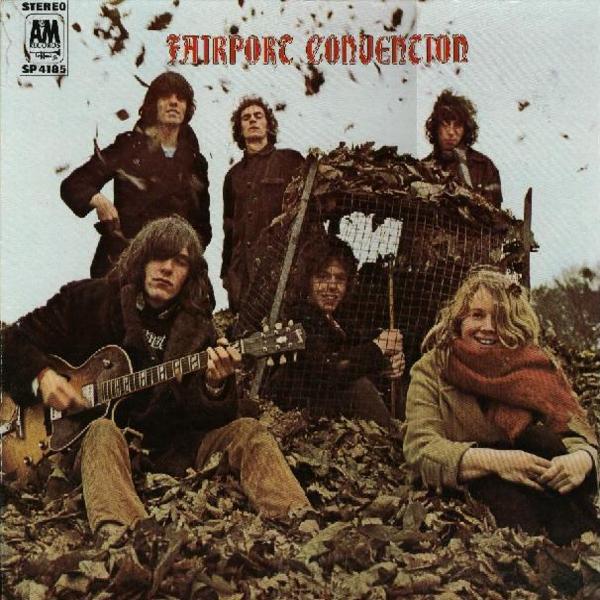
Fairport Convention were searching for their own sound when they made their debut with this diverse collection of progressive folk rock.   The group started with bassist Ashley Hutchings and guitarist Simon Nicol, who met while playing together n the Ethnic Shuffle Orchestra.  They would convene upstairs at a house called "Fairport" in Muswell Hill, North London where Nicol's family lived to practice, which led to the name of a group that they formed with Richard Thompson on guitar and Shaun Frater on drums.  After their first gig at St Michael's Church Hall, they found a new drummer when audience member Martin Lamble convinced them he could do better.  They soon added female vocalist Judy Dyble to the lineup and began playing around underground clubs in the London area.  Joe Boyd saw them and signed them to Island Records.  They added male vocalist Iain Matthews soon afterward and began work on their eponymous debut.  

Joe Boyd produced the sessions with Tod Lloyd at Sound Techniques in London that ran through covers of songs by Bob Dylan, Joni Mitchell, Jim & Jean, Emitt Rhodes, and an adaptation of a poem by George Painter, and some original material.  The album features Judy Dyble on lead vocals, electric and acoustic autoharps, recorder, and piano; Ian MacDonald (Iain Matthews) on lead vocals and Jew's harp; Richard Thompson on vocals, lead electric and acoustic guitars, and mandolin; Simon Nicol on vocals, electric 12 and 6 string, and acoustic guitars; Ashley Hutchings on bass guitar, jug, and double bass; and Martin Lamble on percussion and violin; with Claire Lowther on cello.  


While it evokes the psychedelic sound of groups like Jefferson Airplane, 'Fairport Convention' has a life all its own.  It never charted and wouldn't even be released in the US for two years.  It would be the only album the group recorded with Judy Dyble.  


http://www.fairportconvention.com/


'Fairport Convention' 

full album:


00:00 Time Will Show the Wiser (Emitt Rhodes)
03:07 I Don't Know Where I Stand (Joni Mitchell)
06:53 If (Stomp) (Ian MacDonald, Richard Thompson)
09:42 Decameron (Paul Ghosh, Andrew Horvitch, Thompson)
13:27 Jack O'Diamonds (Bob Dylan, Ben Carruthers)
16:59 Portfolio (Judy Dyble, Tyger Hutchings)
19:01 Chelsea Morning (Joni Mitchell)
22:07 Sun Shade (Ghosh, Horvitch, Thompson)
22:54 The Lobster (George Painter, Hutchings, Thompson)
30:43 It's Alright Ma, It's Only Witchcraft (Hutchings, Thompson)
33:58 One Sure Thing (Harvey Brooks, Jim Glover)
36:51 M1 Breakdown (Hutchings, Simon Nicol)

Bonus Tracks
38:23 Suzanne (Leonard Cohen)
44:12 If I Had a Ribbon Bow (Hughie Prince, Lou Singer)
46:57 Morning Glory (Larry Beckett, Tim Buckley)
50:10 Reno, Nevada (Richard Fariña)