The band opted out of working again with Butch Vig (who had produced Gishand Siamese Dream) and tried to change things up by bringing in Flood and Alan Moulder as co-producers. Some tracks were started in the fall of 1994 at Corgan's home studio Sadlands as well as Bugg Studios at Iha's home; but Flood insisted that they play live together on a daily basis. They began recording basic tracks at their Pumpkinland rehearsal space on the North Side of Chicago, which ended up forming the foundation of the album. More work was done at the Chicago Recording Company and The Village Recorder with multiple recording booths making it easier to get more work done. And there was a lot of work to be done, adding sythesizers, sequencers, loops, and other embellishments gave each track its own sound. In the end, 'Mellon Collie and the Infinite Sadness' had twenty-eight songs and clocked in at over two hours long.
'Mellon Collie and the Infinite Sadness' features Jimmy Chamberlin on drums, vocals on "Farewell and Goodnight"; Billy Corgan on lead vocals, lead guitar, piano, mellotron, production, mixing, string arrangement on "Tonight, Tonight", art direction and design; James Iha on rhythm guitar; backing vocals, mixing, and additional production on "Take Me Down" and "Farewell and Goodnight"; vocals on "Take Me Down"; D'arcy Wretzky on bass guitar, vocals on "Beautiful" and "Farewell and Goodnight"; with the Chicago Symphony Orchestra playing on "Tonight, Tonight"; Greg Leisz adding pedal and lap steel guitar on "Take Me Down"; and Audrey Riley doing the string arrangement for "Tonight, Tonight".
'Mellon Collie and the Infinite Sadness' earned The Smashing Pumpkins Grammy nominations for Album of the Year, Record of the Year ("1979"), Best Alternative Music Performance, Best Rock Performance by a Duo or Group with Vocal ("1979"), Best Hard Rock Performance with Vocal ("Bullet with Butterfly Wings"), Best Pop Instrumental Performance ("Mellon Collie and the Infinite Sadness"), and Best Music Video, Short Form ("Tonight, Tonight"). The band won only one: Best Hard Rock Performance with Vocal for "Bullet with Butterfly Wings". 'Mellon Collie and the Infinite Sadness' has sold over ten million copies in the US alone. http://www.smashingpumpkinsnexus.com/ "Tonight, Tonight" went to forty-six in the Netherlands, thirty-nine in Belgium, thirty-six on the US pop chart, twenty-one in Australia, thirteen in Ireland, seven in the UK, five on the US alternative chart, four on the US mainstream rock tracks chart, and number two in New Zealand. "1979" became the band's biggest hit, reaching number thirty-eight in France, twenty-nine in the Netherlands, twenty-one in Belgium, sixteen in Australia and the UK, twelve on the US pop chart, nine in New Zealand, six in Ireland, two in Canada, and number one on the US alternative chart and the US mainstream rock tracks chart. "Bullet with Butterfly Wings" reached number forty-one in New Zealand, thirty-three in Australia, twenty-two on the US pop chart, twenty in the UK, eighteen in Canada and the Netherlands, seventeen in France, number four on the US mainstream rock tracks chart, and number two on the US alternative chart. It gave the band their first top forty hit and their first Grammy. "Thirty-Three" hit fifty-one in Australia, thirty-nine on the US pop chart, twenty-four in Canada, twenty-one in the UK, eighteen on the US mainstream rock tracks chart, seven in New Zealand, and number two on the US alternative chart. "Zero" found value at number fifteen on the US mainstream rock tracks chart, nine on the US alternative chart, and number three in New Zealand. smashing pumpkins - zeroby aquarius3 'Mellon Collie and the Infinite Sadness' full album: All songs written by Billy Corgan, except where noted. Disc one – Dawn to Dusk 1."Mellon Collie and the Infinite Sadness" 2:52 2."Tonight, Tonight" 4:14 3."Jellybelly" 3:01 4."Zero" 2:41 5."Here Is No Why" 3:45 6."Bullet with Butterfly Wings" 4:18 7."To Forgive" 4:17 8."Fuck You (An Ode to No One)" 4:51 9."Love" 4:21 10."Cupid de Locke" 2:50 11."Galapogos" 4:47 12."Muzzle" 3:44 13."Porcelina of the Vast Oceans" 9:21 14."Take Me Down" Iha2:52 Disc two – Twilight to Starlight 1."Where Boys Fear to Tread" 4:22 2."Bodies" 4:12 3."Thirty-Three" 4:10 4."In the Arms of Sleep" 4:12 5."1979" 4:25 6."Tales of a Scorched Earth" 3:46 7."Thru the Eyes of Ruby" 7:38 8."Stumbleine" 2:54 9."X.Y.U." 7:07 10."We Only Come Out at Night" 4:05 11."Beautiful" 4:18 12."Lily (My One and Only)" 3:31 13."By Starlight" 4:48 14."Farewell and Goodnight" Iha4:22
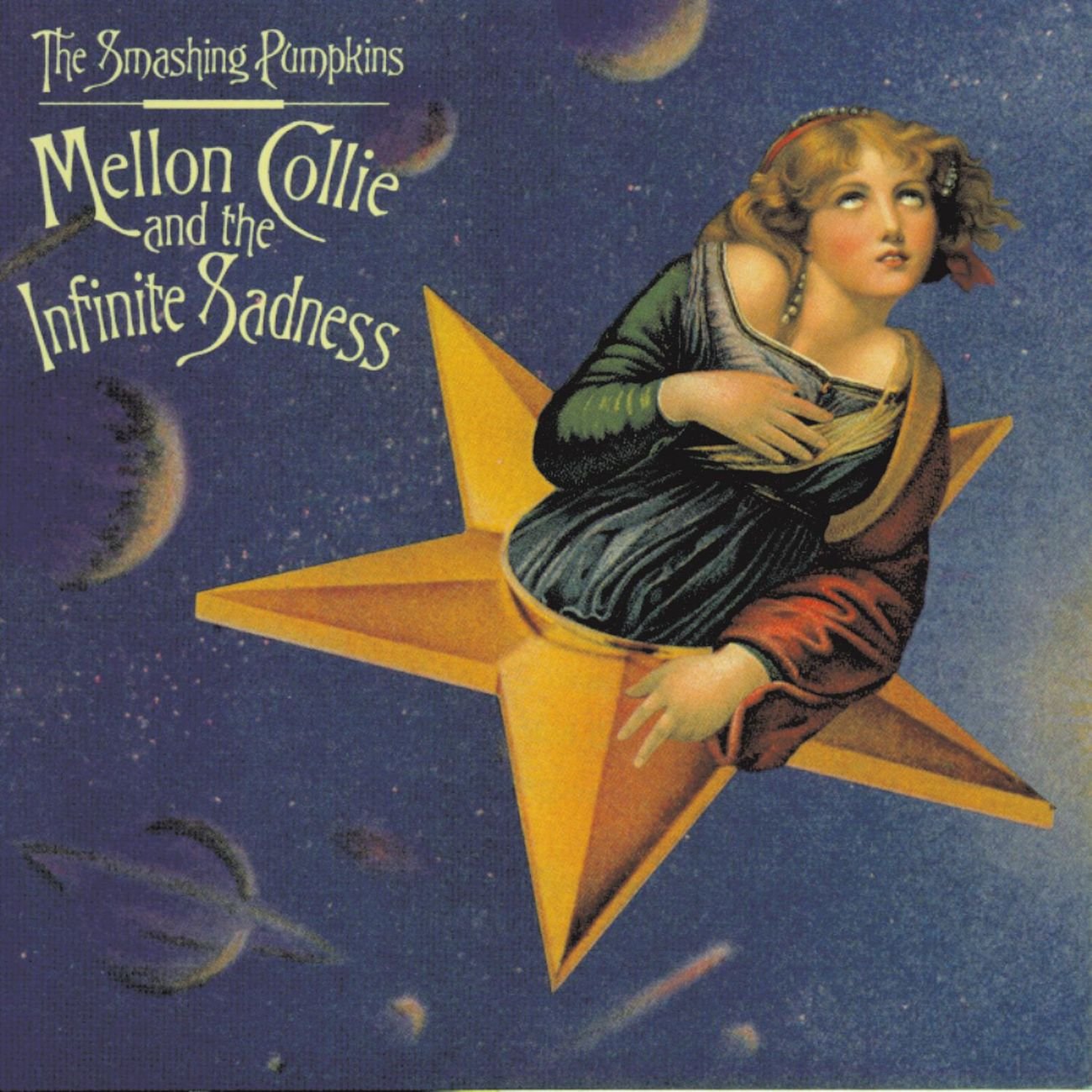
demos 01 - Mellon Collie and the Infinite Sadness [0:00] 02 - Lily (My One and Only) [2:34] 03 - To Forgive [5:53] 04 - Bullet With Butterfly Wings [9:40] 05 - Here Is No Why [14:10] 06 - Galapogos - [17:50] 07 - Frantic Ab Groove [22:05] 08 - Autumn Nocturne [24:57] 09 - Ugly [26:27] 10 - Wishing You Were [29:14] 11 - Thirty-Three [32:21] 12 - Beautiful [36:35] The album cover was done by illustrator John Craig, using a composite of images from classic paintings. The face is Greuze by French painter Jean-Baptiste.
The body is from a Raphael painting of Saint Catherine of Alexandria.
Pink Floyd bent the rules to understand the spaces between with a plutonium prototype pacemaker, transmogrifying an amazing pudding into this psychedelic symphonic bovine breakfast. Syd Barrett's involvement with the band had diminished after The Piper at the Gates of Dawnwith minimal involvement on A Saucerful of Secrets. Roger Waters and David Gilmour had helped him to produce his solo album The Madcap Laughs; while the band carried on in 1969 with the half live, half studio double album Ummagummaand the soundtrack to Moredirected by Barbet Schroeder. In 1970, they worked on the soundtrack to the film Zabriskie Point directed by Michelangelo Antonioni before heading back to England to begin work on their next album.
The album sleeve was designed by the Hipgnosis art collective with the band wanting to get away from the psychedelic imagery of their previous releases. Storm Thorgerson drove out into the countryside and took a picture of a cow named Lulubelle III in Potters Bar. The original pressings did not have the name of the band on the sleeve. It was their first album to be mixed in quadrophonic sound and their first album to go to the top of the British album chart. It also went to number eighty-one in Switzerland, fifty-five in the US, thirty-nine in Canada, thirty in Australia, eleven in France, eight in Germany, and number five in the Netherlands.
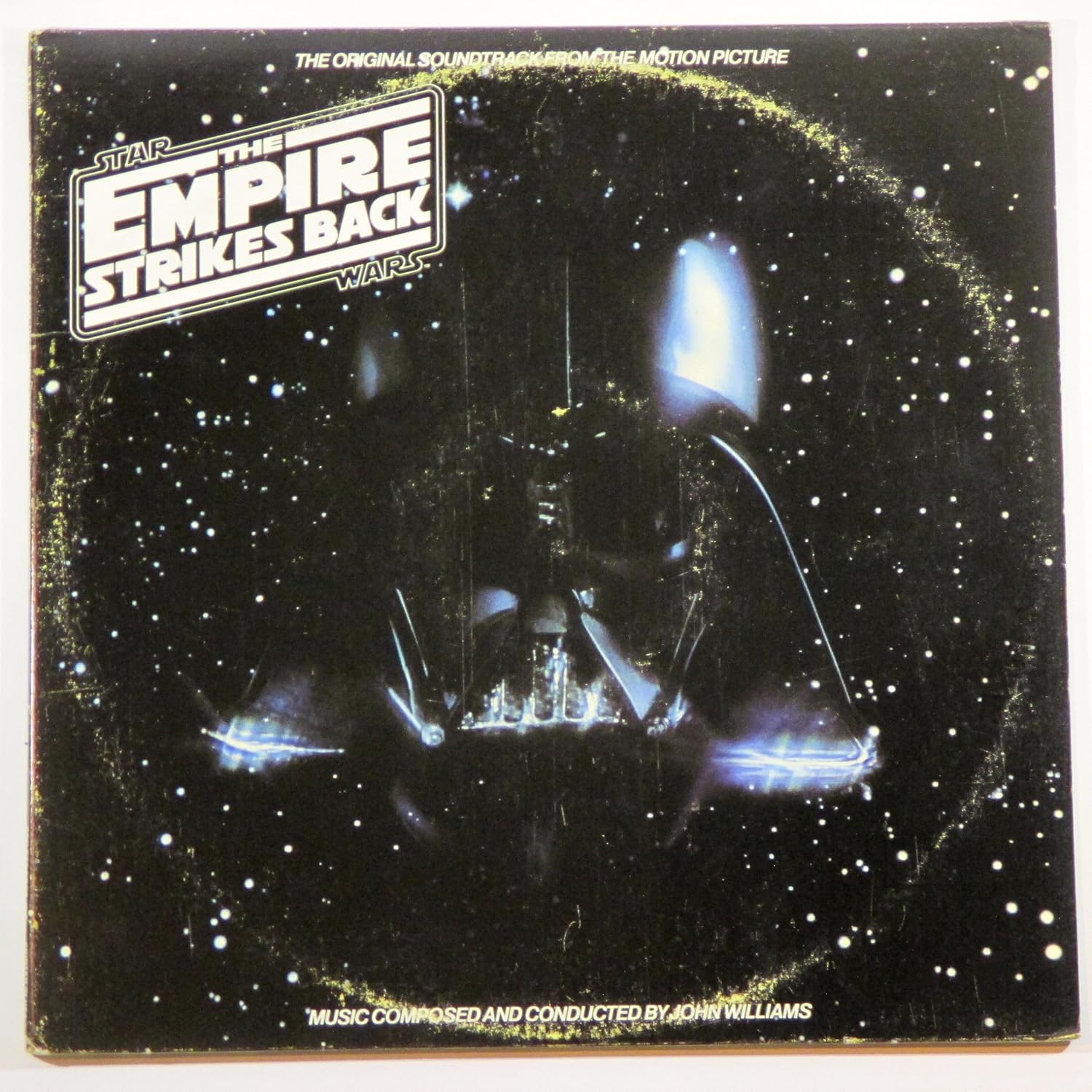
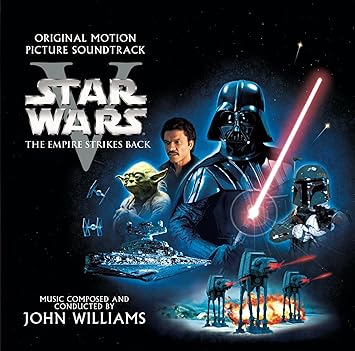
John Williams reached the pinnacle of his illustrious career with the music for this epic imperial expansion. Born in Floral Park, New York, John Towner Williams grew up in Los Angeles, where he attended North Hollywood High School and the University of California, Los Angeles. After being drafted, he conducted and arranged music for The U.S. Air Force Band. He went to New York to study at the Juilliard School and the Eastman School of Music, working as a jazz pianist in clubs and a session player for studios with the nickname "Little Johnny Love" Williams. He collaborated with Henry Mancini on Peter Gunn, Days of Wine and Roses, and Charade; and did work for several television programs including Gilligan's Island and Lost in Space. His first Academy Award nomination came in 1967 for Valley of the Dolls and another two years later for Goodbye, Mr. Chips. He would win with his adapted film score for Fiddler on the Roof in 1972. Another nomination came a year later for Images. His scores for a trio of successful disaster films (The Poseidon Adventure, The Towering Inferno, and Earthquake) led to a collaboration with Steven Spielberg for The Sugarland Express and then Jaws, which earned him his second Academy Award. While working with Spielberg on Close Encounters of the Third Kind, the director recommended Williams to George Lucas for his space adventure 'Star Wars'. The film and its soundtrack became one of the biggest successes of all time and won Williams an Academy Award for Best Original Score.
------------------- 0:00:00 20th Century Fox Fanfare 0:00:20 Main Title/Ice Planet Hoth 0:08:29 The Wampa's Lair/Vision of Obi-Wan/Snowspeeders Take Flight 0:17:12 The Imperial Probe/Aboard the Executor 0:21:33 The Battle of Hoth 0:36:17 The Asteroid Field 0:40:33 Arrival on Dagobah 0:45:25 Luke's Nocturnal Visitor 0:47:57 Han Solo and the Princess 0:51:22 Jedi Master Revealed/Mynock Cave 0:57:04 The Training of a Jedi knight/The Magic Tree 1:02:17 Imperial March 1:05:17 Yoda's Theme 1:08:44 Attacking a Star Destroyer 1:11:48 Yoda And The Force 1:15:50 Imperial Starfleet Deployed -City In The Coulds 1:21:54 Lando's Palace 1:25:46 Betrayal At Bespin 1:29:30 Deal With The Dark Lord 1:32:04 Carbon Freeze/Darth Vader's Trap/Departure of Boba Fett 1:43:55 The Clash Of Lightsabers 1:48:12 Rescue from Cloud City/Hyperspace 1:57:21 The Rebel Fleet -End Title
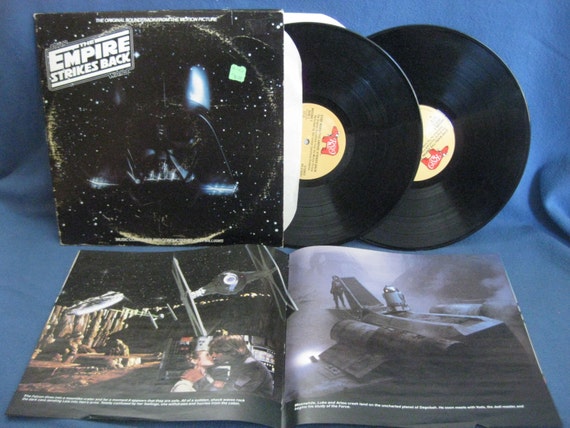
'The Empire Strikes Back' original vinyl release on RSO.
The Beatles wiped the slate clean with this sprawling and diverse collection of solo songs. The unprecedented success of 'Sgt Pepper's Lonely Hearts Club Band' had left the band uncertain about which direction they would go next. They worked on two feature films and their soundtracks ('Magical Mystery Tour' and 'Yellow Submarine') before embarking on a trip to the ashram of Maharishi Mahesh Yogi in Rishikesh, India to study Transcendental Meditation. Ringo left after only ten days. Paul left after a month. George and John stuck around for another month until they heard that the Maharishi had made sexual advances toward women at the compound.
When the band reconvened at Abbey Road Studios, they had amassed over thirty songs, most of which had been written while in India. The sessions were produced by George Martin and Chris Thomas and were fraught with tension as each member of the band fought for control of their own songs. Ringo quit the band for two weeks during the recording of the album; but was convinced to return. The album features John Lennon on lead, harmony and background vocals; acoustic, lead, bass and rhythm guitars; keyboards (electric and acoustic pianos, Hammond organ, harmonium and mellotron); extra drums and assorted percussion (tambourine, maracas, cymbals, thumping on the back of an acoustic guitar, handclaps and vocal percussion); harmonica, whistling and saxophone; tapes, tape loops and sound effects (electronic and home-made); Paul McCartney on lead, harmony and background vocals; acoustic, lead, rhythm and bass guitars; keyboards (electric and acoustic pianos and Hammond organ); assorted percussion (timpani, tambourine, cowbell, hand shake bell, handclaps, foot taps and vocal percussion); drums (on "Back in the U.S.S.R.","Dear Prudence", "Wild Honey Pie", and "Martha My Dear"); recorder and flugelhorn; sound effects; George Harrison on lead, harmony and background vocals; acoustic, rhythm, bass and lead guitars; Hammond organ; extra drums and assorted percussion (tambourine, handclaps and vocal percussion) and sound effects; and Ringo Starr on drums and assorted percussion (tambourine, bongos, cymbals, maracas and vocal percussion); electric piano and sleigh bell (on "Don't Pass Me By"), lead vocals (on "Don't Pass Me By" and "Good Night") and backing vocals ("The Continuing Story of Bungalow Bill"); with contributions from Eric Clapton on lead guitar on "While my Guitar Gently Weeps"; Mal Evans on backing vocals and handclaps on "Dear Prudence", handclaps on "Birthday", and trumpet on "Helter Skelter"; Jack Fallon on violin on "Don't Pass Me By"; Grant Mansell on drums on "Martha My Dear"; Pattie Harrison on backing vocals on "Birthday"; Jackie Lomax on backing vocals and handclaps on "Dear Prudence"; Maureen Starkey on backing vocals on "The Continuing Story of Bungalow Bill"; Yoko Ono on backing vocals, brief lead vocals and handclaps on "The Continuing Story of Bungalow Bill", backing vocals on "Birthday", speech, tapes and sound effects on "Revolution 9"; and including session musicians Ted Barker on trombone on "Martha My Dear"; Leon Calvert on trumpet and flugelhorn on "Martha My Dear"; Henry Datyner, Eric Bowie, Norman Lederman, and Ronald Thomas on violin on "Glass Onion"; Bernard Miller, Dennis McConnell, Lou Soufier and Les Maddox on violin on "Martha My Dear"; Reginald Kilby on cello on "Glass Onion" and "Martha My Dear"; Eldon Fox on cello on "Glass Onion"; Frederick Alexander on cello on "Martha My Dear"; Harry Klein on saxophone on "Savoy Truffle" and "Honey Pie"; Dennis Walton, Ronald Chamberlain, Jim Chest, and Rex Morris on saxophone on "Honey Pie"; Raymond Newman and David Smith on clarinet on "Honey Pie"; Art Ellefson, Danny Moss, and Derek Collins on tenor sax on "Savoy Truffle"; Ronnie Ross and Bernard George on baritone sax on "Savoy Truffle"; Alf Reece on tuba on "Martha My Dear"; The Mike Sammes Singers on backing vocals on "Good Night"; Stanley Reynolds and Ronnie Hughes on trumpet on "Martha My Dear"; Tony Tunstall on French horn on "Martha My Dear"; John Underwood and Keith Cummings on viola on "Glass Onion"; Leo Birnbaum and Henry Myerscough on viola on "Martha My Dear"; and the overwrought production team of Geoff Emerick on engineering, and speech on "Revolution 9"; George Martin on record production and mixing; string, brass, clarinet, orchestral arrangements and conducting; and piano on "Rocky Raccoon"; Ken Scott as engineer and mixer; Barry Sheffield as engineer ( at Trident Studio); Chris Thomas on production; Mellotron on "The Continuing Story of Bungalow Bill", harpsichord on "Piggies",piano on "Long, Long, Long", and saxophone arrangement on "Savoy Truffle". During the sessions, the band would often separate into different recording spaces to focus on their own tracks, with the various engineers and producers scrambling to keep everything together. George Martin left suddenly to go on holiday amid the chaos, leaving his star assistant struck Chris Thomas in charge for the first time.
'The Beatles' was the first album released on the band's own Apple Records. The eclectic mix of musical styles on the two album set was too much for many critics; but the public went crazy for it. In the UK, it made its debut at the top of the album charts, and went to number one in Australia, Canada, France, Germany, Norway, and in the US, where it remains the tenth biggest selling album of all time due to its status as a double album. On account of its plain white packaging, it is most commonly referred to as "the White Album".
Also recorded during the sessions was 'Hey Jude', which was released as a single three months before 'The Beatles'. It became the biggest single of their career.
The b-side was a sped up version of 'Revolution'.
'Revolution' and 'Revolution 9' were originally part of the same track; but were eventually separated.
unplugged
'The Beatles' full album: (as best as the internets will allow)


.jpg)