Showing posts with label steely dan. Show all posts

Sunday, November 22, 2015

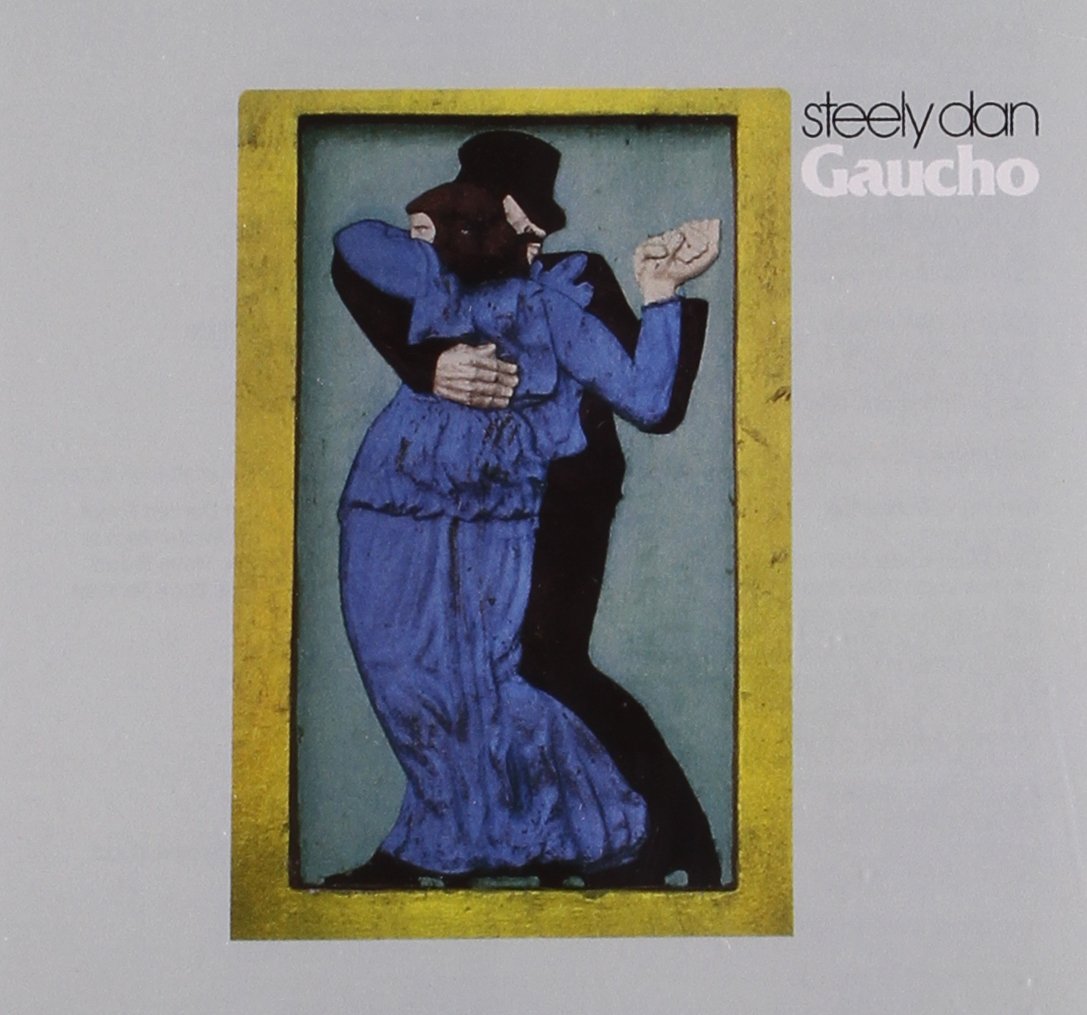
gaucho


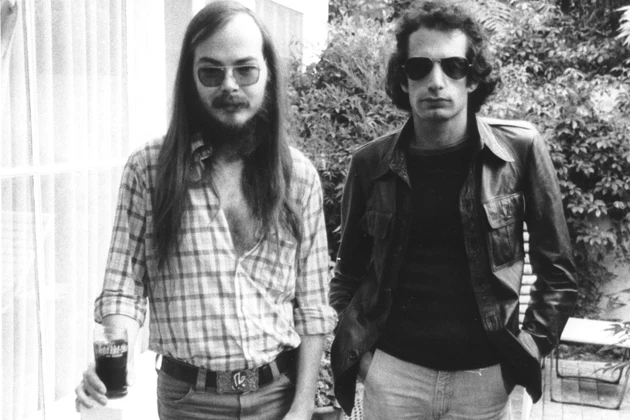
Steely Dan fell on hard times as they tried to shake it whim for whim to achieve a polished perfection.  With a half dozen increasingly successful albums under their belt (Can't Buy a Thrill in 1972,  Countdown to Ecstasy in 1973,  Pretzel Logic in 1974,  Katy Lied in 1975,  The Royal Scam in 1976,  and  Aja in 1977),  soul survivors Donald Fagen and Walter Becker changed labels from ABC to MCA and relocated to New York with longstanding producer Gary Katz to begin recording their next album 'Gaucho'.   

The sessions were fraught with problems as they struggled to achieve the sound they desired with dozens of studio musicians.  At one point, months of work on one of the songs was accidentally erased by an assistant engineer.  After laboring with session drummers to get the right take, engineer Roger Nichols created a drum machine called "Wendel" to get them what they wanted; but it was a time consuming process.  At the same time, Becker's increased drug use became an issue with a wrongful death lawsuit following the overdose of his girlfriend Karen Roberta Stanley.  Becker was sidelined for six months when he was hit by a car while walking home in Manhattan.  

The recording process stretched out over two years at Sigma Sound in Philadelphia, Village Recorders in Los Angeles,  Soundworks recording in Astoria,  Automated Sound and A&R in New York City,  and  Producer's Workshop in Hollywood  featuring  Donald Fagen on lead vocals, synthesizer, electric piano, and organ;    and   Walter Becker on bass and guitar;     with    Rob Mounsey on piano, synthesizer, and horn arrangement;    Don Grolnick on electric piano, and clavinet;    Pat Rebillot and Joe Sample on electric piano;    Steve Khan on guitar and lead guitar;   Mark Knopfler and Larry Carlton on lead guitar;    Hugh McCracken,  Hiram Bullock,  and  Rick Derringer on guitar;   Chuck Rainey and Anthony Jackson on bass;   Bernard Pretty Purdie,  Rick Marotta,  Steve Gadd,  and  Jeff Porcaro on drums;    Crusher Bennett, Steve Gadd, Victor Feldman, Ralph McDonald, and Nicholas Marrero on percussion;    Tom Scott on alto saxophone and clarinet, tenor saxophone, lyricon, and horn arrangement;    Michael Brecker and Dave Tofani on tenor saxophone;   David Sanborn on alto saxophone;   Ronnie Cuber on baritone saxophone;   Randy Brecker on trumpet and flugelhorn;    George Marge, Walter Kane on clarinet;   Wayne Andre on trombone;   and  backing vocals  by   Michael McDonald, Patti Austin, Valerie Simpson, Frank Floyd, Diva Gray, Gordon Grody, Lani Groves, Leslie Miller, Zachary Sanders, and Toni Wine.    


Fagen says:    "New York is the depository for misfit Americans – there’s a reason that we’re here. And why we don’t live in Cincinnati...I think New York has revitalized our stuff. But L.A. did a lot for us as far as giving us a perspective on America ... We started using sequencing and stuff on Gaucho out of desperation really. We were having trouble laying down 'Hey Nineteen'. We tried it with two different bands and it still didn't work, so one of us said something like 'It's too bad that we can't get a machine to play the beat we want, with full-frequency drum sounds, and to be able to move the snare drum and kick drum around independently.' Roger [Nichols] replied 'I can do that.' This was back in 1978 or something, so we said 'You can do that???' To which he said 'Yes, all I need is $150,000.' So we gave him the money out of our recording budget, and six weeks later he came in with this machine and that is how it all started ...  We write the songs individually. They are single audio objects; we don’t plan the album conceptually. So it’s hard to characterize the thing as a whole...It’s possible that we took a few steps backward with this album. In a way, it’s rhythmically more simplistic than Aja.. But the harmonies are interesting. I don’t know if it’s better or worse...The way we write – it’s more improvisational and instinctual. We don’t really use “strategies” consciously...It’s a matter of maturing. Becoming more selective with material, knowing what to write about, being able to pick and choose – showing more discretion than in earlier days. Musically, our harmonic vocabulary and so on has expanded a great deal… so I feel we’ve progressed a lot since our first records." 


Becker looks back:  "In some ways, the early, rougher ones sound better now than the later ones, whereas at the time it seemed like we were ever rising towards the light. I think because of the kind of music we were doing, it seemed to us that it should be real seamlessly put together and have a high level of polish to make it work. We didn't want it to sound like kids trying to play jazz - which I think it did pretty much sound like sometimes, and which now I kind of like the sound of. But at the time we thought what we were doing was so different to other things that were going on, and our own harsh appraisals of our talents dictated to us that we work harder to make it really smooth and flawless...A lot of times we didn't know what we wanted.  Donald and I would write a song on piano, or piano and guitar, and sometimes we'd have a very primitive demo, but often as not we'd go in the studio and we'd be hearing the song played by a band for the very first time. And sometimes it didn't sound like what you'd thought it would sound like, and you had to try and figure out why that was, whether your conception of the song was wrong, or who could change their part, or how to rethink what you were doing to make it work. So a lot of times we didn't know exactly what it was we needed to do at a given moment to get things to be the way we wanted them to be...Other times, we just wanted it to be better, so we'd keep trying for another take. We kept adjusting our standards higher and higher, so many days we'd make guys do 30 or 40 takes and never listen to any of them again, because we knew none of them were any good: but we just kept hoping that somehow it was just going to miraculously get good...Working together as long as we did, Donald and I followed a certain line of thinking to its logical conclusion, and then perhaps slightly beyond - that was what we realised when we'd finished Gaucho: it was not as much fun...It wasn't fun at all, really."


'Gaucho' was another platinum success for the band, going to number forty-four in the Netherlands, twenty-seven in the UK, eighteen in Canada, fifteen in Sweden, nine in Australia and the US, seven in New Zealand, and five in Norway.


http://www.steelydan.com/


"Hey Nineteen"


"Babylon Sisters"


'Gaucho'
full album:


All songs written by Becker and Fagen, except where noted

Side one
"Babylon Sisters" – 5:55
"Hey Nineteen" – 5:10
"Glamour Profession" – 7:29
Side two
"Gaucho" (Becker, Fagen, Jarrett) – 5:32
"Time Out of Mind" – 4:14
"My Rival" – 4:34
"Third World Man" – 5:13


outtakes:


Sunday, March 29, 2015

katy lied


Steely Dan went searching for the song in hot licks and rhetoric and almost dug themselves a hole with this slick and sophisticated stridulating jazz pop excavation.   The band had seen numerous lineup changes with each of their first three albums (Can't Buy a Thrill in 1972,  Countdown to Ecstasy in 1973,  and  Pretzel Logic in 1974) with songwriters Walter Becker and Donald Fagen remaining the only full time members remaining for the recording of 'Katy Lied'.  The sessions took place at ABC Recording Studios in Los Angeles and featured    Donald Fagen on vocals, piano, keyboards, and saxophone;   Walter Becker on bass and guitar (solo on "Black Friday", "Bad Sneakers");   Jeff Porcaro on drums on all songs except "Any World (That I'm Welcome To)";   Michael Omartian and David Paich on pianos and keyboards;   Wilton Felder and Chuck Rainey on bass guitars;   Victor Feldman on percussion;  Hugh McCracken on guitar;   Denny Dias on guitar (solo on "Your Gold Teeth II");   Rick Derringer on guitar (solo on "Chain Lightning");   Dean Parks on guitar (solo on "Rose Darling");   Elliott Randall on guitar (solo on "Throw Back the Little Ones");   Larry Carlton on guitar on "Daddy Don't Live in That New York City No More";   Jimmie Haskell on horn & horn arrangement on "Throw Back the Little Ones";   Bill Perkins on horn on "Throw Back the Little Ones";   Phil Woods on alto saxophone solo on "Doctor Wu";   Hal Blaine on drums on "Any World (That I'm Welcome To)";   Michael McDonald on background vocals;   and  Myrna Matthews, Sherlie Matthews, and Carolyn Willis on background vocals on "Everyone's Gone to the Movies".  'Katy Lied' was produced by Gary Katz;   engineered by Roger Nichols;   mastered by Rick Collins; and arranged by Jimmie Haskell;   with sound consultant Dinky Dawson; and consultant Daniel Levitin.  

Fagan fumes:  "We had a problem with Katy Lied from a technical standpoint. We went through a noise-reduction system which had just come out on the market and it ruined our record; it broke our record and as Walter says, the moral is don't be so hasty to use the latest and the greatest piece of equipment."

Katz gripes:   “We had to decide whether we were just going to scrap the album or put it out.  It was close...it suffered 85 percent.  I can’t listen to it.  I hate to hear an album that we’re involved in that’s not up to our standards. It was the best-sounding thing I ever heard before it was ruined...The ABC studio is a mess."  

Dias reveals:   "Records that are re-released with the indication "direct from the master tape" are generally disappointing because here is the last chance for the people who made the record to correct any mistakes made during mixing. A little adjusting here and there can really make a record sparkle. "Katy Lied" needed more than a little adjustment...The mastering process now became a desperate attempt to produce a vinyl disk that could be played on an average phonograph...Walter stepped in to produce the final release version. It was still disappointing, but it sounded better on more sound systems so it was the better choice." 

Becker says:   “If you heard that album the way it originally went down on tape, you would have heard something else ... The information about equipment] was an attempt at humor more than anything else. The design and notes were a parody of a 50’s Atlantic jazz LP."


'Katy Lied' went to number twenty-eight in Australia, thirteen in the UK and the US, twelve in Canada, and number ten in New Zealand.  The album cover is a photograph of a katydid by Dorothy White.


http://www.steelydan.com/

http://www.steelydan.com/lyrkaty.html


"Black Friday" peaked at number thirty-seven on the US pop chart.  
https://www.youtube.com/watch?v=erVb0xGC7nw


"Doctor Wu" gives the album its title.  
https://www.youtube.com/watch?v=1ATPFtDWW_k


'Katy Lied'
full album:

https://myspace.com/steelydan/music/album/katy-lied-8179433


All songs written by Walter Becker and Donald Fagen.

Side one
"Black Friday" – 3:33
"Bad Sneakers" – 3:16
"Rose Darling" – 2:59
"Daddy Don't Live in That New York City No More" – 3:12
"Doctor Wu" – 3:59
Side two
"Everyone's Gone to the Movies" – 3:41
"Your Gold Teeth II" – 4:12
"Chain Lightning" – 2:57
"Any World (That I'm Welcome To)" – 3:56
"Throw Back the Little Ones" – 3:11


liner notes:

Original liner notes from the 1975 LP

This is a hi-fidelity recording. Steely Dan uses a specially constructed 24-channel tape recorder, a "State-of-the-Art" 36-input computerized mixdown console, and some very expensive German microphones. Individual microphone equalization is frowned upon. The sound created by musicians and singers is reproduced as faithfully as possible, and special care is taken to preserve the band-width and transient response of each performance. Transfer from master tapes to master lacquers is done on a Neumann VMS 70 computerized lathe equipped with a variable pitch, variable depth helium cooled cutting head. The computerized logic circuits of the VMS 70 widen and narrow the grooves on the disc in accordance with its own bizarre electronic mentation for reasons known only to its designers; this accounts for the lovely light and dark patterns that can be seen on the surface of the pressing. Vinylite compound is used. For best results observe the R.I.A.A. curve.

Liner notes from the 1999 MCA re-issue

"Peachy went south for the week."- Michael Caine , in a movie 

What to call this latest instalment in the saga? "Too Little, Too Late"? "Almost Good"? "And Then There Were Three"? "The Rape of the Domini"? (Forget it, we're saving that one for later.) In any case, by the end of 1974 we had learned a number of important life lessons, to wit:

1. There is indeed no business like show business.

2. Background singers, when on the road and deciding whom to fuck first, will start with the roadies and move up from there, without necessarily ever getting to the stewards of the actual intellectual property upon which the success of the enterprise depends.

3. Valium - one blue equals two yellows equals five whites. The purple ones are for veterinary use only.

4. When in London, don't neglect to visit a certain Dr. Bell.

5. Powerful antibiotics should be avoided unless absolutely necessary.

6. Against all odds, an inebriated teamster (with or without underage girl in tow) may be the most excellent and inspiring of M.C.'s.

7. Two drummers are much better than one, sometimes. 

8. Men are beasts. 

Which is why, by summer of that self-same year, we found ourselves back in Los Angeles with no band, no manager, no plans to tour, no money, some minor albeit possibly irreversible brain damage, and, thanks to Gary Katz, the keys to a certain unused office on the ground floor of the ABC/Dunhill Records complex. It was there that we repaired on an autumn evening to lick our wounds and hopefully, begin work on a new suite of songs which would someday adorn the greatest Steely Dan album ever. 

Even a cursory perusal of the previous paragraph convinces the authors that they have raised more questions than they have answered. To wit: 

1. What happened to the band? 

When we came off the road after the long gruelling "Pretzel Logic" tour - penniless, infirm, disillusioned - we had long since come to the conclusion that certain individuals were not suited by temperament or constitution to the rigors of long road trips in the company of superannuated prep school hooligans, especially if the goal of said trips - crisp and stirring recitals of the latest cutting-edge jazz-pop ditties for appreciative audiences in near-ideal acoustical environments - were impossible to achieve, or very nearly so. whereas certain of our bandmates had come to a very different and completely incompatible conclusion, namely, that we should get back out on the road as soon as possible and stay there until our very dicks turned green and fell off. So it was with some regret that we concluded that a parting of the ways was inevitable, and that there was no time like the present to clean house and say our goodbyes, and, in the words of Robert Heinlein, "no time like the future to get things done."

2. What happened to the manager? 

A band with no plans to tour, now or ever, has no need of a manager. 'Nuff said.

3. What happened to the money? 

Don't ask. 

But three things we still had - Gary Katz, guitarist Denny Dias, and the benediction of the great Jay Lasker, president and absolute ruler of ABC/Dunhill Records. Although somewhat skeptical about our contention that our careers would survive and in fact rhrive now that we were no longer a touring band, Jay was still in the marketplace from which to hawk their wares, that is, we still had a record deal and a budget, at least for the time being. 

By now well-acclimated to the bland vagaries of the L.A. scene, for a time that fall we drove each evening from Studio City across Laurel Canyon to Beverly Boulevard, where we had the empty ABC/Dunhill offices all to ourselves. In our little room, equipped with a leather couch, a piano, a lamp, and nothing else, we worked away on our sad little tunes. When we needed a break, we could always go upstairs and make trunk calls on Dennis Lavinthal's WATS line, or sit for a spell in Marv Helfer's big leather chair. If we were inclined to investigate in any way the workstations of the beautiful and nubile secretaries whom we perhaps worshipped from afar, we wouldn't tell you about it anyway, especially now. Even the incredible discovery we made one night while rifling Judy's bottom drawer - even that, we are saving for another occasion. 

In the last days of our final '70s touring band, which on one or two magical evenings may have sounded almost good, we had stumbled onto a configuration of players which featured the considerable talents of drummer Jeff Porcaro and keyboardist / vocalist Mike McDonald. Porcaro, at the tender age of 21, was already a veteran of the "Sonny And Cher Show" studio band; in fact, on the very first tracking date for the new album, he arrived hours late and somewhat the worse for wear after having spent the night partying at Cher's Malibu digs. This was in sharp contrast to New York studio ace Hugh McCracken, who had arrived in town a day early, although without a guitar. 

The first order of business was to go and pick up a Stratocaster that had been left off at a repair shop on a previous visit some months or years earlier. What can we say about those long-ago sessions that has not been previously said or else rejected as unworthy of mention? Here is what we know for sure: 

1. Because Jeff Porcaro was late and because he had slightly injured his hand the night before, no recording was done on the first scheduled tracking day.

2. On the evening of that day, Chuck Rainey and Hugh McCracken went bowling.

3. The little studio at ABC/Dunhill was very nicely tricked out with a brand new Bosendorfer piano, our splendid double Magn- eplanar monitor system, and a newly acquired and fabulously expensive set of Audio Research D-76 tube power amps to go with the Maggies. You should have been there.

4. Denny arrived at the tracking session and made the announcement that "Dolores was back in town." Having said that, we turn to the trusty studio library with the aim of consulting Mr. Brian Sweet's controversial critical biography of your unworthy narrators - only to discover that they only have the Japanese edition in stock at this time. A replaying of the Katy Lied album proper, for the purposes of refreshing our failing memories, is out of the question.

5. The shiny new rack of DBX noise reduction units - did we mention those?

6. What about maintenance man Bob "Love Machine" DeAvila, he of the splendid Real Time Analysis unit, which we used to sweep the control room clean of real or imagined sonic cooties, on a thrice-monthly basis - did that guy think we were nuts, or what? O, the things we've seen and heard! - an Arp synthesizer burning in the courtyard of a West Hollywood sound stage - the thunder of a DeTomaso Pantera parked beneath the echo chambers of Studio C - the mighty room-service bill from the Beverly Wilshire hotel, reflecting the cost of the joyful reunion of Mr. Phil Woods and 200 of his closest L.A. studio/jazz-musician pallies - the world's first and last DBX noise reduction unit with factory installed wings, and a Bosendorfer piano that actually got louder after being struck - all things considered, the Katy Lied experience poses, we think, nothing so much as the musical analog of Richard Burton's famous query, in the sword and sandal epic "The Robe" - "were you...out there?" Yes, we were. 
To be continued.... 

Donald Fagen & Walter Becker


Wednesday, March 19, 2014

pretzel logic


Steely Dan tightened things up with an expanding cast of session major dudes for this twisted minstral show.  The success of their debut 'Can't Buy a Thrill' and the relative commercial letdown of the followup 'Countdown to Ecstasy' had left the band divided.  Songwriters Donald Fagen and Walter Becker had decided that they would rather spend their time in the studio while other members of the band wanted to go on tour.  Since Fagan and Becker felt that the second album had suffered from being too hastily recorded during a hectic touring schedule, they hunkered down to record 'Pretzel Logic', determined to take as much time as needed.  

The sessions at the Village Recorder in West Los Angeles with producer Gary Katz featured  Donald Fagen on keyboards, saxophone, and lead vocals;  Walter Becker on bass, guitar, and background vocals;  Jeff "Skunk" Baxter on lead guitar;  Denny Dias on guitar;  and Jim Hodder on backing vocals;   with Jim Gordon and Jeff Porcaro on drums;  Michael Omartian and David Paich on keyboards;  Timothy B. Schmit on bass and background vocals;  Wilton Felder and Chuck Rainey on bass;  Ben Benay on guitar;  Dean Parks on guitar and banjo;  Plas Johnson, Jerome Richardson, and Ernie Watts on saxophone;  Lew McCreary on horn;  Ollie Mitchell on trumpet;  Michael McDonald on keyboards and backing vocals;  and Royce Jones and Victor Feldman on percussion.  


Fagan would explain at the time:  “We’re a big noisy band now...It’s kind of a workshop…’cause we’re always juggling musicians around—although lately the eight musicians we have now seem to be working out very well. The band as it stands is now quite stable...I did most of the singing on the first album and on the albums since. But then we realised that in order to sell records you have to go out and actually play.”It was very difficult to convince me to get up in front of people and sing. But finally I got enough, courage to do it, And I’ve been getting into it slowly. Now it’s come together pretty well...The first album was more or less experimental. I think the latest one comes closest to what we’ve been wanting to do...We don't necessarily try to communicate any specific thing to the listener. It's more or less we try to communicate an impression, and the listener has the freedom to interpret as he wants...We really don't think about it. The record company was starting to get annoyed with us because they couldn't get a single off 'Countdown To Ecstasy'. The only thing we did was tightened up the arrangements. The songs weren't quite so long. And 'Night By Night' was basically written for commercial purposes.”

'Pretzel Logic' wound its way to number thirty-seven in the UK, twenty-three in New Zealand, eighteen in Australia, eight in the US, and number five in Canada.  


http://www.steelydan.com/


"Rikki Don't Lose That Number" – 4:30
was a major hit for the band, going to number four on the US pop singles chart, making it their highest charting single.  Fagan says:   "That's a very simple love song to a young lady. I always thought it was a rather erotic, decadent sort of thing. Here you find a guy, a rather rich gentleman living in a resort, and he somehow manages to capture this young lady."
http://www.youtube.com/watch?v=UfZWp-hGCdA&feature=kp


"Any Major Dude Will Tell You" – 3:05


"Through with Buzz" – 1:30
Fagan says:  ”’Through With Buzz' was just about a more-or-less platonic relationship between two young people. There's nothing really sexual about it until one, of the young people in the relationship realises he's being used and starts having paranoid fantasies and breaks off the relationship. There's no symbolism or anything. We never used puns.  It's a very saccharine sounding track with a very cynical lyric. We often do that for an ironic purpose. That is to juxtapose a rather bitter against rather sweet music."


"Pretzel Logic" – 4:28
Fagan explains:   "When it says, ’I stepped up on the platform / The man gave me the news', we conceived the platform as a teleportation device. And there are other key lines like ’I’ve never met Napoleon but I plan to find the time'.  What we're actually saying is I plan to find the time in that he lived in."
http://www.youtube.com/watch?v=Xaw0oDqDFlY


"Charlie Freak" – 2:41
http://www.youtube.com/watch?v=C2PBEblkrXk


'Pretzel Logic'
full album:


https://myspace.com/steelydan/music/album/pretzel-logic-8179438


All songs written by Walter Becker and Donald Fagen, except where noted.

Side one
"Rikki Don't Lose That Number" – 4:30
"Night by Night" – 3:36
"Any Major Dude Will Tell You" – 3:05
"Barrytown" – 3:17
"East St. Louis Toodle-Oo" (Duke Ellington, Bubber Miley) – 2:45
Side two
"Parker's Band" – 2:36
"Through with Buzz" – 1:30
"Pretzel Logic" – 4:28
"With a Gun" – 2:15
"Charlie Freak" – 2:41
"Monkey in Your Soul" – 2:31


Wednesday, October 17, 2012

can't buy a thrill


Steely Dan penetrated the musical landscape with the funky jazz grooves of their subversive pop premiere.  Donald Fagen and Walter Becker met while studying at Bard College in Annandale-on-Hudson, New York. They played in different bands while at school and then moved to Brooklyn and met Kenny Vance from Jay and the Americans while trying to sell their songs at the Brill Building. This led to them working on the soundtrack for the film 'You've Got to Walk It Like You Talk It or You'll Lose That Beat' and touring with Jay and the Americans for more than a year as part of the band. Vance hooked them up with Gary Katz who hired them as songwriters for ABC Records and moved the duo out to California. They soon realized that their songs were too complicated for the label's roster. Becker says:  "We realised even before we were doing it that we would have to do these songs ourselves. We could see that nobody was going to come along and pick up on them because they were too odd, too out of context for the day. On the one had, they expressed an odd sensibility lyrically and in their overall musical thing: and they were so musically unusual that even people who later wanted to record some of our songs had a hard time, because the jazz elements or other harmonic elements were hard to pull off."

They brought Denny Dias, Jim Hodder, and Jeff Baxter over from the East Coast to form a band. They even enlisted singer David Palmer, who would sing all of the songs during their early shows because Fagen had stage fright. Fagen considers: "They have to be performed with a certain attitude and we couldn't find the right singer when we started. I became the singer by default because I was the only one with the right attitude, essentially, even though I didn't consider myself a singer at the time."

Katz produced the sessions at the Village Recorder in Los Angeles with engineer Roger Nichols. The recordings included Donald Fagen on acoustic and electric pianos, plastic organ, and vocals; Walter Becker on electric bass, and vocals; Jeff "Skunk" Baxter on guitar, pedal steel guitar, and spoken word; Denny Dias on guitar, electric sitar; Jim Hodder on drums, percussion, and vocals; David Palmer on vocals; plus Elliott Randall on guitar; Jerome Richardson on tenor saxophone; Snooky Young on flugelhorn; Victor Feldman on percussion; and Venetta Fields, Clydie King, and Sherlie Matthews on backing vocals.

'Can't Buy a Thrill' went to number forty-six in Australia, thirty-eight in the UK, and number seventeen in the US, where it went platinum.  The band took their name from a dildo in the novel 'Naked Lunch' by William S. Burroughs. The album title came from a line in 'It Takes a Lot to Laugh, It Takes a Train to Cry' from Bob Dylan's 'Highway 61 Revisited'.


https://www.steelydan.com/


"Do It Again"


"Reelin' in the Years"


"Dirty Work"


'Can't Buy a Thrill' 
full album:


01 "Do It Again" Vocal by Donald Fagen
02 "Dirty Work" Vocal by David Palmer
03 "Kings" Vocal by Donald Fagen
04 "Midnite Cruiser" Vocal by Jim Hodder
05 "Only a Fool Would Say That" Vocal by Donald Fagen and David Palmer
06 "Reelin' in the Years" Vocal by Donald Fagen
07 "Fire in the Hole" Vocal by Donald Fagen
08 "Brooklyn (Owes the Charmer Under Me)" Vocal by David Palmer
09 "Change of the Guard" Vocal by Donald Fagen and David Palmer
10  "Turn That Heartbeat Over Again" Vocal by Donald Fagen. Walter Becker and David Palmer
Sunday, September 23, 2012

aja


Steely Dan enlisted a hoard of jazz musicians to polish their fusion sound to a smooth, sophisticated, radio-friendly sheen and achieved their greatest commercial success.  'Aja' was produced by Gary Katz at Village Recorders in West Los Angeles; Producer's Workshop in Hollywood; Warner Brothers North Hollywood Recording Studios; ABC Recording Studios in Los Angeles; Sound Labs, Hollywood; and A & R Studios in New York.  By this point the band had finished with touring and was down to co-founders Walter Becker and Donald Fagen.   

Fagen remembers:  "We were interested in a kind of hybrid music that included all the music we'd ever listened to.  So there was always a lot of TV music and things in there. It was very eclectic, and it used to make us laugh: we knew something was good if we would really laugh at it when we played it back. We liked the sort of faux-luxe sound of the '50s, there was just something very funny about it. I grew up in a faux-luxe household, and it was a very alienating world, so for me it has the opposite effect: muzak is supposed to relax you, but it makes me very anxious. So in a way, I think I get it out of me by putting some of it in my songs. Then I start to laugh at it when I hear it."

Walter Becker considers:  "In some ways, the early, rougher ones sound better now than the later ones, whereas at the time it seemed like we were ever rising towards the light. I think because of the kind of music we were doing, it seemed to us that it should be real seamlessly put together and have a high level of polish to make it work. We didn't want it to sound like kids trying to play jazz - which I think it did pretty much sound like sometimes, and which now I kind of like the sound of. But at the time we thought what we were doing was so different to other things that were going on, and our own harsh appraisals of our talents dictated to us that we work harder to make it really smooth and flawless.  A lot of times we didn't know what we wanted. Donald and I would write a song on piano, or piano and guitar, and sometimes we'd have a very primitive demo, but often as not we'd go in the studio and we'd be hearing the song played by a band for the very first time. And sometimes it didn't sound like what you'd thought it would sound like, and you had to try and figure out why that was, whether your conception of the song was wrong, or who could change their part, or how to rethink what you were doing to make it work. So a lot of times we didn't know exactly what it was we needed to do at a given moment to get things to be the way we wanted them to be.  Other times, we just wanted it to be better, so we'd keep trying for another take. We kept adjusting our standards higher and higher, so many days we'd make guys do thirty or forty takes and never listen to any of them again, because we knew none of them were any good: but we just kept hoping that somehow it was just going to miraculously get good."


The sessions included Fagen on synthesizer, keyboards, vocals, background vocals, and whistle; and Becker on bass and guitar; with Chuck Rainey on bass; Timothy B. Schmit on background vocals; Paul Griffin on keyboards, electric piano, vocals, and background vocals; Don Grolnick on keyboards and clavinet; Michael Omartian on piano and keyboards; Joe Sample on keyboards, electric piano, and clavinet; Victor Feldman on percussion, piano, keyboards, electric piano, and vibraphone; and Larry Carlton, Denny Dias, Jay Graydon, Steve Khan, Dean Parks, and Lee Ritenour on guitar; as well as Pete Christlieb and Wayne Shorter on flute and tenor saxophone; Richard "Slyde" Hyde on trombone; Lou McCreary on brass; Chuck Findley on horn and brass; Jim Horn and Plas Johnson on flute and saxophone; Jackie Kelso and Bill Perkins on flute, horn, and saxophone; Tom Scott on conducting, flute, tenor saxophone, and lyricon; Bernard Purdie, Steve Gadd, Ed Greene, Paul Humphrey, and Rick Marotta on drums; Jim Keltner on percussion and drums; Gary Coleman on percussion; and Venetta Fields, Clydie King, Rebecca Louis, Sherlie Matthews, Michael McDonald on background vocals. Hideki Fujii did the cover photo featuring Japanese model Sayoko Yamaguchi. 

Becker confesses: "To me, the most difficult guys - without getting down to specific names - would be jazz players who, if it wasn't a jazz date, would treat it just like another gig. They'd have a kind of contemptuous attitude, and they didn't like the fact that these young kids were running these sessions and trying to tell them what to do."
Fagen adds: "It only happened a few times: guy wanted the gig for the bread, but didn't like the music, essentially. 'Specially in the early '70s, 'cos there was still a lot of deep snobbism about rock 'n roll..."
Becker inserts:  "...and we assumed that because we had these chord changes and everything that we'd be able to impress these guys, and in some cases that didn't turn out to be so. It was all still bullshit as far as they were concerned."

'Aja' went to thirty-five in Sweden, ten in Norway, nine in Australia and the Netherlands, five in the UK, and number three in New Zealand and the US.  The album went platinum and won a Grammy for Best Engineered Non-Classical Recording.  The album had three top forty singles:  'Peg' peaked at number eleven, 'Deacon Blues' went to number nineteen, and 'Josie' hit number twenty-six.  


http://www.steelydan.com/


"Peg" peaked at eleven in the US and seven in Canada.


'Aja'
full album:


https://www.youtube.com/playlist?list=PLsivMY0UPVaHFDMekqDSx2th2FRVPwN6e


01   00:00 "Black Cow"
02   05:05 "Aja"
03   12:59 "Deacon Blues"
04   20:29 "Peg"
05   24:21 "Home at Last"
06   29:51 "I Got the News"
07   34:51 "Josie"


'Classic Albums'

http://www.veoh.com/watch/v242044pCWxESzH