Showing posts with label rockabilly. Show all posts

Friday, March 4, 2016

young life


Warren Austin makes the rain and keeps rolling with the times with this mangy miracle.  The Birmingham artist and musician spent a decade recording demos of dozens of songs from which he culled the fourteen tracks that comprise his debut album.  Austin composed, arranged, performed, and produced all of the songs for 'Young Life'.  

The styles range from the gothic grunge thunder of "You Make the Rain" to the wistful folk ramblings of "Spit in the Ocean" to the to the rockabilly grooves of "Think About You" to the goodtimey singalong of "Rollin' With the Times" to the artsy atmospheric angst of "Don't Throw Your Young Life Away".  He pokes a bit of fun ("keep walkin'") at Johnny Depp and pays tribute ("you're in my heart, whatever") to the departed Leonard Nimoy; but, perhaps the most powerful song is the 'Grand Theft Auto' inspired "I Wanna Shoot Someone, Daddy".  In the song, he takes the perspective of a child that has acquired a taste for violence from playing the video game and is ready ("I wanna know what it feels like to hold a real gun in my hand") to take it to the next level.  


'Young Life' is the first of several releases that are in the works for this prolific artist, who seems to ooze music.  Gather some up for yourself and fill up your big belly.  


https://itunes.apple.com/gb/album/young-life/id1091348190

https://fofumandtheheavyset.bandcamp.com/releases

https://soundcloud.com/fofum


Don't Throw Your Young Life Away


Spit in the Ocean


You Make the Rain


'Young Life'

1.  you make the rain
2.  where the ghosts all plug in 
3.  don't throw your young life away
4.  mangy dog
5.  put me back to sleep
6.  keep rollin' with the times
7.  spit in the ocean
8.  think about you
9.  johnny depp keeps walkin'
10. in a long line
11. mister leonard nimoy
12. i wanna shoot someone, daddy 
13. i can't follow where you go
14. amy's eyes


Monday, July 27, 2015

flamingo


The Flamin' Groovies found a raucous sound for their rockabilly revelry in this retro roadhouse rumble.   The anachronistic San Francisco band recorded and self-released their 'Sneakers' EP, which led to a deal with Epic Records for their full length debut 'Supersnazz' in 1969.   The commercial failure of the album got them dropped by the major label.   

Roy Loney looks back:    "We were definitely out of step with what was happening [on the American West Coast], the psychedelic folk-rock blues with people playing thirty-minute songs and stuff like that. We were into playing rock 'n' roll, just simple two minute songs.  My background, my early favorite rock 'n' roll was rockabilly, like Carl Perkins and Elvis, Chuck Berry, Little Richard, Fats Domino. That's kind of my roots. I think the first music we did was that. We were just playing what we loved. We tended to sound like an oldies band, before there was such a thing. Sort of like doing old rock 'n' roll and people saying 'What are you doing?' [Laughs] 'This is ancient history!' But that's what we did.   So we were really out of step with what was happening here. We had a core of followers but for the most part, people thought of us as kinda lightweight I think...What was interesting was that when the Groovies started, it was pretty much a bunch of guys who hadn't played music much. Tim and I had the folk background, Cyril was just learning to play and George had never played the bass before in his life. Our original drummer, Ron Greco, was just beginning. We were guys just learning how to do it. There was a primitive quality to what we did. We were just beginning to learn how to play. I listen to our early stuff and I say, 'God, we were such kids – how did we get a record out?' We just developed and that was what was sort of neat about it – you could feel the band developing and just really learn how to play...I think if you listen to the great rock 'n' roll records throughout history, there are mistakes, they're out of tune but they've got this intensity, this fire that just carries it. I think one thing the Groovies always had is a lot of intensity. Whatever we lacked in musicality, we made up in our complete commitment towards what we were doing."


Their second album 'Flamingo' was recorded in March of 1970 at Pacific High Recording Studio in San Francisco for Kama Sutra Records with producer Richard Robinson.   The sessions featured  Roy Loney on vocals and guitar;   Cyril Jordan on guitar and vocals;   Tim Lynch on guitar and vocals;   George Alexander on bass guitar;   Danny Mihm on drums, percussion;   and  Commander Cody on piano.   


Jordan says:    "We really didn't have that much time to work on it and I'll tell you, one thing that's far out about the Groovies is that 'Sneakers'  is on 4-track, OK? And 'Supersnazz' is on 8-track. But 'Flamingo' was on 12-track but that's just one inch (tape), just like 8-track so the tracks were squelched. So, you know, 12-track didn't stick around that long. If there's any vibe on 'we don't like the sound on Flamingo,' it's basically because it was a 12-track tape recorder. You know, our next album 'Teenage (Head)' was 16-track and then when we cut 'Shake Some Action', we went to 24-track. So as we were progressing from album to album, the techology of recording was also progressing along with us."

Loney recalls:    "Flamingo we cut in no time flat. We cut it here in the city, pretty much live. The vocals weren't [live], but mostly we went for a crunchy live sound. We wanted it to be as out of control as possible. We cut "Roadhouse" ten times and it wasn't out of control enough so we pushed it until it was. We did it with a 'Let's go for the throat' feel.  Then I went to New York and mixed it with Richard Robinson. I brought it back and played it for the guys and they said 'It sucks!' They didn't like the mix – they thought it was missing things. I said, 'Well, we cut it live and didn't add a whole lot to it.'   It sounded sparse because it was a sparse record. They thought it should sound bigger, and I thought, 'Maybe they're right – maybe it's too sparse, too raw.' It's one of those albums where I go back and forth with it. Everybody does in the band. Sometimes I'll listen to it and say, 'Hey, this is very cool' and sometimes it's like, 'Ah...it just doesn't make it.' It's the one album where we all go 'Well...'"


https://twitter.com/flamingroovies

https://www.facebook.com/pages/Flamin-Groovies/85760453541


"Sweet Roll Me on Down"
https://www.youtube.com/watch?v=wu6EXnZim8g


"Road House"
https://www.youtube.com/watch?v=ODk2Jkpz8IQ


'Flamingo' 
full album:

https://myspace.com/theflamingrooviesbaby/music/album/flamingo-16865022

https://www.youtube.com/playlist?list=PLJ2l_s26FnNrxzXEAsN1phuKVhIFmlI8O


All songs written by Cyril Jordan and Roy Loney except where noted.

Side 1
"Gonna Rock Tonight" (Loney)
"Comin' After Me"
"Headin' for the Texas Border"
"Sweet Roll Me on Down"
"Keep a Knockin'" (Richard Penniman)

Side 2
"Second Cousin" (Loney)
"Childhood's End" (Loney)
"Jailbait"
"She's Falling Apart" (Loney)
"Road House"

bonus
"My Girl Josephine" (Dave Bartholemew, Fats Domino)
"Around and Around"
"Rockin' Pneumonia and the Boogie Woogie Flu" (Huey "Piano" Smith, John Vincent)
"Somethin' Else" (Eddie Cochran, Sharon Sheeley)
"Rumble"
"Going Out Theme"


Thursday, May 21, 2015

rockin' with wanda


Wanda Jackson became the first lady of rockabilly with her driving rhythm and fearless country snarl.    Born in Oklahoma, her father Tom taught her to play guitar and brought her to see country artists like Tex Williams, Spade Cooley, and Bob Wills.  At the age of twelve, she won a local singing contest for KLPR in Oklahoma City.  She got a record deal with Decca and had a top ten Country & Western hit with her first single "You Can't Have My Love" in 1954.   On her first tour, she played on the same bill as Elvis Presley, who influenced her to play the up and coming rockabilly music.  

Jackson looks back:     "It was just what I lived a for; a new record I could buy and listen to it over and over and over, learn to sing it, learn to play the chords on the guitar - anything to do with music, I loved it. By the time my parents moved back to Oklahoma - let’s see, I was in the fifth grade, which would make me about nine years old, I guess - I had a lot of friends from the church - my mother being a very good Christian woman, she saw to it that I was brought up in church, and we joined a Baptist church there in Oklahoma City. My friends in the church were daring me to go up to a radio station that had local talent and just try out, you know. So, when they double dared me, (laughs) I had to do it! So I went up and tried out for that and from that point on I was on the radio quite a bit. And then in ’54 I signed my first recording contract with Decca...No looking back!...It was so fresh and new, and lot of people - especially adults - they don’t accept something so new very easily. We were finding that that’s the way it was with rock and roll. But yeah, it turned the whole music industry upside down. Nothing was selling but just rock and roll; us other artists were getting frustrated. I’d been working with [Elvis] since ’55 after I graduated - he was the first one I toured with, and toured with up until ’57 - and it was then that he encouraged me to try this new music that was gaining popularity by the minute. And of course I could see that, but I just didn’t think that I could sing it, and he just kept assuring me that I could. Because it was my generation’s music - I was a teenager, seventeen. ...[Rockabilly] was the artist that wore a guitar and... (Laughs) It’s a hard term to explain! Elvis was called ‘the hillbilly cat’, so we think that by him having the guitar, and the word ‘hillbilly’ was the word for country music - that wasn’t used, because you’re ‘hillbilly music’. None of us liked that word...But that’s what they dubbed him, ‘the hillbilly cat’. But as the music became so popular and the word ‘rock’ came into being, they just kinda dropped the ‘cat’ and went with ‘rockabilly’. I don’t know who did that. It was a small window of time, but we made quite an impact in that amount of time...Apparently it was [more controversial for a girl to be playing that kind of music]. I didn’t think about it. I mean, it didn’t bother me or my folks, so I didn’t think about it much. It’s just music; I wanted to try it. But I couldn’t get airplay in America, so I think that was the problem; they didn’t want to accept Elvis and Jerry Lee [Lewis] and those, but the public demanded it, so they had to play it. And then, here comes this teenage girl singing it! (Laughs) And most people say I sing it as well if not better than some of the guys. But they wouldn’t help me by playing my record. And so I recorded for about four years, and then I just stopped. I gave up, because I hadn’t had a hit, and my record sales were dropping. That’s why all that’s happening to me now is so amazing - that this whole body of work is just now being appreciated. It’s amazing."


http://www.wandajackson.com/


"Rock Your Baby"
https://www.youtube.com/watch?v=6bpOjdQb6JE


"Cool Love"
https://www.youtube.com/watch?v=UPdi3tRgyH0


"Hot Dog! That Made Him Mad"
https://www.youtube.com/watch?v=HJ4vtwtphQU


"Mean, Mean Man" hit number forty in the UK. 
https://www.youtube.com/watch?v=mFHBQ3LMP4Q


"I Gotta Know" went to number fifteen on the US country singles chart. 
https://www.youtube.com/watch?v=STr1XRjrnhU


'Rockin' With Wanda' 
full album:


All songs written by Wanda Jackson, except where noted.
Rock Your Baby  1:43

Fujiyama Mama ( Earl Burrows)  2:11
You're the One for Me  (Steve Rowland) 1:58
Did You Miss Me?  (Bobby Lord) 2:16
Cool Love  (Vicki Countryman, Wanda Jackson) 2:15
Honey Bop  (Axton, Durden, Reeves) 2:13
Hot Dog! That Made Him Mad  (Danny Barker, Don Raye) 2:36
Baby Loves Him   1:59
Mean, Mean Man   2:10
You've Turned to a Stranger  (Freddy Franks, Jack Rhodes) 2:39
Don'a Wan'a  (Boudleaux Bryant) 2:10
I Gotta Know  (Matt Williams, Paul Evans) 2:29


Tuesday, April 14, 2015

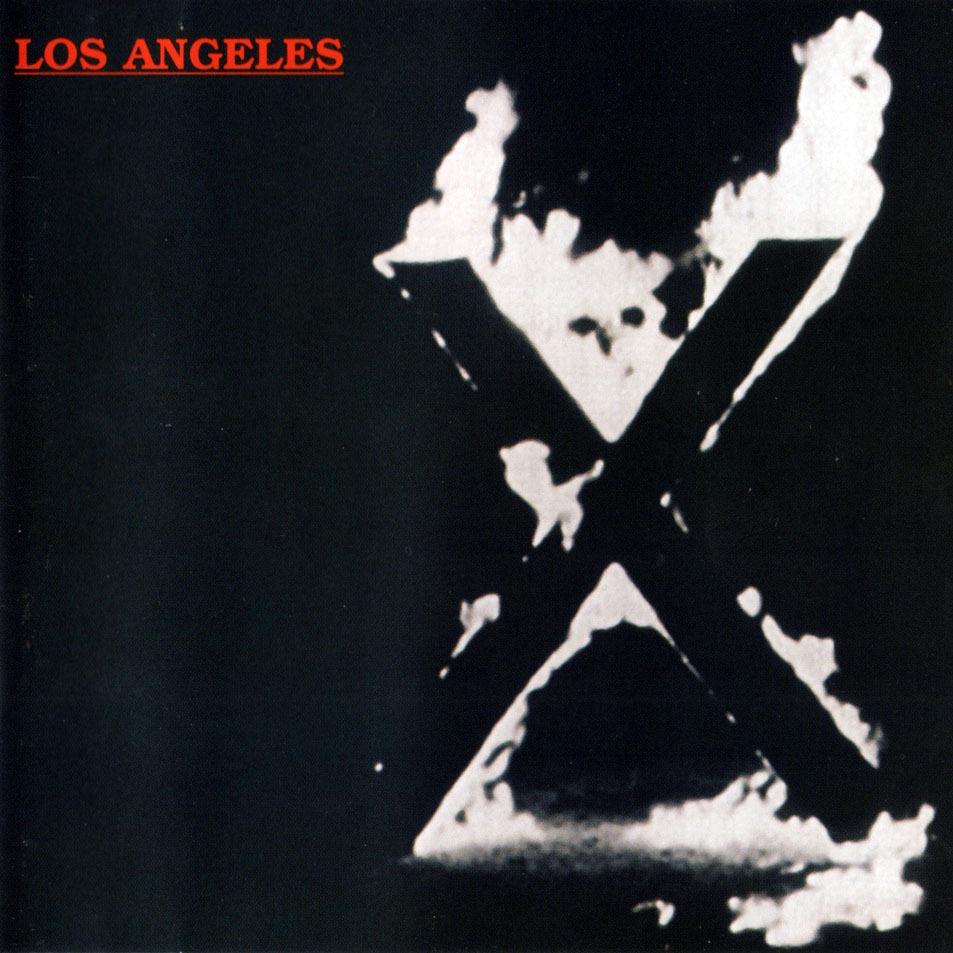
los angeles


X were locked out of the public eye, talking out of harmony with this hotter than hot, hectic punkabilly nausea.   The group had formed in 1977 and became a vital part of the developing punk scene, releasing a single "Adult Books" / "We're Desperate"  the next year on the local Dangerhouse label.  They moved to Slash Records for their debut album.  'Los Angeles' was recorded at Golden Sound Studios in Hollywood, California with Ray Manzarek of The Doors producing.   The sessions featured the quartet of Exene Cervenka on  vocals;  John Doe on bass and vocals;  Billy Zoom on guitar;  and D.J. Bonebrake on drums;   with Manzarek playing organ.   

Cervenka looks back:   "John [Doe] and I both came to L.A. from the East Coast. I came from Florida and he came from Baltimore. We met at this poetry workshop in Venice, California where Jim Morrison used to hang out and where the skate kids were hanging out in '76, and we hit it off immediately. And he had already met Billy [Zoom] and the band started. Like, punk was starting, the band was starting, poetry was happening. It was amazing. And in the meantime you had Fleetwood Mac, Linda Ronstadt, the Record Plant--which is a recording studio--cocaine, limousines. You know, swimming pools, movie stars, the whole thing, right? And we were part of these poverty-stricken people trying to make it as alternative beings in the universe. So it was a love/hate thing from the day we got there. And it's always been a love/hate thing."  


Doe delineates:   "X was always press-driven because we didn’t have airplay, or exposure to radio airplay, or big crowds, because no one would have us open for them. So we were press-driven and, I guess, controversial in that we have a core audience of subculture. There are two typical responses to X. It’s either, “You changed my life,” or “Who?” ... [X outlasted other bands for] all the reasons that anyone survives. A certain amount of ambition, a certain amount of talent, and determination. We like making a living playing music. I think that X had songs and musicianship that were a little apart from other bands in L.A., and maybe if they had more of the ambitions or determination or the other elements, they might have found something that was as lasting ... Punk rock was anything that wasn’t old and in the way. I don’t know who coined that phrase. There’s a line that was drawn in 1975, maybe even a little earlier. It was, “This is no longer corporate rock, this is no longer glam.” Iggy and the MC5 were doing it, but they were doing it in a little more of a vacuum. Once the New York bands started doing their thing, which was a spin-off of maybe Andy Warhol and the New York Dolls and that sort of thing, it went over to England, came around to L.A., and went to San Francisco, Boston, D.C. and a million other places. It was in the air and all those bands were punk rock bands, but punk rock wasn’t codified and it wasn’t just one sound. Maybe by 1979, or even earlier, it became more of a thing. When the hardcore scene started coming in, the bands sounded more similar to each other ... I think it was more a descendent of what Chuck Berry, Little Richard, Eddie Cochran and Gene Vincent were doing, and maybe with the Ramones and Blondie you would have to include doo-wop bands like Darlene Love or the Ronettes. If you take Jimmy Reed and then listen to Chuck Berry, Chuck Berry took Jimmy Reed from 33 and sped it up to 45, and we took Chuck Berry and sped it up to 78. We couldn’t get airplay because punk rock was dangerous. The hair bands, or whatever you want to call that, were not dangerous because it was cartoonish, and it also played into, in my opinion, sort of a male-dominated, “Women are just playthings, an item, a possession.” Those bands got plenty of exposure, but punk rock was for real dangerous. It was openly gay, openly druggies, you can’t control me, I don’t want to play your game, f--k you. I think we saw ourselves in a timeline of, “There is rock and roll, and there were the beatniks and the drug-addled hippies like the Doors and the Rolling Stones in their ’70s phase, and OK, it’s punk rock’s turn.” There were all these bands and we pissed off the media to the point that they said, “Oh no.” The record companies were pretty fat and set in their ways and they didn’t want to know about these upstarts, so nothing happened."


http://xtheband.com/


"Los Angeles"
https://www.youtube.com/watch?v=Exs-mcKApxI


"Nausea"
from  'The Decline of Western Civilization'


"Johnny Hit and Run Paulene"  


"The World's a Mess; It's in My Kiss"  
on New Wave Theater 
https://www.youtube.com/watch?v=wjJ6m00r6pg


'Los Angeles' 
full album:


All tracks written by John Doe and Exene Cervenka except as indicated.

Side A
1. "Your Phone's Off the Hook, But You're Not"     2:25
2. "Johnny Hit and Run Paulene"     2:50
3. "Soul Kitchen"   John Densmore, Robbie Krieger, Ray Manzarek; Jim Morrison 2:25
4. "Nausea"     3:40
5. "Sugarlight"     2:28
Side B
6. "Los Angeles"     2:25
7. "Sex and Dying in High Society"     2:15
8. "The Unheard Music"     4:49 
9. "The World's a Mess; It's in My Kiss"     4:43

bonus tracks 
"I'm Coming Over" (Demo version) – 1:24
"Adult Books" (Dangerhouse Rough Mix version) – 3:21
"Delta 88" (Demo version) – 1:28
"Cyrano de Berger's Back" (Rehearsal) – 3:01
"Los Angeles" (Dangerhouse version) – 2:14


'X: The Unheard Music' documentary


Wednesday, April 1, 2015

songs the lord taught us


The Cramps dug their way out of the campy crypt to create a trash subculture with the grotesque garage glamour of this rip-roaring rockabilly raveup.     Demented lovebirds Lux Interior (Erick Lee Purkhiser) and Poison Ivy (Kristy Marlana Wallace) met in 1972 in Sacramento, California when Purkhiser picked up Wallace while she was hitchhiking.  Ivy says:    “Everyone hitchhiked in California at that time. It was a very hippy era. We all thought it was safe, but it was hare-brained, looking back. I think we would have met anyway. It was destiny...I was Poison Ivy in Sacramento. I still have a driver’s licence that says that, and this was before any thought of a band. Lux was Flip Flop on his driver’s licence. When we went to Ohio, he was Raven Beauty and eventually changed to Lux Interior. For some reason that doesn’t make sense to me now. I thought I needed a last name, and Rorschach [named after the inventor of those infamous ‘inkblot’ psychiatric tests] came to me in a dream. But I was already Poison Ivy before The Cramps. We were reinventing ourselves, but not because of the band. Only our shrink knows why.”


Lux considers:  "She was somebody really special when I met her, we immediately got along and we’ve never spent any time apart since. She’s just… smart, and interested in all the things that I was interested in. When we first met, all we wanted to do was go to rock’n’roll shows. And at that time, going to rock’n’roll shows in southern California was great ’cos everybody got dressed up like crazy and… it almost didn’t matter who the band was. The audience was more interesting than the bands. I’d wanted to be in a band and she played guitar and we got this idea within days of meeting each other: that we should have a band.”


In 1973, they moved to Akron, Ohio, and then to New York in 1975, where they got caught up in the burgeoning punk scene.    Ivy remembers:   “It was easier than you’d imagine.  That’s why we feel so grateful and so fortunate with the scene that was there at the time. Monday night was audition night at CBGBs, but not everybody could get on. We did straight away because we’d made friends with The Dead Boys, who were really hot at the time. So The Dead Boys headlined this audition night, and we played our first show to a packed house. A lot of people saw us, as chaotic as we were, including Peter Crowley who booked Max’s Kansas City. He loved us and immediately booked us. Hilly Kristal thought we sucked, which we probably did. But Peter loved us and we started playing Max’s regularly, supporting Suicide. We got a following just from that. We put these flyers up all over town and that’s where the ‘psychobilly’ tag came from… we thought it up just to get people interested in us. We clicked straight away. The biggest break was when the Ramones saw us, and dug us, and then they let us open for ’em. Their audience loved us. New York was just a magnetic Mecca for people and there was just this swell of energy. We were hanging out at CBGBs and Max’s every night of the week, and so was everybody else. A swirl of creativity. It must be so hard for bands now. People are much more jaded.”


They recorded two singles with Alex Chilton at Ardent Studios in Memphis in 1977 leading to a deal with the new I.R.S. Records label and a UK tour with The Police for "Outlandos D'amour".   In 1979 they put out the Gravest Hits EP with their singles plus new songs recorded in New York.


 Ivy ponders the origin of their unique style: “It was a natural, organic thing. People think we’re more image-conscious than we are… it’s really more self-expression of our personal tastes. And we didn’t know who else would be in the band — we didn’t know anyone who even knew who The Sonics were, and they were a must as an influence. We had to do rockabilly songs. When we first went into the basement of the Musical Maze record store with Bryan Gregory and his sister Pam to jam, we didn’t know how we’d sound. So we just did it. We didn’t have enough going on to discuss it! When we met Bryan we just connected. It was a chemistry thing. There was never a plan.”

Their debut album 'Songs the Lord Taught Us' was also produced by Alex Chilton.  The sessions took place at Sun Records founder Sam C. Phillips' Recording Studio in Memphis  and featured  Lux Interior on vocals;   Poison Ivy Rorschach on guitar;  Bryan Gregory on guitar;  and Nick Knox on drums;  with  Booker C playing organ on "Fever".    'Songs the Lord Taught Us' went to number one on the UK indie rock album chart.


Lux defends their throwback shtick:   “At the time when we started, and even today, you hear people say, ‘We want to do something new. We don’t wanna have anything to do with the past.’ Well, that’s okay, but you sure get a lotta crap that way.”


http://www.thecramps.com/


"Garbageman"
https://www.youtube.com/watch?v=z9sbgi9xfcU


"I Was a Teenage Werewolf"
https://www.youtube.com/watch?v=HrbTkNwbUz8


"TV Set"
https://www.youtube.com/watch?v=eHJHl2Yh7UU


 'Songs the Lord Taught Us'
full album:

https://myspace.com/cramping/music/album/songs-the-lord-taught-us-9502340


All songs written and composed by Lux Interior and Ivy Rorschach; except where indicated.

Side one
1. "TV Set"     3:12
2. "Rock On The Moon"   Jimmy Stewart 1:53
3. "Garbageman"     3:37
4. "I Was a Teenage Werewolf"     3:03
5. "Sunglasses After Dark"   Dwight Pullen 3:47
6. "The Mad Daddy"     3:48
Side two
1. "Mystery Plane"     2:43
2. "Zombie Dance"     1:55
3. "What's Behind the Mask"     2:05
4. "Strychnine"   Gerry Roslie 2:24
5. "I'm Cramped"   The Cramps 2:37
6. "Tear It Up"   Johnny Burnette, Dorsey Burnette, Paul Burlison 2:32
7. "Fever"   John Davenport, Eddie Cooley 4:17
bonus tracks
14. "I Was a Teenage Werewolf (With False Start)" (Original Mix)   4:48
15. "Mystery Plane" (Original Mix)   2:39
16. "Twist and Shout"     2:32
17. "I'm Cramped" (Original Mix)   2:37
18. "The Mad Daddy" (Original Mix)   3:15


live at Napa State Mental Hospital, June 1978
https://www.youtube.com/watch?v=Fat2rswNJ1k