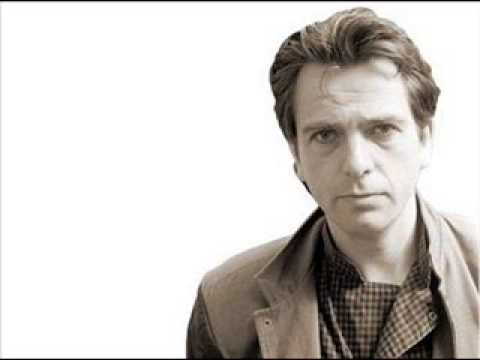
Peter Gabriel burned into our memory cells, melting away barriers with the studio sophistication and musical experimentation of this dark and dramatic knockout. Gabriel produced the sessions for his eponymous third album with Steve Lillywhite and engineer Hugh Padgham at his home studio at Ashcombe House near Bath and at London’s Townhouse Studios. The album features Peter Gabriel on lead vocals, backing vocals, piano, synthesizer, bass synthesizer, drum pattern, and whistles; Kate Bush on backing vocals; Dave Gregory, Robert Fripp, and Paul Weller on guitar; David Rhodes on guitar and backing vocals; Larry Fast on synthesizer, processing, bass synthesizer, and bagpipes; John Giblin on bass; Tony Levin on Chapman stick; Jerry Marotta on drums and percussion; Phil Collins – drums, drum pattern, snare drum, and surdo; Dick Morrissey on saxophone; Morris Pert on percussion; Dave Ferguson on screeches; and Steve Lillywhite and Hugh Padgham adding whistles. For the recording of the final chorus of "Biko", everyone in the studio was brought in to sing along.
'Peter Gabriel' is noted for the gated drum sound employed for the opening song "The Intruder" . Gabriel considers: "You'd probably get three or four different answers to this question depending on whether you asked me, Hugh Padgham, Phil Collins or Steve Lilywhite. My version is that Hugh had already used gated reverb on an XTC album but he used it as a colouring agent in the way that people use FX. It is my belief that when the song was written around my basic [drum machine] programmed pattern, it originally had a much fuller arrangement. When Hugh put on the gated reverb, I got incredibly excited by it and I thought that it was going to change the way that drums sounded. I said, 'Let's turn it up, let's really put the drums loud and proud at the front of the mix and everything else will be subservient. I asked Phil then to just repeat that pattern from start to finish without putting in any fills. I also asked him to take all the metal off the kit, there were no cymbals and no hi-hats. I don't think anyone would dispute that. Steve is a great producer. He has many talents now but back then his main talent was that he was good at recognizing moments and getting great performances out of people. Hugh wasn't sure about it but he created that thing. [Making 'Intruder'] to me was the defining moment. But then of course the record that made the sound much more famous than mine was Phil's 'In The Air Tonight'. He hadn't met Hugh before that session and he then invited him to come and work on all of his records and that song went on to become a massive international hit, in the way that 'Intruder' was never going to be. ... I worked out the rhythmic sequences on a small electronic drum kit, then I built up the songs on top of them. For the lyrics, too, I exploited the repetitive rhythms of the drum machine.
'Peter Gabriel' went to number thirty-eight in New Zealand, twenty-two in the US, eight in Sweden, seven in Canada, five in Norway, and number one in France and the UK. Gabriel notes: This was the first time I had a chance to work with Kate Bush, who sang on Games Without Frontiers. I thought she had an extraordinary, wonderful voice and was doing great things as a writer. Obviously I went on to work with her again in the future on Don’t Give Up. http://petergabriel.com/ "Biko"
Written as a tribute to South African activist and martyr Steve Biko, the song became a torch song for the anti-aparteid movement. “Biko became a very important song for me. I’d not written an overtly political song before and it led me towards some of the human rights stuff that I’m still very much involved with today. So it was as much a thing that helped shape me as it was the other way round ... I suppose; it is useful obviously if it does inform, so that now there are people who are aware of that when otherwise they would not have been. But I was very conscious about being hypocritical about that - because for a white Englishman with a comfortable home to portray something that is going on for a black person in South Africa is questionable...it *can* be an influence - but I don't [think] that song will have much of an impact, a tangible impact, upon what happens in South Africa. But maybe it's part of a whole number of things which could increase external pressure from other countries on what goes on there...Books can be a much better source of social comment than rock songs, and yet rock songs get through to a much bigger audience ... It's a white, middle-class, ex-public schoolboy, domesticated, English person observing his own reactions from afar. It seemed impossible to me that the South Africans had let him be killed when there had been so much international publicity about his imprisonment. He was very intelligent, well reasoned and not full of hate. His writings seemed very solid in a way that polarized politics often doesn't...The musical side of the song 'Biko' was inspired by hearing a shortwave Dutch radio station playing the soundtrack to a not very good Stanley Baker epic called Dingaka. There were elements in the choir and grooves which made me want to explore further. I started to listen to various bits of African music, and Anthony Moore (formerly of Slapp Happy) introduced me to Dollar Brand, as he was then known (now Abdullah Ibrahim), and he was an influence. So there were a few feelers out in that area."
https://www.youtube.com/watch?v=ijb9auSQRso VIDEO September '77
Port Elizabeth weather fine
It was business as usual
In police room 619
Oh Biko, Biko, because Biko
Oh Biko, Biko, because Biko
Yihla Moja, Yihla Moja
-The man is dead
When I try to sleep at night
I can only dream in red
The outside world is black and white
With only one colour dead
Oh Biko, Biko, because Biko
Oh Biko, Biko, because Biko
Yihla Moja, Yihla Moja
-The man is dead
You can blow out a candle
But you can't blow out a fire
Once the flames begin to catch
The wind will blow it higher
Oh Biko, Biko, because Biko
Yihla Moja, Yihla Moja
-The man is dead
And the eyes of the world are
watching now
watching now
"Games Without Frontiers"
https://www.youtube.com/watch?v=3xZmlUV8muY VIDEO "I Don't Remember"
https://www.youtube.com/watch?v=V_X13P7V2x0 VIDEO "Family Snapshot"
https://www.youtube.com/watch?v=7ZTh_NxUX1U VIDEO 'Peter Gabriel' full album:
https://www.youtube.com/playlist?list=PL2EA0D5B8B6FBA057 VIDEO All songs written by Peter Gabriel.
Side one
"Intruder" – 4:54 "No Self Control" – 3:55 "Start" – 1:21 "I Don't Remember" – 4:41 "Family Snapshot" – 4:28 "And Through the Wire" – 5:00 Side two
"Games Without Frontiers" – 4:06 "Not One of Us" – 5:22 "Lead a Normal Life" – 4:14 "Biko" – 7:32
Peter Gabriel went through the wilderness and found real world redemption through the alluring aboriginal accomplishment of this soul searching soundtrack. When Martin Scorcese decided to make a film version of Nikos Kazantzakis' novel 'The Last Temptation Of Christ' , the controversy surrounding the enterprise prompted Universal to get the movie released as soon as possible. Gabriel was excited about the project; but felt rushed: “This was one of the most important records for me – an opportunity as a writer to try to do a different sort of job than I usually do. The brief for 'The Last Temptation Of Christ' 'Passion' .”
Gabriel was able to utilize the resources of WOMAD, the World of Music, Arts, and Dance organization he co-founded to extend his musical reach and find an eclectic panopoly of instrumentation from around the globe, bringing world music to the mainstream, and introducing artists such as Nusrat Fateh Ali Khan, Baaba Maal, Youssou N'Dour, and L. Shankar. Almost a year after the release of 'The Last Temptation Of Christ' , Real World Records put out 'Passion: Music for The Last Temptation of Christ' . The soundtrack went gold in the US, where it charted at number sixty. It also went to fifty-nine in the Netherlands, thirty-four in Sweden, thirty in Germany, and twenty-nine in the UK. The soundtrack was nominated for a Golden Globe Award for Best Original Motion Picture Score in 1988 and won a Grammy for Best New Age Album in 1990. The album cover was a painting by Julian Grater called “Study for Self Image” . 'Passion - Sources' was also released in 1989, described by Gabriel as "a selection of some of the traditional music, sources of inspiration, and location recordings." http://petergabriel.com/ 'Passion' full album:
VIDEO Side One
"The Feeling Begins" – 4:00
"Gethsemane" – 1:26
"Of These, Hope" – 3:55
"Lazarus Raised" – 1:26
"Of These, Hope – Reprise" – 2:44
"In Doubt" – 1:33
"A Different Drum" – 4:40
Side Two 19:41
"Zaar" – 4:53
"Troubled" – 2:55
"Open" – 3:27
"Before Night Falls" – 2:18
"With This Love" – 3:40
Side Three
"Sandstorm" – 3:02
"Stigmata" – 2:28
"Passion" – 7:39
"With This Love (Choir)" – 3:20
Side Four
"Wall of Breath" – 2:29
"The Promise of Shadows" – 2:13
"Disturbed" – 3:35
"It Is Accomplished" – 2:55
"Bread and Wine" – 2:21
VIDEO
Peter Gabriel poured his personal pain into the diverse introspection of this pop fusion of world music with art rock. 'Us' "I think there's a lot of me in the music, particularly the last record came after divorce and the breakup of another relationship; so there's quite a lot of that in it...I think music is partly exorcism, partly trance, and it's also fun...There's always been a division in our society: these people are the clever ones, the creative ones; and these people have to do regular jobs and they're not creative - which is bullshit. We're all born with curious, imaginative minds and capable of expressing ourselves creatively." The sessions took place at the brand new Real World Studios from October of 1989 through June of 1992 with Gabriel co-producing with Daniel Lanois. Lanois recalls: "It's true that Peter likes detail, but he also likes performance a lot. Having watched Peter for a long time now, I know that this is the aspect of recording that he enjoys the most: giving it hell and jamming it out with the band. His attention to detail generally goes into the area of sonic creativity. He likes to break new ground sonically and I encouraged him to spend time on that." David Bottrill was the programming engineer. He remembers the genesis of Real World Studios : " When Daniel went over to the UK in 1985 to work with Peter Gabriel on his album 'So' , he called me halfway through it and I went over to assist the project. When we had finished, I stayed and worked for Peter and then he bought the property for Real World Studios . I helped him with ideas, a bit of the design and what I thought would be good to have in the studio... Those years were unparalleled for me. I learnt so much in so many different areas—it was a fantastic education. I learnt how to build a studio, but I also learnt about different styles of music; we worked on music from Africa, Pakistan, India, and all kinds of world music."
Gabriel explains: "I was never able to make records quickly. Having paid enough recording costs to purchase several studios, it suddenly occurred to me that I should get some setup that allowed me to spend whatever time I wanted recording. We built Real World the way that I'd always wanted a recording studio to be. Most studios at that time were cellars with disco lights. That wasn't an environment I found very easy or comfortable to work in. We built what I think may still be the world's largest control room so we could put a lot of musicians in the control room together rather than in the live room or a recording booth. From the word go the musicians were part of the process, although that can make life difficult for the engineer sometimes. But there's a general sense that it's a good space. We have good acousticians who control the environment. It has lots of windows that fill the studio with natural daylight. The studio is on the edge of a river, so we pointed the control room out at the water so we're looking at swans or an occasional otter rather than an irate drummer. We were getting musicians in from all over the world, so we tried to make them feel comfortable and even get the food right. Although it's in the countryside it's located by the main London to Bristol railway line. Trains often shoot through at high volume, so it cost a lot more than I anticipated to soundproof the studio...We've had these wonderful recording weeks where we would hijack a lot of the musicians from the WOMAD festival and bring in songwriters, poets, and producers. It was like a big dating agency for creative people from around the world. We kept a café going 24 hours and encouraged people to explore interesting ideas or noises and get together. It was effectively a bring-your-own studio party. Unfortunately we never found a way to make it pay for itself, so that concept died recently...I think there are two forms of creative energy. One is 'energy A', which is an analytical energy where you layer things up track by track, then zoom in and work on little details. The other is 'energy Zed', which is a Zen-like performance energy that is spontaneous and improvised and produces a different animal. Both are useful and important. The smart process involves harvesting performances then analyzing them and layering them up. Initially you might just look at rhythm, then maybe you look at melody, then harmony, then timbre. Each time you put down a layer of performance you slow it down and analyze it. Musicians need to be aware of how they work. Sometimes you just need to flip it and do it the other way and see what happens. Working backwards is an exploratory process. I love diversions and I keep on following them, which makes the process a lot longer."
The sessions included Gabriel on vocals and keyboards; Tony Levin on bass; David Rhodes on guitar; Manu Katché on drums; The Babacar Faye Drummers on sabar drums; Doudou N'Diaye Rose on drum loops; Chris Ormston on bagpipes; Daniel Lanois on shaker, guitar, hi-hat, dobro, horn arrangements, and vocals; Richard Blair on additional verse keyboards and programming; Levon Minassian on doudouk; Hassam Ramzy on tabla and surdu; Daryl Johnson on hand drum; William Orbit on programming; Bill Dillon on guitar; Wayne Jackson on trumpet; Mark Rivera on alto saxophone; Brian Eno on additional keys; Shankar on violin; Caroline Lavelle on cello and string arrangement; Will Malone and Johnny Dollar on string arrangements; Richard Evans on additional engineering, mix engineer, and mandolin; Gus Isidore on bridge guitar; Richard Chappell on bridge section mix; Leo Nocentelli on guitar; Tim Green on tenor saxophone; Reggie Houston on baritone saxophone; Renard Poché on trombone; Wayne Jackson on trumpet and cornet; Kudsi Erguner on ney flute and shaker; Malcolm Burn on horn arrangement, additional synth cello, and additional production ideas; Mark Howard on horns recording; Babacar Faye on djembe; Assane Thiam on tama and talking drum; John Paul Jones on surdu; Adzido Pan African Dance Ensemble on additional percussion loop; Manny Elias on Senegalese shakers; with technical support from Brian Eno, Mike Large, Sue Coulson, and Brian Gray; and vocals by Sinéad O'Connor, Ayub Ogada, Peter Hammill, Marilyn McFarlane, Richard Macphailand the Dmitri Pokrovsky Ensemble.
'Us' http://petergabriel.com/ The psychotherapeutic 'Digging in the Dirt' clawwed its way up to number fifty-two in the US, thirty-nine in the Netherlands, twenty-five in New Zealand, twenty-four in the UK, twenty-three in Australia and Germany, ten in Italy, and number one on the US mainstream rock tracks chart. The video won a Grammy in 1993 for Best Short Form Music Video. http://www.youtube.com/watch?v=X0C3DHp36zc VIDEO The funky sledgehammer-esque 'Steam' rose to number forty-eight in Germany, thirty-two in the US, twenty-nine in Australia, twenty-seven in the Netherlands, ten in the UK, seven in Ireland and New Zealand, two on the US mainstream rock tracks chart, and number one in Canada. In 1994, the video won Gabriel the Grammy for Best Short Form Music Video for the second year in a row. http://www.youtube.com/watch?v=Qt87bLX7m_o VIDEO The duet with Sinéad O'Connor 'Blood of Eden' ebbed at number seventy-three in Canada and forty-three in the UK. http://www.youtube.com/watch?v=jzdzyqbdJ1k VIDEO 'Kiss That Frog' hopped to forty-six in the UK, thirty-six in Canada, and number eighteen on the US mainstream rock tracks chart. http://www.youtube.com/watch?v=w3px06j0tIM VIDEO 'Come Talk to Me' describes Gabriel's struggle to communicate with his daughter. http://www.music-love.com/index.php?view=display&id=84537&option=com_videos Peter Gabriel - Come Talk To Me - Secret World Live from Delfin on Vimeo .'All About Us' US http://exactmovietrailer.com/All-About-Us-16-11-2008/ VIDEO The 'Secret World Live' http://www3.iconcerts.com/en/concert/peter-gabriel-secret-world-live http://petergabriel.com/release/secret-world-live-dvdblu-ray/ 'Us' full album: All songs written by Peter Gabriel.
"Come Talk to Me" – 7:06 "Love to Be Loved" – 5:18
"Blood of Eden" – 6:38
"Steam" – 6:03
"Only Us" – 6:30
"Washing of the Water" – 3:52
"Digging in the Dirt" – 5:18
"Fourteen Black Paintings" – 4:38
"Kiss That Frog" – 5:20
"Secret World" – 7:03
VIDEO VIDEO "Plus From Us" VIDEO
Peter Gabriel took his time traveling the world, exploring the emotional jungle of the soul, and purging personal and collective demons with this dark and dense opus. Gabriel joked about the extended production process: "Old men take a little longer to get 'Up' In the decade between 'Us' 'Up' Engineer Richard Chappell worked with Gabriel for seven years on the writing and production of 'Up' "We did a lot of writing, and a lot of snowboarding. It's a dream way of working, up in the mountains every day. It was very inspiring and made Peter very happy. We generally worked at night time, which was tiring, because we'd be exhausted from jumping around and running around the mountain by day." Guitarist David Rhodes was also present during the two months they spent there. The creative process moved from there to Bath, England and Gabriel's Real World Studios where Chappell says Gabriel set up a permanent workspace in the Writing Room, also known as the 'garden shed': "Peter made the decision for this album to get out of the production room in the main studio building and make the Writing Room his base. Whenever he walks in, his mic and his keyboards are always live so he can just sit down and play and work." There was a three month period in Senegal that was particularly fruitful for the writing process. They spent more time in Bath and Meribel before going to the Amazon on a private boat with a full recording studio. After all of this, Gabriel had over one hundred and thirty different song ideas, which fed into several different simultaneous projects: 'Ovo' 'Rabbit Proof Fence' 'Up' Gabriel explained at the time: "I'm working on several things, all at once. Plus we have a new child. Next to my old family I also have a new one. I have a precise sense for what is important and what's not. My new album is very important - at least for me...The opinion of others is irrelevant, when you see something fit after due consideration. I've taken ten years because I considered everything very well...I guess I've indeed been singing about facing one's demons for thirty-five years. And then killing them. In my life I've had to overcome immense fears. They obviously had nothing to do with my surroundings, as I didn't grow up in poverty or during war-time. Swimming in the sea was very difficult for me as I was petrified of the depth. So I swam. I had an immense fear of heights. So I went up the mountains. In the end of "Darkness" the demon lies curled up on the floor and looks like a baby. They usually look like this after you fought them. You have to face your demons daily. I have a child who already faces the demon by approaching the hotplate...In the past they would say: He's completely nuts. Then they would say: He wants to abolish Apartheid, he thinks he's god. People don't know me. I'm not a good person, at least not better than you or anyone else here in the hotel. But well, I guess the ones who said I'm nuts were more right on track. At the concerts you get insight into a strange personality. Then however some things don't occur all that strange to the listeners. Possibly that doesn't speak against me...I bring my demons, the people in the audience bring their demons. Together we have an event with our demons. If it touches people it is relevant. For me it was never about teaching people. It was always about exposing through music and images what we carry around with ourselves. And occasionally it can get a little dark. In the end I have to wrap up everything I throw at people into really good entertainment. Nothing else matters. People don't care for my fears if I don't entertain them well. And so they find out along the way that fears are not something bad. Fears are something very bad."
'Up' challenges the listener to enter into its catharsis. The deeper you go, the darker it gets. There are light moments; but it takes work to discover them. There's no running away. If you undertake the journey through this therapeutic healing process, you can purge the dysfunctional excess: let it out and move on, and find a way to turn up the signal and wipe out the noise. Once you reach rock bottom, the only way to go is up. 'Up' reached number thirty-five in New Zealand; eighteen in the Netherlands; eleven in Norway and the UK; nine in the US; six in Sweden; four in France, Germany and Poland: two in Canada; and number one in Italy.
"Darkness" https://www.youtube.com/watch?v=G6jS-Y6yF8w VIDEO
"Growing Up" http://www.youtube.com/watch?v=mBFwD7K-e_Y VIDEO live http://www.youtube.com/watch?v=Kh80jJNgRrY VIDEO "Sky Blue" http://www.youtube.com/watch?v=yFvwVOX95GY VIDEO "No Way Out" https://www.youtube.com/watch?v=ssWbqeC6DJA VIDEO
"I Grieve" http://www.youtube.com/watch?v=fQ3wpjdYMqk VIDEO "The Barry Williams Show" http://www.youtube.com/watch?v=kAesGRwa_6k VIDEO live http://www.youtube.com/watch?v=CcYV9guosMk VIDEO "My Head Sounds Like That"
https://www.youtube.com/watch?v=30KvYZaT-IA VIDEO "More Than This" http://www.youtube.com/watch?v=ufeixjATn5Q http://www.youtube.com/watch?v=7YnTKhyWRfk VIDEO "Signal to Noise" http://www.youtube.com/watch?v=xJoSNZxLdbU VIDEO "The Drop" http://www.youtube.com/watch?v=_BO3pZKUSHY VIDEO