Showing posts with label 1980. Show all posts

Wednesday, December 30, 2015

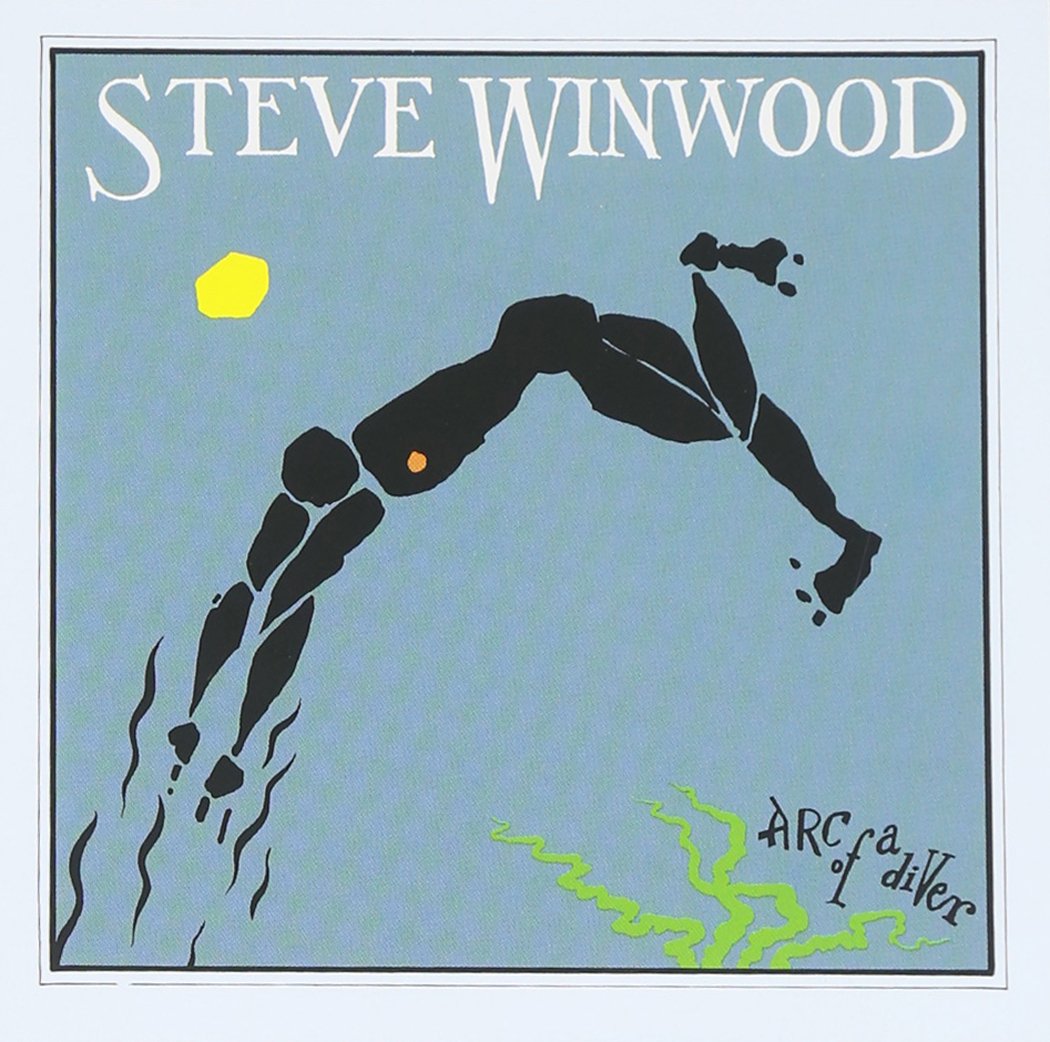
arc of a diver


Steve Winwood saw a chance and took it with the transfixing translation of this dramatic do it yourself do over.  The celebrated star of major groups like The Spencer Davis Group,  Traffic,  and  Blind Faith had been reluctant to record a solo album; but Island Records insisted on new material.  After the disappointing response to his self titled debut, he was looking to buy his way out of the music business; but first, since Jim Capaldi had moved to Brazil, he needed a new songwriting partner.  

Winwood relates:   "Will Jennings and I have been writing together since 1980, and we met really through kind of an uninteresting way, through publishers. We started working on the Arc of a Diver album, and we just hit it off from that point...I think he'd read something in a rock 'n' roll yearbook of 1970 that said some rather unpleasant things about me, so he didn't really want to get in a car with me, and I couldn't really understand what he was talking about, cause I hadn't really read the book at the time, and it was only quite a while after that he told me, it was like a year or two after, he said 'By the way, that first time we met, I read this thing about you in a rock 'n' roll yearbook,' which shall remain nameless."
  

Arc of a Diver was produced, engineered and mixed by Steve Winwood at his own Netherturkdonic Studios that he had built in the Gloucestershire house he shared with his wife Nicole.  Winwood played all the insturments himself:  acoustic & electric guitars, mandolin, bass, drums, percussion, drum machines, keyboards, synthesizers, organ, lead & backing vocals;  with only additional engineering by John "Nobby" Clarke.    The process was not effortless; it took two years.   Winwood quips:  ""I'd sunk nearly all my money into my home studio, so I could work at my own pace. I thought it would be quick, inexpensive and easy but it turned out to be slow, expensive and difficult...The record company was almost embarrassed to ask how it was going. I knew that if the album didn't make it, I'd have to sell up, maybe move to a little flat or join a gypsy caravan...I figured I'd continue doing some things that I like doing and enjoy life as best I could in diminished circumstances."


It was well worth the wait.  Arc of a Diver became a worldwide smash hit, charting at number thirty three in Sweden; twenty six in Germany; twenty four in Norway; thirteen in the UK; six in the Netherlands; five in Australia; three in France, New Zealand, and the US; and number one in Canada.  


http://www.stevewinwood.com/


"While You See a Chance" was the breakthrough solo hit he was seeking, going to number forty-five in the UK, twenty-eight in New Zealand, sixteen in Australia, seven in the US, and number three in Canada.  The instrumental introduction to the song was composed after Winwood accidentally erased the drum track.  

Winwood remarks:  "Thankfully there weren't too many of those kind of accidents...'While You See a Chance' was the first song I wrote with Will Jennings, who's been my chief lyricist. I met him through my publisher at the time, Island Music. I'd said I desperately wanted to somebody to write songs with, and they said, 'Oh, there's this bloke ...' ... Will just came up with the lyric, and it was right for me, right for him, and right for the song."


Jennings says:   "It's like writing... if you're writing a play, you're writing for a particular persona, a particular character, and you try to feel as deeply inside them as you can - where are they coming from and what they've been through. It's the same with Steve, 'While You See A Chance,' because he was coming out of a whole period with Spencer Davis and Traffic, and then where else do you go? I was up there at his place in rural England, and I was in his life so to speak, and trying to see through his eyes as well as mine. And that's what all those things were about, all the songs we wrote ... When Steve played me the music that became the song 'While You See a Chance', it was like looking right into his soul ... We didn't talk about what the song was about ... 'While you see a chance take it, find romance, fake it, because it's all on you'" - the lyric of the song is about realizing that you are all alone in this life and you have to do with it what you can - it was written around 1980 in a certain part of my life when I realized it was all on me to do, the lyric inspired by Steve's transcendent track....The next line explains it: 'Because it's all on you.' There's an old English expression called "Fake it till you make it." If you don't have romance in your life, meaning in the broader sense, really, something to make life interesting, just imagine it until it's there."


Stand up in a clear blue morning
Until you see what can be
Alone in a cold day dawning
Are you still free? Can you be?

When some cold tomorrow finds you
When some sad old dream reminds you
How the endless road unwinds you

While you see a chance take it
Find romance fake it
Because its all on you

Dont you know by now
No one gives you anything?
And dont you wonder how you keep on moving?
One more day your way, oh your way

When theres no one left to leave you
Even you dont quite believe you
Thats when nothing can deceive you

While you see a chance take it
Find romance fake it
Because its all on you

Stand up in a clear blue morning
Until you see what can be
Alone in a cold day dawning
Are you still free? Can you be?

And that old gray wind is blowing
And theres nothing left worth knowing
And its time you should be going

While you see a chance take it
Find romance fake it
Because its all on you

While you see a chance take it
Find romance
While you see a chance take it
Find romance


"Night Train"

Steve Winwood - Night Train by jpdc11


Arc of a Diver
full album:  


All songs written by Steve Winwood & Will Jennings except where noted.

Side one
"While You See a Chance" - 5:12
"Arc of a Diver" (Winwood, Vivian Stanshall) - 5:28
"Second-Hand Woman" (Winwood, George Fleming) - 3:41
"Slowdown Sundown"- 5:27
Side two
"Spanish Dancer"- 5:58
"Night Train"- 7:51
"Dust" (Winwood, Fleming) - 6:20


Saturday, November 28, 2015

sound affects


The Jam scraped away with desperation and disgust to fight indoctrination with entertainment in the corner shop confessions of this post punk psychedelic soul.   The restless trio had cranked out four albums  (In the City  and  This Is the Modern World  in 1977,   All Mod Cons  in 1978,  and   Setting Sons in 1979)  and had ten consecutive UK hit singles in three short years.    Recorded at London's Town House over three months in between tour dates, their fifth album 'Sound Affects' was produced by The Jam with Chris Parry and Vic Coppersmith-Heaven and engineers George Chambers and Alan Douglas.   The sessions featured  Rick Buckler on drums;  Bruce Foxton on bass and vocals;   and   Paul Weller on guitar, keyboards, and vocals.   

Weller says:   "We never really go into the studio with 12 songs, all arranged, all rehearsed.  If we did that we could probably do an LP in two weeks.  As it is, of late we've been going into the studio with vague ideas and odd bits of song structures, and worked the song out in the studio. It's mainly a lack of time, though, that makes us do it like that. The actual music is always created in the studio, though I may already have written some lyrics...It's not the ideal way of recording or the way we'd really like to do it – it's just down to present circumstances.  Obviously the first album was just the stage act we were playing at that time, which we just put down on vinyl...I thought Setting Sons was a bit too slick, a bit too polished.  I don't think it's a really true sound...although it was certainly never intended to be a rock opera, which is one impression I've heard bandied about of it."


Buckler relates:  "When we were doing the album at the Town House.  I was up there on my own one day and I heard a noise in the corridor outside the studio: when I looked out I found the place had been invaded by about 50 mods. They'd broken in through the door and were swarming all over the place. When they found which studio we were in, though, they just seemed satisfied and said they were going down the pub.  They asked me to come with them for a drink but I figured I couldn't really get through about 50 pints, so I just carried on mixing tracks."


Weller:   "That English following's taken four years to get that large.  We've been building it since 1977. Recently it has suddenly got a lot bigger and more fanatical – probably because of the number ones – but really it's the result of a slow build-Up over the years. Mind you, we've always had a really strong following: even when it was only 400 people those 400 were a really powerful force.  We get loads of mods coming to our gigs.  but there's loads of other kids also...Really, despite what's been claimed, that New Mod thing that happened last year was nothing to do with us. It really came out of a few pubs down the East End of London.  I thought that mod thing was alright.  It gave a bit of new blood to the music. People said it was all very contrived, but I don't think it was from the kids' point of view – It's not their fault all those poxy shops filled with crappy clothes started up...I certainly felt part of [the Punk Movement], yeah!  We didn't call ourselves A Punk Band, because there didn't seem any point – there doesn't seem much point in any of those labels. But I still felt part of it...Punk was the most important musical development in our time – certainly! In fact, it's a pity for really young kids today that things seem to have got away from that sense of unity that was around then – now it's all this splintered tribalism."


 'Sound Affects'  made waves at number seventy-two in the US, thirty-nine in Canada, seventeen in Sweden, and number two in New Zealand and the UK.    Foxton admits: "I wasn’t thinking of music back in school but I did want to be Number One in whatever I was capable of doing, even though that was a nine-to-five career at first (printing). That drive was in me all right."


http://www.fromthejamofficial.com/


http://www.thejam.org.uk/


http://www.thejamfan.net/


"Going Underground" became the band's first number one single before they went into the studio to record 'Sound Affects'.  


"Dreams of Children" was the original A-side.  


"Start!" became their second chart topper.  


"That's Entertainment"


A police car and a screamin' siren
Pneumatic drill and ripped-up concrete
A baby wailing, a stray dog howling
The screech of brakes and lamplight blinking

That's entertainment

A smash of glass and the rumble of boots
An electric train and a ripped-up phone booth
Paint-splattered walls and the cry of a tomcat
Lights going out and a kick in the balls 

I say that's entertainment
That's entertainment
La la la la la, ah
La la la la la, ah

Days of speed and slow-time Mondays
Pissing down with rain on a boring Wednesday
Watching the news and not eating your tea
A freezing cold flat with damp on the walls

I say that's entertainment
That's entertainment
La la la la la
La la la la la

Waking up at 6 A.M. on a cool warm morning
Opening the windows and breathing in petrol
An amateur band rehearsing in a nearby yard
Watching the telly and thinking 'bout your holidays

That's entertainment
La la la la la, ah
La la la la la, ah
La la la la la, ah
La la la la la

Waking up from bad dreams and smoking cigarettes
Cuddling a warm girl and smelling stale perfume
A hot summer's day and sticky black tarmac
Feeding ducks in the park and wishing you were far away

That's entertainment

Two lovers kissing masks a scream of midnight
Two lovers missing the tranquility of solitude
Getting a cab and travelling on buses
Reading the grafitti about slashed-seat affairs

I say that's entertainment
That's entertainment
La la la la la, ah
La la la la la, ah
La la la la la, ah
La la la la la
La la la la la, ah
La la la la la, ah
La la la la la, ah
La la la la la
La la la la la, ah
La la la la la, ah
La la la la la, ah


 'Sound Affects' 
full album:


All tracks written by Paul Weller except as noted.


Side one
"Pretty Green" – 2:37
"Monday" – 3:02
"But I'm Different Now" – 1:52
"Set the House Ablaze" – 5:03
"Start!" – 2:33
"That's Entertainment" – 3:38
Side two
"Dream Time" – 3:54
"Man in the Corner Shop" – 3:12
"Music for the Last Couple" (Rick Buckler, Bruce Foxton, Paul Weller) – 3:45
"Boy About Town" – 2:00
"Scrape Away" – 3:59


Sunday, November 22, 2015

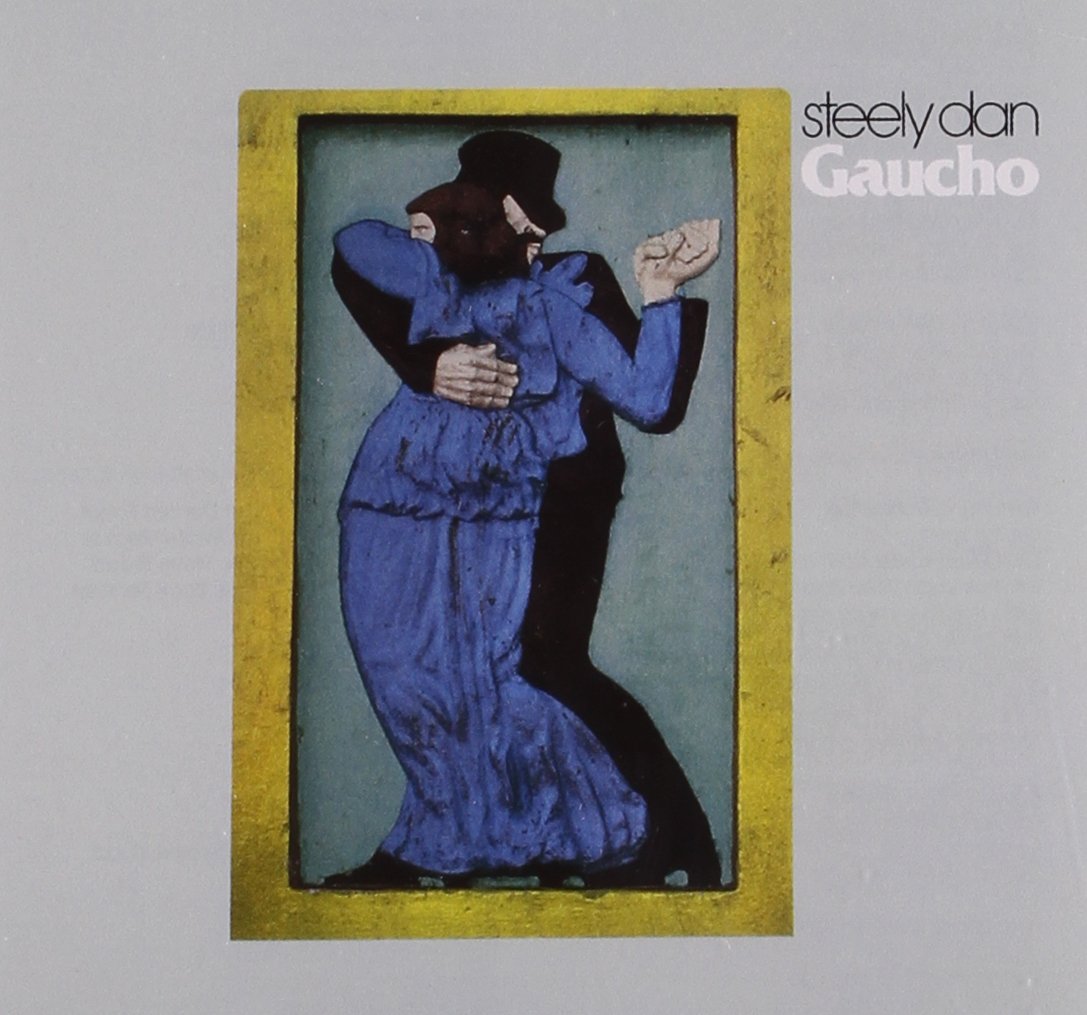
gaucho


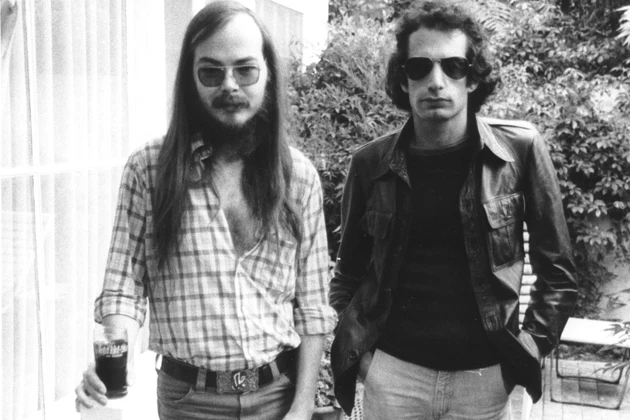
Steely Dan fell on hard times as they tried to shake it whim for whim to achieve a polished perfection.  With a half dozen increasingly successful albums under their belt (Can't Buy a Thrill in 1972,  Countdown to Ecstasy in 1973,  Pretzel Logic in 1974,  Katy Lied in 1975,  The Royal Scam in 1976,  and  Aja in 1977),  soul survivors Donald Fagen and Walter Becker changed labels from ABC to MCA and relocated to New York with longstanding producer Gary Katz to begin recording their next album 'Gaucho'.   

The sessions were fraught with problems as they struggled to achieve the sound they desired with dozens of studio musicians.  At one point, months of work on one of the songs was accidentally erased by an assistant engineer.  After laboring with session drummers to get the right take, engineer Roger Nichols created a drum machine called "Wendel" to get them what they wanted; but it was a time consuming process.  At the same time, Becker's increased drug use became an issue with a wrongful death lawsuit following the overdose of his girlfriend Karen Roberta Stanley.  Becker was sidelined for six months when he was hit by a car while walking home in Manhattan.  

The recording process stretched out over two years at Sigma Sound in Philadelphia, Village Recorders in Los Angeles,  Soundworks recording in Astoria,  Automated Sound and A&R in New York City,  and  Producer's Workshop in Hollywood  featuring  Donald Fagen on lead vocals, synthesizer, electric piano, and organ;    and   Walter Becker on bass and guitar;     with    Rob Mounsey on piano, synthesizer, and horn arrangement;    Don Grolnick on electric piano, and clavinet;    Pat Rebillot and Joe Sample on electric piano;    Steve Khan on guitar and lead guitar;   Mark Knopfler and Larry Carlton on lead guitar;    Hugh McCracken,  Hiram Bullock,  and  Rick Derringer on guitar;   Chuck Rainey and Anthony Jackson on bass;   Bernard Pretty Purdie,  Rick Marotta,  Steve Gadd,  and  Jeff Porcaro on drums;    Crusher Bennett, Steve Gadd, Victor Feldman, Ralph McDonald, and Nicholas Marrero on percussion;    Tom Scott on alto saxophone and clarinet, tenor saxophone, lyricon, and horn arrangement;    Michael Brecker and Dave Tofani on tenor saxophone;   David Sanborn on alto saxophone;   Ronnie Cuber on baritone saxophone;   Randy Brecker on trumpet and flugelhorn;    George Marge, Walter Kane on clarinet;   Wayne Andre on trombone;   and  backing vocals  by   Michael McDonald, Patti Austin, Valerie Simpson, Frank Floyd, Diva Gray, Gordon Grody, Lani Groves, Leslie Miller, Zachary Sanders, and Toni Wine.    


Fagen says:    "New York is the depository for misfit Americans – there’s a reason that we’re here. And why we don’t live in Cincinnati...I think New York has revitalized our stuff. But L.A. did a lot for us as far as giving us a perspective on America ... We started using sequencing and stuff on Gaucho out of desperation really. We were having trouble laying down 'Hey Nineteen'. We tried it with two different bands and it still didn't work, so one of us said something like 'It's too bad that we can't get a machine to play the beat we want, with full-frequency drum sounds, and to be able to move the snare drum and kick drum around independently.' Roger [Nichols] replied 'I can do that.' This was back in 1978 or something, so we said 'You can do that???' To which he said 'Yes, all I need is $150,000.' So we gave him the money out of our recording budget, and six weeks later he came in with this machine and that is how it all started ...  We write the songs individually. They are single audio objects; we don’t plan the album conceptually. So it’s hard to characterize the thing as a whole...It’s possible that we took a few steps backward with this album. In a way, it’s rhythmically more simplistic than Aja.. But the harmonies are interesting. I don’t know if it’s better or worse...The way we write – it’s more improvisational and instinctual. We don’t really use “strategies” consciously...It’s a matter of maturing. Becoming more selective with material, knowing what to write about, being able to pick and choose – showing more discretion than in earlier days. Musically, our harmonic vocabulary and so on has expanded a great deal… so I feel we’ve progressed a lot since our first records." 


Becker looks back:  "In some ways, the early, rougher ones sound better now than the later ones, whereas at the time it seemed like we were ever rising towards the light. I think because of the kind of music we were doing, it seemed to us that it should be real seamlessly put together and have a high level of polish to make it work. We didn't want it to sound like kids trying to play jazz - which I think it did pretty much sound like sometimes, and which now I kind of like the sound of. But at the time we thought what we were doing was so different to other things that were going on, and our own harsh appraisals of our talents dictated to us that we work harder to make it really smooth and flawless...A lot of times we didn't know what we wanted.  Donald and I would write a song on piano, or piano and guitar, and sometimes we'd have a very primitive demo, but often as not we'd go in the studio and we'd be hearing the song played by a band for the very first time. And sometimes it didn't sound like what you'd thought it would sound like, and you had to try and figure out why that was, whether your conception of the song was wrong, or who could change their part, or how to rethink what you were doing to make it work. So a lot of times we didn't know exactly what it was we needed to do at a given moment to get things to be the way we wanted them to be...Other times, we just wanted it to be better, so we'd keep trying for another take. We kept adjusting our standards higher and higher, so many days we'd make guys do 30 or 40 takes and never listen to any of them again, because we knew none of them were any good: but we just kept hoping that somehow it was just going to miraculously get good...Working together as long as we did, Donald and I followed a certain line of thinking to its logical conclusion, and then perhaps slightly beyond - that was what we realised when we'd finished Gaucho: it was not as much fun...It wasn't fun at all, really."


'Gaucho' was another platinum success for the band, going to number forty-four in the Netherlands, twenty-seven in the UK, eighteen in Canada, fifteen in Sweden, nine in Australia and the US, seven in New Zealand, and five in Norway.


http://www.steelydan.com/


"Hey Nineteen"


"Babylon Sisters"


'Gaucho'
full album:


All songs written by Becker and Fagen, except where noted

Side one
"Babylon Sisters" – 5:55
"Hey Nineteen" – 5:10
"Glamour Profession" – 7:29
Side two
"Gaucho" (Becker, Fagen, Jarrett) – 5:32
"Time Out of Mind" – 4:14
"My Rival" – 4:34
"Third World Man" – 5:13


outtakes:


Monday, November 16, 2015

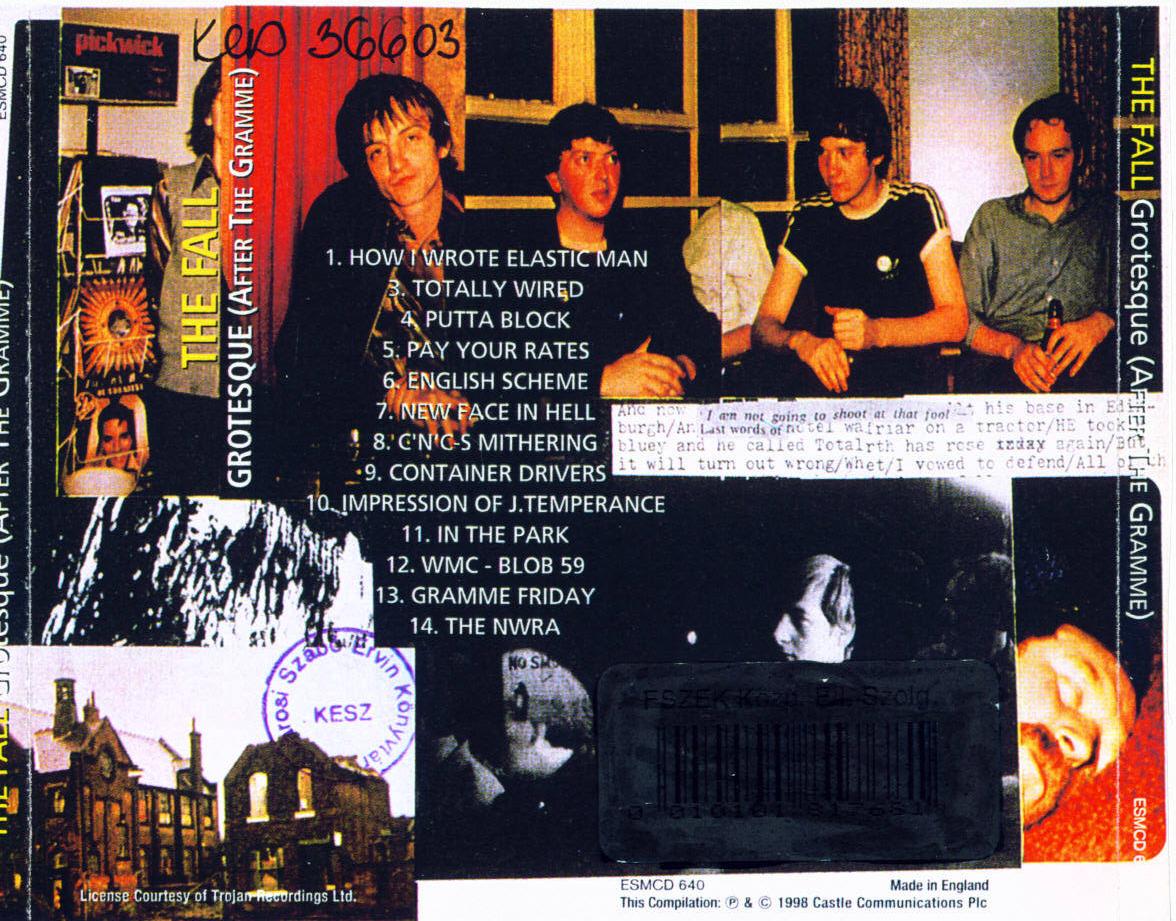
grotesque (after the gramme)


The Fall uncovered secrets and scandals of deceitful type proportions in the spontaneous cash 'n' carry house dance  reverberation of this neurotic underground medicine.   The Manchester noisemongers had put out Live at the Witch Trials  and  Dragnet  in 1979 on the Step Forward label before moving to Rough Trade.  Their first record on the new label was the live Totale's Turns (It's Now or Never), which reached the top of the UK independent album chart early in 1980.  Around that time, Mike Leigh left the band for more regular work to be replaced by sixteen year Paul Hanley.  Their next album was recorded at Cargo Studios in Rochdale, England with production by The Fall, Rough Trade founder Geoff Travis, Grant Showbiz, and Red Krayola's Mayo Thompson;  with  engineering by John Brierley  and  mastering by George "Porky" Peckham.  The sessions featured  Mark E. Smith on vocals, tape operation, kazoo, and guitar;   Marc Riley on guitar and keyboards;   Craig Scanlon on guitar;   Steve Hanley on bass guitar;   Paul Hanley on drums;  with  Kay Carroll on "extra vocals"


Smith would exclaim at the time:   "The third LP is going to be an improvement...it's going to be called 'The Grotesque Peasants' ...  We've got a new drummer on it called Paul Hanley he's Steve's brother...Paul took over for mike who left the band a while back for various reasons...Mike was always a good contrast to the band...Let's just say the Fall are ok...Change is as good as a rest...We've done a few sporadic gigs around...We're doing an album soon which will consist of some songs with good stories and some melodies and voice as instrument exercises...It probably won't be fill up the rubbish bin or clog up the coffee table like those of the 73 revival lp's masqueraging under various new wave trademarks...But will put a bit of intelligence back into the state as ususal...All groups immitate us but they always under rate us...The main idea of the fall is to leave the mark and we have done and will carry on doing."


'Grotesque (After the Gramme)' went to number thirty-eight in New Zealand and became their second consecutive number one on the UK independent album chart.  


http://thefall.xyz/


http://thefall.org/


lyrics:
http://thefall.org/discography/data/album03.html


"The Container Drivers"


"How I Wrote 'Elastic Man'"
stretched to number two on the UK indie singles chart.   Smith says the song is about "how the public kill off their heroes' creativity ...I was talking more about Jimmy Greaves and George Best.  Just ask them."


"City Hobgoblins" was the b side.   


"Totally Wired"  reached number twenty-five in New Zealand and number two on the UK indie singles chart.  


"Putta Block" was the b-side.


'Grotesque (After the Gramme)' 
full album:

https://myspace.com/fallthe/music/album/grotesque-after-the-gramme-cd-bonus-tracks-19580690


"Pay Your Rates" (Mark E. Smith) --
"English Scheme" (Marc Riley, Craig Scanlon, Smith) -- 3:05
"New Face in Hell" (Riley, Scanlon, Smith) -- 5:40
"C 'n' C-S Mithering" (Smith, Steve Hanley, Riley, Scanlon) --10:47
"The Container Drivers" (Riley, Scanlon, Hanley, Smith) -- 18:23

"Impression of J. Temperance" (Riley, Scanlon, Smith) -- 21:28
"In the Park" (Smith) -- 25:50
"WMC-Blob 59" (Smith) -- 27:35
"Gramme Friday" (Scanlon, Riley, Smith) -- 28:57
"The NWRA" (Scanlon, Hanley, Smith) -- 32:18


Friday, November 6, 2015

ace of spades


Motörhead bit the bullet and pushed up the ante to bring the hammer down in this fast and loose rock and roll conflagration.  The trio had established themselves at the forefront of the new wave of heavy metal in the UK with their high octane sound.  Bassist and founder Lemmy Kilmister had been ousted from Hawkwind and wanted to "concentrate on very basic music: loud, fast, city, raucous, arrogant, paranoid, speedfreak rock n roll ... it will be so loud that if we move in next door to you, your lawn will die."

Their first album On Parole  was recorded in 1976 for United Artists, but not released until 1979 because the label thought it would not sell.  Motörhead came out in 1977 on Chiswick.  In 1979, they moved to Bronze Records to record Overkill and Bomber with producer Jimmy Miller.  

For 'Ace Of Spades' they worked with Vic Maile at Jackson's Studios in Rickmansworth, England.    The sessions lasted just over a month and featured  Lemmy Kilmister on bass and lead vocals;   "Fast" Eddie Clarke on guitar, backing vocals on "Emergency";  and  Phil "Philthy Animal" Taylor on drums.   Maile's soft-spoken approach defused the band's typically wild studio behavior and helped to create a sleeker sound.  

Taylor: "Even if he was angry, [Vic] was angry like this: (assumes soft-spoken tone) 'You're not supposed to do it like that', or 'Stop that boys' ...He got me playing more solid"


Clarke:  "[Vic] didn't drink, he didn't smoke, and he was very delicate because he was diabetic. He had to have his Ryvita at six o'clock. We couldn't get heavy with him, couldn't fucking shake him, you know what I mean? He might die! So we had to listen to him...We only thought of ourselves as a good time rock 'n' roll band, really...But we weren't trying to get a message across, apart from have a good time, you know: get pissed, get stoned, and fuck a chick. And that'll do...[On 'Ace of Spades' you can finally hear everything that's going on."


Kilmister:    "He used to own a mobile studio — Hawkwind hired it out to do Space Ritual and he came with it...Vic was a great man and a great producer, really brilliant...Those were good times; we were winning, we were younger, and we believed it...Vic was great. He was the first one who told us we were all cunts and work harder. He had a very dry personae: 'Is that really the best shot you've got?'...Vic got me singing instead of just shouting all the time"


'Ace Of Spades' went to number four in the UK and helped to break the band around the world.  It became an influential cornerstone in the development of thrash metal.  


http://imotorhead.com/


lyrics:
http://www.darklyrics.com/lyrics/motorhead/aceofspades.html


"Ace of Spades" 
Lemmy says:  "I used gambling metaphors, mostly cards and dice — when it comes to that sort of thing, I'm more into the slot machines actually, but you can't really sing about spinning fruit, and the wheels coming down. Most of the song's just poker, really: 'I know you've got to see me read 'em and weep, Dead man's hand again, aces and eights' — that was Wild Bill Hickock's hand when he got shot. To be honest, although Ace of Spades is a good song, I'm sick to death of it now. Two decades on, when people think of Motörhead, they think Ace of Spades. We didn't become fossilized after that record, you know. We've had quite a few good releases since then. But the fans want to hear it so we still play it every night. For myself, I've had enough of that song."


If you like to gamble, I tell you I'm your man,
You win some, lose some, all the same to me,
The pleasure is to play, makes no difference what you say,
I don't share your greed, the only card I need is
The Ace Of Spades

Playing for the high one, dancing with the devil,
Going with the flow, it's all the game to me,
Seven or Eleven, snake eyes watching you,
Double up or quit, double stake or split,
The Ace Of Spades

You know I'm born to lose, and gambling's for fools,
But that's the way I like it baby,
I don't wanna live for ever,
And don't forget the joker!

Pushing up the ante, I know you wanna see me,
Read 'em and weep, the dead man's hand again,
I see it in your eyes, take one look and die,
The only thing you see, you know it's gonna be,
The Ace Of Spades


'Ace Of Spades'
full album:


All tracks composed by Ian Kilmister, Phil Taylor, Eddie Clarke

side one
1. Ace of Spades 
2. Love Me Like a Reptile 2:48
3. Shoot You in the Back 6:12
4. Live to Win 8:50
5. Fast and Loose 12:30
6. (We Are) The Road Crew 15:52
side two
7. Fire Fire 19:03
8. Jailbait 21:49
9. Dance 25:22
10. Bite the Bullet 28:00
11. The Chase Is Better Than the Catch 29:40
12. The Hammer 33:57
bonus 
13. Dirty Love 36:45
14. Please Don't Touch 39:41
15. Emergency 42:31