Showing posts with label miles davis. Show all posts

Saturday, July 18, 2015

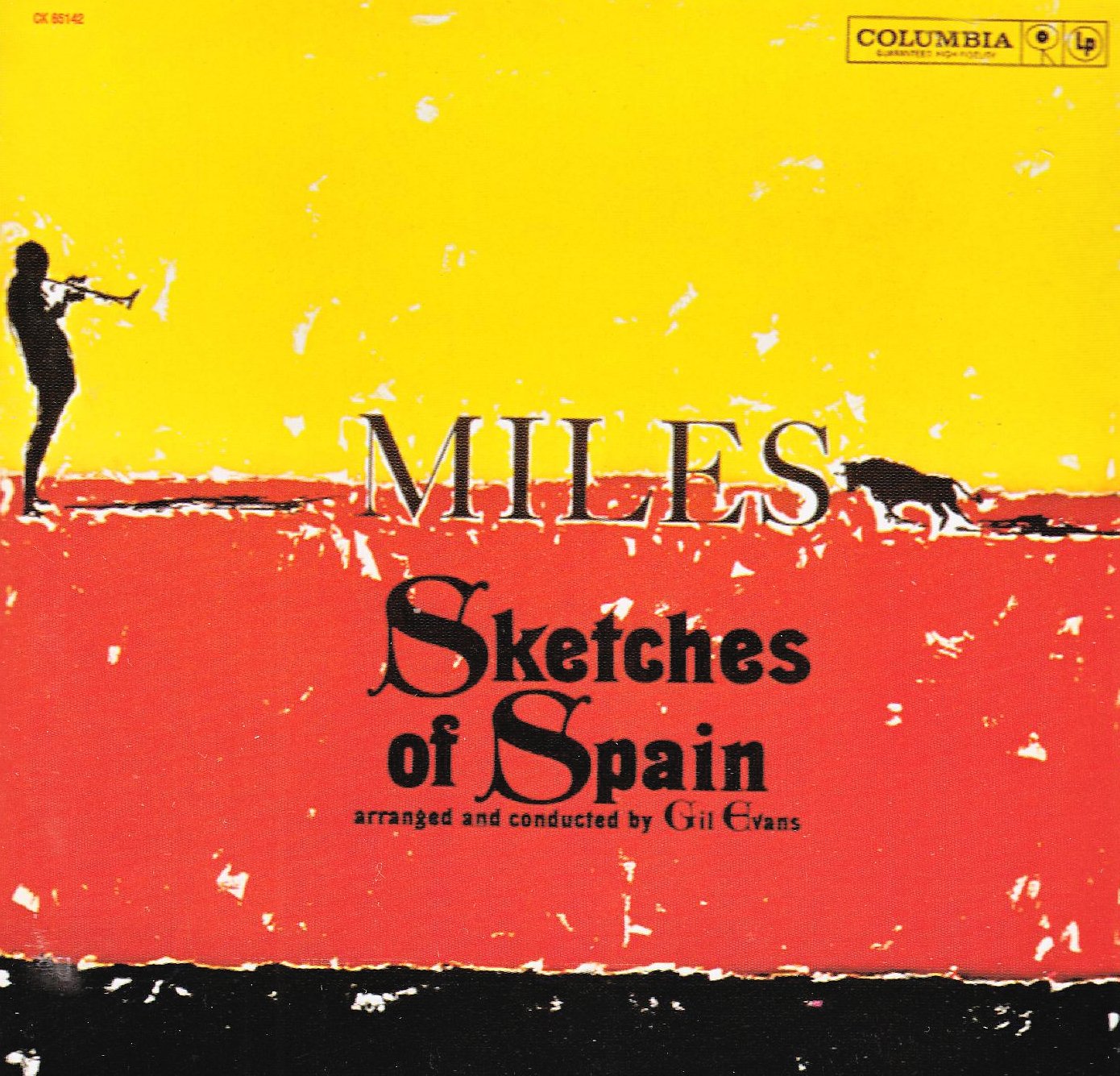
sketches of spain


Miles Davis and Gil Evans created a powerful artistic statement with this panoramic potpourri of jazz, classical, flamenco, Arab maqam, and Andalusian folk.     Following the landmark 'Kind of Blue', John Coltrane and Cannonball Adderley moved on other projects and Davis teamed up once again with Gil Evans  (they had collaborated on 'Birth of the Cool' and 'Miles Ahead' in 1957, and 'Porgy and Bess' in 1958) for 'Sketches of Spain'.  

Recorded at the Columbia 30th Street Studio in New York with producers Teo Macero and Irving Townsend, the sessions featured Miles Davis on trumpet and flugelhorn and Gil Evans as arranger and conductor.   Three jazz players (Paul Chambers on  bass;  Jimmy Cobb on drums;  Elvin Jones on percussion) collaborated with the orchestra of  Danny Bank on bass clarinet;   Bill Barber and Jimmy McAllister on tuba;  John Barrows, James Buffington, Earl Chapin, Tony Miranda, and  Joe Singer on  French horn;   Albert Block, Eddie Caine, on flute;    Johnny Coles, Bernie Glow, Taft Jordan, Louis Mucci, and Ernie Royal on trumpet;   Harold Feldman on  clarinet, flute, and oboe;   Dick Hixon and Frank Rehak on trombone;    Jack Knitzer on bassoon;   Romeo Penque on oboe;  Janet Putnam on harp;  with added percussion from Jose Mangual.    

During the production Davis would express:      "I love that chord and the end of that section with the flutes way up there.  That's all I could hear last night in my sleep...You know, the melody is so strong there's nothing you have to do with it.  If you tried to play bebop on it, you'd wind up being a hip cornball.  The thing I have to do now is make things connect, make them mean something in what I play around it."

Evans explained:    "[We] hadn't intended to make a Spanish album. We were just going to do the Concierto de Aranjuez. A friend of Miles gave him the only album in existence with that piece. He brought it back to New York and I copied the music off the record because there was no score. By the time we did that, we began to listen to other folk music, music played in clubs in Spain... So we learned a lot from that and it ended up being a Spanish album. The Rodrigo, the melody is so beautiful. It's such a strong song. I was so thrilled with that."

Although the album received mixed reviews from jazz critics, it reached number thirteen in the US jazz album chart and went gold in the UK and the US and has come to be one of his most enduring achievements.  Davis said, "It's music; and I like it."


http://www.milesdavis.com/


'Sketches of Spain'
full album:


Side one"Concierto de Aranjuez" (Adagio) (JoaquĆ­n Rodrigo) – 16:19
"Will o' the Wisp" (Manuel de Falla) – 3:47
Side two
"The Pan Piper" (a.k.a. Alborada de Vigo) (traditional) – 3:52
"Saeta" (Gil Evans) – 5:06
"Solea" (Evans) – 12:15




Friday, April 3, 2015

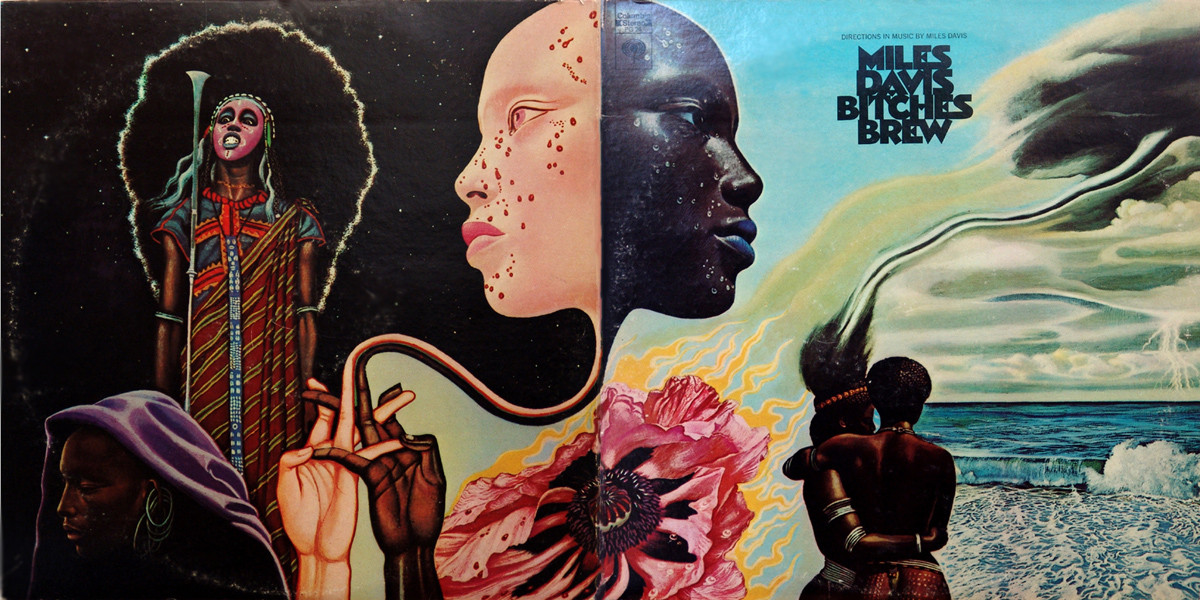
bitches brew


Miles Davis ran the voodoo down with the revolutionary rhythmic rebirth of cool in this fluid fusion of jazz with rock and funk.  After a quarter of a century of tireless reinvention that saw him spearhead several movements in jazz, Davis was looking for a way to keep the music relevant.  Expanding on the styles that he began with 'Filles de Kilimanjaro' and continued on 'In A Silent Way', Davis took on an ambitious project with little support from his record label.

He would recount in his autobiography:  "[Clive Davis] was trying to take Columbia into the future and pull in all those young record buyers.  After a rough start he and I got along well, because he thinks like an artist instead of a straight businessman.  He had a good sense for what was happening;  I thought he was a great man.  He started talking to me about trying to reach this younger market and about changing.  He suggested that the way for me to reach this new audience was to play my music where they went, places like the Fillmore.  The first time we had a conversation I got mad with him because I thought he was putting down me and all the things I had done for Columbia.  I hung up on him after telling him I was going to find another record company to record for.  But they wouldn't give me a release.  After we went back and forth in these arguments for a while, I was thinking about going over to Motown Records, because I liked what they were doing and figured that they could understand what I was trying to do better.  What Clive didn't like was that the agreement I had with Columbia allowed me to get advances against royalties earned, so whenever I needed money, I would call up and get an advance.  Clive felt that I wasn't making enough money for the company to be giving me this type of treatment.  Maybe he was right, now that I'm looking back on all of it, but right from a strictly business position, not an artistic one.  I felt that Columbia should live up to what they had agreed to.  They thought that since I sold around 60,000 albums every time I put out a record - which was enough for them before the new thing came around - that that wasn't enough to keep on giving me money.  So this was the climate with Columbia and me before I went into the studio to record 'Bitches Brew'.  What they didn't understand was that I wasn't prepared to be a memory yet,  wasn't prepared to be listed only on Columbia's so-called classical list.  I had seen the way to the future with my music, and I was going for it like I had always done.  Not for Columbia and their record sales, and not for trying to get to some young white record buyers.  I was going for it for myself, for what I wanted and needed in my own music.  I wanted to change course, had to change course for me to continue to believe in and love what I was playing."


'Bitches Brew' was recorded at Columbia's 30th Street Studio in New York with producer Teo Macero and featured   Miles Davis on trumpet;   Wayne Shorter on soprano saxophone;   Bennie Maupin on bass clarinet;   Joe Zawinul on electric piano  (left channel);   Chick Corea on electric piano (right channel);   John McLaughlin on electric guitar;   Dave Holland on bass;   Harvey Brooks on electric bass;   Lenny White on drum set (left channel);   Jack DeJohnette on drum set (right channel);  Don Alias on congas;   and  Juma Santos (aka "Jim Riley") on shaker and congas.   


Davis remembered:   "When I went into the studio in August 1969, besides listening to rock music and funk, I had been listening to Joe Zawinul and Cannonball playing shit like "Country Joe and the Preacher."   And I had met another English guy, named Paul Buckmaster, in London. I asked him to come over sometime and help me put an album together.  I liked what he was doing then.  I had been experimenting with writing a few simple chord changes for three pianos.  Simple shit, and it was funny because I used to think when I was doing them how Stravinsky went back to simple forms.  So I had been writing these things down, like one beat chord and a bass line, and I found out that the more we played it, it was always different.  I would write a chord, a rest, maybe another chord, and it turned out that the more it was played, the more it just kept getting different...So I would direct, like a conductor, once we started to play, and I would either write down some music for somebody or I would tell him to play different hings I was hearing, as the music was growing, coming together.  It was loose and tight at the same time.  It was casual but alert, everybody was alert to different possibilities that were coming up in the music.  While the music was developing I would hear something that I thought could be extended or cut back.  So that recording was a development of the creative process, a living composition.  It was like a fugue, or motif, that we all bounced off of.  After it had developed to a certain point, I would tell a certain musician to come in and play something else...I wish I had thought of video taping that whole session because it must have been something and I would have like to have been able to see just what went down, like a football or basketball instant replay...That was a great recording session, man, and we didn't have any problems as I can remember.  It was just like one of them old-time jam sessions we used to have up at Minton's back in the old bebop days.  Everybody was excited when we left there each day."


'Bitches Brew' reached number eighty in Belgium,  thirty-five on the US pop album chart, and number one on the US jazz album chart, becoming Davis' first gold record and giving commercial credibility to the fledgling jazz fusion movement.  The album won a Grammy Award for Best Large Jazz Ensemble Album.  


http://www.milesdavis.com/


'Bitches Brew'
full album:


All pieces written by Miles Davis, except where noted.


side one
1. Pharaoh's Dance  (Joe Zawinul) 0:00
side two
2. Bitches Brew 20:05
side three
3. Spanish Key 47:04
4. John McLaughlin 1:04:40
side four
5. Miles Runs The Voodoo Down 1:09:05
6. Sanctuary (Wayne Shorter) 1:23:10


Live


Saturday, November 22, 2014

miles davis and the modern jazz giants


Miles Davis and the Modern Jazz Giants were workin' and relaxin' as they laid out some cookin' and steamin' vibes on this controversial collaboration.

Most of 'Miles Davis and the Modern Jazz Giants' was recorded at Van Gelder Studio in Hackensack, New Jersy on December 24, 1954 with Miles Davis on trumpet, Milt Jackson on vibraphone, Thelonious Monk on piano, Percy Heath on bass, and Kenny Clarke on drums.

It was the only time that Monk and Davis would record together in the studio. The fact that Davis asked Monk to 'lay out' during his solo has been built up to be some kind of fisticuff. Davis would express in his autobiography: "Monk was a serious musician. When I first met him, he used to stay fucked up a lot, high off Dexedrines. At least, that's what I heard. But when I was learning music from him - and I learned a lot from him - he wasn't getting high so much. He was a big, strong motherfucker, about six feet two, and over two hundred pounds. He didn't take no shit off nobody. When I heard stories later saying that me and him was almost about to fight after I had him lay out while I was playing on "Bags' Groove," I was shocked, because Monk and I were, first, very close, and second, he was too big and strong for me to even be thinking about fighting. Shit, man, he could have just squashed me if he wanted to. All I did was tell him to lay out when I was playing. My asking him to lay out had something to do with music, not friendship. He used to tell cats to lay out himself. But as great a musician as he was, I just didn't like what he played behind me, that is, the way he used to play chords in the rhythm. See, you had to play like Coltrane to play with Monk - all that space and disjointed shit he used to play. But that shit was bad, now. It was some top of the shit music. But it was just different."


"'Round Midnight" is an early version of the song from the new quintet of Miles Davis on trumpet, John Coltrane on tenor saxophone, Red Garland on piano, Paul Chambers on bass, and Philly Joe Jones on drums. It comes from a marathon two day session to crank out four albums
('Relaxin' with the Miles Davis Quintet', 'Steamin' with the Miles Davis Quintet', 'Workin' with the Miles Davis Quintet', and 'Cookin' with the Miles Davis Quintet') to fulfill Davis' contract with Prestige so he could move on to Colombia Records and release the classic 'Round Midnight' album.


https://www.milesdavis.com/


'Miles Davis and the Modern Jazz Giants'
full album:


Side one
1. "The Man I Love" (Take 2) George Gershwin & Ira Gershwin 7:59
2. "Swing Spring"   Miles Davis 10:46
Side two
1. "'Round Midnight"   Bernie Hanighen, Cootie Williams & Thelonious Monk 5:25
2. "Bemsha Swing"   Thelonious Monk & Denzil Best 9:33
3. "The Man I Love" (Take 1) George Gershwin & Ira Gershwin 8:29


Wednesday, July 30, 2014

in a silent way


Miles Davis made the leap to electronic instrumentation and created a whole new genre of music with this meditative melding of jazz and rock.  After dipping his toe into the fusion pool earlier that year with  'Filles de Kilimanjaro', Davis dove headfirst with the sessions for 'In a Silent Way'.    The sessions featured guitarist John McLaughlin, who had just recorded his debut album 'Extrapolation' a month before.  Drummer Tony Williams had invited McLaughlin to come from England to play with Tony Williams Lifetime and brought him to visit Davis at home the night before the sessions began.  Davis invited McLaughlin to the studio to take part in the proceedings.  


'In a Silent Way' was produced by Teo Macero at CBS 30th Street Studio B in New York City on one date in February of 1969 and includes Miles Davis on trumpet;  Wayne Shorter on soprano saxophone;  John McLaughlin on electric guitar;  Chick Corea and Herbie Hancock on electric piano;  Joe Zawinul on organ;  Dave Holland on double bass;  and Tony Williams on drums.    The music divided critics; but 'In a Silent Way'  became his biggest album in years, going to number one hundred and thirty four on the Billboard album chart.  


'In a Silent Way' 
full album:


Side one
"Shhh"/"Peaceful" (Miles Davis) – 18:16
"Shhh" – 6:14
"Peaceful" – 5:42
"Shhh" – 6:20
Side two
"In a Silent Way"/"It's About That Time" (Joe Zawinul, Miles Davis) – 19:52
"In a Silent Way" (Zawinul) – 4:11
"It's About That Time" (Davis and Zawinul) – 11:27
"In a Silent Way" (Zawinul) – 4:14


'The Complete In a Silent Way Sessions' is a three-disc box set featuring recordings from the sessions that would produce his 1969 album 'In a Silent Way'. 


Session One:
1. Mademoiselle Mabry (00:00)
2. Frelon Brun (16:28)
3. Two Faced (22:03)
4. Dual Mr. Anthony Tillmon Williams Process (39:58)
5. Splash: Interlude 1/Interlude 2/Interlude 3 (53:14)
6. Splashdown: Interlude 1/Interlude 2 (1:03:14)

Session Two:
1. Ascent (1:11:10)
2. Directions, I (1:26:00)
3. Directions, II (1:32:41)
4. Shhh/Peaceful (1:37:30)
5. In A Silent Way [Rehearsal] (1:56:35)
6. In A Silent Way (2:01:54)
7. It's About That Time (2:06:01)

Session Three:
1. The Ghetto Walk (2:17:23)
2. Early Minor (2:44:07)

Original 1969 LP Release:
A Side: Shhh/Peaceful/Shhh (2:51:04)
B Side In A Silent Way/It's About That Time/In A Silent Way (3:09:18)


Monday, January 27, 2014

filles de kilimanjaro


Miles Davis incorporated electric instruments into his traditional acoustic jazz sound during the sessions for the exotic free flow fusion of this transitional adventure.  Continuing the move he began on 'Miles in the Sky', 'Filles de Kilimanjaro' sees Davis utilizing electric instrumentation on every track.  Teo Macero produced the sessions at Columbia 30th Street Studio in New York City.  The album was begun in June of 1968 with his second great quintet with Wayne Shorter on saxophone, Herbie Hancock on the electric Rhodes piano, Ron Carter on electric bass, and Tony Williams on drums.  For the sessions in September, Davis replaced  Hancock with Chick Corea, and Carter with Dave Holland.  During September Davis also married Betty Mabry, a model and songwriter who introduced Miles to Jimi Hendrix and Sly Stone and was pivotal in his move to fusion.  It is Mademoiselle Mabry that graces the album cover designed by Hiro.  All of the songs were composed by Miles Davis with arrangements by Gil Evans.  


http://www.milesdavis.com/


'Filles de Kilimanjaro' 
full album:


"Frelon Brun" (Brown Hornet)  – 5:39
"Tout de Suite" (Right Away)  – 14:07
"Petits Machins" (Little Stuff)  – 8:07
"Filles de Kilimanjaro" (Girls of Kilimanjaro)  – 12:03
"Mademoiselle Mabry" (Miss Mabry)  – 16:32


Monday, December 30, 2013

milestones


Miles Davis began experimenting with a more expressive modal music on the only album recorded with his original sextet.   In the year leading up to 'Milestones', Davis had broken up his quintet due to drug problems and traveled to France where he recorded the improvisational soundtrack to the film 'Ascenseur pour l'Ć©chafaud' and saw a performance by the Ballets Africains from Guinea from which he got the idea to pursue modal music.   


When he returned to the States, he reformed the quintet with the addition of Julian "Cannonball" Adderley, who he had tried to recruit for the quintet before bringing in John Coltrane.  'Milestones' was recorded at Columbia 30th Street Studio in New York City with producer George Avakian and features Miles Davis on trumpet and piano (on "Sid's Ahead"); Cannonball Adderley on alto saxophone; John Coltrane on tenor saxophone; Red Garland on piano; Paul Chambers on double bass; and Philly Joe Jones on drums.  The hard bop blues sound of most of the record is broken up by the modal experiments of the title track.  Davis would expound:    "When you go this way you can go on forever.  You don't have to worry about changes and you can do more with the line.  It becomes a challenge to see how melodically inventive you are.  When you're based on chords, you know that at the end of thirty-two bars that the chords have run out and there's nothing to do but repeat what you've just done - with variations.  I think a movement in jazz in beginning away from the conventional string of chords, and a return to emphasis on melodic rather than harmonic variation. There will be fewer chords but infinite possibilities on what to do with them."  


Shortly after the album was finished, Davis fired  Garland and Jones and replaced them with Bill Evans and Jimmy Cobb.  Adderley revealed:    "I had planned when I joined him stay with Miles about a year; but I stayed longer.  Miles was getting more successful, and there was the business recession.  I was functioning meanwhile as a kind of road manager - paying off the guys, collecting money...In a way, I suppose, I was kind of a stabilizing influence on the band.  Two of the men he had - fine musicians - weren't exactly on time or dependable."


Davis would admit:  "Fronting a band ain't no fun. A lot of people don't understand that music is business, it's hard work and a big responsibility. I hate to even think what all I've been through to play my horn, and still go through. I put everything I've got into it. Even after a good rehearsal, I feel empty. And you add to playing your instrument the running of a band and you got plenty of problems. I got my own family, and the guys that work for me, and their families to think about. On one tour, I had this white woman in Kansas City meet me when I came off the stand and wanted me to come to her table with her and her husband for a drink. I told her I didn't like to do that, and she hollered, "They said you're like that!" I felt like throwing down my horn and kicking it. But I said to myself I was going to try and educate at least that one couple. So I went over and talked to them.   I told them an artist's first responsibility was to himself. I said if he kept getting upset with what other people think he ought to do, he never would get too far, or he sure wouldn't last. I tried to make them see how I had worked all my life to play myself and then to get a band worth people paying to hear. I said that a lot of times when people in a club wanted to talk to me, I needed to be worrying about something about my band. They said they understood. I hope they did."


http://www.milesdavis.com/


full album:


Miles Davis - Milestones - Full Album Remastered by BnFCollection


Side one
"Dr. Jekyll" (aka "Dr. Jackle") – 5:47 (Jackie McLean)
"Sid's Ahead" – 12:59 (Miles Davis)
"Two Bass Hit" – 5:13 (John Lewis – Dizzy Gillespie)
Side two
"Milestones" (originally titled "Miles") – 5:45 (Davis)
"Billy Boy" – 7:14 (traditional, arr. Ahmad Jamal)
"Straight, No Chaser" – 10:41 (Thelonious Monk)


Tuesday, April 16, 2013

ascenseur pour l'Ʃchafaud


Miles Davis improvised this sad smokey sensual somnambulist soundtrack to a frantic French noir film while watching clips from the movie. Davis was performing at Parisian nightclub Club Saint-Germain and was approached by Jean-Paul Rappeneau to do the soundtrack to Louis Malle's film 'Ascenseur pour l'Ć©chafaud' ('Lift To The Scaffold' or 'Elevator to the Gallows').  After watching a private screening, Davis showed up at Le Poste Parisien Studio in Paris with his musicians.  Davis had worked up some basic ideas in his hotel room; but the group had very little to build on when they started recording.  With scenes from the film projected in the studio as they played, they extemporized the entire soundtrack live with Miles Davis on trumpet; American expatriate Kenny Clarke on drums; and French musicians Barney Wilen on tenor saxophone; RenĆ© Urtreger on piano, and Pierre Michelot on bass. 'Ascenseur pour l'Ć©chafaud' is a lost classic that begins one of Davis' most accomplished periods of creativity.  


https://www.milesdavis.com/


'Ascenseur pour l'Ć©chafaud' was Louis Malle's first film and became associated with European art cinema and the burgeoning Nouvelle Vague (French New Wave).  The film made a star of Jeanne Moreau.


trailer


A1  GĆ©nĆ©rique 2:52

http://www.youtube.com/watch?v=1MvCnQIAQNM


A2 L'assassinat de Carala 2:12

http://www.youtube.com/watch?v=mdNWtzJnt20


A3 Sur l'autoroute 2:21

http://www.youtube.com/watch?v=GUVKhwEg4XE


A4 Julien dans l'ascenseur 2:13

http://www.youtube.com/watch?v=pMo6aB7h8EI


A5 Florence sur les Champs-ElysƩes 2:53

http://www.youtube.com/watch?v=WXOt7L1w-Sc


B1 DƮner au motel 3:59

http://www.youtube.com/watch?v=zyVbGl-8oro


'Ascenseur pour l'Ʃchafaud'
full album:


00:00 - GƩnƩrique
02:53 - L'assassinat de Carala
05:04 - Sur l'autoroute
07:24 - Julien dans l'ascenseur
09:37 - Florence sur les Champs-ƉlysĆ©es
12:29 - DƮner au motel
16:27 - Ɖvasion de Julien
17:21 - Visite du vigile
19:26 - Au bar du Petit Bac
22:20 - Chez le photographe du motel


Saturday, March 17, 2012

'round about midnight


Miles Davis made the move to Columbia Records with his first great quintet and recorded this innovative jazz masterpiece. ''Round About Midnight' was recorded at Columbia Records studios during sessions in October of 1955, and later in June and September of 1956. With John Coltrane on tenor saxophone, Red Garland on piano, Paul Chambers on bass, and Philly Joe Jones on drums; Davis' trumpet leads them through shades of classic bebop and into a new hard bop style improvising show tunes and old standards. Davis' triumphant appearance at the Newport Jazz Festival led to a meeting with Columbia producer George Avakian and a new record deal; but he was still under contract with Prestige Records, so the release of ''Round About Midnight' was delayed for two years while he fulfilled his contractual obligations with four albums recorded over two days: 'Relaxin' with the Miles Davis Quintet', 'Steamin' with the Miles Davis Quintet', 'Workin' with the Miles Davis Quintet', and 'Cookin' with the Miles Davis Quintet'.


"Dear Old Stockholm" is a traditional Swedish folk song that was arranged by Stan Getz.


''Round About Midnight' full album:


Side one
1. "'Round Midnight"   Thelonious Monk, Bernie Hanighen, Cootie Williams 5:58
2. "Ah-Leu-Cha"   Charlie Parker 5:53
3. "All of You"   Cole Porter 7:03
Side two 
4. "Bye Bye Blackbird"   Mort Dixon, Ray Henderson 7:57
5. "Tadd's Delight"   Tadd Dameron 4:29
6. "Dear Old Stockholm"   traditional; arranged by Stan Getz 7:52
bonus
7. "Two Bass Hit"   John Lewis, Dizzy Gillespie 3:45
8. "Little Melonae"   Jackie McLean 7:22
9. "Budo"   Bud Powell, Davis 4:17
10. "Sweet Sue, Just You"   Will J. Harris, Victor Young 3:40