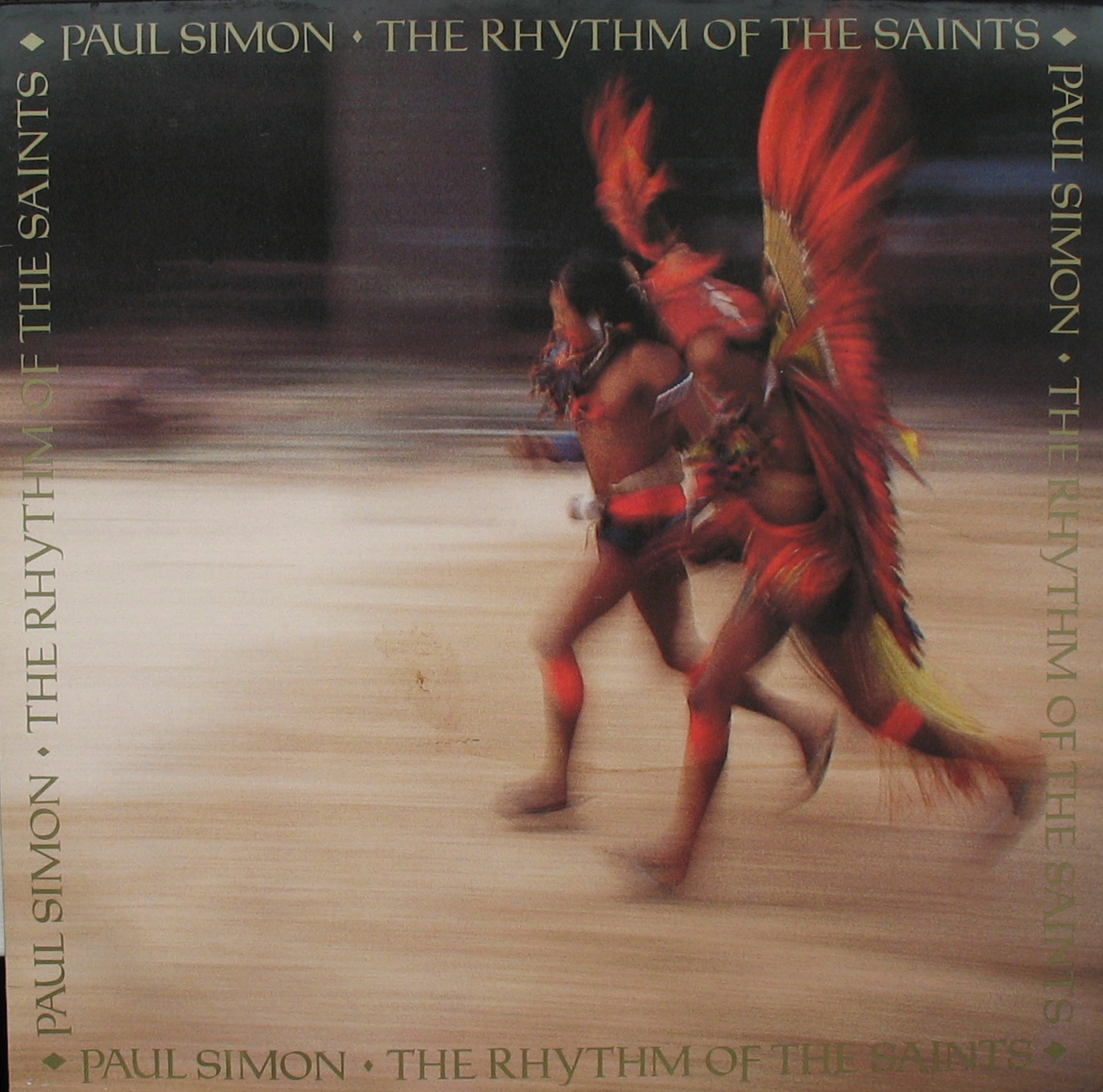
The album included a parade of guest contributors including: Paul Simon on vocals, acoustic guitar, and electric guitar; Clifton Chenier on accordion; Ladysmith Black Mambazo on background vocals; Milton Nascimento on vocals; Naná Vasconcelos on percussion, conga, triangle, berimbau, and gourd; Adrian Belew on synthesizer; J.J. Cale on guitar; Rigo Star on guitar; Michael Brecker on saxophone and EWI synthesizer; Hugh Masekela on flugelhorn; Giovanni Hidalgo on congas; Kim Wilson on harmonica; Clifton Anderson on trombone; Francisco Aguabella on congas; Artur Andres on percussion; Mingo Araujo on percussion, castanets, congas, cymbals, drums, triangle, shaker, African bells, agogo bells, and casinette; Isaac Asante on percussion; Martin Atangana on electric guitar; Dave Bargeron on euphonium; Karen Bernod on background vocals; Jude Bethel on tenor saxophone; Jacques Bolognesi on trombone; Randy Brecker on piccolo trumpet; Briz on background vocals; Anthony Carrillo on bongos; Elolongue Mbango Catherine on background vocals; Don Chacal on bongos, congas, bata, and gourd; C.J. Chenier on accordion; Wilson DasNeves on percussion and cowbell; Djana'd on background vocals; Charles Doherty on tenor & alto saxophone; Steve Gadd on drums; Florence Gnimagnon on background vocals; Myrna Lynn Gomila on background vocals; Gordinho on surdo; Grupo Cultural Olodum on drums; Alain Hatot on saxophone; Errol Ince on trumpet; Kia Jeffries on background vocals; Remi Kabaka on percussion; Bakithi Khumalo on bass; Armand Sabal-Lecco on bass; Charlotte M'bango on background vocals; Andre Manga on bass; Mazzola on percussion and chicote; Jimmy McDonald on accordion; Clyde Mitchell on trumpet; Madeleine Yayodele Nelson on chekere; Vincent Nguini on guitars, bass, and claves; Greg Phillinganes on synthesizer; Ray Phiri on guitar; Raphael Rabello on guitar; Decio Ramos on drums; Felix Sabal-Lecco on drums; Paul Santos on percussion; Paulo Sérgio Santos on chicote; George Seba on electric guitar; Phillipe Slominski on trumpet; Pedro Sorongo on percussion and scraper; Justin Tchounou on synthesizer; Antonio Luis Alves de Souza as director; Remi Kabaka on drums; Beloba on percussion; Marçalzinho on percussion; Armandinho on guitar; Canegal on percussion; Sidinho Moreira on bongos, conga, drums, bottle, and water bowl; Madeleine Yayodele Nelson on shekere; Jorge Ferreira da Silva on percussion; Kofi Electrik on guitar; and Uakti on percussion.
Well, I’m accustomed to a smooth ride Or maybe I’m a dog who’s lost its bite I don’t expect to be treated like a fool no more I don’t expect to sleep through the night Some people say a lie’s a lie’s a lie But I say why Why deny the obvious child? Why deny the obvious child? And in remembering a road sign I am remembering a girl when I was young And we said, “These songs are true These days are ours These tears are free” And hey The cross is in the ballpark The cross is in the ballpark We had a lot of fun We had a lot of money We had a little son and we thought we’d call him Sonny Sonny gets married and moves away Sonny has a baby and bills to pay Sonny gets sunnier Day by day by day by day Well, I’ve been waking up at sunrise I’ve been following the light across my room I watch the night receive the room of my day Some people say the sky is just the sky But I say Why deny the obvious child? Why deny the obvious child? Sonny sits by the window and thinks to himself How it’s strange that some roots are like cages Sonny’s yearbook from high school Is down on the shelf And he idle thumbs through the pages Some have died Some have fled from themselves Or struggled from here to get there Sonny wanders beyond his interior walls Runs his hands through his thinning brown hair Well, I’m accustomed to a smoother ride Or maybe I’m a dog who’s lost its bite I don’t expect to be treated like a fool no more I don’t expect to sleep the night Some people say a lie is just a lie But I say The cross is in the ballpark Why deny the obvious child? 'The Rhythm of the Saints' full album:
All tracks composed by Paul Simon, except where indicated. "The Obvious Child" – 4:10 "Can't Run But" – 3:36 "The Coast" (Simon, Vincent Nguini) – 5:04 "Proof" – 4:39 "Further to Fly" – 5:36 "She Moves On" – 5:03 "Born at the Right Time" – 3:48 "The Cool, Cool River" – 4:33 "Spirit Voices" (Simon, Milton Nascimento) – 3:56 "The Rhythm of the Saints" – 4:12 bonus tracks "Born at the Right Time" (Acoustic demo) – 3:50 "Thelma" (Outtake) – 4:14 "The Coast" (Work-in-progress version) – 5:13 "Spirit Voices" (Work-in-progress version) – 3:49
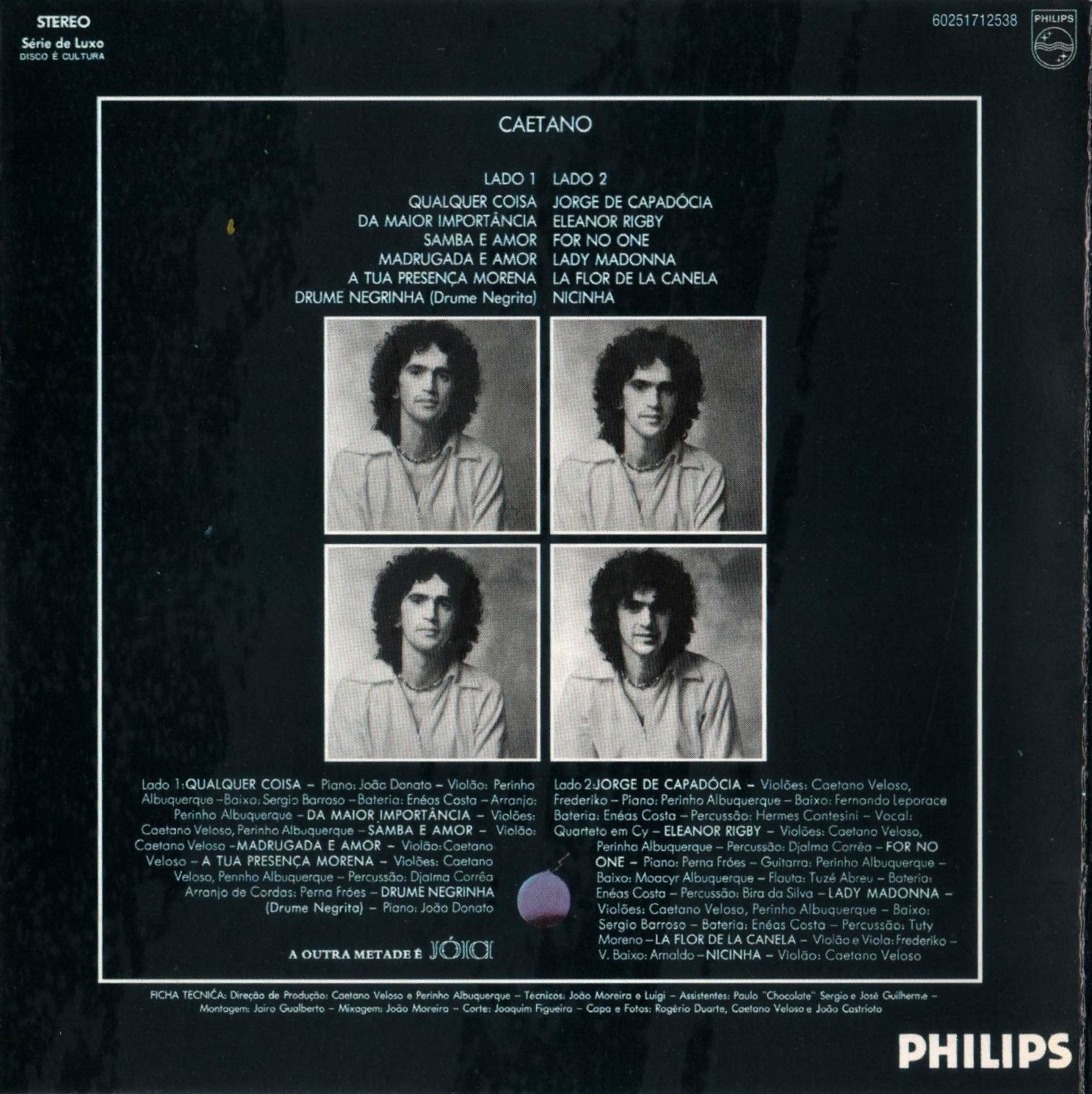
Caetano Veloso simultaneously created two pseudo-movements with these two jewels of unique expression and quiet contemplation. He had been the catalyst for a new hybrid of traditional music with modern influences over the course of almost a decade on albums like Domingowith Gal Costa in 1967, Caetano Veloso (Tropicália), the 1968 collaboration Tropicália: ou Panis et Circenses, Caetano Velosoin 1969 and Caetano Velosoin 1971, and Transaand Araçá Azulin 1972. After spending some time touring and producing albums for other, he returned to the studio to record one album of (mostly) originals and a second of (mostly) covers. The proceedings were produced by Caetano Veloso and Perinho Albuquerque and included Moacyr Albuquerque and Sergio Barroso on bass; Perinho Albuquerque on arrangements, guitar, violin, and percussion; Tuzé Abreu, Altamiro Carrilho, Jorge Ferreira da Silva, and Celso on flute; Djalma Corrêa and Bira Da Silva on percussion; Perna Froes on arrangements and piano; As Gatas on background vocals; Tutty Moreno on bateria; Quarteto em Cy on vocals; with Jairo Gualberto and Aldo Luiz; and director Caetano Velosoon guitar, percussion, viola, and vocals. Both albums were released on the same day in June of 1975. The racy album cover for 'Jóia' was banned by the Brazilian goverment.
Elis Regina and Antonio Carlos Jobim created a bewitching bossa nova out of the intimate exquisite expression of what had to be. They had both been performing since their early teens in nightclubs and music festivals. Jobim was the preeminent Brazilian composer with roots in jazz, classical, and samba. He had rencently cemented his place in musical history with the smash success of his song "The Girl From Ipanema" from the classic album 'Getz/Gilberto'. Regina was a beloved Brazilian singer whose passionate craft had inspired nicknames like "little pepper" and "hurricane". Her controversial song "Arrastão" marked the beginning of the Brazilian popular music movement (Música Popular Brasileira -MPB). Regina had long wanted to record an album of Jobim's songs with him, and to mark ten years with Philips Records, the project was given the green light by the label. 'Elis & Tom' was recorded over sixteen days in February and March of 1974 at MGM Studios in Los Angeles, California with producer Aloysio de Oliveira. The sessions featured Antonio Carlos Jobim on piano and vocals; Elis Regina on vocals; César Camargo Mariano on piano; Hélio Delmiro and Oscar Castro-Neves on guitar; Luizão Maia on bass; Paulo Braga on drums; Chico Batera on percussion; and Bill Hitchcock as conductor.
With its full spectrum of emotion, 'Elis & Tom' has gone on to be considered one of the very finest examples of Brazilian pop.
00:04 "Águas de Março" (Antonio Carlos Jobim) 03:41 "Pois É" (Antonio Carlos Jobim, Chico Buarque) 05:28 "Só Tinha de Ser com Você" (Antonio Carlos Jobim, Aloysio de Oliveira) 09:55 "Modinha" (Antonio Carlos Jobim, Vinícius de Moraes) 12:10 "Triste" (Jobim) 15:25 "Corcovado" (Jobim) 19:36 "O Que Tinha de Ser" (Jobim, de Moraes) 21:23 "Retrato em Branco e Preto" (Jobim, Buarque) 24:29 "Brigas, Nunca Mais" (Jobim, de Moraes) 26:40 "Por toda a Minha Vida" (Jobim, de Moraes) 28:48 "Fotografia" (Jobim) 32:12 "Soneto de Separação" (Jobim, de Moraes) 34:35 "Chovendo na Roseira" (Jobim) 38:07 "Inútil Paisagem" (Jobim, de Oliveira)
'Caetano Veloso' was a hugely successful artistic achievement; but the social implications of the Tropicália movement made Veloso a dangerous man to the repressive military goverment in Brazil at the time. He and Gil were arrested a year later and exiled for their counter-cultural attitudes.
All songs written and composed by Caetano Veloso except where noted. Side one 1."Tropicália" 3:40 2."Clarice" (Caetano Veloso, José Carlos Capinam)5:31 3."No Dia em que Eu Vim-Me Embora" (Caetano Veloso, Gilberto Gil)2:26 4."Alegria, Alegria" 2:43 5."Onde Andarás?" (Caetano Veloso, Ferreira Gullar)1:55 6."Anunciação" (Caetano Veloso, Rogério Duarte)2:01 Side two 7."Superbacana" 1:28 8."Paisagem Útil" 2:35 9."Clara (feat. Gal Costa)" (Caetano Veloso, Perinho Albuquerque)2:43 10."Soy Loco por Tí, América" (Gilberto Gil, José Carlos Capinam)3:40 11."Ave Maria" 2:06
Jorge Ben made his free spirited debut with the new style swing of this seductive samba. He was born Jorge Duilio Lima Menezes in Rio de Janeiro and began playing guitar to emulate the bossa nova style of João Gilberto. He took the stage name Ben from his mother's maiden name. He sang in a church choir and played parties and nightclubs, where he was discovered at the age of twenty-three and signed to the Phillips label. A week later, his first single 'Mas Que Nada' was released and became such a huge sensation that other artists were tripping over each other to cover the song. 'Samba Esquema Novo' ("New Style Samba") was recorded with producer Armando Pittigliani and features Jorge Ben on vocals and violão; Manuel Gusmão on bass; Luís Carlos Vinhas on piano; J.T. Meirelles on flute and saxophone; Pedro Paulo on trumpet; and Dom Um Romão on drums.
Mas que nada Don't mind that Sai da minha frente Get out of my way Eu quero passar I want to come through Pois o samba está animado Because the samba is cheerful O que eu quero é sambar And what I want is to samba Este samba This samba Que é misto de maracatu is a mixture of Maracatu É samba de preto velho It is the old black man's samba Samba de preto tu Black man's samba Mas que nada Don't mind that Um samba como esse tão legal A samba like this is so cool Você não vai querer You won't want it Que eu chegue no final
to come to an end.
In 1966, Sergio Mendez and Brasil 66 took the song to number forty-seven on the US pop chart and number four on the US easy listening chart. http://www.youtube.com/watch?v=BrZBiqK0p9E