Showing posts with label rhythm and blues. Show all posts

Thursday, March 17, 2016

the commitments


Alan Parker brought Roddy's Doyle's novel about building a soul band in Dublin to life by building a soul band with actual working musicians.   Parker remembers:  "I had said from the outset, rather rashly, that in our search for the Commitments members I would consider anyone who sang or played a musical instrument. It was pointed out to me that there were as many as 1200 bands playing in Dublin, which is extraordinary in a city of just over a million people. There was a little Irish blarney attached to this, however, as I discovered that many of the young musicians often play in three or four bands at a time and “The Boneshakers” this week can inexplicably be called “Hep Cat Huey” the next. Each evening a different pub offered us up yet another band belting away in the cramped upstairs rooms. They say forming a band in Dublin is one thing, but finding somewhere to play is a little more difficult. Also on every street corner there seemed to be a busker who was dutifully dragged in to audition. Many reasons are put forward for the music explosion in Ireland. The international success of performers like U2, Sinéad O’Connor, Van Morrison and Bob Geldof are obvious beacons for young Dubliners. Ireland also has the youngest population in Europe and (in 1990) the high unemployment amongst young people is an important factor in why so many struggle to buy their guitars and form their garage bands as a way of gaining some dignity for the present and hope for a future...Also, in order to cast our net as widely as possible, we had organized an open casting call at the Mansion House (town hall) where we invited anyone in Dublin who wanted to be considered for the film. Over 1500 young hopefuls turned up reading a page of the script and singing and playing everything from guitars to tin whistles, banjos to bagpipes (quite a miraculous turnout considering Ireland was doing rather well in the World Cup at the time, consequently bringing Dublin to a halt). The truth is, of course, if you ask absolutely anyone to sing in Ireland they’ll gladly oblige —often quite beautifully and sometimes even without a glass of Guinness in their hand."


The group was assembled using ten musicians and two actors (Bronagh Gallagher and Johnny Murphy).  The film stars:  

Robert Arkins as Jimmy Rabbitte, manager.

Sixteen year old Andrew Strong as Declan "Deco" Cuffe, lead singer. His father, Rob Strong, was the film's vocal coach and when Parker heard his son singing, he asked him to audition for Deco.

Glen Hansard from the band The Frames as Outspan Foster, guitar.


Kenneth McCluskey as Derek Scully, bass.

Johnny Murphy as Joey "The Lips" Fagan, trumpet.  Rory Gallagher and Van Morrison had been approached to play the part.

Félim Gormley as Dean Fay, sax.

Michael Aherne as Steven Clifford, piano.

Dick Massey as Billy Mooney, first drummer.

Dave Finnegan as Mickah Wallace, second drummer.

The Commitmentettes
Angeline Ball as Imelda Quirke, backup singer.
Maria Doyle as Natalie Murphy, backup singer
Bronagh Gallagher as Bernie McGloughlin, backup singer.


Colm Meaney as Jimmy Rabbitte, Sr.
Anne Kent as Mrs. Rabbitte

All four siblings from The Corrs appear in the film.

Andrea Corr as Sharon Rabbitte, Jimmy's younger sister. She does not sing in the film.
Jim Corr as a "Avant-Garde-A-Clue" band member
Sharon Corr (uncredited) as Fiddle Player in Country & Western band
Caroline Corr (uncredited) as Drummer in Country & Western band

Peter Rowen (who featured on the cover of U2's Boy and War) as the skateboarding boy who wants to audition for the band.
Colm Mac Con Iomaire as an auditioning fiddler
Sean Hughes as Dave from Eejit Records
Alan Parker as Eejit Records producer


Parker says:   "Our music priority was to lay down the basic tracks for the twenty-four chosen performed songs. We had decided to use a new system for shooting and recording the music which had never been used before on a film.  Most film music from “Singing In The Rain” to MTV uses pre-recorded tracks and vocals which are played back as the camera takes up different positions with the artists miming. I wanted to capture the reality of the rehearsals and performing by recording the vocals live on set. This is very difficult as modern film requires many different angles to be covered and a constant sound track is needed in order for the finished edited scene to match cut by cut. We used a new system of out-of-phase speakers which enabled us to play the pre-recorded constant backing tracks at maximum volume on set to give us a live performance atmosphere for the vocalists to sing to. Each vocal was then recorded live onto a twenty-four track recorder that was on set with us. Because of the out-of-phase speakers the vocals could be recorded cleanly, as they were filmed, for re-mixing later. This allowed us the technical precision needed for a complicated cut but gave us the truth, energy and spirit of a live performance. It also enabled us to interweave dramatic dialogue with the songs.  By the end of the month we had rehearsed each scene in the film over and over until  our ten musicians had become actors and our two actors had become musicians and all of them had become an accomplished ensemble theatrical group. By the time we were ready to film, all the songs could be performed by the cast and we could run through the whole script, from beginning to end, in one stretch, just like a play."


'The Commitments'  earned almost fifteen million at the box office and won the BAFTA Award for Best Film, as well as  Best Director, Best Editing, and Best Adapted Screenplay. It was nominated for the Golden Globe Award for Best Motion Picture - Musical or Comedy and for the Academy Award for Best Film Editing.  In a poll done in 2005 by Jameson Irish Whiskey, The Commitments was voted best Irish film of all time.  


'The Commitments'  
trailer


"Mustang Sally"


"Try A Little Tenderness"

The Commitments - Try a Little Tenderness by algizdk


The soundtrack produced two volumes of music.  The original soundtrack went to number seventeen in Sweden, twelve in Austria, eight in the US, six in Switzerland, four in the UK, two in Australia, and number one in New Zealand.  Volume 2 charted at number one hundred and eighteen in the US, thirty-two in Austria, twenty-five in Sweden, fifteen in Switzerland, thirteen in the UK, eleven in Norway, six in Australia, and number three in New Zealand.  


'The Commitments'  
soundtrack Volumes 1&2
full albums


VOLUME 1
1. "Mustang Sally" Mack Rice  00:00
2. "Take Me To The River" Al Green, Mabon "Teenie" Hodges  04:00
3. "Chain Of Fools"  Aretha Franklin  07:39
4. "The Dark End Of The Street" Dan Penn, Chips Moman 10:37
5. "Destination Anywhere"  (Niamh Kavanagh) Nickolas Ashford, Valerie Simpson 13:13
6. "I Can't Stand The Rain"  Ann Peebles, Don Bryant, Bernard "Bernie" Miller 16:22
7. "Try A Little Tenderness" Jimmy Campbell and Reg Connelly, Harry M. Woods 19:34
8. "Treat Her Right"   Roy Head and the Traits 24:09
9. "Do Right Woman, Do Right Man" (Niamh Kavanagh) Penn, Moman  27:48
10. "Mr. Pitiful"  Redding, Steve Cropper 31:04
11. "I Never Loved A Man" Ronny Shannon 33:15
12. "In The Midnight Hour" Pickett, Cropper 36:27
13. "Bye Bye Baby"  Mary Wells 38:52
14. "Slip Away" William Armstrong, Marcus Daniel, Wilbur Terrell 42:16

VOLUME 2
1. "Hard To Handle"  Allen Jones, Al Bell, Otis Redding  46:47
2. "Grits Ain't Groceries"  Titus Turner 49:10
3. "I Thank You" Isaac Hayes, David Porter 52:53
4. "That's The Way Love Is" Norman Whitfield, Barrett Strong 56:33
5. "Show Me" Joe Tex 1:00:42
6. "Saved" Jerry Leiber and Mike Stoller 1:03:36
7. "Too Many Fish in the Sea" Whitfield, Eddie Holland 1:06:33
8. "Fa-Fa-Fa-Fa-Fa (Sad Song)" Redding, Steve Cropper 1:09:18
9. "Land Of A Thousand Dances" Chris Kenner 1:12:11
10. "Nowhere To Run" Holland–Dozier–Holland 1:15:24
11. "Bring It On Home To Me" Sam Cooke 1:19:05
12. "Are You Lonely for Me" 1:22:50
13. "(She's) Some Kind of Wonderful" 1:26:46
14. "Too Many Cooks (Spoil the Soup)" 1:30:08
15. "Same Old Me" 1:33:34
16. "Ain't Nothing You Can Do" [Long Version] 1:38:40


where are they now?


Friday, December 18, 2015

having a rave up with the yardbirds


The Yardbirds had a heart full of soul and reached new heights of innovation with the psychedelic ragas and wild man blues of this transitional tour de force.  After the release of their debut album Five Live Yardbirds  in late 1964, the band saw drastic changes in their lineup.  Legendary lead guitarist Eric Clapton left the band on the very day their single "For Your Love" was released in March of 1965:   "I was with them a year and a half. They weren't too keen to have it known that I'd left. People leaving groups in those days was dirty...The guitar players who play with them don't like them. I was fooled into joining the group, attracted by the pop thing, the big money and traveling around and little chicks. It wasn't until after a year and a half that I started to take music as a serious thing. I just realized I would be doing it for the rest of my life and I'd better be doing it right. I was playing what they wanted me to play...I intended to pack up playing all together. I was kind of screwed up about everything. Playing with a group like that puts you in a very strange frame of mind." 


His replacement Jeff Beck reveals:   "Apart from being a tramp, I was playing on records whenever I could.  I was lucky enough to be known.  Whenever they needed a rock and roll guitar break, I'd play it.  But work was limited because there weren't very many rock and roll records being made at the time.  I met Jimmy Page at these recording sessions and he recommended me to the Yardbirds when Eric left."


Jimmy Page says:   "At that point, I didn't have any wish to go out touring. I appreciated what I was doing in the world of recording, being a studio musician.  There was another issue. Eric and I had become pals, and I didn't feel right [about taking his place]. But I did say to the band: "You should check out Jeff Beck." Because I knew Jeff was playing well...[I changed my mind and joined as a bassist after] I had a Muzak session to do. It was a whole folio of music – all reading, turning the page and carrying on. I thought, "This is it." I was experimenting with all of these ideas at home. I just knew it was time to go. They had a show at the Marquee Club, and Paul was not coming back. So I foolishly said, "Yeah, I'll play bass." [Drummer] Jim McCarty says I was so desperate to get out of the studio that I'd have played drums."


As their debut had not found distribution in the US, their label scrambled to put together material for release across the pond.  Their second album For Your Love  came out in June 1965 and became their first album available in the United States.  Their third album, Having a Rave Up with The Yardbirds was culled together from singles and tracks from Five Live Yardbirds.  Side one features studio material and Jeff Beck on lead guitar, while side two features the live material and Eric Clapton on lead guitar.    The entire album has Keith Relf on vocals, harmonica, acoustic guitar, and percussion;   Chris Dreja on rhythm guitar;  Paul Samwell-Smith on bass and backing vocals;  and  Jim McCarty on drums and backing vocals.   Ron Prentice played bass on "Heart Full of Soul".  Producer Giorgio Gomelsky also did the backing bass vocal on "Still I'm Sad"; while  Samwell-Smith also did production work, credited as  musical director.  The reissue of the album includes eleven bonus tracks from the Beck lineup, one of which "Stroll On" includes Jimmy Page as second lead guitar and  Chris Dreja on bass.   The original Having a Rave Up with The Yardbirds album reached number fifty-three in the US market.  


McCarty muses:   "I don’t know if anyone’s done a rave-up quite the same – I haven’t really heard it played by anybody else. We were just trying to make the music a bit more exciting, and I think it was Paul Samwell-Smith’s idea to pump up the bass and the drums, and build the band up to this crescendo: it was all in order to get the audience going...The four-piece was much tighter, with a much tighter sound than the five-piece, especially with Jimmy Page. It was much more sort of businesslike – I don’t know what the right word would be – it was much more of what was expected, it was steady, but I don’t think we quite had the creativity of the five-piece. The five-piece with Jeff Beck and Paul Samwell-Smith was a very creative line-up that produced lots of things, like “Shapes Of Things,” “Happenings Ten Years Time Ago” and “Over Under Sideways Down.” The four-piece was good, but it was much better live, and it didn’t really work in terms of creating new songs."


Dreja demures:   "A little rave-up doesn’t do your soul any harm at all, you know. It’s all good stuff. You can have sex, or you can have a rave-up, but it’s all good for you...Music takes you to the places that nothing else does. It’s as simple as that. Especially when times are a little bit tough for people...I’m a background boy. I love playing the bass and rhythm guitar, and helping with song ideas. But I’ve never been a virtuoso; I didn’t have that thing about leaping in front, you know. And I was just very happy to work behind some very gifted players, and make them sound good."


Relf reveals:  "To tell you the truth I never really dug anything that we recorded 'cause I always felt that when we got to the recording situation it never really captured anything we ever did live. Somehow, whenever we got to the clinical situation of sitting down and trying to contrive it, it didn't work. I think the band was one of those rare kind of bands that only really got it on in the excitement of the situation, of the environment, and of the audience. If I could put into one word or phrase what the essence of The Yardbirds was - one word to describe The Yardbirds - it would be "electricity". But, somehow, it was probably too raw to put down on tape -- but I don't know, really. Possibly if there was the 16 track facilities and whatever to do it we could have done it. We very often did lots of those things straight down in one mono take...and the balancing was, like, up to whoever ... Well, it wasn't really up to us...The whole thing was in hands of managers, record companies - - it was a different era, man. One didn't have the control over things like we do now. It was a pop era and being a pop band you were kind of manipulated...In a way it was a case of using the numbers that the Stones hadn't used off the Bo Diddley album - - do you know what I mean?...it was on a different path completely. We were always aware of what the Stones were doing -- everyone had to be...we were following our own path...Jeff was the guy for developing sounds. He used to get into motorbike sounds on a guitar and de-tuning, playing with the strings over the top of the know, and de-tuning the thing while he was playing. He used to go out on stage without tuning up...he hardly ever tuned up properly. He'd get a semblance of tuning up and then he'd go on the stage and just play -- he'd bend to the notes. He never really played chords or anything. If the thing was out of tune he'd just bend to it. You could never get him to tune up. He'd go out on stage with the guitar totally out of tune -- but whatever he'd play would be in tune...[Jeff's strongest point was] his unbridled spontaneity; When he got in on, you know -- when he forgot himself and just blew - - when he forgot his problems, you know ?"


Beck would explain:   "I've got dozens of amplifiers.  The more the merrier.  You can't say any one is better than the other.  The effects I get are done by the sue of fuzzboxes and echoes...We started experimenting with sounds a long time ago ... [My style of playing]...It’s like a tantrum. Those things are outbursts, like exactly what I wanted to do to the teachers at school. It’s a bottled-up frustration that manifests itself in those outbursts, as well as a reflection of my life and my reaction to the difficulties of it. Singers are like that when they start screaming, like Screaming Jay Hawkins: One minute he’s singing perfectly normally, and then all of a sudden he bursts into rage. Love it.   I like an element of chaos in music. That feeling is the best thing ever, as long as you don’t have too much of it. It’s got to be in balance. I just saw Cirque du Soleil, and it struck me as complete organized chaos. And then there was this simple movement in the middle of the show, which was a comedy, and I thought, What a great parallel between the way that I think and the way this circus is happening.  It had a special meaning for me, aside from the spectacle of it all. When I came away from it, I thought, If I could turn that into music, it’s not far away from what my ultimate goal would be, which is to delight people with chaos and beauty at the same time."


http://www.theyardbirds.com/


Heart Full of Soul became their second consecutive top ten hit on both sides of the pond.  


I'm A Man


Still I'm Sad


Having a Rave Up with The Yardbirds
full album:


side one
You're a Better Man Than I-00:00 (Mike Hugg, Brian Hugg)
Evil Hearted You-03:19 (Graham Gouldman)
I'm a Man -05:45 (Ellas McDaniel aka Bo Diddley)
Still I'm Sad-08:24 (Paul Samwell-Smith, Jim McCarty)
Heart Full of Soul-11.24 (Gouldman)
The Train Kept A-Rollin-13:53 (Tiny Bradshaw, Howard Kay, Lois Mann)
side two
Smokestack Lightning-17:20 (Chester Burnett aka Howlin' Wolf)
Respectable -23:01 (O'Kelly Isley, Ronald Isley, Rudolph Isley)
I'm a Man-28:37 (Ellas McDaniel aka Bo Diddley)
Here 'Tis-33:09 (Ellas McDaniel aka Bo Diddley)

bonus:
Shapes of Things-38:20 (Paul Samwell-Smith, Keith Relf, Jim McCarty)
New York City Blues-40:47 (Relf, Chris Dreja)
Jeff's Blues -45:07(The Nazz Are Blue" demo) (Jeff Beck)
Someone to Love-48:12 (Lost Woman demo, Part 1, Take 15) (Beck, Relf, Samwell-Smith, Dreja, McCarty)
Someone to Love-50:37 (Lost Woman demo, Part 2) (Beck, Relf, Samwell-Smith, Dreja, McCarty)
Like Jimmy Reed Again-54:56 (demo) (Beck, Relf, Samwell-Smith, Dreja, McCarty)
Chris' Number-58:01 (demo) (Beck, Relf, Samwell-Smith, Dreja, McCarty)
What Do You Want-1:05:27 (demo, Take 4) (Beck, Relf, Samwell-Smith, Dreja, McCarty)
Here 'Tis -1:08:39 (demo) (Ellas McDaniel aka Bo Diddley)
Here 'Tis-1:12:30 (aka "For RSG", track for Ready Steady Go! TV broadcast) (Diddley)
Stroll On-1:16:36 (Relf, Beck, Jimmy Page, Dreja, McCarty)


Sunday, November 1, 2015

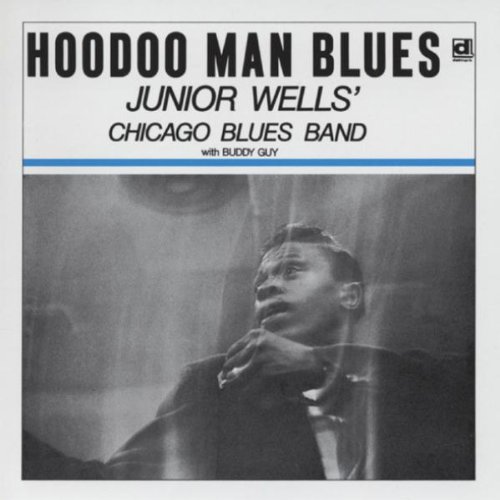
hoodoo man blues


Lil' Junior Wells and Buddy Guy tried to make us understand how somebody done hoodooed the hoodoo man with this electric blues classic.  


Wells learned harmonica at the age of seven and moved from Arkansas to Chicago when he was a teenager.  After playing with various local groups he recorded several singles including  "Messin' with the Kid", "Come on in This House", "It Hurts Me Too", and the 1960 R&B number twenty-three hit "Little by Little"  on Chief subsidiary Profile Records.  

Bob Koester offered his Delmark label to produce Wells' debut album 'Hoodoo Man Blues' with the Junior Wells' Chicago Blues Band, which included session blues guitarist Buddy Guy.  Koester thought Guy was signed with Chess Records, so he listed him on the album as Friendly Chap:     “I called Leonard Chess and he said, ‘OK, use the sonofabitch but you don’t use his name and he doesn’t sing.’  I later discovered that he didn’t have Buddy under contract, so I used his name, with Buddy’s blessing.”


Stu Black engineered the sessions with Friendly Chap Buddy Guy on guitar and vocals;  Jack Myers on bass;   Bill Warren on drums;   and  Junior Wells on harmonica and vocals.   The album became the label's best seller ever.  


"Hoodoo Man Blues"


Lord, I wonder what's has got the matter
Wit' time, you know, wit' time
It seems like the hours
Oh, everything done changed

But I hold up my hand
I'm just tryin' t'make her understand
Lord, you know, everybody tells Little Junior
That somebody done hoodooed the hoodoo man

Now, I'm goin' down to Louisiana
An' get me a mojo hand
My little woman
She done quit me for some other man

But I hold up my hand
I'm tryin' to make her understand
Lord, you know, everybody they tells me
That somebody done hoodooed the hoodoo man

{Well that's what I'm talkin'}

Now I buzzed your bell this morning
You had your elevator running slow
I buzzed your bell, little woman
To take me on the third floor

But I hold up my hand
I'm just trying make you understand
Lord, you know, everybody tells Lil' Junior
"Somebody hoodooed the hoodoo man"


 'Hoodoo Man Blues' 
full album:


"Snatch It Back and Hold It" (Junior Wells) – 2:53
"Ships on the Ocean" (Wells) – 4:07
"Good Morning Schoolgirl" (Sonny Boy Williamson) – 3:50
"Hound Dog" (Jerry Leiber, Mike Stoller) – 2:12
"In the Wee Wee Hours" (Junior Wells) – 3:42
"Hey Lawdy Mama" (Buddy Moss) – 3:10
"Hoodoo Man Blues" (Wells, Williamson) – 2:49
"Early in the Morning" (traditional) – 4:44
"We're Ready" (Buddy Guy, Wells) – 3:33
"You Don't Love Me, Baby" (Willie Cobbs) – 2:58
"Chitlin Con Carne" (Kenny Burrell) – 2:12
"Yonder Wall" (Elmore James) – 4:10
"Hoodoo Man Blues (alternate take)" (Wells, Williamson) – 2:50 
"Chitlin Con Carne (alternate take)"(Burrell) – 3:20 


Thursday, October 8, 2015

dirty mind


Prince was just a-freakin' as he drove his daddy's car into virgin territory with his unique blend of salacious new wave funk and revolutionary rock and roll.  While still a teenager the Minneapolis prodigy signed a three album deal with Warner Brothers Records and managed to retain creative control over his music.  On his debut album 'For You'   he produced, arranged, composed, and played all twenty-seven instruments.  The follow-up 'Prince'  gave him his first number one hit, with the R&B smash "I Wanna Be Your Lover".  

As he prepared for his next album, he returned to Minneapolis where he had set up his own studio at the house he rented at Lake Minnetonka.  He brought some of his touring band into the process this time around, actually recording with Dr. Fink on synthesizer (on "Dirty Mind" and "Head")  and  Lisa Coleman on vocals ("Head").  Otherwise, all other vocals and instruments were performed by Prince.   The lyrics were more explicit than anything that had ever been released, dealing plainly with such taboo subjects as threesomes, incest, and oral sex without any metaphor or double entendre.    The music was just as raw, bridging the diverse styles of funk and post punk, soul and new wave, pop and protest, into something that defied categorization.   


Prince would express at the time:   "To me, disco was always very contrived music. It was all completely planned out for when the musicians were recording it in the studios. Basically, what I do is just go in and play...It's easy for me to work in the studio, because I have no worries or doubts about what the other musician's going to play because that other musician is almost always me! All the other musicians on the record are me. Disco music was filled with breaks that a studio musician would just play and fill up when his moment came. But I don't do that at all – I just play along with the other guy...[The idea that I can play twenty-seven instruments] came about because that was the exact number of instruments I played on the first album. But actually, there are a lot of instruments which if you can play you can also play another six related ones...I think I've always been the same. But when you're in the hands of other people they can package it in a way that is more … uhhh, acceptable. All along I've had the same sort of ideas that came out on this record. It's just that my former management had other thoughts about it all...The songs on Dirty Mind were originally just some demo tapes that I recorded and took to LA to play to my new management. Even they weren't too happy with them. We also had long talks about what I felt was me getting closer to my real image, and at first they thought that I'd gone off the deep end and had lost my mind. Warners basically thought the same, I think...But once I told them that this was the way it was, then they knew they had no choice and they'd have to try it, because they weren't going to get another record out of me otherwise...I know that I'm a lot happier than I was. Because I'm getting away with what I want to do. With the other two albums I feel I was being forced to suppress part of myself – though also I was younger...I just turned down all the producers that Warners suggested to me for the first album. Even when they finally agreed to let me produce myself they insisted I had to work with what they said was an Executive Producer, who was really just an engineer. And that caused a whole lot of other problems, because he was versed in shortcuts and I didn't want to take any – though (laughs) that was why it took five months to make...The recording's become a little easier these days. I used to be a perfectionist – too much of one. Those ragged edges tend to be a bit truer...I write everything from experience. Dirty Mind was written totally from experience...When I started doing my own records I really didn't want to listen to anybody, because I figured I should just disregard what anybody else might be doing. Though I suppose subconsciously I might have been influenced just by the mood that was going on around me. I can only be a product of my time … unless I cut myself off totally. Though that is soon to come...[from] the world...Just write music, and things like that. Hang around in my head. And just make records. I don't think I'll perform any more. I don't want to do this too much longer...It's still fun. But I get bored real fast. Yeah, it's still fun. But I can't see it going on for too much longer in the same fashion."


'Dirty Mind' became an underground smash, selling a half a million copies with zero radio exposure.  The album charted at number forty-five on the Billboard 200 and number seven on the R&B album chart.  


http://prince.org/


http://www.princevault.com/


http://store.artofficialage.com/


http://plectrumelectrum.3rdeyegirl.com/


lyrics:

http://www.princelyrics.co.uk/album/dirtymind/


"Uptown" reached number five on the US R&B singles chart. 


http://www.wat.tv/video/prince-uptown-383vh_2hztv_.html


"Partyup" 

"I was in a lot of different situations when I was coming up to make that record. A lot of anger came up through the songs. It was kind of a rough time. There were a few anti-draft demonstrations going on or that I was involved in that spurred me to write Partyup...Really, that song is just about people who'd rather have a good time than go and shoot up one another. That's all – it's pretty basic. I just seem to read about a lot of politicians who're all going to die soon and I guess they want to go out heavy, because they're prepared to make a few mistakes and end up starting a war that they don't have to go out and fight...I just think the people should have a little more to say in some of these foreign matters. I don't want to have to go out and die for their mistakes."

http://myfunk.ning.com/video/prince-party-up


http://www.nicozon.net/watch/sm3741957

http://v.yinyuetai.com/video/2710433


'Dirty Mind' 
full album:
https://itunes.apple.com/us/album/dirty-mind/id214145168


http://www.last.fm/music/Prince/Dirty+Mind

https://myspace.com/prince/music/album/dirty-mind-8523347


http://tidido.com/a35184372117695/al56014cd4e7c622686a982b1a


http://classic.beatport.com/release/dirty-mind/332045


All songs written and composed by Prince, except where noted


Side one

1. "Dirty Mind"   Prince, Dr. Fink (music) 4:14
2. "When You Were Mine"     3:47
3. "Do It All Night"     3:42
4. "Gotta Broken Heart Again"     2:16
Side two
5. "Uptown"   Prince, André Cymone  5:32
6. "Head"     4:44
7. "Sister"     1:31
8. "Partyup"   Prince, Morris Day 4:24


live


Capitol Theatre January 30, 1982


The Ritz, New York March 22, 1981

http://www.dailymotion.com/video/x30rugz

http://www.nicozon.net/watch/sm3913417


American Bandstand  
January 6, 1980
I Wanna Be Your Lover / Why You Wanna Treat Me So Bad?