Showing posts with label no wave. Show all posts
Friday, January 23, 2015
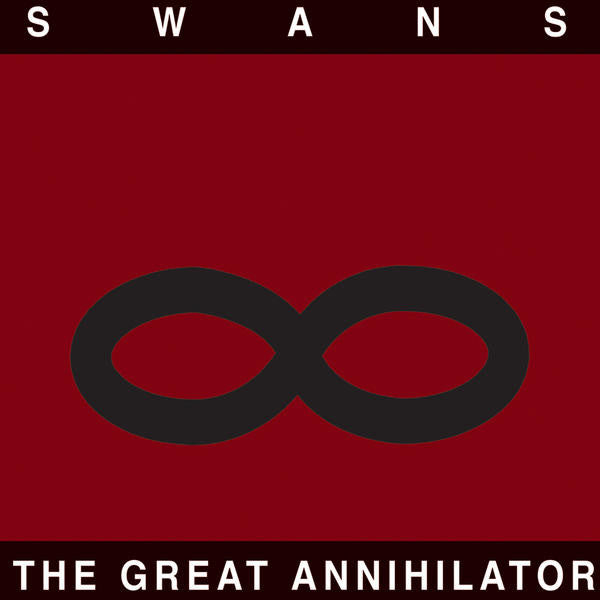
the great annihilator
Swans went burning backwards through a cosmic gothic blood promise to create this insane unconscious true love annihilation. After a decade the group had developed from a visceral industrial onslaught ( 'Filth' , 'Cop' , 'Holy Money' , and 'Greed' ) into a more diverse and accessible sound ( 'Children of God' , 'The Burning World' , 'White Light from the Mouth of Infinity' , and 'Love of Life' ) coinciding with a brief flirtation with major label Uni/MCA. The group took three years to record their next album 'The Great Annihilator' with Michael Gira on electric guitar, vocals, electric 12 string guitar, sounds, acoustic guitar, and production; Jarboe on vocals, background vocals, sounds, organ, and keyboard; Bill Rieflin on drums, percussion, sounds, and 12 string acoustic guitar; Algis Kizys on bass guitar; Norman Westberg on electric guitar; Clinton Steele on electric guitar, acoustic guitar, and drone guitar; and Ted Parsons on drums.
Gira would recount: "The new album was recorded in Chicago while we were still living in New York. That was a long disastrous process, though. We thought we had some pretty strong interest from major labels for the record, and that went on for over a year. When that didn't come through, we didn't know what we were doing. At the time, the person that was doing our business was associated with Martin Atkins at Invisible, so we just decided to put it out on his label because he was available and had good distribution ... Actually, we've recorded in a lot of different places around the world, and this just came about like most things, it seems, through inertia. We got hooked up with what was supposed to be cheap studio time there. I spent three months living inside a windowless warehouse, never going outside, drinking far too much and making fresh enemies with whomever had the bad luck to come in to work on the album or stare at me like an evil troll on display. A real fun time! Jarboe and I slept in a tent in the room next to the recording console because the warehouse was infested with mosquitoes that bred in the toxic sludge outside in nearby Cabrini Green and worked their way in through the air vents, honing in on our blood. It was like camping out, except in a subterranean cell where nothing ever changes. Most of my time was spent shuffling around comatose in the debris like a zombie, listening to the same sounds over and over, trying to remember what I was doing there - this is my impression of Chicago. But don't get me wrong, I really enjoyed myself. That's why the album sounds so great! ... I wouldn't say there is a single lyrical or thematic thread to it. There are a few references to a quasi-cosmic phenomenon, the great annihilator, I don't know if you know about that...I'm certainly no science freak but according to Stephen Hawking's theory, the ultimate black hole into which all matter, time and events get sucked into once-the universe starts reversing itself is called the great annihilator. So its like this inhaling and exhaling process of creation and destruction of the universe. To me. it was a nice image really, because I don't know much about science-l didn't even graduate from high school. It's kind of like a Buddhist concept. Actually. modern physics is veering toward Buddhism more and more. it seems, like all matter being sentient. I saw this physicist giving a lecture once about matter having intentionality."
http://swans.pair.com/
Where Does A Body End?
Warm
Mind/Body/Light/Sound
'The Great Annihilator'
full album:
All songs by Michael Gira except "My Buried Child" (lyrics: Michael Gira, music: Michael Gira, Jarboe) and "Out" (Michael Gira, Jarboe).
1 - In
2 - I Am The Sun - 2:27
3 - She Lives! - 5:51
4 - Celebrity Lifestyle - 12:52
5 - Mother/Father - 17:02
6 - Blood Promise - 21:09
7 - Mind/Body/Light/Sound - 25:25
8 - My Buried Child - 30:18
9 - Warm - 33:17
10 - Alcohol The Seed - 38:11
11 - Killing For Company - 41:41
12 - Mother's Milk - 48:36
13 - Where Does A Body End? - 51:03
14 - Telepathy - 54:46
15 - The Great Annihilator - 1:00:57
16 - Out - 1:05:51
live 1995
https://www.youtube.com/watch?v=5LQxz7j0WwA
Friday, June 6, 2014
sonic nurse
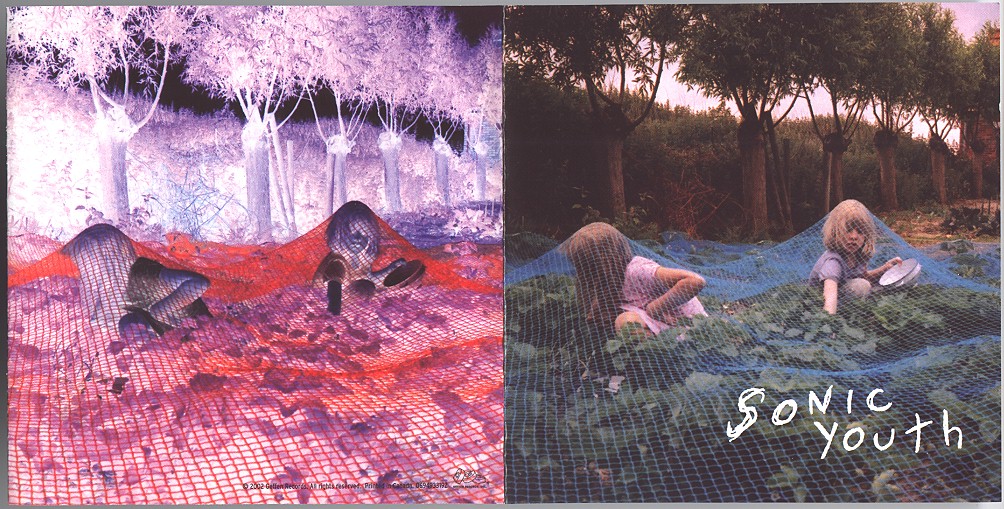
Sonic Youth coalesced their avante experimentation into recognizable patterns with the melodic medicine of this dripping dream. Having reestablished their credibility with 'Murray Street', 'Sonic Nurse' finds the band continuing to turn dissonant feedback into beautifully cascading sound collages that are emotionally affecting. Once again the band produced the sessions at Echo Canyon on Murray Street in New York City with Kim Gordon on vocals, guitar, and bass; Thurston Moore on vocals and guitar; Lee Ranaldo on guitar and vocals; and Steve Shelley on drums. Jim O'Rourke plays guitar and bass for the second album in a row.
'Sonic Nurse' is strongly influenced by the writing of William Gibson (whose novel 'Pattern Recognition' gives the opening track its title) and the art of Richard Prince (who did the cover art and gave 'Dude Ranch Nurse' its title). Gordon considers: "We’ve never subscribed to the rock and roll cliche of sex, drugs and rock and roll -- or at least the first two. We do all have input in writing. It’s not like we’re a band that has one or two songwriters. Everyone feels involved, and we share in the publishing equally. That probably makes some big difference...Jim has definitely made it different. He’s a real -- as they say in basketball -- role player. And I think whatever the song needs, he’ll kind of think up parts for. I think that definitely the songs have gotten more structured because of that."
Shelley says: "We changed the name from 'Sonic Youth Nurse' to 'Sonic Nurse' . It’s never been just Nurse, but it’s kind of confusing...When you get the real booklet, it’s a series of paintings by this artist, Richard Prince. He took these pulp novels from the 60s that all had nurse in the title and he made paintings based on these book covers, which are beautiful; his paintings are amazing. I don’t know, there’s like five or six of these paintings in our CD booklet and each one of them is a different title, whether it’s New England Nurse or Surfing Nurse, so we’ve changed one of them to be called Sonic Nurse...I love being an underground band. I wouldn’t have it any other way."
Ranaldo reveals: "I think [an underground band is] what we are to a large degree. It’s an incongruity because we’re on a major label, and yet we have our own indie label as well. But for the larger music-buying population, for people buying Britney and Outkast records, we’re an underground band, because we don’t exist in that world. We’re in this totally other world and we’re really happy there. We love the music we make there and we love the community...I guess the main thing that’s kept us going is that we’ve stayed focused on the music and the community that we exist in, and we’ve gotten what we wanted out of it. We weren’t looking to make a hit single and go for that dream that for most people is fairly unobtainable. We wanted to make really good music and we kind of just went about it and did it and focused on that."
Moore muses: "One thing we accomplished is that we were able to create a true working model for how bands can conduct themselves for more than five years, playing decidedly fringe music. I think in the future we'll probably become more of a pop band. There's no alternative for us. I'll deliver papers if I have to. It's not going to stop me from making records and doing music on whatever level it is ... The thing is, being punk rock is not having to prove you are. And it's obvious to anyone who is authentic in that mind-set. You don't have to call yourself a punk rocker...Sometimes we get letters from kids going, 'You guys aren't noisy; but if you listen to our records, pretty much across the board they aren't noisy. They're just different. Maybe that's the noise those people are hearing — this unknown thing."
'Sonic Nurse' edged its way to number eighty-nine in Germany, sixty-four in the US, fifty-three in Ireland, fifty in Italy, forty-one in France, twenty-three in Belgium, and twenty-one in Norway.
http://www.sonicyouth.com/
Pattern Recognition
New Hampshire
Stones
'Sonic Nurse'
full album:
https://myspace.com/sonicyouth/music/album/sonic-nurse-8754569
All tracks written by Sonic Youth, except as noted.
1. "Pattern Recognition" lyrics: Gordon vocals: Gordon 6:33
2. "Unmade Bed" lyrics: Moore vocals: Moore 3:53
3. "Dripping Dream" lyrics: Moore vocals: Moore 7:46
4. "Kim Gordon and the Arthur Doyle Hand Cream" vocals: Gordon 4:51
5. "Stones" lyrics: Moore vocals: Moore 7:06
6. "Dude Ranch Nurse" lyrics: Gordon vocals: Gordon 5:44
7. "New Hampshire" lyrics: Moore vocals: Moore 5:12
8. "Paper Cup Exit" lyrics: Ranaldo vocals: Ranaldo, background vocals Moore 5:57
9. "I Love You Golden Blue" lyrics: Gordon vocals: Gordon 7:03
10. "Peace Attack" lyrics: Moore vocals: Moore 6:10
Wednesday, October 2, 2013
daydream nation
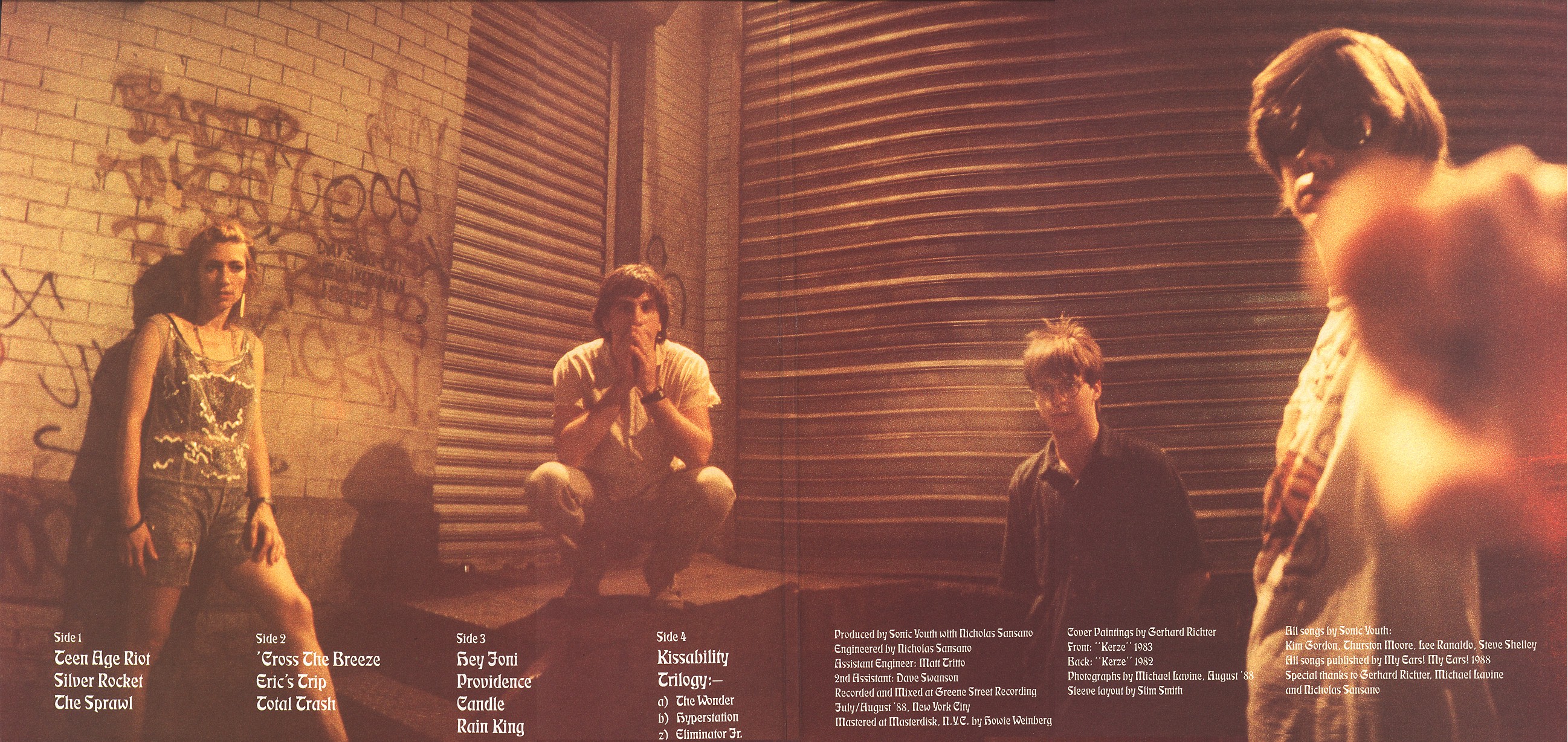
Sonic Youth took their underground art noise to the hypernation with the extended hazy exaltations and inverted pop structures of this bold and breathtaking landmark. Building on the artistic triumphs of 'EVOL' and 'Sister', the band co-produced 'Daydream Nation' with Nick Sansano in the basement at Greene Street Recording in New York City. The sessions featured Thurston Moore on guitar, vocals, and piano; Kim Gordon on bass guitar and vocals; Lee Ranaldo on guitar and vocals; and Steve Shelley on drums.
Moore muses: "We're basically very kind of anarchistic when we write and we just allow anything to happen. And then we'll just sort of modify it to what we think is good. We're interested in pop song structures so we'll like do something that you wouldn't believe that could be used in a pop structure; but we think it could be and it would be interesting to see something used that way. And we've done it and I think we've done that successfully."
Shelley says: "We want people to hear out music; but we don't care about being a commodity...I don't think we're trying to change for the sake of change. Everything's been pretty organic and natural. we've just changed in ways that we've felt comfortable with. and again, in ways that we think 'well this is just plain good.' ... We're not interested in doing something unique just for the uniqueness' sake. It's got to have substance to it. It's got to mean something in the format we're using it in."
Gordon reflects on the violent label that gets attached to the band: "Like anything the news or media touches...people are fond of using catchphrases, and when you use catchphrases or people go for what reads as good press it is subject to distortion; and what is violent to one person physically is not necessarily violent to us. It's more of a violence of emotions or something or a passion of something it's not really violence. Any more than rock was ever meant to be violent. you know, it's just to be alive."
Ranaldo remembers: "'Daydream Nation' was our last record on an independent label, 'Goo' was the first record on a major, so it was a transition in a lot of ways. 'Daydream' brought us to the top of the heap of the indie-college market and recognition by all of our peers; 'Daydream' kind of capped off everything we set out to do when we started as a band, in terms of like wow, wouldn't it be great to make a record that a lot of people liked and listened to?... 'Daydream' culminated that because a lot of the songs were sprawling, but in the years before that, through 'Bad Moon', 'Evol', and 'Sister', we were going out live and melding all these songs into one long song. We wouldn't stop from one song to the next, we'd turn on tape recorders and have noisy sound interludes and have one song go from right into the other and not wait for flaws and just build this symphonic grouping of pieces throughout a set. 'Bad Moon Rising' is strung like that on a record, there aren't really any gaps in between the songs. By the time we finished touring 'Daydream' we were ready to make a record where we actually stopped in between songs and tried to do that, a more normal thing. "
'Daydream Nation' did not chart in the US and only reached number ninety-nine in the UK; but it was featured prominently in numerous critical lists for the best albums of 1988. It has subsequently been lauded as one of the greatest albums of all time. The album cover features a painting by Gerhard Richter called Kerze ("Candle").
Moore looks back: "It was statement-oriented, but we didn't think, "This is gonna blow minds." We knew that it was a pretty audacious record to put out at the time. But we didn't realize what the feedback was gonna be. And I don't think we ever did, until the [Village Voice] Pazz & Jop Poll put it at No. 2, below Public Enemy's 'It Takes a Nation of Millions'. All of a sudden, it became real to us — that people were appreciating the record in a way that was beyond our expectations. That was as big as it could ever get for us... Listening to the ['Daydream Nation'] master tapes, I was amazed at how crude my guitar takes were. Especially "Rain King," which I had to decode — like, "What the fuck tuning was that and where were my fingers on the guitar?" Because it sounded like I was playing rotten guitar strings on a piece of wood. And then it would break into this kind of hard-rock riff. But it was just so spastic all through the song. And "The Sprawl" and " 'Cross the Breeze" were two songs that we hadn't really played since those days. I had to really listen closely to them to figure out what the tunings were. It was just really weird, finding old notations in scrapbooks and on pieces of paper, like these ancient texts. It sounds great, but when you listen to just one element of it, like my guitar, it sounds like I don't know how to play, like I'm playing with gloves on. I would never accept a guitar take like that today. And it sounds crappy, too, the way it's recorded."
http://www.sonicyouth.com/
'Daydream Nation'
full album:
http://www.youtube.com/watch?v=PVwJMOtfJbU
Side one
1. "Teen Age Riot" Moore 6:57
2. "Silver Rocket" Moore 3:47
3. "The Sprawl" Gordon 7:42
Side two
4. "'Cross the Breeze" Gordon 7:00
5. "Eric's Trip" Ranaldo 3:48
6. "Total Trash" Moore 7:33
Side three
7. "Hey Joni" Ranaldo 4:23
8. "Providence" 2:41
9. "Candle" Moore 4:58
10. "Rain King" Ranaldo 4:39
Side four
11. "Kissability" Gordon 3:08
12. "Trilogy" Moore, Gordon 14:02
A. "The Wonder"
B. "Hyperstation"
Z. "Eliminator Jr."
"Teen Age Riot" made it to number twenty on the Billboard modern rock tracks chart.
https://www.youtube.com/watch?v=tPytYrYqDbA
"Candle"
https://www.youtube.com/watch?v=rhT4vn6tphA
Saturday, July 21, 2012
dirty
Sonic Youth focused their energies and found their greatest commercial success with the elegant chaos of this pop punk noise rock exposition. After their major label debut 'Goo' broadened their audience, they brought in the team producer Butch Vig and mixer Andy Wallace that handled 'Nevermind' for their Geffen labelmates Nirvana. Vig convinced the band to condense their extended instrumental jams into more cohesive song structures before they even started recording at the Magic Shop studio with Kim Gordon on bass and vocals, Thurston Moore on guitar and vocals, Lee Ranaldo on guitar and vocals, and Steve Shelley on drums. He also had them record multiple takes of the songs, and the result is a cleaner more urgent sound. Vig recalls: "'Dirty' was recorded on an old radio broadcast console, and cut in a smaller room, where we tracked a lot of things live with the band playing in a circle round Steve's kit. Again, a simple set-up...Over the years, I've found that the fewer mics you use, the better the sound is going to be...It's important to understand how a drummer plays – do they hit the cymbals loud, or do they play the fills louder than the groove? Steve Shelley is amazing in the way he fits into the symphonic sound that Sonic Youth make. Often, he'll play drums more as a pulse than a clearly defined part. He glues it all together."
Shelly says: "In a way it seems like we maybe made some concessions to the label, at least in how we recorded the last two albums. But I think that 'Dirty' is easily the best sounding thing we've done- you can really hear everything that's going on. It's the first time I really felt like the album's musical base was as deep and wide as it could be. So I'm Not sure I'd even consider that any kind of concession, really."
Renaldo adds: "And some of the songs on 'Dirty'-mostly ones that Kim ended up singing- are as abstracted as anything we've done. As far as the difference in major and indie labels.....it's really more in your head then anywhere else. You do a record and give it to some people who try to sell it for you. Weather it's a major label or any independent label doing the selling makes little difference to the way you live your life. We're fortunate in the fact that we've not allowed anyone to take much control out of our hands- but that's something we've never done. Maybe other bands are just to willing to sign that away. I think we've all been pretty happy with the way things have gone with our label, and I don't think we could've made a record that's better than 'Dirty', regardless of where we were."
Moore says the band goes out of its way to find different, more extreme sounds “because it’s a gas, and sometimes it’s the only way to make it sound interesting...Just do it, and don’t let anybody tell you you can’t do it. That way you can free yourself up from an uptight music world.”
Gordon admits: "I think in general we wanted to have as much power as any mainstream rockband...We don't want to be thought of as an indie band or a noise band. We think of ourselves as a guitar oriented rock band."
Moore quips: "We can't get rid of our punk roots. We try washing them out-We try bleaching them out."
'Dirty' became their biggest selling album; reaching eighty-three in the US, twenty-two in Australia, six in the UK; and charting for the first time in several countries: going to fifty-nine in Germany, fifty-three in Japan, twenty-six in Sweden, and five in New Zealand, their highest position on any album chart.
http://www.sonicyouth.com/
'100%' hit twenty-six in the UK and went to number four on the US modern rock chart, their best showing on any singles chart. It was dedicated to Joe Cole, the roadie and friend of Henry Rollins who was murdered. The music video was directed by Tamra Davis and Spike Jonze.
'Sugar Kane' peaked at twenty-six in the UK.
The political ranting of 'Youth Against Fascism' fifty-two in the UK. It features Ian MacKaye of Fugazi on guitar. The video was directed by Nick Egan.
'Chapel Hill' is inspired by the burgeoning music scene.
'Purr' is a hyper-driven rocker that slows down to an mindblowing melting solo before kicking back into gear.
'Dirty'
full album:
1. "100%" 00:00
2. "Swimsuit Issue" 02:30
3. "Theresa's Sound-World" 05:29
4. "Drunken Butterfly" 10:58
5. "Shoot" 14:02
6. "Wish Fulfillment" 19:18
7. "Sugar Kane" 22:45
8. "Orange Rolls, Angel's Spit" 28:42
9. "Youth Against Fascism" 33:02
10. "Nic Fit" 36:38
11. "On the Strip" 37:38
12. "Chapel Hill" 43:20
13. "JC" 48:08
14. "Purr" 52:11
15. "Créme Brûlèe" 56:34
Monday, June 25, 2012
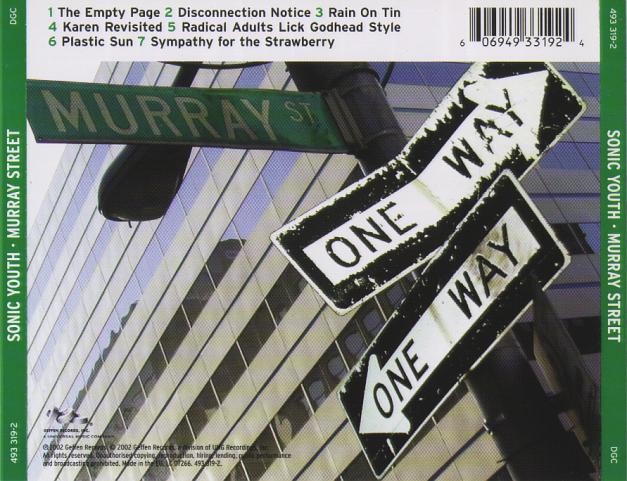
murray street

Sonic Youth struck an artful balance between melody and experimentation with the chilled out noise rock of their twelfth album. 'Murray Street' was named for the location of their Echo Canyon studio in New York City. The sessions were interrupted by the World Trade Center attacks of September 11, 2001. Multi-instrumentalist Jim O'Rourke had just become an official member of the band: “The studio was just two short blocks away. A jet engine fell from the sky, and landed on Murray Street within eyeshot of the studio’s front window.”
Drummer Steve Shelley recalls: "The record was pretty much on its way. We had even done some of the basics in August, it’s just that we basically got shut down for two months. We couldn’t get to the studio, and we had to deal with real life at that time. Being in a studio is like the most unreal way to spend your days and your weeks. You’re in this sterile environment and you’re listening to the same thing over and over again. You don’t see the news or your friends and people lives as they change. Every day you’re in this environment where you’re working on creating another false environment, a recording. It’s a really weird process. It’s took us out of that process and dropped us back into it a few months later."
Kim Gordon reflects: "It was strange to go down there to work and be huddled in that studio, and there was nothing, just these empty buildings all around. But it's comforting that when something like that happens, you can still feel good about your work."
Thurston Moore says: "Concurrent with us making this record, they would dig up the street, then they would patch it; then they would dig it up again and they would patch it. They kept changing and rearranging conduits of water and electricity. To me, it was like they were working on their own record."

It was the second album that included O’Rourke; but his involvement was more intensive this time around: "I played bass on two-thirds of the songs and guitar on almost all of them. Actually, Lee was laughing in rehearsal, because I’m often playing bass live, which means he sometimes has to play my guitar parts. It was the first time he has ever had to play parts that weren’t his own. And although I’m credited as the album’s producer, I actually acted more as an engineer. The album’s production was a truly democratic effort by the band."
Lee Ranaldo describes their method for acquiring noises: "Well, basically all sounds heard and felt are fair game to inspire new sounds in whatever form they may take — I love industrial factory smash mechanique, but also birdsong, the wind whipping through tall grasses, and tall trucks slamming across city blacktop streets...It’s just some subtle switch in the brain that trips when an interesting sonic event happens — a bird’s song, jet engine, etc. that spawns sounds in the studio. It’s mostly about being open to hearing things in the world to begin with; I find interesting sounds just about everywhere I turn — then it’s not a matter of imitating but transforming the emotions you feel when you react to such sounds into music."

'Murray Street' was hailed as a return to the melodic sound of their heyday in the 80's. Shelley says: "To us, all of the albums have melody and they have pop songs in them, it’s just that sometimes, they’re done in a different way. People say, 'Oh, you’re writing songs this time.' We consider the material the last couple records in the format of songs and pop music structure, but our definition of what a pop song could be is maybe wider than some people’s. Some people really compare it to DN, which is fine, but we don’t really think about that when we’re making the record. We’re just in the moment and doing what we’re doing."
The album features several extended instrumental sections that deconstruct into an electric cacophony that winds around the interplay of at least three guitarists. Ranaldo says: "We build them like sculptures—from the ground up. Everybody hacks away at it until it’s something. We’ll often just sit around in a room with a tape recorder as a sketching tool and start generating sounds. Ideas gradually expand and develop until we have a structure and a songscape." Moore adds: "It’s not noise improvisation, though it may have originated as such when we first created it. Each of us is playing a distinct musical part that intertwines with the others." O’Rourke considers: "The challenge is keeping it all together, and then, when it falls apart, making sure it’s a good falling apart."
'Murray Street' went to number one hundred and twenty-six in the US, seventy-seven in the UK, sixty-seven in Ireland, sixty-three in Germany, fifty-two in Austria, forty-eight in France, and sixteen in Norway. It was awarded 'Album of the Year' by The Wire.
http://www.sonicyouth.com/
"The Empty Page"
"Disconnection Notice"
"Rain on Tin"
"Karen Revisited"
"Radical Adults Lick Godhead Style"
"Plastic Sun"
"Sympathy for the Strawberry"
"Street Sauce" was an import bonus track.
'Murray Street'
full album:
All music composed by Sonic Youth (Thurston Moore, Kim Gordon, Lee Ranaldo, Steve Shelley, Jim O'Rourke).
1. "The Empty Page" Moore 4:20
2. "Disconnection Notice" Moore 6:24
3. "Rain on Tin" Moore 7:56
4. "Karen Revisited" Ranaldo 11:10
5. "Radical Adults Lick Godhead Style" Moore 4:27
6. "Plastic Sun" Gordon 2:14
7. "Sympathy for the Strawberry" Gordon 9:06
Subscribe to:
Posts (Atom)