Showing posts with label frank zappa. Show all posts

Thursday, June 25, 2015

one size fits all


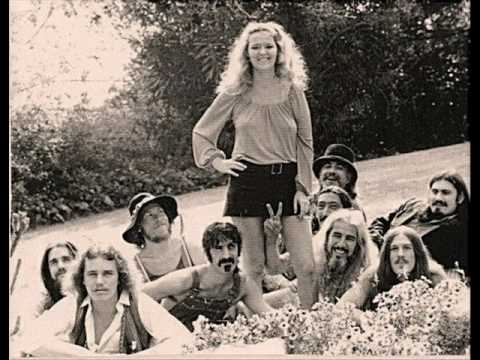
Frank Zappa and the Mothers of Invention carved up the hill and crammed a real good deal-o into this progressive po-jama pogen.  Following the winning streak of The Grand Wazoo,  Over-Nite Sensation ,  Apostrophe ('),  and the live 'Roxy & Elsewhere';  'One Size Fits All' maintains much of the lineup that played on 'Roxy & Elsewhere':    Frank Zappa on guitar, lead and backing vocals;    George Duke on keyboards, lead and backing vocals, and synthesizer;    Napoleon Murphy Brock on flute, lead and backing vocals, and tenor saxophone;   Ruth Underwood on marimba, vibraphone, and percussion;   Chester Thompson on drums, sound effects, and voices;   Tom Fowler and James "Bird Legs" Youman on bass guitar;    Johnny "Guitar" Watson on vocals;    and   Captain Beefheart (aka 'Bloodshot Rollin' Red') on harmonica.   

Zappa would admit:    "I'm not always the one who controls who is in or out of the Mothers. People come and go as they please in the band. So it follows that when somebody leaves you have to replace them; and then sometimes you don't have to replace them...The amount of rehearsals that it takes is greatly increased by the constant transition of the group's members. I like to have things pretty snappy when I go out on stage, and that requires all the band members, new or old, to be well rehearsed...Conflict always arises because different musicians who play different instruments have a different outlook on life from one another... Because of the different natures of instruments, take the trumpet and guitar for instance, there are two instruments that do two completely different things, and so, produce different attitudes in how their players see the music. 'You are what you play!'' It is a fallacy that all musicians have the same psychological make-up. Take a person who plays a bass – who really wants to play a bass? Who wants to play the bottom notes of a song? Just think about what kind of people become bass players, and what psychological things they have to put up with – they hardly ever get to play a solo, and most of the time, in rock'n'roll, they are playing the most boring things that you can imagine. Well, that kind of consciousness is different than someone who plays an instrument that plays the melody of a song and has a lot of solos – it just is not the same head."


Zappa produced the sessions at Record Plant Studios and Paramount Studios in Los Angeles;  and  at Caribou Ranch in Nederland, Colorado.   He had a great appreciation for the Steinway at Caribou:  "It's one of the best pianos in the world; and it used to be used for all the classical recordings. To me, that's what a piano is supposed to sound like.  But I wouldn't go there just for the piano.  It has other advantages: You buy the studio for twenty-four hours a day and you go in whenever you want, you know. You just live at the place, stay there for a while and you get your work done."


 'One Size Fits All' charted at number twenty-six in the US and five in Norway.  Zappa described the record as containing "some story-type songs, but it's pretty much rock-and-roll oriented.  You could actually dance to this record ...  I think everything I've written can be danced to. It can't be danced to by people who don't have a certain amount of creative ability and it's an excellent way to weed people out. If you can dance to one of our songs I think you have some creative ability and don't want to dance in a regimented manner. The beat's just as good on our records as on anybody else's records. It so happens that there's more of them in funny places ... It should have been more successful both commercially and critically. Most of the bad reviews – on this album and others – don't deal with the music but just talk about me. And most rock critics can't write anyway. Of course, every time I do an album, I think it's wonderful. That's how crazy I am – I thought they were all hits."


"Inca Roads"


"San Ber'dino"  
https://www.youtube.com/watch?v=lXBbttFIVEY


 'One Size Fits All' 
full album:

https://www.youtube.com/playlist?list=PLC8D634F0E5158379

https://www.youtube.com/watch?v=WUxJQlOKj38


All songs written by Frank Zappa.

Side one
00:00 "Inca Roads"   8:45
08:45 "Can't Afford No Shoes"   2:38
11:24 "Sofa No. 1"   2:39
14:04 "Po-Jama People"   7:39
Side two
21:43 "Florentine Pogen"   5:27
27:10 "Evelyn, a Modified Dog"   1:04
28:15 "San Ber'dino"   5:57
34:12 "Andy"   6:04
40:16 "Sofa No. 2"   2:42


Friday, October 10, 2014

hot rats


Frank Zappa turned out some hot ritz in the progressive jazz gumbo of this motherless majestic movie for your ears.  The Mothers of Invention had disbanded after the release of 'Uncle Meat' with only Ian Underwood sticking around to work with Zappa on a solo album.  

Zappy would reveal:   "As far as the completely orchestrated stuff goes, many people hearing these things that do not have a text don't hear the humor in it, in what the notes are saying and the instruments that are playing the notes.  If you consider the normal function of an instrument and the way an instrument is expected to behave in an orchestral ensemble and if you assign a function to that instrument that takes it out of its normal character that's an element of humor.  Also, some people think that the "Hot Rats" album was completely scored out. Well, it wasn't. Here's how the "Hot Rats" album was made. It started out with basic rhythm tracks that were done by a four-piece rhythm ensemble and all the rest of the parts were over-dubbed on top of that and much of it was written right there in the studio...The rhythm tracks took approximately ten hours, but to complete "Peaches and Regalia" took 100 hours in terms of over-dubbing for that one song and there's only four people playing on the album at any one time on any of those tracks...I consider myself a composer except that most people think of composers as people who write dots on a piece of paper. My idea of being a composer extends to the organisation of materials which are not exclusively musical. My compositions deal with not just the notes that are being played, the instruments that are playing them but also involve the people who are playing them. Each ensemble of personalities produces a different result even though you are playing the same written musical material. So it's a musical, chemical, psychological, elaborate sort of composition that's happening. When you consider that a lot of the stuff we do on stage is improvised for personnel combination and the mood they're in at the time, it has a lot to do with the music that's coming out."


'Hot Rats' features Frank Zappa on guitar, octave bass, and percussion; and Ian Underwood on piano, organus maximus, flute, all clarinets, and all saxes;  with Max Bennett providing bass on all tracks except "Peaches en Regalia";  Captain Beefheart supplying vocals on "Willie the Pimp";  John Guerin on drums for "Willie the Pimp", "Little Umbrellas" and "It Must Be a Camel";  Don "Sugarcane" Harris on violin for "Willie the Pimp" and "The Gumbo Variations";  Paul Humphrey on drums for "Son of Mr. Green Genes" and "The Gumbo Variations";  Shuggie Otis on bass for "Peaches en Regalia";  Jean-Luc Ponty on violin for "It Must Be a Camel";  Ron Selico on drums for "Peaches en Regalia";  and Lowell George adding rhythm guitar

The entire project was produced and arranged by Frank Zappa with Director of engineering Dick Kunc overseeing Cliff Goldstein, Jack Hunt, and Brian Ingoldsby.  The album was recorded on a state-of-the-art custom built sixteen track recorder, which allowed multiple overdubs that created a fuller sound.  


'Hot Rats' reached one hundred and seventy three in the US and number nine in the UK.  The album was  dedicated to Zappa's newborn son, Dweezil.  


http://www.zappa.com/


"Peaches en Regalia"

https://www.youtube.com/watch?v=BmEXyXVVp24
https://www.youtube.com/watch?v=04QCGFirghI


'Hot Rats' 
full album:


All songs written and composed by Frank Zappa. 

Side one
1. "Peaches en Regalia"   3:38
2. "Willie the Pimp"   9:21
3. "Son of Mr. Green Genes"   8:58
Side two
4. "Little Umbrellas"   3:06
5. "The Gumbo Variations"   12:53
6. "It Must Be a Camel"   5:15

Total length:     43:11


Friday, July 18, 2014

roxy & elsewhere


Zappa and the Mothers dummied up some be-bop bondage and  twisted tango for this intricate inspired improvization.  The double-live album captures the band at the height of its powers with most of the material recorded at The Roxy Theatre in Hollywood, California during three nights in December of 1973 with three songs recorded at the Edinboro State College, Edinboro, Pennsylvania and the  Auditorium Theatre in Chicago, Illinois in May of 1974.  'Roxy & Elsewhere' features Frank Zappa on guitar, vocals, and production;   Napoleon Murphy Brock on flute, tenor saxophone, and vocals;   George Duke on synthesizer, keyboards, and vocals;  Bruce Fowler on trombone and dancing;  Tom Fowler on bass guitar;  Walt Fowler on trumpet and bass trumpet;   Ralph Humphrey and Chester Thompson on drums;  Don Preston on synthesizer;  Jeff Simmons on rhythm guitar and vocals;  and Ruth Underwood on percussion;  with Robert "Frog" Camarena, Debbie, Lynn, and Ruben Ladron de Guevara on backing vocals.   

 'Roxy & Elsewhere'  went to number twenty-seven on the US pop album chart.  


http://www.zappa.com/


movie trailer


'Roxy & Elsewhere' 
full album:


Side one
1. "Penguin in Bondage"   6:48
2. "Pygmy Twylyte"   2:13
3. "Dummy Up" (Brock, Simmons, and Zappa) 6:02
Side two
4. "Village of the Sun"   4:17
5. "Echidna's Arf (Of You)"   3:52
6. "Don't You Ever Wash That Thing?"   9:40
Side three
7. "Cheepnis"   6:33
8. "Son of Orange County"   5:53
9. "More Trouble Every Day"   6:00
Side four
10. "Be-Bop Tango (Of the Old Jazzmen's Church)"   16:41


http://www.youtube.com/watch?v=BynKe8BjIxk&list=RDlnDqHppWS_Q&index=5


01:48 Cosmik Debris
09:49 Eric Dolphy Memorial Barbecue
10:53 Kung Fu
11:54 Penguin In Bondage
16:02 RDNZL
20:26 Montana
29:01 Dupree's Paradise
53:44 Join The March And Eat My Starch
54:22 Farther Oblivion


Tuesday, April 22, 2014

uncle meat


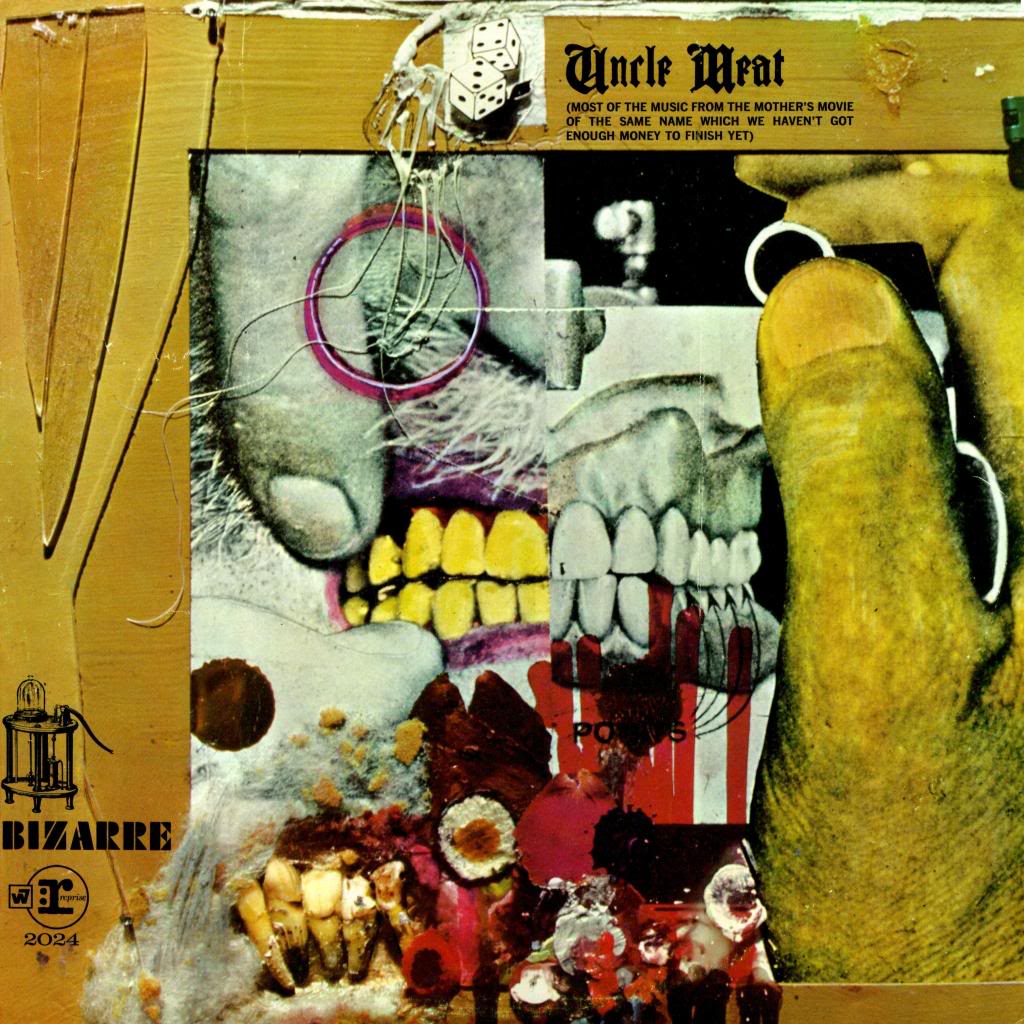
Frank Zappa and the Mothers of Invention laid out a bizarre smorgasbord of avante garde, neo-classical, spoken word, noise collage, and experimental jazz fusion with this soundtrack to an unfinished movie.   The subtitle to the original release of 'Uncle Meat' was '(MOST OF THE MUSIC FROM THE MOTHER'S MOVIE OF THE SAME NAME WHICH WE HAVEN'T GOT ENOUGH MONEY TO FINISH YET)'.  Zappa would explain:    "We made a movie called ‘Uncle Meat’. It’s got a lot of pictures of the Mothers in it, it also has a very strange plot which will require some straight-life-type actors to execute and we need some more money to finish it...It’s quite possible to make a film to match music, so I made some music and I made up the story line around it...It’s a fantasy film with political and sociological overtones!...I-er-usually just get some paper and start drawing dots on it, and wait for someone to play it so I know what it sounds like. That's the chamber music stiff. You know there's a difference between songs and compositions, songs are put together a different way, but these little bitty pieces that we are doing, they are based on another technique...I like to play with straight musicians, you know, it gives us a little contrast material, and it also displays the fact that there are some members of the group who really are very skilled players and could exist just as easily in a symphony orchestra as on rock and roll stage; so we brought them out to er sort of bridge the gap between electric music and the other kind...If we come along and we are playing some electric chamber music or if we are experimenting with electronic sounds where we are into percussion constructions, or we are into unaccompanied arias on stage which are spontaneous, or we are doing some sort of visual thing with a gas mask. You know, if you are a rock and roll critic in one of those pop papers what do you write about? What kind of musical background do you have to assess this, how much Stockhausen have you heard, how much er John Cage do you know about?...One of the things that’s really sick about the so-called serious musicians’ world. It completely ignores rock music. You know, they think that ‘we have it all, we are the avant garde and we are the forefront of musical experimentation,’ say serious composers you know, and they’re foolish to think that way because we in the rock world have equipment at our disposal that they don’t even know about, that we use on the bandstand all the time, I am sure that a lot of the composers who are sweating now in their little isolated garrets don’t know about electric woodwind instruments or what you can do with them. Even the electric guitar hasn’t been touched by serious composers, and this whole thing has happened right under their noses. They ignore it. They think that electric music is something that you make with a synthesiser and amplified music is a completely different world. The composer has been writing for bassoons for a long time, but the way it sounds in our ensemble is completely different. It's executed the same way, the only thing we added was the electricity. The same with the flugel-horn, clarinet, flute and other things we use. The trouble with the serious music world is that they're too narrow minded. They should go to the rock concerts. That’s one of the reasons why their music is out of touch with the youth. And it shouldn’t be, because I think that they are doing important things artistically, but it’s very difficult to bring that to the attention of large numbers of people; and the largest single body of people are the teenies – and how we get our music across without lowering our standard is that we just play it in places where the serious composers never go. We go to the Fillmore, and we play in all those little psychedelic dungeons all over the United States. We play schools and we play hockey rinks and we play bowling alleys and we also happen to play concert halls when we come to Europe...50 per cent of [our music is notated]. The other 50 per cent is improvised and it’s very carefully structured, and the live shows we do are all different, not just because of the improvisation but because of the way the building blocks of the show can be assembled...I am very interested in things which are absurd, and so the lyrics of that album are absurd, but some people think they are too sophisticated to appreciate an absurdity now and then...As a matter of fact they do have sociological significance but it isn’t as literal as most of the intellectuals would like to make it. You know, it’s a pretty subtle thing. First of all it’s an art statement that we are working in this medium, and it’s also an art statement that the package looks like it does for that record. It’s an art statement that the words are what they are against the music being what it is. It’s all very carefully balanced out ... It's all one album. All the material in the albums is organically related and if I had all the master tapes and I could take a razor blade and cut them apart and put it together again in a different order it still would make one piece of music you can listen to. Then I could take that razor blade and cut it apart and reassemble it a different way, and it still would make sense. I could do this twenty ways. The material is definitely related."


The sessions that produced 'Uncle Meat' took place at the same time as 'Cruising With Ruben and The Jets'.   The Mothers were:   Frank Zappa on guitar, low grade vocals, and percussion;  Ray Collins, who left the group in May 1968, on swell vocals;  Jimmy Carl Black on drums, droll humor, and poverty;  Roy Estrada on electric bass and cheeseburgers;  Don (Dom De Wild) Preston on electric piano, tarot cards, and brown rice;  Billy (The Oozer) Mundi on drums on some pieces before he quit in December 1967 to join Rhinoceros;  Bunk (Sweetpants) Gardner on piccolo, flute, clarinet, bass clarinet, soprano sax, alto sax, tenor sax, bassoon (all of these electric and/or no-electric depending);  Ian Underwood on electric organ, piano, harpsichord, celeste, flute, clarinet, alto sax, baritone sax, special assistant, copyist, industrial relations, and teen appeal;  Artie (With the Green Mustache) Tripp on drums, timpani, vibes, marimba, xylophone, wood blocks, bells, small chimes, cheerful outlook, and specific inquiries;  Euclid James (Motorhead/Motorishi) Sherwood on pop star, frenetic tenor sax stylings, tambourine, choreography, obstinance & equipment setter-upper when he's not hustling local groupies;   with special thanks to Ruth Komanoff who plays marimba and vibes with Artie on many of the tracks; and Nelcy Walker, the soprano voice with Ray & Roy on "Dog Breath" & "The Uncle Meat Variations."  Also, Pamela Zarubica appears as Suzy Creamcheese.   The sessions were produced by Zappa and engineered by Jerry Hansen, with Euclid James Sherwood as equipment technician and choreographer.  


The liner notes reveal:  "The music on this album was recorded over a period of about 5 months from October 1967 to February 1968.  Things that sound like a full orchestra were carefully assembled, track by track through a procedure known as overdubing.  The weird middle section of 'DOG BREATH' (after the line, "Ready to attack") has forty tracks built into it.  Things that sound like trumpets are actually clarinets played through an electronic device made by Maestro with a setting labeled Oboe D'Amore and sped up a minor third with a V.S.O. (variable speed oscillator).  Other peculiar sounds were made on a Kalamazoo electric organ.  The only equipment at our disposal for the modification of these primary sounds was a pair of Pultec Filters, two Lang Equalizers, and three Melchor Compressors built into the board at Apostolic Studios in New York.  The board itself is exceptionally quiet and efficient (the only thing that allowed us to pile up so many tracks) and is the product of Mr. Lou Lindauer's imagination & workmanship.  The material was recorded on a prototype Scully 12 track maching at 30 ips.  The whole project was engineered by Richard Kunc or Dynamite Dick, as he is known to the trade.  Special Engineering credits go to Jerry Hansen for the percussion effects added later at Sunset Sound in L.A., and to our friend Mike in Copenhagen for the tapes he sent us. "

  'Uncle Meat' reached number forty-three on the US album chart.  


http://www.zappa.com/


"Dog Breath, in the Year of the Plague"

https://www.youtube.com/watch?v=wMSQ1vCxZJU


"The Uncle Meat Variations"

https://www.youtube.com/watch?v=euNyMUrXKsE


"Electric Aunt Jemima"

https://www.youtube.com/watch?v=ge6j7uUCwQc


"Mr. Green Genes"

https://www.youtube.com/watch?v=szI0izZbhbc


"Project X"

https://www.youtube.com/watch?v=6uDy5sMtUlM


"Cruising for Burgers"

https://www.youtube.com/watch?v=D30r_MbIRVU


 "Tengo Na Minchia Tanta" 
was included in the re-issue of the album.
https://www.youtube.com/watch?v=rqQ8t6N9A0M


'King Kong' parts I-VI

https://www.youtube.com/watch?v=FD5kTEf8Rd0


1. "King Kong Itself (as played by the Mothers in a studio)"   0:53
2. "King Kong (it's magnificence as interpreted by Dom DeWild)"   1:15
3. "King Kong (as Motorhead explains it)"   1:44
4. "King Kong (the Gardner Varieties)"   6:17
5. "King Kong (as played by 3 deranged Good Humor Trucks)"   0:29
6. "King Kong (live on a flat bed diesel in the middle of a race track at a Miami Pop Festival...the Underwood ramifications)"   7:22


'Uncle Meat' 
full album:

https://myspace.com/frankzappa/music/album/uncle-meat-18706065


All tracks written by Frank Zappa, except where noted.

Side one
1. "Uncle Meat: Main Title Theme" 1:54
2. "The Voice of Cheese" 0:27
3. "Nine Types of Industrial Pollution" ("400 Days of the Year") 5:56
4. "Zolar Czakl" 0:57
5. "Dog Breath, in the Year of the Plague" 5:51
6. "The Legend of the Golden Arches" 1:24
7. "Louie Louie" (At the Royal Albert Hall in London) Richard Berry 2:28
8. "The Dog Breath Variations" 1:36
Side two
1. "Sleeping in a Jar" 0:49
2. "Our Bizarre Relationship" 1:05
3. "The Uncle Meat Variations" 4:40
4. "Electric Aunt Jemima" 1:53
5. "Prelude to King Kong" 3:24
6. "God Bless America" (Live at the Whisky a Go Go) Irving Berlin 1:22
7. "A Pound for a Brown on the Bus" 1:29
8. "Ian Underwood Whips It Out" 5:08
Side three
1. "Mr. Green Genes"  3:10
2. "We Can Shoot You" 1:48
3. "'If We'd All Been Living in California...'" 1:29
4. "The Air" 2:57
5. "Project X" 4:47
6. "Cruising for Burgers" 2:19
Side four
1. "King Kong (As Played By The Mothers In A Studio)" 0:53
2. "King Kong (Its Magnificence As Interpreted By Dom DeWild)" 1:15
3. "King Kong (As Motorhead Explains It)" 1:44
4. "King Kong (The Gardner Varieties)" 6:17
5. "King Kong (As Played By 3 Deranged Good Humor Trucks)" 0:29
6. "King Kong (Live On A Flat Bed Diesel In The Middle Of A Race Track At A Miami Pop Festival...The Underwood Ramifications)" 7:22


Saturday, March 22, 2014

apostrophe (')


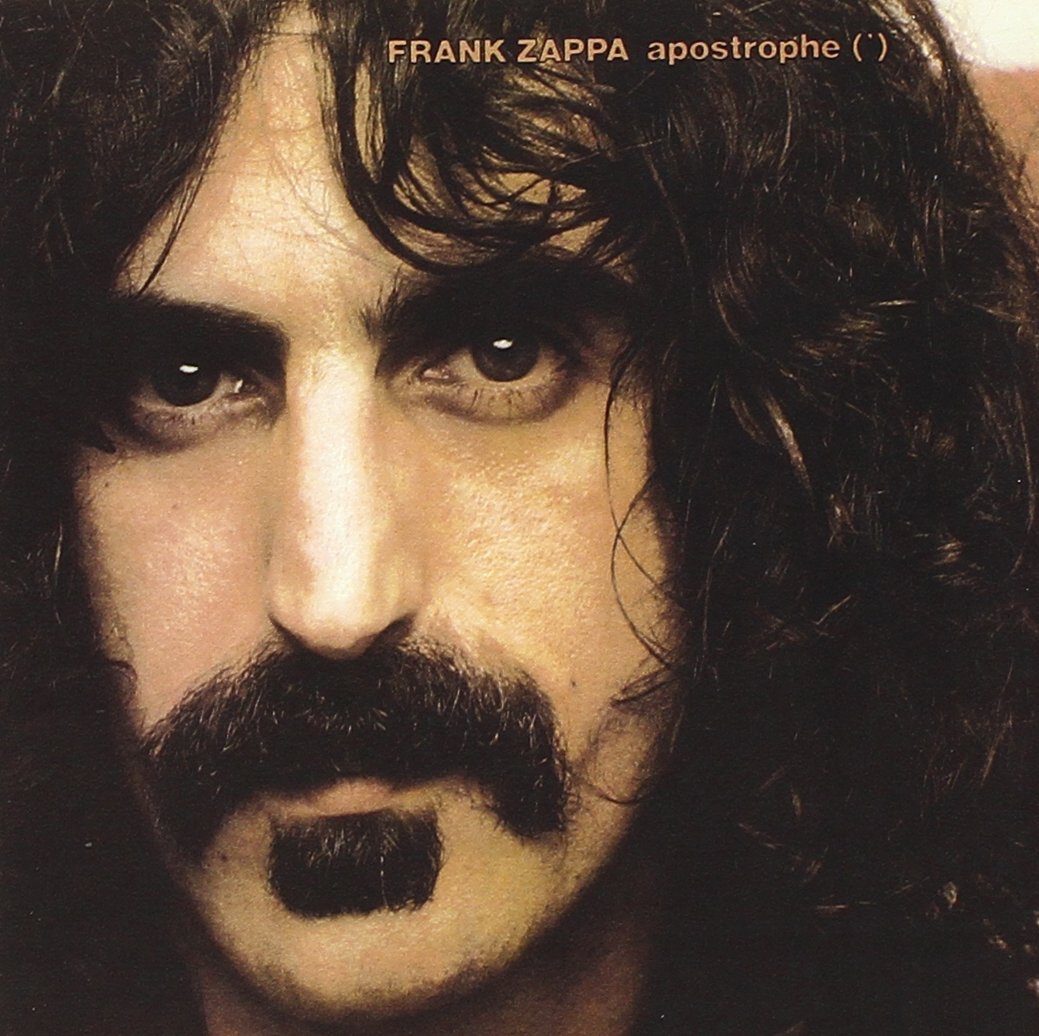
The crux of the biscuit is that Frank Zappa had the unmitigated audacity to try and jive us with the funky sleeze of this deadly wah-wah wee-wee.  Most of  'Apostrophe (')' was recorded during the same period as his gold record 'Over-Nite Sensation' with some tracks going back as far as 1969.  The various sessions took place at Electric Lady Studios, in New York; and at Bolic, Inglewood, and Paramount Studios in Hollywood  and featured producer Frank Zappa rubbing it on vocals, guitar, bass, and bouzouki;   Tony Duran on rhythm guitar;   Tom Fowler and Erroneous (Alex Dmochowski) on bass guitar;   Aynsley Dunbar, Ralph Humphrey, and Johnny Guerin on drums;   Ruth Underwood on percussion;  Sal Marquez on trumpet;   Ian Underwood on saxophone;  Bruce Fowler on trombone;   Don "Sugarcane" Harris and Jean-Luc Ponty  on violin;    George Duke on keyboards and backing vocals;  Napoleon Murphy Brock on saxophone and backing vocals;   Lynn, Debbie, Robert "Frog" Camarena,and  Ruben Ladron de Guevara on vocals and backing vocals;   and  Ray Collins, Sue Glover, and engineer Kerry McNabb on backing vocals.  There is some disagreement over the nature of the  bass guitar contributions of Jack Bruce on "Apostrophe'", which also featured Jim Gordon on drums (he also sat in on "Excentrifugal Forz").  

 'Apostrophe (')'  became Zappa's highest charting album, peaking at number ten.   Zappa talks shop about his conceptual continuity:     "In the studio most of the stuff is played through a Pignose. I've done all kinds of things with a Pignose; I've taken it and put it in a "live" chamber and taken an (ElectroVoice) RE-20 and stuck it right in front of the Pignose, and that will get one kind of sound. It's actually the sound of an amp, but you can hear that it's in a room, and the room is resonant, so it's a realistic sound ... Another thing I've done with the Pignose is just put it out in the middle of a dead studio, put two mikes on it, and mike it in stereo. It gets a good sound. Put one mike behind the other so there's a slight spread to it. I've also put the Pignose in an echo chamber and miked it, but not too close, because the echo chamber is real resonant. Since the amplifier isn't real loud, if you put the mike a foot away from the amp, you're going to get a sound that really approaches what you hear in a hockey rink. Anybody who's working in a studio and wants to try this, just tell the engineer to disconnect the speaker cables in the echo chamber and put a plug (phone jack) on the end of the echo send, and plug the echo send into your Pignose. Then you can sit in the control room, plug your guitar directly into the board, send it to the echo chamber on the echo send, and hear yourself coming back - and it sounds like you're in a hockey rink. You can even make it feed back by long distance. I've been using a Pignose for about the last three or four years. I think I started using it the most on Apostrophe, but there is some on Over-Nite Sensation, too ... [The title track] was just a jam thing that happened because [bassist Jack Bruce] was a friend of (drummer) Jim Gordon. I found it very difficult to play with him; he's too busy. He doesn't really want to play the bass in terms of root functions; I think he has other things on his mind. But that's the way jam sessions go. On that solo on "Apostrophe" I'm using an SG with a Barcus-Berry on the bridge, and that's being sent to one of the channels, then the other side is coming out of a Pignose. And there's an attack differential between how fast the Barcus-Berry speaks and how fast the Pignose speaks. So you've got a sharp attack on one side and then the rest of the note following it on the other. And on "Stink-Foot" there's an interesting sound where I'm using an acoustic guitar with a magnetic pickup on it and a Barcus-Berry on the bridge. The Barcus-Berry is going into one channel, and the maguetic pickup is going to a Mu-tron and the other channel, so you have a sharp attack and an enveloped attack. It gives a lot of space."


"Ain't this boogie a mess?!"


http://www.zappa.com/


"Don't Eat the Yellow Snow"
became Zappa's first chart single, reaching a strictly commercial peak of eighty-six.  
http://www.youtube.com/watch?v=5__cMKfO46A


I Dreamed I was an Eskimo
(Bop-bop ta-da-da bop-bop Ba-da-da)
Frozen wind began to blow
(Bop-bop ta-da-da bop-bop Ba-da-da)
And my momma cried
(ooh, ooh, ooh)
And my momma cried
(Nanook-a no no, Nanook-a no no)
Don't be a naughty Eskimo
(Bop-bop ta-da-da bop-bop Ba-da-da)
Watch out where the Huskies go
And don't you eat the yellow snow
Watch out where the Huskies go
And don't you eat the yellow snow

Right about that time people
A fur trapper, who was strictly from commercial
(strictly commercial)
Had the unmitigated audacity to jump up from behind my ig-a-loo
(peak-a-boo, woo-woo-woo)
And he started in a-whippin' on my favorite seal
With a lead filled snow shoe
That got me just about as evil as an Eskimo boy can be
So I bent down, and I reached down, and I scooped down
And I gathered up a generous smitten of the deadly
(yellow snow)
The deadly yellow snow from right there where the huskies go
Whereupon I preceded to take that mitten full of the deadly yellow snow crystals and rub it all into his beady little eyes
With a vigorous circular motion, hitherto unknown to the people in this area
But destined to take the place with the mudshark in your mythology
Here it goes now, the circular motion
Rub it

And then in a fit of anger I
I pounced, and I pounced again
Great Goog-a-ly moog-a-ly
Well, he was very upset, as you can understand
And rightly so because the deadly
Yellow snow crystals had deprived him of his sight
And he stood up and he looked around and he said

Where
No, no
I can't see
What
I can't

He took a dog doo snow cone and
stuffed it in my right eye
He took a dog doo snow cone and
stuffed it in my other eye
And the husky wee-wee I mean the
doggy wee-wee has blinded me
And I can't see - temporarily


 'Apostrophe (')' 

full album


1. "Don't Eat the Yellow Snow"   2:07
2. "Nanook Rubs It"   4:38
3. "St. Alfonzo's Pancake Breakfast"   1:50
4. "Father O'Blivion"   2:18
5. "Cosmik Debris"   4:14
6. "Excentrifugal Forz"     1:33
7. "Apostrophe'"   (Frank Zappa, Jim Gordon and Jack Bruce)  5:50
8. "Uncle Remus"   (Frank Zappa and George Duke) 2:44
9. "Stink-Foot"     6:33