Showing posts with label cabaret. Show all posts

Friday, September 11, 2015

felt mountain


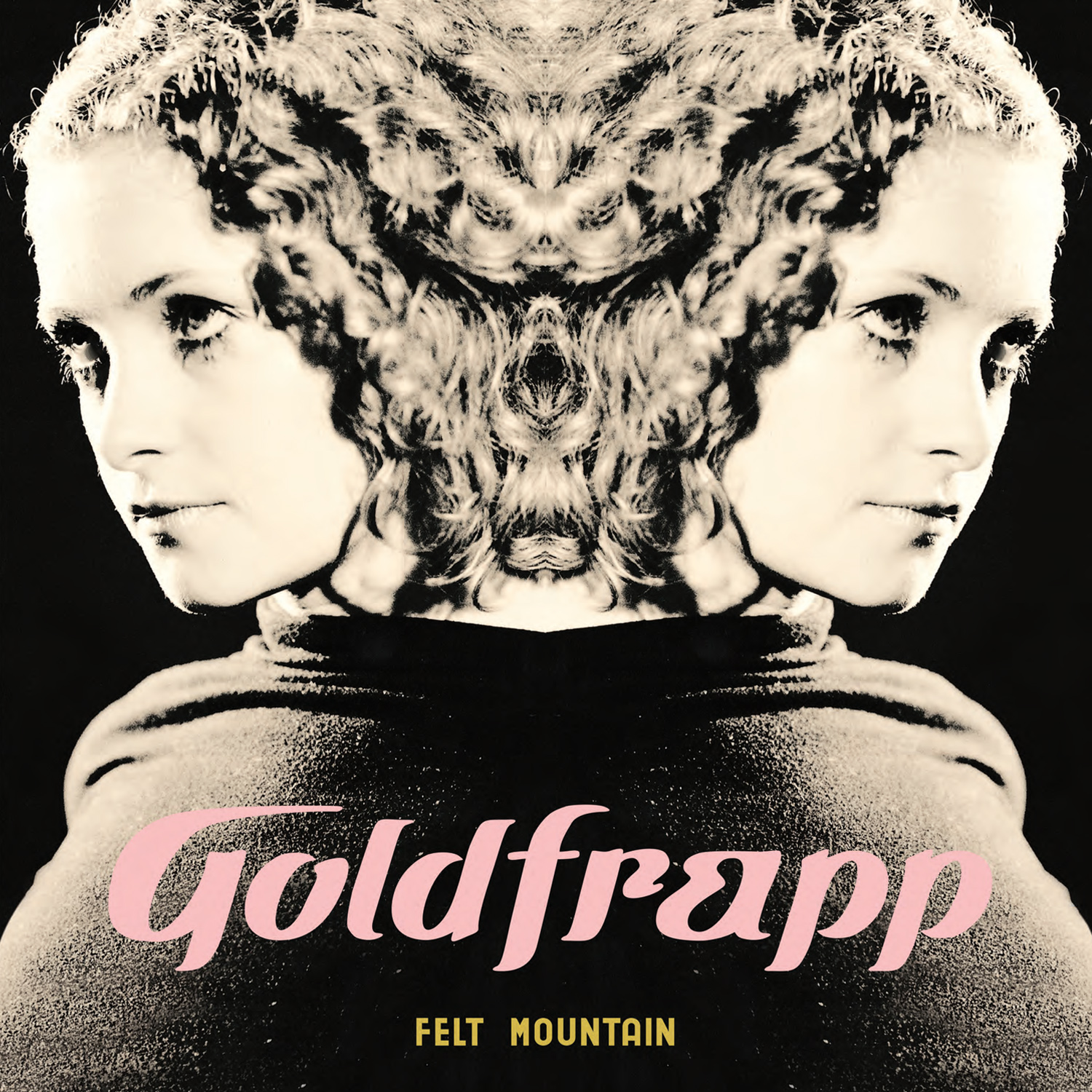
Goldfrapp wanted our minds with the utopian magic hour murmurs of this deliciously wired electronic cabaret.   As a child, Alison Goldfrapp sang in the choir at the Alton Convent School before being expelled for her grades.  She moved to London at the age of sixteen and then went on to study art at Middlesex University:   "They taught me that it doesn't matter whether you have any money - 'the idea' is everything. Also, that I could do music, and that it didn't have to be pop."


She did some musical theatre work before doing guest vocals on various projects, including Orbital's  "Are We Here" from Snivilisation, Add N to (X)'s "Revenge of the Black Regent" from Avant Hard,  Bryan Ferry's "San Simeon" from Franticand Tricky's "Pumpkin" from Maxinquaye.   Goldrapp reveals:   "It took two years for me to get my head back to what I wanted.  Things were complex because I was good friends with Martina, who I effectively replaced. It was highly acrimonious between those two and I was in the middle. I mean, I like Tricky. As much as he's a fucking nightmare. Offensive? He's totally offensive! But I can give it back.  His best stuff was done in his living room.  I'd be standing in the hallway with one working headphone while he went out for chips. When he came back, the track was done." 

It was around this time that she connected with Will Gregory (who had worked with numerous artists including Tears For Fears,  Tori Amos,   Peter Gabriel,  and  Portishead).   Gregory remembers:   "We both had been in music doing various things, as you do trying to earn your living as a musician. It seems like you have to be flexible, to say, at the very least. Looking back on it, I guess you could say that we'd come to a point in our lives, respectively, where we felt we needed to just stop doing all those little things that feel like a compromise, and try and do something that feels like it's really what you want to do. But at the time, I think it was just that I heard her voice. I heard her singing on a very early version of a song that later became "Human," and it sounded great. I just thought, "This is someone I'd really like to meet. Wherever she is, I want to be there too - because I feel like I already am." I just felt that there was a connection there...I think that, having done a lot of writing for TV and film and stuff, you begin to realize that, OK it's fun, the idea that you're a chameleon - that you can put on any fancy dress music pastiche costume - but actually, what's more interesting is finding your own voice, your own style. I got to a point where I think I'd found that, to some extent, and I wasn't usually allowed to do it, because it wasn't appropriate to the project. But when I heard Allison, I thought, "That really is appropriate," because wherever I am, I imagine that she can be there too...After that, we spoke a lot on the phone and we also sent each other -- because, at the time, I lived in Bath and she lived in London - compilation cassettes of our favorite tracks, just to see where our heads were...I've not had much experience working [with other people]. It was intense. That's all I can really tell you. I think that the first thing we wrote was "Lovely Head," and that was lucky in a way because we were really pleased with it. We wanted to continue in that vein, and that set a kind of benchmark. And the next track we wrote was "Horse Tears," and that set another kind of direction up - the kind of slow space that we really enjoy - that intensity. So between those two, we really kind of covered the gamut, and they ended up being the first and last track on the album, but they were actually the first two things we wrote. I think that that was lucky for us, because it meant that we had a standard, and we had a benchmark and we knew that, if we'd written tracks as good as that - we felt they were good - then we had our work cut out. After that, it was sometimes harder, because we were trying to recapture that direction." 


'Felt Mountain' was recorded over six months starting in September of 1999 in the solitude of a rented cottage in the countryside of Wiltshire.   Goldfrapp considers:   "It was mad and I wouldn't do it again," she says. "My social and private life collapsed. Because it was a bungalow, it felt really vulnerable. Big windows. Mice in the roof. I like extremes but, at the end of that six months, I really did feel I was going bonkers. I remember spending three days in a raincoat, scrubbing the side of the bungalow because there were all these spiders hatching. I became obsessive about the wildlife I thought was taking over the bungalow. It was disgusting, moths everywhere. You could hear the mice scuttling across the roof."

Gregory and Goldfrapp produced the sessions together.  Gregory says:   "All I can really tell you is that we both write the music together, and Alison writes the lyrics. How we get there, I don't really know. We haven't found a formula for doing it. I think that's probably a good thing ... I think that it's interesting having counterpoint. I don't write the lyrics, so I'm not fully qualified to talk about them. What I will say is that I think we tend to go with the emotion rather than the kind of politics. And I think that the emotion behind the idea that we are potentially in control, scientifically, of creating how we're going to be in the future - we're moving into a position where we can play God to a pretty extreme extent - has an emotional significance. And then you imagine some futuristic alien human being that's been the product of all this genetic whats-it. What's going through their mind? That can be a very torturous, sad place to be, I suppose. So that creates a certain drama straight away, even though it's quite comical at the same time. "
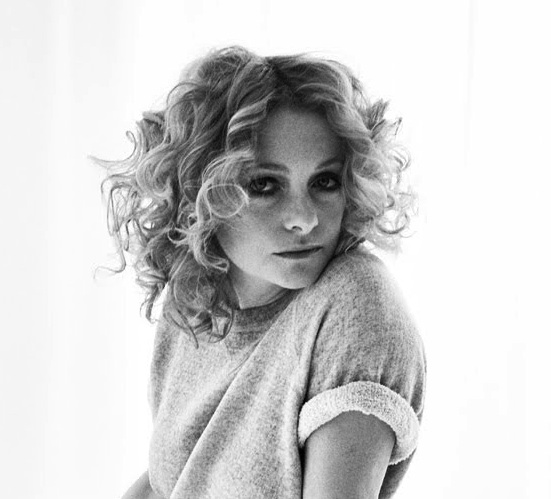


Goldfrapp says their process involves delving deeper:   "What is the scenario behind this song? What are the emotions?... ['Felt Mountain' evokes a] total loneliness where something horrible is happening...It's sort of beautifully macabre.  I love all that David Lynch, Midwich Cuckoos thing. But it isn't cinema. It's real."


'Felt Mountain' climbed to number ninety-eight in Switzerland, fifty-seven in the UK, forty-eight in France,  forty-four in Australia and Austria,  and thirty-six in Germany.  In the UK, it was nominated for the prestigious Mercury Prize.  


http://goldfrapp.com/


"Utopia"


"Pilots"

https://www.youtube.com/watch?v=rK_B_M0MBcY


"Human"

https://www.youtube.com/watch?v=fz3Yu6_Bt-Y


"Lovely Head"


'Felt Mountain'  full album:


All songs written and composed by Alison Goldfrapp and Will Gregory, except where noted. 


1. "Lovely Head"   3:49
2. "Paper Bag"   4:05
3. "Human" (Tim Norfolk, Bob Locke, Goldfrapp, Gregory) 4:36
4. "Pilots"   4:29
5. "Deer Stop"   4:06
6. "Felt Mountain"   4:17
7. "Oompa Radar"   4:42
8. "Utopia"   4:18
9. "Horse Tears"   5:10


live in Paris
June 21, 2001 


UK Girls (Physical)


Tuesday, December 16, 2014

mule variations


Tom Waits rode his junkyard jalopy 'til the wheels came off and plowed a raw and ragged folk blues with the ebb and flow of this diamond that wants to stay coal.    It had been five years since his last album, 'The Black Rider'which featured studio recordings of songs from the musical he had composed three years earlier.  In the meantime, he appeared in films (Robert Altman's 'Short Cuts' and Jim Jarmusch's 'Coffee and Cigarettes: Somewhere in California'), worked with Gavin Bryars on a reworking of  'Jesus' Blood Never Failed Me Yet', did the music for the Oscar winning animated short film 'Bunny'.  and left Island Records for the ANTI- subsidiary of Epitaph Records.  

'Mule Variations' was his first release for the new label.  The album features Tom Waits on vocals, guitar, piano, organ, pump organ, percussion, chamberlin, and optigan;   Andrew Borger on drums and percussion;   Ralph Carney on trumpet, sax, alto-sax, bass clarinet, and reeds;   Les Claypool and Dalton Dillingham III on bass;   Greg Cohen on bass and percussion;   Linda Deluca-Ghidossi on violin;   Joe Gore and Larry LaLonde on guitar;   Chris Grady on trumpet;   John Hammond and Charlie Musselwhite on blues harp;   Stephen Hodges and Jeff Sloan on percussion;   Smokey Hormel on guitar, dobro, chumbus & dousengoni;   Jacquire King on programming;   Brain Mantia and Christopher Marvin on drums;  Nik Phelps on bari sax;   DJ M. Mark "The III Media" Reitman on turntable;   Larry Rhodes on contrabassoon;   Marc Ribot on guitar, lead guitar, and guitar solo:   Larry Taylor on bass, guitar, and rhythm guitar;  and the Wings Over Jordan Gospel, Bali Eternal from turntable samples.   The sessions at Prairie Sun Recording Studios in Cotati, California were produced by Kathleen Brennan and Tom Waits.  


Waits would reveal:   "My wife Kathleen and I collaborated on just about all of [the songs]. Of the sixteen songs that are now on the record, we wrote ten or eleven together. We've been working together since Swordfish... I'm the prospector, she's the cook. She says 'you bring it home, I'll cook it up'.   I think we sharpen each other like knives. She has a fearless imagination. She writes lyrics that are like dreams. And she puts the heart into all thins. She's my true love. There's no one I trust more with music, or life. And she's got great rhythm, and finds melodies that are so intriguing and strange. Most of the significant changes I went through musically and as a person began when we met. She's the person by which I measure all others. She's who you want with you in a foxhole. She doesn't like the limelight, but she is an incandescent presence on everything we work on together...Mainly the only reasons to write new songs is because you're just tired of the old ones. Throw something out and get another one. It wasn't like a lightning bolt. For me, it just kind of starts with something amusing. Something amuses me, and I let it pass through my mind, along with a lot of other things. Hundreds of melodies and ideas go through your head when you're not writing. You just let them wash over you. When we start writing we put up a little dam and start catching them. It's the old butterfly net theory...Pianos have to be in the right room. Most studios are designed to keep the outside world out, and they rely heavily on baffling and carpeting and all kids of architectural devices on the wall to shape sound waves, and whatnot. I don't go in for it, myself. We've got a concrete room with a wood ceiling, and we got a great sound. We just brought the piano from home and moved it in. I gave it to Kathleen a long time ago for a birthday present. It's a Fischer from New York. We use it to catch the big ones...I don't know, I guess it's where I keep coming back to. As an art form, it has endless possibilities, as an ingredient or a whole meal. Definitely part of the original idea was to do something somewhere between surreal and rural. We call it surrural. That's what these songs are -- surrural. There's an element of something old about them, and yet it's kind of disorienting, because it's not an old record by an old guy...Sometimes you have to take stuff out to let other stuff shine better. We talk about it. Flip for it sometimes. I'd like to do a record with twelve songs, but I just couldn't let go of all those songs. I didn't know which were the best songs out of 25."

'Mule Variations' went to number thirty-six in New Zealand; thirty in the US; twenty-two in France; seventeen in Canada; thirteen in Australia; twelve in the Netherlands; eleven in Finland; nine in the UK;  seven in Austria, Sweden, and Switzerland;  four in Germany;  two in Belgium;  and number one in Norway.  'Mule Variations' won a Grammy Award for Best Contemporary Folk Album.   He had previously won a Grammy Award for Best Alternative Album for 'Bone Machine'.  


http://www.tomwaits.com/


http://www.tomwaits.com/albums/#/albums/album/8/Mule_Variations/


"Big In Japan"
https://www.youtube.com/watch?v=-RwjpG4Xh60


"Hold On" was nominated for a Grammy Award for Best Male Rock Performance.


"Cold Water"
https://www.youtube.com/watch?v=GNqRqF1E0fc


"What's He Building?"
https://www.youtube.com/watch?v=nMqxNPsfN50


"Take It With Me"
https://www.youtube.com/watch?v=Dixxse4dpQ4


"Come On Up To The House"
https://www.youtube.com/watch?v=-GugzLSbOQE


 'Mule Variations' 
full album:

https://www.youtube.com/playlist?list=PLSthFO1xMVh8eOSnrjpwKaVRHaQM-gwmi


All songs written and composed by Tom Waits and Kathleen Brennan unless otherwise noted. 


1. "Big in Japan"     4:05
2. "Lowside of the Road"     2:59
3. "Hold On"     5:33
4. "Get Behind the Mule"     6:52
5. "House Where Nobody Lives"   Waits 4:14
6. "Cold Water"     5:23
7. "Pony"   Waits 4:32
8. "What's He Building?"   Waits 3:20
9. "Black Market Baby"     5:02
10. "Eyeball Kid"     4:25
11. "Picture in a Frame"     3:39
12. "Chocolate Jesus"     3:55
13. "Georgia Lee"     4:24
14. "Filipino Box Spring Hog"   Waits 3:09
15. "Take It with Me"     4:24
16. "Come on Up to the House"     4:36

 bonus tracks
17. "Buzz Fledderjohn"   Waits 4:14
18. "Big Face Money"   Waits, Casey Waits 0:38


Tuesday, September 24, 2013

swordfishtrombones


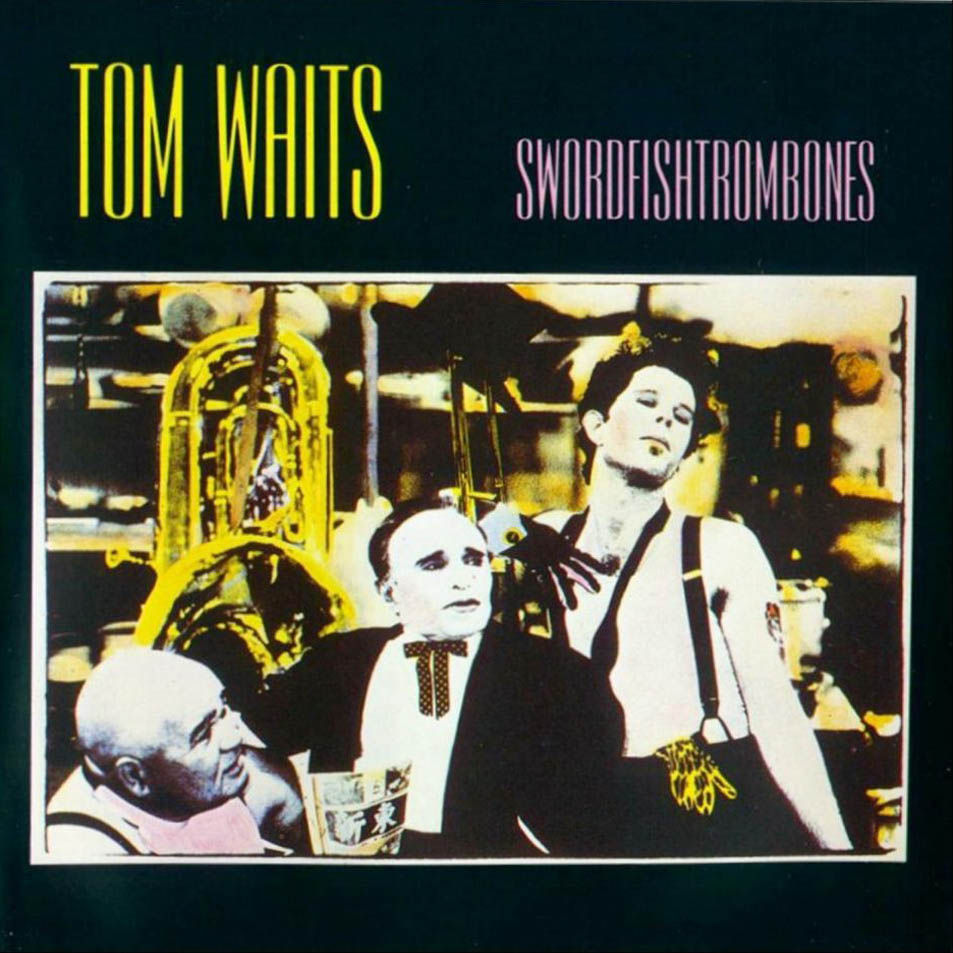
Tom Waits found a new label and a dramatic new sound with the ragged experimental impressionism of this creepy and colorful cabaret carnival concept album.  After the bluesy howl of his final album for Elektra Records 'Heartattack and Vine'Waits wrote the music for Francis Ford Coppola's 'One From the Heart'.  It was on the set of that film that he met his wife screenwriter Kathleen Brennan, who became a major influence on his new creative direction.

'Swordfishtrombones' was recorded at Sunset Sound in Hollywood, CA with Tom Waits on production, vocal, chair, Hammond B-3 organ, piano, harmonium, synthesizer, and freedom bell; Victor Feldman on bass marimba, marimba, shaker, bass drum with rice, bass boo bams, brake drum, bell plate, snare, Hammond B-3 organ, snare drum, bells, conga, bass drum, dabuki drum, tambourine, and African talking drum; Larry Taylor on acoustic bass and electric bass; Randy Aldcroft on baritone horn and trombone; Stephen Taylor Arvizu Hodges on drums, parade drum, cymbals, parade bass drum, and glass harmonica; Fred Tackett on electric guitar and banjo guitar; Francis Thumm on metal aunglongs and glass harmonica; Greg Cohen on bass and acoustic bass; Joe Romano on trombone and trumpet; Anthony Clark Stewart on bagpipes; Clark Spangler on synthesizer program; Bill Reichenbach and Dick "Slyde" Hyde on trombone; Ronnie Barron on Hammond organ; Eric Bikales on organ; Carlos Guitarlos on electric guitar; and Richard Gibbs on glass harmonica. 

Waits confessed:  "I've always been afraid of percussion for some reason. I was afraid of things sounding like a train wreck, like Buddy Rich having a seizure. I've made some strides; the bass marimbas, the boo bams, metal long longs, African talking drums and so on ... I listened to some Mongolian stuff when I was getting ready to do this record. It sounded like Tibetan Voodoo. It caught my ear and helped me some...It's hard to play with a bagpipe player. I had an opportunity to play with my first bagpipe player on this record. You can't play with them. It's like an exotic bird. I love the sound, it's like strangling a goose. I played the trumpet when I was a kid, but I gave it up. I like it because it was easy to carry. It was like carrying your lunch. A piano, you have to go to it. You never hear anybody say "Pass me that piano, buddy." Composing on different instruments will give you different songs. So, I'm trying to get away from the piano as a compositional device and find something else to write on...The problem is that all these things pass through you all the time, and when you sit down to write, it's really just like purchasing a butterfly net. It's going on all the time, it's just that you're going to draw a frame around it now. You're going to reach up and grab some and swallow it. There are times when you're more receptive to it than others. There are times when I feel more musical than others. I used to write a lot on the road, in hotels and stuff, that whole transient quality of my life. I'm not really what you'd call anal retentive. I found that the traveling brought me to a certain place as a writer. Now, I'm working on something that requires myself to stay put. I find it difficult to write on the road now. I'd like to go to Rangoon or Hong Kong. Be there, come home and write. Get something on you and come me. I wanted to join the Navy when I was a kid. But, you know the expression, the Navy's not just a job, it's $39 a month. When I turned 18, I got tattoos and thought that was it. I think the Navy is no longer a career opportunity for me but it's nice to know it's there."

'Swordfishtrombones' took more than a year to get released after the recording was finished.  Eventually, he signed a deal with Island Records and the album became his first to chart in the UK.  It made its way to number one hundred and sixty-seven in the US, sixty-two in the UK, forty-eight in the Netherlands, and eighteen in Norway.  Waits says:   "I was trying to do a bit of an - uh - adventure, do some type of 'Beggar's Opera' in a way, with songs that had some kinda relationship to each other, whether it was later on in the story, or in some kinda discombobulated sequence. Thematically, I put in the instrumentals to try and provide connective tissue."


http://www.tomwaits.com/


"Swordfishtrombone"
"That's the title song. It has kind of a Cuban night club feel to it. It's a story to try and give an overview of a character. We tried it with a lot of different ways. It was arranged differently with electric guitar and drums. We had trombone on it and trumpet and ended up..we.. I had to discard most of what we had done and completely rearrange it just to get it as simple as possible. So that it just kind of rolled and allowed me to tell the story over it without any interruptions.  Tenkiller Lake, that's in Tulsa, Oklahoma. So, "He came home from the war with a party in his head and an idea for fireworks display."
http://www.youtube.com/watch?v=-FRgGheX4jk


"Johnsburg, Illinois"
"My wife is from Johnsburg, Illinois. It's right outside McHenry and up by the ching-a-lings. She grew up on a farm up there. So it's dedicated to her.  It's real short. Somehow I wanted just to get it all said in one verse. There are times when you work on a song and end up repeating in the second verse what you already said in the first. So I thought I would be more appropiate if it's just like a feeling of a sailor somewhere in a cafe, who opens his wallet and turns to the guy next to him and shows him the picture while he's talking about something else and says: "Oh, here. That's her." and then closes his wallet and puts it back in his pants.
It relates in some way to "Shore Leave" in the sense that it talks about Illinois. So thematically I was trying to tie it into "Shore Leave".


 "16 Shells From A Thirty-Ought-Six"
"I tried to get a 'chain gang work song'-feel holler. Get a low trombone to give a feeling of a freight train going by. It's Stephen Hodges on drums, Larry Taylor on acoustic bass, Fred Tackett on electric guitar, Victor Feldman on brake drum and bell plate and Joe Romano on trombone.  So, I wanted to have that kind of a sledgehammer coming down on anvil. Originally I saw the story as a guy and a mule going off looking for this crow. He has a washburn guitar strapped on the side of his mule and when he gets the crow he pulls the strings back and shoves this bird inside the guitar and then the strings make like a jail. Then he bangs the on the strings and the bird goes out of his mind as he is riding off over the hill. So I tried to make the story a bit impressionistic but at the same time adding some very specific images in there. I worked a long time on this. The feel of it was really critical. I added snare and we pulled the snare off 'cause it made it shuffle too much. I liked the holes in it as much as I liked what was in them. It was a matter of trying to get that feeling of a train going. Originally I tried it just with organ and bass. Then I was afraid to add too much to it 'cause sometimes you get a feel that's appropiate. If you try to heap too much on it then it crumbles into the strain."


"Frank's Wild Years"
"Charles Bukowski had a story that essentially was saying that it's the little things that drive men mad. It's not the big things. It's not World War II. It's the broken shoe lace when there is no time left that sends men completely out their minds. So this is kind of in that spirit. Little of a Ken Nordine flavour.  Ronnie Barren alias Rev. Eather from New Orleans, Lousiana, on Hammond organ and Larry Taylor, originally with Canned Heat, on dog house.  I think there is a little bit of Frank in everybody."
http://www.youtube.com/watch?v=8fsBj65IODk


"Down, Down, Down"
"It's best described as pentecostal revron man. I was stranded in Arizona on the route 66. It was freezing cold and I slept at a ditch. I pulled all these leaves all over on top of me and dug a hole and shoved my feet in this hole. It was about 20 below and no cars going by. Everything was closed.  When I woke up in the morning there was a pentecostal church right over the road. I walked over there with leaves in my hair and sand on the side of my face. This woman named Mrs. Anderson came. It was like New years eve... Yeah, it was New years eve. She said: "We're having services here and you are welcome to join us." So I sat at the back pew in this tiny little church.  And this mutant rock'n'roll band got up and started playing these old hymns in such a broken sort of way. They were preaching, and everytime they said something about the devil or evil or going down the wrong path she gestured in the back of the church to me. And everyone would turn around and look and shake their heads and then turn back to the preacher. It gave me a complex that I grew up with.  On Sunday evening they have these religious programs where the preachers they are all bankers. They get on with these firering glasses and 700 $ suits. Shake their finger at America. So this is kind of my own little opportunity at the lectern."
http://www.youtube.com/watch?v=v7O5scQhbsE


'Swordfishtrombones' 
full album:


01 00:00 "Underground"
02 01:58 "Shore Leave"
03 06:14 "Dave the Butcher" (Instrumental)
04 08:33 "Johnsburg, Illinois"
05 10:02 "16 Shells From A Thirty-Ought-Six"
06 14:32 "Town with No Cheer"
07 18:58 "In the Neighborhood"
08 22:04 "Just Another Sucker on the Vine" (Instrumental)
09 23:47 "Frank's Wild Years"
10 25:38 "Swordfishtrombone"
11 28:44 "Down, Down, Down"
12 30:58 "Soldier's Things"
13 34:18 "Gin Soaked Boy"
14 36:40 "Trouble's Braids"
15 37:57 "Rainbirds" (Instrumental)


Thursday, November 8, 2012

transformer


Lou Reed took a walk on the wild side to find his inner beauty, a new sound, and a new lease on life with the androgynous glam of this campy classic.  'Transformer' was recorded in London at Trident Studios with David Bowie and Mick Ronson co-producing.  Bowie had been a big fan of Reed's work with the Velvet Underground and with the huge success of 'Ziggy Stardust', he was in the position to help him record his new album.  The sessions featured Reed on guitar, keyboards, and vocals; Ronson on lead guitar, piano, recorder, backing vocals, and string arrangements; and Bowie on background vocals.  Since Reed did not have a band anymore, they brought in studio musicians:  Herbie Flowers on bass guitar, double-bass, and tuba; and John Halsey on drums; as well as Klaus Voormann on bass; Barry DeSouza and Ritchie Dharma on drums; Ronnie Ross on baritone saxophone; and the Thunder Thighs on backing vocals.  


'Transformer' went to number twenty-nine in the US and number thirteen in the UK.  Reed adopted the sexually ambiguous style of glam and combined it with the subversive decadence of his work with the Velvets to produce a new sound that portrays the underground characters with sensitivity and humor:  "The makeup thing is just a style thing now, like platform shoes. If people have homosexuality in them, it won't necessarily involve makeup in the first place. You can't fake being gay, because being gay means you're going to have to suck cock, or get fucked. I think there's a very basic thing in a guy if he's straight where he's just going to say no: 'I'll act gay, I'll do this and I'll do that, but I can't do that.' Just like a gay person if they wanted to act straight and everything, but if you said, 'Okay, go ahead, go to bed with a girl,' they're going to have to get an erection first, and they can't do that.  The notion that everybody's bisexual is a very popular line right now, but I think its validity is limited. I could say something like if in any way my album helps people decide who or what they are, then I will feel I have accomplished something in my life. But I don't feel that way at all. I don't think an album's gonna do anything. You can't listen to a record and say, 'Oh that really turned me onto gay life, I'm gonna be gay.' A lot of people will have one or two experiences, and that'll be it. Things may not change one iota. It's beyond the control of a straight person to turn gay at the age he'll probably be listening to any of his stuff or reading about it; he'll already be determined psychologically. It's like Franco said: 'Give me a child until he's seven and he's mine.' By the time a kid reaches puberty they've been determined. Guys walking around in makeup is just fun. Why shouldn't men be able to put on makeup and have fun like women have?"


http://www.loureed.com/


The adult themed 'Walk on the Wild Side' became an unlikely hit for Reed, going to number sixteen in the US and number ten in the UK. 
http://www.youtube.com/watch?v=qkwD261MHsc


'Transformer'


full album:


Lou Reed - Transformer from Juan Pedro Soriano on Vimeo.


All songs written by Lou Reed.

Side one
1. "Vicious"   2:55
2. "Andy's Chest"   3:17
3. "Perfect Day"   3:43
4. "Hangin' 'Round"   3:39
5. "Walk on the Wild Side"   4:12
Side two
6. "Make Up"   2:58
7. "Satellite of Love"   3:40
8. "Wagon Wheel"   3:19
9. "New York Telephone Conversation"   1:31
10. "I'm So Free"   3:07
11. "Goodnight Ladies"   4:19


Friday, August 17, 2012

franks wild years


Tom Waits expanded a song from 'Swordfishtrombones' into "Un Operachi Romantico in Two Acts". 'Franks Wild Years' completes a trilogy of albums released by Waits in the eighties that began with
 'Swordfishtrombones' and continued through 'Rain Dogs'. All three albums embrace a drunken, expressionistic, avante garde, carnival aesthetic that he developed with his wife Kathleen Brennan. 'Franks Wild Years' is drawn from the musical play that they took on the road. Waits recalls: "I just started working on the project in December [1978] when I got off the road. I'm working on it with a gentleman by the name of Paul Hampton who used to be Burt Baccarach's old songwriting partner; he used to write for Famous Music in New York during the '50s, writing for Gene Pitney and cats like that. And he is also an actor, and we're collaborating on this film script about a used car dealer in Southern California, and an old friend of his who are reunited on New Year's Eve. It's a nice story. It's about a guy who's a success at being a failure and a guy who's a failure at being a success."... "Actually we haven't got anyone to release the film yet. The whole thing's being written on spec. The characters are Jack Farley Fairchild, of Fairchild Dord. Torence, California, and Donald Fedore, his partner and side-kick. I never tried anything like this before. I don't find it at all easy. In fact, it's the hardest thing I've ever done... well, the most challenging anyway."


Waits produced the album at Universal Recording in Chicago, and at The Sound Factory and Sunset Sound in Hollywood with Jay Anderson on bass; Michael Blair on drums, conga, percussion, maracas, marimba, orchestra bells, and glockenspiel; Kathleen Brennan with vocal arrangements; Angela Brown on background vocals; Ralph Carney on sax, baritone horn, violin, and tenor sax; Greg Cohen on bass, alto horn, horn arrangements, and Leslie bass pedals; David Hidalgo on accordion; Leslie Holland and Lynne Jordan on background vocals; Marc Ribot on guitar and banjo; William Schimmel on piano, pump organ, accordion, Leslie bass pedals, and cocktail piano; Larry Taylor on bass and upright bass; Moris Tepper on guitar; Francis Thumm on prepared piano and pump organ; and Waits on vocals, pump organ, Optigan, guitar, vocal stylings, rooster, piano, Farfisa, Mellotron, drums, conga, and tambourine.


'Franks Wild Years' went to one hundred and fifteen in the US, forty-nine in Germany, twenty-four in Austria, twenty-one in the Netherlands, twenty in the UK, seventeen in Sweden, and peaked at number thirteen in Norway. It was certified gold in Canada. Waits says: "It's really, simply enough, the story of a guy from a small town who goes out to seek his fame and fortune; a standard odyssey. Eventually, what happens is that the story opens on a park bench in East St. Louis. Frank is despondent, penniless, and he dreams his way back home to the saloon where he began. He's thinking he's only moments from freezing, then wakes up, to his surprise, in the saloon. He's given um...a ticket home, and there he tells the story of his success. But he stops in the middle of it, and tells the real story. He's no hero, he is no champion; wasn't what he says he was. He was really a guy who stepped on every bucket on the road. His friends kind of pull him out of it, and tell him he's got plenty to live for. In the end, he wakes up on the bench, ready to start again."


http://www.tomwaits.com/


promo:


"Hang on St. Christopher"


"Blow Wind Blow"


"Temptation"


"Way Down in the Hole"


"Telephone Call from Istanbul"


'Franks Wild Years'
full album:

Tracks written by Tom Waits, except where noted. 

Side One
1. "Hang on St. Christopher"   2:46
2. "Straight to the Top (Rhumba)"   Waits, Greg Cohen 2:30
3. "Blow Wind Blow"   3:35
4. "Temptation"   3:53
5. "Innocent When You Dream (Barroom)"   4:15
6. "I'll Be Gone"   Waits, Kathleen Brennan 3:12
7. "Yesterday Is Here"   Waits, Brennan 2:29
8. "Please Wake Me Up"   Waits, Brennan 3:36
9. "Frank's Theme"   1:49
Side Two
1. "More Than Rain"   3:52
2. "Way Down in the Hole"   3:30
3. "Straight to the Top (Vegas)"   Waits, Cohen 3:26
4. "I'll Take New York"   3:58
5. "Telephone Call from Istanbul"   3:12
6. "Cold Cold Ground"   4:07
7. "Train Song"   3:20
8. "Innocent When You Dream (78)"   3:08


demos:


0:00 - Frank's Theme
1:55 - Innocent When You Dream
5:08 - Blow Wind Blow
8:44 - Hang On St. Christopher
10:45 - Please Wake Me Up
13:26 - Temptation
16:04 - Vocals Tune
17:53 - More Than Rain
21:43 - I'll Take New York
24:26 - Yesterday Is Here
26:45 - Piano Tune
28:12 - Train Song
31:24 - Franks Theme (Again)


Rainville. Hardly ever did rain though, rain that is. It was nowhere. Railroad tracks ran up the back of the state like stitches. Telephone lines slashed the orange dawns like a wrecked ship's rigging... and when it rained the whole town went mad. Dogs ran wild in the streets. Frank was squeezed between scrap iron places and radiator repair shops... Rainville, good place to dream yourself away from. When the trains thundered past the backyard fence, bound for Oxnard, Lompoc, Gila Bend, Stanfield and parts south where the wind blew big, Frank would count the cars and make a wish just like he did when he was a kid... At least something was getting out of town alive... One moonlit night Frank packed up his accordion and said Blow Wind Blow Wherever You May Go... Cause I'm Going Straight To The Top... Up Where The Air Is Fresh And Clean