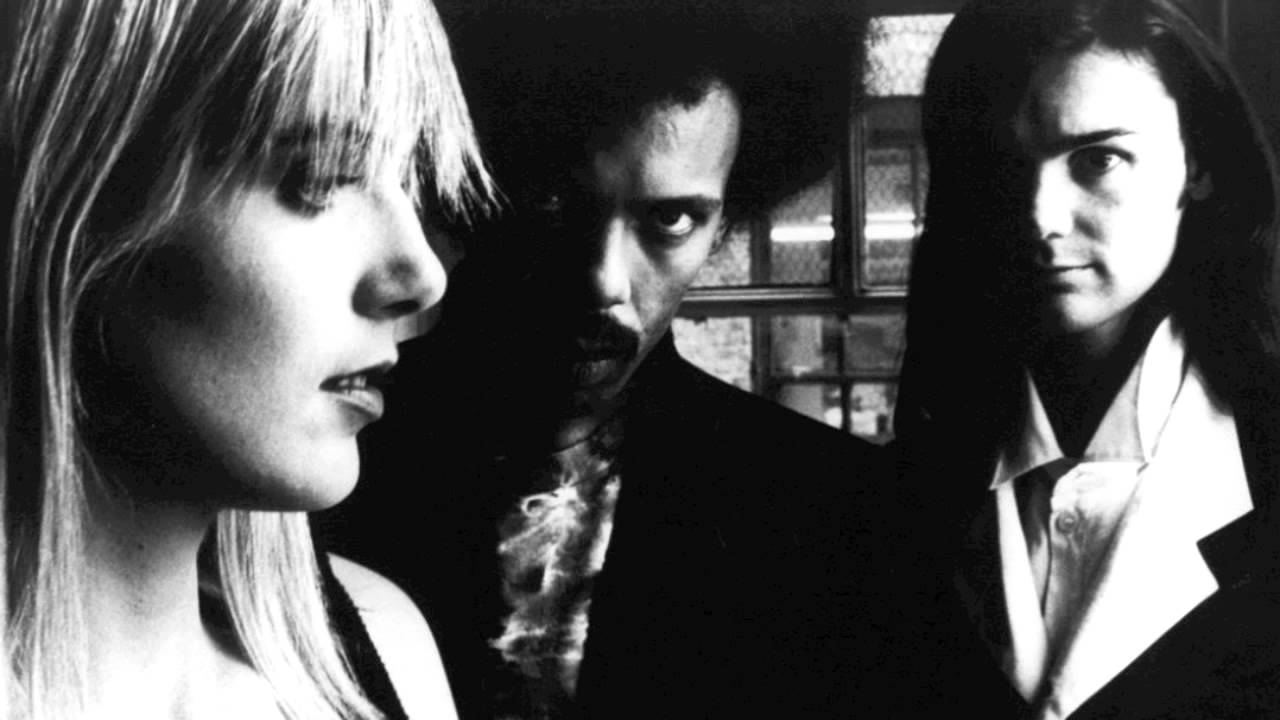
The Dream Academy inculcated the love parade in places on the run with sophisticated symphonic psychedelic soundscapes sketching life in a northern town. The trio came together in London with Gilbert Gabriel and Nick Laird-Clowes playing together in various groups and Kate St. John joining later after a chance meeting at a party.
Gilbert Gabriel: "When I first met Nick, it was after a long day of auditioning for several bands in London. I had previously read in a book called The Reader's Digest that suggested that the more people you meet the more chance you have of manifesting your dreams (pretty obvious really). So I decided to triple my efforts and work in several bands and keep checking out new options. After a long day of auditions and feeling pretty tired and hungry, I eventually met Nick rehearsing with his band The Act in a rehearsal studio in London near the torture museum! I immediately liked the melody and harmony of his band as they had three-part harmonies although I felt it lacked keyboards and should be a little bit more psychedelic. Anyway, the rest is history. We did some great gigs in London and a couple of tours in Spain but it eventually broke up and Nick and I plotted another destiny. With the help of David Gilmour, we were able to produce some "original-sounding" demos that we also used for backing tracks and started performing as a duo called Politics of Paradise in alternative clubs in London (like the Titanic and the Language Lab). Once we appeared on stage after two naked strippers came off! There were classical violinists; a guy named Tom Dixon (became a leading Ikea furniture designer) that welded furniture on stage and a band called Funkapolitan hanging around. It was like a psychedelic version of CBGB's but in London! Nick and I shared the same youthful enthusiasm for experimentalism and the love of all that was psychedelic...Nick and I shared a similar creative space and wished to explore all the different possibilities of light, sound, cinematic backdrops, etc. Whereas Nick had learned his craft by being in the thick of the music industry since the 1970s with his three-part harmony group Alfalpha and I brought to the table an artistic "wackiness" inspired by many psychedelic nights in the depths of experimental Devon as well as an informed cultural input that was influenced by more utopian ideals...Nick and I used to gig under the name of Politics of Paradise that was inspired by R.D. Laing's title of one of his psychotherapy books called The Politics of Experience and the Bird of Paradise (he was the guy that tried to cure Syd Barrett when he lost it after too many acid trips). The Dream AcademyI had read The Glass Bead Game that revolved around a special game played after many years of serious study of the arts, science etc. and also a poem called The Dream House that prompted me to write down the words "The Dream Academy". I think we had both decided Politics of Paradise didn't really feel right so I came up with another name."
Kate St. John: "The Ravishing Beauties did a few sessions for Radio One; John Peel, who called us the Very Lynns of the Eighties, and also for John Walters. I'd also done sessions for other people on the oboe. I was sad when the Ravishing Beauties split up because by then I'd got hooked into that sort of music and didn't know how to find another band who'd want an oboe player. However, about a year later I met Nick (the singer of the Dream Academy) and it turned out he and Gilbert were looking for people who played 'weird' instruments."
Nick Laird-Clowes: "I had met Gilbert Gabriel, he'd been in the last incarnation of The Act after the album and had come with us on tour. And on tour, he played me Erik Satie and things like that, and he said, “I think you're too focused on the Beatles.” And this isn't something he said later. He said it at this point: “You're too focused on Beatles-type things. There's another world. Listen to all of this amazing music!” And he played me Ravel and things, different types of music. So he and I started working together, and for the first time I started co-writing songs. He had bits of music, and we were really into an arty, experimental vibe where we'd try anything. And the rest of the band in The Act were horrified. They said, 'You don't need him! For fuck's sake, man, the songs are great!' But I liked what was happening with him, and that we were thinking in a different way. So we just didn't do anything for a year. We just tried to find our own voice. And along the way we met Kate St. John...First of all, she was devastatingly beautiful. And then she played in the Ravishing Beauties, and they were a band I'd read about in the NME, and…they were cool! I mean, they'd been supporting The Teardrop Explodes and things! So I said, 'Oh, yeah, I know about you. I'm working with this guy, and we want to use classical instruments. Is there any chance you could come and rehearse with us?' And she said, 'Of course! When?' I said, 'Well, we're working tomorrow.' She said, 'I'll come up with you on the train.' And it took hours and hours, and we had some of these ramshackle guys - the sitar player and the clarinetist - and she heard all that, and then we played “Life in a Northern Town” as it was, which was still called “The Morning Lasted All Day” in that incarnation. And when we left, she said, 'I know other players who are much better than those guys, and I'll introduce you to them.' And she introduced me to Adam Peters, who went on to score Ocean Rain for Echo and the Bunnymen, and these other people she went to college with, and soon we were working with them. So that was a very happy and lucky thing, because then I started to hear what she did, and she took up piano accordion quite quickly, and I thought, 'If she sings with me, that's one thing, and if she plays piano accordion, that's another amazing thing, and then she plays the oboe…' I started always figuring her into arrangements, vehicles that would work with her using the most possible...We found that we had this...thing. And I suddenly thought, 'Nobody is playing acoustic guitar.' You could pick up a good acoustic guitar for nothing. So I thought, 'Well, I'm going back to acoustic guitar.' And these orchestral instruments… The synths could be played to sound like strings, and then add Kate to that with her wonderful real oboe sound, and add my acoustic guitar to that, and then use drum machines for drums, and then we started adding tympani and all these other things. And at first I said, 'My God, this sounds like Phil Spector!' But then I went, 'No, this sounds like Pet Sounds!' And nobody else was doing it at that point. It was an easy thing for us to just add the classical instrument sound. People had used classical instruments to make their psychedelic masterpieces, but we could do it because technology allowed it, and when we came out with our album, not only did we have this new sound which wasn't what was going on at all, but we also had not bothered to have our hair cut in the way that everyone had at time. [Laughs.] They all had this kind of rockabilly hair cut, even if they were doing the white boy funk. So we went with our kind of more hippie-ish look, which was almost a punk stance, because hippies were ever so out. And we didn't oAverdo it. It was just how we naturally were. And at first everyone was really negative about us, but then we started playing these nightclubs after bands who were playing funk and other bands who were around at the time. People like Mick Jones and the Bunnymen would come see us, and we suddenly realized, “Hey, we're doing it our own way!” And that was the biggest lesson for me: if you can find your own voice, it's the only way, really. "
Pink Floyd's David Gilmour produced the sessions for their eponymous debut with Gilbert Gabriel on keyboards and vocals; Nick Laird-Clowes on guitars, harmonica, and vocals; Kate St. John and piano, tenor sax, oboe, cor anglais, accordion, and piano-accordion; with Gary Barnacle on tenor saxophone; Dave DeFries on trumpet; Peter Buck on guitars; David Gilmour on guitars for "Bound to Be" & "The Party"; Greg Dechert on Hammond organ; Mickey Feat, Pino Palladino, and Guy Pratt on bass; Chucho Merchan on double bass; Tony Beard, Bosco DeOliveira, Luis Jardim, Ben Hoffnung, Jake LeMesurier, and Dave Mattacks on drums and percussion. When the album was complete, Alan Tarney was brought in to rework the demo of "The Love Parade".
'The Dream Academy' http://www.nicklairdclowes.com/ http://gilbertgabrielmusic.com/ http://www.katestjohn.co.uk/ "Life in a Northern Town" reached number fifteen in the UK, nine in Ireland, seven on the US pop and mainstream rock charts, and number two on the US adult contemporary chart. Gabriel: "I remember this song emerging gradually from the ether in autumn when I was living in Southgate in a shared house with other students. I was endlessly experimenting with different guitar chord shapes higher up the guitar fretboard on a guitar with only five strings. Eventually, I found two chords that seemed to achieve a sense of consonance that seemed to mesmerize me. Nick then learned it and came up with a lower inversion that I embellished with a colorful chord progression played on the Solina synthesizer. Nick and I would then sing various chants over these chords inspired by a library tape of some African children I asked my girlfriend to borrow from her college library. The idea was to "re-conjure" the 60s and more idealistic times through the visual imagery of the verses that were fused with a chant that sounded universal. Hence the reference to The Beatles and JFK that became the axiom that we would build it around as well as the massive chant. We consciously wanted to create a song that had a wide demographic appeal but communicated something honest, beautiful and universal – a song that could appeal to children, adults and grandparents. I think we achieved this. "
VIDEO A Salvation Army band played
And the children drank lemonade
And the morning lasted all day, all day
And through an open window came
Like Sinatra in a younger day
Pushing the town away, ah
Ah hey, ma ma ma
Life in a northern town
They sat on the stony ground
And he took a cigarette out
And everyone else came down to listen
He said, "In winter 1963
It felt like the world would freeze
With John F. Kennedy and the Beatles"
Ah hey, ma ma ma
Life in a northern town
Ah hey, ma ma ma
All the work shut down
The evening had turned to rain
Watch the water roll down the drain
As we followed him down to the station
And though he never would wave goodbye
You could see it written in his eyes
As the train rolled out of sight, bye-bye
Ah hey, ma ma ma
Life in a northern town
Ah hey, ma ma ma
Life in a northern town
"The Love Parade"
VIDEO "This World"
VIDEO "The Edge of Forever" was featured in the John Hughes film 'Ferris Bueller's Day Off'
VIDEO 'The Dream Academy' full album:
VIDEO 1. "Life in a Northern Town" Laird-Clowes, Gabriel 4:19 2. "The Edge of Forever" Laird-Clowes, Gabriel 4:23 3. "(Johnny) New Light" Laird-Clowes, Gabriel 4:23 4. "In Places on the Run" Laird-Clowes, Gabriel 4:27 5. "This World" Laird-Clowes, Gabriel Gilmour, Laird-Clowes, Nicholson 5:07 6. "Bound to Be" Laird-Clowes, Gabriel 3:08 7. "Moving On" Laird-Clowes, Gabriel 5:14 8. "The Love Parade" Laird-Clowes, Gabriel 3:47 9. "The Party" Laird-Clowes 5:07 10. "One Dream" Laird-Clowes 2:32
The Chameleons looked inwardly through the suffocating intrigue of the chaos and the crass to see what lies behind the mask. Formed in 1981 in the Middleton area in the north of Greater Manchester, the original lineup included Mark "Birdy" Burgess, Reg Smithies, Dave Fielding, and Brian Schofield. John Lever took over for Schofield before they secured a deal with Epic Records in 1982 to release their debut single "In Shreds" . The band was dropped from Epic over creative differences and they moved on to Virgin Records subsidiary Statik to record their debut album Script of the Bridge
Richardson helmed the sessions for the follow-up 'What Does Anything Mean? Basically' at Highland Studios in Inverness, Scotland during January of 1985. The album features Mark Burgess on vocals, bass guitar, strings, and production; Dave Fielding on guitar, strings, and production; Reg Smithies on guitar, acoustic guitar, album cover illustration, and production; and John Lever on drums and production; with engineering by Ian Caple.
Burgess admits: "We had no idea what we were going to do next. Obviously there was a guitar sound. Dave (Fielding, guitar) had a sound. Reg (Smithies, guitar) had a style. I ha a style. The drums had a style in keeping with a lot of the stuff John (Lever, drums) was into. However, in terms of what we actually produced with that sound was varied. There was nothing typical about it. The only reason why the second album sounds remotely like the first one is because a lot of the songs which ended up on it were written around the same time but didn't end up on Script Of The Bridge ... Some of the songs off the second record stretch us a bit. For example, 'P.S. Goodbye' is very untypical of anything we've ever done as a band. We wrote it in the studio, put it together in the studio and basically did it one piece at a time. "
http://www.thechameleons.com/ lyrics http://lyrics.wikia.com/wiki/The_Chameleons:What_Does_Anything_Mean%3F_Basically_(1985) 'What Does Anything Mean? Basically' full album: VIDEO All lyrics written by Mark Burgess, all music composed by The Chameleons (Burgess, Dave Fielding, Reg Smithies and John Lever).
Side A
00:00 "Silence, Sea and Sky" 1:59
02:01 "Perfume Garden" 4:36
06:41 "Intrigue in Tangiers" 5:17
11:59 "Return of the Roughnecks" 3:26
15:27 "Singing Rule Britannia (While the Walls Close In)" 4:17
Side B
19:47 "On the Beach" 4:10
24:01 "Looking Inwardly" 4:29
28:35 "One Flesh" 4:28
33:02 "Home Is Where the Heart Is" 4:54
38:57 "P.S. Goodbye" 4:02
bonus tracks
11. 42:02 In Shreds
12. 46:14 Nostalgia
Intrigue in Tangiers [live at Candem Palace, 1984] VIDEO Singing Rule Britannia - (Live at the Camden Palace, London, UK, 1985) Burgess; "There were a lot of political writers in music at that time who were raising awareness and that was brilliant but I would only write about what I had direct experience of. I've never even been arrested so I was never going to write about being in solitary confinement because I feel like I'm in solitary anyway when I walk down the street. There are plenty of writers cleverer than me who can bring that stuff to people's awareness so I tended to avoid a lot of the heavy political issues. What I wrote about I don't regard as political; it's more social. 'Sing Rule Britannia' is very much about Thatcherite Britain but I'm there I'm trying to write from the perspective of the social repercussions of that rather than the politics of it. "
VIDEO
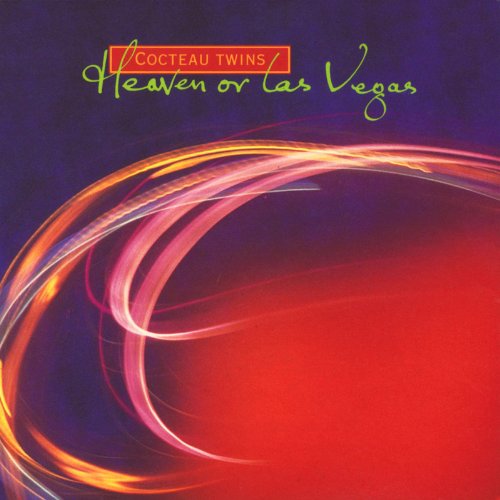
Cocteau Twins found an exquisite emotional expression in this unblemished and natural fantasy for a carnival. The Scottish dreampop outfit had ruled the British Indie album chart with their albums and collaborations (Garlands Head over Heels 'It'll End in Tears' Treasure Victorialand The Moon and the Melodies Blue Bell Knoll
Elizabeth Fraser and Robin Guthrie had a daughter Lucy Belle while Simon Raymonde got married and had a son Stanley. Fraser also recorded a duet with lan McCulloch on the title song of his album 'Candleland' , and Guthrie did production work with Lush . The trio also rented a new studio space in Twickenham (formerly known as Eel Pie Studios) which they renamed September Sound. The sessions featured Elizabeth Fraser on vocals, Robin Guthrie on guitar, and Simon Raymonde on bass guitar.
Raymonde reflects: “When Robin and Liz had their baby, we all thought – well, Liz and I probably thought – that the drug use was gonna stop and a new baby in the house would make things better and they would play happy families for a while. That’s what we figured would happen but it didn’t really turn out like that. And it was a really weird time; while the music was amazing and great fun to be a part of, together Robin and I wrote some of our best tunes and separately too, he wrote a couple all on his own and I wrote a couple all on my own and when he added things to mine it made them better and vice versa. We were in a very good space musically but we were putting so much time and effort into the music, it was trying to mask all the other shit that was going on that we didn't want to stop and think about for too long. But the drug problem did get absolutely out of hand by the end of the recording of Heaven or Las Vegas and that obviously led to the rehab period which we moved into shortly afterwards.”
Guthrie grasps: "I like [the technology]. I mean it's a distraction for me. You know, I used to use all the technology to fulfill my needs as a person. It was like, 'I have to get more stuff.' Until I felt OK. So I went out and got every fuckin' thing there is. All this motherfuckin' houseful of equipment. Things that most probably we didn't need... The trouble is, if we spend half an afternoon making up this guitar part and we get to be really happy with it, then in two year's time when we want to play the song live we can't actually remember what we played because we only played it once. More traditional bands, they practise their songs every week and they know them inside out. We don't. ... I think we've had it in the back of our mind that we wanted to play live again, so we thought we'd make some of the pieces more like songs we could play live. We've never actually sat down and said 'let's make a record sound like this'."
Frasier fingers: "Suddenly I had confidence which I'd never ever had in my life, which I consequently lost after I had the baby, because it's such a frightening experience you lose it again and you have to start over again. But it does change you ... I don't feel it's any deeper than usual. I know I can't sing as many notes [as before]; I'm not sure I can get any deeper than I used to, but I know I can't get as high. It's definitely a hormone thing."
'Heaven or Las Vegas' became the biggest album of their career, going to number seven on the UK album chart and cracking the top one hundred in the US.
http://www.cocteautwins.com/ "Heaven or Las Vegas"
https://www.youtube.com/watch?v=dtBr5JKSuks VIDEO "Iceblink Luck"
https://www.youtube.com/watch?v=L_Tj4bJ0VFw VIDEO 'Heaven or Las Vegas' full album:
https://www.youtube.com/playlist?list=PLrY0Cn5NiagadSP3GGVZ3jSq1FTo3O6sU VIDEO All songs written by Cocteau Twins.
"Cherry-Coloured Funk" – 3:12
"Pitch the Baby" – 3:14
"Iceblink Luck" – 3:18
"Fifty-Fifty Clown" – 3:10
"Heaven or Las Vegas" – 4:58
"I Wear Your Ring" – 3:29
"Fotzepolitic" – 3:30
"Wolf in the Breast" – 3:31
"Road, River and Rail" – 3:21
"Frou-Frou Foxes in Midsummer Fires" – 5:38
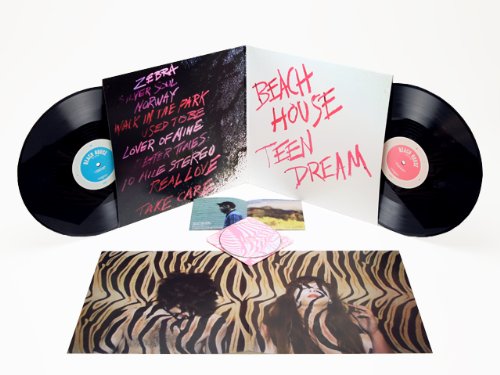
Beach House gathered medicine for heartache with the enigmatic expressionistic echo of this transcendental reverberation. The acclaim afforded their first two albums 'Beach House' 'Devotion' 'Teen Dream' was recorded at Dreamland Recording Studio in Hurley, New York in a converted church with producer/engineer Chris Coady. The record shows the duo expanding their sound ever so slightly with a more sophisticated sheen. Alex Scally explains: "Looking back on it, it wasn't really something we were conscious of happening. But I think touring all of 2008 on a record [Devotion Devotion
Victoria Legrand considers: "More than anything, the jumping-off point for me personally was just having played so many shows. Just the live performance and the live energy. When we got back, there was all this stored-up energy...We were almost feeling tied down by certain things...We were thinking about stripping things away and pushing them further. There was a kind of constant feeling of not settling for things that we may have done in the past. We pushed ourselves harder...We're very song-oriented; we believe in songs. It's very important to us that every song is treated with great care. So in that sense, the album, beginning to end, is very important to us. Not that it's a concept record that must be listened to in its order or anything, but that at any point you would pick up the record and feel that you're in this universe. We would never be happy with ourselves where only one song stood out, that's not even part of our hemisphere...Moving to a bigger label isn't about making things easier. It's about going to someplace new so that you can continue to challenge yourself. Because I think we sort of outgrew a certain place that we were in...And there's probably still innocence, and there's still love and heartbreak. It's just a wider spectrum."
'Teen Dream' went to number forty-three on the US Billboard 200 album chart and number six on the US alternative albums chart.
http://www.beachhousebaltimore.com/ "Zebra"
https://www.youtube.com/watch?v=N-wfb25WmV4 "Silver Soul"
https://www.youtube.com/watch?v=njbmwfndFH4 "Norway"
https://www.youtube.com/watch?v=PHbtR8uO81M "Walk in the Park"
https://www.youtube.com/watch?v=HeaHW-rUsUQ "Used to Be"
https://www.youtube.com/watch?v=3OK_eK_cuKI "Take Care"
https://www.youtube.com/watch?v=4ZxrIbTMJr4 'Teen Dream' full album:
https://myspace.com/beachhousemusic/music/album/teen-dream-14779771 http://grooveshark.com/#!/album/Teen+Dream/3646381 http://www.last.fm/music/Beach+House/Teen+Dream https://www.youtube.com/playlist?list=PLA6A2ED4650D23884 VIDEO
1. "Zebra" 4:48
2. "Silver Soul" 4:58
3. "Norway" 3:54
4. "Walk in the Park" 5:22
5. "Used to Be" 3:58
6. "Lover of Mine" 5:06 7. "Better Times" 4:23 8. "10 Mile Stereo" 5:03 9. "Real Love" 5:20 10. "Take Care" 5:48
bonus:
11. "Baby" 2:59
https://www.youtube.com/watch?v=aT151NLiWvo