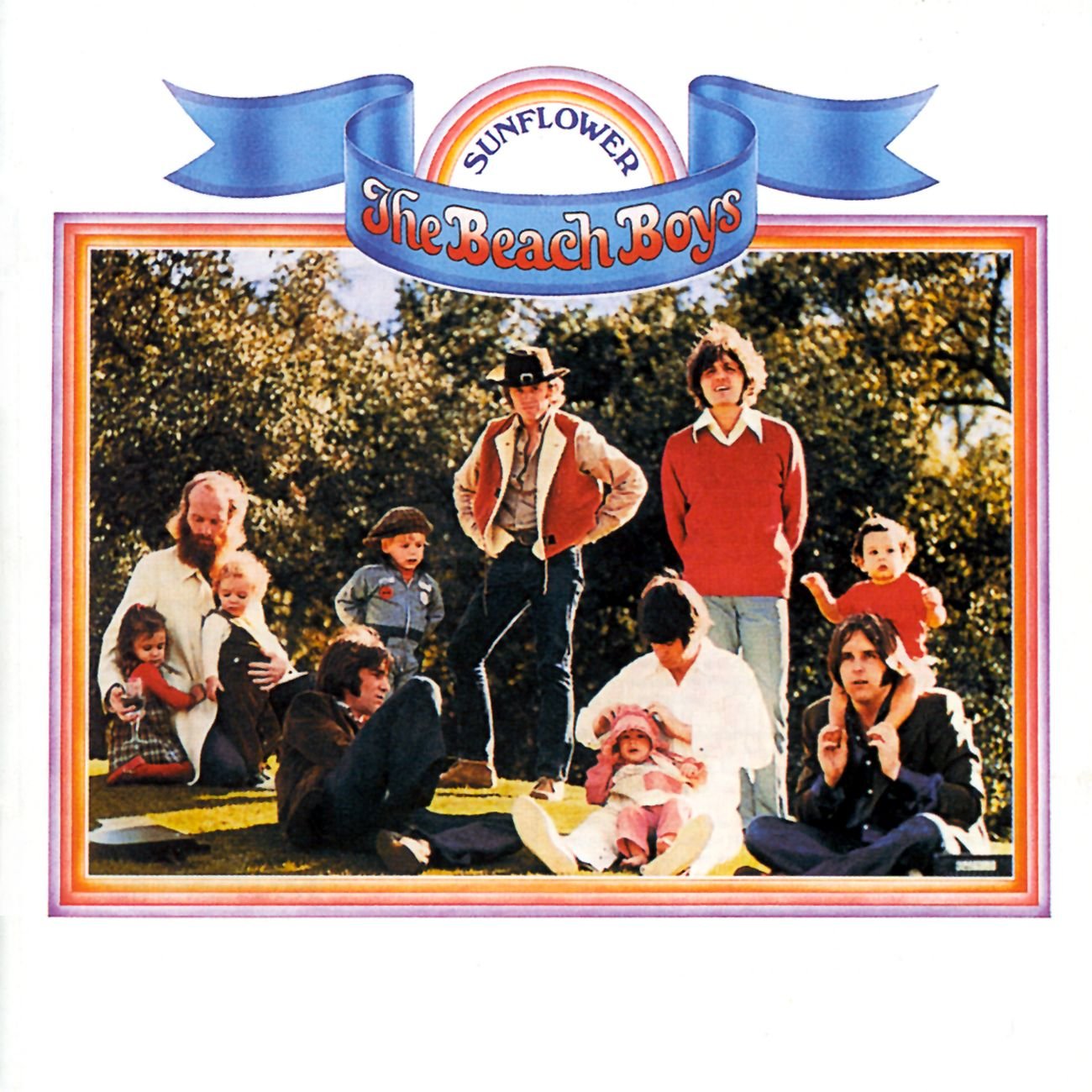
The Beach Boys slipped on through to switch labels and add some music to this cool, cool reverberation. After fourteen albums (Surfin' Safari in 1962; Surfin' U.S.A. , Surfer Girl, and Little Deuce Coupe in 1963; Shut Down Volume 2, All Summer Long, and The Beach Boys' Christmas Album in 1964; The Beach Boys Today!, Summer Days (And Summer Nights!!), and Beach Boys' Party! in 1965; Pet Sounds in 1966; Wild Honey in 1967; Friends in 1968; and 20/20 in 1969), two live releases (Beach Boys Concert in 1964 and Live in London in 1970), and one album on their own Brother Records imprint (Smiley Smile in 1967), their contract with Capitol Records expired in June of 1969; and, with lawsuits over unpaid royalties, Capitol deleted their catalog from print. The Beach Boys had sold over sixty-five million records worldwide and were the most successful American group in popular music; but they were without a label. Although he had been fired as their manager three years earlier, Murry Wilson took it upon himself to sell the band's publishing company Sea of Tunes and the rights to their songs to A&M Records in November of 1969. Van Dyke Parks helped to broker a new deal with Mo Ostin at Warner Brothers to sign the Beach Boys to Reprise Records that same month. The deal required Brian be actively involved and resurrected their Brother Records imprint.
The group went to work on dozens of studio tracks and came up with a tentative album 'Sun Flower' which became 'Add Some Music', an album that was rejected by Reprise. They also put together some tracks for an album called 'Reverberation' to satisfy their contract with Capitol; but opted to use 'Live in London' for that purpose. In February of 1970, they went back into the studio to record some new songs to satisfy Ostin and came up with the album that was released as 'Sunflower'.

Despite the strong critical response, 'Sunflower' only grew to number one hundred and fifty-one in the US, seventy-nine in Canada, and number twenty-nine in the UK. It was their worst performing album to date.
http://www.thebeachboys.com/
"All I Wanna Do"
https://www.youtube.com/watch?v=SwwTV35NqLA
"Slip On Through"
https://www.youtube.com/watch?v=g_FBUc-eJOc
"This Whole World"
https://www.youtube.com/watch?v=nZJAC9i3EEs
"Add Some Music to Your Day"
https://www.youtube.com/watch?v=PoZJLl1lil4
"It's About Time"
https://www.youtube.com/watch?v=JKuh1BmGKFY
'Sunflower'
full album:
https://www.youtube.com/playlist?list=PLApyhECLlb997nmi4bGnFoj99RIrU0990
Side one
1. "Slip On Through" (Dennis Wilson) lead vocals: Dennis Wilson 2:17
2. "This Whole World" (Brian Wilson Carl Wilson) vocals: (lead), Brian Wilson (opening line) 1:56
3. "Add Some Music to Your Day" (B. Wilson/Joe Knott/Mike Love) lead vocals: Mike Love, Bruce Johnston, C. Wilson, B. Wilson, and Al Jardine 3:34
4. "Got to Know the Woman" (D. Wilson) lead vocals: D. Wilson 2:41
5. "Deirdre" (Bruce Johnston/B. Wilson) lead vocals: Johnston 3:27
6. "It's About Time" (D. Wilson/Bob Burchman/Al Jardine) lead vocals: C. Wilson, M. Love (bridge) 2:55
Side two
1. "Tears in the Morning" (Johnston) lead vocals: Johnston 4:07
2. "All I Wanna Do" (B. Wilson/Love) lead vocals: Love and B. Wilson 2:34
3. "Forever" (D. Wilson/Gregg Jakobson) lead vocals: D. Wilson 2:40
4. "Our Sweet Love" (B. Wilson/Carl Wilson/Jardine) lead vocals: C. Wilson 2:38
5. "At My Window" (B. Wilson/Jardine) lead vocals: Johnston, B. Wilson (various sections) 2:30
6. "Cool, Cool Water" (B. Wilson/Love) lead vocals: Group (sections one and two), B. Wilson and Love (final section) 5:03
Sun Flower tracklisting
1. "Slip On Through"
2. "Walkin'"
3. "Forever"
4. "Games Two Can Play"
5. "Add Some Music to Your Day"
6. "When Girls Get Together"
7. "Our Sweet Love"
8. "Tears in the Morning"
9. "Back Home"
10. "Fallin' in Love"
11. "I Just Got My Pay"
12. "Carnival"
13. "Susie Cincinnati"
14. "Good Time"
'Add Some Music' tracklisting
side one
1. "Susie Cincinnati"
2. "Good Time"
3. "Our Sweet Love"
4. "Tears in the Morning"
5. "When Girls Get Together"
6. "Slip On Through"
side two
1. "Add Some Music To Your Day"
2. "Take a Load Off Your Feet, Pete"
3. "This Whole World"
4. "I Just Got My Pay"
5. "At My Window"
6. "Fallin' in Love"
'Reverberation' tracklisting
1. "Cottonfields"
2. "Loop de Loop"
3. "All I Wanna Do"
4. "Got to Know the Woman"
5. "When Girls Get Together"
6. "Break Away"
7. "San Miguel"
8. "Celebrate the News"
9. "Deirdre"
10. "The Lord's Prayer"
11. "Forever"
reissue liner notes by Timothy White
It was one small contractual step for a pop-rock band but a giant leap of faith in the second stage of The Beach Boys’ artistic destiny. On November 18, 1969 – the day after the U.S. – U.S.S.R. Strategic Arms Limitation Talks began in Helsinki, Finland, and mere hours before two Apollo 12 moon astronauts landed their “Intrepid” module on the Ocean of Storms lunar plain – The Beach Boys embarked on a bold new beginning by signing their own Brother Records label to a multi-album deal with the Reprised division of Warner Bros. Records. After seven years with Capitol Records, the group was eager to bridge the artistically rich but commercially quiet late-Capitol era of Smiley Smile, Wild Honey, Friends and 20/20, with a fresh creative and popular span under Warners’ wing. And the resurrected Brother imprint, first utilized in 1967 for the Heroes and Villains/You’re Welcome single, subsequently Smiley Smile album and the Brian Wilson/Mike Love single Gettin’ Hungry/Devoted To You, seemed to signal a revived confidence on the part of the band.
But such soothing scenarios soon got detoured as the first Beach Boys entry for release experienced a bumpy splashdown. Under the informal (two word) heading, “Sun Flower,” the Boys had assembled a 14-song reel late in 1969 that included a selection of the roughly four dozen studio tracks they had accumulated in the prolific period after 20/20. (The running order: Slip On Through, Walkin’, Forever, Games Two Can Play, Add Some Music To Your Day, When Girls Get Together, Our Sweet Love, Tears In The Morning, Back Home, Fallin’ In Love, I Just Got My Pay, Carnival, Susie Cincinnati, Good Time.) this was the period during which interest from Polydor, CBS and MGM fell by the wayside as Warner Bros. president Mo Ostin, initiated serious negotiations leading to his pact with The Boys.
Once on board with Reprise, Brother Records’ star act hastily issued a trial single on February 23, 1970, Add Some Music To Your Day/Susie Cincinnati, which spent a modest five weeks on the Billboard Hot 100 chart, peaking at number 64. Meanwhile, Beach Boys’ leader Brian Wilson, brothers Carl and Dennis and fellow Beach Boys Mike Love, Al Jardine and Bruce Johnston worked with chief engineer Stephen W. Desper to winnow and refine their latest output into a twelve song 16-track master entitled Add Some Music, subheaded An Album Offering From The Beach Boys.
Delivered to Warner Bros., president Mo Ostin early in 1970, it was digested corporately, and much deliberated over in various offices in the company’s Burbank headquarters – with even its album jacket fully executed by Warner art director/photographer Ed Thrasher with a cover shot by band friend Ricci Martin (Dean Martin’s son, whom Beach Boy Carl Wilson later co-produced for Capitol) – but ultimately the record was rejected as too weak for a debut album under the dawning Brother/Reprise marquee. The original pre-release track listing as detailed beneath the “ingredients” banner on the back sleeve, was as follows: (Side One) Susie Cincinnati, Good Time, Our Sweet Love, Tears In The Morning, When Girls Get Together, Slip On Through, Take a Load Off Your Feet, Pete, This Whole World, I Just Got My Pay, At My Window and Fallin’ In Love.
As discussions on a stronger lineup ensued, Warner A&R executive Lenny Waronker visited Brian’s Bel Air mansion (site of the ‘Brothers Studios’ home recording rig on which most of the current material had been cut) and he was stunned to hear Cool, Cool Water, a song of Brian Wilson’s and Mike Love’s that Brian had performed alone at his piano for Lenny.
Waronker was deeply moved by the sheer beauty of Cool, Cool Water, whose inspired simplicity seemed to dovetail with the transcendent commercial complexity of Brian’s masterpiece of four years earlier, Good Vibrations. Waronker deemed both songs to be works of great intuitive grace, and made a mental note to himself: “If I ever get the opportunity to produce Brian, I’d encourage him to do something that combined the vividness of Good Vibrations with the non-commercial gentleness of Cool, Cool Water.” (Waronker got his chance in 1988, when he co-produced Rio Grande for the solo Brian Wilson album on Sire/Reprise).
On June 29, 1970 Brother/Reprise sent out another Beach Boys single, Slip On Through/This Whole World, as a stalking horse for the impending album, but it failed to chart in Billboard. Finally, the inaugural Beach Boys long-player for Brother/Reprise reached stores on August 31, 1970, and the same album jacket fashioned earlier by Ed Thrasher proved to be its packaging, the sole change surrounding Ricci Martin’s toddler-filled and rainbow-framed front portrait of the group being the title, which now read Sunflower in crisp purple type.
The final revised song sequencing for Sunflower is the one preserved on this reissue, which marks the first time Sunflower has been on compact disc since its brief appearance in the U.S. on Caribou/Epic in October 1990 (with concurrent release in Europe in Epic and Japan on Sony).
Sunflower opens with the surging throb of Dennis Wilson’s breath-stealing Slip On Through. It has a serpentine bass line, inside-out drum patterns, and the clangorous knell of a cow bell that launch an introductory kaleidoscope of four-tiered vocals; one layer of intersecting harmonies, another of organ punctuations or percussive phrases like “believe, believe,” topped off by Dennis’ beautifully insistent lead singing. A clutter-free triumph of arranging flair, Slip On Through is also a sophisticated step beyond the dream-walking Pet Sounds esthetic, and it rocks hard thanks to convulsive drum breaks and nimble conga tattoos.
“It was a really dynamic song,” recalls Brian Wilson, of Slip On Through, Wilson talking at his home in Los Angeles in April 2000 as he offered an exclusive commentary on each of the tracks in this historic join Sunflower/Surf’s Up reissue. “Dennis, I was very proud of, because he really rocked and rolled on that one. Dennis did really interesting energetic things on that.”
Next is Brian’s This Whole World, whose rhythmic floor is an impeccable vocal parquetry of various tonal parts. Carl’s graceful intonation on the heartfelt lyric about global amity makes unsurpassed use of his swooping falsetto range and his catch-in-the-throat vocal sob to convey the emotional breadth of the music’s message. The song’s ability to traverse a half-dozen separate moods and settings in an evolution of less than two minutes is similarly arresting, making the quasi-elongated This Whole World, the most ingenious of Brians’ mini-opuses.
“I do that on my live album (Brian Wilson: Live at The Roxy Theater), at my concerts,” Says Brian now of This Whole World, adding, “It’s one of my very favorites. Structurally, it rambles, but I just remember I said (at the time it was first recorded), “Listen, this is a really spiritual tune.” We double-tracked our singing on that one; but we always double-tracked our voices, always. Carl sang the lead and I did the voices in the background. It was inspired by my love of the world, how I love people, and how people should be free.”
This Whole World’s extended fade is also a deft transition into the gradual build of the song that follows, Add Some Music To Your Day. Written by Brian, with Mike Love and friend Joe Knott. Add was the eldest Wilson’s consummate appraisal of music as the great equalizer and companion of the common man. The song starts with hushed praise for the “Sunday morning gospel” that begins the week for many citizens and then traces music’s gentle but pervasive influence as it pours from neighbors’ homes, dentists’ offices, the carts of ice-cream vendors, and the alters of wedding ceremonies, gladdening passersby as much as direct participants. Indeed, the lyric is eerily reminiscent of Wilson family rituals that occurred two generations prior to Brian’s time. Wilson’s 19th century forbears in Hutchinson, Kansas were pioneer stock who migrated there from Ohio, and initially entered California circa 1904. As this writer learned during a trip to Hutchinson in 1983 to interview Brian’s 87-year old great uncle Charlie and other surviving kin, these Wilson ancestors played mandolins, fiddles and piano, and during their regular Saturday evening recitals at their family home in Hutchinson, they’d open the windows – much as Brian later innocently envisioned in Add Some Music – so passersby on the prairie streets could enjoy the music too.
“Well, I’ll be gosh-darned,” says Brian with a laugh when told of is distant ancestors parallel practices. “What a spiritual family! I had no notion of that, so it’s a scary little lyric, isn’t it?” he concludes with an impish laugh. “My family before me, for a couple of generations, that’s one of the missing links in me – and it’s a fascinating thing, that missing link.”
“We wrote Add Some Music in 1970,” adds Brian. “I think we wrote it my house in Bel Air. It was written by me and Mike and Joe Knott, who was a friend of mine who wasn’t a songwriter but he contributed a couple of lines. But I can’t remember which ones! The lyrics are wonderful. When I do my shows, I always tell the people, “Listen to the lyrics of this song, You’ll like them a lot.”
Dennis’ Got To Know The Woman (“That,” notes Brian with a giggle, “sounds like a Dennis title!”) is one of the few Beach Boys songs that could honestly be called funky, its tinkly Dixieland piano a perfect foil for the coarse frivolity of the verses, which contain a boorish come-on to the object of one’s lowest bump-and-grind fantasies. Increasingly caught up in the track’s pulsating groove, the singer’s absurdly overstated ardor has pushed him by mid-song into open embarrassment; his familiar macho pose toppling into a knowing laugh that listener’s can share.
Brian and Bruce Johnston penned the dazzling Deidre, a stroll-tempo devotional to an idealized, red-haired goddess; its stippled use of flutes plus the spacey filtering and compression techniques in the vocal mixes giving the track a celestial grandeur. “Loved it,” says Brian. “One of my very favorites. I thought Bruce’s harmonies were beautiful – harmonic genius.”
Side one of the vinyl version of Sunflower concludes with It’s About Time, a flat-out rocker by Dennis, Al Jardine and writer Bob Burchman that was the first-person account of a fallen artist nearly destroyed by his fruitless search of “a lost elation.” “That’s another Dennis one, really good,” Brian reflects. “Dennis was very creative, a creative guy.” The Santana-like Latin pivot of its percussion gave the song a nice tension, and the personal renewal described by the song’s central character triggers a driving guitar break that makes his second chance seem both plausible and thrilling. And undidactic commentary on rock indulgence and self-redemption, it was also a wishful scenario regarding both Brian and Dennis Wilson’s sporadic personal troubles.
Tears In The Morning on Side Two of the original LP is Bruce Johnston’s melodramatic but ably sung story of a love asunder; its string section, tactical Broadway-style pit drumming, Parisian accordion, and horn/piano coda were vaguely redolent of Sinatra’s Nelson Riddle-arranged songs for films such as Can-Can and Pal Joey. The unusual approach for modern rock-pop is redeemed by the tracks’ production clarity, which makes for a neat contrast with the eerie, buzzing reverberance of Brian and Mike Love’s ghostly love vow, All I Wanna Do. “Tears In The Morning was lovely,” says Brian, “and All I Wanna Do, that was a real nice one. (Sings) “All I want to do/Is always be good to you.”
Forever by Dennis and buddy Gregg Jakobson and Our Sweet Love, a Brian-Carl-Al collaboration, are pristine ballads that would not have been out of place of Pet Sounds but for their absence of pessimism. “Forever has to be the most harmonically beautiful thing I’ve ever heard,” Brian now declares. “It’s a rock and roll prayer. And Our Sweet Love, I wrote that for Carl. After I wrote it I said, “Hey, he could sing this good” so I gave it to Carl.”
At My Window, Al and Brian’s ode to a bird on a sill, is a childlike consideration of a good omen. “Al wrote the lyrics,” says Brian. “It’s a fantastic song; the sound of it, the overall wall of sound we put into it, was really good.” Window also serves as a fit prelude to the meditative innocence of Cool, Cool Water, which incorporates a portion of the spooky, droned canticle of I Love To Say Dada from the shelved Smile album.
“Well, I’m proud of Cool, Cool water,” Brian assures, “because that was a divinely inspired song. I had just moved into a new house on Bellagio Road in Bel Air, in March of 1967, and the first day I moved in, there was a piano there, and I went to the piano and wrote Cool, Cool Water. I sat down and wrote the gist of it, the basic song. It was finished much later of course. (Sings) “Gimme some cool, cool water.”
Gone from the final Sunflower lineup were Al and Brian’s Good Time – “That was a very good cut; it brings back pleasant memories.” Brian now recalls. Gone as well, were Brian and Mike’s When Girls Get Together, and another Brian and Al effort, I Just Got My Pay (“That’s another one we did that was a really cool song,” Brian now assures, “and we harmonized real good on it.”) The former cut landed on Keepin’ The Summer Alive (1980).
Also dropped was Dennis’ Fallin’ In Love (featuring a string arrangement by Daryl Dragon on The Captain and Tennille fame); the song later appeared under the title Lady as the B-side of Dennis’ 1970 Sound Of Free solo single on the Stateside/EMI label, both tracks credited to Dennis Wilson and Rumbo. Among other finished cuts left in the can were Games Two Can Play, an instrumental called Carnival (sometimes referred to as Over The Waves), and San Miguel, which surfaced in 1981 on the Caribou Ten Years of Harmony (1970-1980) anthology.
The direction of The Beach Boys would take in the 1970’s was determined in no small part by audience reaction to the keen self-assurance of Sunflower, which Brian considered at the time to be “probably one of our best albums.” But Sunflower sold a piddling amount after its release on August 31, 1970, soaring no higher than 151 on Billboard’s Top LP chart during its scant four weeks on the survey. Since the commercial response to such an exceptional work was one of utter disinterest in the marketplace. The Beach Boys creative direction swerved downward, away from the hopefulness that had characterized the band’s new beginning at Warner Bros.


