Showing posts with label ska. Show all posts

Sunday, October 4, 2015

more specials


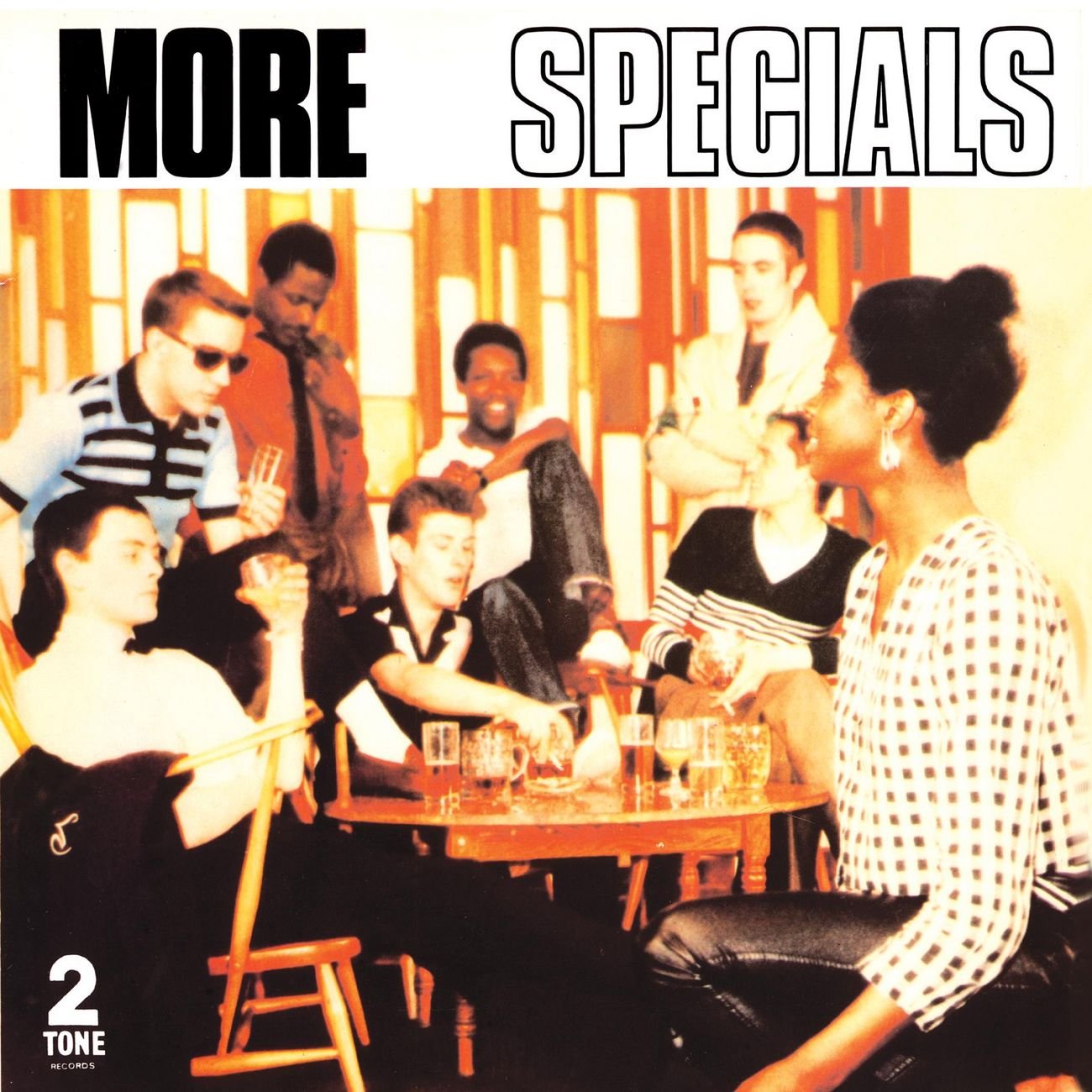
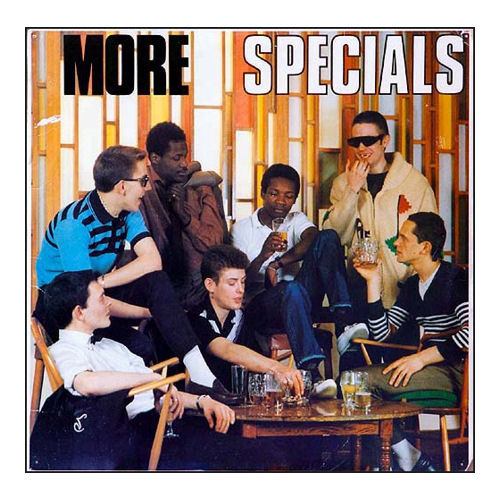
The Specials defied stereotypes with rat race resistance to extend jet set enjoyment with a soulful bosanova scratch.  The group had spearheaded the British ska revival with their gold selling socially conscious self-titled debut in late 1979; and in January of 1980, their EP Too Much Too Young was released as The Special A.K.A. and became a number one hit in the UK.   Both releases were put out on the 2 Tone label established by bandleader and producer Jerry Dammers.  After their first US tour in February, the band did another tour of the UK with The Bodysnatchers and The Go-Go's in June.   In the midst of all of the activity, they began recording their second album 'More Specials'.  


Dave Jordan was producer (along with Jerry Dammers and  John Bradbury) and engineer, assisted by engineer Jeremy (The Blade) Allom at Horizon Studios in Coventry.  The sessions included Terry Hall on vocals;   Lynval Golding on vocals and guitar;   Neville Staple on vocals and percussion;   Jerry Dammers on organ, piano, keyboards, and production;   Roddy Byers on guitar;   Sir Horace Gentleman on bass guitar;   John Bradbury on drums and production;   Rico Rodriguez on trombone;   Dick Cuthell on cornet, flugelhorn, and horn;   Lee Thompson and Paul Heskett  on saxophone;   with  Rhoda Dakar of the Bodysnatchers on vocals;   and Belinda Carlisle, Jane Wiedlin and Charlotte Caffey of the Go-Go's on background vocals


Byers:    "[When I joined the band] Jerry wanted a punk edged guitarist at the time and I fitted the bill. I had been listening to Bob Marley and a lot of Dub stuff at the time, so I was interested in the cross-over sound Jerry’s band was doing and I had become bored with punk scene. Concrete Jungle was a song I wrote while in the Wild Boys which I brought with me to the Automatics/ Specials. I sang it live early on and that’s my lead vocal on the first album...[With 'More Specials'] Jerry was all for changing our ska/punk sound a bit too early I thought, but I managed to write three songs that fit into his new master plan."


Hall:   "I enjoyed working on 'More Specials' more than I did on the first one. I thought we were getting into some interesting areas. But we recorded it at a time when personal relationships were frayed so its going to mess it up. There was a definite argument that we should have taken some time off and let the dust settle between records but we didn’t do that...I don’t trust bands who get on. You need a certain tension to make a good group...We’re still relevant, but it’s totally different now. We were one of the first mixed bands when we formed...I think our songs still hold a relevance...I just think the whole music business changed, really. The desire to make those sort of records just went. With the advent then of ‘talent TV,’ people want to be famous, really, and that was never a reason why we started a band...We just wanted to try and find a voice."


Dammers:   "I spent my time growing up in Coventry in the '60s and '70s seeing the working-class youth bashing each other up, whether it was bashing immigrants or bashing each other at football. It was only a minority, of course, but it did seem like most districts in Coventry had some sort of gang, and some of the pubs were notorious for people glassing each other. The media was winding this up all over the country, so some kids thought that was what they were supposed to do. Meanwhile, the establishment that was actually keeping them down just carried on getting richer like they always had. The hippies wanted to form a better "alternative" society, but that just alienated some people. I wanted to change all of society from within, which was a much harder and more risky thing to try and do. The amazing thing is that it worked at all, even to the small extent that some people say it did. I often meet people who tell me that if it wasn't for The Specials they would have been racists or whatever, and that they turned to more socialist ideas because of The Specials ... The general idea that children are still starving, or dying of preventable diseases, or getting blown to pieces, is not a good thing. Even if there was such a thing as "trickle down" from capitalism, which there never has been, and never will be, what an absolutely horrible idea, that some people are only worthy of what might happen to "trickle down" from the rich."


'More Specials' went to number ninety-eight in the US, forty-nine in Canada, thirty in Sweden, twenty-eight in New Zealand, and number five in the UK, where it was certified gold.  Three singles on the album went to the top twenty in Ireland and the top ten in the UK.  


"Rat Race" ran to number ninety-eight on the US dance chart, seventeen in Ireland, and number five in the UK.  The single was not included on versions of the album released in the UK and the Netherlands.  


"Do Nothing" made it to number thirteen in Ireland and number four in the UK.  


"Stereotypes" reached forty-one in the Netherlands, twelve in Ireland, and number six in the UK.  


"Hey, Little Rich Girl" live


"Enjoy Yourself" live


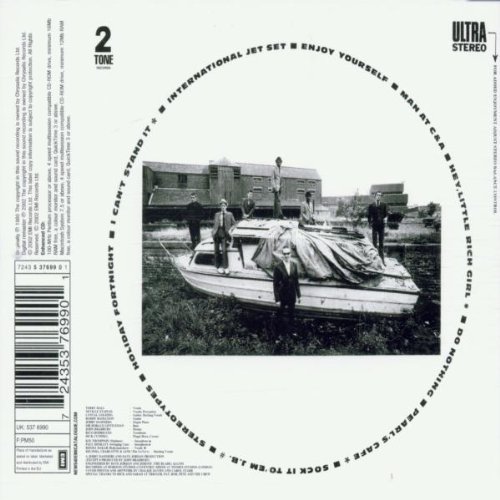
'More Specials'
full album:


Side one
"Enjoy Yourself" (Herb Magidson, Carl Sigman) – 3:39
"Man at C & A" (Dammers, Hall) – 3:36
"Hey, Little Rich Girl" (Roddy Byers) – 3:35 - featuring Lee Thompson
"Do Nothing" (Golding) – 3:43
"Pearl's Cafe" (Dammers) – 3:07
"Sock It to 'Em J.B." (Dunn, Garvin, Holman) – 2:56
Side two
"Stereotype/Stereotype Pt. 2" (Dammers, Staple) – 7:24
"Holiday Fortnight" (Byers) – 2:45
"I Can't Stand It" (Dammers) – 4:01 - featuring Rhoda Dakar
"International Jet Set" (Dammers) – 5:37
"Enjoy Yourself (Reprise)" (Magidson, Sigman) – 1:46


"Rat Race" (Byers) – 3:07 was not on the UK release nor Dutch LP


Early copies of the album included a free 7" single:

"Braggin' & Tryin' Not to Lie" by Roddy Radiation and The Specials


"Rude Boys Outa Jail (version)" featuring Neville Staple AKA Judge Roughneck


"Montreux Jazz Festival" (Switzerland 1980)


0:13 Monkey Man
2:52 Blank Expression
4:58 Concrete Jungle
8:27 Stupid Marriage
12:15 Raquel
14:22 Guns Of Navarone
16:54 Do Nothing
20:36 Rat Race
23:49 A Message To You Rudy
26:44 Man At C & A
29:58 Do The Dog
32:10 Too Much Too Young
34:21 Gangsters
38:53 Skinhead Moonstomp
40:38 Enjoy Yourself


Thursday, August 20, 2015

...and out come the wolves


Rancid rummaged through radical roots reggae and rockabilly revivalism to find their destination in this tattooed time bomb.  Childhood friends Tim Armstrong and Matt Freeman played in punk bands around Berkeley like Operation Ivy, Downfall,  Generator, and Dance Hall Crashers before forming Rancid,    Armstrong remembers:  "A good friend of mine who had been in bands for a long time asked me who my two closest friends were. He then told me that was who I should start a band with. It didn't matter how good they were or if they had any chops. It was more about getting together with homies that I wanted to hang out with. I thought about it and realized that I already had Matt, who happens to have chops and is an incredible bass player, and Brett (Reed), who played drums. Lars (Frederiksen) joined about a year later, and we clicked immediately."

After they released their self-titled debut EP was released on Lookout! Records in 1992, the group was signed to Epitaph Records.    'Rancid' came out in 1993 and 'Let's Go' in 1994 (with indie hit "Salvation").  That same year Rancid toured with label mates Offspring and started to catch the attention of several major labels; but they decided to stick with Epitaph for their next album.   Lars Frederiksen reveals:   "Everything you can possibly imagine happened  We were like, 'Whoa, this is crazy.' We're just a blue-collar punk band. We just want to make records and play our music, and there was all this other bullshit going on. But I'm glad that we all went through the shit. We went to the wall and came back...You learn just who your friends are, and you see people's motives. We went back to Epitaph because we knew they loved us as people first and foremost. With Brett Gurewitz we're more than some account on a ledger somewhere, we're part of a family...This is the only time I've ever experienced unconditional love and acceptance in my life, just by these three guys. We put our friendship and our family above music and whatever else."


'...And Out Come The Wolves' was produced and mixed by Jerry Finn with engineers Brett Gurewitz and Michael Rosen.  The sessions at Fantasy Studios in Berkeley, California and Electric Lady Studios in New York City featured  Tim Armstrong on vocals and guitar;   Lars Frederiksen on guitar and vocals;   Matt Freeman on bass, guitar, and backing vocals;   and  Brett Reed on drums;   with   Bashiri Johnson on percussion;   DJ Disk on scratching;   Paul Jackson on Hammond organ;  and  Jim Carroll doing guest vocals on "Junkie Man" (which gives the album its title).

Frederiksen also did the album cover art:   "We're really on a role creatively.  We wrote forty songs for the album and we've already written twenty more since. The last two records were really hard, fast records, but this time we're mixing things up. Ska, punk rock, and reggae all have the same feel, the same soul, and we just love the music. We're a gut instinct band, and it just felt right to do this stuff now."

Armstrong asserts:  "Punk rock is rebel music.  So is reggae music. They both go against the norm and make their own rules. I've always loved music like punk, rock and roll, and ska, which to me has a similar sound to punk. I love bands like the Specials, the Ramones and The Who."

'...And Out Come The Wolves'  clawed its way to number eighty-nine in the Netherlands,  fifty-five in the UK,  forty-five in the US,  thirty-nine in Sweden,  thirty in Austria and Finland,  twenty-seven in Canada.    It has been certified gold.


http://rancidrancid.com/


"Roots Radicals" broke into the top thirty of the US alternative  chart. 
https://www.youtube.com/watch?v=wpzkGQhftMw


"Time Bomb" was a top ten hit on the Canadian and US alternative singles charts.  
https://www.youtube.com/watch?v=DhKHAopx7D0


"Ruby Soho" went to number thirteen on the US alternative chart and number nine on the Canadian alternative chart. 
https://www.youtube.com/watch?v=FGGPy8wtOp0


'...And Out Come The Wolves' 
full album:
https://www.youtube.com/watch?v=JaBXx5lOipw


All songs written and composed by Tim Armstrong, Matt Freeman and Lars Frederiksen, except where noted.


0:00 - Maxwell Murder
1:25 - The Eleventh Hour  (Armstrong, Freeman, Frederiksen, Eric Dinn)
3:53 - Roots Radical
6:40 - Time Bomb
9:04 - Olympia WA.
12:35 - Lock, Step & Gone
15:00 - Junkie Man  (Armstrong, Freeman, Frederiksen, Jim Carroll)
18:05 - Listed M.I.A
20:27 - Ruby Soho
23:05 - Daly City Train
26:25 - Journey to the End of the East Bay
29:37 - She's Automatic
31:12 - Old Friend
34:05 - Disorder and Disarray
36:55 - The Wars End
38:48 - You Don't Care Nothin'
41:17 - As Wicked
43:57 - Avenues & Alleyways
47:09 - The Way I Feel


Tuesday, May 19, 2015

i just can't stop it


The Beat came over with love and unity in the joyful sound of this sharp and sensitive reflection of recompense.    The group was started by Dave Wakeling, Andy Cox, and David Steele on the Isle of Wright but relocated to Birmingham and began to develop a hybrid sound.   The Beat was the supporting band for The Dum Dum Boys, which included Ranking Roger Charlery, who decided to join the opening act:    "I started off as a punk rocker and my first job in a band was playing drums,and the first gig that we ever did had the Beat opening up for us as our support band. I soon joined them and became their front man and it went from there, but I still have that slight punk edge or streak within me and I still listen to it. I love every kind of music as long as it’s rhythmic and melodic,and I thought that punk was...It’s poor people’s music. Punk or reggae is roots music which comes from the ground up, and that’s why it’s so hard because usually there is a message of truth within it all. I think there is a real lack of this with today’s music; people should be singing about real things. Why should every song be another love song?... I was torn, yeah. You know I potentially had the chance to join UB40 because they were both from Birmingham. What a choice, eh? They weren’t big at the time; The Beat and UB40 were both unknown and they were both doing local pubs, but when I analysed it in my head something was just saying to me that I should go for the Beat because the dynamics of the music was far greater. UB40 were good, but I saw them as sort of a space age reggae band with both the guitars and the keyboards being phased. It was almost like a Lee Perry sound. I thought they were a great version of English reggae and they executed that perfectly.   The Beat had more going for them though; they had more styles in the songs ranging from reggae to punk then from that to a song that sounded a bit soul-ish. God knows what it was; they did so many different styles mixed together, and there were catchy guitars going on and that bass was so awkward. You know, when I first met the Beat’s band members I thought they were aliens from a different planet because to me they didn’t look human. In a way it was weird because nobody really knew each other. I think Andy Cox and Dave Wakeling knew each other from college, but for the rest of us it was like we were just placed in the room and told, 'Right, go and make something decent.' So we did."

Wakeling looks back:   "We had this view that life was tragic, and yet it was beautiful. It’s all so beautiful (singing), I wanted to try to capture that in song, so we had the seductive side of reggae, the energy and power of punk, and the triumph and feeling of soul, and the crisp editing of ’60s pop, so people would want to put the needle back on the record. We wanted to combine all that into a three-minute pop song. That was the brief. We all had different visions of it. Mine initially was I wanted Toots and the Maytals jamming with the Velvet Underground, with Brian Ferry and Van Morrison dueting on top. David Steele wanted the Monkees in there, and Roger was pure punk so he wanted a bit of the Clash and Pistols in there. We wanted to synthesize it into something that would make everyone in the room dance and feel uplifted, because life was as it was in Birmingham. It’s a bit like Detroit in how much joyful music came out of there.”

They were joined by Everett Morton on drums and veteran sax man Lionel Augustus Martin (AKA Saxa) who had played with The Beatles and ska legends like Prince Buster and Desmond Dekker.   Roger remembers:   “Everett worked in a kettle factory.  David Steele worked as a nurse, and he knew a Jamaican nurse who put him in touch with Everett, who put us in touch with Saxa. We realised we needed a bit of brass – we only met Saxa a few days before we laid down 'Tears Of A Clown'. He'd played in various bands around town, all backgrounds, from Irish to calypso. Basically, he was a jazz man. I was a bit wary of him at first. His dress sense was straight out of Shaft! He seemed a bit noisy, a bit drunk. I thought, 'He's trouble.' But the way he played sax was like nothing I'd ever heard before. And we realised, all the time, he was teaching us. He'd say things like, “one hand wash the other”, and you only later got what he meant."


Wakeling reveals:    "When we started rehearsing as a band, we were trying to get David Steele’s punk basslines and Everett Morton’s reggae drums, and mine and Andy Cox’s power-pop melodies all put together. We’d rehearse, and for about a minute or two it would gel, and everything would seem great. And then we’d all drift off into our favorite grooves, and it was as though there were a number of ellipses going on, and every now and then those ellipses would converge and we’d make a perfect circle for a minute or two—something like we’d never quite heard before—and then we’d drift off again. After a few weeks of that, Everett said, 'Why don’t we try to learn a song that we all know, practice that ’til we’ve got it right, find out where our grooves meet, and then we can try one of your weird songs like that ‘Mirror’ thing.' It actually took us 10 minutes in the rehearsal room to come up with a song we all knew; that’s how different our influences were.   But “Tears Of A Clown” we all knew, so we went home and learned it. Well, learned most of it. We didn’t bother with the really, really difficult chords. [Laughs.]"


The group had a top ten hit in the UK with their first single, a cover of "Tears of a Clown", which led to the recording of their debut album. 'I Just Can't Stop It' was produced by Bob Sargeant and engineered by Mike Hedges and featured Dave Wakeling on lead vocals and rhythm guitar; Ranking Roger on toasting and vocals; Andy Cox on lead guitar; David Steele on bass; Everett Morton on drums; and Saxa (Lionel Augustus Martin) on saxophone. The album charted at number one hundred and forty-two in the US (where the band became The English Beat), thirty in New Zealand and Norway, and number three in the UK.
Wakeling:   "It was easier in England [to mix reggae and punk]; we had [a] whole generation of people that moved over from Jamaica and other islands to help rebuild Britain in the ‘50s after the second World War. The idea at the time was, the people were invited to come over with the notion being just being like just work here for three to five years to help rebuild the motherland. The idea was to go back home with a load of money to build a big house for yourself and then live in luxury back in Jamaica. Then, of course, people settle and have kids and those kids have Birmingham accents. And one thing leads to another and people start to call England home and the next generation [is] born in England. Like Ranking Roger, for instance. He’s born English, so going home for him meant Birmingham, and he still lives in Birmingham to this day. It was a bit easier for us in England to get into contact with reggae whereas in America white folk weren’t that interested in reggae. Now I mean you see reggae beats all over American television commercials and kids’ shows. So it’s a groove that’s been adopted and accepted and is pretty well-regarded here now.


http://englishbeat.net/

http://englishbeat.net/lyrics/i-just-cant-stop-it/


"Mirror in the Bathroom"
Wakeling:   "I was working in construction at the time, and it was the winter. I had forgotten to hang my jeans up to dry overnight, so when I got into the bathroom to shower up, I noticed my jeans were still on the floor, soaking wet, covered in sand. So I hung them up thinking well, it's probably best to have them steaming hot and wet. I went to shave, and it was snowing, and I really, really didn't want to go. So I started talking to myself in the mirror as I was shaving up. And it was weird, because I looked deeper in the mirror, and I could see the little caption on the door behind, and I said to myself, Look, David, there's just me and you in here. The door's locked. We don't have to go to work. Of course we did. Got on the motorbike, and I just started pondering as I skated my way to the construction site on this motorbike. And that's how it started. It was thinking about how self-involvement turns into narcissism and how narcissism turns into isolation, and then how isolation turns into self-involvement again, and how what a vicious cycle that can become. So then I just started thinking about different situations where people would ostensibly look like they were doing something, but in fact they were checking their own reflection out. And you'd see it perhaps on Saturday afternoon with people window shopping, half the time they're actually just looking at their own reflection. Then this restaurant opened, and it was a big deal at the time because it had glass tables, and I was like, oh, you can watch yourself."
https://www.youtube.com/watch?v=SHWrmIzgB5A


"Best Friend"
https://www.youtube.com/watch?v=YFv1kqdl2VQ


"Tears of a Clown" didn't appear on the original UK album; but was added to the US version.  
https://www.youtube.com/watch?v=VY98T36ZC60


"Ranking Full Stop" was the flip side to their first single.  It also appeared on the US release.  
https://www.youtube.com/watch?v=xPO2G6m746w


"Rough Rider"
https://www.youtube.com/watch?v=uRmDw6ZhAPo


'I Just Can't Stop It'
full album:

https://www.youtube.com/watch?v=I58tsdmA5Co


All songs written by The Beat, unless otherwise noted.

Side One
"Mirror in the Bathroom" – 3:10
"Hands Off...She's Mine" – 3:01
"Two Swords" – 2:19
"Twist & Crawl" – 2:35
"Rough Rider" (Eddy Grant, Dervan Gordon, Lincoln Gordon, and Patrick Gordon; arranged and adapted by The Beat) – 4:52
"Click Click" – 1:28

Side Two
"Big Shot" – 2:34
"Whine and Grine/Stand Down Margaret" – 3:51 (Whine and Grine by Prince Buster, Stand Down Margaret by The Beat)
"Noise in This World" – 2:19
"Can't Get Used to Losing You" (Mort Shuman, Doc Pomus) – 3:04
"Best Friend" – 3:01
"Jackpot" (George Agard, Sydney Crooks, Jackie Robinson, The Beat) – 4:19


live at Capitol Theatre in Passaic, New Jersey on the 26th of September 1980


00:00 : Hands Off She's Mine
02:49 : Psychedelic Rockers
06:10 : Noise In This World
08:27 : Big Shot
11:29 : Tears Of A Clown
15:14: : Rankin Full Stop
18:00 : Mirror In The Bathroom
21:24 : Click Click


Tuesday, April 28, 2015

telephone free landslide victory


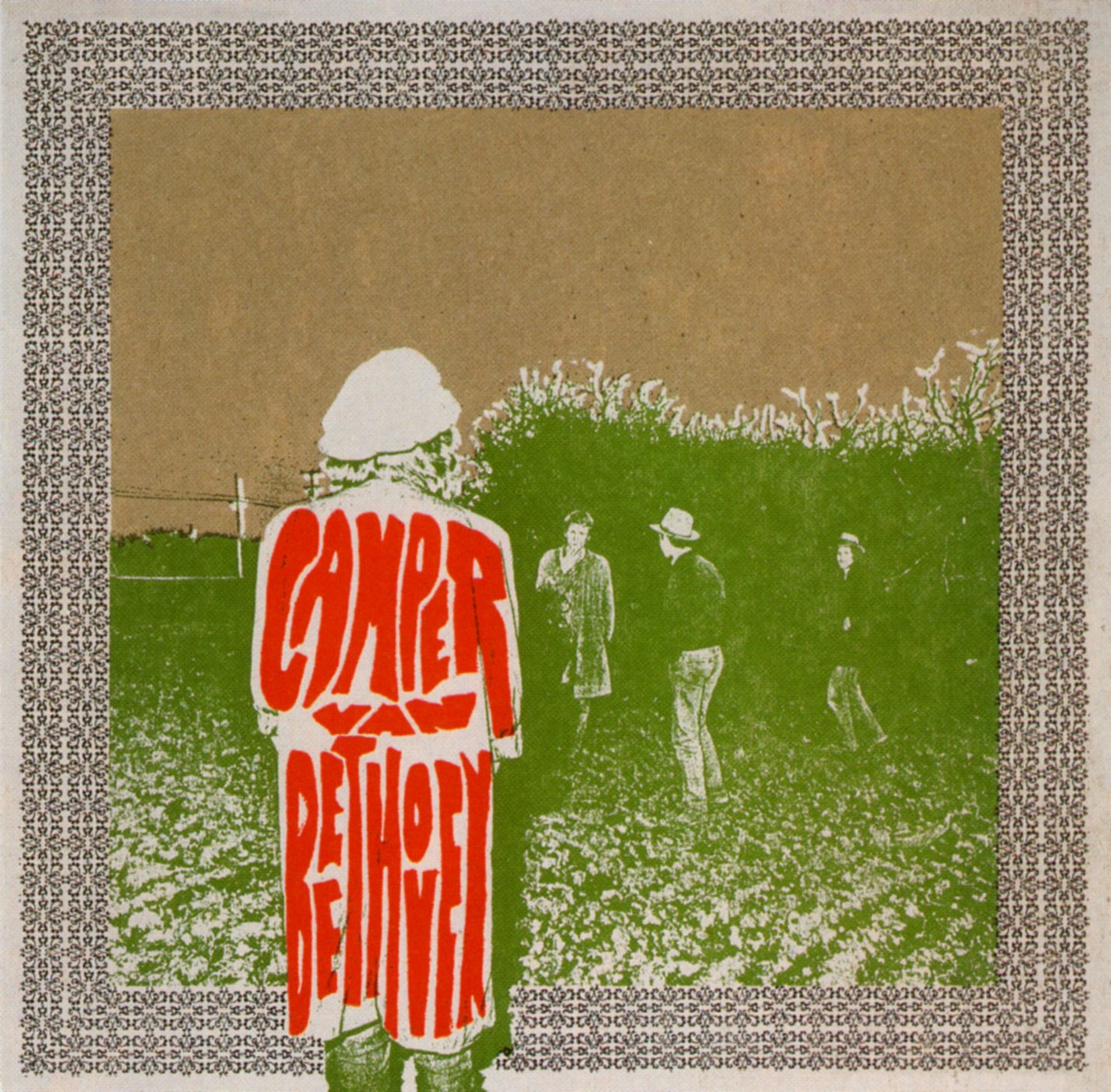
Camper Van Beethoven went to the moon and came home for lunch with this absurd ambiguous amalgamation of bowling skinhead stomp and breathtaking border ska. The group formed at the University of California in Santa Cruz with David Lowery, Chris Molla, and Victor Krummenacher with a revolving cast of characters under the moniker Camper Van Beethoven and the Border Patrol. 

 Lowery reveals: "We had the name before we had any songs. David McDaniel was one of the founding members of the band. He was my funny, quirky friend, very devout Christian who spent most of his life as a minister. He also had this crazy stand-up comedy persona that he did where he would say these jokes that had all the reason and rhyme of jokes, but they didn’t really make any sense. He would do some foreign Borat-type accent and say, ‘My country is so small every time we change a tire, everybody laughs!’ I mean, it doesn’t make any sense. And he had this rhyme and reason that was his sense of humor — this whole series of never ending things that sounded like they could be jokes but they deconstructed and destroyed themselves in the process. That’s where Camper Van Beethoven came from...We thought ska sounded like that, at least the ska that we were listening to back in the early punk-rock days when ska and punk-rock were all mixed together. We would just use those scales and those kind of melodies but we were also really influenced by surf-bands, but we just didn’t play surf beats, but that’s what we were into. But we just put ska and punk rock, and sort of put punk beats and rhythms into the song. Surf music was obsessed with the sound of other cultures."


'Telephone Free Landslide Victory' was recorded during January and February of 1985 at Sámurai Sound Studio in Davis, California. The sessions were engineered by Dave Gill and featured David Lowery on lead vocals, rhythm guitar, and drums; Jonathan Segel on violin, mandolin, keyboards, guitar, backing vocals, and noise; Chris Molla on guitar, backing vocals, and drums; Victor Krummenacher on bass and backing vocals; Greg Lisher on guitar; and Anthony Guess on drums.

Lowery elucidates: "We’re playing with words. There’s a good story that goes with that title. There was this band back in the 60s that we idolized called The Kaleidoscope. One of their classic albums, Beacon From Mars, was actually supposed to be called Bacon From Mars. But apparently it went to the printing plant and somebody just figured it was a misspelling or a typo or couldn’t read the handwriting, and they changed it to Beacon From Mars. Strange parallel: Telephone Free Landslide Victory was originally called Telephone Tree Landslide Victory. But when we sent it to to Bruce Licher to print the cover, he misread our handwriting and thought it was Telephone Free Landslide Victory. We were like, ‘No, it’s Telephone TREE Landslide Victory!’ And he was like, ‘Oh, shit!’ But he’d already hand-printed fifteen hundred covers. And the we were like, ‘Wait, that’s better!’"

'Telephone Free Landslide Victory' was initially released on the band's own Independent Projects label and sold over sixty thousand copies. It charted at number thirty on the UK indie album chart.

Krummenacher considers: "Rarely do I listen to my own stuff, but when I do listen to it… you know, I guess they say “lightning in a bottle” is the way to describe certain things that just kind of happen that are unexpected and spontaneous and very real. I think that record is a really good example of something that nobody anticipated being anything other than what it was. We were just making a record for a friend. We did it in four days – two days of recording and two days of mixing. It’s 17 songs or something. It’s basically about everything we were playing at the time. We just threw it in there, and had no clue that it would become this culty kind of thing that people like R.E.M. would be interested in, and basically it secured us a place...You know, Camper was a joke band. Camper was the band that played at parties. We all had serious bands that we were trying to play with at the time. I think we were serious about making the record, we thought we were a pretty cool, interesting, weird garage band. But I don’t think we thought it would be what it was. Which is good – there were no expectations going into it. I think that’s when the best stuff is made, when you just don’t have an expectation. Expectation is really kind of the enemy of rock ‘n’ roll. Once you get too thinky about things it’s just not good."

Lowery expounds: "The first Camper Van Beethoven record is all bouncy and poppy, like when you were 18 and you smoked pot, it actually made you sort of energetic, and then like when you were like 35 and you smoked pot and you went to sleep."


http://campervanbeethoven.com/ 


"Take the Skinheads Bowling"
became a college radio sensation and went to number eight on the UK indie chart.
Lowery: "I just got this idea that I thought a lot of great songs really didn’t mean anything; it was kind of just cool, the way the words went together, and that that should be celebrated. So, I was really carefully trying to make it so that each line didn’t really seem like it had anything to do with the line before it."
Krummenacher: "It’s funny, when I listen to it now, there’s a huge bass mistake at the end. It’s really, really loose. I had no clue that it would be a hit in Britain. Or that it would ultimately allow me to buy my house because when Michael Moore bought it for “Bowling for Columbine.” That was a big deal for a lot of us."

https://www.youtube.com/watch?v=gKfMlQ7KWFE


Every day, I get up and pray to Jah
And he decreases the number of clocks by exactly one
Everybody's comin' home for lunch these days
Last night there were skinheads on my lawn
Take the skinheads bowling
Take them bowling
Take the skinheads bowling
Take them bowling
Some people say that bowling alleys got big lanes
Some people say that bowling alleys all look the same
There's not a line that goes here that rhymes with anything
I has a dream last night, but I forget what it was
I had a dream last night about you, my friend
I had a dream--I wanted to sleep next to plastic
I had a dream--I wanted to lick your knees
I had a dream--it was about nothing


"The Day That Lassie Went to the Moon"
https://www.youtube.com/watch?v=s-hmqY2Md4I

https://www.youtube.com/watch?v=dU4Ns2oWAUM


"Ambiguity Song"
https://www.youtube.com/watch?v=U6DcKeVbGCk


'Telephone Free Landslide Victory'

full album:

http://campervanbeethoven.com/album/31422/telephone-free-landslide-victory-1985

https://www.youtube.com/playlist?list=PL4471FF305ADCC27E


Side one
"Border Ska" - 2:50
"The Day That Lassie Went to the Moon" - 3:14
"Wasted" - 1:59 (Greg Ginn, Keith Morris)
"Yanqui Go Home" - 2:41
"Oh No!" - 1:54
"9 of Disks" - 2:36
"Payed Vacation: Greece" - 1:52
"Where The Hell is Bill?" - 2:06

Side two
"Vladivostock" - 2:22
"Skinhead Stomp" - 1:48
"Tina" - 1:37
"Take The Skinheads Bowling" - 2:32
"Mao Reminisces About His Days in Southern China" - 1:59
"I Don't See You" - 2:23
"Balalaika Gap" - 2:13
"Opi Rides Again - Club Med Sucks" - 3:55
"Ambiguity Song" - 2:29


Wednesday, December 10, 2014

wonderful world, beautiful people


Jimmy Cliff traveled a hard road with many rivers to cross, making a better way with the hopeful grooves of this progressive ska classic.  He was born James Chambers on April's Fool's Day, 1948 in St. James near Montego Bay, Jamaica.  When he was fourteen, he moved to Kingston to attend technical school and came up with an idea to promote a local hangout with a song he wrote ("Dearest Beverley"). He forced his way into an audition with Leslie Kong and his two older brothers Cecil and Lloyd, who ran a restaurant, ice cream parlour and record shop called Beverley's:   "I told them I have some songs, and one said to me, 'I'm not in the business.'   'But you sell records. You might want to get in the business.' Two of the brothers laughed, but this other brother told me, 'You have the best voice I've ever heard in Jamaica.' And I was like, yes! Because when you get somebody who sees in you what you see in yourself, it was a great encouragement ...  I started at Beverley’s and I had hits and I became one of the people who did the auditions for new artists and the other person, the senior person was Derrick Morgan. Desmond Dekker came and I auditioned him. The first song that I chose was ‘Honour Your Mother And Your Father’ and he got that one recorded and it was a big hit for him. And that was the start of his recording career. Now Desmond and Bob Marley used to work together at the same welding plant. So after I auditioned him and he got that song he went back and said to Bob, 'I’m recording a song for Beverley’s after doing an audition with Jimmy Cliff – are you interested?' And he said yes. So he sent Bob down and he recorded about five songs and I chose three of them and then it went to Derek Morgan and he chose the same three and that was the beginning of his career as well. So at that point of time we were all on the same label and all worked under the same roof and we worked together for quite a number of years...I was interested in Chris Blackwell in Jamaica at the time because I was told he paid the best money. Ha ha ha! So of course I wanted to meet him but I never really got to meet him until I first went to New York to do some recording there in 1964 [with Byron Lee and the Dragonaires]. I got some great reviews in the magazines. We met and he said, "Why don’t you come to England? You’re doing great but you could be doing greater." I was a little bit reluctant because I was getting these great reviews but he said, "Yeah, you can stay in America but there are lots of singers in America like you. But if you come to England there are not so many singers like you and you stand a better chance." And that’s what changed my mind...The living was alright economically because Chris was looking after that side of things for the time before I got a band and started to work, then I had to pay back that money. But what was difficult was living in a new society. It was very difficult to adjust to life in the UK...When you hear the line in [‘Many Rivers To Cross’], “Wandering I am lost, as I travel along the White Cliffs of Dover”, that came from the number of times I crossed the channel to the continent. Most of the time it was France but sometimes it was Germany. It was a very frustrating time. I came to England with very big hopes and I saw my hopes fading. And that song came out of that experience."

His eponymous Trojan Records release 
'Jimmy Cliff' was produced by Larry Fallon, John Kelly, and Leslie Kong utilizing members of Beverley's All Stars and Gladdy's All Stars including Gladstone "Gladdy" Anderson on keyboards;   Jackie Jackson on bass;  Winston Grennan and Paul Douglas on drums;  Hucks Brown on guitar;  and Winston Wright on organ.   Fallon also did the arrangements.  The album would be re-released with the title 'Wonderful World, Beautiful People' after that song became a hit in the UK and the US.  By that point, he was already branching out into other musical forms.  


Cliff looks back on his restless nature:     "I can’t continue doing the same thing all the time. My creative spirit is to invent and to create something fresh. I contributed to creating reggae because when I came into the business there was no reggae and ska was just forming and I contributed to that. But what I really enjoyed doing was creating new things...I’ve been in different genres of music and there was a period of time where I had a successful album with Wonderful World, Beautiful People [1969] and all those songs. But then I didn’t follow them up in that reggae idiom; I went to Muscle Shoals and followed up with a different [kind of] album. And at the back of my head I always felt that there was a missing link from the chain. I always felt like I should go back and make another straight up reggae album...I think I kind of grew up with punk a bit more than Bob [Marley] because he was visiting England at the time whereas I actually lived there and watched the birth of it. From a musical point of view it was very fresh because when you blend all these things together like rock and reggae, then you end up with something new. And this is what I really like… invention. And lyrically what they were saying, expressing the social and political issues of the day, well that was really up my street. I liked punk a lot...Ska was a very celebratory music and it was celebrating Jamaican independence. But then people started looking inside themselves and asking, ‘Well, we have independence but what does this actually mean?’ And then the mind and spirit slowed down so the music slowed down. And then the spirituality came into the music so people looked toward Africa to discover what their roots were, so that’s how the music changed. The spirit of the people and the society of the people changed so the music changed as well."


http://www.jimmycliff.com/


"Many Rivers to Cross" has become a reggae classic; but at the time of its release it only charted at number thirty-seven in France.   Cliff confesses:    “When I came to the UK, I was still in my teens. I came full of vigour: I’m going to make it, I’m going to be up there with the Beatles and the Stones. And it wasn’t really going like that, I was touring clubs, not breaking through. I was struggling, with work, life, my identity, I couldn’t find my place; frustration fuelled the song.  I had the idea but it wasn’t ripe...I waited till I got to New York and linked up with Chris Blackwell. We were mixing the record and putting on what we call sweetening, adding overdubs and backing vocals. It was a 15-minute walk to the Record Plant studio, and on that walk I kind of finished the song in my head. It was the last day, the end of the session, the musicians were getting up to go, and I said, ‘Excuse me, please, I have this one song idea, do you mind to have a listen to it?’ And they grumble a little bit, ‘Ah, we’re finishing,’ cause they work off union time. But they gave me a few minutes. I took up my guitar, they gave me a mic and I played the song.  I started singing, the band came in, and that was it. Once. That was it. And then Chris said, ‘OK, let’s put this one in to fill out the album.’ It became a classic, because everyone can relate to it, everyone at some point asks ‘Who am I? Why am I here? What am I going to do?’ ”


Many rivers to cross
But I can't seem to find my way over
Wandering, I am lost
As I travel along the white cliffs of Dover

Many rivers to cross
And it's only my will that keeps me alive
I've been licked, washed up for years
And I merely survive because of my pride

And this loneliness won't leave me alone
It's such a drag to be on your own
My woman left me and she didn't say why
Well, I guess I'll have to cry

Many rivers to cross
But just where to begin, I'm playing for time
There've been times I find myself
Thinking of committing some dreadful crime

Yes, I've got many rivers to cross
But I can't seem to find my way over
Wandering, I am lost

As I travel along the white cliffs of Dover


https://www.youtube.com/watch?v=EzS-Jis7kfA


"Wonderful World, Beautiful People" went to number twenty-five in the US, seventeen in Ireland, thirteen in Belgium, twelve in the Netherlands, and six in the UK. 

Wonderful world, beautiful people
You and your girl, things could be pretty
But underneath this there is a secret
That nobody can reveal

Take a look at the world
And the state that it's in today
I am sure you'll agree
We all could make it a better way
With our love, put together
Everybody learn to love each other

Instead of fussing and fighting
Cheating, backbiting
Scandalizing and hating
Baby we could have a
Wonderful world, beautiful people
You and your girl, things could be pretty
But underneath this there is a secret
That nobody can reveal

Man and woman, girl and boy
Let us try to give a helping hand
This I know and I'm sure
That with love we all could understand
This is our world, can't you see?
Everybody wants to live and be free

Instead of fussing and fighting
Cheating, backbiting
Scandalizing and hating
We could have a
Wonderful world, beautiful people
You and your girl, things could be pretty
But underneath this there is a secret
That nobody can reveal

Talking about the
Wonderful world, beautiful people
You and your girl, talking about you
Things could be pretty, talking about me
Wonderful world, talking about Nixon
Beautiful people, Harold Wilson
Wonderful world, power too

Beautiful people, and the Seagate

https://www.youtube.com/watch?v=ZDwDSuFnf2c


"Vietnam" 
https://www.youtube.com/watch?v=OChrbIR6oHs


"Hello Sunshine"
https://www.youtube.com/watch?v=GnZGx17fz5g


"Come Into My Life"
https://www.youtube.com/watch?v=6ophgd8BxQk


'Wonderful World, Beautiful People'
full album:


All songs written and composed by Jimmy Cliff; except where indicated. 

Side one
1. "Time Will Tell"     4:12
2. "Many Rivers to Cross"     2:44
3. "Vietnam"     4:52
4. "Use What I Got"     3:04
5. "Hard Road to Travel"     2:36

Side two
1. "Wonderful World, Beautiful People"     3:15
2. "Sufferin' in the Land"     3:12
3. "Hello Sunshine"     2:49
4. "My Ancestors"   Demetriss Tapp 3:34
5. "That's The Way Life Goes"     2:12
6. "Come Into My Life"     2:55


bonus tracks
12. "Let's Dance"     2:36
13. "Give a Little, Take a Little"     2:28
14. "Those Good, Good Old Days"     3:46
15. "Pack up, Hang Ups"     3:37
16. "My World Is Blue"     2:53
17. "Better Days Are Coming"     3:21
18. "Where Did It Go?"   Desmond Dekker, Leslie Kong 3:17


'This Is Ska'

part one
https://www.youtube.com/watch?v=xyrhw6dkXkM

part two
https://www.youtube.com/watch?v=dB2elK7PVFg

part three
https://www.youtube.com/watch?v=UR_phlSARYM

part four
https://www.youtube.com/watch?v=MNUVLZ_4V1M