Showing posts with label progressive rock. Show all posts

Friday, May 22, 2015

lightbulb sun


Porcupine Tree emerged out of the darkness with significant motion to combine the noise on the street with a pure psychedelic plastic blues. The group had evolved from a solo project for Steven Wilson to a full fledged band creating a progressive rock ambient trance fusion over the course of several albums (On the Sunday of Life... in 1992, Up the Downstair in 1993, and The Sky Moves Sideways in 1995), bringing in Colin Edwin, Chris Maitland, and Richard Barbieri to assist with live performances. They began to develop more song oriented structures with full fledged band albums (Signify in 1996 and Stupid Dream in 1999) before going into the studio to record 'Lightbulb Sun'. The sessions at Foel Studio/No Man's Land featured Steven Wilson on vocals, guitars, piano, mellotron, hammered dulcimer, samples, banjo, harp, and production; Richard Barbieri on synthesizers, hammond organ, fender rhodes, clavinet, and mellotron; Colin Edwin on bass, drum machine, and guimbri; and Chris Maitland on drums and backing vocals; with Stuart Gordon on violin and viola; Nick Parry on cello; Eli Hibit on backup rhythm guitar; and The Minerva String Quartet (Katy Latham and Lisa Betteridge on violin, Sarah Heines on viola, and Emmeline Brewer on cello). The String sections were arranged and produced by XTC's Dave Gregory at Christchurch Studios in Clifton, Bristol with John Waterhouse. 'Lightbulb Sun' became their first album to chart, going to number one hundred and sixty one on the UK album chart.

Wilson reveals in the liner notes:     The quickest album we ever made (in 3 months flat and within only a few months of the release of the previous one) and we all feel our best work to date. Although superficially it seems to be a continuation of "Stupid Dream" it is a much more intense work - possibly less immediate, but ultimately more rewarding. Lyrically I arrived at a point where I was no longer interested in writing about abstract concepts like war, religion, space...etc... These are very personal and emotionally raw songs. It took me a long time to have the confidence and experience to be able to write them and some of them are dripping with negative emotions (Hatesong and Feel So Low particularly). Feel So Low pleased me a lot as I resisted the temptation to refine the original stream of consciousness words and left the nerve ends dangling.   Musically we wanted to bring back some of the experimental aspects that had been to some degree lost on "Stupid Dream". Richard and I worked on creating some unique keyboard sounds for the album...There was also an influence from industrial and metal music coming through...On the other hand there is a whole set of songs where the pastoral sound of long-gone English summers exerts it's influence on me (not for the first time). In a song like "Winding Shot" there are shades of Crosby, Stills, Nash and Young and Nick Drake, although the end result is hopefully pure Porcupine Tree. This effect is accentuated by the fact that many of the instruments and vocals on the album are much more up front and given less of a sheen than on "Stupid Dream" (where the "stadium" production is I think the weakest aspect). Organic is the word I like to use.  As we had on "Stupid Dream" we expanded our musical colours to include things like banjo, hammered dulcimer, the string arrangements of Dave Gregory and several African and Morrocan instruments that Colin brought back from his travels."


Barbieri adds:   "Although it appears to be a continuation of sorts from "Stupid Dream" there are quite obvious differences as well. Certainly on the production side there is a more intense and upfront sound apparent. Also parts of the arrangements are stripped down to the bare essentials. Steven's lyrics became more personal and less ambiguous and so the arrangements by definition became more stripped down and more direct. Much of my keyboard experimenting took place on tracks like "Russia On Ice", "Last Chance to Evacuate Planet Earth...", "Feel so Low" and "4 Chords That Made a Million"", while other tracks didn't seem to need a great deal of keyboards. I'm not one for playing all over a track if I can't see a genuine need for it.  For me this album has an honesty and emotion that places it above all the other Porcupine Tree albums, although I would also say that not every track is as strong as some individual tracks on past albums."


http://www.porcupinetree.com/


 'Lightbulb Sun'
full album:


All tracks by Wilson except "Hatesong" (Edwin, Wilson) and "Russia on Ice" (Barbieri, Edwin, Maitland, Wilson). Arrangements by Porcupine Tree.

1. "Lightbulb Sun"   5:33
2. "How Is Your Life Today?"   2:48
3. "Four Chords That Made a Million"   3:38
4. "Shesmovedon"   5:15
5. "Last Chance to Evacuate Planet Earth Before It Is Recycled"   4:50
6. "The Rest Will Flow"   3:36
7. "Hatesong"   8:28
8. "Where We Would Be"   4:14
9. "Russia on Ice"   13:05
10. "Feel So Low"   5:16


Saturday, April 18, 2015

the snow goose


Camel migrated to classical rock with the instrumental orchestrated sanctuary of this progressive parable.   The Guildford quartet had released their eponymous debut on RCA Records before moving to the Deram Records subsidiary of Decca Records for the celebrated 'Mirage'.  


It was at this point that songwriters Peter Bardens and Andrew Latimer decided to try something new.  Latimer reveals:    "We hadn’t really got the idea of doing a concept album, when we went down there. We went down there, we had a few bits and pieces we’d written, but we had no real direction for the album. We didn’t really fall on the conceptual idea until about a week after we’d been down there. I think Doug was saying it was a good idea if we do a concept album. So after about a week Peter and I were chatting, because Peter wanted to do Steppenwolf by Herman Hesse and I didn’t. I wanted to do The Snow Goose, because Peter had read it – I hadn’t read it until the week I went down there, and Doug had read it and said it was worthwhile considering. And I’d read it and thought it had great musical possibilities. And so we thrashed it out, Peter and I. We went up to the top of this hill – I remember it really well, and when we went up there, he wanted to do Steppenwolf, and me wanted to do Snow Goose. And we came back down and said “yeah, we want to do The Snow Goose.” It was great. And we worked on it, wrote the majority of it in about two weeks, which was very easy, ‘cos we both had a very clear defined picture of who and what the characters should say musically. So we were writing and as we were writing you know, Pete would write a piece or I would, and we’d say to each other you know, “do you think this is right for one of the characters?” We’d know, both of us if we found it was right, and sometimes we’d write five different pieces until we came on the right mood for the character. And so it was very easy in that area.   It was a strange album in as much as we wrote the whole thing and practiced each piece, but we’d never ever played it all the way through. So we didn’t really know how it was going to sound like all the way through. And I was sort of working on links and things with Peter. We eventually went into the studios to do it, and we recorded each piece separately.


Rhett Davies engineered the recording in London at Island Studios, with overdubs done at Decca Studios with John Burns.  The sessions featured Andrew Latimer on electric guitar, acoustic guitar, slide guitar, flute, and vocals;   Peter Bardens on organ, minimoog, electric piano, acoustic piano, pipe organ, and ARP Odyssey;   Doug Ferguson on bass and duffle coat;  Andy Ward on drums, vibes, and percussion.   David Bedford did the orchestral arrangements and conducted the London Symphony Orchestra.  

Latimer says:   "[It] was produced by David Hitchcock, who produced the Mirage album.  And he was very good actually, because he helped us really organise things, like getting together with David Bedford, and more or less took control when the studio musicians and orchestra came in to do their parts – which we were a bit inexperienced with at that stage; we didn’t want to tell anybody how it should go. It was quite funny.  It was successful album for Peter and I because it came very close to what we had in our heads about The Snow Goose. Whether it was successful on a commercial thing is a, you know, is rather irrelevant really. I think it was successful to us, that’s what art is all about. But it did turn out to be a successful album for the band. It really did push the band up into the public eye. It was the turning point I think for Camel, ‘cos up until then it had been a band that people didn’t take much notice of, though we had quite a keen set of followers. But when The Snow Goose came along it was welcomed in this country with open arms, and it really did – it went into the charts, and around that time we got Melody Maker Brightest Hope award I think…did the Albert Hall concert. So things were sort of generating interest. So it was a good period for the band, and we were working well together at that stage, Peter and I. We still had our arguments and some disagreements in the studio, but we were really pulling together on all things and fronts; on the stage show and album. It was a very harmonious time for the band.


'The Snow Goose: A Story of Dunkirk' tells the story of artist Philip Rhayader who lives in an abandoned lighthouse who befriends a local girl named Fritha when she finds a snow goose wounded by gunshots and together they nurse the animal back to health.  The animal is released and continues to visit the lighthouse during its migrations, although Rhayader and Fritha grow apart.  After Rhayader is killed assisting the British retreat from Dunkirk, Fritha sees the goose again and realizes that she loved him.    


The instrumental tribute to the novella by Paul Gallico was not welcomed by the author and he filed a lawsuit against the band for copyright infringement.  The album was re-released as 'Music Inspired by The Snow Goose' and the notes on the storyline were removed.   Regardless, the album was a breakthrough success for Camel, going to number twenty-two on the British album chart.  


http://www.camelproductions.com/


"Migration"
https://www.youtube.com/watch?v=9gKO4x6dSuo


The Snow Goose / Friendship / Rhayader Goes to Town
https://www.youtube.com/watch?v=9eT2AzM1O8s


'The Snow Goose' 
full album:

https://myspace.com/thecamels/music/album/the-snow-goose-12158704


All songs by Peter Bardens and Andrew Latimer.

Side one
1. "The Great Marsh" 2:02
2. "Rhayader" 3:01
3. "Rhayader Goes to Town" 5:19
4. "Sanctuary" 1:05
5. "Fritha" 1:19
6. "The Snow Goose" 3:11
7. "Friendship" 1:43
8. "Migration" 2:01
9. "Rhayader Alone" 1:50
Side two
10. "Flight of the Snow Goose" 2:40
11. "Preparation" 3:58
12. "Dunkirk" 5:19
13. "Epitaph" 2:07
14. "Fritha Alone" 1:40
15. "La Princesse Perdue" 4:43
16. "The Great Marsh" 1:20


Thursday, January 1, 2015

permanent waves


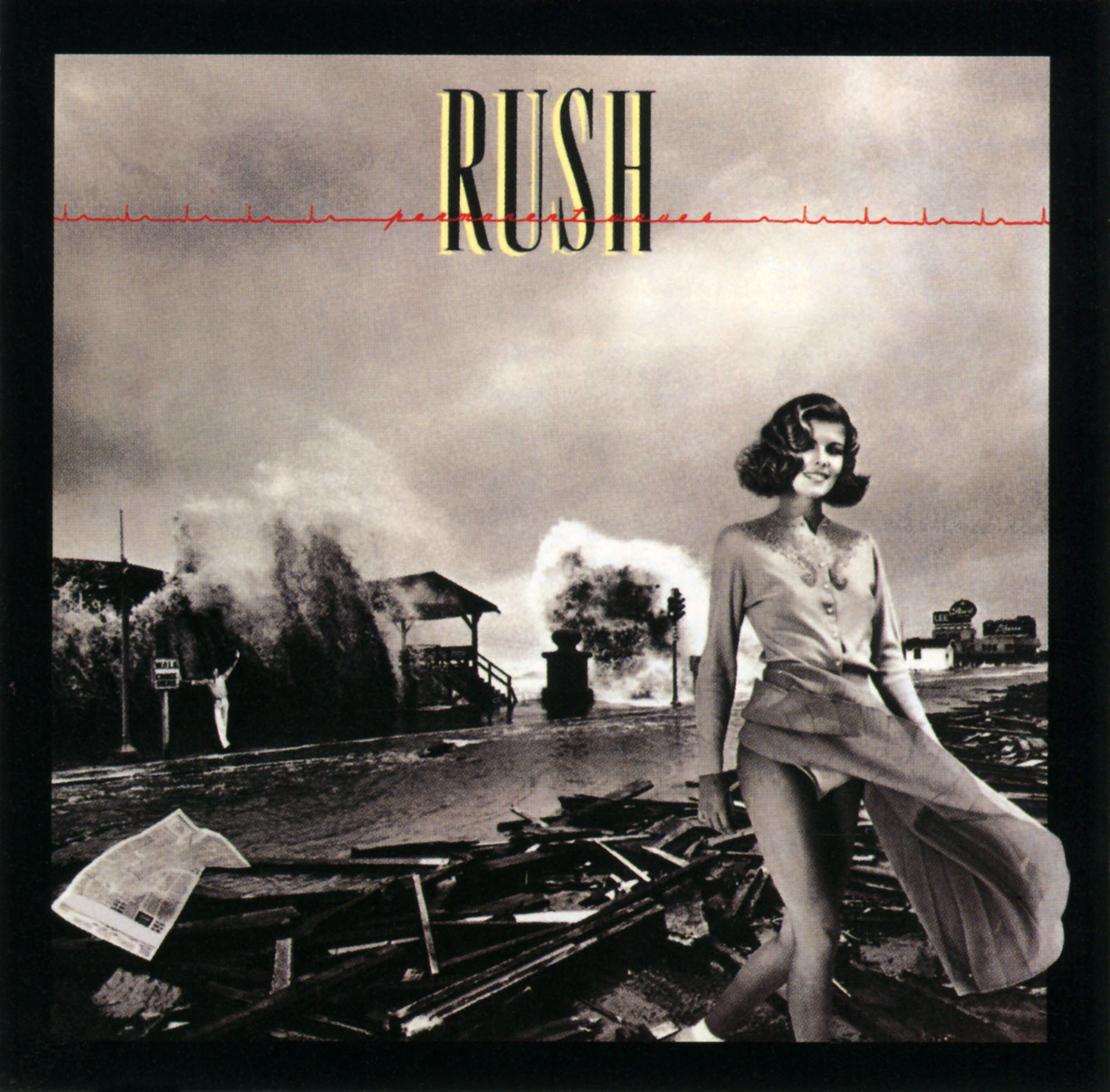
Rush chose a path that's clear with the emotional feedback of new wave modern music.   The band would debut some new material during a mini-tour of the US supporting their previous album 'Hemispheres'.  For 'Permanent Waves', Terry Brown did the arrangements, production, and mixing with engineer Paul Northfield and assistant engineer Robbie Whelan.  The sessions at  at Le Studio in Morin Heights, Quebec featured Geddy Lee on lead vocals, bass guitar, Oberheim polyphonic, Minimoog, Taurus pedal synthesizer, and OB-1;   Alex Lifeson on electric and acoustic six- and twelve-string guitars, and Taurus pedals;   and Neil Peart on drums, timpani, timbales, orchestra bells, tubular bells, wind chimes, bell tree, triangle, crotales, and cover concept;    with Erwig Chuapchuaduah on steel drums;  Hugh Syme providing piano on "Different Strings", as well as art direction, design, and cover concept.  Paula Turnbull was the cover girl.  

Peart reveals:    "Le Studio is a wonderful place, nestled in a valley of the Laurentian Mountains about sixty miles north of Montreal. It is situated on 250 acres of hilly, wooded land, surrounding a private lake. At one end of the lake is the studio, with the luxurious and comfortable guest house situated at the other, about a mile away. We commuted by bicycle, rowboat, on foot, or in laziness or bad weather, by car. We arrived in the full, ripe glory of autumn, and were there through a genuine Indian Summer, and we heralded the coming of snow and winter, all in our four week stay! The recording facilities are, of course, nothing les than excellent in every way. The room itself features one whole wall of glass, overlooking a spectacular view of the lake and the mountains. This is in direct contrast to most studios, which are more in the way of being isolated, timeless vaults, which in that respect of course, are not necessarily bad. Here, though, we worked in the light of the sun, and one could watch the changing seasons in idle moments, rather than a dimly lit, smoky view of musical and electronic hardware. Our engineer, Paul Northfield, soon proved himself to be a helpful, capable, and congenial member of the project, as did all of the excellent people who were employed there. I don't think we have ever been so well treated anywhere...We began our great labors by working on the individual sounds of the instruments. This consists of the musician banging away at his particular object, while the engineering types experiment with different microphones, mic positionings, and their own arcane world of knob-twiddling, faders, echoes, equalization, etc., refining the sound to a true and/or pleasing reproduction of the original. Once this has been accomplished, the three of us will play together, probably going over the song we plan to record first, and considerably more work is put into the sounds, to make them sit together properly ... Often times. Alex and Geddy will have a musical idea, maybe individually. They'll bring it into the studio and we'll bounce it off one another, see what we like about it, see if we find it exciting as an idea and then we get a verbal idea of what the mood of it is. What the setting would be. If I have a lyrical idea that we're trying to find music for, we discuss the type of mood we are trying to create musically. What sort of compositional skills I guess we'll bring to bear on that emotionally. The three of us try to establish the same feeling for what the song should be. Then you bring the technical skills in to try to interpret that properly, and achieve what you thought it would... I came into [writing the lyrics] by default, just because the other two guys didn't want to write lyrics. I've always liked words. I've always liked reading so I had a go at it. I like doing it. When I'm doing it, I try to do the best I can. It's pretty secondary. I don't put that much importance on it. A lot of times you just think of a lyrical idea as a good musical vehicle. I'll think up an image, or I'll hear about a certain metaphor that's really picturesque. A good verbal image is a really good musical stimulus. If I come up with a really good picture lyrically, I can take it to the other two guys and automatically express to them a musical approach ... The work continued as we plowed through a mountain of overdubs. Alex and I splashed oars in the lake with shivering hands to record the "Tide Pool" effects, voices and guitar sounds were sent out over the lake to make use of it's natural echo, the tympani was recorded outdoors, guitar amps were strung all over the building to take advantage of as many different sounds as possible. The parade of guitars, synthesizers, vocals, percussion, and experiments went on, and the days wore away. But... we finished early! We had about three days at the end to spare, in which we could make some rough mixes of the songs to take home and listen to before the real mixing began. As straightforward and logical as this again must sound, it was the first time that such a thing had ever happened. In the past we had always had to begin mixing the day after the recording was finished, giving no opportunity to get away from the material, and return to it with a fresh, objective ear."


'Permanent Waves' became a major breaththrough, charting at number thirty-eight in the Netherlands;  twenty-six in Sweden;  twenty-one in Norway;  four in the US; and number three in Canada and the UK.  


http://www.rush.com/


"The Spirit of Radio"
https://www.youtube.com/watch?v=pHTsIiyIg8I
https://www.youtube.com/watch?v=0b-vC_Hcgps


Begin the day
With a friendly voice
A companion, unobtrusive
Plays that song that's so elusive
And the magic music makes your morning mood 

Off on your way
Hit the open road
There is magic at your fingers
For the spirit ever lingers
Undemanding contact
In your happy solitude 

Invisible airwaves 
Crackle with life 
Bright antennae bristle 
With the energy 
Emotional feedback 
On a timeless wavelength 
Bearing a gift beyond price, 
Almost free

All this machinery
Making modern music
Can still be open-hearted
Not so coldly charted
It's really just a question
Of your honesty 

One likes to believe
In the freedom of music
But glittering prizes
And endless compromises
Shatter the illusion
Of integrity 

For the words of the profits 
Are written on the studio wall, 
Concert hall,
Echoes with the sounds, of salesmen

https://www.youtube.com/watch?v=AlTVbx6b9L8


"Freewill"
https://www.youtube.com/watch?v=bpOyQhgM1FU


There are those who think that life has nothing left to chance
A host of holy horrors to direct our aimless dance

A planet of play things
We dance on the strings
Of powers we cannot perceive
'The stars aren't aligned
Or the gods are malign...'
Blame is better to give than receive

You can choose a ready guide in some celestial voice
If you choose not to decide, you still have made a choice
You can choose from phantom fears and kindness that can kill
I will choose a path that's clear
I will choose freewill

There are those who think
That they were dealt a losing hand
The cards were stacked against them
They weren't born in Lotusland

All preordained
A prisoner in chains
A victim of venomous fate
Kicked in the face
You can't pray for a place
In heaven's unearthly estate

You can choose a ready guide in some celestial voice
If you choose not to decide, you still have made a choice
You can choose from phantom fears and kindness that can kill
I will choose a path that's clear
I will choose freewill

Each of us
A cell of awareness
Imperfect and incomplete
Genetic blends
With uncertain ends
On a fortune hunt that's far too fleet

You can choose a ready guide in some celestial voice
If you choose not to decide, you still have made a choice
You can choose from phantom fears and kindness that can kill
I will choose a path that's clear
I will choose freewill


"Jacob's Ladder"  
https://www.youtube.com/watch?v=vvsw_Jq4UcE


"Natural Science"
https://www.youtube.com/watch?v=_0EFpL7eTCc


'Permanent Waves'
full album:


https://myspace.com/officialrush/music/album/permanent-waves-15555

Permanent Waves from Rush on Myspace.


All lyrics written by Neil Peart; all music composed by Geddy Lee and Alex Lifeson.

Side one
1. "The Spirit of Radio"   4:59
2. "Freewill"   5:24
3. "Jacob's Ladder"   7:28
Side two
4. "Entre Nous"   4:37
5. "Different Strings"   3:50
6. "Natural Science"  9:17
I: Tide Pools  2:09
II: Hyperspace  2:22
III: Permanent Waves  4:46


Tuesday, September 3, 2013

pieces of eight


Styx came alive and spread their wings with the renegade riffs of this progressive pop powerhouse. Building on the success of 'The Grand Illusion', the band produced the sessions for 'Pieces of Eight' at Paragon Recording Studios and St. James Cathedral in Chicago with Dennis DeYoung on keyboards, synthesizers, pipe organ, and vocals; Chuck Panozzo on bass guitar and vocals; John Panozzo on drums and vocals; Tommy Shaw on guitar, mandolin, and vocals; and James Young on guitar and vocals.   

Shaw considers:    "'Grand Illusion' and 'Pieces Of Eight', they didn’t really set out to be concept albums. But they seemed to be. It was just a matter of consciousness. We were all so on the same page on 'Grand Illusion' and 'Pieces Of Eight' that we kind of agreed on everything—we had similar outlooks on life, we were all going through the same thing, and we were a team." 


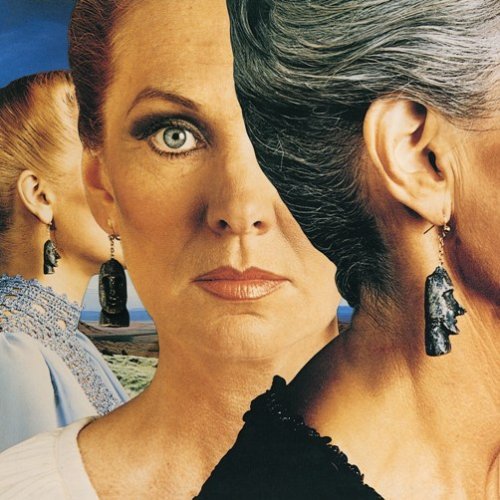
Chuck Pannozzo reveals:    "The album cover I was most responsible for, was the iconic 'Pieces of Eight' album cover with the ladies on the cover. The funny part of that was that I went to Los Angeles, California, and spoke to some guys about the concept and when I went back to Chicago, somebody who worked with the band thought it was too big. I told them that it wasn't a postage stamp, it was an album cover. After some wrangling, everybody agreed and I am proud of it. It is certainly one of the most iconic and identifiable album covers out there."

DeYoung reflects:    "It's really very highly intellectual - it's three old broads on Easter Island, as far as I can tell looking at this thing. Here's the deal: when the people who designed this album cover, Hipgnosis, they're English - I think that explains most of it - when they showed me this album cover, I gotta tell you, I hated it. "Why do you have these old women on our album cover?" was the first thought that came to my mind. But here's the deal (and of course, now that I've gotten older, these women are starting to look pretty good to me): since pretty much what 'Pieces of Eight' is about is not giving up your dreams just for the pursuit of money and material possessions, this album cover symbolizes these women who are affluent by their demeanor and they way they're dressed, and they all have these earrings on which are of the Easter Island statues, made famous by Thor Heyerdahl in Aku-Aku, and what that supposedly symbolizes is that these women - imagine them all belonging to the same country club, where the status symbol is to have these earrings, the statue of these little Easter Island earrings, as a symbol of their achievements in life, a symbol of their monetary success and materialism, yet Easter Island, as we all know, the statues themselves symbolize a lost civilization, which somehow built these wonderful monuments, and has completely disappeared without any trace. So I suppose the moral of the story is, when you just pursue this sort of thing, this monetary gratification, that perhaps the ultimate goal would be extinction."


'Pieces of Eight' matched the triple-platinum success of 'The Grand Illusion', going to number thirty in Sweden and number six in the US.  


http://www.styxworld.com/


"Renegade" hit number sixteen in the US.  

Shaw reveals:  "At the time, I was really into the Alan Parsons Project. There was just a lot of really great music production going on. If you lived during that time, you would put your headphones on, get those Koss headphones, and listen to Pink Floyd—things that are panning around left and right—and if you would just smoke a joint, and you were really in tune with that, there was this trip you could go on. I loved the way those songs were engineered. They were great songs, and they were beautifully recorded. So when I started “Renegade,” it was kind of like an Alan Parsons song, this slow dirge. You know how the beginning is, with those three-part harmonies? It was like that all through the verses, but it was slow. It was a real dirge-y kind of thing. And I was real proud of it. I took it to the guys in the band and they liked it, too, but they said, “Let’s bring up the energy.” So as soon as we did that, we felt like we were onto something."


"Great White Hope" 


"Blue Collar Man (Long Nights)" went to ninety-eight in Australia, twenty-one in the US, and number nine in Canada.  Shaw recalls:  "I was on a deep-sea fishing trip. It must have been at the end of Crystal Ball, or after the Grand Illusion tour. We were out all day, and I must have smoked a lot of pot that day—I haven’t done any of that in 21 years—but you know, we were on this boat, and on the way up there, a girl asked us, “You guys want some kona buds?” “Kona buds?” It was this lady taxi driver taking us out there. And we were like, “Sure!” So, she passed this joint around, and it was the strongest pot I’ve ever smoked in my life. When we booked this fishing boat, we said, “We are going to be partying. Because we just finished this tour, and we have a cooler and drinks, and I hope you don’t mind if we party.” Well, we smoked this pot, and by the time we got on the boat, we were paralyzed. We were, like, stone quiet for the first hour and a half. We finally started coming around a little bit and told [the boat owner] what happened. He’s like, “I wondered what happened to you guys, because you said there was going to be this big party, and you guys haven’t said a word.” We’re all sitting there in this daze from this pot, and the boat was making this sound: “mmm mmm mmm.” You are moving slowly when you are trolling through the water. The engines are at really low RPMs. The sound just sort of tattooed itself onto my psyche. And when I got back to the room, I got the acoustic guitar and wrote the music to “Blue Collar Man.” 

http://www.youtube.com/watch?v=lzk9zpnOJvM


http://www.youtube.com/watch?v=CDM6v1XhWEg


'Pieces of Eight' full album

https://www.youtube.com/watch?v=he94OI4UKm0


Side One
"Great White Hope" (James Young) – 4:22
Lead vocals and lead guitar: Young
"I'm O.K." (Dennis DeYoung, Young) – 5:41
Lead vocals, synthesizer solo and pipe organ: DeYoung
Lead Guitar: Tommy Shaw
"Sing for the Day" (Shaw) – 4:57
Lead vocals, mandolin, all guitars: Shaw
"The Message" (DeYoung) – 1:08
All synthesizers: DeYoung
"Lords of the Ring" (DeYoung) – 4:33
Lead vocals and middle guitar solo: Young
Ending guitar solo: Shaw
Synthesizer solos: DeYoung

Side Two
"Blue Collar Man (Long Nights)" (Shaw) – 4:05
Lead vocals and lead guitar: Shaw
"Queen of Spades" (Young, DeYoung) – 5:38
Lead vocals: DeYoung
Lead guitar: Young
"Renegade" (Shaw) – 4:13
Lead vocals: Shaw
Lead guitar: Young
"Pieces of Eight" (DeYoung) – 4:44
Lead vocals: DeYoung
Lead guitar: Shaw
"Aku-Aku" (Instrumental) (Shaw) – 2:57
Lead guitar and whisper chant: Shaw