Nick Lowe reunited with Rockpile to record two bona fide new wave roots rock classics simultaneously. After the critical acclaim of his debut 'Jesus of Cool / Pure Pop For Now People' , Lowe was caught up in a whirlwind of activity that included producing, touring, and recording: "Back in those days if you wanted to be in the pop business – and it was a much less crowded business then – you would get on the end of a conveyor belt that would move very slowly towards some point in the distance where you would get your big break. Once you were on this conveyor belt you would learn your craft in total anonymity: you had to write songs if you wanted to stick around and learn how to work a room and how to do a show. It involved a lot of riding in vans and playing thousands of gigs until suddenly the ol’ chance came along for you your fellow travelers. My chance had come a year before 'Labour of Lust' and that was when the real work started. There was no hint that it was going to come up, it just suddenly did. 'Labour of Lust' was my ticket to the next stage, which was some sort of international recognition. I was signed to Columbia earlier by the great Gregg Geller, but then Rockpile had been doing thousands of gigs in America and when we came back to England I’d go to the studio with Elvis Costello or somebody else. We just seemed to be working at this incredible pitch. My time on the conveyor belt was spent living in the most appalling sort of squalor. But we were young, you know, and full of pep. It was fabulous, really was fantastic. When all these tours in America started there were shows back to back, with lots of driving hundreds of miles, and then getting back into some vehicle and driving frequently back the same road you traveled the previous day. Sitting here in my cozy London pad, I don’t have any desire to go back to that, but at the same time it was terrific fun and I am ever so glad I did it. But I cannot remember having a plan at all. It seemed that [ 'Labour of Lust' ] was just the next thing on the sheet...When we weren’t working on [ 'Repeat When Necessary' and 'Labour of Lust' ], I was either with Elvis Costello doing Armed Forces or we were on tour in the states. They were both essentially Rockpile records, but we weren’t allowed to call them Rockpile records because Edmunds was signed to Led Zeppelin’s label, Swan Song. It was a shame we couldn’t distill the best tracks from 'Repeat When Necessary' and 'Labour of Lust' . I think it would’ve been a pretty good record." Lowe produced the sessions for 'Labour of Lust' at Eden Studios in London, England and Love Studios in Helsinki, Finland which featured Nick Lowe on bass and vocals; Dave Edmunds on rhythm and solo guitars and backing vocals; Billy Bremner on rhythm and solo guitars and backing vocals; and Terry Williams on drums; with Huey Lewis adding harmonica on "Born Fighter"; Bob Andrews playing Oberheim on "Endless Grey Ribbon"; Elvis Costello on backing vocals for "American Squirm"; Bruce Thomas on bass for "American Squirm"; and Pete Thomas on drums for "American Squirm". At the same time, the same lineup recorded Dave Edmunds' 'Repeat When Necessary' .
'Repeat When Necessary' would make it to number fifty-four in the US and thirty-nine in the UK while 'Labour of Lust' worked its way to number forty-two in the UK and thirty-one in the US. Lowe expressed at the time: " I think there's a lot of people who could do what I'm doing. I don't think that I'm particularly talented. What I have got which a lot of people don't is an eye for style and for people with style: I can recognize it I don't even think that I have it but I can certainly recognize people who have got it, which I think is a talent in itself. So, I'm just a jack of all trades and master of none. I'm like a music fan and I'm in this position where I can do all of this. I have a very temporary attitude to the whole thing. I don't take it seriously and I don't think it will last forever. As soon as I stop thinking like that, I'll be bad. I don't want to go through all that pop star crap." http://www.nicklowe.net/
'Born Fighters' documentaryhttps://www.youtube.com/watch?v=l8LbhEq7B-8
VIDEO
"Cruel to Be Kind" became Lowe's only US hit, peaking at number twelve. He admits: " Originally it was sort of a rip-off of “The Love I Lost” by Harold Melvin and the Blue Notes. We weren’t good enough to play it that way, but it was fun to attempt to play that sophisticated stuff. We tried to record it on the last Brinsleys album that was really quite poor. But when Gregg Geller heard the Brinsley demo he subtly put pressure on me, as only he can...I thought Gregg was joking to start with because I was sort of in my new rude, bad boy phase. He slowly tightened the old noose every time I saw him and asked if I had recorded it yet. I remember I had to come into the studio and tell the boys, “I’m under orders and we have to record this old Brinsley song.” I told them that it would only take a few minutes. Then Edmunds started putting all these harmonies on it and it did start to sound like something. We really started to have fun with it. The rest, as they say, is history. The funny thing about that song is that it’s a really good little tune. I know that it’s good, not because it was a top 20 hit, but you can do it so many different ways. I can do it on an acoustic guitar or I’ve done more of a punk version, all different sorts of ways. Right now I’m doing it more the Brinsley way, with that sort of Philly thing with my band. I heard the hit version the other day and I thought ‘Crikey! This isn’t how we are doing it now.’ It’s a really cool little tune. I know a lot of people think that for one hit wonders, like I suppose I am, that one tune can be a real millstone around the neck. They think you can’t get out from under it. There is this one thing that puts food on the table and shoes on your kids’ feet, but you loathe it. Well I don’t feel that at all about “Cruel to be Kind.” I love doing it, it cheers people up and it’s a cool little tune, and I’m very lucky. So thanks to Gregg for making me do it! ... I remember coming to Los Angeles when it was a hit, and did that thing where you change the radio station, and it was on about two or three at the same time. You could hear it starting on one station and finishing on another. Amazing."
The video reimagines Lowe's marriage to Carlene Carter, who appears as herself. Dave Stewart also makes an appearance as the chauffeur.
https://www.youtube.com/watch?v=b0l3QWUXVho Oh, I can't take another heartache Though you say you're my friend, I'm at my wits end
You say your love is bona fide
But that don't coincide with the things that you do
And when I ask you to be nice, you say
You gotta be Cruel to be kind in the right measure
Cruel to be kind it's a very good sign
Cruel to be kind means that I love you
Baby, you gotta be cruel to be kind
I do my best to understand, dear But you still mystify and I want to know why
I pick myself up off the ground
To have you knock me back down again and again
And when I ask you to explain, well, you say
You gotta be Cruel to be kind in the right measure
Cruel to be kind it's a very good sign
Cruel to be kind means that I love you
Baby, you gotta be cruel to be kind
Well, I do my best to understand, dear But you still mystify and I want to know why
I pick myself up off the ground
To have you knock me back down again and again
And when I ask you to explain, well, you say
You gotta be Cruel to be kind in the right measure
Cruel to be kind it's a very good sign
Cruel to be kind means that I love you
Baby
You gotta be Cruel to be kind in the right measure
Cruel to be kind it's a very, very, very good sign
Cruel to be kind that means that I love you
Baby, you gotta be cruel
So, baby, you gotta be cruel
Said, baby, you gotta cruel to be kind
VIDEO
"Cracking Up"
VIDEO "Born Fighter"
VIDEO "You Make Me"
VIDEO "Switchboard Susan"
VIDEO "Love So Fine"
VIDEO 'Labour of Lust' full album:
https://www.youtube.com/playlist?p=ALGLx1orRGw4WQhFGSnNe99tNNfvgYxREJ http://www.last.fm/music/Nick+Lowe/Labour+of+Lust VIDEO
U.K. version
All songs by Nick Lowe, except where noted.
"Cruel to Be Kind" (Lowe, Ian Gomm) – 3:31
"Cracking Up" – 2:59
"Big Kick, Plain Scrap!" – 2:28
"Born Fighter" – 3:09
"You Make Me" – 1:53
"Skin Deep" – 3:12
"Switchboard Susan" (Mickey Jupp) – 3:50
"Endless Grey Ribbon" – 3:17
"Without Love" – 2:29
"Dose of You" – 2:21
"Love So Fine" (Lowe, Dave Edmunds, Billy Bremner, Terry Williams) – 3:52
U.S. version
All songs by Nick Lowe, except where noted.
"Cruel to Be Kind" (Lowe, Ian Gomm) – 3:31
"Cracking Up" – 2:59
"Big Kick, Plain Scrap!" – 2:28
"American Squirm" – 2:29
"You Make Me" – 1:53
"Skin Deep" – 3:12
"Switch Board Susan" (Mickey Jupp) – 3:50
"Dose of You" – 2:21
"Without Love" – 2:29
"Born Fighter" – 3:09
"Love So Fine" (Lowe, Dave Edmunds, Billy Bremner, Terry Williams) – 3:52
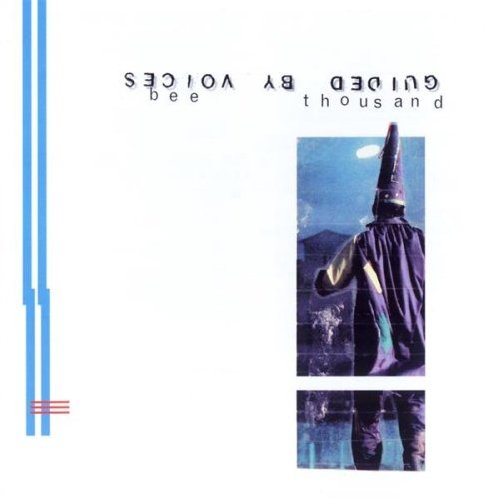
Guided By Voices were better than ever with the incurable basement belief of these lo-fi lessons and true pop confessions (or something like that). The Dayton group had formed in 1983 and began making their own records in limited pressings ('Devil Between My Toes' 'Sandbox' 'Self-Inflicted Aerial Nostalgia' 'Same Place the Fly Got Smashed' Propeller' 'Vampire on Titus' 'Bee Thousand' were 'All That Glue' and 'Instructions for the Rusty Time Machine'. The raw recordings were finished in three days and featured Robert Pollard on vocals, guitar, and other instruments; Jim Pollard on bass guitar and feedback; Tobin Sprout on bass guitar, guitar, piano, and other instruments; Mitch Mitchell on guitar; and Don Thrasher on drums and percussion; with Dan Toohey and Greg Demos on bass guitar; Kevin Fennell on drums and percussion; and Randy Campbell on backing vocals.
Robert Pollard reflects: "Most record stores wouldn't have those [early] records. There was even a label guy who put our first record out -- his label was called I Wanna Records -- Rev Cool, he called himself. When we made our first record, we didn't even have a label, so we put his label on our record. He got all pissed off about it. Then he did a compilation record of all the bands that were on his label, and he didn't put us on there. Now he's kicking himself in the ass, because he'd probably be getting a lot of money from those records. But anyway, most record stores wouldn't even put our records in the store. Then a friend of mine, Greg Demos, who was actually playing bass, not only did he take them to record stores but he actually started sending them out for review. We started getting some pretty good reviews on some of those early records. We got a good review in Spin, a "Spin Underground" thing. But I just totally said, "I'm not going to do anything with this stuff... I'm afraid" [laughs]. I was, like [whispers], "we suck." [Laughs] I thought we did suck. Maybe we did suck. I was really afraid of big cities like New York and Cleveland, because those were the rock and roll towns. I thought if Cleveland and New York heard our stuff, we'd be laughed off the planet. I really did, that's why I didn't send anything out. But critics seem to like us. We have a story [laughs] ... I have an addiction to songwriting. You know, there are people who like to play softball all the time, or basketball, or darts, or whatever. I like to write songs, so when I'm here at home, I get up in the morning and make myself some coffee, and I just get my guitar and turn on my tape recorder. I really love to write songs. Another reason is that I'm bored with music for some reason. I don't know what it is. I don't know if it's because we've become part of "rock" now, but when I was just a fan, I was an avid, enthusiastic record buyer and listener. Now I'm just bored, because I've found everything, I think. When I go into record stores, I don't look at the new-music section too much. It's pretty pathetic. There are some good underground bands coming from the same place we are, bands we've known for a long time that are still doing good stuff. Bands like Superchunk, Pavement, Sebadoh, and The Grifters are still doing good stuff. But if you look for good new music, it's just not there, so I'm always looking for old '60s and '70s compilations. If you're looking for a particular type of song that's not around or that doesn't exist anymore, the only thing you can really do is try to write it yourself, and try to find it in your own mind. So that's why I write, 'cause I'm addicted...When you write short songs, you can write more of 'em. A lot of bands like to labor over one song until they get it perfect, but I can't stand it. I don't have the patience to try to make it perfect, because it's pointless to try to labor over it. You can always make it better. The only important thing is that you capture what you heard in your head. It doesn't matter if it fits any kind of MTV standard, or radio standard, or whatever. You do the song, then you move on to the next one. That way, you get a lot of 'em out, and it's more fun."
'Bee Thousand' didn't chart; but it was named Album of the Year by the Village Voice and led to a deal with Matador Records.
http://www.gbv.com/ I Am A Scientist
https://www.youtube.com/watch?v=zN9x6zckn18 Hot Freaks
https://www.youtube.com/watch?v=VlcuOU1tAUg 'Bee Thousand' full album:
VIDEO "Hardcore UFO's" – 1:54
"Buzzards and Dreadful Crows" (Jim Pollard, R. Pollard) – 1:43
"Tractor Rape Chain" – 3:04
"The Goldheart Mountaintop Queen Directory" – 1:45
"Hot Freaks" (R. Pollard, Tobin Sprout) – 1:42
"Smothered in Hugs" (Mitch Mitchell, J. Pollard, R. Pollard) – 2:59
"Yours to Keep" – 1:15
"Echos Myron" – 2:42
"Gold Star for Robot Boy" – 1:39
"Awful Bliss" (Sprout) – 1:12
"Mincer Ray" (Sprout) – 2:21
"A Big Fan of the Pigpen" (Randy Campbell, J. Pollard, R. Pollard) – 2:09
"Queen of Cans and Jars" – 1:55
"Her Psychology Today" (Mitchell, J. Pollard, R. Pollard, Sprout) – 2:04
"Kicker of Elves" – 1:04
"Ester's Day" (Sprout) – 1:51
"Demons Are Real" (Mitchell, J. Pollard, R. Pollard, Sprout) – 0:48
"I Am a Scientist" – 2:30
"Peep-Hole" – 1:25
"You're Not an Airplane" (Sprout) – 0:33
VIDEO 'Bee Thousand: The Director's Cut' came out ten years later with a thirty-three track early version of the album with other songs that made it onto the final version and two subsequent EP's, fifty-five tracks in all!
http://www.gbvdb.com/album.asp?albumid=1766
Hole got what they wanted when they regrouped and hit the majors, revealing their softer side with the raw and righteous nirvana of this grunge pop classic. After the tour for their debut album 'Pretty on the Inside'
The sessions for 'Live Through This' took place at Triclops Sound Studios in Marietta, Georgia with producers Paul Q. Kolderie and Sean Slade. The album features Courtney Love on vocals and guitar; Eric Erlandson on guitar; Kristen Pfaff on bass, piano, and backing vocals; and Patty Schemel on drums and percussion; with backing vocals by Kletter and Kurt Cobain; and additional mixing by Scott Litt and J Mascis.
Love would reveal at the time: "I want this record to be shocking to the people who don't think we have a soft edge, and at the same time, [to know] that we haven't lost our very, very hard edge...There's a part of me that wants to have a grindcore band and another that wants to have a Raspberries-type pop band ... Aesthetically we've changed a lot...I came into this band with a history of writing jangly REM songs. I had a real chip on my shoulder. I said, 'Fuck it; I'm going to move to L.A. and be the Melvins.' In Minneapolis, Kat had been giving me shit 'cause I didn't like the Butthole Surfers. So I was like, 'You want hard? I'll show you hard. The hardest!' I think on some level I accomplished this; but the consequences were we didn't show any...this is a lame word...'craftsmanship'. One of the things I have a problem about women is, to me it isn't enough to just stand up with my guitar and say 'I'm angry, and that's rare. Give me a lot of attention!' I like the 'girl thing'. I work the 'girl thing'. But if you can't write a song and go, if the guy in the Pixies or Kurt or Neil Young...whoever you admire...wrote this song, would it still be good? If a guy wrote this song, would it still stand up?"
'Live Through This' did more than that. The music was so powerful that many accused her of stealing the songs from her recently departed husband (and worse). Schemel says: "There is that myth that Kurt wrote a lot of our songs— it's not true. Eric [Erlandson] and Courtney wrote 'Live Through This' ." The album went to number fifty-two in the US; thirty-nine in Germany; twenty-nine in the Netherlands; twenty-two in Sweden; thirteen in Australia and the UK; and number eight in Belgium. It was praised by critics and lauded as album of the year by several music publications. It went multi-platinum and has sold over two million copies worldwide. Love drew criticism for her performances by simulating the suicide of her husband on stage. She would explain: "What do I do? Do I ignore it, do I acknowledge it, is there a middle ground? What can I do? Do I sit here, play Betty Crocker, and pretend that I don't write music, and die?...It's more catharsis. It's catharsis and there's not a thing I could or would take back because it was for me, not for them, and yet they get something out of it. I'm not a clown; I would never dishonor my husband, and I don't think I have...The name of my band came from a conversation I had with my mother. People always think it's obscene. And I guess it has that on top of it. As someone who always wanted to be a poet, there was no money in it. I've always been looking for the quadruple entendre, you know, the barge, you know, what Shakespeare could do. And my mother said to me 'Now Courtney, you know you can't walk around with a hole in yourself just because you had a bad childhood.' And I remember thinking 'What a brilliant name, HOLE.'" http://www.holemusic.com/ https://www.facebook.com/Hole http://hole.gomerch.com/ Violet
VIDEO Miss World
VIDEO Asking For It
'Live Through This' full album:
All songs written by Courtney Love, Eric Erlandson, except where noted. 1. "Violet" 3:24
2. "Miss World" 3:00
3. "Plump" 2:34
4. "Asking for It" 3:29
5. "Jennifer's Body" 3:42
6. "Doll Parts" Love 3:31
7. "Credit in the Straight World" Stuart Moxham 3:11 8. "Softer, Softest" 3:28
9. "She Walks on Me" 3:24
10. "I Think That I Would Die" Love, Erlandson, Kat Bjelland 3:36 11. "Gutless" 2:15
12. "Rock Star (Olympia)" 2:42
VIDEO
The Soft Boys chiseled open a can of funky psychedelia and waded crabwise through the ventilator with the farcical fury of this jagged metallic folk. The group had formed in Cambridge, England as Dennis and the Experts with Robyn Hitchcock, Rob Lamb, Andy Metcalfe, and Morris Windsor. Hitchcock reveals the genesis of the band: "The Soft Boys came into my head in Cambridge, in the hot, dry summer of 1976 while punk was being conjured up by a small group of artists and villains in London. My idea was to concoct a tribe of translucent, bloodless man-things that had awesome powers but were largely invisible: stalkers of the hypothalamus, erotic guerrillas that would transform people's thoughts in a different way from the bludgeoning M.O. of UK punk. The front man would be a robot, for good measure; being the songwriter and lead guitarist I would supply the material and direct the music, while he, Golem-like, would be the cyber-darling of the crowds. I saw The Soft Boys as upmarket versions of Morlocks from HG Wells' Time Machine crossed with William Burroughs' slithery boys on bikes. At my table in the Portland Arms, where at the folk club each Saturday I tormented the local bluegrass community with my three-song floor-spot (the MC Nick Barraclough once introduced me as 'Cambridge's answer to music'), I hunched over my Guinness and sketched out my plans. When it came to the actual birth of the band, the reality was a little different. My friend James 'The Great One' Smith had pointed out to me some of the great local players who were already on the ladder to professionalism. On his advice, I met Morris Windsor in his dark eyrie, where he gave me some coffee and we leafed through copies of Creem magazine together, not saying much. Then I found Kimberley Rew, appearing through a trapdoor with shoulder-length hair and an ironic (or was it?) grin; he seemed amused that I was me and he was him. Could it have been the other way 'round? From my performance-art perspective, living for my weekly spots at folk clubs, these guys were like Ringo Starr and Eric Clapton, as yet unused. Matthew Seligman smiled charmingly at me across an empty plate in another medieval chamber, and Andy Metcalfe loomed out of the shadows to play bluegrass mandolin at the Portland Arms occasionally. I could see these people but I couldn't get at them. The true Soft Boy is almost invisible, only appearing at twilight. But courtesy of Rob Lamb (half-brother of Charlie Gillett, DJ and man of great taste, who sadly died earlier this year) I eventually recruited them all at different points into the band. The early Soft Boys featured Alan 'Wang Bo' Davies on guitar and was light in touch; we were crystalline guitars over a nimble rhythm section. Our first EP Give It to The Soft Boys (1977) shows us trying out whatever we thought would work, and on that record it did. When Kimberley Rew replaced Wang Bo, our sound mutated into a ferocious kind of folk-metal, not the easiest of wares to peddle to a UK audience in 1978, which had only the year before been brutally shaved of whiskers and bell-bottoms and converted to punk. What did we play back then? Bowie's 'Station to Station,' Lennon's 'Cold Turkey,' Cream's 'Sunshine of Your Love,' and Rob Lamb's ace, the John Cale arrangement of 'Heartbreak Hotel'. There was always a hard rock element to the SB's, but we were innocent of marketing at that point. We played what we felt like playing. Gradually my own songs developed: 'Give It To The Soft Boys,' 'The Face Of Death,' 'Where Are The Prawns?' and 'The Pigworker'. We spent a month arranging a group composition called 'Hear My Brane' which was always a favourite. Morris and Andy inclined to The Beach Boys and Steely Dan; Andy, Kimberley and I were big into Fairport, Richard Thompson, and The Albion Band; while I was magnetized by Syd Barrett and Captain Beefheart, but we all loved the Beatles, which marked us out, irrevocably, from the permitted heroes of punk. As we learned to play electric music, we festooned it with harmonies and booby-trapped it with odd time signatures. Meanwhile, Sham 69 were singing "If The Kids Are United, They Will Never Be Divided". Wang Bo gave way to Kimberley and The Soft Boys spread in a very light film across Britain. Outside of Cambridge where we had incubated, and London where we had first crawled after hatching out, we found ourselves in a bleak and alien land. Huddled at the foot of a slag heap in Grantham (birthplace of Margaret Thatcher) in the drizzle, then watching Kimberley pad through Scarborough in his striped blazer, I wondered how long we could go without being beaten up. Would we be mugged for our cucumber sandwiches and thermoses? After a gig in Sheffield one person clapped and one person told us to fuck off. We finally got an encore in Yorkshire in late 1980. As we sharpened the guitar sound we started delving back into Steeleye Span and Fairport Convention, whilst picking up the odd droppings from Pere Ubu, whom we supported in autumn 1978. This further polarized listeners; most couldn't stand it, but the occasional fellow (it was mostly fellows) would become apoplectic with joy and go into spasm. Having spent months and thousands of pounds trying to record 'Sandra's Having Her Brain Out' and other songs of mine from that era, our record company dropped us before the deal was even signed. No one rushed to take their place, so 'A Can of Bees' was released on our own label in spring 1979. Whilst it was a hit with neither the press (apolitical, impenetrable and 3-part harmonies to boot - sorry, lads) nor many of our listeners, it was the best approximation yet of what we were playing at the time, and it did make its way to a swathe of US record shops where young musicians working there behind the counter would listen to it in amazement, sometimes putting it on to clear the shop at closing time. I've worked with a few of them since. The 'Can of Bees' tour was a demoralizing experience: long silences in the van punctuated by Kimberley sighing, 'Looks like rain.'"
Rew remembers: "Robyn Hitchcock arrived in the medium-sized college town of Cambridge, England in 1975 to look for musicians for his band- not an obvious choice of location as a hotbed of talent but none of this would apply if he hadn't. I first heard him at some weekly informal musical get-togethers at the Great Northern Hotel run by a man called Sunshine Joe, with a backing band he later described as 'people who were living in my house'. Robyn wore black leather trousers and jacket, long hair and beard, and either glowered at the audience or, then as now, launched into lightningly impromptu song introductions which took the subject matter on a season ticket to Unexpectedsville. At the time I was renting a room in a terraced house whose basement contained Spaceward recording studio. Robyn arrived and recorded and we met in the kitchen where he stubbed his fag on the lino and was rebuked by recording engineer Mike Kemp. Mike subsequently invented the 'Sadie' hard disk recorder and retired to the Algarve. Morris Windsor and Rob Lamb (and original Waves singer Rob Kelly) were in local rock outfit Mad Hatter whom I heard at a cricket pavilion on one of those balmy summer night college shindigs. Rob and Morris went on to form Sheboygan (which I thought for a long time was a quote from Surfin' USA, but then found was a generic name for 'Nowheresville') and discovered pub-rock. The next year, 1976, in pursuit of a 'white soul' style, they teamed up with Robyn and Andy Metcalfe to form Dennis and the Experts and began to rehearse in Robyn's front room. Uneasy about the way things were shaping, in December Rob quit (subsequently forming the respected Ducks on the Wall, whose Adrian 'Hots' Foster gave us the phrase 'I've got the hots for you'). Except Robyn was in bed at the time so he had to shout his resignation thru the keyhole. Dennis and the Experts were booked that month for a university Christmas ball- recruiting Alan Davies on guitar, Robyn arrived at the venue, which being an educational institution had a blackboard, that night being used to list the evening's musical program. Erasing 'Dennis and the Experts', he chalked in 'The Soft Boys'. Thus were they born. Now began the group's truly formative year. All the distinctive musical ingredients were brewed- incisive lyrics, unexpected twists (at least few expected twists), the twin guitar attack. There was a vague feeling among the local musos that it wasn't 'proper' music- proper music at the time was more a swamp of 'tasteful' licks at the pinnacle of which, if swamps have pinnacles, was Steely Dan. Nobody of course ever actually could play like Steely Dan, but that distant peak was always in view. Certainly it was hard to hear the subtleties of the Soft Boys thru the group's two four-by-twelve WEM columns. That all changed with the appearance of the EP 'Give it to the Soft Boys' Robyn put up the cash to record 'A Can of Bees' independently at Spaceward on his own Two Crabs label." 'A Can of Bees' was cut with engineer Mike Kemp at Spaceward Studios in Cambridge with Gerry Hale on violin; Robyn Hitchcock on bass, guitar, and vocals; Jim Melton on harmonica, percussion, drums, and vocals; Andy Metcalfe on bass and vocals; Jim Milton on harmonica, percussion, and vocals; Kimberley Rew on guitar and vocals; and Morris Windsor on drums and vocals. Hitchcock says that the original concept for the band was "to cross Abbey Road with Trout Mask Replica, to have those harmonies and choruses but also that jumping sound. But it was quite an ugly hybrid. In 1978, we were at our most fragmented - a kind of heavy metal/barbershop doo-wop/country and western/psychedelic/folk blues band. We would play something like ’Mystery Train,’ then do these gothic pieces in 9/8 time. We were painting ourselves into a corner with cleverness. I didn’t have an identity as a songwriter either. What we tried to do was make an identity out of not ruling out any possibility. It was a beast that couldn’t survive...By the time we recorded 'A Can of Bees' , most of the songs had been recorded at Radar’s expense in three or four studios up and down the land. The songs were overworked. The technique was there, but there was no love in it." http://www.robynhitchcock.com/ the-soft-boys "Human Music" 4:30
https://www.youtube.com/watch?v=toGX1yXZ0W0 VIDEO "Sandra's Having Her Brain Out" 3:47https://www.youtube.com/watch?v=anvqXNQixik VIDEO 'A Can of Bees' full album:
VIDEO All tracks written by Robyn Hitchcock, except where noted.
1. "Give It to the Soft Boys" 1:57
2. "The Pig Worker" 4:30
3. "Human Music" 4:30
4. "Leppo and the Jooves" 5:27
5. "The Rat's Prayer" 3:19
6. "Do the Chisel" 3:03
7. "Sandra's Having Her Brain Out" 3:47
8. "The Return of the Sacred Crab" 2:54
9. "Cold Turkey" (John Lennon) 4:17 10. "School Dinner Blues" (Live) 2:26
11. "Wading Through a Ventilator" (Live) 4:08
12. "Leppo & The Jooves" 5:29
13. "Sandra's Having Her Brain Out" 3:39
14. "School Dinner Blues" 2:14
15. "Fatman's Son" 2:38
16. "(I Want to Be An) Anglepoise Lamp" (Live) 2:51
17. "Ugly Nora" (Live) 3:05