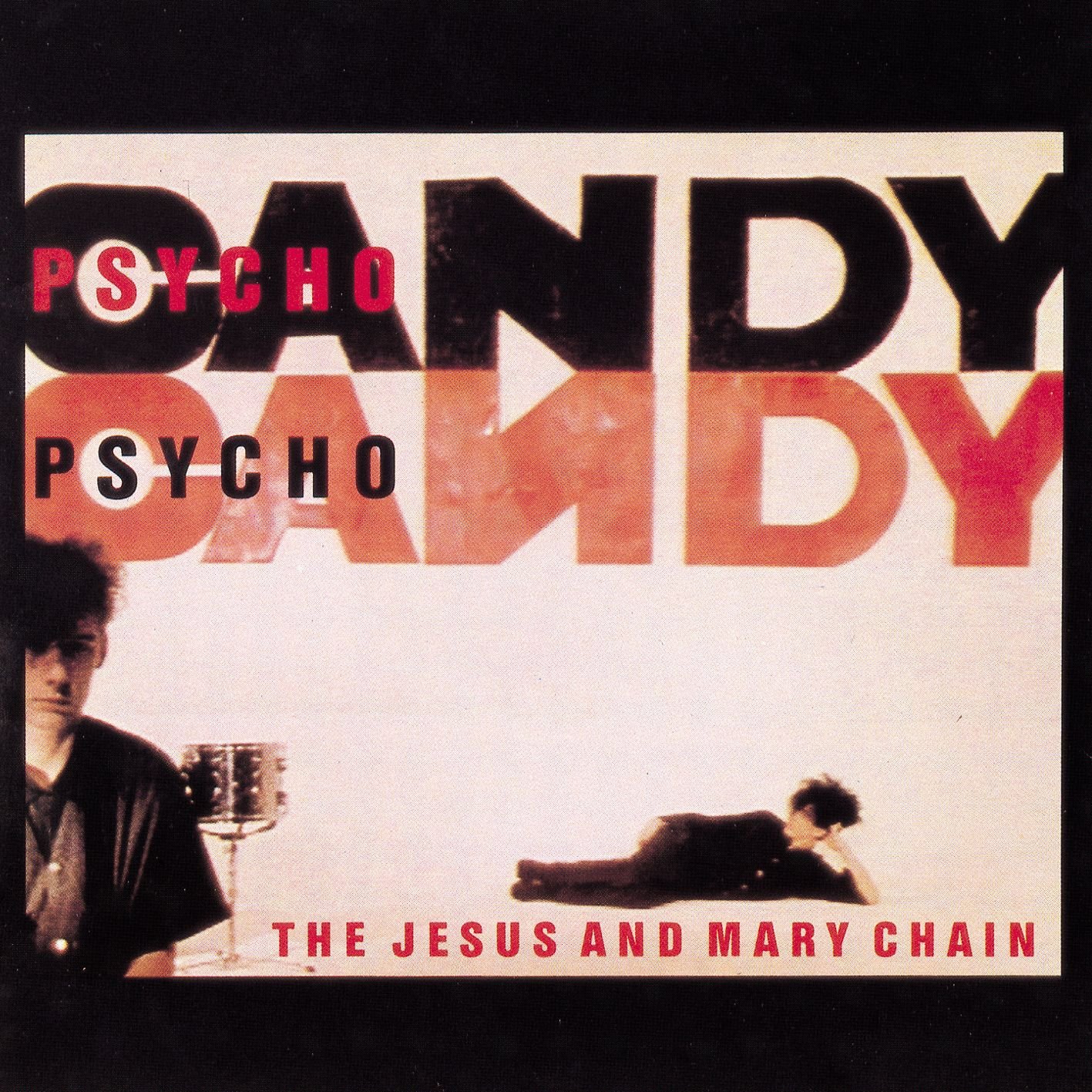
The Jesus and Mary Chain took on half the world from their little underground with the beautiful noise of their distorted black mood. Brothers Jim and William Reid started the group in East Kilbride, Scotland in 1983 and recorded demos on their own Portastudio unit . The rhythm section of Douglas Hart and Murray Dalglish came together the next year and they developed a sound that was washed in feedback and harmonic distortion. They relocated to London where they were signed to a one off deal on Creation Records by Scot Alan McGee. Bobby Gillespie from Primal Scream took over on drums when Dalglish quit. Their debut single "Upside Down" b/w a cover version of Syd Barrett's "Vegetable Man" became a number one sensation on the UK independent chart. The success led to a deal with WEA-subsidiary Blanco y Negro Records. 'Psychocandy' at Southern Studios in Wood Green, London with Jim Reid and William Reid on vocals and guitar, Douglas Hart on bass, and Bobby Gillespie on drums; with Karen Parker and Laurence Verfaillie on backing vocals. The Jesus and Mary Chain handled production with engineer John Loder. "Never Understand" was engineered by Flood with assistant engineer Alan Moulder.
William waxes: "Yeah, it was noise, but it was the most beautiful tenderness. It was this thing that just sorta happened. I don’t think I will ever feel that sort of like…almost like a dream feeling again in my life ...When it comes to The Jesus And Mary Chain, I write most of the lyrics and the music. But when it comes to making the record, I kind of like to say to my brother, Jim, “Hey, is this gonna be a fast song?” He’s kind of like… The vibe guy? Well, kinda. Yeah. He kind of knows how it’s gonna be. ‘Cause I’m thinking, ‘Yeah, it’s gonna be really fast,’ and Jim’s like, “No, no, no.” Like Just Like Honey. When I wrote that I was thinking like “DEE DUH DUH DUH DUH DUH!!!” And Jim was like, “No, bring that down a bit,” and I was like, “No, Jim. No, Jim. You don’t know.” And he was like, “Please, please, please, just bring it down a bit.” He was right. He was totally right. He was like, (sings softly) Listen to the girl as she takes on half the world. So he won. So he won ... I was kind of the singer in the beginning, but when I sang, I kind of used my nasal voice, and Jim kind of uses his throat, like, really cool. And it was like, “OK, Jim, you’ve gotta be the singer,” and he was like, “No, I won’t do it.” And eventually everybody was like, “Come on, you f**king bastard. You must do it.” So he reluctantly became the singer. "
Jim says: "I remember we had quite a professional attitude towards the recording process. People probably imagine that we just fell into the studio off our tits and made a record, but there was no drink and drugs at that time in the studio. We went in there and just set about making a record as well as we could. In later years, recording would be a very, uh, fucked-up affair, but at that time, we had quite a professional work ethic ...The punk thing was a massive influence on the Mary Chain. After that, we got seriously into the Velvets and the Stooges. We weren't very into what was going on in music in the Eighties. The bands that didn't make us want to puke back then were the likes of the Birthday Party or Echo and the Bunnymen. Actually, it was the crap coming out of the radio that made us want to be in a band more than anything else, because it was like, "Why is everything we hear so fucking awful?" That was the main driving force: how bad things were ...When we started the band, we could barely play and in some ways you use the guitar in a more interesting way because when you don't know how to play it, you make noise rather than music ...That was just chaos. It just suggested itself. We wanted the guitars to be as out there as possible. We wanted a fucked-up, distorted sound, and we had these pedals that we used. They did most of the work themselves. You just plugged them in, and they started screeching like you wouldn't believe. That was the sound ...Reverb is one of those things that, when you're not used to making records, seems like the thing you use when you've not got loads of studio experience. I suppose we were into Sixties bands – like Sixties girl bands, and all that – and that's kinda where all that came from. "
'Psychocandy' only went to number one hundred and eighty-eight in the US, ninety-two in Canada, eighty-seven in Australia, thirty-five in New Zealand, and thirty-one in the UK; but it went on to influence scores of bands.
http://thejesusandmarychain.uk.com/ lyrics: http://genius.com/albums/The-jesus-and-mary-chain/Psychocandy "Never Understand" VIDEO "You Trip Me Up" VIDEO "Just Like Honey" VIDEO 'Psychocandy' full album: VIDEO All songs written and composed by Jim Reid and William Reid
1. "Just Like Honey" 3:03
2. "The Living End" 2:16
3. "Taste the Floor" 2:56
4. "The Hardest Walk" 2:40
5. "Cut Dead" 2:47
6. "In a Hole" 3:02
7. "Taste of Cindy" 1:42
8. "Some Candy Talking" 3:19
9. "Never Understand" 2:57
10. "Inside Me" 3:09
11. "Sowing Seeds" 2:50
12. "My Little Underground" 2:31
13. "You Trip Me Up" 2:26
14. "Something's Wrong" 4:01
15. "It's So Hard" 2:37
Animal Collective reconvened and took their time turning out this emotional dance up through an accidental truth gate in a broken cartoon show. The group has its roots in childhood, as Noah Lennox (Panda Bear) and Josh Dibb (Deakin) knew each other in elementary school in Baltimore before Lennox moved away to Pennsylvania. Dibb met David Portner (Avey Tare) and Brian Weitz (Geologist) in high school where they formed a band called Automine, which self released a 7-inch-single Padington Band
In 1997, they all went to different colleges, Lennox and Dibb in the Boston area (Boston University and Brandeis University), while Portner and Weitz went to New York City (NYU and Columbia University). During this time, Lennox and Dibb put together Lennox's debut album, Panda Bear
In 2000, Avey Tare and Panda Bear put out Spirit They're Gone, Spirit They've Vanished on their own Animal label. In 2001, Danse Manatee Hollinndagain Campfire Songs
They adopted the moniker Animal Collective and created a new label Paw Tracks with Todd Hyman for the release of Here Comes the Indian Sung Tongs Prospect Hummer
Feels was recorded in Seattle with engineer Scott Colburn. The sessions also included Doctess on piano and Eyvind Kang on violin. Geologist: "Part of the reason we started playing live and releasing records, in 2000 I think, was to react against what we saw happening in late 90s indie rock. It was so intellectual and a lot of it lacked emotion. There isn’t a lot of irony in our music because we relate to music on a more pure, emotional level ... A lot of us have been in more serious relationships this past year, so we figured Feels would be our “love” record. It’s not exactly childlike this time. Only some of our records really touch on childlike innocence, or the innocence of nature, but there’s still similar themes throughout about touching our lives and feelings, instead of intellectual concepts that we don’t have any connection to ...We use lots of...found sounds, field recordings, electronics, feedback...a lot of times they sound like something they are not. We like liquidy sounds, but it’s often something different than just a stream or a faucet. But I won’t really go too deep into our approach on a technical level — I’m not trying to be secretive or anything, I just can’t think of an ordered process. It’s more like having fun and thinking about how a sound fits with the mood and color and feel of a song. We just use our bunch of effects and play around. Again, very little computer manipulation. We like turning knobs and faders and such. We’ve been doing it since high school, way before the laptop explosion, and we just stayed old school for the most part ... I would say the only boundaries we fight against are ourselves and our past. But it’s not too hard. We consciously try and move beyond what we’ve done before. Well not necessarily beyond, but away from. There are certain instruments we like, but I’m not sure they are crutches so to speak. We obviously like vocals, guitars, pianos, electronics, and percussion. But we try and change the dynamic between those things from record to record in order to explore more musical possibilities. If we create something that reminds us too much of something we’ve done before, or that we think could easily fit onto a past album of ours, we abandon it. We’ve covered that ground already, and it’s time to look forward. "Avey Tare: " I think just what seems comfortable–a lot of it these days has to do with that we do in our alone time. Not the ideas we come up with together since we’re not together so much. If we have a lot of time to think about things and work on stuff, it takes like a week and a half to come up with new ideas. Right now we want it to be a really slow process. Like just how long we worked on Feels –how it expanded in our brains and how we’re still playing some of it live–I think it takes a little while to move to a new place. We want it to be slow so it feels like the inspiration is actually there ...In my perfect musical world a person could understand the lyrics or not understand the lyrics as they wanted. Initially, with writing music that included vocals, it was primarily the goal (and still is) to have the voice be seen as another instrument, as having a very integrated role in the overall scheme of a song. Though our song writing has become a little more focused on vocals than it had been in the past, it would still feel awkward to only focus on hearing the lyrics. Just as we like sounds to fit in with the color and feel of a song, I’d say we approach vocals in a very similar manner ... For our new record I think it’s the first time where the lyrics are basically from my point of view. I guess I just feel like I wanted to say something and that’s the way it came out ... But the music and the vocals will always be very attached and I think, most of the time, the lyrics get lost in the sound anyway, which is fine cause I don’t necessarily think lyrics are that important to getting into a song, as long as the feeling stays intact and the emotion doesn’t get lost — though it’s nice to think that people could know them if they wanted. " Deakin: "The word “collective” is oddly touchy for us because it has a certain political air. The idea of calling ourselves a collective was for our own state of mind. We weren’t thinking of it in a broader sense. We’re a fairly exclusive collective. There are people are in our lives that we work with who we consider part of it, in a way, but we aren’t a collective in the big sense. We’ve known each other since we were kids, and really enjoy doing this together. We don’t want to just form a regular band where it’s like “he plays guitar, he plays bass, and I sing.” We came up with the idea in college, when we couldn’t always all work together. Originally, our records had their own titles without band names attached. It’s this idea of creating an environment where you’re not wed to specific habits. Habit contributes to complacency. We wanted to allow for as much change and development as possible. My perception of collectives is that there is some kind of collective consciousness that is an element for us, but mostly we’re strong individuals who have different ideas and like to share them with each other ...I hate to generalize, but there have been lots of new approaches to music and art in the past five, six years. We’re trying to get music and art back to expressing itself on some visceral level, not just being something on display that you look at and analyze. There shouldn’t be a wall between us and the audience. A lot of bands are into creating physical sound right now, and some of it I’m not even that psyched on, but I’m glad it’s happening. "
Panda Bear: " This album’s the same and different at the same time in terms of childhood stuff. We’re talking about more mature adult topics, so there is a bit of the sour mixed in with the sweet. The way we like to describe experiences from childhood or see things in a childlike way, the uninhibited, anything goes, everything is new attitude, that’s all still there on Feels . In that way, our music is always the same. Now, the kinds of relationships we talk about are more adult, but the spirit of creating the music is still anything goes. Keep it new, fresh, and explore stuff ...Confusion is another way to describe childhood illusion. When I was younger, I’d get fevers, so sick that I would feel crazy. I would go to places I’d never been to, in terms of hallucinating. Weird kid dreams are really confusing ...Vocally, it starts when you go, “I want to use my voice to sing but not just to sing words. I want to use my voice like an instrument.” There are all kinds of things you can do with your voice in terms of tone, pitch, the color of it. You can tweak it any which way you want. For some people, it’s all about the message, but we have a lot of fun making weird sounds with our voices. With instruments and effects, one goal of ours is to make it not sound like what we’re using, to disguise the means. But with the voice, you don’t need to use effects on it so much because you can mask it in all kinds of ways. It’s the ultimate instrument ...In the past year, a lot of the issues we’ve had with each other have been resolved. We’ve always been tight in the sense that a relationship with a person is an ongoing thing, and of course it’s not always perfect. We’ve made huge steps, and we understand each other better than ever. We’re having so much fun hanging out. Now, since we live far apart, when we do get together to play music or tour we’re immediately psyched to be best friends again. Three out of four of us have been affected by love in the past year, so there’s lots of emotion there. Feels sounds positive because it’s all about good times. There’s no room for abrasion on this one because everything is sweet. No matter how much work I do, I’m happy to do it. "
http://animalcollective.org/ "Grass"
VIDEO Feels full album: VIDEO All songs written and composed by Animal Collective.
1. "Did You See the Words" 5:15
2. "Grass" 2:59
3. "Flesh Canoe" 3:44
4. "The Purple Bottle" 6:48
5. "Bees" 5:38
6. "Banshee Beat" 8:22
7. "Daffy Duck" 7:34
8. "Loch Raven" 4:59
9. "Turn into Something" 6:29
Total length: 51:48
Sufjan Stevens found healing in the transformative power of extraordinary ordinary things through a primal cacophonous expression of the language of ghosts, eternal living, and impossible soul. It had been five years since he had his breakthrough with his celebrated concept album 'Illinois' The Avalanche Songs for Christmas The BQE I think I just got fed up with my own existential quandary, and got really bored with this sort of circular, philosophical pondering and my obsession with naming things and categorizing things. I think I wasn’t so much [disillusioned] with songwriting as I was disillusioned with form, and I was really frustrated with the limitations of the song. And I think a lot of that was suffering the repercussions of The BQE ... It signalled a big sea-change for me in terms of my process...[The BQE
In 2009 he began recording again, releasing Run Rabbit Run , a reworking with strings of his electronic album from 2001 Enjoy Your Rabbit All Delighted People 'Illinois'
Stevens admits: " I was aware that the textures and the sonic environment was a little dirtier, more cacophonous, or whatever. I was aware of that, cause I feel like I was also extremely aware during the making of Illinois of how much effort I put into making it listenable. It’s such a populist record—there’s just so much effort in appealing to the listener, you know there’s such a kind of a pageant of sound, and it’s constantly entertaining and rewarding, and it’s just sort of a patchwork of this sort of harmonic beauty, harmonic what do you call it, I don’t know—It’s very harmonious. You know, The Age of Adz , these are pop songs, but they’re based on sound experimentation and noise. They’re more aggressive, and even my tone of—the way I’m singing—it’s more in my throat and not always pretty. So I was aware of that, and I just felt like an imperative to experiment with these tones, and generally, I think now more than ever, I’m making music for that elite 5%—you know, the listener who’s been with me from the very beginning and understands my interest in electronic music and noise and in sound sculpting and minimalism and all that stuff. So I think that that record, The Age of Adz , is really for that listener, you know? I don’t think it’s meant to be for the casual listener who likes the song “Chicago,” which is fine. There’s no condescension at all in that remark. I don’t condescend to any of my music or to any listener. But I just am not in a season right now of feeling that kind of populist thrust. I don’t feel motivated to make things so listenable.
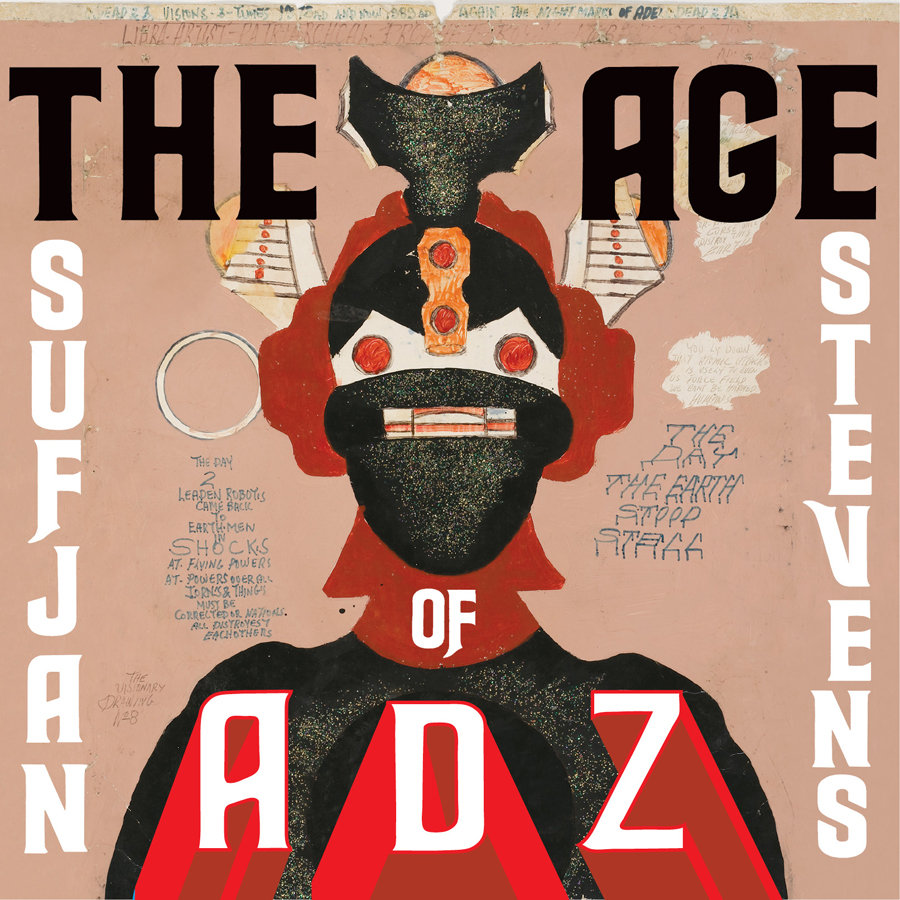
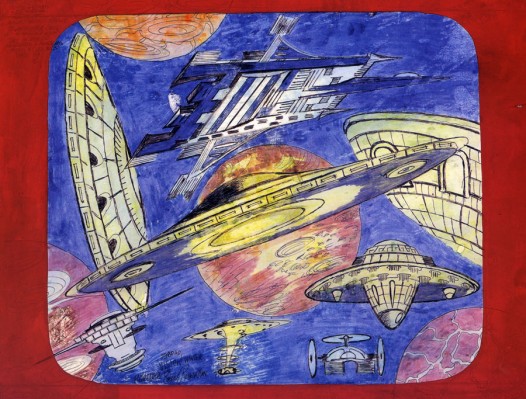
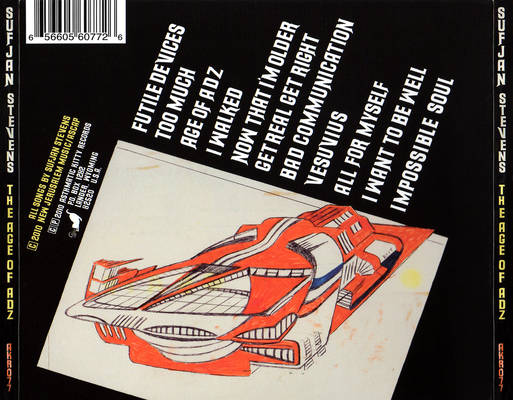
During this creative upheaval, Stevens fell prey to an unspecified nervous disorder that manifested in lethargy, painful sensations all over his body, adrenaline surges, and hypersensitivity. He recalls: "This was really supernatural. It was like I was possessed ... For several months, I couldn't really work and was forced to focus on my physicality and restoring myself. It took several months before I could even get back to working again and writing music. " The tormented work of paranoid schizophrenic artist Prophet Royal Robertson seemed to help Stevens work through his pain and coalesce the edgy music he was creating for his next album that had become, as he says, "really monstrous and hazardous in its ambition ... I was really, really desperate to get better because I had started so much music; I had begun all of these projects and was recording a lot. Then when I went back to it, I found it really overwhelming and I didn't know how to approach it. So, this record, The Age of Adz , is, in some ways, a result of that process of working through health issues and getting much more in touch with my physical self. That's why I think the record's really obsessed with sensation and has a hysterical melodrama to it." The album drew its title from one of Robertson's pieces, and most of the artwork on the album was taken from pieces done by Robertson.
Stevens expounds: "I can't apologize for the direction I'm going because it feels necessary and obvious. I know it's confusing because I'm something of an aesthetic nightmare, and I kind of suffer from multiple personality disorder. But that's part of me and my character. So, I guess I don't care. It's a big shift, and it may not be for some people. They should stay home. [laughs] Don't listen to the record; don't buy it. I'm very aware that this material is far less popular and accessible than the kind of songwriting on Illinois. I'm also willing to admit that these songs don't measure up to the songs I was writing five years ago; these aren't great songs in terms of the palpable, fundamental nature of a song. But I'm not interested in songwriting anymore. I'm interested in sound and movement. And this material is all about that. Unfortunately, we sold the tickets to the tour before I even had the record done, so a lot of people didn't really have the chance to know what they were investing in. I apologize for that...Life is all about toiling and labor. But obviously I get great joy in confronting challenge and taking risk. I don't ever want to be comfortable ...I have a hard time distinguishing what is valuable when it comes to the real world and the fantasy world. Like, should I invest my time in the ordinary world or the imaginary world? Royal made a decision and completely escaped the ordinary world. Maybe that's enlightenment. Maybe that's what it's like to be in heaven. I don't know ...For me, the sensory pleasure of sound and music is so transcendent that I begin to distrust it and worry if it's a distraction from ordinary life. Maybe I should be spending my time doing something else, like start a family. Or build an amusement park-- actually, that's still a fantasy world. Engineering? Investment banking? Real estate? There are all kinds of people who make the world go 'round. [laughs] ...I wanted to be a graphic designer, a teacher, a writer. We all have our plans, but they're worth nothing. There's a sequence of events that takes over. But I'm not quitting now. I'm fully embracing the life of the musician ...I'm less interested in songwriting and more into just making noise. "
'The Age of Adz' reached number sixty-one in Australia, thirty in the UK, twenty-three in Ireland, thirteen in Canada, and became his highest charting album at number seven in the US. Stevens considers: "I went through a period of questioning motive and function and now I no longer have the privilege of questioning. I just have the privilege of celebrating my music and sharing it. I don't really want to get caught up in that self-doubt any more. I've always been really insecure about what I do, but those existential conundrums are really circuitous and – what's the word? – unproductive. You know, I don't think my music is important, I don't think it's changing the world, I don't think it's art. I just think it's music. It is what it is."
http://music.sufjan.com/ lyrics: http://genius.com/albums/Sufjan-stevens/The-age-of-adz "Too Much" VIDEO "Get Real Get Right" VIDEO "All For Myself" VIDEO 'The Age of Adz' full album:
http://music.sufjan.com/album/the-age-of-adz https://www.youtube.com/playlist?list=PLZqsyBiYZFQ2aB-JyI-J1-tyxaD-73TSa VIDEO All songs written and composed by Sufjan Stevens.
1. "Futile Devices" 2:11
2. "Too Much" 6:44
3. "Age of Adz" 8:00
4. "I Walked" 5:01
5. "Now That I'm Older" 4:56
6. "Get Real Get Right" 5:10
7. "Bad Communication" 2:24
8. "Vesuvius" 5:26
9. "All for Myself" 2:55
10. "I Want to Be Well" 6:27
11. "Impossible Soul" 25:35
Total length: 74:49
The Flaming Lips prevailed with the psychedelic psychiatric explorations of this punctured pop placebo. Following the success of 'Transmissions from the Satellite Heart' "She Don't Use Jelly" , the band spent a year touring and making numerous television appearances. For their next album the band reunited with producer Dave Fridmann in Oklahoma City. The sessions featured Wayne Coyne on vocals and guitar; Steven Drozd on drums, piano, keyboards, guitar, vocals, and glockenspiel; Michael Ivins on bass and vocals; and Ronald Jones on guitar and vocals.
Coyne confesses: "There's not really a certain direction to say we're heading from this to that. It's just a splattering of songs mixed up with crappy noises. We try to make each song, each record, its own thing. We've managed to avoid the flavor of the month so far...We don't have many boundaries. My songs are so simple--one verse, one chord. They don't get much simpler than that. It's fun turning that into something. We record noises, bugs, all sorts of things to keep it interesting over the years. We've always felt every record we've ever made would be our last one, and we kinda always expect to get a call telling us it's over. So far, no one has caught on ... It's fruity. That's the word we use. Some of it's damn fruity. Weird kinda implies it's eerie or something; this is just plain fruity...Going into the studio for this new record, we really wondered, 'Are we just those chumps who do the jelly song?' We know we can always do the Flaming Lips thing, we can go and play to a thousand people, we can always do that. Really, that's fine by us. A lot of bands can't do that. So we really feel like we've got nothing to lose ... We literally make it up as we go. There really isn't any preconceived idea of what kind of record we're going to do. We just sort of go in and hopefully play things that excite us at the moment, and then by the time we're done with it, hope that it still excites us that we've made another record. We don't have any preconceived idea of where the Flaming Lips are gonna go. That must be where the audience comes in. I hope that maybe they have an idea, and maybe they can tell us."
'Clouds Taste Metallic' charted at number sixteen on the US heatseekers album chart. It was their last album recorded with Ronald Jones.
http://www.flaminglips.com/ "Bad Days"
VIDEO "Christmas at the Zoo"
VIDEO "This Here Giraffe"
VIDEO 'Clouds Taste Metallic' full album:
https://www.youtube.com/watch?v=-YGhPXE0FRw VIDEO 0:00 - The Abandoned Hospital Ship
3:40 - Psychiatric Explorations of the Fetus With Needles
7:10 - Placebo Headwound
10:47 - This Here Giraffe
14:33 - Brainville
17:46 - Guy Who Got a Headache and Accidentally Saves the World
22:17 - When You Smile
25:30 - Kim's Watermelon Gun
28:52 - They Punctured My Yolk
33:13 - Lightning Strikes the Postman
36:05 - Christmas at the Zoo
39:16 - Evil Will Prevail
43:00 - Bad Days [Aurally Excited Version]
The Fearless Freaks https://vimeo.com/40127788 The Fearless Freaks feat The Flaming Lips from JoLynn Garnes on Vimeo .https://www.youtube.com/watch?v=nxAgmGr9fRU VIDEO live February 24, 2015
VIDEO 8:13 The Abandoned Hospital Ship
15:37 Psychiatric Explorations of the Fetus with Needles
27:19 Placebo Headwound
35:55 This Here Giraffe
41:52 Brainville
53:25 Guy Who Got a Headache and Accidentally Saves the World
1:00:40 When You Smile
1:06:27 Kim's Watermelon Gun
1:12:26 They Punctured My Yolk
1:22:58 Lightning Strikes the Postman
1:30:25 Christmas at the Zoo
1:39:40 Evil Will Prevail
1:52:17 Bad Days
2:01:05 What is the Light?
2:05:25 The Observer
2:13:16 Vein of Stars
The Pixies expanded their sonic pallet with the surreal mix of polished surf pop, primal punk noise, country & western, reggae, and brooding balladry that comprise this alternative rock and roll animal. The band had built up a reputation for their aggressive alternative sound with their debut EP 'Come On Pilgrim' and its full length followup 'Surfer Rosa' . For their next album they decided to work with producer Gil Norton, who also engineered the sessions at Downtown Recorders in Boston, Massachusetts and Carriage House Studios in Stamford, Connecticut. The album features Black Francis on vocals and rhythm guitar; Kim Deal on bass guitar, vocals, and slide guitar on "Silver"; Joey Santiago on lead guitar and backing vocals; David Lovering on drums, lead vocal on "La La Love You", and bass guitar on "Silver"; with the addition of Arthur Fiacco and Ann Rorich on cello, and Karen Karlsrud and Corine Metter on violin for "Monkey Gone to Heaven".
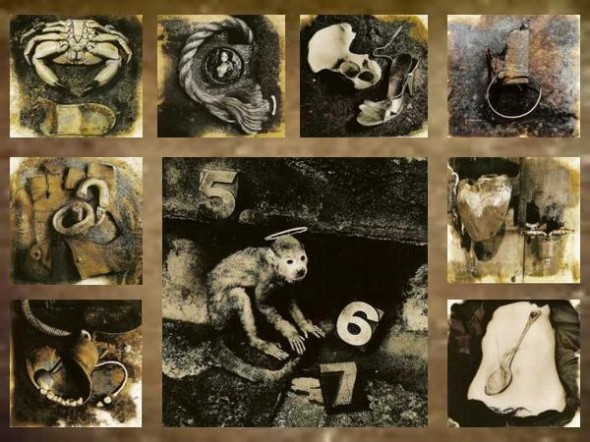
The working title for the album was 'Whore' 'Doolittle' from a lyric in the song "Mr. Grieves": "I thought people were going to think I was some kind of anti-Catholic or that I'd been raised Catholic and trying to get into this Catholic naughty-boy stuff...A monkey with a halo, calling it Whore, that would bring all kinds of shit that wouldn't be true. So I said I'd change the title." Dave Lovering “We didn’t feel like we were making a masterpiece. I guess I can see that it’s a classic now. At the time of its release, I just thought of it as another Pixies album. It was the next thing we were doing...When we did 'Doolittle' with Gil, the production became more polished and pro. The songs were more accessible, too, which just might have been where we were going as a band. Not to say that I didn’t like it; in fact, I was extremely proud of 'Doolittle' when I first heard it being played back. I couldn’t believe it was us – it sounded so big and accomplished...It’s a great record. After all these years, it’s like it hasn’t aged. Time sort of caught up with it.”
Kim Deal reflects: "It’s OK actually. I think Charles’ singing is really strong, I think it’s a lot better now. I think his singing is really good, so…maybe if he couldn’t hit the notes the songs wouldn’t have aged very well. Some singers write really high when they’re younger...It felt different but it was like… we were gone from our home. I can’t even remember what state we recorded it in now."
Black Francis AKA Frank Black AKA Charles Michael Kittridge Thompson IV considers: "I’m very much about the moment, not necessarily in my life, but in my music. When I’m making music, or performing music or writing music, I’m just very much about what I’m doing at the moment, and it doesn’t require different hats really, it doesn’t require different ways of thinking. For example, I really like playing with musicians that are really great, but I also really like playing with musicians who are not great — they’re just simple musicians because the goal is the same. As long as everyone understands, we have to make this moment, we have to make this song or performance as good as we can, and you can be really rough about it or you can be really inept about it, but there’s a spirit of 'We’ve gotta make this good' — as long as everyone’s on that page, it doesn’t really matter...It might be a nostalgic [thing] for certain members of the audience, but it’s not really [nostalgic] for me. It’s part of my repertoire, my canon of songs; it’s what I do. It’s not like in 1989 I was trying a different kind of music altogether, or something that was about the moment in fashion. It’s hard for me to think about it in terms of nostalgia. I think that it’s all gotten so blurry anyway with all of the different pop genres. Everything is essentially so derivative that I think it’s pretty rare that you get a totally new form of popular music. I mean, think about something like hip-hop and rap records, for example: There are a couple of hip-hop records that I’m very familiar with that came out, like, 25 years ago. They were, like, doing the rap 25 years ago, and that has become such a big part of the mainstream cultural vocabulary. It’s hard to say, 'What really is new?' There may be new tags, but what popular music form would you say — I’m not saying there aren’t any — but to me, the last new thing that I can remember that was really, truly new, is rap and hip-hop music...I like the Iggy Pop quote: 'It’s all disco.' I totally get it, I totally get it, it’s all disco."
'Doolittle' became the band's biggest success, going to number ninety-eight in the US (eventually being certified platinum), sixty-six in France, fifty-three in the Netherland, eighteen in the Netherlands, and number eight in the UK (where it has been certified gold). It has sold over a million copies worldwide and has been cited as one of the greatest albums of all time by numerous music publications. http://www.pixiesmusic.com/ "Here Comes Your Man"
"Monkey Gone to Heaven"
"Debaser" was inspired by the silent surrealist short film by the Spanish director Luis Buñuel and artist Salvador Dalí 'Un Chien Andalou' (An Andalusian Dog) from 1929.
https://www.youtube.com/watch?v=PVyS9JwtFoQ
'Doolittle' VIDEO All tracks were written by Black Francis, except where noted.
"Debaser" – 2:52
"Tame" – 1:55
"Wave of Mutilation" – 2:04
"I Bleed" – 2:34
"Here Comes Your Man" – 3:21
"Dead" – 2:21
"Monkey Gone to Heaven" – 2:56
"Mr. Grieves" – 2:05
"Crackity Jones" – 1:24
"La La Love You" – 2:43
"No. 13 Baby" – 3:51
"There Goes My Gun" – 1:49
"Hey" – 3:31
"Silver" (Francis/Deal) – 2:25
"Gouge Away" – 2:45
demos VIDEO