Showing posts with label genesis. Show all posts

Wednesday, October 21, 2015

trespass


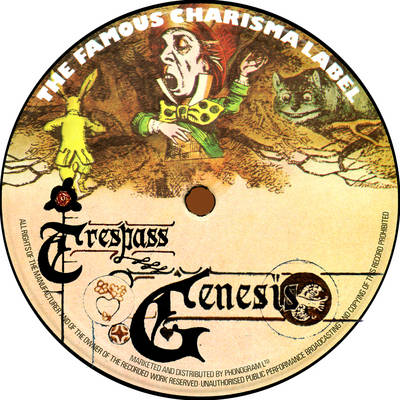
Genesis skirted sophomoric stagnation to find themselves and give all through visions of angels and tales of sin in this preternatural progressive penance.  After the recording of their debut album 'From Genesis to Revelation'  while the members were still students at the Charterhouse School, drummer John Silver left the band.  Tony Banks enrolled at Sussex University and Mike Rutherford went to Farnborough College of Technology, while Peter Gabriel and Anthony Phillips finished up at Charterhouse.  They came back together in the summer of 1969 and decided to pursue music full time.  John Mayhew was brought into the fold and fellow Charterhouse alum and former singer for The Anon Richard MacPhail became their new manager.  He brought the band to his parents' cottage in Wotton, Surrey to rehearse and compose new material.  They lived there for several month, playing long hours and gigging occasionally.  Their live show caught the attention of Charisma A&R man John Anthony who recommended the to label owner Tony Stratton-Smith.  They signed with Charisma and got to work on their second album 'Trespass' in June of 1970 at Trident Studios in London with John Anthony producing with engineer Robin Geoffrey Cable.   The sessions featured   Tony Banks on organ, acoustic & electric pianos, mellotron, acoustic guitar, and backing vocals;    Peter Gabriel on lead vocals, flute, accordion, bass drum, and tambourine;   John Mayhew on drums, percussion, and backing vocals;   Anthony Phillips on electric guitar, acoustic guitar, dulcimer, and backing vocals;   and  Mike Rutherford on bass guitar, acoustic guitar, nylon string guitar, cello, and backing vocals.  


Phillips ponders:   "There was a huge, lost world of material in between, as we went from our school-boy holiday song-based album through similar songs, but more mature, through to our first experiments with longer forms. Tony began using the organ, as we left Jonathan King’s more commercial song-based stable. Then, there were long jams, with heavier riff ideas — like “Knife,” etc. We had to raise the tempo and power to get noisy crowds to listen when we ventured out on the road! In short, we were from songwriters who played a bit on an album to a fully equipped, fighting-force live band — and most of the transitional material betwixt those two points bit the dust."


Mayhew muses:   " I remember sitting by the mixing desk for a few hours and watching what was happening there. I recall one of the last tracks we recorded was actually “The Knife.” I remember feeling particularly in the mood to play “The Knife” that day for some reason – that is what I recollect. Not that I didn’t feel in the mood to play the other songs as well on other days, but I really liked playing it that day. It seemed to go well...We were just so well-drilled on the songs. Everything was note perfect. So, that it just took over. It was fun...I think they were very keen to maintain creative control, of course...I think that they were just learning to listen to outside influences. Not that they needed to learn hard. For example, they knew that they had to listen to the people who were paying for these sessions. That would be the thing to do. Just like how the softer songs had to go and be put on the back burner and louder, more strident Friday night at the pub sounds were the new order of the day. So, Genesis went through lots of changes at that time, and I think some of that advice would have come from Charisma. They were giving advice right from the start when they came down to hear us in Sussex...They were improving all the time and probably quite obviously they would have been looking at that. The album contract had been secured months ahead of the actual recording date. In the meantime, we were still rehearsing, just practicing so the music would be note perfect. By the time we got to the studio, I felt like a well-drilled soldier, I think we all did."


Banks:      "We became more interested in longer form – allowing ourselves to go a few other places. The groups that were influencing us were groups that were doing a bit more of that kind of thing, like Procul Harum and Family, and Fairport Convention. When we were writing Trespass, In The Court Of The Crimson King came out, and that had influence on us, definitely...“The Knife” was an important song for us to write, because quite a lot of what we’d done up to the point was quite soft and acoustic. Peter (Gabriel) wrote what you might call the best bit. We started trying all this extra stuff – not just guitar solos, but really structured instrumentals. A lot of the songs had quite simple starting points – we allowed ourselves to stretch."

Rutherford:    "It was quite a formative time. Stuff like Yes and those sort of bands…they seemed more about great players. I think we were more about songs. There was no worry about whether it was going to get on the radio. It was a time to be completely free musically... “Rock theatre” was a tag we ended up with. Lyrically, the things that Peter was trying to say…in those days, no-one could hear what he was saying because the PA was so bad. So he was trying to act out the songs, so people would know what they were about – and that was where the whole thing sort of started. We were painting images, moods, atmospheres…so giving it a setting seemed to work well for us. Lindisfarne didn’t need to do that." 

 Gabriel:   "The lyrics for 'The Knife' were partly me being a public schoolboy rebelling against my background. I'd been heavily influenced by a book on Gandhi at school, and I think that was a part of the reason I became a vegetarian as well as coming to believe in non-violence, as a form of protest. And I wanted to try and show how all violent revolutions inevitably end up with a dictator in power...The thing is that the lyrical content of the songs appealed to us most of all. We just like the idea of telling stories and to some extent, it's been there from a very early stage. As far as what I do in between numbers on stage: it evolved through having three or four 12-string guitars which need regular tuning. This means there are large silences between each number. So we were lucky if we held a - tenth of the audience's attention during these moments. I just had to fill it and some of the stories became somewhat irrelevant and still areóstart running a bit fast from images ...This band started...as songwriters joining together. The songs we were writing then were very simple, but they were still a bit...the Iyrics were a bit pretentious, full of images. We've been recording since we were about seventeen and as we've grown older so has the material. But then we went through one or two stages in which we began to tell stories with the music and it seemed that things we liked playing were very varied in their moods and we like that, that contrast, some sort of structure other than the usual verse-chorus. verse-chorus-end."

'Trespass' only reached ninety-eight in the UK; but it went to number one in Belgium.  It would be their final album with Phillips, who left when the record was finished.  They fired Mayhew very soon after that.  The album cover was the first of several done by artist Paul Whitehead before recording was finished.  When the group asked him to redo it, he was resistant; so they suggested he slice the painting with a knife.  The final cover was a photograph of the canvas after he did just that.  


http://worldofgenesis.com/

http://shop.genesis-music.com/


lyrics:
http://lyrics.rockmagic.net/lyrics/genesis/trespass_1970.html


'Trespass' 
full album:


All tracks written by Tony Banks, Peter Gabriel, Anthony Phillips, and Mike Rutherford.

side one
1. Looking For Someone 0:00
2. White Mountain 7:04
3. Visions of Angels 13:48
side two
4. Stagnation 20:38
5. Dusk 29:24
6. The Knife 33:34


original mix:


live at Atomic Sunrise Festival
November 3, 1970


Monday, March 30, 2015

duke


Genesis found a collaborative balance with the loose conceptual art rock explorations of this progressive pop purification.    After the tour for ...And Then There Were Three... the trio went their separate ways as Phil Collins moved to Vancouver, Canada to work on his marriage with Andrea Bertorelli.  In the meantime, Tony Banks and Mike Rutherford began working on their respective solo releases, A Curious Feeling and Smallcreep's Day, . With his marriage in shambles, Collins returned to his home in Shalford, Surrey; reunited with jazz fusion band Brand X; and started work on demos for his first solo album Face Value.


Banks and Rutherford joined Collins at Shalford where they began writing music together for their next album 'Duke'.   The sessions took place during late 1979.  They were produced by David Hentschel  and Genesis at Polar Studios in Stockholm, Sweden and featured  Tony Banks on keyboards, 12-string guitar, and background vocals;   Phil Collins on drums, percussion, lead and backing vocals, and drum machine;   and   Mike Rutherford on guitars, bass guitar, bass pedals, and background vocals.  with  David Hentschel on backing vocals, production, audio engineering.


 'Duke' traveled to number twenty-two in Australia, fourteen in Austria, twelve in the Netherlands; eleven in the US, nine in Sweden, four in France and Norway, three in Switzerland, two in Germany, and number one in the UK.  


http://www.worldofgenesis.com/

http://www.worldofgenesis.com/Links-Official%20Genesis%20Related%20Sites.htm

http://thegenesisarchive.co.uk/

http://www.davemcnally.com/lyrics/genesis/duke/


"Turn It On Again" was a top ten hit in the UK.  


"Misunderstanding" became a top twenty breakthrough hit for the band in the US, peaking at number fourteen.  In Canada it went to the top of the pop chart.  
https://www.youtube.com/watch?v=bmFRvpwVSwo
http://www.dailymotion.com/video/x1wsl7_genesis-misunderstanding_music

Genesis - Misunderstanding by Salut-les-copains


"Duke Suite"
https://www.youtube.com/watch?v=M6irjp4zp2M


full album:


https://www.youtube.com/watch?v=4j2h5i7CNVw


Side one
00:00 "Behind the Lines"   Tony Banks, Phil Collins, Mike Rutherford 5:31
05:31 "Duchess"   Banks, Collins, Rutherford 6:40
12:08 "Guide Vocal"   Banks 1:18
13:29 "Man of Our Times"   Rutherford 5:35
19:04 "Misunderstanding"   Collins 3:11
22:19 "Heathaze"   Banks 5:00
Side two
27:19 "Turn It On Again"   Banks, Collins, Rutherford 3:50
31:11 "Alone Tonight"   Rutherford 3:54
35:08 "Cul-de-sac"   Banks 5:02
40:13 "Please Don't Ask"   Collins 4:00
44:15 "Duke's Travels"   Banks, Collins, Rutherford 8:41
52:53 "Duke's End"   Banks, Collins, Rutherford 2:04


interview:
https://www.youtube.com/watch?v=zfHgAzML20M


live at the Lyceum 1980
https://www.youtube.com/watch?v=4ZnP6eq9kcM


Deep In The Motherlode 5'36"
Dancing With The Moonlit Knight (Excerpt) 1'53"
Carpet Crawlers 5'25"
Squonk 7'37"
One For The Vine 15'26"
Behind The Lines 5'23"
Duchess 7'01"
Guide Vocal 1'26"
Turn It On Again 4'49"
Duke's Travels 7'14"
Duke's End 4'52"
Say It's Alright Joe 10'54"
The Lady Lies 6'15"
Ripples (Pt. 2) 5'19"
In The Cage 7'32"
Slippermen 1'05"
Afterglow 4'39"
Follow You Follow Me 4'27"
Dance On A Volcano 5'31"
Los Endos 7'18"
I Know What I Like 9'49"


Tuesday, November 18, 2014

the lamb lies down on broadway


Genesis plumbed the depths of the subconscious to come out the other side of a fractured finality in the experimental existentialist exegesis of this dense monolithic masterwork.  In the wake of the tour for 'Selling England By The Pound', the band began working on new material at the rat infested Headley Grange in Headley, Hampshire, England.  

Peter Gabriel:   "Several ideas for the album were presented in order for the band to exercise a democratic vote. I knew mine was the strongest and I knew it would win - or, I knew that I could get it to win. The only other idea that was seriously considered was The Little Prince which Mike was in favour of - a kid's story. I thought that was too twee. This was 1974; it was pre-punk but I still thought we needed to base the story around a contemporary figure rather than a fantasy creation. We were beginning to get into the era of the big, fat supergroups of the seventies and I thought, "I don't want to go down with this Titanic".  Once the story idea had been accepted we had all these heavy arguments about writing the lyrics. My argument was that there aren't many novels which are written by a committee. I said, "I think this is something that only I'm going to be able to get into, in terms of understanding the characters and the situations". I wrote indirectly about lots of my emotional experiences in The Lamb and so I didn't want other people coloring it. In fat there are parts of it which are almost indecipherable and very difficult which I don't think are very successful. In some ways it was quite a traditional concept album - it was a type of Pilgrim's Progress but with this street character in leather jacket and jeans. Rael would have been called a punk at that time without all the post-'76 connotations. The Ramones hadn't started then, although the New York Dolls had, but they were more glam-punk. The Lamb was looking towards West Side Story as a starting point."


Phil Collins:  "We were living at Headley Grange - this house that Led Zeppelin, Bad Company and the Pretty Things had lived in. it was a bit of a shambles - in fact they'd ripped the shit out of it. We were all living together and writing together and it went very well to start with. Pete had said he wanted to do all the words so Mike and Tony had backed off and we were merrily churning out this music. Every time we sat down and played, something good came out."


Mike Rutherford:   "I think that The Lamb is one of our best albums - one of our most different, anyway. We started writing, and it just came out very easily. After the previous album, it was a big relief. We realised quite quickly that we had three good sides - not just two good sides and another side, but three good sides. So we had to go for a double. Pete started the lyrics, and it finally became apparent we hadn't got a chance in hell of getting it finished by the deadline."


The process was complicated when Gabriel took a break to work with  filmmaker William Friedkin on the script for a film project; but, when Friedkin decided to work with Tangerine Dream on the music, Gabriel returned to the project.  

Tony Banks:   "Pete came back and we finished the album, and I really enjoyed it. We used a lot of moods - at times things were little more than improvisations on an idea. For instance, Mike would say, "Pharoahs going down the Nile" and he would just play two chords and instantly the rest of us would conjure up that particular mood. That one ended up on the album as "Fly on a Windshield". We did that with lots of the other tracks. The best jam we had in the rehearsal room ended up being called "The Waiting Room", which we called "The Evil Jam". We switched off all the lights and just made noises. And the first time it really was frightening."

Collins:    ""The Evil Jam" started wtih Steve inventing noises and Tony messing around on a couple of synthesizers - we were just mucking about with some really nasty sounds. We were all getting very intense; Peter was blowing his oboe reeds into the microphone and playing his flute with the echoplex on when suddenly there was this great clap of thunder and it started raining. We all thought, 'We've got in contact with something heavy here.' It was about five or six in the evening and we were making all these weird noises when the thunderstorm started and it began to pour down. And then we all shifted gear and got into a really melodic mood. At moments like that it really was a five-piece thing. We worked well together on "The Lamb" - the two albums gave us the room to do it. After we had prepared all our material, we went to another house in Wales to record. We put down the backing tracks in two weeks, and a month later we were still waiting for the words. Peter was well behind. Then he started saying, 'I need another piece of music to link these two songs.' We got bored with it in the end and nobody could help him because he was determined to do it on his own."

Gabriel:   "I was pretty good at manipulating but I think by "The Lamb" the resentment towards me was so big that I had very little space. And I felt the only way I could work was to go into a corner and function on my own. A lot of the melodies were written after the event - after the backing tracks had been put down."


The sessions for 'The Lamb Lies Down on Broadway' were produced by the band with John Burns at Island Mobile Studios in Wales and featured Tony Banks on Hammond T-102 organ, RMI 368x Electra piano, Mellotron M400, Elka Rhapsody synthesizer, ARP 2600 & ARP Pro Soloist synthesizers, and acoustic piano;   Phil Collins on drums, percussion, vibraphone, and backing vocals;   Peter Gabriel on lead vocals, flute, oboe, tambourine, and experiments with foreign sounds;   Steve Hackett on electric guitar and classical acoustic guitar;   and Mike Rutherford on bass guitar, 12-string guitar, bass pedals, and fuzz bass;   with Brian Eno providing enossification (treatments).  

Hackett:   "I was an innocent bystander on "The Lamb".  It happened despite me, not with me. All the things that I'd managed to hold back on "Selling England By The Pound" seemed to come back in full force here. The nightmarishly long sides - everything linked to everything else. I really felt it was very indulgent. I couldn't quite get to grips with it or contribute something great in a guitar sense. I don't think Tony's done a finer album. But I did feel the amount of stuff I was managing to put across was painfully small. My marriage, at this point, was on the rocks."


'The Lamb Lies Down on Broadway' went to eighty in Australia, forty-one in the US, and number ten in the UK.  

Gabriel:   ""The Lamb" was intended to be like a "Pilgrim's Progress", an adventure through which one gets a better understanding of self -- the transformation theme. I was trying to give it a street slant, and that was before punk happened. I felt an energy in that direction, and it seemed that prancing around in fairyland was rapidly becoming obsolete." 


http://genesis.m3w.com/

http://www.genesis-music.com/

http://www.worldofgenesis.com/
http://www.worldofgenesis.com/Links-Official%20Genesis%20Related%20Sites.htm


'The Lamb Lies Down on Broadway'
live:
https://www.youtube.com/watch?v=TKS9np3GoWc


'The Lamb Lies Down on Broadway'
slideshow playlist:
https://www.youtube.com/playlist?list=PLE08D5ED988A28703


'The Lamb Lies Down on Broadway'
full album:

http://www.youtube.com/watch?v=MRSgvfNZcWA


1. The Lamb Lies Down on Broadway 0:00
2. Fly on a Windshield 4:52
3. Broadway Melody of 1974 7:37
4. Cuckoo Cocoon 9:48
5. In the Cage 12:01
6. The Grand Parade of Lifeless Packaging 20:13
7. Back in N.Y.C. 22:59
8. Hairless Heart 28:44
9. Counting Out Time 30:54
10. Carpet Crawlers 34:35
11. The Chamber of 32 Doors 39:50
12. Lilywhite Lilith 45:35
13. The Waiting Room 48:24
14. Anyway 53:41
15. Here Comes the Supernatural Anaesthetist 56:58
16. The Lamia 59:47
17. Silent Sorrow in Empty Boats 1:06:45
18. The Colony of Slippermen: Arrival / A Visit to the Doktor / Raven 1:09:46
19. Ravine 1:17:58
20. The Light Dies Down on Broadway 1:20:04
21. Riding the Scree 1:23:36
22. In the Rapids 1:27:43
23. It. 1:30:05


Gabriel's press release regarding his leaving Genesis:  


July 1975
I had a dream, eye's dream. Then I had another dream with the body and soul of a rock star. When it didn't feel good I packed it in. Looking back for the musical and non-musical reasons, this is what I came up with:

OUT, ANGELS OUT - an investigation.


The vehicle we had built as a co-op to serve our songwriting became our master and had cooped us up inside the success we had wanted. It affected the attitudes and the spirit of the whole band. the music had not dried up and I still respect the other musicians, but our roles had set in hard. To get an idea through "Genesis the Big" meant shifting a lot more concrete than before. For any band, transferring the heart from idealistic enthusiasm to professionalism is a difficult operation. I believe the use of sound and visual images can be developed to do much more than we have done. But on a large scale it needs one clear and coherent direction, which our pseudo-democratic committee system could not provide. As an artist, I need to absorb a wide variety of experiences. It is difficult to respond to intuition and impulse within the long-term planning that the band needed. I felt I should look at/learn about/develop myself, my creative bits and pieces and pick up on a lot of work going on outside music. Even the hidden delights of vegetable growing and community living are beginning to reveal their secrets. I could not expect the band to tie in their schedules with my bondage to cabbages. The increase in money and power, if I had stayed, would have anchored me to the spotlights. It was important to me to give space to my family, which I wanted to hold together, and to liberate the daddy in me. Although I have seen and learnt a great deal in the last seven years, I found I had begun to look at things as the famous Gabriel, despite hiding my occupation whenever possible, hitching lifts, etc. I had begun to think in business terms; very useful for an often bitten once shy musician, but treating records and audiences as money was taking me away from them. When performing, there were less shivers up and down the spine. I believe the world has soon to go through a difficult period of changes. I'm excited by some of the areas coming through to the surface which seem to have been hidden away in people's minds. I want to explore and be prepared to be open and flexible enough to respond, not tied in to the old hierarchy. Much of my psyche's ambitions as "Gabriel archetypal rock star" have been fulfilled - a lot of the ego-gratification and the need to attract young ladies, perhaps the result of frequent rejection as "Gabriel acne-struck public school boy". However, I can still get off playing the star game once in a while. My future within music, if it exists, will be in as many situations as possible. It's good to see a growing number of artists breaking down the pigeonholes. This is the difference between the profitable, compartmentalized, battery chicken and the free-range. Why did the chicken cross the road anyway? There is no animosity between myself and the band or management. The decision had been made some time ago and we have talked about our new direction. The reason why my leaving was not announced earlier was because I had been asked to delay until they had found a replacement to plug up the hole. It is not impossible that some of them might work with me on other projects. The following guesswork has little in common with truth: Gabriel left Genesis. 1) To work in theatre. 2) To make more money as a solo artist. 3) To do a "Bowie". 4) To do a "Ferry". 5) To do a "Furry Boa round my neck and hang myself with it". 6) To go see an institution. 7) To go senile in the sticks. I do not express myself adequately in interviews and I felt I owed it to the people who have put a lot of love and energy supporting the band to give an accurate picture of my reasons.


Saturday, October 12, 2013

selling england by the pound


Genesis found a more polished expression of their literary ambitions and told us how their country lies with this pastoral progressive rock concept album.  After the artistic triumph of 'Foxtrot', the band had exhausted themselves with extensive touring.  While they were putting together material for a new album, their label released 'Genesis Live' as a stop gap and to capitalize on their growing reputation for their distinctive performances.  

'Selling England by the Pound' was produced by Genesis with John Burns and featured Tony Banks on piano, organ, electric piano, mellotron, synthesizer, backing vocals, and twelve-string guitar; Phil Collins on drums, percussion, backing vocals, and lead vocals on "More Fool Me"; Peter Gabriel on lead vocals, flute, oboe, and percussion; Steve Hackett on lead guitar and nylon guitar; and Mike Rutherford on bass guitar, bass pedals, rhythm guitar, electric sitar, twelve-string guitar, and backing vocals.  It took six weeks with everyone contributing to the composition of the album.  


'Selling England by the Pound'  made it to number seventy in the US and three in the UK.  


interview


'Selling England by the Pound' 
full album:


00:00 - Dancing With The Moonlit Knight
08:03 - I Know What I Like (In Your Wardrobe)
12:13 - Firth Of Fifth
21:48 - More Fool Me
25:00 - The Battle Of Epping Forest
36:43 - After The Ordeal
40:58 - Cinema Show
51:40 - Aisle Of Plenty