Showing posts with label poetry. Show all posts

Tuesday, August 25, 2015

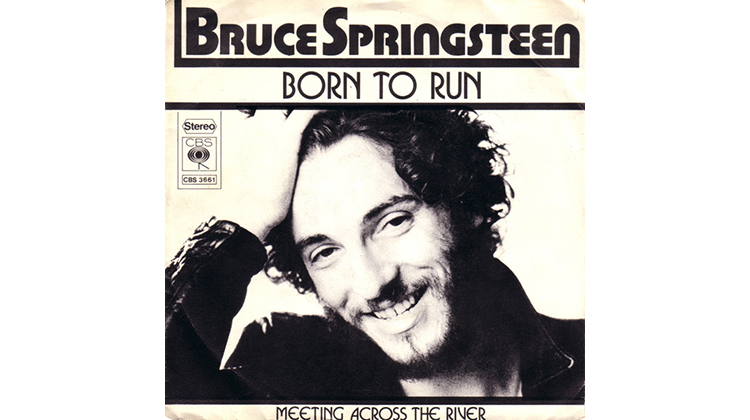
born to run


Bruce Springsteen had one last chance to make it real and spent months searching for his groove on the backstreets of a runaway American dream to come out on the other side with this visionary tour de force.     After the commercial disappointment of his first two albums Greetings from Asbury Park, N.J. and The Wild, the Innocent and the E Street Shuffle, CBS Records execs told him that they would allow him to produce one more single, the strength of which would determine whether or not he would get to do another album.  

He spent six months producing the single that would make or break his career:   "One day I was… working on some song ideas, and the words ‘born to run’ came into my head. At first I thought it was the name of a movie or something I’d seen on a car spinning round the Circuit, but I couldn’t be certain.[I was determined to] deliver its message in less time and with a shorter burst of energy...Born To Run… proved to be the key to my songwriting for the rest of the record. Lyrically, I was entrenched in classic rock and roll images, and I wanted to find a way to use those images without their feeling anachronistic." 


An advance copy of the single was given out to select radio stations to build the buzz and the strategy worked.  Listeners and other radio stations were clamoring for the song before it had even been put into production.  The green light was given for Springsteen to record his third album.  By this point, however, two members of the band David Sancious and Ernest "Boom" Carter had moved on to pursue jazz.   Roy Bittan and Max Weinberg were brought in to replace them as sessions began in upstate New York at the lackluster 914 Sound Studios in Blauvelt.   Springsteen's manager Mike Appel was able to secure better recording equipment at the Record Plant in New York City; and, by this point, journalist Jon Landau was brought into the fold as a co-producer.


Springsteen considers:   "Everyone was finding their way.  I was not interested in a strictly professional setup.  I did not want to contain my talents in that box, because I didn't know where they were going to lead me at that time.  At that time, my concern was this:  I have these abilities. I don't know what they are, but I know that they are there. I don't know where they are going to lead me, but wherever that is, I have to go, even if it is down a bunch of blind alleys, until I find one that I do want to go down.  Give me room to do this particular thing.  In my own fashion.   The primary questions that I would be writing about for the rest of my work life first took form in the songs on 'Born To Run'.  What do you do when your dreams come true?  What do you do when they don't?  Is love real?  'Born To Run' was the album where I left behind my adolescent definitions of love and freedom.  It was the real dividing line. "


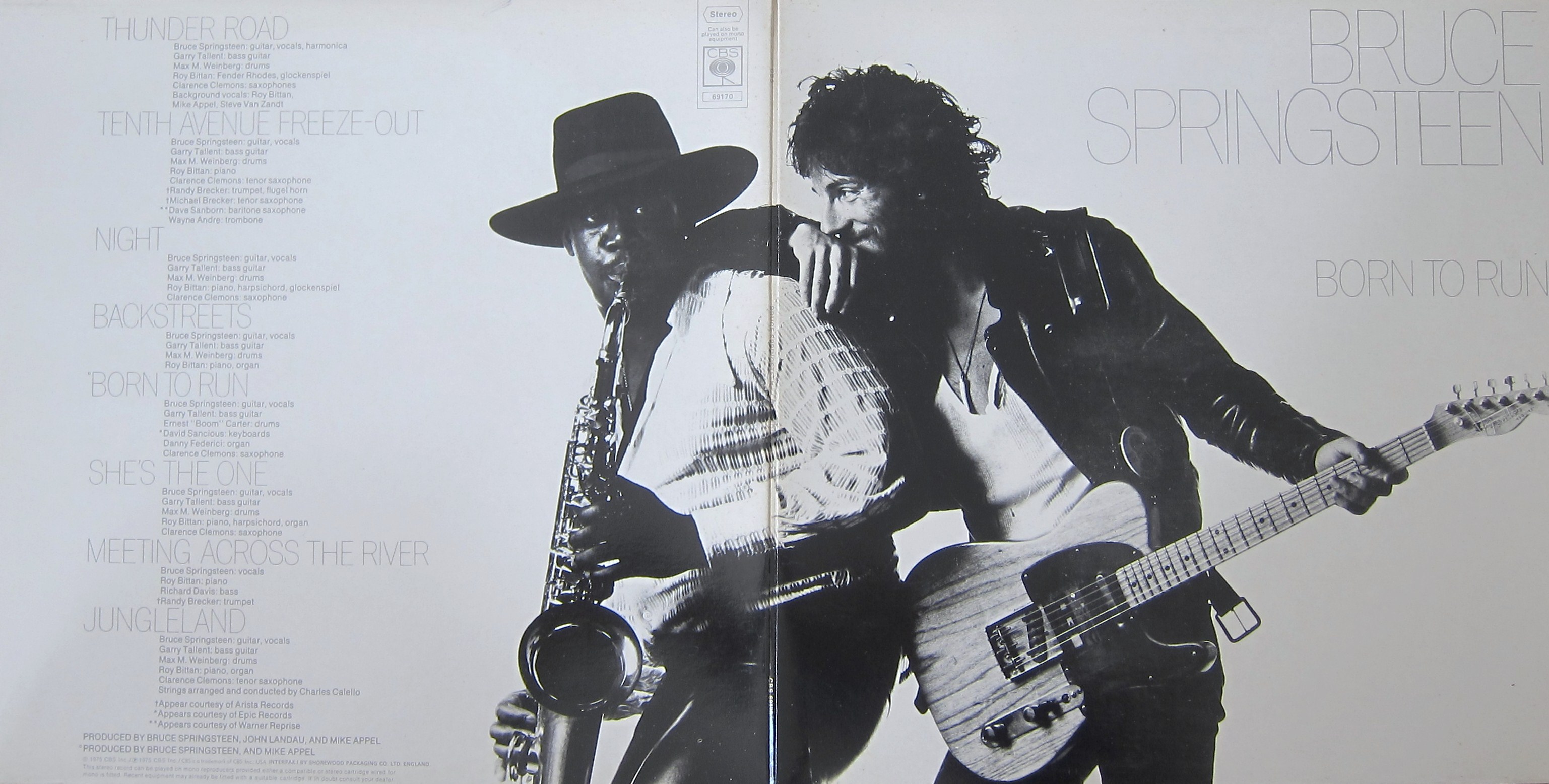
All in all, 'Born To Run' took over fourteen months to record with  Bruce Springsteen  on lead vocals, lead and rhythm guitars, harmonica, and percussion;   Clarence Clemons on saxophones, tambourine, and background vocals;  Garry W. Tallent on bass guitar;    Roy Bittan on piano, Fender Rhodes, organ, harpsichord, glockenspiel, and background vocals on all tracks except "Born to Run";   Max Weinberg on drums on all tracks except "Born to Run";   David Sancious on piano and organ for "Born to Run";  Danny Federici on organ and glockenspiel for "Born to Run";  Ernest "Boom" Carter on drums for "Born to Run";  Suki Lahav on violin for "Jungleland";  Steven Van Zandt on background vocals for "Thunder Road" and horn arrangements;    with    Wayne Andre on trombone, Mike Appel on background vocals, Michael Brecker on tenor saxophone, Randy Brecker on trumpet and flugelhorn, David Sanborn on baritone saxophone.   Richard Davis on double bass for "Meeting Across The River", and conductor Charles Calello did the string arrangements.    The sessions were produced by Bruce Springsteen, Jon Landau, and Mike Appel (except on "Born To Run" which was produced by Springsteen and Appel) with engineers Andy Abrams, Angie Arcuri, Ricky Delena, Jimmy Iovine, Louis Lahav, Thom Panunzio, Corky Stasiak, and David Thoener.  


Springsteen says he was seeking a sound reminiscent of "Roy Orbison singing Bob Dylan, produced by Spector ... I know what it’s like not to be able to do what you want to do, because when I go home, that’s what I see. It’s not fun, it’s no joke. I see my sister and her husband. They’re living the lives of my parents in a certain kind of way. They got kids; they’re working hard. These are people, you can see something in their eyes ... I asked my sister, ‘What do you do for fun?’ ‘I don’t have any fun,’ she says. She wasn’t kidding...I don’t think the American Dream was that everyone was going to make it or that everyone was going to make a billion dollars, but it was that everyone was going to have an opportunity and the chance to live a life with some decency and a chance for some self-respect.”


The album became a major breakthrough for Springsteen, going to number thirty-one in Canada; twenty-eight in New Zealand; twenty-six in Norway; twenty in Ireland; seventeen in the UK; seven in Australia, the Netherlands, and Sweden; and number three in the US.    Springsteen recalls:    "Born To Run had the feeling of that one, endless summer night. The whole record feels like it could all be taking place in the course of one evening, in all these different locations. Everything is filled with that tension of somebody struggling, trying to find some other place."


http://brucespringsteen.net/

http://www.backstreets.com/


"Born To Run"
https://www.youtube.com/watch?v=RqTLl68aUzg


In the day we sweat it out on the streets of a runaway American dream
At night we ride through mansions of glory in suicide machines
Sprung from cages on Highway 9
Chrome-wheeled, fuel-injected
And steppin' out over the line
Baby this town rips the bones from your back
It's a death trap, it's a suicide rap
We gotta get out while we're young
'Cause tramps like us, baby we were born to run

Wendy let me in, I wanna be your friend
I want to guard your dreams and visions
Just wrap your legs 'round these velvet rims
and strap your hands across my engines
Together we could break this trap
We'll run till we drop, baby we'll never go back
Will you walk with me out on the wire
'Cause baby I'm just a scared and lonely rider
But I gotta find out how it feels
I want to know if love is wild
girl I want to know if love is real

Beyond the Palace hemi powered drones scream down the boulevard
The girls comb their hair in rearview mirrors
And the boys try to look so hard
The amusement park rises bold and stark
Kids are huddled on the beach in a mist
I wanna die with you out on the streets tonight
In an everlasting kiss

The highway's jammed with broken heroes
On a last chance power drive
Everybody's out on the run tonight
but there's no place left to hide
Together, Wendy, we can live with the sadness
I'll love you with all the madness in my soul
Someday girl, I don't know when,
we're gonna get to that place
Where we really want to go
and we'll walk in the sun
But till then tramps like us
baby we were born to run

https://www.youtube.com/watch?v=v63dQYJQxJI


'Born To Run' 
full album:

https://www.youtube.com/playlist?list=PLq5_IODrGmKijUfcxMTKroa5maPvYJDtz


All songs written and composed by Bruce Springsteen.

Side one
1. "Thunder Road"   4:49
2. "Tenth Avenue Freeze-Out"   3:11
3. "Night"   3:00
4. "Backstreets"   6:30

Side two
1. "Born to Run"   4:31
2. "She's the One"   4:30
3. "Meeting Across the River"   3:18
4. "Jungleland"   9:34


outtakes

 "Linda Let Me Be the One"
"So Young and In Love"
"Walking in the Street (aka Lovers in the Cold)"
"Lonely Night in the Park"
"A Love So Fine"
"A Night Like This"
"Janey Needs a Shooter"


Live in London at Hammersmith Odeon 1975
https://www.youtube.com/watch?v=eXFWXgFk5Jo


Thunder Road
Tenth Avenue Freeze-Out 
Spirit In The Night
Lost In The Flood
She's The One 
Born To Run
The E Street Shuffle
It's Hard To Be A Saint In The City
Backstreets
Kitty's Back
Jungleland
Rosalita (Come Out Tonight)
4th Of July, Asbury Park (Sandy)
Detroit Medley: 
Devil With a Blue Dress On 
C.C. Rider 
Good Golly Miss Molly 
Jenny Take a Ride
For You
Quarter To Three


Springsteen became a household name when he appeared 
on the covers of Time and Newsweek in the same week on October 27, 1975.  


Sunday, August 16, 2015

charles bukowski


Henry Charles Bukowski
(August 16, 1920 – March 9, 1994)

Born into this madhouse of drunken violent pretense, he delivered a poetry of passion and pain from the underground with unrelenting honesty.   He came into the world as Heinrich Karl Bukowski in Andernach, Germany.  His father was an American who met his mother between the wars.  Heinrich and Katharina emigrated to the United States and settled in Los Angeles when Bukowski was ten years old.  He attended Los Angeles High School and Los Angeles City College, before embarking on a visionquest as a vagrant, evading the draft through a psychological exemption, and eventually returning to Los Angeles.  He submitted dozens of stories to magazines before "Aftermath of a Lengthy Rejection Slip" was published in Story magazine.  He became disillusioned with the publishing world and gave up writing for a decade.  When he started again after an episode with a near-fatal bleeding ulcer, it was expressed in poetry.  He agreed to a proposal of marriage from small-town Texas poet Barbara Frye, with whom he had a daughter Marina.  His first book of poetry Flower, Fist, and Bestial Wail was published in 1960.


His column "Notes of a Dirty Old Man" for Los Angeles' Open City, an underground newspaper, was picked up by the Los Angeles Free Press and NOLA Express when Open City was shut down.  Bukowski and Neeli Cherkovski produced their own magazine Laugh Literary and Man the Humping Guns for three years.  John Martin at Black Sparrow Press convinced Bukowski to quit his job at the post office and dedicate himself to writing full time.  In less than a month he finished his first novel Post Office.


Factotum  and  Women documented his exploits with various women who were intrigued with his notoriety including love affairs with Linda King and Pam"Cupcakes" Miller.  He met Linda Lee Beighle in 1976 and moved to San Pedro where they lived together.  They were married in 1985.  Beighle appears as "Sarah" in Women and Hollywood.   He exorcised his abusive childhood with Ham on Rye which was his most difficult work.  


Bukowski died of leukemia at the age of seventy-three  on March 9, 1994, in San Pedro, aged 73, shortly after completing his sixth novel, Pulp.   He published twenty-one books of poetry during his lifetime and twelve more posthumous volumes have followed, eight collections of short stories with five more posthumously, eight non fiction books, and ten screenplays with five more films adapted from his work.  


Some quotes:  

Some people never go crazy. What truly horrible lives they must lead.

We are here to laugh at the odds and live our lives so well that Death will tremble to take us.

The free soul is rare, but you know it when you see it - basically because you feel good, very good, when you are near or with them.

I don't like jail, they got the wrong kind of bars in there.

An intellectual says a simple thing in a hard way. An artist says a hard thing in a simple way.

If you're losing your soul and you know it, then you've still got a soul left to lose.

Humanity, you never had it to begin with.

There will always be something to ruin our lives, it all depends on what or which finds us first. We are always ripe and ready to be taken.


http://bukowski.net/


'Bukowski: Born Into This'


'Poems and Insults'
https://www.youtube.com/watch?v=61t-Smksvvc


Bukowski at Bellevue
https://www.youtube.com/watch?v=iD-3Orkj4gw


Factotum
starring Matt Dillon
https://www.youtube.com/watch?v=yOcMSq9msSc


Storie di ordinaria follia aka Tales of Ordinary Madness
Ben Gazzara as Bukowski
https://www.youtube.com/watch?v=wfyah1V0g1g


Barfly
written by Bukowski
starring Mickey Rourke
https://www.youtube.com/watch?v=g6obUECR71Y


Saturday, April 25, 2015

suzanne vega


Suzanne Vega fought things she couldn't see with the emotional undertow of this literate urban folk.    Growing up in Spanish Harlem, Vega began writing poetry in her early teens, and by the age of sixteen was performing her own songs on the in small clubs.  Vega looks back:  "It was great… I had a lot of songs and I was writing steadily – a song every few months – and I could try them out at a leisurely pace. I was with friends who had high standards for writing, and so it was good to try to meet them...The record deal came after a great review in the New York Times. We’d made a demo tape and my manager had already submitted it to A&M Records twice. However, after this particular review they came running…"


The sessions for her eponymous debut featured  Suzanne Vega on vocals and  acoustic guitar;    Steve Addabbo on background vocals, synclavier guitar, 12-string acoustic guitar, and electric guitar;   Darol Anger on electric violin;  Frank Christian on acoustic guitar and electric slide guitar;  Paul Dugan on bass and vertical bass;   Sue Evans on drums and percussion;   Jon Gordon on electric guitar;  Peter Gordon on string arrangement;   Frank Gravis on bass;   Shem Guibbory on violin;  Mark Isham on synthesizers;   John Mahoney on synclavier programming;   Maxine Neuman on cello;   C.P. Roth on synthesizers, piano, and organ;   and Roger Squitero on percussion.   Vega admits:   "If they'd say, 'Come out and sing it again,' I'd say, 'I don't want to, I sang it alright the last time,' or 'You sing it yourself.'   Steve (producer Steve Addabbo) has told me there were times he wanted to really throttle me, but then I never would have sung again."


'Suzanne Vega' went to number ninety-one in the US, fifty-four in Germay, forty-two in Sweden, eleven in the Netherlands and the UK,  and number nine in New Zealand.  Vega would express at the time:  "People who are expecting a folk album are surprised and people who are expecting a rock album don't quite get it...I like contemporary music and I like old-fashioned music, so I take things that I like from each of those and mix them all together.  I suppose it confuses some people, but I like it...It's a little frustrating to go into a record store in New York and see that it's in the folk section, which is always either way in the back or upstairs or buried somewhere down some hole. I feel a little bad about that. I don't want it to be misrepresented, but I still want it to be what it is...Some people say 'I just can't understand' or 'Who wants folk music back?' and that's a mistake.  Some people just don't want to think or make judgment for themselves. People want things to be clear for them...There's a lot I don't know about my songs.  What I have to say is not always clear. I think I speak for a lot of people, I'm just not sure who they are yet."


http://www.suzannevega.com/


"Marlene on the Wall"

https://www.youtube.com/watch?v=tHZV7NOqEY4


Even if I am in love with you
All this to say, what's it to you
Observe the blood, the rose tattoo
Of the fingerprints, on me from you

Other evidence has shown that
You and I are still alone we
Skirt around the danger zone
And don't talk about it later

Marlene watches from the wall
Her mocking smile says it all
As she records the rise and fall
Of every soldier passing

But the only soldier now is me
I'm fighting things I cannot see
I think it's called my destiny
That I am changing

Marlene on the wall

Well I walk to your house in the afternoon
By the butcher shot, with the sawdust strewn
Don't give away the goods too soon
Is what she might have told me

And I tried so hard, to resist
When you held me in your handsome first
And reminded me, of the night we kissed
And of why I should be leaving

Marlene watches from the wall
Her mocking smile says it all
As she records the rise and fall
Of every soldier passing

But the only soldier now is me
I'm fighting things I cannot see
I think it's called my destiny
That I am changing

Marlene on the wall

Marlene watches from the wall
Her mocking smile says it all
As she records the rise and fall
Of every soldier passing

But the only soldier now is me
I'm fighting things I cannot see
I think it's called my destiny
That I am changing

Marlene on the wall

And even if I am in love with you
All this to say, what's it to you
Observe the blood, the rose tattoo
Of the fingerprints, on me from you

Other evidence has shown that
You and I are still alone we
Skirt around the danger zone
And don't talk about it later

And I tried so hard, to resist
When you held me in your handsome first
And reminded me, of the night we kissed
And of why I should be leaving

Marlene watches from the wall
Her mocking smile says it all
As the records the rise and fall
Of every man who's been here

But the only one here now is me
I'm fighting things I cannot see
I think it's called my destiny
That I am changing, changing, changing, changing, changing

Marlene watches from the wall
Her mocking smile says it all
As she records the rise and fall
Of every soldier passing

But the only soldier now is me
I'm fighting things I cannot see
I think it's called my destiny
That I am changing


Marlene on the wall


"Small Blue Thing"

 "That day, I felt like a small blue thing and I said, OK, no one has ever said that before, so I would like to give this thing a voice."
https://www.youtube.com/watch?v=0Z7VlOToPKs

https://www.youtube.com/watch?v=oclv-EqJbvY


"Neighborhood Girls"

https://www.youtube.com/watch?v=5Oia4UTcbSw


'Suzanne Vega' 
full album:

https://myspace.com/suzannevega/music/album/suzanne-vega-8340554

https://www.youtube.com/playlist?list=PL4C6B1A79513F1313


All songs written by Suzanne Vega.

"Cracking" – 2:49
"Freeze Tag" – 2:36
"Marlene on the Wall" – 3:40
"Small Blue Thing" – 3:54
"Straight Lines" – 3:49
"Undertow" – 3:26
"Some Journey" – 3:38
"The Queen and the Soldier" – 4:48
"Knight Moves" – 3:36
"Neighborhood Girls" – 3:21


Monday, April 7, 2014

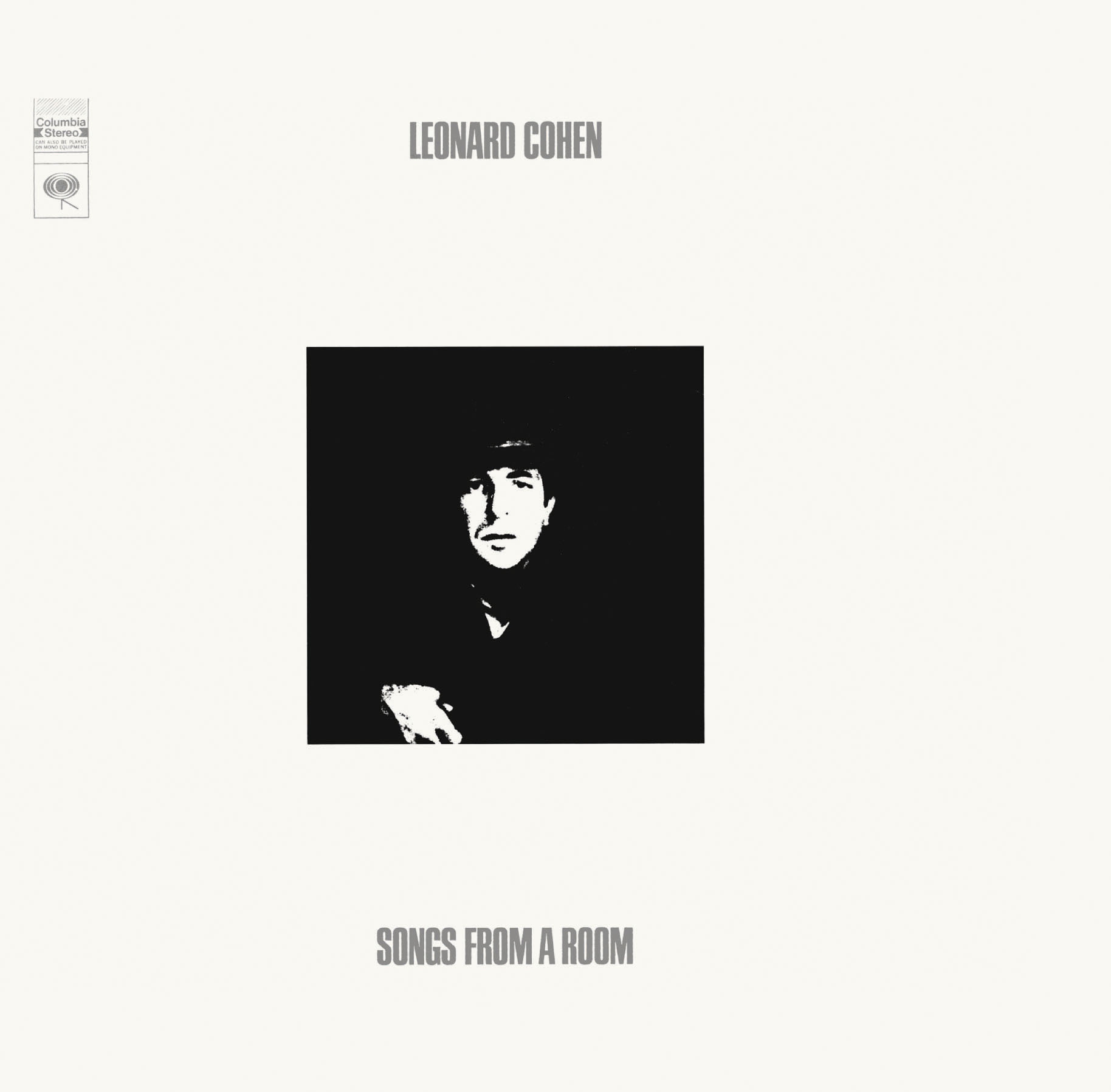
songs from a room


Leonard Cohen almost gave up on his musical career during the conflicted production of this stark and intimate artistic statement.  The triumph of his debut album 'Songs of Leonard Cohen' had left him empty and exhausted and uncertain of his future:    "I had no idea there was going to be a second record and I myself felt no urgency to produce one but somehow a kind of pressure did develop to produce another record.  Columbia wanted another record. My management wanted another record and I suppose I wanted one too just to prove to myself that I wasn't entirely impotent; so I tried to put together some songs but I didn't really have any songs and I just let it go, man.  I just left.  I went back to Greece for a little while and I just travelled around the states.  I had given up the idea of a second record.  I had thought to myself that it was a good thing to have produced a record and now I could just get back to my life and do whatever comes next.  Then I tried very hard to write and for several months I'd sit down everyday in front of a piece of paper in motels in California and try to write, which is something I had never done.  I'd only written when there was an urgency to write.  I tried to put songs together and nothing happened.  I suppose I couldn't reconcile myself to the idea that I had no more songs and no more anything.  After a while I was ready to accept that and then one day I just happened to meet Bob Johnston and I liked the way he talked and the way he understood my first record and what was right with it and what was wrong and  just on the basis of a very short conversation I said I'd come to Nashville and try it out with him.  So I went down there, I put down a few songs and I came back another time and I played with a group of musicians - very good musicians, good men - and I said let's listen to it.  We listened to it and my voice was completely dishonest.  There wasn't anything straight at all in my voice.  It was a painful disaster just to listen to it; so I asked the musicians to go home and I went out and talked to Bob Johnston.  We talked for some time and I said it's all over.  I said I just can't squeeze out another record merely because people liked my first one; so let's just forget about it.  So he said OK, we'll forget about it.  And I went back to my motel and thought about all the things I'd do in my new life and got more and more depressed.  And then one morning I woke up and I changed a couple of lines in the very first song I had written in that second phase of writing and I went into the studio and it seemed to spring into shape.  I had a lot of help from my friend too, the jew's harp player whose name is Zem. He's a close friend of mine and he was a great support.  So between Zem and Bob Johnston and the Nashville muscians, people like Charlie McCoy and Charlie Daniels, we put it together." 


'Songs from a Room' was recorded at Columbia Studio A in Nashville and features Cohen on vocals;  Ron Cornelius on acoustic and electric guitar;  Bubba Fowler on banjo, bass guitar, violin, and acoustic guitar;  Charlie Daniels on bass guitar, violin, and acoustic guitar;  Bob Johnston on production and keyboards;  and Neil Wilburn as engineer.  The album went to number sixty-three in the US, ten in Canada, and number two in the UK.  


http://www.leonardcohen.com/


"Bird on the Wire" - 3:28
https://www.youtube.com/watch?v=wEJGWSRxW7U


'Songs from a Room' 
full album:
http://www.leonardcohen.com/us/music/songs-room

https://myspace.com/leonardcohenlegacy/music/album/songs-from-a-room-8121729


https://www.youtube.com/playlist?list=PL0DA2921180888A9F


All songs written by Leonard Cohen except as noted.

Side one
"Bird on the Wire" - 3:28
"Story of Isaac" - 3:38
"A Bunch of Lonesome Heroes" - 3:18
"The Partisan" (Hy Zaret/Anna Marly) - 3:29
"Seems So Long Ago, Nancy" - 3:41
Side two
"The Old Revolution" - 4:50
"The Butcher" - 3:22
"You Know Who I Am" - 3:32
"Lady Midnight" - 3:01
"Tonight Will Be Fine" - 3:53
bonus
"Like a Bird (Bird on the Wire)" - 3:21
"Nothing to One (You Know Who I Am)" - 2:17


Monday, July 22, 2013

waiting for the sun


The Doors went through creative differences and alcoholic binges to create the psychedelic blues experiments of this pop celebration.  The massive success of their eponymous debut had eclipsed their second album 'Strange Days' and the band was under pressure from Elektra Records to come up with another hit song.  They went into T.T.G. Recording Studios in Hollywood, with its state of the art 16-track recording capabilities to record 'Waiting For The Sun' with engineer Bruce Botnick and producer Paul A. Rothchild.  Jac Holzman was production supervisor on the sessions that featured Jim Morrison on lead vocals and percussion; Ray Manzarek on keyboards, backing vocals, and percussion; Robby Krieger on guitars, backing vocals, and percussion; and John Densmore on drums, backing vocals, and percussion;  with Douglas Lubahn and Kerry Magness on bass guitar; Leroy Vinnegar on acoustic bass.  

During the sessions, Morrison's drinking had gotten out of hand and it affected his ability to perform in the studio when he actually showed up.  It was enough to make Densmore quit the band...twice.  Kreiger reveals:    "That’s when the liquor really started being a problem. Before that, everything was more or less fine. LSD was no problem because it was a creative thing. There’s nothing good about liquor — it just fucks you up—though at first it relaxes you, which is what you probably need after taking eight-zillion acid trips... By that time, Jim was being taken advantage of by various hangers-on. He would bring them to the studio and Rothchild would go crazy — all these drunken assholes would be hanging around, fucking in the echo chamber and pissing in the closets. It was a mess.  Jim would drink with anybody because we wouldn’t drink with him. He would take on all these assholes, who used him: 'Hey, we’re hanging with Jumbo.' And they wouldn’t care how fucked up he got—they’d leave him on somebody’s doorstep in his own puke...I never drank with him because I didn’t like to drink to excess and he loved to go until he couldn’t see. I knew what was coming and hated to see it, so I would usually be gone by that point. John and Ray felt the same way...The fact that Jim was using so much made us use even less. The romance was definitely gone. Once in a while he would talk me into taking acid — just like you saw in the movie — but not often."

Morrison fought to get his 'Celebration of the Lizard' on the record, which would have taken up an entire side; but the rest of the band vetoed him and only part of the song was included as 'Not To Touch the Earth'.   Morrison considered at the time:  "We tried that, but it didn't work out. But we did use part of it. I think we're going to wait and do that later, maybe as part of a live album. Our new album is called 'Waiting For The Sun'. We're thinking of adding something else to it...It's.....just songs. There are no real long ones."

'Waiting for the Sun' went to number twenty in Germany, sixteen in the UK, three in Canada, and number one in France and the US.  It became their only album to hit the top spot in the US; but critics were not kind.  Manzarek recalls:    “When we got negative reviews from San Francisco, we thought, ‘Hey, wait a minute.  We came out of John Coltrane and Muddy Waters and Miles Davis, out of Beat poetry, Sabicas ‘flamenco guitar, Coltrane’s drummer Philly Joe Jones, Bill Evans on the piano. We’re not underground? ‘I think it all had to do with ‘Hello, I Love You, ‘which we consciously set out to make a hit single. People were like, ‘Bloody damn hell, you can’t manipulate things. ‘We’re the masters of space and time, of course we can manipulate. ‘You’re not the underground anymore. ‘We’re not starving. We made a hit. As a matter of fact, we hope you, the lovers, the hippies, join us. Let’s take over the fucking world. Is everyone ready to do the hard work that it takes to run this country?' They weren’t.”


http://www.thedoors.com/


'The Unknown Soldier' was released as a single during the production of the album.  It only made it to number thirty-nine on the US pop chart.   Morrison would consider: "Well, I liked Soldier and I'm not sure what the trouble was. Most of the stuff at that time was real soft music, you know...There have been war songs before. It wasn't really a war song anyway."    Manzarek added: "It came out at a bad time. If it had come out maybe six months earlier or four months later or right now, it probably would have done all right. It was the war thing, you know. When it came out, the war was just sort of really coming to a head. I think it came out just when we started negotiations and that everybody was really into a funny thing about the war. But now, I don't know, I guess the war is over. Everybody assumes it's over. It's not, of course. They're still fighting."
http://www.youtube.com/watch?v=TcqVEWcO5RY


'Hello, I Love You' became the second and final number one hit for the band in the US.  

http://www.youtube.com/watch?v=hzM71scYw0M


'Waiting for the Sun'
full album:


1-Hello, I Love You 0:00
2-Love Street 2:16
3-Not to Touch the Earth 5:08
4-Summer's Almost Gone 9:03
5-Wintertime Love 12:25
6-The Unknown Soldier 14:19
7-Spanish Caravan 17:44
8-My Wild Love 20:43
9-We Could Be So Good Together 23:35
10-Yes, the River Knows 25:59
11-Five to One 28:36
bonus tracks:
12 Albinoni's Adagio In G Minor 33:04
13 Not To Touch The Earth (Dialogue) 37:37
14 Not To Touch The Earth (Take 1) 38:16
15 Not To Touch The Earth (Take 2) 42:19
16 Celebration Of The Lizard (An Experiment-Work In Progress) 46:36


'Feast of Friends' 
documentary