Showing posts with label willie nelson. Show all posts

Friday, May 8, 2015

red headed stranger


Willie Nelson took on deceivers an' believers an' old in-betweeners with the wild sorrow of this stark country concept album.    After two highly successful albums on Atlantic Records ('Shotgun Willie' and 'Phases and Stages'), Nelson signed a deal with Colombia Records that gave him creative control over his recordings:  "I had a clause in my contract which gave me artistic freedom. That was all I needed, I thought. That's really all anyone needs. If you think you can do it yourself, do it. That makes less for them to do, and they can just sell it. And if it doesn't sell, you're screwed...I bet everything I had on this one album. It was the first album with CBS, and it had to be good or else the second one they don't normally get excited about."

Returning to Texas from a ski trip to Colorado,  Nelson was inspired by his wife Connie Koepke to use  the song "Tale of the Red Headed Stranger" by Arthur "Guitar Boogie" Smith:   “I started out with the song ‘Red Headed Stranger’ itself, a song that I didn’t write but I used to sing when I was a disc jockey many years ago.  So, when I had the chance to do an album with CBS, what was almost unheard of in those days was artistic control. I had to stop and think of what I wanted to do. I took the ‘Red Headed Stranger’ album and thought, “I’ll write a concept album about what happened up until that song started, and then what happened after the end of it.”


He cut some demos at his ranch in Fitzhugh Road and then found a studio in in Garland, Texas called Autumn Sound Studios to record the album.  The sessions were engineered by Phil York and Eric Paul with Willie Nelson on vocals and guitar;  Paul English and Billy English on drums;   Jody Payne on guitars and mandolin;   Bee Spears on bass;   Bobbie Nelson on piano;  Mickey Raphael on harmonica;  and  Bucky Meadows on guitar.   

Nelson says:   "In our agreement, I could go in and do what I wanted to do any way I wanted to do it, and they would take it and put it down. So that's when I wrote the 'Red-headed Stranger' album, and I took that song and I wrote from the first song from the time of the preacher all the way up to the Red-headed stranger, and imagined what would have happened after that. I wrote the concept album, recorded it, and gave it to CBS. They thought I'd gone insane because there wasn't that much there. It was very sparse ... They’d never heard anything, probably, that sparse turned in as a session (laughs) They thought it needed a little…you know, maybe it sounded pretty good as a demo, but I couldn’t be serious about it being a finished product ... But they put it out. I think Waylan shamed them into putting it out...There were some good songs in there. 'Blue Eyes Crying in the Rain' was a big hit out of the album, and the album itself sold very well. A lot of young people liked it. They still like it." 

'Red Headed Stranger' became his first number one album on the country chart and went on to sell over two million copies.  


http://willienelson.com/


 "Blue Eyes Crying in the Rain" became a number one country smash.  His first.  
https://www.youtube.com/watch?v=JA644rSZX1A

https://www.youtube.com/watch?v=6u8D33fJs4M


"Remember Me"
went to number two on the country singles chart.  
https://www.youtube.com/watch?v=BW7rnIQMMjs


'Red Headed Stranger' 
full album:

https://myspace.com/willienelson75/music/album/red-headed-stranger-28117


Side one
1. "Time of the Preacher"   Willie Nelson 2:26
2. "I Couldn't Believe It Was True"   Eddy Arnold, Wally Fowler 1:32
3. "Time of the Preacher Theme"   Willie Nelson 1:13
4. "Medley: Blue Rock Montana/Red Headed Stranger"   Nelson / Carl Stutz, Edith Lindeman 1:36
5. "Blue Eyes Crying in the Rain"   Fred Rose 2:21
6. "Red Headed Stranger"   Carl Stutz, Edith Lindeman 4:00
7. "Time of the Preacher Theme"   Willie Nelson 0:25
8. "Just As I Am"   Charlotte Elliott, William B. Bradbury 1:45

Side two
1. "Denver"   Willie Nelson 0:53
2. "O'er the Waves"   Juventino Rosas, arranged by Willie Nelson 0:47
3. "Down Yonder"   L. Wolfe Gilbert 1:56
4. "Can I Sleep in Your Arms"   Hank Cochran 5:24
5. "Remember Me"   Melba Mable Bourgeois 2:52
6. "Hands on the Wheel"   Bill Callery 4:22
7. "Bandera"   Willie Nelson 2:19

reissue bonus tracks
16. "Bach Minuet in G" (arranged by Nelson) Johann Sebastian Bach 0:37
17. "I Can't Help It (If I'm Still In Love With You)"   Hank Williams 3:31
18. "A Maiden's Prayer"   Tekla Bądarzewska-Baranowska, Bob Wills 2:14
19. "Bonaparte's Retreat"   Pee Wee King, Redd Stewart 2:26


Friday, March 14, 2014

phases and stages


Willie Nelson traced the circles and cycles and scenes that we've all seen before in this carefully considered compassionate and cautionary country concept album about closure and contrition.  After the creative breakthrough of 'Shotgun Willie', Nelson built his next album around an old single that never charted and created an insightful commentary on divorce with side one from the perspective of the woman and side two from that of the man.  He had recorded the songs in Nashville, Tennesee; but decided to rerecord them exclusively with R&B producer Jerry Wexler, who had produced some of 'Shotgun Willie'.  The sessions at Muscle Shoals Sound Studios in Muscle Shoals, Alabama featured Willie Nelson on acoustic guitar and vocals;  Fred Carter, Jr. on acoustic, 12-string, & electric guitars, and dobro;  Pete Carr on acoustic & electric guitars, dobro, and background vocals on "Pick Up the Tempo";  John Hughey on pedal steel guitar;  Johnny Gimble on fiddle and mandolin;  Barry Beckett on keyboards;  David Hood on bass;  Roger Hawkins on drums;  Eric Weissberg on banjo on "Down at the Corner Beer Joint";  Al Lester on fiddle on "Bloody Mary Morning";  Jeannie Greene and George Soulé on background vocals on "Pick Up the Tempo";  and Mike Lewis on string arrangements on "I Still Can't Believe You're Gone" and "It's Not Supposed to Be that Way".  

The subject matter was inspired by his own recent divorce.  Nelson reflects:  "I just do things off the top of my head -- trust my instincts, pretty much ... The country songs themselves are three-chord stories, ballads which are mostly sad. If you are already feeling sorry for yourself when you listen to them they will take you to an even sadder place...Sometimes that’s good for your mind. It doesn’t hurt to feel sad from time to time. It’s better than having a drink when you feel life has abused you, because that way you can end up a drunk...We enjoy making ourselves feel sad. People will pay good money to come and cry. Give me a hundred bucks for a ticket and I’ll make you cry!...You don’t have to be selfish because your ambition and drive is for your family members as much as for yourself. Along the way you pick up wives and kids and you are responsible for them. You don’t discard them. There is no such thing as ex-wives, only additional wives ... You know why divorces are so expensive? They're worth it ... We create our own unhappiness. The purpose of suffering is to help us understand we are the ones who cause it."


'Phases and Stages' only made it to number one hundred and eighty-seven on the Billboard's Top LP's and Tapes chart and thirty-four on the country album chart.  The album sold over four hundred thousand copies; but it wasn't enough to keep Atlantic Records'  Ahmet and Nesuhi Ertegun from closing down their country division over the protests of Jerry Wexler, who would quit in protest.  Wexler says:  "'Shotgun Willie', I only contributed a side or two; the late Arif Mardin really made and produced that record. A great man...The next one, 'Phases and Stages', was on me. So I took him– to Muscle Shoals, and we used the Muscle Shoals guys augmented by Johnny Gimble on fiddle; I think we had a steel player, and Fred Carter (Jr.), a great lead guitarist...These two records are generally viewed as having set Willie on a new path ... it was the coalescing of his audience, where the rednecks and the hippies came together. And to this day, that's Willie's audience."


http://willienelson.com/


https://myspace.com/willienelson/music/album/phases-and-stages-424


Bloody Mary Morning had originally appeared on his album 'Both Sides Now' in 1970.  The new version hit number seventeen on the country chart.  
http://www.youtube.com/watch?v=2ut-YSf9hgk


I Still Can't Believe You're Gone went to number fifty-one.
http://www.youtube.com/watch?v=TjrxzIhxRIA


Pretend I Never Happened
http://www.youtube.com/watch?v=178y5C55xpw


Phases and Stages (Theme)/No Love Around
http://www.youtube.com/watch?v=2ut-YSf9hgk


'Phases and Stages' 
full album


All songs written by Willie Nelson.

Side one
1. "Phases and Stages (Theme)" / "Washing the Dishes"   2:06
2. "Phases and Stages (Theme)" / "Walkin'"   3:58
3. "Pretend I Never Happened"   3:00
4. "Sister's Coming Home" / "Down at the Corner Beer Joint"   3:46
5. "(How Will I Know) I'm Falling in Love Again"   3:27
Side two
1. "Bloody Mary Morning"   2:48
2. "Phases and Stages (Theme)" / "No Love Around"   2:24
3. "I Still Can't Believe You're Gone"   4:15
4. "It's Not Supposed to Be That Way"   3:27
5. "Heaven and Hell"   1:52

6. "Phases and Stages (Theme)" / "Pick Up the Tempo" / "Phases and Stages (Theme)"   3:26


Sunday, December 15, 2013

shotgun willie


Willie Nelson cleared his throat and found a new voice when he came blasting out of retirement with the outlaw funk of this crossover country classic.  Discouraged by the dwindling response to his albums, the fiery destruction of his ranch in  Ridgetop, Tennessee, and the end of his marriage to Shirley Collie; Nelson quit the music business and moved to Austin, Texas.  It was there that he got caught up in the burgeoning music scene that was bringing together rock and country audiences at the Armadillo World Headquarters music hall.  Nelson was inspired to create his own blend of country music that incorporated elements of rock, soul, and jazz; and decided to get back into the music business.  He hired Neil Rashen as his manager, who negotiated with RCA to release Nelson from his contract for a repayment of money that the label had overpaid him.  Nelson had met Atlantic Records vice-president Jerry Wexler at party in Nashville and was offered a contract with Atlantic for their new country music division.  

Sessions took place at Atlantic Studios in New York; Quadraphonic Studios in Nashville; and Sam Phillips Recording Studio in Memphis with Arif Mardin, Jerry Wexler, David Briggs all taking part in the production that featured Willie Nelson on vocals and acoustic guitar; Steve Burgh on electric guitar and acoustic guitar; James Clayton Day on dobro, pedal steel guitar, and background vocals; Bobbie Nelson on piano; Mickey Raphael on harmonica; Jeff Gutcheon on electric piano and organ; Dan Spears, Hugh McDonald, and Jack Barber on bass; George Rains, Paul English, and Steve Mosley on drums; Wayne Jackson on trumpet; Andrew Love on tenor sax; James Mitchell on baritone sax; Jack Hale on trombone; Willie Bridges on baritone sax; Dave Bromberg on electric guitar; Doug Sahm on electric guitar and background vocals; Waylon Jennings on acoustic guitar and background vocals; Augie Meyers and Red Lane on acoustic guitar; Johnny Gimble on fiddle; Jimmy Day on pedal steel guitar; Jessi Colter, Dee Moeller, and Larry Gatlin on background vocals; and Arif Mardin and Donny Hathaway on string arrangements.  


Nelson was unsatisfied with the early sessions, which ended up being released years later as 'The Troublemaker' when Nelson would move on to Columbia Records.  After more than twenty songs had been recorded, Nelson had a breakthrough one night when the title song came to him:  "In my room I paced from corner to corner...the old sensation of need surging through me.  Then I went into the bathroom and sat down.  I saw a sanitary napkin envelope on the sink.  I picked up the envelope and wrote out the lyrics."

'Shotgun Willie' was a nickname Nelson received after a shootout with his daughter's husband and his brothers that took place after Nelson threatened to kill him if he hit his daughter again.  The album only made it to number two hundred and five on the US album chart and forty-one on the US country album chart; but it established Nelson as a performer that could not be contained by the narrow confines of the country music establishment in Nashville.  'Shotgun Willie' was also the debut of his new outlaw image with a beard and long hair; and the sound that incorporated horns and electric guitar made him a crossover sensation.  


http://willienelson.com/


"Shotgun Willie"  went to number sixty-six on the Canadian country chart and number sixty on the US country chart.

http://www.youtube.com/watch?v=eK-7k8MHvnE


"Whiskey River"
http://www.youtube.com/watch?v=HiVunqkZ1RM


"Stay All Night (Stay a Little Longer)" 
http://www.youtube.com/watch?v=Ej-u1H8xRWc


"Devil in a Sleepin' Bag"  
http://www.youtube.com/watch?v=B4rST3Mo-dU


"A Song for You" 
http://www.youtube.com/watch?v=xcr8XlnPF1Y


'Shotgun Willie' 

full album:


All tracks written by Willie Nelson, except where noted. 

Side one
1. "Shotgun Willie"   2:40
2. "Whiskey River" (Johnny Bush, Paul Stroud) 4:05
3. "Sad Songs and Waltzes"   3:08
4. "Local Memory"   2:19
5. "Slow Down Old World"   2:54
6. "Stay All Night (Stay a Little Longer)" (Bob Wills, Tommy Duncan) 2:36
Side two
1. "Devil in a Sleepin' Bag"   2:40
2. "She's Not for You"   3:15
3. "Bubbles in My Beer" (Duncan, Cindy Walker, Wills) 2:34
4. "You Look Like the Devil" (Leon Russell) 3:26
5. "So Much to Do"   3:11
6. "A Song for You" (Russell) 4:20

Tuesday, April 30, 2013

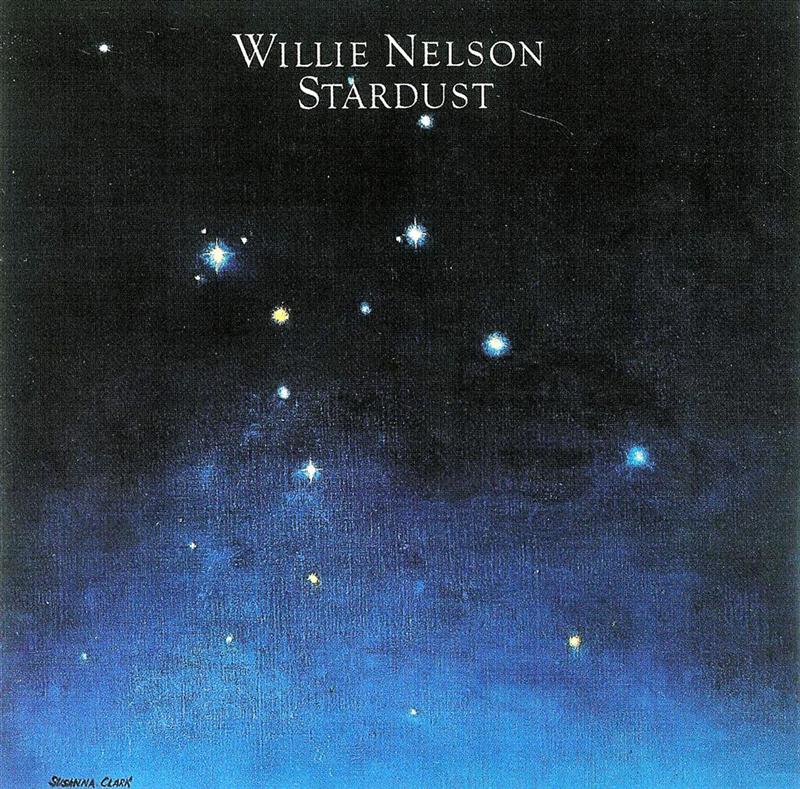
stardust


Willie Nelson took a huge risk and had his greatest success with this collection of pop standards.  After years of massive acclaim with his outlaw country concept albums like 'The Red Headed Stranger', Nelson defied expectations by reinterpreting some of his favorite songs from his childhood:  "Honestly I did most of my own songs until I started running out and then I did the 'Stardust' album ... I was living in L.A., in an apartment, right underneath the apartment of Booker T. Jones. He was married to Rita Coolidge’s sister at the time -- Priscilla. He and I hung out together a lot, and the more I got to know him, the more I realized that this was the time to do the Stardust album. I’d wanted to do all those songs for a long time, but I just didn’t find the right producer and arranger. I knew that in order to do songs like that, I would need to have someone in there, who knew everything there was to know about writing and arranging. Booker T. was the guy that I felt could do it. Sure enough, he was the guy...When you have a producer, you’ve really got to trust him. You’ve got to say, 'Okay, take it.'You’ve got to believe in the guy before you can do this. So, I believed in Don Was, I believe in Chet Atkins, and I believe in Daniel Lanois. Spirit, I produced that myself. But, Stardust was Booker."

The sessions featured Willie Nelson on vocals and guitar; Bobbie Nelson on piano; Paul English and Rex Ludwick on drums; Jody Payne on guitar; Bee Spears on bass; Chris Ethridge on bass; Mickey Raphael on harmonica; 
and Booker T. Jones on organ and piano. 


Nelson admits:    "It's more of a challenge to do those pop classics and standards because I grew up singing Your Cheating Heart and the Hank Williams songs is second nature to me, but to do 'Stardust' and 'Moonlight' and 'Vermont' and songs like that, you really have to be on your game a little bit ... I have gone through cycles where the commercial stations play some of our stuff and then I go through cycles where they don’t. It was a long time before I really got anything going on the radio stations, early hit 'Blue Eyes Crying in the Rain', that was one of the first things that sort of crossed over and got a lot of play country, and even the pop rock and roll stations played it and it was pure country. Then along with the 'Stardust' album and that is completely opposite from country and yet it was on the country charts for ten years. It just goes to prove to me that a good song is always a good song."

'Stardust' reached number thirty on the US album chart, twenty-eight in Canada, five in Australia, and number one in New Zealand and on the US and Canadian country album charts.  The album spent ten years on the US country album chart.  Nelson won a Grammy Award for Best Male Country Vocal Performance for 'Georgia on My Mind'.  'Stardust' has sold more than eighteen million copies worldwide.  


http://willienelson.com/


'Stardust' 

full album:


Side one
1. "Stardust" Hoagy Carmichael Mitchell Parish  3:53
2. "Georgia on My Mind" Carmichael Stuart Gorrell  4:20
3. "Blue Skies" Irving Berlin 3:34
4. "All of Me" Seymour Simons Gerald Marks   3:54
5. "Unchained Melody" Alex North Hy Zaret   3:50
Side two
1. "September Song" Kurt Weill Maxwell Anderson   4:35
2. "On the Sunny Side of the Street" Jimmy McHugh Dorothy Fields   2:36
3. "Moonlight in Vermont" Karl Suessdorf John Blackburn    3:25
4. "Don't Get Around Much Anymore" Duke Ellington Bob Russell   2:33
5. "Someone to Watch Over Me" George Gershwin Ira Gershwin    4:03


Tuesday, April 24, 2012

blue skies


Irving Berlin wrote this classic as a last minute addition for the musical 'Betsy' when the star of the show requested a show stopper. ’Blue Skies’ was introduced on opening night in 1926 and the audience requested more than twenty encores that night from singer Belle Baker. That year alone, the song charted six times. Al Jolson sang it in 'The Jazz Singer' in 1927; and also that year Ben Selvin and His Orchestra took their version to number one. In the years since, it has been recorded by countless artists in a myriad of musical genres. In 1978, Willie Nelson took his version to the top of the country chart.


Tommy Dorsey Orchestra with Frank Sinatra


Ella Fitzgerald


Benny Goodman and his Orchestra


Willie Nelson


Ben Selvin and His Orchestra


I was blue, just as blue as I could be
Ev'ry day was a cloudy day for me
Then good luck came a-knocking at my door
Skies were gray but they're not gray anymore

Blue skies
Smiling at me
Nothing but blue skies
Do I see

Bluebirds
Singing a song
Nothing but bluebirds
All day long

Never saw the sun shining so bright
Never saw things going so right
Noticing the days hurrying by
When you're in love, my how they fly

Blue days
All of them gone
Nothing but blue skies
From now on

I should care if the wind blows east or west
I should fret if the worst looks like the best
I should mind if they say it can't be true
I should smile, that's exactly what I do


Sunday, April 24, 2011

someone to watch over me


George and Ira Gershwin wrote this classic song from the Great American Songbook. It was originally composed for the musical 'Oh Kay!' which was probably inspired by Kay Swift, composer, pianist, and George's very close friend. Howard Dietz is credited with helping to write the lyrics to two of the songs from the musical during Ira's hospital stay; but not for this song, although he claimed to have come up with the title. The song was originally conceived as an uptempo number; but after playing around with it one day, the duo recognized how moving it was as a ballad. It has been covered by generations of music fans. Hopefully, you will find you favorite below.


George Gershwin


Ella Fitzgerald


Blossom Dearie


Stephane Grappelli


Frank Sinatra


Barbra Streisand


Willie Nelson


Linda Ronstadt


Sting


There’s a saying old, says that love is blind
Still we’re often told, "seek and ye shall find"
So I’m going to seek a certain lad I’ve had in mind

Looking everywhere, haven’t found him yet
He’s the big affair I cannot forget
Only man I ever think of with regret

I’d like to add his initial to my monogram
Tell me, where is the shepherd for this lost lamb?

There’s a somebody I’m longin’ to see
I hope that he, turns out to be
Someone who’ll watch over me

I’m a little lamb who’s lost in the wood
I know I could, always be good
To one who’ll watch over me

Although he may not be the man some
Girls think of as handsome
To my heart he carries the key

Won’t you tell him please to put on some speed
Follow my lead, oh, how I need
Someone to watch over me

Won’t you tell him please to put on some speed
Follow my lead, oh, how I need
Someone to watch over me

Someone to watch over me