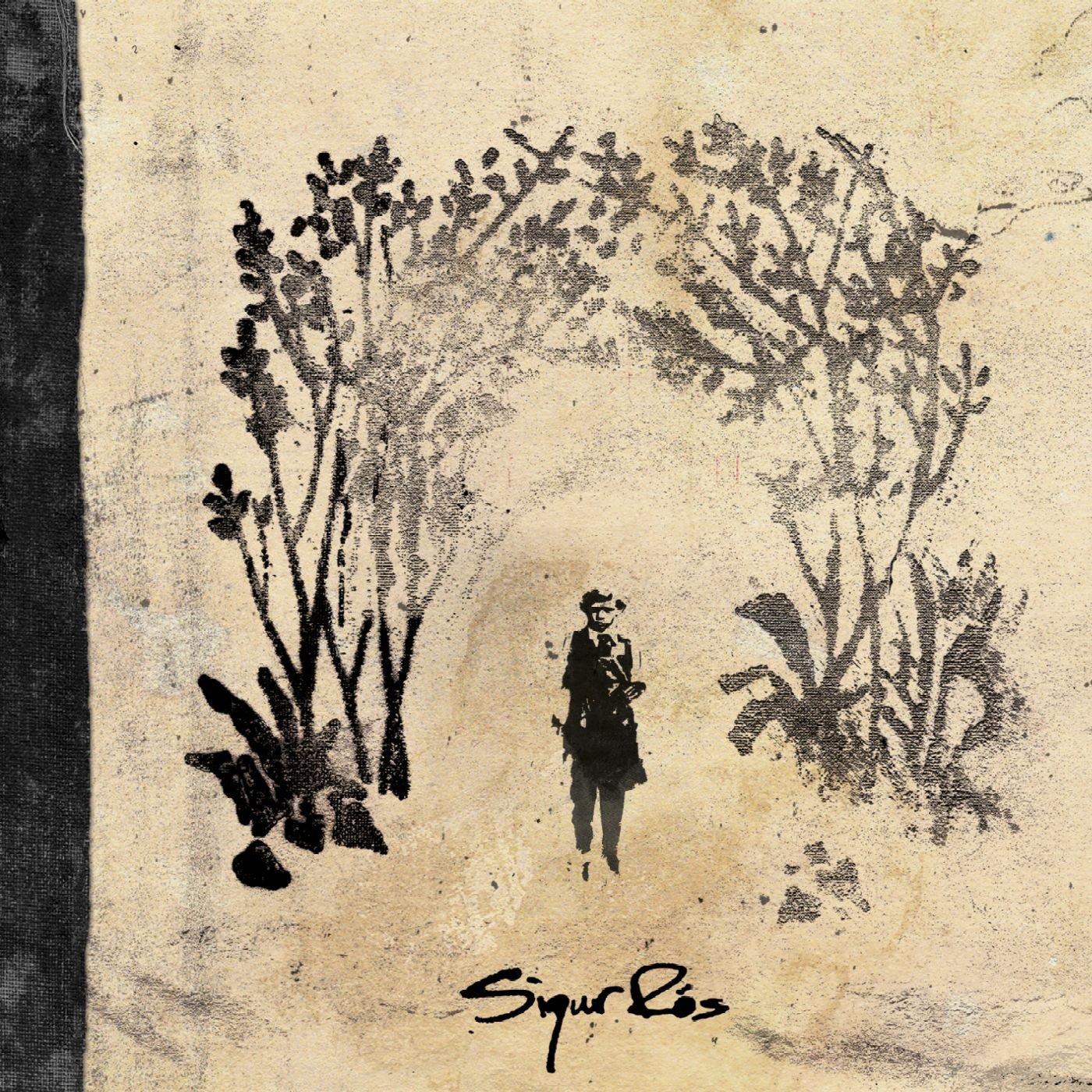
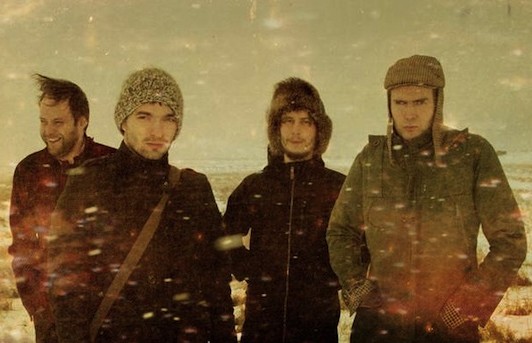
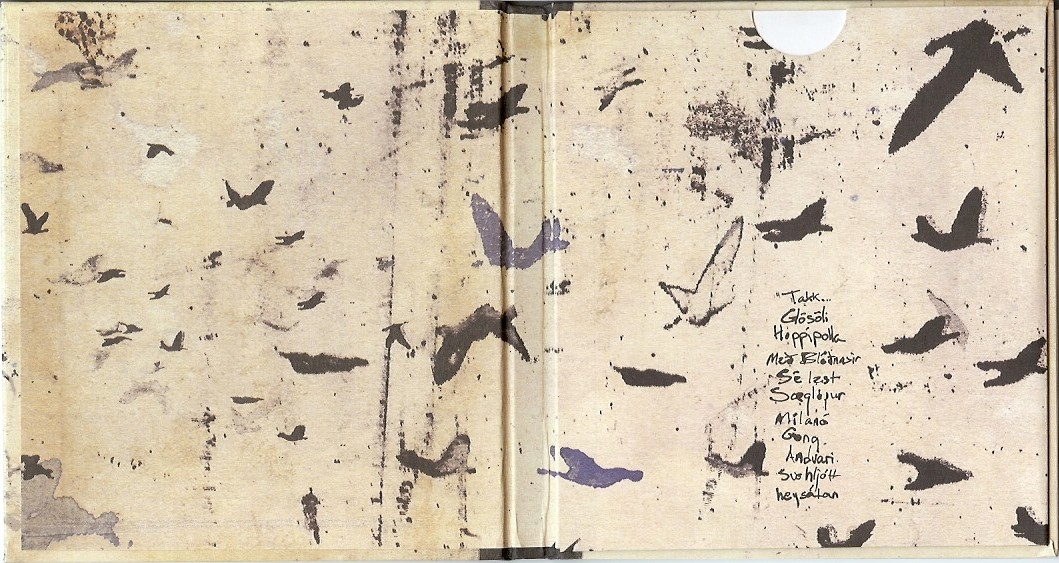
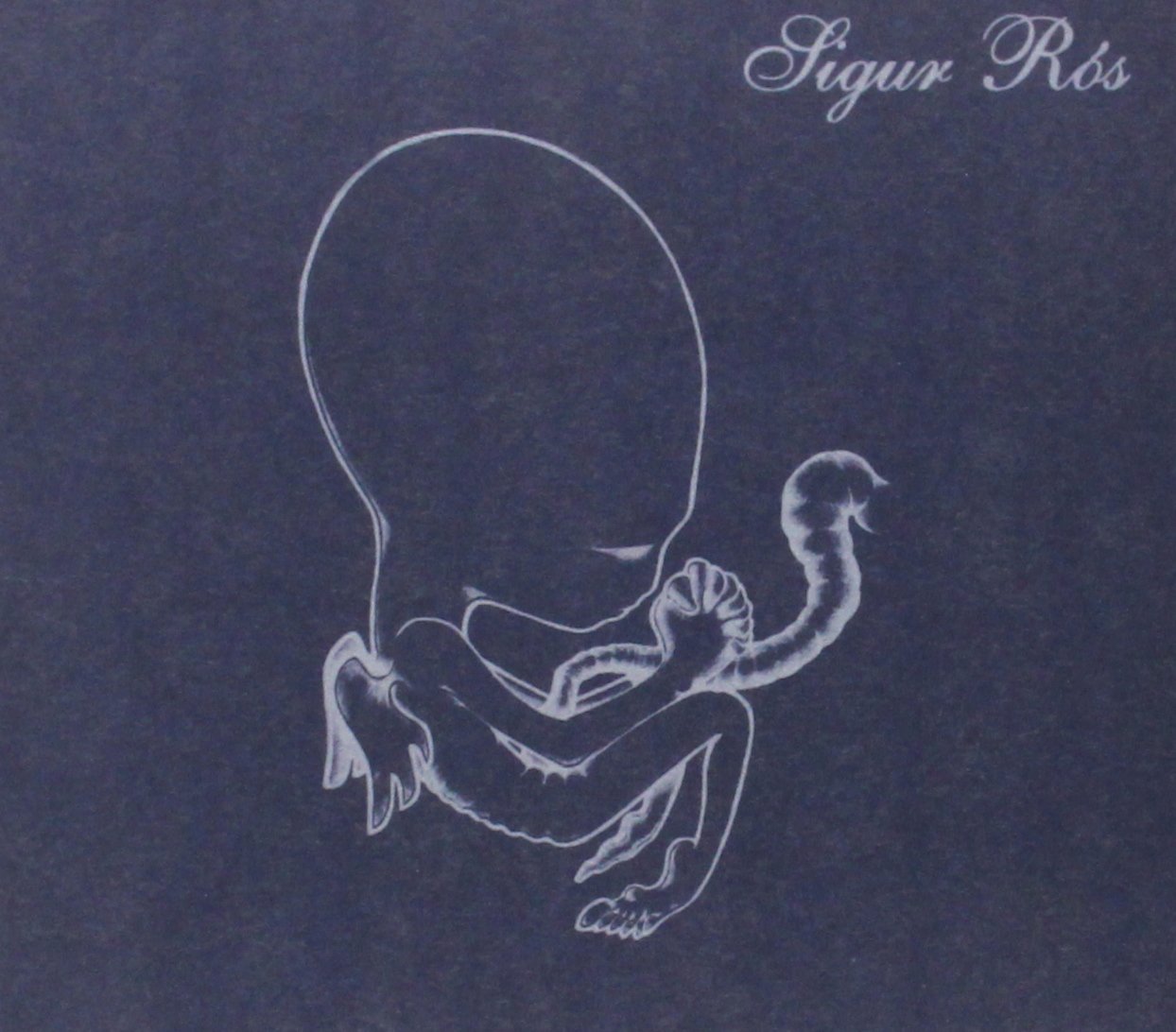
Sigur Rós created glowing galvanic moments out of little adventures in the delicate dynamics and swelling strings of this rapturous requital. The Icelandic quartet had developed their unique ethereal sound over three albums ('Von' in 1997, 'Ágætis Byrjun' in 1999, and '( )' in 2002), three EP's (Rímur in 2001, Sigur 1 / Sigur 9 in 2003, and their composition for Merce Cunningham's Split SidesBa Ba Ti Ki Di Do in 2004), and the instrumental electronic soundtrack to the documentary Hlemmur in 2002. 'Takk...' was recorded at their Sundlaugin "swimming pool" studio near Álafoss, in the town of Mosfellsbær. The sessions featured Jón Þór Birgisson on vocals and guitar; Kjartan Sveinsson on keyboards; Georg Hólm on bass guitar; and Orri Páll Dýrason on drums; with strings by Amiina, Kristín Lárusdóttir, Júlía Mogensen, Stefanía Ólafsdóttir, Eyjólfur Bjarni Alfreðsson, Ingrid Karlsdóttir, Gréta Salóme Stefánsdóttir, Matthías Stefánsson, and Ólöf Júlía Kjartansdóttir; brass by Eiríkur Orri Ólafsson, Snorri Sigurðarson, Helgi Hrafn Jónsson, Samúel Jón Samúelsson, and Össur Geirsson; Frank Aarnink on percussion; and Álafosskórinn as the choir on "Hoppípolla". The band co-produced the album with Ken Thomas.
1. Takk... "Thanks..." 00:00 2. Glósóli "Glowing Sole" 1:57 3. Hoppípolla "Hopping into Puddles" 8:12 4. Með blóðnasir "I Have a Nosebleed" 12:40 5. Sé lest "I See a Train" 14:57 6. Sæglópur "Lost at Sea" 23:37 7. Mílanó "Milan" 31:16 8. Gong "Gong" 41:41 9. Andvari "Zephyr" 47:14 10. Svo hljótt"So Quietly" 53:54 11. Heysátan "The Haystack" 1:01:18 Sigur Rós Live in Reykjavík 2005 (Full Set)
Setlist: 0:00 Takk... 2:20 Glósóli 8:47 Ný batterí 19:10 Sæglópur 26:36 Untitled #4 (a.k.a Njósnavélin/The nothing song) 34:55 Gong 40:00 Andvari 46:30 Hoppípolla 51:20 Með blóðnasir 54:10 Sé lest 1:02:55 Olsen Olsen 1:11:25 Viðrar vel til loftárása 1:22:10 Svo hljótt 1:28:50 Heysátan 1:35:50 Hafsól 1:44:40 Untitled #9 (a.k.a. Smáskífa) 1:53:44 Untitled #8 (a.k.a. Popplagið/The pop song)
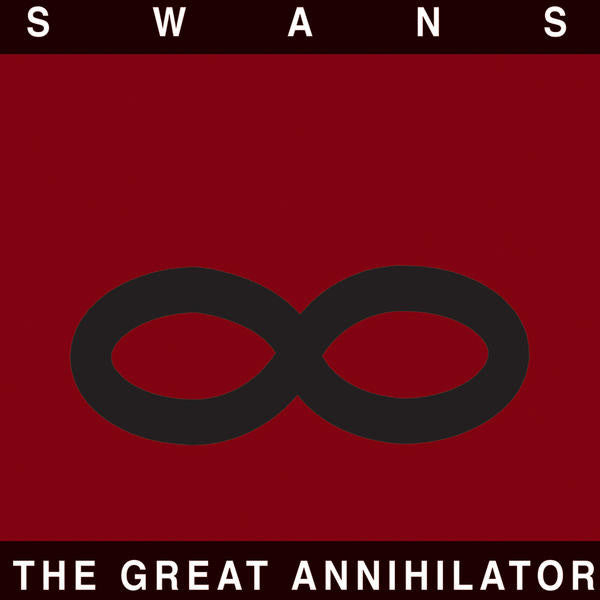
Swans went burning backwards through a cosmic gothic blood promise to create this insane unconscious true love annihilation. After a decade the group had developed from a visceral industrial onslaught ( 'Filth' , 'Cop' , 'Holy Money' , and 'Greed' ) into a more diverse and accessible sound ( 'Children of God' , 'The Burning World' , 'White Light from the Mouth of Infinity' , and 'Love of Life' ) coinciding with a brief flirtation with major label Uni/MCA. The group took three years to record their next album 'The Great Annihilator' with Michael Gira on electric guitar, vocals, electric 12 string guitar, sounds, acoustic guitar, and production; Jarboe on vocals, background vocals, sounds, organ, and keyboard; Bill Rieflin on drums, percussion, sounds, and 12 string acoustic guitar; Algis Kizys on bass guitar; Norman Westberg on electric guitar; Clinton Steele on electric guitar, acoustic guitar, and drone guitar; and Ted Parsons on drums.
Mind/Body/Light/Sound 'The Great Annihilator' full album:
All songs by Michael Gira except "My Buried Child" (lyrics: Michael Gira, music: Michael Gira, Jarboe) and "Out" (Michael Gira, Jarboe). 1 - In 2 - I Am The Sun - 2:27 3 - She Lives! - 5:51 4 - Celebrity Lifestyle - 12:52 5 - Mother/Father - 17:02 6 - Blood Promise - 21:09 7 - Mind/Body/Light/Sound - 25:25 8 - My Buried Child - 30:18 9 - Warm - 33:17 10 - Alcohol The Seed - 38:11 11 - Killing For Company - 41:41 12 - Mother's Milk - 48:36 13 - Where Does A Body End? - 51:03 14 - Telepathy - 54:46 15 - The Great Annihilator - 1:00:57 16 - Out - 1:05:51
Sigur Rós slowly and softly embraced the world with the glacial cinematic soundscapes of this ecstatic orchestral escalation. The group had formed in Reykjavík, Iceland in 1994 with Jón Þór "Jónsi" Birgisson on guitar and vocals, Georg Hólm on bass, and Ágúst Ævar Gunnarsson on drums. Although the band's name translates roughly to "Victory Rose"; it was actually inspired by Jónsi's newborn sister Sigurrós. They were signed to the Sugarcubes' Bad Taste label and released 'Von' (translated "hope") in 1997 and then'Von Brigði' ("variations on Von") in 1998. That same year the band welcomed Kjartan Sveinsson on keyboards. 'Ágætis Byrjun' ("a good beginning") was recorded with producer Ken Thomas during the summer of 1998 and spring of 1999. The sound of the band had developed into a neo-classical swoon with the addition of Sveinsson and the adoption by Jónsi of using a cello bow on his guitar. The strings in 'Starálfur' are palindromic; they are the same forwards and backwards and the album's 'Intro' is a chapter from the title track, 'Ágætis byrjun', reversed. 'Avalon' is a chapter from 'Starálfur', slowed down. 'Ágætis Byrjun' climbed to the top of the Icelandic album chart and was praised by critics around the world. It finally saw release in the UK in 2000 and in the US in 2001 on Fat Cat Records. The album charted at sixty-five in France, fifty-two in the UK, thirty-eight in Ireland, seventeen in Norway, and number one in Iceland.
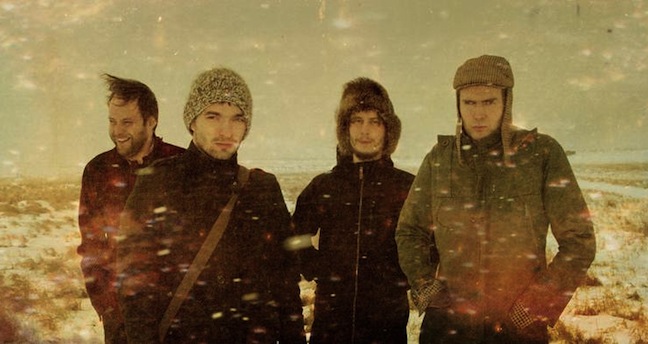
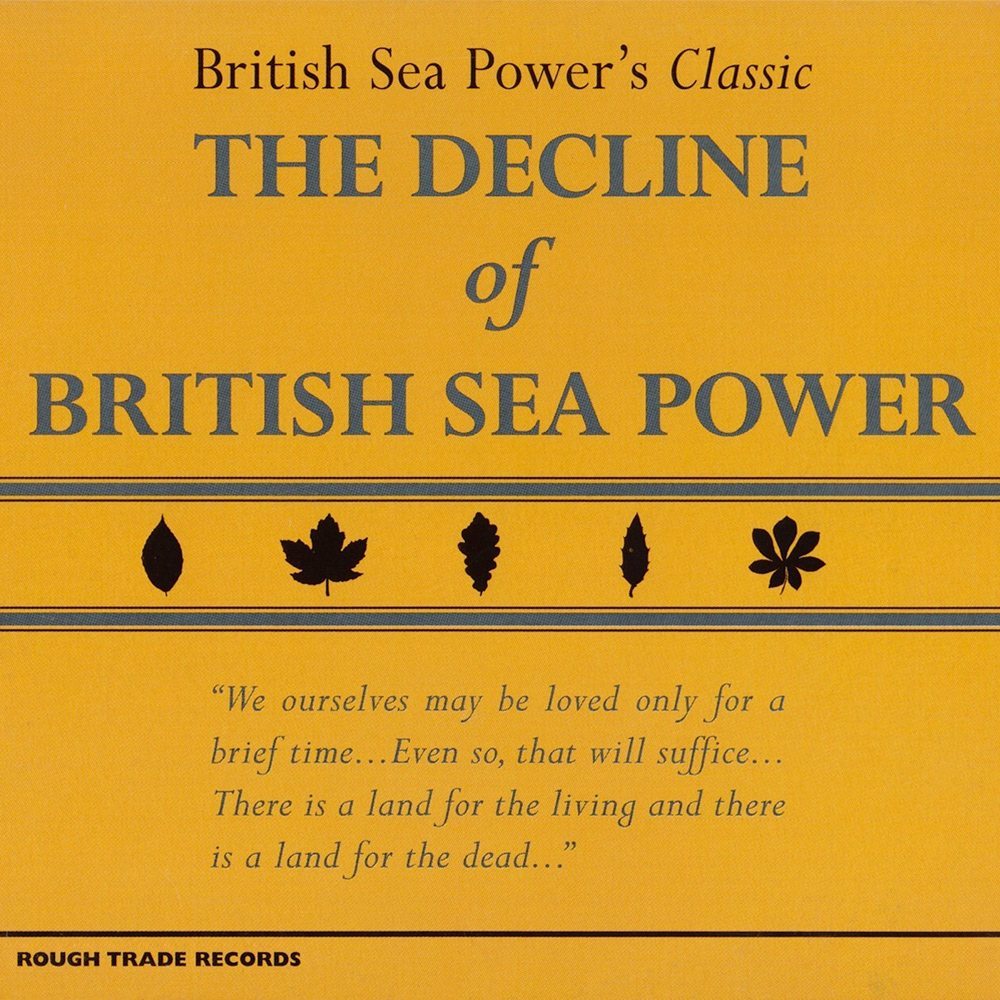
'The Decline of British Sea Power' was recorded by Mads Bjerke and British Sea Power at 2 kHz; with the exception of 'Carrion' which was recorded at Golden Chariot Studios, Roundhouse, and 2 kHz and, with Marc Beatty, at Mockingbird Studio. The sessions featured Yan (Scott Wilkinson) on vocals, guitar, piano, and organ; Hamilton (Neil Hamilton Wilkinson) on vocals, bass, guitar, piano, organ, and backing vocals; Noble (Martin Noble) on guitar, piano, backing vocals, and organ; and Wood (Matthew Wood) on drums; with D. Sharp on french horn; M. J. Noble on extra backing vocals; and V. Oag providing the recording of the sea. 'The Decline of British Sea Power' only charted at number fifty-four in the UK; but it managed to sell over sixty thousand copies in the years since its release. Noble says: "We've been doing everything ourselves, gradually learning... the production side, doing the covers. We did all the videos up to Remember Me. It can take a little more time than with people who get things done for you."
Sonic Youth focused their energies and found their greatest commercial success with the elegant chaos of this pop punk noise rock exposition. After their major label debut 'Goo' broadened their audience, they brought in the team producer Butch Vig and mixer Andy Wallace that handled 'Nevermind' for their Geffen labelmates Nirvana. Vig convinced the band to condense their extended instrumental jams into more cohesive song structures before they even started recording at the Magic Shop studio with Kim Gordon on bass and vocals, Thurston Moore on guitar and vocals, Lee Ranaldo on guitar and vocals, and Steve Shelley on drums. He also had them record multiple takes of the songs, and the result is a cleaner more urgent sound. Vig recalls: "'Dirty' was recorded on an old radio broadcast console, and cut in a smaller room, where we tracked a lot of things live with the band playing in a circle round Steve's kit. Again, a simple set-up...Over the years, I've found that the fewer mics you use, the better the sound is going to be...It's important to understand how a drummer plays – do they hit the cymbals loud, or do they play the fills louder than the groove? Steve Shelley is amazing in the way he fits into the symphonic sound that Sonic Youth make. Often, he'll play drums more as a pulse than a clearly defined part. He glues it all together." Shelly says: "In a way it seems like we maybe made some concessions to the label, at least in how we recorded the last two albums. But I think that 'Dirty' is easily the best sounding thing we've done- you can really hear everything that's going on. It's the first time I really felt like the album's musical base was as deep and wide as it could be. So I'm Not sure I'd even consider that any kind of concession, really." Renaldo adds: "And some of the songs on 'Dirty'-mostly ones that Kim ended up singing- are as abstracted as anything we've done. As far as the difference in major and indie labels.....it's really more in your head then anywhere else. You do a record and give it to some people who try to sell it for you. Weather it's a major label or any independent label doing the selling makes little difference to the way you live your life. We're fortunate in the fact that we've not allowed anyone to take much control out of our hands- but that's something we've never done. Maybe other bands are just to willing to sign that away. I think we've all been pretty happy with the way things have gone with our label, and I don't think we could've made a record that's better than 'Dirty', regardless of where we were."
Moore says the band goes out of its way to find different, more extreme sounds “because it’s a gas, and sometimes it’s the only way to make it sound interesting...Just do it, and don’t let anybody tell you you can’t do it. That way you can free yourself up from an uptight music world.” Gordon admits: "I think in general we wanted to have as much power as any mainstream rockband...We don't want to be thought of as an indie band or a noise band. We think of ourselves as a guitar oriented rock band." Moore quips: "We can't get rid of our punk roots. We try washing them out-We try bleaching them out." 'Dirty' became their biggest selling album; reaching eighty-three in the US, twenty-two in Australia, six in the UK; and charting for the first time in several countries: going to fifty-nine in Germany, fifty-three in Japan, twenty-six in Sweden, and five in New Zealand, their highest position on any album chart.
http://www.sonicyouth.com/ '100%' hit twenty-six in the UK and went to number four on the US modern rock chart, their best showing on any singles chart. It was dedicated to Joe Cole, the roadie and friend of Henry Rollins who was murdered. The music video was directed by Tamra Davis and Spike Jonze.
'Sugar Kane' peaked at twenty-six in the UK.
The political ranting of 'Youth Against Fascism' fifty-two in the UK. It features Ian MacKaye of Fugazi on guitar. The video was directed by Nick Egan.
'Chapel Hill' is inspired by the burgeoning music scene.
'Purr' is a hyper-driven rocker that slows down to an mindblowing melting solo before kicking back into gear.