Showing posts with label neoclassical. Show all posts

Tuesday, June 10, 2014

ágætis byrjun


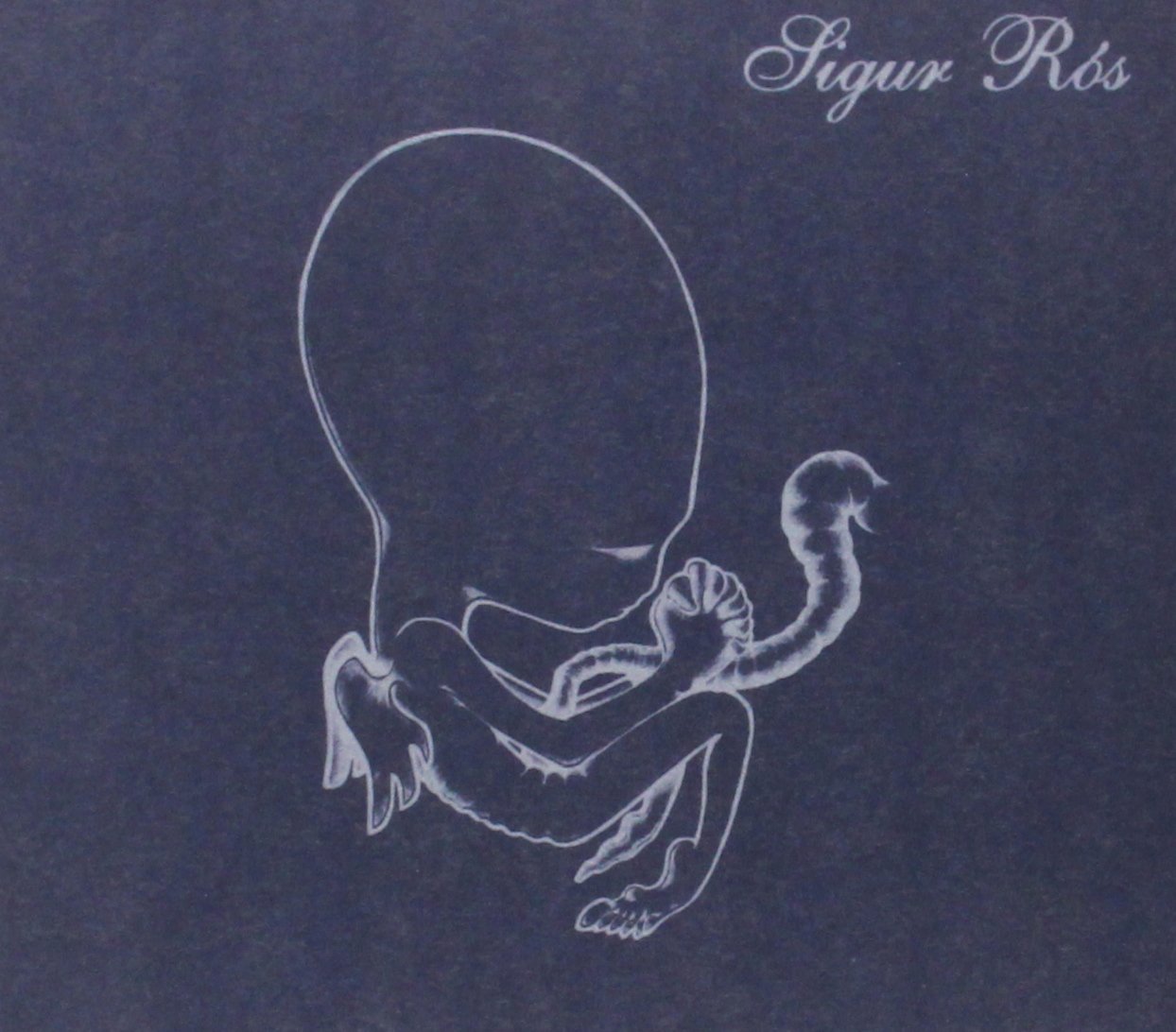
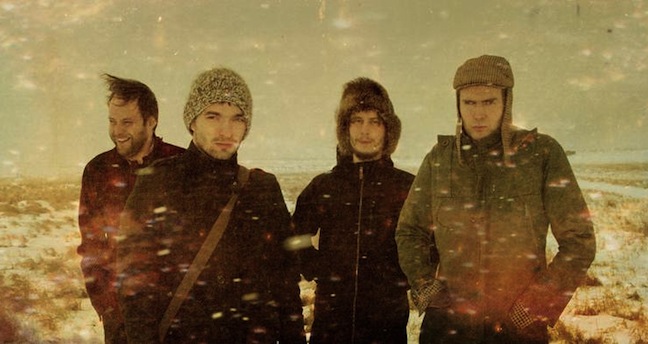
Sigur Rós slowly and softly embraced the world with the glacial cinematic soundscapes of this ecstatic orchestral escalation.  The group had formed in Reykjavík, Iceland in 1994 with Jón Þór "Jónsi" Birgisson on guitar and vocals, Georg Hólm on bass, and Ágúst Ævar Gunnarsson on drums.  Although the band's name translates roughly to  "Victory Rose"; it was actually inspired by  Jónsi's newborn sister Sigurrós.  They were signed to the Sugarcubes' Bad Taste label and released 'Von' (translated "hope") in 1997 and then 'Von Brigði' ("variations on Von") in 1998.  That same year the band welcomed Kjartan Sveinsson on keyboards.  

'Ágætis Byrjun' ("a good beginning") was recorded with producer Ken Thomas during the summer of 1998 and spring of 1999.  The sound of the band had developed into a neo-classical swoon with the addition of Sveinsson and the adoption by Jónsi of using a cello bow on his guitar.  The strings in 'Starálfur' are palindromic; they are the same forwards and backwards and the album's 'Intro' is a chapter from the title track, 'Ágætis byrjun', reversed. 'Avalon' is a chapter from 'Starálfur', slowed down.

'Ágætis Byrjun' climbed to the top of the Icelandic album chart and was praised by critics around the world.  It finally saw release in the UK in 2000 and in the US in 2001 on Fat Cat Records.  The album charted at sixty-five in France, fifty-two in the UK, thirty-eight in Ireland, seventeen in Norway, and number one in Iceland.  


Sveinsson considers:   "If it's a question about space, it is my question.  In Iceland there's plenty of open space and the sky is very big and you can drive only minutes out of Reykjavik and be surrounded by lava and black deserts - it is very creative. It's rough and violent, and I think the environment definitely influences us in an unconscious way."

Hólm says:  "It's different with books, for example, because writers are very good at explaining, but musicians deal with music, so we can't explain, except through our music.  So, you must listen to the music and then you will find out everything. Our album is like a little book and it should be listened to as a whole...Maybe as individuals we aren't that special, but our music is definitely special. Music has to sound real and it has to be sincere. It has to come from you, not from some idea you might have of what sounds cool. Its something you hear inside your head and you want to make the music sound like that because it describes your feelings."

Birgisson reveals:   "The first year of Sigur Rós, we were playing kind of slow, grand rock, or something — yeah, maybe more rock than, like, some ambient stuff. After that we slowly found our groove...When you're in Iceland, you're just so isolated. At that time, we didn't have Internet or anything like that. We didn't travel that much outside of Iceland. So there were never any dreams of becoming famous. That kind of stuff just happens. But it was a really good time to grow up and play in a band. The only thing you did was just play with your friends and have fun. If you do that and are honest, then probably good things come to you ... When I am writing music, it is magical...I don't know why I write songs, I don't know where it comes from and I don't know why we four are really good at doing it. It happens unconsciously, but reporters want to know why I sing like this, why do I use a bow on my guitar...I really don't know. and I can't make something up about it, I can only speak the truth. How can I make someone understand things that I don't understand myself?...It is all unconscious.  Everything that Sigur Rós does has to flow; it is like good karma - if you do honest things, then everything is as it should be."


http://www.sigur-ros.co.uk/


"Svefn-g-englar"   "Sleep(walk)ing Angels"
https://www.youtube.com/watch?v=Xow2gnVTUjs


"Viðrar vel til loftárása"   "Good Weather for an Airstrike"
https://www.youtube.com/watch?v=akYuy2FMQk4


"Olson Olson"
https://www.youtube.com/watch?v=8LeQN249Jqw


"Ágætis byrjun"   "A Good Beginning"


'Ágætis Byrjun'
full album:


1. Intro (0:00 - 1:37)
2. Svefn-g-englar (1:37 - 11:41)
3. Starálfur (11:41 - 18:27)
4. Flugufrelsarinn (18:27 - 26:16)
5. Ný batterí (26:16 - 34:26)
6. Hjartað hamast (bamm bamm bamm) (34:26 - 41:36)
7. Viðrar vel til loftárása (41:36 - 51:54)
8. Olsen Olsen (51:54 - 59:57)
9. Ágætis byrjun (59:57 - 1:07:53)
10. Avalon (1:07:53 - 1:11:57)

1. "Intro"     1:36
2. "Svefn-g-englar"   "Sleep(walk)ing Angels" 10:04
3. "Starálfur"   "Staring Elf" 6:46
4. "Flugufrelsarinn"   "The Fly's Savior" 7:48
5. "Ný batterí"   "New Batteries" 8:06
6. "Hjartað hamast (bamm bamm bamm)"   "The Heart Pounds (boom boom boom)" 7:08
7. "Viðrar vel til loftárása"   "Good Weather for an Airstrike" 10:13
8. "Olsen Olsen"     8:03
9. "Ágætis byrjun"   "A Good Beginning" 7:39
10. "Avalon"     4:01


Tuesday, March 4, 2014

rising force


Yngwie  (pronounced "ING-vay") Malmsteen marched forth with revolutionary rising force and lightning virtuosity in the incendiary neo-classical shredding of this groundbreaking metal opus.   Born Lars Johan Yngve Lannerbäck in Stockholm, Sweden, he was inspired to play the guitar after seeing a TV special about Jimi Hendrix in 1970.  He was playing in a band by the age of ten and had changed his name to Yngwie Johan Malmsteen (taking on his mother's maiden name) by the age of twelve.  He became influenced by the music of 19th century violinist and composer Niccolò Paganini as well as the guitar style of Deep Purple's Ritchie Blackmore.  Mike Varney of Shrapnel Records heard Malmsteen's demo 'Powerhouse' and invited the eighteen year old guitarist to the US.  Malmsteen played for a few months with Steeler before moving on to Alcatrazz.  


'Rising Force' was conceived as a side project while on break from touring with Alcatrazz.  Malmsteen arranged and produced the album himself at the Record Plant in Los Angeles with engineering by Lester Claypool and Peter Vargo.   'Rising Force'  features Yngwie Malmsteen on guitar, Moog Taurus, and bass; Jeff Scott Soto on vocals; Jens Johansson on keyboard and harpsichord arrangement;  and Barriemore Barlow on drums.  It was released at first only in Japan on Polygram; but it sold so well as an import that they decided to release it domestically.  


Malmsteen escaped from Alcatrazz after 'Rising Force'  was officially released.   He would admit:   "I wanted to leave Alcatrazz a lot sooner than I actually left. There was always a subliminal disliking between me and the rest of the guys in the band. We couldn't agree upon things and my influences and beliefs were totally different from theirs. We tried to be as nice as we could to one another, but it was an uncomfortable atmosphere. They probably feel the same way about me...If guitar players just listen to other guitar players it's almost impossible to avoid sounding like them.  I try to achieve a style that is a lot different from what other guitarists sound like. If you listen to other instruments like violin, flutes or keyboards you will break away from the clichés of guitar playing...Classical is the peak of the development of music and Bach is the most influential classical composer of all. Beethoven, Chopin and Liszt all took from Bach. Mozart even took from Bach; he was a little kid when Bach died. Classical is the source of music; it's like a religion, almost.  Paganini is probably my biggest classical influence. I got turned on to him through a tv show in Sweden. This guy was playing Paganini and I freaked, so I went out and bought Paganini's 'Twenty-Four Caprices', which is my all-time favorite thing to listen to. Paganini did with his instrument what few people have ever come close to doing. He was a rock and roller -- very wild and very extreme...I’d rather have people dislike my style than change it.  If someone says, ‘Hey, Yngwie, you play too damn much’ –- I don’t care. They way I play is the way I like to play. If people like it – great. If they don’t, it’s still fine with me...I want to say something very clearly. I understand that I’m a self-confident person who might come off with the wrong attitude sometimes, but I don’t mean to. I just believe in certain things and I know exactly what I want. I’ve always sacrificed things in order to become the best musician I could be. My will power has always been very strong. If I want something, I’ll get it. I’ve had no trouble keeping my head on my shoulders; nor do I have any chips on there.”


'Rising Force' went to number sixty in the US, nineteen in Japan, and fourteen in Sweden.  It won the Guitar Player Magazine's award for Best Rock Album and was nominated for a Grammy for 'Best Rock Instrumental'.  


http://www.yngwiemalmsteen.com/


'Rising Force' 

full album:


All tracks written by Yngwie Malmsteen.

1. "Black Star" 4:53
2. "Far Beyond the Sun" 5:52
3. "Now Your Ships Are Burned" 4:11
4. "Evil Eye" (based on Johann Krieger's "Bourree") 5:14
5. "Icarus' Dream Suite Op. 4" (based on "Albinoni's Adagio") 8:33
6. "As Above, So Below" 4:39
7. "Little Savage" 5:22
8. "Farewell" 0:49


Yngwie Malmsteen - Rising Force live


01:05 As Above so Below

05:05 I'll See the Light Tonight
09:40 Far Beyond the Sun
19:07 I am a Viking
23:27 On the Run Again
27:17 Little Savage
34:26 Guitar Solo
48:20 Black Star


Saturday, November 26, 2011

fragile


Yes coalesced into their classic lineup and produced their big commercial breakthrough with this expansive progressive rock masterwork. Original keyboardist Tony Kaye refused to play the synthesizer that the rest of the band wanted and quit early in the sessions, paving the way for multi-instrumentalist session man Rick Wakeman to fill in on Hammond organ, piano, RMI 368 Electra-Piano and Harpsichord, Mellotron, as well as the disputed Moog synthesizer. Wakeman remembers: "I had heard Yes live, as Strawbs had supported them at a gig in Hull. I thought they were amazing – incredibly different. When they asked me to join, I said 'no' initially, as I had decided to go back to just doing sessions. But after going along to one rehearsal, I was sold instantly. I wanted to add orchestral sounds in the keyboard department, and that’s exactly what Yes wanted. A match made in Heaven!"

Chris Squire says, "Yes has had quite a few changes over the years. Every time someone new has come in they’ve obviously injected more energy or new energy into the band and changed the sound a bit, and the approach, etc., depending on how much input the new member has had." Wakeman's contributions went uncredited, due to contractual obligations. Jon Anderson recalls: “Those songs still stand the test of time for sure. Steve and Rick added amazing amounts of different styles, music, new chords, new ideas. It was that perfect storm of energy that created 'Fragile'.”

Wakeman says, "Yes were always prepared before we went into the studio. The studio is not the place to write. You need to be seventy-five percent ready when you go into the studio, and then the music can develop to the next stage. The studio is the end of the assembly line. David Bowie taught me this. It’s a lesson I never forgot and will be eternally grateful for."

Steve Howe explains the band's differing methods of recording: "There are two schools of thought. In one, you start making an album, and then you never stop until you completely finish it. The opposite of that is you do tracks, and then you come back to them. You do some more tracks, and then you come back even later to the mixing. So, you’re always thinking fresh. You’re not thinking, 'God, I’ve been on this record for three months. I just want to stop hearing it!' This is how we made our earlier records, and it may prove to be a much better way. In the early days, we could never have one period of total immersion, until we did 'Topographic Oceans'. That was the first time we said, 'Okay, life stops until we finish this record.' But the records made before that were made around, and involved, life. 'Close to the Edge', 'Fragile', and 'The Yes Album' were made as we lived and toured, and stopped and started. I think, most probably, they were better because of it. They benefitted from renewing that fresh approach."


Squire ponders the band's influences and contemporaries: "Strange enough, around that time that you start realizing that you’ve got a band that could work and could become popular—and of course you see that in growing audiences, etc.—you don’t really listen to necessarily people who say you’re from the same country or whatever. In fact, I probably listened to Crosby, Stills and Nash more than I listened to Led Zeppelin in those formative years. Because that was more what Yes was about; a band that had great vocal harmonies. So, of course, I was influenced by Simon and Garfunkel and bands with great vocals. And of course we wanted to be band who were good instrumentalists as well, and Bill Bruford, our original drummer, was of course very influenced by jazz. So that was another element that was sewn into the makeup of Yes. We were kind of eclectic really. We kind of stood slightly aside from other acts."

Bill Bruford reminisces: “If you say to people that rock music is made up of three chords, there will always be guys, especially in the UK, who say, ‘What if we added a fourth chord and put it into 5/4?’ Those people fell into something called progressive rock. The British working class guys who assumed that rock ’n’ roll was their property got very pissed off at these art school guys who brought in all the nuts and bolts of progressive rock and added classical music, vocal harmony, poetry, and art. The Black Sabbaths of the world were very pissed off, and then the punks came and trashed it. I was fortunate enough to grow up in an era where everything went on. It was great. People even cared what the drummer thought!”

Anderson elaborates: "Each person in the band was great at what he did. Bill had that jazz-rock style, Chris Squire was of course a great bass player, Rick Wakeman was classically trained, and of course Steve Howe was terrific. There was so much talent, at a variety of levels. I was sort of the musical director, the person who decided which direction we should go with an idea. I might bring in a song and say, 'I don’t want you to simply play the chords. Why don’t you play some unusual figures, and jump around within the song?' Oftentimes the song might be very simple, so I wanted everyone to come up with music that would be entertaining for them to play. That’s how 'Long Distance Runaround' and 'Roundabout' were written. They were variations on the idea of, 'You find what you like playing, and let’s make it all work together.' Pulling those elements together is what created that unique sound. Everyone is playing his unique part, but we somehow made it all fit."

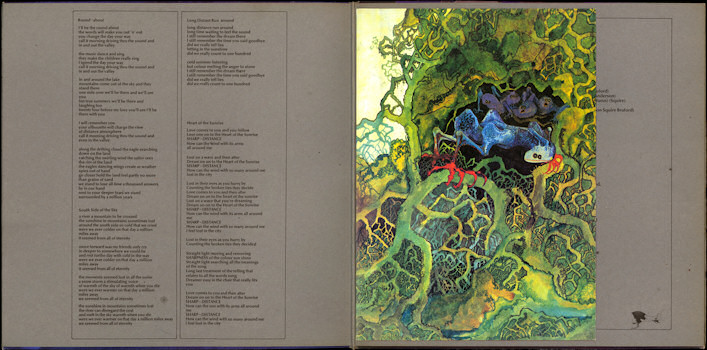
'Fragile' consists of four long group pieces and five individual showcase tracks. Anderson says: “Steve wanted to do a piece … Rick had ideas for his solo … so I suggested we all try one.” As laid out in the liner notes: "Five tracks on this album are the individual ideas, personally arranged and organised, by the five members of the band. 'Cans and Brahms' is an adaptation by Rick Wakeman on which he plays electric piano taking the part of the strings, grand piano taking the part of the woodwind, organ taking the brass, electric harpsichord taking reeds, and synthesizer taking contra bassoon. 'We Have Heaven' is a personal idea by Jon Anderson in which he sings all the vocal parts. 'Five Per Cent For Nothing' is a sixteen bar tune by Bill Bruford, played twice by the group, and taken directly from the percussion line. In Chris Squire’s 'The Fish,' each riff, rhythm, and melody is produced by using the different sounds of the bass guitar. Steve Howe concludes with a solo guitar piece 'Mood For A Day.' The remaining tracks on the album are group arranged and performed." 'Fragile' was recorded with Eddy Offord at Advision Studios in London. It went to number seven in the UK and number four in the US, selling double-platinum. Roger Dean did the iconic artwork.


"Tell the Moon Dog, Tell the March Hare".


An edited version of 'Roundabout' made it to number twenty seven in the Netherlands and number thirteen in the US. “It was written on the way from Aberdeen to Glasgow in Scotland, and we went through so many roundabouts (traffic circles on Scottish roadways), maybe 40 or so. It has a Scottish feel about it. Just listen to the solo, just like a ‘reel’. It changed everything. 'Roundabout' was a hit! And that’s what the band needed.”

"In and around the lake
Mountains come out of the sky
And they stand there
One mile over we'll be there
And we'll see you
Ten true summers we'll be back
And laughing too
Twenty four before my love
You'll see, I'll be there with you"


'Long Distance Runaround'

"Long distance runaround
Long time waiting to feel the sound
I still remember the dream there
I still remember the time you said goodbye
Did we really tell lies
Letting in the sunshine
Did we really count to one hundred"


'Heart of the Sunrise'

"Lost on a wave and then after
Dream on on to the Heart of the Sunrise
SHARP-DISTANCE
How can the wind with so many around me
Lost in the city "


'Fragile'
full album:
https://www.youtube.com/watch?v=87xx5pzHDlY


"Roundabout" (Jon Anderson/Steve Howe) -- 8:33
"Cans And Brahms" (Johannes Brahms, Arr. Rick Wakeman) -- 1:38
"We Have Heaven" (Jon Anderson) -- 1:40
"South Side Of The Sky" (Jon Anderson/Chris Squire) -- 7:58
"Five Per Cent For Nothing" (Bill Bruford) -- 0:35
"Long Distance Runaround" (Jon Anderson) -- 3:30
"The Fish (Schindleria praematurus)" (Chris Squire) -- 2:39
"Mood For A Day" (Steve Howe) -- 3:00
"Heart Of The Sunrise" (Jon Anderson/Chris Squire/Bill Bruford) -- 11:27


Saturday, November 12, 2011

nursery cryme


Genesis emerged fully formed as a powerful progressive juggernaut with their dramatic and daring third album. 'Nursery Cryme' was recorded with John Anthony at the state-of-the-art 16-track Trident Studios in London. Tony Banks, Peter Gabriel, and Mike Rutherford are energized by the addition of Phil Collins on drums and Steve Hackett on guitar. "We're closer to cartoons than the conventional rock band", reflects Peter Gabriel. "As far as other bands go, I think we're in a little puddle all by ourselves". The catchy and compelling experimental music moves from classical acoustic grace through symphonic mellotron to thunderous electronic assault and back again weaving surreal tales of love, death, and croquet. 'Nursery Cryme' went to number thirty-nine in the UK and peaked at number four in Italy.


http://www.worldofgenesis.com/


https://www.genesisfan.net/


@genesis


'The Musical Box' combines murder, resurrection, lust, and destruction in this Victorian English combination of Pandora's box and Ol' King Cole.

"I've been waiting here for so long
And all this time has passed me by
It doesn't seem to matter now
You stand there with your fixed expression
Casting doubt on all I have to say.
Why don't you touch me, touch me,
Touch me now, now, now, now, now"


'For Absent Friends' features Phil Collins on lead vocals.

"Inside the archway,
The priest greets them with a courteous nod.
He's close to God.
Looking back at days of four instead of two.
Years seem so few (four instead of two).
Heads bent in prayer
For friends not there"


'The Return of the Giant Hogweed' tells the story of an oppressive phototoxic weed.

"Fashionable country gentlemen had some cultivated wild gardens,
In which they innocently planted the Giant Hogweed throughout the land.
Botanical creature stirs, seeking revenge.
Royal beast did not forget.
Soon they escaped, spreading their seed,
Preparing for an onslaught, threatening the human race.
Mighty Hogweed is avenged.
Human bodies soon will know our anger.
Kill them with your Hogweed hairs
Heracleum Mantegazziani"


'Seven Stones'

"I heard the old man tell his tale:
Tinker, alone within a storm,
And losing hope he clears the leaves beneath a tree,
Seven stones
Lay on the ground.
Within the seventh house a friend was found.
And the changes of no consequence will pick up the reins from nowhere"


'Harlequin'

"There was once a harvest in this land.
Reap from the turquoise sky, harlequin, harlequin,
Dancing round, three children fill the glade,
Theirs was the laughter in the winding stream, and in between.
Close your door, the picture fades again
From the flames in the firelight"


'Fountain of Salmacis' borrows from Greek myth of Salmacis and Hermaphroditus.

"Unearthly calm descended from the sky
And then their flesh and bones were strangely merged
Forever to be joined as one"


'Nursery Cryme' 
full album:


All songs composed and arranged by Tony Banks, Phil Collins, Peter Gabriel, Steve Hackett, and Mike Rutherford.

Side one
1. "The Musical Box"   10:27
2. "For Absent Friends"   1:44
3. "The Return of the Giant Hogweed"   8:10
Side two
1. "Seven Stones"   5:08
2. "Harold the Barrel"   2:58
3. "Harlequin"   2:53
4. "The Fountain of Salmacis"   7:47


remastered