Showing posts with label kinks. Show all posts

Thursday, November 26, 2015

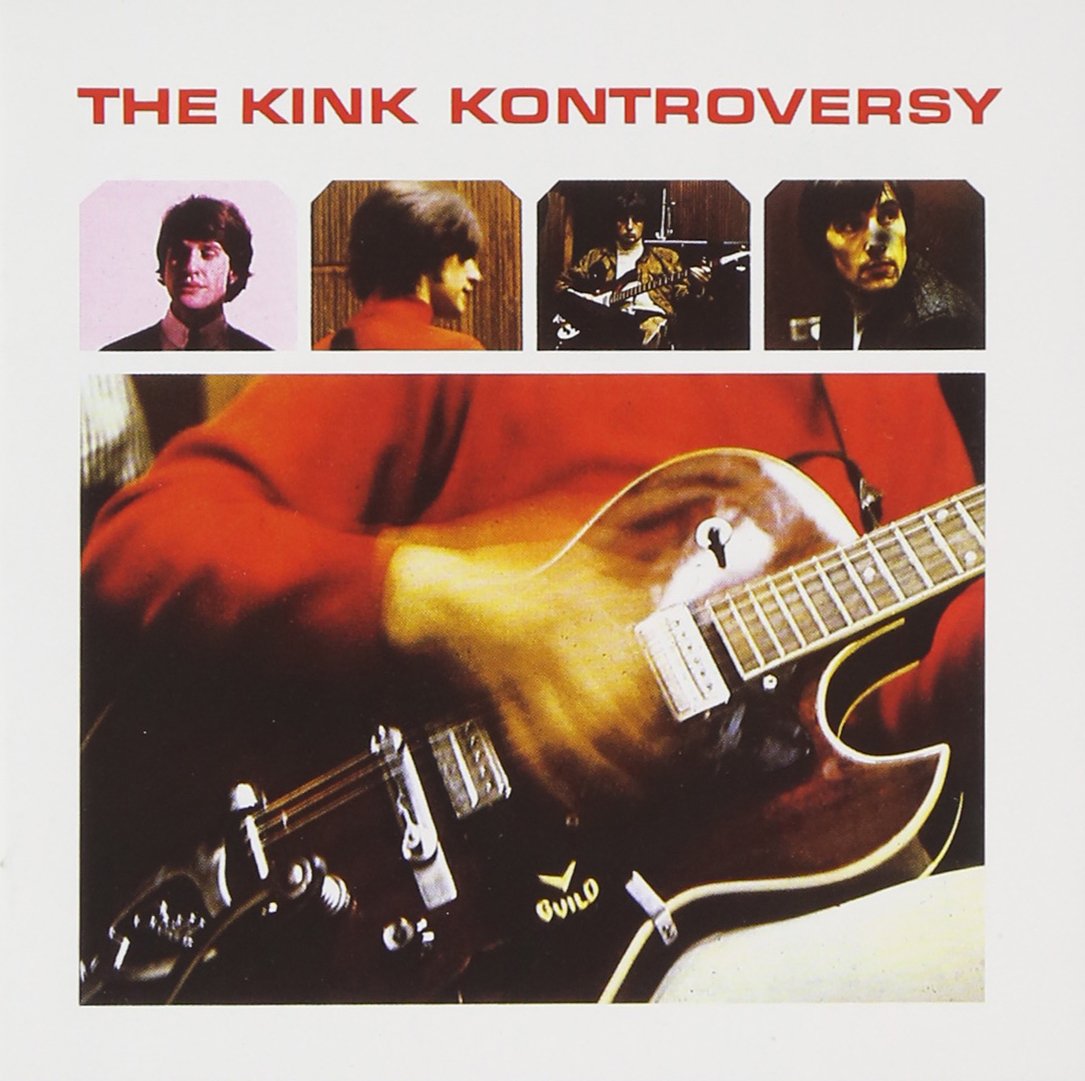
the kink kontroversy


The Kinks kontinued to kompound their konversion from koarse krunching riffage to more konceptual kompositions through the kreative konflict of this killer kollection.    The group had established themselves as major players in the burgeoning British explosion with two albums (Kinks  aka  You Really Got Me  in 1964,  and   Kinda Kinks earlier in 1965) and a slew of classic hit singles including "You Really Got Me",  "All Day and All of the Night",  "Tired of Waiting for You",  "Set Me Free",  "See My Friends", and "A Well Respected Man"; but there was trouble brewing.   Their fighting onstage during their tour of the US in 1965 led to them being banned from performing anywhere in the country for three years.  


Mick Avory:  "It used to blow hot and cold with Kinks on the road. It could absolutely euphoric or a real downer...All a bit hazy now [how we got banned in the US]; but we did shows when the unions had called a strike and arguments started and the Kinks had their own strike, right on this bloke's nose...My relationship with Dave was up and down as he was a volatile character and didn’t take a lot to upset him, and had a foul temper, but he was good company and sociable on his good side. I used to call him Mr Hyde. I let grievance build up in me and it finally came to a head  ...  [After Dave knocked over my kit, I hit him in the head with a cymbal stand] because that was all I had left to hit him with. He went down, and I left the building at speed."


Dave Davies:    "We were so green, and our management was green, too,  We were rough and rebellious and we didn't realize the power of the unions. Management may have rubbed them the wrong way. Also, the name 'Kinks' was connected to perversion and weird people. We didn't have a lot going for us  ...  Looking back, I met some really unusual characters, some wonderful people and some of them are still friends. But intertwined in all that were some pretty shady people. It's the sort of business where you meet some wonderfully talented people but there are also some shark-infested waters, to say the least."


After the tour, the pressure got to Ray Davies and he had a nervous breakdown:    “I’d been ill, partly because of all the lawsuits and partly because I realised other people depended on me for a living  ...  Some albums that we struggled with at the time, like The Kink Kontroversy, I've underrated that, it had songs that had to be written on the session and turned around in a day.  The second album [Kinda Kinks] was funny because it literally had to be made in a week  ...  Yeah, [pop music is disposable]; but it's also dealing with people's dreams and their emotions, and you've got to tread carefully. Because you're dealing with something that becomes somebody's memory, something they carry around with them. They come home - I've been the same - they want to hear a great record today...It gets you though the evening, sets you up. It becomes the soundtrack to people's lives. It's disposable, but a lot of people rely on that to get them through. So it can't be trivialized that much."


Pete Quaife:   "Mick was already with us and playing when we went into Pye studios and I think it was him that had to do most of the adjusting! Mick was our drummer and it was a great surprise to us to find that he was not allowed to play on most of the early recordings...That was in the very beginning of our career. At this time, because we were still trying to get used to recording, we just let everything go and happily banged away at our instruments, hoping that the producer could put it all together again! So the strange bass lines in Milk Cow Blues was simply me showing off and trying to be nothing more that the lead guitarist! I cringe now when I hear it! As far as arrangements go - there were none! Nothing serious anyway. We knew the numbers off by heart and we simply started each one and then did anything we could possibly think of to make the number more exciting. It didn't always work!"


'The Kink Kontroversy' features  Ray Davies on lead and backing vocals, rhythm guitar, and harmonica;   Dave Davies on lead guitar, backing vocals, lead vocals on "I Am Free" and "What's in Store for Me", and shared lead vocals on "Milk Cow Blues" and "You Can't Win";    Pete Quaife on bass guitar and backing vocals;   and  Mick Avory on drums (tracks 1, 2 and 9) and percussion;   with  Clem Cattini on drums (tracks 3-8, 10-12);   Nicky Hopkins on keyboards;  Rasa Davies on backing vocals (track 6 and 9);  and  Shel Talmy on guitar for "It's Too Late".

'The Kink Kontroversy' made it to number ninety-five in the US and nine in the UK


http://www.thekinks.info/


http://www.kindakinks.net/


"Milk Cow Blues"


"Till the End of the Day"


 "Dedicated Follower of Fashion"


'The Kink Kontroversy' 
full album:


All songs written and composed by Ray Davies, except where noted.

Side one
1. "Milk Cow Blues"   (Sleepy John Estes; arranged by The Kinks)   
2. "Ring the Bells" 
3. "Gotta Get the First Plane Home" 
4. "When I See That Girl of Mine" 
5. "I Am Free" 
6. "Till the End of the Day" 
Side two
7. "The World Keeps Going Round" 
8. "I'm On an Island" 
9. "Where Have All the Good Times Gone" 
10. "It's Too Late" 
11. "What's in Store for Me" 
12. "You Can't Win" 


Liner Notes:

Milk Cow Blues - Ray and Dave swop over lead

Ring The Bells - Ray, solo
Gotta Get The First Plane Home - Ray singing and playing harmonica
When I See That Girl Of Mine - Dave and Ray share vocal
I Am Free - Dave moans on his own
Till The End Of The Day - Ray, Dave and (help!) Pete, but Ray sings lead
The World Keeps Going Round - Ray mainly but with Dave and Pete in background
I'm On An Island - I Think it's Ray?
Where Have All The Good Times Gone - Ray and Dave
It's Too Late - Ray and Dave singing, but with Shel Talmy on guitar and Ray in the control box
What's In Store For Me - Dave sings assisted by Ray
You Can't Win - Ray and Dave, share
Before you proceed any further, ask yourself why you are reading this. Surely, the important thing is not to read about, but to listen to, the LP? It is because you are attracted by the look of the four young men enticing you to sample some KINKS KONTROVERSY? Or is it because you hope that by reading something on the back of an album cover, it will make you desperately want to buy what is inside?

Maybe you are simply hung up on the Kinks. If you are, then you are wasting valuable listening time reading what is, after all, only the designer's fill-in on the back. And, you should really be gazing, enraptured, at the photograph of Ray, Dave, Pete and Mick on the other side.


Should you be idly browsing through a stack of LP sleeves without the slightest intention of buying anything, read on. It will help absorb a few brief seconds of your life. And who knows, your curiosity might even be sufficiently aroused for you to want to hear this LP.


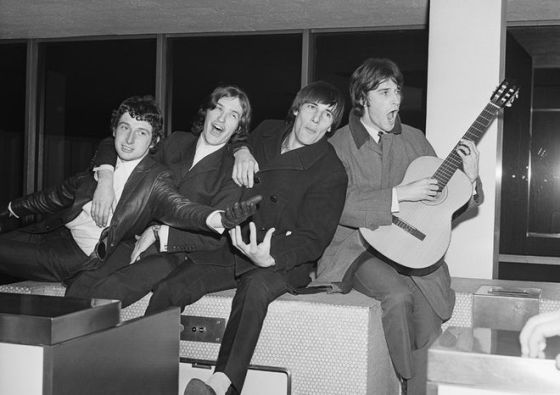
For the uninitiated--and it is conceivable that there may be one or two people around who still aren't hip--the Kinks compromise two brothers, Ray and Dave Davies; a bassist by the name of Peter Quaife, and a drummer, Mick Avory. They are four seperate identities and four conflicting personalities. Yet, somehow, they gell with a magnetism and force that has made them not only one of the country's most consistent groups, but gathered them hordes of followers throughout Germany, Scandinavia, France and America as well.


Ray, is one of England's most enlightened songwriters. His lyrics are very simple, to the point of being basic. They mask the complex character that evolves them.


Dave's main preoccupation is the diverse pursuit of happiness. But, he too, swings between the extremes of frustration, elation and black boredom.


Peter Quaife is everybody's friend. Rarely upset, he regards being a Kink infinitely preferable to being a commercial artist--his former occupation.


Mick Avory is at his happiest when he is drumming. He says little, and drums a great deal.


But enough is enough. Now is the fatal moment of decision. Take out the LP, listen and buy. You won't be disappointed. You never are with the Kontroversial Kinks.


MICHAEL ALDRED


Wednesday, October 29, 2014

arthur (or the decline and fall of the british empire)


The Kinks got angry and edgy for this satirical conceptual soundtrack to a television play that never happened.  With a string of critically acclaimed but (mostly) commercially unsuccessful albums ('Face To Face', 'Something Else', and 'The Village Green Preservation Society') to their credit, the band was approached in January of 1969 by Granada Television to create a musical with writer Julian Mitchell.  As the project developed, the band was distracted by the final departure of founding bassist Pete Quaife, who was once again replaced by John Dalton.  

Ray Davies went to Los Angeles, California to produce The Turtles' album 'Turtle Soup' with engineer Chuck Britz.   While there, he was able to get the ban lifted that had kept the band from being able to perform in the US for nearly four years.  Back in in the UK, the band began rehearsing at Ray's house in Borehamwood, Hertfordshire.  They were simultaneously working on the material for the TV play and for a solo album for Dave Davies.  Recording took place during May of 1969  at Pye Studios in London with Mick Avory on drums and percussion;   John Dalton on bass guitar and background vocals;   Dave Davies on lead guitar, co-lead vocal on "Australia" and "Arthur", lead vocals on his own tracks, and background vocals;   and Ray Davies on lead vocals, rhythm guitar, keyboards (harpsichord and piano), and production.    Lew Warburton did the horn and string arrangements.   

As the album(s) were being mixed, Davies and Mitchell continued writing for the play; while filming continued to be postponed.  This delayed the release of The Kinks album, titled 'Arthur (Or the Decline and Fall of the British Empire)'; while Dave Davies solo album ('A Hole in the Shoe of...' or 'The Album That Never Was') never saw release.  Dave would later reflect:  "We recorded it very quickly in an eight-track studio in London.   The reason why I didn't want to put it out is because I'd just come off a hit single in England - 'Death of a Clown' - and, while recording the songs, I suddenly realized that I felt I was being rushed throughout all of those songs. I wasn't really that happy, so I just stopped."


'Arthur (Or the Decline and Fall of the British Empire)' was finally released in October of 1969 and a tour was scheduled for the album, while the filming for the TV play was finally cancelled in December ostensibly over lack of funds.  The titular Arthur was based on Ray and Dave's brother-in-law Arthur Anning, who had moved with their sister Rose to Australia.  Ray revealed at the time:   "The opera is about the rise and fall of the British Empire, which people tend to associate with me (laughter). You could sum up the British Empire in one song. I haven't written it, but it could be done, a little fifteen minute thing (laughter). But about the opera: I decided to make it about one person, someone who didn't really count, that's all, and mixed it with a few people I knew, put them into one. I told Julian Mitchell, who wrote the script, a story about someone I knew. He liked it and worked on it and it came from there. He was easy to work with...I played "Shangri-La" to somebody - an old friend of mine, and I knew, halfway through it he was embarrassed by it because it was about him, and he realized it, and I can never sort of talk to him again. I wanted him to hear it, and then I realized: there he is.   I'm not laughing at those people in the song at all. They're brainwashed into that, they brainwash themselves. She says, "that's it. I don't want a new dress", not because she really doesn't want one, but because she can't afford it. Their minds are like that: they're happy, really. It becomes a religion to them. The glory of being boring. It's a glory. He shows you his stamp collection. It's a sense of greatness he's got around him that you can't penetrate because you feel you might upset him, he's that aura of stuff.   The chorus of "Shangri-La" is a bit of a chant - like "See My Friends". It's a religious thing. You accept it as your religion because you can't have anything else, whatever you've got anyway is what you accept yourself. You let yourself believe it. No, perhaps not. If you lived here (Kenwood) and you accepted this, and this was as far as you could go, you'd be a lot happier. Well, no, perhaps not. See, I tried living in a big house and I can't. I'm going back to a little house. I don't thing people really want to live in a posh house, as much as a rich person doesn't want to live in a slum. I don't like to say what I've got and be happy with it. I'd wear hobnail boots by my fire rather than slippers. I can't stand slippers because they symbolize giving up to me. But at the same time, I love the people who are like that. But I hate what's handed down when people get into the state where that's all they want. And that can be anybody - toffs; toffs are the world's worst offenders. Top hats and walking sticks. Cary Grant's a toff. David Niven.   It's like the song "Princess Marina". My brother Dave said, "I don't know whether you like these people or you hate them." You don't really hate anybody, do you? You only hate people for an instance. They can't help it. "Princess Marina" starts pretty sad, maybe, then it goes into the bit about - "I haven't got any money or anything", they're having a hard time. And then they sing in the way they did in the music hall, because that's the way they used to express it: "Don't Have Any More, Mrs. Moore." There was a song about poverty. People think I'm taking it out on the ordinary persons. But it's about all people. In fact it's more about nobs and toffs, executives - "Yes sir, no sir. Three bags full, sir." ... Grayness is beauty in boredom. I could have given Arthur a limp, I suppose, made him buy funny books, have a secret life. Then, that isn't the important thing - he'd have had control over his secret life, and he hasn't control over what's happening to him. But he thinks he does....when we play the opera in America, I hope people will accept the opera as a musical thing. There's jamming - we do a lot of that, but people don't think we do, since we don't do it on record. As far as the next thing I'm doing, I'm leaving what I've done. That's why I didn't want pictures taken of me reminiscing. I'm not like that, really. I'm going to try something else next.....someone will get me if I talk about it...Everything has been thrown at me, paperboats float past me, but something more direct might hit me and leave its mark. I think the things I write about are the things I can't fight off. There are a lot of things I say that are really common-place. I can't get rid of them. I go into something one minute, then look at it, then go back into it."


http://www.thekinks.info/


"Victoria"  
https://www.youtube.com/watch?v=ElJRnlfNAiU


"Some Mother's Son"  
https://www.youtube.com/watch?v=JogcI0L1m9s


"Drivin'"  
https://www.youtube.com/watch?v=T660PruHXMg


"Brainwashed"  
https://www.youtube.com/watch?v=XdWYEEAsaOg


"Shangri-La"  
https://www.youtube.com/watch?v=l4DJ9YUYshE


"Mr. Churchill Says"  
https://www.youtube.com/watch?v=kukrBLGTzYo


"Young and Innocent Days"  
https://www.youtube.com/watch?v=iQEuOvxQqts


"Nothing to Say"  
https://www.youtube.com/watch?v=QDHFpC36gUk


"Arthur"  
https://www.youtube.com/watch?v=__TwofWd31Q


'Arthur (Or the Decline and Fall of the British Empire)'
full album:


All songs written by Ray Davies, except when noted.

Side one
1. "Victoria"   3:40
2. "Yes Sir, No Sir"   3:46
3. "Some Mother's Son"   3:25
4. "Drivin'"   3:21
5. "Brainwashed"   2:34
6. "Australia"   6:46
Side two
1. "Shangri-La"   5:20
2. "Mr. Churchill Says"   4:42
3. "She's Bought a Hat Like Princess Marina"   3:07
4. "Young and Innocent Days"   3:21
5. "Nothing to Say"   3:08
6. "Arthur"   5:27


bonus tracks:  

"Plastic Man" - 3:04
"This Man He Weeps Tonight" - 2:43
"Mindless Child of Motherhood" (Dave Davies) - 3:09
"Creeping Jean" (Dave Davies) - 3:19
"Lincoln County" (Dave Davies) - 3:13
"Hold My Hand" (Dave Davies) - 3:21


Liner Notes:


Arthur? Oh, of course--England and knights and round tables, Excalibur, Camelot, "So all day long the noise of battle roll'd among the mountains by the winter sea." Sorry, no. This is Arthur Morgan, who lives in a London suburb in a house called Shangri-La, with a garden and a car and a wife called Rose and a son called Derek who's married to Liz, and they have these two very nice kids, Terry and Manlyn. Derek and Liz and Terry and Marilyn are emigrating to Australia. Arthur did have another son, called Eddie. He was named for Arthurs brother, who was killed in the battle of the Somme. Arthur's Eddie was killed, too--in Korea. His son, Ronnie, is a student and he thinks the world's got to change one hell of a lot before it's going to be good enough for him. Derek thinks it's changed a bloody sight too much--he can't stick England any more, all these bloody bureaucrats everywhere, bloody hell, he's getting out. Ronnie and Derek don't exactly get on.

Arthur wasn't named for Arthur of Camelot and all that; he was called after Prince Arthur William Patrick Albert, 1st Duke of Connaught and Stratheam and Earl of Sussex, because Arthurs parents knew their place, and children ought to be named in honour of Queen Victona's children, and Prince Arthur, you know, he was her third and married...

Arthur has spent most of his life on his knees, laying carpets. Oh, he had his plans; he was thinking very seriously indeed about setting up on his own, only he hadn't much in the way of savings and there was this Hitler and... it all seemed a bit risky. There were the children to think of, weren't there? Arthur doesn't like risks, never has. He bought a car instead, and took the kids out on Sundays. Things aren't exactly easy now he's retired, but he owns his own house, and most of his car. You've got to be careful. But you don't want to worry too much about the worid, the way Ronnie does, or complain all the tlme like Derek; you're not going to get anywhere like that, you know. You want to take things as they come.

Things have been coming at Arthur all his life.

Arthur's life (and the lives of millions of English people like him) is shown through the songs Ray Davies has written. The Granada TV story in which they're set all takes place on Derek and Liz's last day in England. Nothing happens very much--everyone has Sunday dinner together, then Ronnie turns up and the men go to the pub where Ronnie gets all worked up about The System, while Liz and Rose talk about the past, and then Arthur takes them all to the boat, and they have a picnic on the way, and all the time Arthur's remembering his life and... It's a sad day for Arthur, seeing them off. People haven't been nearly as nice to Arthur as he's been to them, and... what's it all about, then? Is this what he's lived for? He's got the house, hasn't he? And the car? It's been a good life, hasn't it? Well, hasn't it?

JULIAN MITCHELL


Saturday, September 15, 2012

something else


The Kinks further expanded their sound with the wry and melancholy English vignettes of this elegant and eclectic classic.  'Something Else By The Kinks' was recorded at Pye Studios London with Ray Davies on lead vocals, rhythm guitar, and harmonica; Dave Davies on lead guitar, 12 string guitar, backing vocals, and lead vocals; Pete Quaife on bass and backing vocals; and Mick Avory on drums and percussion with Nicky Hopkins on keyboards, piano, organ, and harpsichord; and Rasa Davies on backing vocals.  

After some tension during the recording of 'Face to Face',  Shel Talmy passed the reigns of production over to Ray Davies sometime during the sessions.  Davies says that 'Waterloo Sunset' "was the first thing I was credited as producing, but I did a lot of stuff before that. But I think the deal was Shel had to get the credit whether he did it or not. I did ‘Dead End Street’, Shel did ‘Sunny Afternoon’ with me, but by then, you see, it was such a good team that he would listen to the way I wanted it. I think the real falling out came over ‘Dead End Street’, which I didn’t like at all. We waited ’til the session finished, waited until he left and then went in and re-recorded it, and that became the one that went out!...My idea of production was not as clear as Shel’s.  I think there was a sort of clarity in a lot of his recordings, whereas I liked to bring in things like sounding off-mic sometimes, or double-miking, so it sounded like an old jazz sound rather than a clean pop sound, and that was the difference. But I’d like to think that I learned the quality control from Shel — in other words, saying ‘We could keep doing it but it’s not gonna get any better!’, things like that.  I had good engineers: Bob Auger, Alan Mackenzie, Alan O’Duffy, Ray Prickett, all employees at Pye, all really good solid studio guys. I learnt a lot from those people. They had to know their sonics, those guys. It was a new music and they were using a lot of old equipment that had probably been used by the BBC, and there was a BBC kind of feeling about the rules still, but the Kinks came in and broke the rules. I remember the first time — I think it was the first time — there was feedback on a record, on ‘I Need You’. It was a mistake, but as I was doing the count-in, Dave’s guitar went off. Bob Auger was engineering it, and this man with all his experience just knew what to do and that was the take. It was a combination of new, young musicians like the Kinks coming through with radical ideas, and then very knowledgeable, experienced people who knew how to record it. There’s a real debt owed to a lot of those engineers working with us...Mic placement is a personal thing, and I guess instinctively I know what I want, but scientifically I’m not aware of what’s happening. I know what sounds right, but I think instinctively. Sometimes the rule book has to go out of the window, but there’s that saying: ‘You gotta know the rules before you break them!’... I feel that I shouldn't have been allowed to produce 'Something Else'. What went into an album required someone whose approach was a little bit more mundane"

'Something Else By The Kinks' also features Dave Davies on lead vocals and as songwriter on several songs.  He says his compositions were based on his own experience:  "It was a two-fold thing, really: the misery of going into a funny little studio that I didn’t like that much – it was an old Polydor demo studio or something – and writing songs when I didn’t really want to write anything. Whenever I got miserable, I’d always lean on my emotional experiences that I had with my first serious girlfriend. I fell in love with her when I was fifteen and we had a baby, which was a big thing in those days, for school kids to be taking care of little children. Now, it’s normal! But it was frowned upon and both of our parents tried to keep us apart, which caused great upset and I wrote songs based on that later, like 'Funny Face', 'Susannah’s Still Alive'...nearly everything I wrote was based on me and Sue."

With its diverse mix of psychedelia, music hall, baroque, bossa nova, proto-punk, and rhythm and blues, 'Something Else By The Kinks' only went to one hundred and fifty-three in the US and thirty-five in the UK.  At the time, the Kinks were banned from performing in the US; and the album turned out to be their last to chart in Britain.  Ray Davies explains that the band's changing styles of music also made things difficult for them commercially, especially when their record company wanted them to continue with the sound that had made them successful:  "I think that you do fall into the rut willingly. I jumped off that at, like, the second or third single, because I was terrified of that happening. But I suppose it was bad for us. If we'd done more conforming to what people wanted, I think we would have sold a lot more records as a band, and been an easier commodity to sell. But unfortunately, The Kinks didn't make it easy for our record companies, because we chopped and changed. Then I made things like 'Waterloo Sunset', and before I made that, I made things like 'Well Respected Man'. If you think of the three different types of music, they're like three different artists. It was great for singles in England at that time, when singles really did drive the market. But for album people... I remember when we delivered 'Muswell Hillbillies' to RCA, they said, 'This is great. Now, can we have three more albums of the same?' The next thing I did was about show business; it was about glitter, whereas 'Muswell Hillbillies' was about gritty, working-class London. So I do chop and change. I approach my music a bit like a novelist, I guess, or an author, saying, 'Well, I've done this trilogy. Let me move on and do something else.' I do approach it from a writing perspective rather than as a career artist. I think I take myself as a performer second to myself as a writer."


http://www.thekinks.info/


"David Watts".  Ray has revealed that "David Watts is a real person. He was a concert promoter in Rutland."


"Death of a Clown"  was released as Dave Davies solo single; but was included on the album.  Dave remembers:  "One of our managers suggested that I go solo. I felt quite uncomfortable with it because I was so used to being in a family; in a band which was like an extended family. Then going out and touring all over the world, with the fans, that's another part of the family. So I didn't want to be stuck out there on my own. I like the cooperation and camaraderie of being in a group. My heart was in the group really. Ray was very much into analyzing things. Trying to build up his craft, his solo. If I was in the right mood, I'd always write something. The more I thought about it, the worst it got though."    It went to sixty-eight in Canada, thirty-one in Australia, five in Belgium, three in Germany and the UK, and number two in the Netherlands.  Dave says: "A lot of older people seem to think it is some kind of novelty record - rather like 'Cigarettes And Whisky And Wild Wild Women' - remember that? I'm quite pleased about that if it means we are getting a wider market...There are two ways you can take the song - one is obvious and the other is a very personal thing to me. The lion tamer, for example could be the bully at school ... I'd rather not talk about it!"


"No Return"  


"Love Me Till the Sun Shines"  was also inspired by his relationship with Sue:  "That was tinged with it as well, knowing that I couldn’t be with her but also an 'as long as you love me, we can work it all out, whatever happens' sort of thing."


"Lazy Old Sun"  


"End of the Season"


"Waterloo Sunset"  went to fourteen in Sweden, eight in Belgium, seven in Germany and New Zealand, six in Australia, two in the UK, and number one in the Netherlands.    
Ray says:  "It was a fantasy about my sister going off with her boyfriend to a new world and they were going to emigrate and go to another country... Liverpool is my favourite city, and the song was originally called Liverpool Sunset. I was inspired by Merseybeat. I'd fallen in love with Liverpool by that point. On every tour, that was the best reception. We played The Cavern, all those old places, and I couldn't get enough of it. I had a load of mates in bands up there, and that sound – not The Beatles but Merseybeat – that was unbelievable. It used to inspire me every time. So I wrote Liverpool Sunset. Later it got changed to Waterloo Sunset, but there's still that play on words with Waterloo. London was home, I'd grown up there, but I like to think I could be an adopted Scouser. My heart is definitely there... I didn't think to make it about Waterloo, initially, but I realised the place was so very significant in my life. I was in St Thomas' Hospital when I was really ill and the nurses would wheel me out on the balcony to look at the river. It was also about being taken down to the 1951 Festival of Britain. It's about the two characters - and the aspirations of my sisters' generation who grew up during the Second World War. It's about the world I wanted them to have. That, and then walking by the Thames with my first wife and all the dreams that we had." 


Dave recalls:  "We spent a lot of time trying to get a different guitar sound, to get a more unique feel for the record. In the end we used a tape-delay echo, but it sounded new because nobody had done it since the 1950s. I remember Steve Marriott of the Small Faces came up and asked me how we'd got that sound. We were almost trendy for a while."


bonus tracks:
"Autumn Almanac" charted at seventeen in New Zealand, thirteen in Germany, six in the Netherlands, five in Belgium, and number three in the UK.  Ray said:  "I like autumn things. I did a record called 'Autumn Almanac' - I drew pictures of it and everything. After I wrote it, for a whole month I was thinking about it. I wasted a lot time, really, because I was sweeping up dead leaves and putting them in the sack. I'm susceptible to that sort of thing - to walls and flowers. You can probably get something more from a wall than a person sometimes. It's just put somewhere. It's just put somewhere. It's in line, in order, it's in line with horizon. Ah, ridiculous."


"Wonderboy"  charted at thirty-six in the UK, twenty-nine in Germany, and number six in the Netherlands.
Ray remembers:  "I had a song which I liked, but which nobody else much liked called 'Wonderboy', and the lines went: 'Wonderboy, some mothers son/Turn your sorrow into wonder." I had to use 'some mother's son' again. It was just one line and it was gone and had to be explained, for me, I was interested in that line. And then I wanted to write about soldiers must have been frightened and killing each other, but they were some mother's son. Apart from the line 'head blown off by some soldier's gun', the song could be about executives in an advertising agency."


'Something Else By The Kinks' 

full album:


All tracks written by Ray Davies, unless otherwise noted. 

Side one
1. "David Watts"   2:32
2. "Death of a Clown"   Dave Davies, R. Davies 3:04
3. "Two Sisters"   2:01
4. "No Return"   2:03
5. "Harry Rag"   2:16
6. "Tin Soldier Man"   2:49
7. "Situation Vacant"   3:16
Side two
1. "Love Me till the Sun Shines"   D. Davies 3:16
2. "Lazy Old Sun"   2:48
3. "Afternoon Tea"   3:27
4. "Funny Face"   D. Davies 2:17
5. "End of the Season"   2:57
6. "Waterloo Sunset"   3:15


https://www.youtube.com/playlist?list=PLPAL315FJtRxvDKE-QBcsK4nxZn2GPHDT


Liner Notes:

Welcome to Daviesland, Where all the little kinklings in the magic Kinkdom wear tiny black bowlers, rugby boots, soldier suits, drink half pints of bitter, carry cricket bats and ride in little Tube trains. Here all the little lady kinklings wear curlers in their hair, own fridges and washing machines, fry bacon and eggs, and take afternoon tea.

Gulliver-like Ray Davies stoops to pluck a small mortal from his musical World -- turns him upside down to see where he was made -- and replaces him gently but firmly in that great class society where all men are equal but some are more equal than others.

Many of the songs on this album are the tails of those mini-people who keep rolling across his yesterday-mind and so we find Terry and Julie in "Waterloo Sunset" and "David Watts," who has not known that abominable golden school-boy? For his musical conjuring tricks Ray reaches into his stream of life and extracts a rusty Irish jig -- there were a few spokes missing and the saddle torn -- but with a few dabs of "Kinko," the wonder song ingredient, the handlebars are reversed and you have 'moonshine music' as good as himself could have asked. Further down the waters, and a soggy bossa nova, well-worn but still serviceable, is dragged from the river-bed but re-upholstered and tempered with a Ray of gentleness it becomes the beautiful "No Return."

Somewhere in the deeper waters down-stream he finds a water-logged show-tune, sung during the battle of 'Desert Song,' but renovated and re-equipped it becomes the jaunty little sloop "Tin Soldier Man." And finally another worn-out hulk rotting from the Vaudeville era is re-manned pushed, afloat to become the saddest comedy song of all -- "End Of The Season."

This album is important for another reason -- it showcases the song writing development of younger brother Dave whose "Death Of A Clown" proved so successful, and includes two other compositions here -- "Love Me Till The Sun Shines" and "Funny Face" on which he sounds like a wicked choir-boy. Neither should we forget the stalwart contributions of bass-Kink Pete Quaife or drum-Kink Mick Avory who combine to produce the solid root sounds which hall-mark the group.

One further word of advice on listening to these tracks -- never, never take a Davies composition at face value for so much goes on behind the words in the Wondrous World of the Brothers 'D' where a corner of the Kinkdom is forever England!