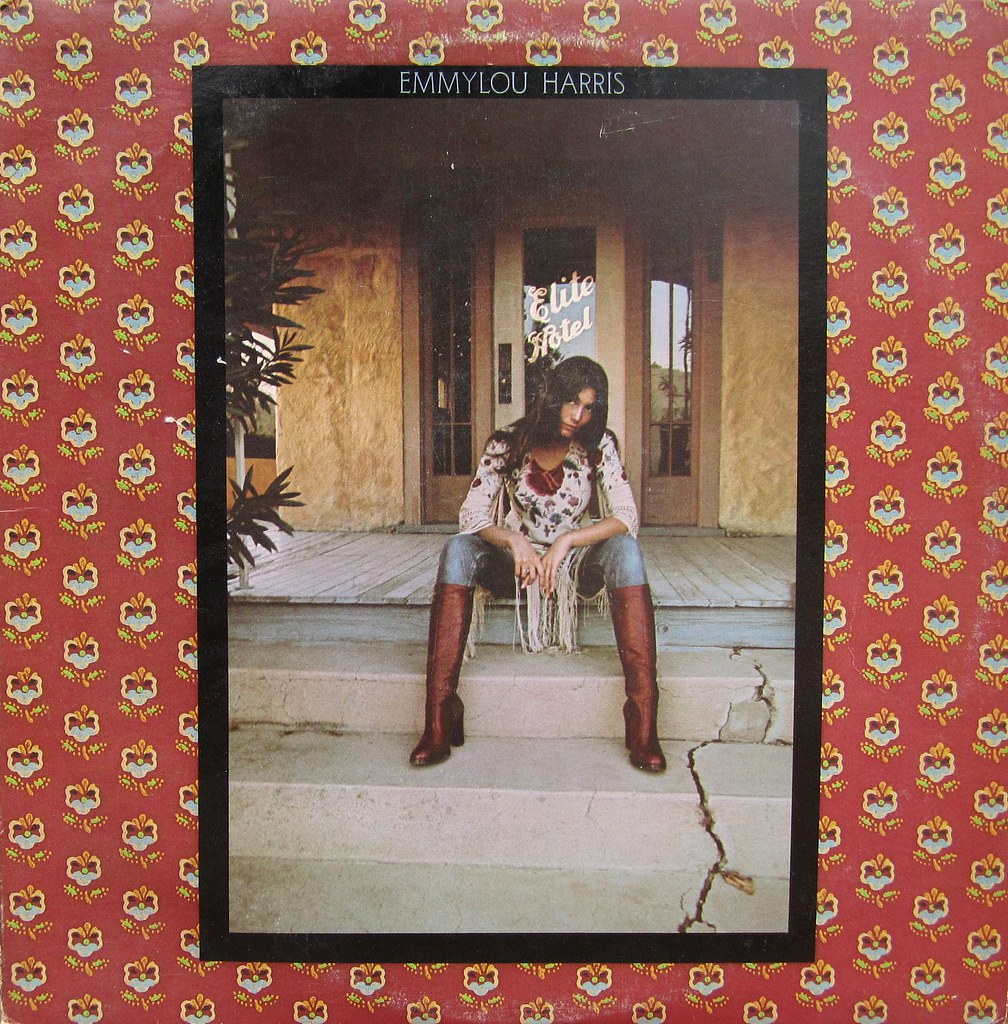
Emmylou Harris and The Hot Band were hooked in the first degree on sin and salvation and gone like the wayward wind walking the long way home just to think of an alibi. Elite Hotel came out less than a year after her acclaimed Pieces of the Sky Heart Like a Wheel and Prisoner in Disguise with Linda Ronstadt, Home Plate with Bonnie Raitt, Two Lane Highway with Pure Prairie League, All I Can Do with Dolly Parton, Desire with Bob Dylan, Mike Auldridge with Mike Auldridge, Sleepless Nights with The Flying Burrito Brothers, Starland Vocal Band with Starland Vocal Band, and Texas Cookin' with Guy Clark. Warner Brothers executives agreed to record her next album as long as she got herself "a hot band". She brought in a revolving cast of studio aces, including guitarist James Burton and pianist Glen Hardin from Elvis Presley's touring band. Elite Hotel was recorded during June with producer Brian Ahern and engineers Bradley Hartman, Rudy Hill, Stuart Taylor, and Miles Wilkinson . The Hot Band included: Brian Ahern on acoustic guitar and bass; Mike Auldridge on dobro; Byron Berline on fiddle and mandolin; Dianne Brooks on backing vocals; James Burton electric guitar; Rodney Crowell on electric guitar and backing vocals; Rick Cunha on acoustic guitar; Nick DeCaro on string arrangements; Hank DeVito on pedal steel; Jonathan Edwards on backing vocals; Amos Garrett on electric guitar; Emory Gordy, Jr. on bass and backing vocals; Glen D. Hardinon piano, electric piano, and string arrangements; Emmylou Harris vocals and acoustic guitar; Ben Keith on pedal steel; Bernie Leadon acoustic guitar and backing vocals; Bill Payne on piano; Herb Pedersen on acoustic guitar, banjo, and backing vocals; Mickey Raphael and harmonica; Linda Ronstadt on backing vocals; Fayssoux Starling on backing vocals; John Starling on acoustic guitar and backing vocals; Ron Tutt on drums; and John Ware on drums.
Harris says the album and tour with The Hot Band made her reputation; but left her $250,000 in debt: "Well, we were damn good, but [the name of the band] was slightly tongue-in-cheek. It came about because someone at the record company – and this was the early 1970s, remember – decided, 'We gotta put the chick singer together with a hot band.' ... I made it all back in record sales – so it turned out to be a smart business move. That was something else I learned from Gram, 'If you pay the best, you'll play with the best.'...R ight at the beginning, the Hot Band was just me and Rodney [Cromwell], sitting late into the night, singing harmony and strumming guitars," The eclectic mix of songs on the album set her apart from other country artists at the time: “Elite Hotel Elite Hotel became her first number one album on the country chart riding the wave of two number one country singles. Harris would admit: “I know what’s happening but it hasn’t really hit me yet...I guess it’s just been a kind of long hard road. In a way I’ve been at this for almost ten years on almost all kinds of levels – from waiting tables to playing in New York clubs and not having anybody listen to me, to making a terrible first record for a bankrupt company to working with Gram. I suppose working with Gram was the most amazing thing that ever happened to me. There was just something very magical about the experience. It was so much fun to just get up there, sing with him, and not worry about carrying a show myself. Everyone paid all this attention to me and told me how good I was and all that. It was really like being some kind of fairytale princess. Somehow that affected me more than all this that’s happening now...Maybe I’m on time delay.” http://www.emmylouharris.com/ lyrics: http://genius.com/albums/Emmylou-harris/Elite-hotel "Together Again" VIDEO
"Sweet Dreams" VIDEO
"One of These Days"
VIDEO
Elite Hotel full album:
VIDEO "Amarillo" (Emmylou Harris, Rodney Crowell) – 3:05
"Together Again" (Buck Owens) – 3:56
"Feelin' Single, Seein' Double" (Wayne Kemp) – 2:34
"Sin City" (Gram Parsons, Chris Hillman) – 3:57
"One of These Days" (Earl Montgomery) – 3:03
"Till I Gain Control Again" (Rodney Crowell) – 5:40
"Here, There and Everywhere" (John Lennon, Paul McCartney) – 3:59
"Ooh Las Vegas" (Gram Parsons, Ric Grech) – 3:47
"Sweet Dreams" (Don Gibson) – 4:03
"Jambalaya (On The Bayou)" (Hank Williams) – 3:05
"Satan's Jewel Crown" (Edgar L. Eden) – 3:13
"Wheels" [with Jonathan Edwards] (Chris Hillman, Gram Parsons) – 3:13
bonus tracks:
"You're Running Wild" [with Rodney Crowell] (Ray Edenton, Don Winters) – 1:44
"Cajun Born" [with Jo-El Sonnier] (Jo-El Sonnier, Kermit Goell) – 3:19
VIDEO VIDEO
Emmylou Harris had nowhere to hide and nowhere to go except the other side of desire and went looking for the water from a deeper well with the turbulent rhythms of this country reinvention. She had enjoyed an incomparable career in the traditional Nashville country idiom with eighteen studio albums (Gliding Bird Pieces of the Sky and Elite Hotel Luxury Liner Quarter Moon in a Ten Cent Town Light of the Stable - The Christmas Album Blue Kentucky Girl Roses in the Snow Evangeline Cimarron White Shoes The Ballad of Sally Rose Thirteen Trio Angel Band Bluebird Brand New Dance Cowgirl's Prayer , two live releases (Last Date At the Ryman , and guest appearances and collaborations on dozens of albums (including Will the Circle Be Unbroken 'GP' Feats Don't Fail Me Now 'Grievous Angel' Heart Like a Wheel Home Plate Prisoner in Disguise Two Lane Highway All I Can Do Desire Mike Auldridge Sleepless Nights Starland Vocal Band Texas Cookin' Ain't Living Long Like This with Rodney Crowell, American Stars 'N Bars Long Time Gone Hiding with Albert Lee, Right or Wrong with Rosanne Cash, and Sweet Temptation with Ricky Skaggs in 1979; Honeysuckle Rose with Willie Nelson in 1980; Seven Year Ache with Rosanne Cash and The Innocent Age Heartland Higher Ground with Tammy Wynette, and Pontiac Don't Close Your Eyes with Keith Whitley and Lucinda Williams in 1988; Lying to the Moon Another Country with The Chieftains, Hearts in Armor with Trisha Yearwood, Infamous Angel Joshua Judges Ruth ; Other Voices, Other Rooms Flyer Train a Comin' ; but she had seemed to reach a plateau with sales.
Harris reveals: "I will say that there were some good people at the company [Elektra] who were disappointed with the reaction to Cowgirl's Prayer. They came to me and said, 'Listen, we've done our best, we don't know what to do. Who would you like to work with?' I had become a huge fan of Daniel's first solo record and the record Oh Mercy
The sessions in New Orleans featured Emmylou Harris on vocals, acoustic guitar, and harmony vocals; Daniel Lanois on mandolin, electric guitar, acoustic guitar, bass, dulcimer, duet vocals, chant vocals, percussion, and bass pedals; Malcolm Burn on piano, tambourine, vibes, organ, synthesizer, keyboards, slide guitar, bass, drums, and harmony vocals; Larry Mullen, Jr. on drums, cymbal, and hand drum; Tony Hall on percussion, bass, and stick drum; Daryl Johnson on high harmony vocals, tom tom, drum kit bass pedals, backing vocals, harmonic bass, and harmony vocals; with Brian Blade adding drums and Indian hand drum; Steve Earle adding acoustic guitar; Sam O'Sullivan adding roto wheel; Neil Young adding harmony vocals and harmonica; Kufaru Mouton adding extro percussion; Lucinda Williams adding acoustic guitar; Richard Bennett adding tremolo guitar; and Anna McGarrigle and Kate McGarrigle adding harmony vocals.
It wasn't a huge band. It was Larry Mullen, Tony Hall, Daniel, Malcolm [Burn], and myself. People think the more you put on a record, the more exciting and emotional it's going to be. Sometimes I think that works, but for me, what they did leaves more room for vocal interpretation, and what I was hearing was so inspiring that I think it raised the bar for me...I think it was a certain time in my life. My father had died the year before. A few years earlier I had a divorce, I was living alone, except my mother had come to live with me. I was just going through a lot of changes. I've always lived through music and expressed myself through music. I chose "All My Tears" because I had sung on Julie Miller's version of that song, so I was aware of it. "Orphan Girl," I loved. I had met Gillian Welch. And I had heard Kate and Anna perform "Goin' Back to Harlan" a few years earlier, and just absolutely loved the way they did that song. It evoked something in me. At our first meeting, Dan gave me a huge book of Dylan songs. Malcolm suggested "Every Grain of Sand" and he also brought Neil Young's "Wrecking Ball." ... For me, Wrecking Ball was a watershed, if that's the right word. Before that, I felt, especially at the record company, like I'd done my bit. I'm not really on the radio, but I still had my loyal fans, I was still able to make a living touring. But it had gotten to a point where the record I made just before it, Cowgirl's Prayer in 1993, we put a lot of energy into it, and I was trying to be a good Girl Scout and give radio something they could play without compromising myself. Basically I was told, 'You're just not invited to this party anymore'." 'Wrecking Ball' I think when Wrecking Ball Wrecking Ball "http://www.emmylouharris.com/ "Sweet Old World" Sweet Old World from Craig Culver on Vimeo ."Orphan Girl"
VIDEO 'Wrecking Ball' full album:
https://myspace.com/emmylouharris/music/album/wrecking-ball-20138503 https://www.youtube.com/playlist?list=PLSy831CbqEp3jWCk3ftk5sBukCddY_LJ- VIDEO "Where Will I Be?" [with Daniel Lanois] (Daniel Lanois) – 4:15
"Goodbye" (Steve Earle) – 4:53
"All My Tears" (Julie Miller) – 3:42
"Wrecking Ball" (Neil Young) – 4:49
"Goin' Back to Harlan" (Anna McGarrigle) – 4:51
"Deeper Well" (David Olney, Lanois, Emmylou Harris) – 4:19
"Every Grain of Sand" (Bob Dylan) – 3:56
"Sweet Old World" (Lucinda Williams) – 5:06
"May This Be Love" [with Daniel Lanois] (Jimi Hendrix) – 4:45
"Orphan Girl" (Gillian Welch) – 3:15
"Blackhawk" (Daniel Lanois) – 4:28
"Waltz Across Texas Tonight" (Rodney Crowell, Emmylou Harris) – 4:46
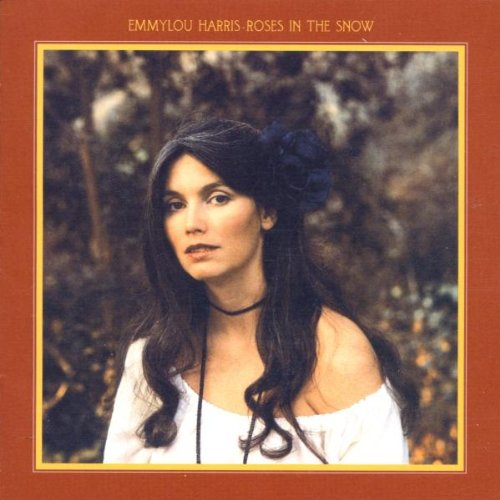
'Blue Kentucky Girl' 'Light of the Stable' 'Roses in the Snow' “If you’re looking at an overview — I definitely came in through the country door. It’s like saying, ‘Where were you born. What are your roots?’ I was a folk singer who became totally over the edge with country music. I found my voice and style working with Gram Parsons. I learned how to listen to George Jones records and the Louvin Brothers. Listening to harmonies. Being enthused. I was a woman with a mission after Gram’s death, trying to keep his music alive — and bring what I liked about country music to people like me who came to it without growing up with it. Discovering the beauty and depth of it instead of the caricature. This politically incorrect music (laughs) I really was on a crusade. Even from my very first record, I think I established a pattern of eclecticism. And I was hoping to encourage other people to go out and buy George Jones records. And discover the music that shouldn’t be left behind. There was a power and beauty to it...Overseas there is no confusion. If I’m a country artist, whatever record I do is country. They don’t pigeonhole it. Here the pigeonholing is rampant. I never followed a pattern. If I had any kind of style it was no style. I could do a traditional record like ‘Blue Kentucky Girl' ‘Roses in the Snow' ."'Roses in the Snow' I think [what I want is] all determined by the song really. All the musicians I have worked with are just very creative and it’s a thing that happens in the studio at that moment of recording. And also it’s not like this is a country record. Over the years, we have done a few things that were very specific. I think the best example of that was Roses in the Snow ."
"Wayfaring Stranger"
VIDEO "The Boxer"
VIDEO "Jordan"
https://www.youtube.com/watch?v=FoTEme72qx8 VIDEO "Gold Watch and Chain"
https://www.youtube.com/watch?v=-vGJgzEP41U VIDEO 'Roses in the Snow' full album:
https://myspace.com/emmylouharris/music/album/roses-in-the-snow-17587712 VIDEO
"Roses in the Snow" (Ruth Franks) – 2:32 "Wayfaring Stranger" (Traditional/arr. Brian Ahern) – 3:26 "Green Pastures" (Traditional/arr. Brian Ahern) – 3:08 "The Boxer" (Paul Simon) – 3:16 "Darkest Hour is Just Before Dawn" (Ralph Stanley) – 3:22 "I'll Go Stepping Too" (Tom James/Jerry Organ) – 2:16 "You're Learning" (Ira Louvin/Charlie Louvin) – 2:57 "Jordan" (Traditional/arr. Brian Ahern) – 2:07 "Miss the Mississippi and You" (Bill Halley) – 3:40 "Gold Watch and Chain" (A.P. Carter) – 3:12 bonus tracks:
"You're Gonna Change" (Hank Williams) – 2:40 "Root Like a Rose" (Nancy Ahern) – 4:45
Emmylou Harris found a saving grace by straightening out her crooked way of thinkin' and hit her stride by telling everything with honky tonk humor, too far gone heartbreak, and a hot band. She had given up her drama scholarship to the University of North Carolina at Greensboro to pursue music in the folk scene of New York City's Greenwich Village, where she met and married another songwriter Tom Slocum. Her debut album 'Gliding Bird' was produced by Ray Ellis for Jubilee Records, which went bankrupt soon after its release in 1969. She and Slocum divorced and she left with their newborn daughter Hallie to the suburbs of Washington D.C. for what Harris considers: "a tough time. I was living on food stamps and working six nights a week in clubs, trying to support my daughter. I had pretty much given up on the idea of 'making it' by that point." She was recommended by Chris Hillman, who had seen one of her performances in 1971, to his former bandmate Gram Parsons; and she toured as part of his Fallen Angels Band, as well as collaborating on his albums 'GP' and 'Grievous Angel' "[Gram] never treated me like the chick singer; he was very gracious, a real Southern gentleman...I didn't get his music; I didn't quite get his singing either. I had always sung folk music and I saw country music as kind of hokey. So at first I just saw what we were doing as an opportunity to make some money singing on a record. But as we began singing these harmonies it seemed like we sounded good together and I began to appreciate what he was doing...We had elements of being a couple through a musical relationship that became very intense. I think I kept a little bit of a distance, though. I mean, Gram was married and, though I wasn't that much of a prude, I probably didn't want to mess with that. Toward the end, I couldn't really deny it any more. I knew what I felt for him, and I just assumed that that was something that was going to happen, never thinking that we would never have the chance. When I got the call that he had died, I was just so shocked...I felt I couldn't possibly stop. Because that was the only way I could deal with it. I had no idea where I was going to get to, or end up, but all these extraordinary things came together in just the right way to put me in a place where I could actually realise whatever it was I was trying to do. Mainly, I wanted to carry on with Gram's music. That was what pushed me forward...I had just assumed I would go forward making music with Gram until whenever. Then, when it was cut so short, I had to move forward on my own. It was hard, and a very bleak time for me. My daughter was with my parents and I hardly saw her. I didn't have experience making records, my education was incomplete and I'd lost my teacher, my mentor. In the end, I was very fortunate in the community of people I found – and who found me – who helped put me on the right path. And also that they understood I was grieving and was in a very vulnerable place."
'Pieces of the Sky' features Emmylou Harris on vocals, and acoustic guitar; with producer and engineer Brian Ahern on acoustic guitar, high-strung guitar, super 400 acoustic guitar, and bass; James Burton on electric guitar, gut-string guitar, and dobro; Glen D. Hardin on piano, electric piano, and string arrangements; Nick DeCaro on string arrangements; Bernie Leadon on acoustic guitar, bass, banjo, dobro, and backing vocals; Herb Pedersen on acoustic guitar, 12-string guitar, banjo, and backing vocals; Bill Payne on piano; Bruce Archer on acoustic guitar; Rick Cunha on acoustic guitar and high-strung guitar; Amos Garrett on electric guitar; Ben Keith and Danny Pendleton on pedal steel; Richard Greene on fiddle; Byron Berline on fiddle and mandolin; Ricky Skaggs on fiddle and viola; Duke Bardwell, Tom Guidera, and Ray Pohlman on bass; Mark Cuff and Ron Tutt on drums; and Linda Ronstadt and Fayssoux Starling on backing vocals. The sessions were also engineered by Chris Skene, Paul Skene, Fran Tate, and Stuart Taylor.
Harris reveals: "I had been signed to Warner/Reprise. They brought a great team together of a very, very successful producer, Brian Ahern, who had all those great Anne Murray records. And I was, you know, a fledgling artist. Basically I was signed because I had gotten a bit of notoriety singing on two Gram Parsons records, Gram who had died in 1973, and I was signed in '74. And so, you know, everyone's concerned, you know, we've got to get the material, got to get it right. So I went up to Toronto where Brian lived and to listen to material and pick material. And I didn't really know what I wanted to do, but I found out right away that I knew what I didn't like. And Brian played me a whole day's worth. We went a whole day through a pile of cassettes, few people remember cassettes, of material that just did not do anything for me. And he kind of smiled, and he said, well, he said, I've got one more thing, and I haven't listened to this yet. It's been sent to me, a writer that I've signed who I've not heard but on the recommendation of someone whose opinion I respect. So for the first time Brian Ahern and I listened to the voice and the songs of Rodney Crowell. And the first song that was on the tape was "Bluebird Wine." And I just knew that we had struck gold, that there was just something in his voice, in the music and the energy that was there."
'Pieces of the Sky' went gold, charting at number seventy-six in Canada, forty-five in the US, and seven on the US country album chart.
http://www.emmylouharris.com/ "Bluebird Wine"
VIDEO "If I Could Only Win Your Love" was a breakthrough hit, going to number fifty-eight on the US pop chart, four on the US country chart, and number one on the Canadian country chart.
https://www.youtube.com/watch?v=6g8EqgRk-nw VIDEO https://www.youtube.com/watch?v=CjRi1vFlrGQ VIDEO "Boulder to Birmingham" was written in memory of Gram Parsons.
https://www.youtube.com/watch?v=xgzlNxUF3b0 VIDEO I don't want to hear a love song
'Pieces of the Sky' full album:
https://myspace.com/emmylouharris/music/album/pieces-of-the-sky-8102747 VIDEO
"Bluebird Wine" (Rodney Crowell) – 3:18 "Too Far Gone" (Billy Sherrill) – 4:05 "If I Could Only Win Your Love" (Charlie Louvin, Ira Louvin) – 2:36 "Boulder to Birmingham" (Emmylou Harris, Bill Danoff) – 3:33 "Before Believing" (Danny Flowers) – 4:44 "The Bottle Let Me Down" (Merle Haggard) – 3:16 "Sleepless Nights" (Felice and Boudleaux Bryant) – 3:25 "Coat of Many Colors" (Dolly Parton) – 3:42 "For No One" (John Lennon–Paul McCartney) – 3:40 "Queen of the Silver Dollar" (Shel Silverstein) – 5:14 bonus
"Hank and Lefty" (Dallas Frazier, Doodle Owens) – 2:50 "California Cottonfields" (Dallas Frazier, Earl Montgomery) – 2:47