Sufjan Stevens found healing in the transformative power of extraordinary ordinary things through a primal cacophonous expression of the language of ghosts, eternal living, and impossible soul. It had been five years since he had his breakthrough with his celebrated concept album 'Illinois' The Avalanche Songs for Christmas The BQE I think I just got fed up with my own existential quandary, and got really bored with this sort of circular, philosophical pondering and my obsession with naming things and categorizing things. I think I wasn’t so much [disillusioned] with songwriting as I was disillusioned with form, and I was really frustrated with the limitations of the song. And I think a lot of that was suffering the repercussions of The BQE ... It signalled a big sea-change for me in terms of my process...[The BQE
In 2009 he began recording again, releasing Run Rabbit Run , a reworking with strings of his electronic album from 2001 Enjoy Your Rabbit All Delighted People 'Illinois'
Stevens admits: " I was aware that the textures and the sonic environment was a little dirtier, more cacophonous, or whatever. I was aware of that, cause I feel like I was also extremely aware during the making of Illinois of how much effort I put into making it listenable. It’s such a populist record—there’s just so much effort in appealing to the listener, you know there’s such a kind of a pageant of sound, and it’s constantly entertaining and rewarding, and it’s just sort of a patchwork of this sort of harmonic beauty, harmonic what do you call it, I don’t know—It’s very harmonious. You know, The Age of Adz , these are pop songs, but they’re based on sound experimentation and noise. They’re more aggressive, and even my tone of—the way I’m singing—it’s more in my throat and not always pretty. So I was aware of that, and I just felt like an imperative to experiment with these tones, and generally, I think now more than ever, I’m making music for that elite 5%—you know, the listener who’s been with me from the very beginning and understands my interest in electronic music and noise and in sound sculpting and minimalism and all that stuff. So I think that that record, The Age of Adz , is really for that listener, you know? I don’t think it’s meant to be for the casual listener who likes the song “Chicago,” which is fine. There’s no condescension at all in that remark. I don’t condescend to any of my music or to any listener. But I just am not in a season right now of feeling that kind of populist thrust. I don’t feel motivated to make things so listenable.
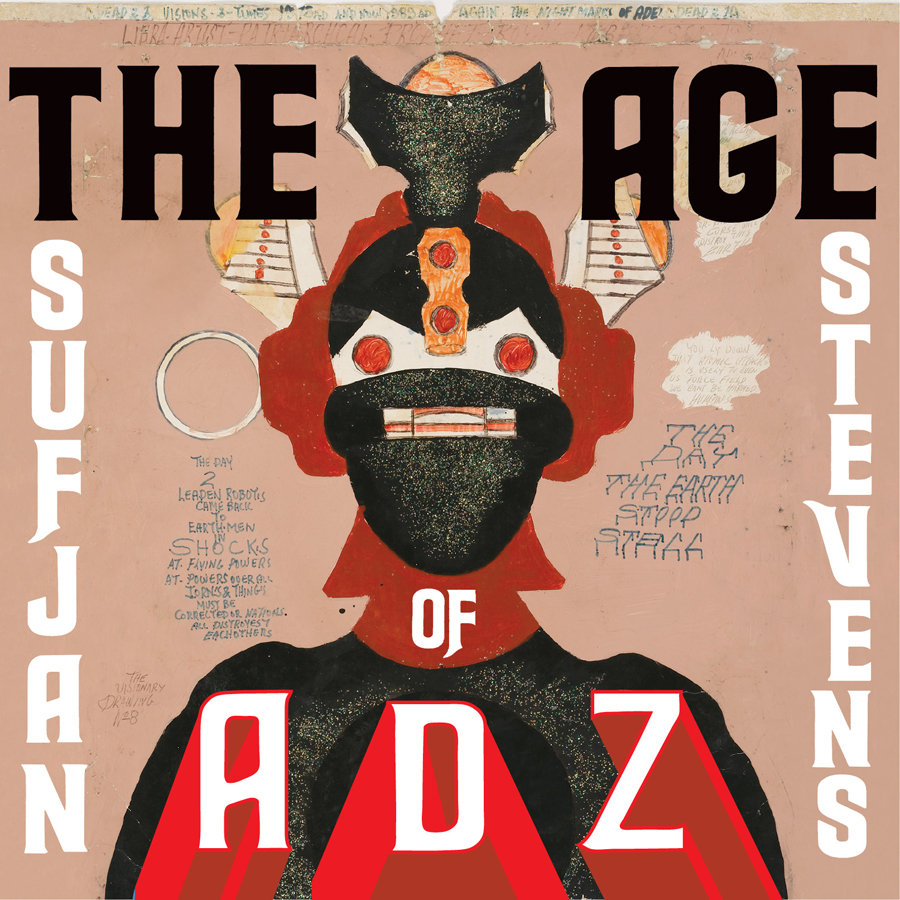
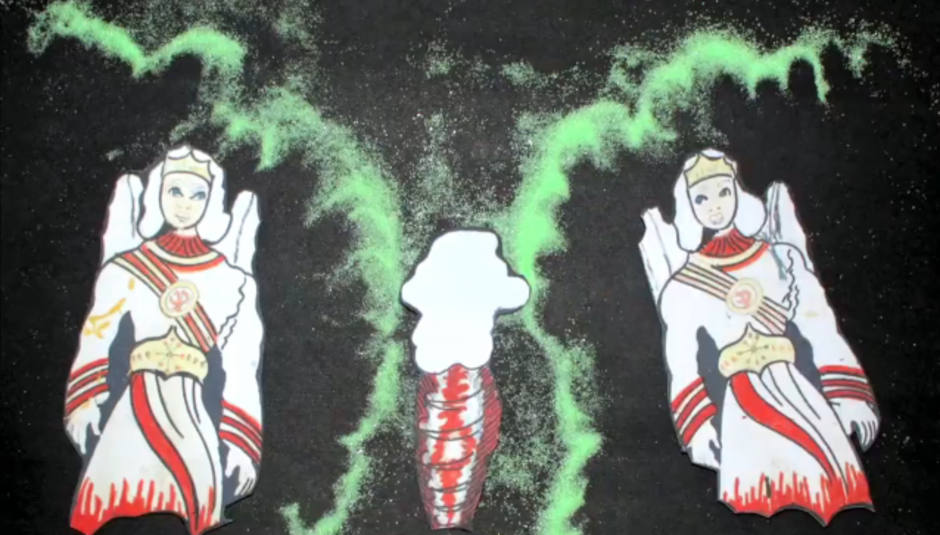
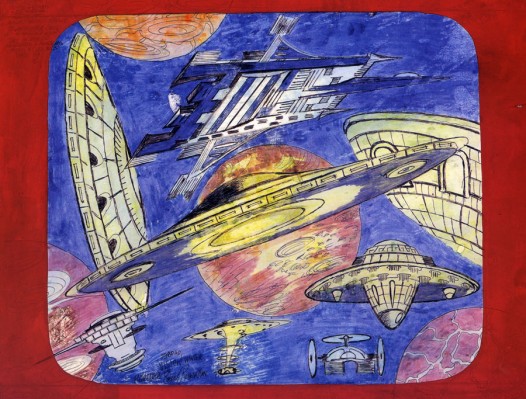
During this creative upheaval, Stevens fell prey to an unspecified nervous disorder that manifested in lethargy, painful sensations all over his body, adrenaline surges, and hypersensitivity. He recalls: "This was really supernatural. It was like I was possessed ... For several months, I couldn't really work and was forced to focus on my physicality and restoring myself. It took several months before I could even get back to working again and writing music. " The tormented work of paranoid schizophrenic artist Prophet Royal Robertson seemed to help Stevens work through his pain and coalesce the edgy music he was creating for his next album that had become, as he says, "really monstrous and hazardous in its ambition ... I was really, really desperate to get better because I had started so much music; I had begun all of these projects and was recording a lot. Then when I went back to it, I found it really overwhelming and I didn't know how to approach it. So, this record, The Age of Adz , is, in some ways, a result of that process of working through health issues and getting much more in touch with my physical self. That's why I think the record's really obsessed with sensation and has a hysterical melodrama to it." The album drew its title from one of Robertson's pieces, and most of the artwork on the album was taken from pieces done by Robertson.
Stevens expounds: "I can't apologize for the direction I'm going because it feels necessary and obvious. I know it's confusing because I'm something of an aesthetic nightmare, and I kind of suffer from multiple personality disorder. But that's part of me and my character. So, I guess I don't care. It's a big shift, and it may not be for some people. They should stay home. [laughs] Don't listen to the record; don't buy it. I'm very aware that this material is far less popular and accessible than the kind of songwriting on Illinois. I'm also willing to admit that these songs don't measure up to the songs I was writing five years ago; these aren't great songs in terms of the palpable, fundamental nature of a song. But I'm not interested in songwriting anymore. I'm interested in sound and movement. And this material is all about that. Unfortunately, we sold the tickets to the tour before I even had the record done, so a lot of people didn't really have the chance to know what they were investing in. I apologize for that...Life is all about toiling and labor. But obviously I get great joy in confronting challenge and taking risk. I don't ever want to be comfortable ...I have a hard time distinguishing what is valuable when it comes to the real world and the fantasy world. Like, should I invest my time in the ordinary world or the imaginary world? Royal made a decision and completely escaped the ordinary world. Maybe that's enlightenment. Maybe that's what it's like to be in heaven. I don't know ...For me, the sensory pleasure of sound and music is so transcendent that I begin to distrust it and worry if it's a distraction from ordinary life. Maybe I should be spending my time doing something else, like start a family. Or build an amusement park-- actually, that's still a fantasy world. Engineering? Investment banking? Real estate? There are all kinds of people who make the world go 'round. [laughs] ...I wanted to be a graphic designer, a teacher, a writer. We all have our plans, but they're worth nothing. There's a sequence of events that takes over. But I'm not quitting now. I'm fully embracing the life of the musician ...I'm less interested in songwriting and more into just making noise. "
'The Age of Adz' reached number sixty-one in Australia, thirty in the UK, twenty-three in Ireland, thirteen in Canada, and became his highest charting album at number seven in the US. Stevens considers: "I went through a period of questioning motive and function and now I no longer have the privilege of questioning. I just have the privilege of celebrating my music and sharing it. I don't really want to get caught up in that self-doubt any more. I've always been really insecure about what I do, but those existential conundrums are really circuitous and – what's the word? – unproductive. You know, I don't think my music is important, I don't think it's changing the world, I don't think it's art. I just think it's music. It is what it is."
http://music.sufjan.com/ lyrics: http://genius.com/albums/Sufjan-stevens/The-age-of-adz "Too Much" VIDEO "Get Real Get Right" VIDEO "All For Myself" VIDEO 'The Age of Adz' full album:
http://music.sufjan.com/album/the-age-of-adz https://www.youtube.com/playlist?list=PLZqsyBiYZFQ2aB-JyI-J1-tyxaD-73TSa VIDEO All songs written and composed by Sufjan Stevens.
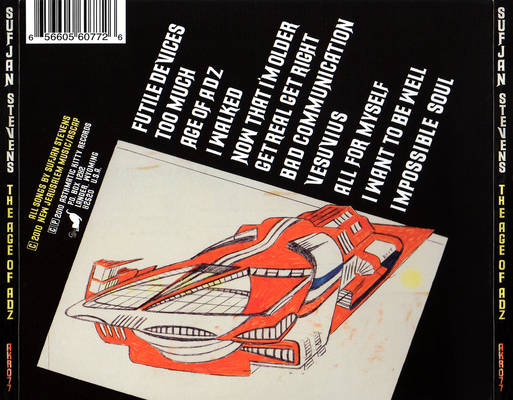
1. "Futile Devices" 2:11
2. "Too Much" 6:44
3. "Age of Adz" 8:00
4. "I Walked" 5:01
5. "Now That I'm Older" 4:56
6. "Get Real Get Right" 5:10
7. "Bad Communication" 2:24
8. "Vesuvius" 5:26
9. "All for Myself" 2:55
10. "I Want to Be Well" 6:27
11. "Impossible Soul" 25:35
Total length: 74:49
Bebel Gilberto bid so long to old school bossa nova with the electronic update of this unrestrained global phenomenon. Isabel Gilberto de Oliveira was born in 1966 in New York into a family of Brazilian musical luminaries. Her father is João Gilberto , her mother is Heloisa (Miúcha) Buarque de Hollanda , and her uncle (Miúcha's brother) is Chico Buarque de Hollanda .
Gilberto says: "My musical education was my childhood in Brazil My father was always playing the guitar and would often play it until I went to sleep...Seeing new cultures and how audiences worldwide can embrace my music is the exciting part...Music surrounded me [growing up] - it was like I was absorbing it without realising it. My parents never pushed me down this path and they also never said things like, 'You must be a doctor.' Music was just the natural path. The house was always full of music - and musicians. There were moments when I said to myself, 'I want normal parents, I want them to ask me to do my homework,' but it was always music, music, music. That was my life."
'Tanto Tempo' was recorded at Wah Wah Studio in São Paulo, Gorila Mix Studio and Chico Neves Studio in Rio de Janeiro, Chocolate Factory Studios in London, Bundy's Farm in Los Angeles, and Dada Studio in Brussels with Yugoslavian producer Mitar "Suba" Subotić . During the final mixing there was a fire in the studio and Suba died of smoke inhalation trying to save the tapes.
Gilberto considers: "To try to make it as a musician in Brazil was too hard. You never know if people like you or hate you because of who your parents are...My father could have more attention for me. People say his talent must have helped me, but in fact he was so into his talent he ignored my talent. My mother had the same problem with him. Two years ago he was supposed to be performing with me in New York, but then on the day he was travelling instead. That was very hard for me...But you know, that's the way we have always been. He's a pure artist. He doesn't have email, he doesn't answer the phone. He doesn't go anywhere...He says my sound is too poppy ... Bossa Nova is never going to happen again. What we have to work with now are not even the roots, but the petals of that time."
'Tanto Tempo' became an international sensation. By the end of the year, it was the third biggest selling Brazilian album in US chart history, earning her two Latin Grammy nominations for Best Brazilian Album and Best New Artist. In 2004, it became the biggest selling Brazilian album of all time, dethroning the classic album her father recorded with Stan Getz in 1964 'Getz/Gilberto'
http://bebelgilberto.com/ "Samba da Benção" is an old Baden Powell/Vinicius de Moraes song sung over the backing track of "Nova" by Amon Tobin .
https://www.youtube.com/watch?v=4rlzdn9xk6c VIDEO "Bananeira"
https://www.youtube.com/watch?v=Kii1dLvxBDM VIDEO "Close Your Eyes"
https://www.youtube.com/watch?v=pOxkKNUkUAg VIDEO 'Tanto Tempo' full album:
https://myspace.com/bebelgilberto/music/album/tanto-tempo-11662242 https://www.youtube.com/playlist?list=PLHGaDrztHZo1YNWwH5TSUil8o83nqtHTj VIDEO "Samba da Benção" (lyrics: Vinicius de Moraes, music: Baden Powell) - 4:47
"August Day Song" (music & lyrics: Bebel Gilberto (Isabel Gilberto de Oliveira), Nina Miranda, Chris Franck) - 4:37
"Tanto Tempo" (lyrics: Bebel Gilberto, music: Bebel Gilberto, Suba, Gilberto Gil (sample)) - 3:01
"Sem Contenção" (lyrics: Bebel Gilberto, music: Bebel Gilberto, Gerry Arling, Richard Cameron) - 3:10
"Mais Feliz" (lyrics: Cazuza (Agenor Miranda Araújo Neto), music: Bebel Gilberto, Dé (André Palmeira Cunha)) - 4:17
"Alguém" (lyrics: Bebel Gilberto, Roberto "Béco" Dranoff, music: Bebel Gilberto, Suba) - 4:04
"So Nice (Summer Samba)" (lyrics: Paulo Sérgio Valle, Norman Gimbel, music: Marcos Valle) - 3:32
"Lonely" (lyrics: Bebel Gilberto, music: Bebel Gilberto, Roberto Garza) - 2:24
"Bananeira" (lyrics Gilberto Gil, music: João Donato) - 3:26
"Samba e Amor" (music & lyrics: Francisco "Chico" Buarque De Hollanda) - 3:28
"Close Your Eyes" (lyrics: Dinho Ouro Preto, Bebel Gilberto, Roberto "Béco" Dranoff, music: Suba, Patricia Ermel) - 4:14
bonus
"No Return" (Ray Davies) - 4:45 Tanto Tempo Remixes https://www.youtube.com/playlist?list=PLHGaDrztHZo1Hqe1Idnx1wSd33CC9XhEs VIDEO
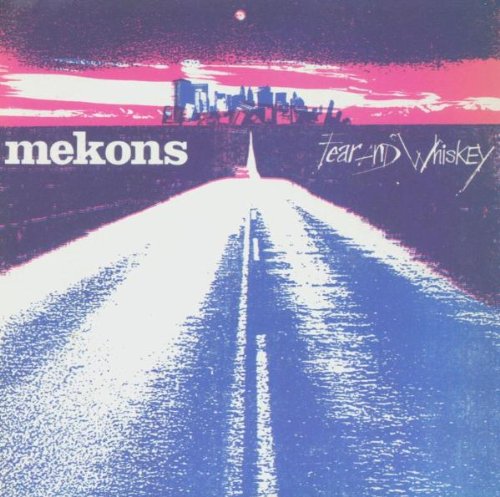
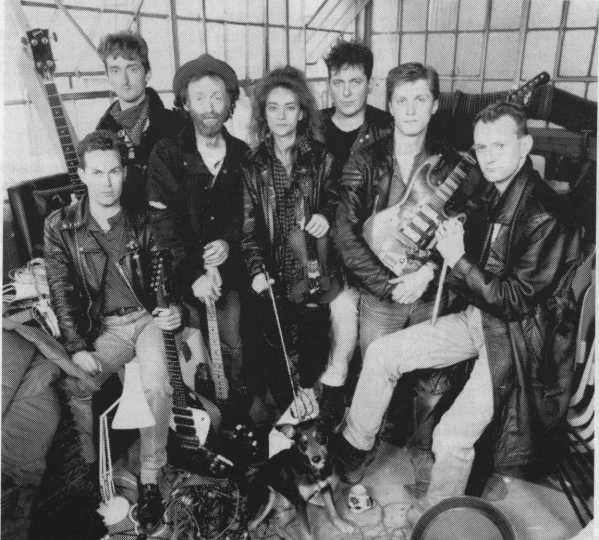
The Mekons came staggering through darkness and doubt on the lost highway breaking new territory with the original sin of this rootsy rebellion. The art punk consortium had distinguished themselves from the start with their early singles ("Never Been in a Riot" and "Where Were You" ) and albums (The Quality of Mercy Is Not Strnen The Mekons [aka Devils Rats and Piggies a Special Message from Godzilla] The Mekons Story The English Dancing Master EP
Tom Greenhalgh remembers: "When the yearlong miners strike of 1984-'85 came along, the Mekons were approached to play benefits in support of the striking miners, whose communities were being starved...Having previously been known to get politically involved with the likes of Rock Against Racism and Anti-Fascist Action, we had to get a live band together and recruited then friends of friends -- Susie Honeyman, Steve Goulding, Lu Edmonds, Dick Taylor -- specifically for that purpose...At that time -- the drab post-punk/new romantic early '80s -- people were looking for other music and finding things elsewhere in reggae, African music, German electronics, folk music and country music. One day I met Terry Nelson, legendary Chicago deejay, in my house in Brixton. He had been invited to stay, unbeknownst to me, by Hugo Burnham, the drummer with the Gang of Four. Terry was well into all the good country stuff and pretty soon the difference between the three chords of country and the three chords of punk became blurred...As a band, we were ready to go, making music that was really great to play and apparently great to get involved with as an audience."
'Fear and Whiskey' was produced by The Mekons and engineered by John Gill and Shelagh Quinn at Lion Studios in Leeds with Jacqui Callis on vocals; Lu Edmonds on bass; Steve Goulding on drums; Tom Greene on guitar, piano, and vocals; Tom Greenhalgh on mixing and vocals; Suzie Honeyman on fiddle; Jon Langford on guitar, harmonica, and vocals; Ken Lite on bass, rhythm guitar, and vocals; Terry Nelson on walkie talkie; Dick Taylor on guitar; and Robert Sigmund Worby on drums; plus Jim Chapman, Mark J. White, Carlton B. Morgan, Dolf Anonymous, Sabien Ex, Ralph Mulcahy, Dave Haines, Dolph Anonymous, John Moor, Stoke Newington Jr., Brendan "Crowkey" Croker, Cobie, and Terrie. The album was released on their own Sin Records label and celebrated by critics as it floundered in obscurity. Still, it became the first album to be categorized as alt-country.
Jon Langford reveals: "We never really split up, but we didn't function much as a live band after 1981...But during the miners strike, the Mekons wanted to get involved, and after we started playing a few gigs, we realized we needed something a bit more ... We spent a long time working on the ideas for that record, thinking about what we should be doing. We had been a professional band on a major label in the late '70s, and we were reluctant to become that again. But we knew we had to play the game a bit, or we would cease to exist...Once we started taking it seriously, we tried to find strategies to write songs that made sense to us. The Mekons were always very good at knowing what we didn't want to do. Basically, we thought everything was crap, so we always ended up doing what little was left! ... We were listening to a lot of country stuff, but we weren't really trying to play it. We just kind of steeped ourselves in it because it was interesting. With the Mekons, a lot of people always told us we [had influences] that we didn't even realize. You know, that we were really like a honkytonk band because all the songs were about bars! ... I think country and western is a big problem for a lot of people. Even if we didn't think we were playing country and western, the fact that it was even mentioned was a problem. We talked about people like Merle Haggard as influences, and the people in Europe didn't get that ... I think for us, everything was so wide open with punk when it first started...I didn't like the politics of punk rock; I liked the freedom of it that let you do anything you want. I liked that you could be in a band, express yourself, say whatever you want, without having to play the music-industry game. That's where the Mekons really came in. We were non-musicians, and we played rock 'n' roll like it was some sort of primitive folk music.,,I mean, we didn't have anything better to do, so we got back into being a proper band. We felt like we had the firepower we were lacking before."
http://www.mekons.de/mekonhom.htm "Hard To Be Human"
https://www.youtube.com/watch?v=Cj2naiqMg4w VIDEO "Last Dance"
https://www.youtube.com/watch?v=SAMil7dkZh4 VIDEO
'Fear and Whiskey' full album:
https://myspace.com/mekons/music/album/fear-and-whiskey-18611818 All songs written and composed by Mekons, except as noted.
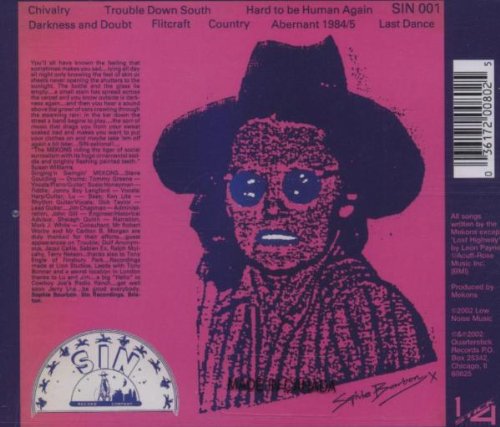
VIDEO 1. "Chivalry" 4:03 2. "Trouble Down South" 4:15 3. "Hard to Be Human Again" 3:58 4. "Darkness and Doubt" 5:15 5. "Psycho Cupid (Danceband on the Edge of Time)" 2:52 6. "Flitcraft" 3:23 7. "Country" 2:54 8. "Abernant 1984/5" 2:21 9. "Last Dance" 3:13 10. "Lost Highway" Leon Payne 2:59 liner notes for 'Original Sin'
You'll all have known the feeling that sometimes makes you sad... lying all day all night only knowing the fee) of 5km or sheets never opening the shutters to the sunlight. The bottle and the glass lie empty... a small stain has spread across the carpet and you know outside (5 darkness again... and then you hear a sound above the growl of cars crawling through the steaming ram: in a bar down the street a band begins to play... the sort of music that drags you from your sweat soaked bed and makes you want to put your clothes on and maybe take ,em off again a bit later... Sensational... But not so fast meatball... A drinker (5 full of dreams... dreams so full of drink they can't stand up... trembl-ing you untwine your naked body from the sheets as another dying days light fades into neon... these days hang as thick as the sodden nights... avoiding the crushing gaze of the mirror your hands slack with shame you shake the shards of glass from the underdothes rubbing numbly at the stains trying to pull nothing together... from the night beyond the drawn shades a drum roll, a dis-tant chord chiming like a death knell; your blood moves - only the music can speak for a soul in such depths. Winter comes to Chicago cutting through the love-knots like the judgement of Solomon. Outside the red wind sears the jangling night: reeling through the neon haze you stumble across the street-automobiles blare, in the dazzle of their lights your shaking fingers find the door... down the stairs through the spinning dark, the heat slams against your crushed dothes, your pulse pounding, you fight through the brawl at the bar to the deep back corner of the room... a hillbilly orchestra of eight pieces dres-sed in ill-fitting mexican jackets and purple shirts smiles glassily into the fog of cigarette smoke - your spine is an electric arc as the music roars around your aching head and floods into your heart... Late night sitting at the bar revulsion shuddering thru your body as you try to recall who it was and what you said - knowing you've talked too much once again... are you remembering dancing that time... your face flushed as you held hands... laughing... the sting of death (5 sin and the strength of sin (5 the law, there (5 nothing more dangerous than a confident man, your thoughts staggering without direction, staring at the pools of liquor on the chipped bartop, realising you can trust no-one, something you once read somewhere... ,1 only know that he who forms a tie (5 lost. The germ of corruption has entered his soul'... your elbow slips from the bar. SOPHIE BOURBON Chicago John Peel 1985
https://www.youtube.com/watch?v=7oZKbthAxJw VIDEO 1. Hey Susan! (0:07)
2. Beaten And Broken (2:37)
3. Deep End (5:25)
4. Chop That Child In Half (8:48)
Four Tet found a subtle unfolding bliss in the angel echoes and layered loops of this folktronic love cry. London born Kieran Hebden formed Fridge with classmates at the Elliott School in Putney and signed a deal with the Output Recordings label at the age of fifteen. Within a year he was releasing material with Steve Reid as Four Tet. Over four albums ( Dialogue Pause Rounds , and Everything Ecstatic ) they developed a sound that was completely unique.
Hebden says 'There Is Love In You' was influenced by two years of playing the London club circuit: “This album’s more about bliss! It’s about being completely lost in music in some ways. To me, music’s like this sacred thing; it’s like my escape, the thing that helps me through life. When I started making this album, I wanted to make music that touched on those moments that make me feel on fire inside, make me feel sublime. I think that ties in the DJing a lot...When I started DJing at The End it was like being thrown in the deep end. I was scared again. It was new to me. And also around that time dance music was so uncool, this was in 2007: Justice or whatever was around but in general it was like the Kings Of Leon or something; rock bands were getting all the press. It felt like there was no one there because they’d read about it in ID Magazine.” 'There Is Love In You' reached one hundred and eighty nine in France, one hundred and fifty seven in the US, ninety-four in Belgium, and thirty-five in the UK.
http://www.fourtet.net/ full album:
https://www.youtube.com/playlist?list=PL031F235198EC6CE7 http://grooveshark.com/#!/album/There+Is+Love+In+You/3929173 http://www.last.fm/music/Four+Tet/There+Is+Love+in+You VIDEO All tracks composed and arranged by Kieran Hebden.
1. "Angel Echoes" 4:00
2. "Love Cry" 9:13
3. "Circling" 5:18
4. "Pablo's Heart" 0:12
5. "Sing" 6:49
6. "This Unfolds" 7:55
7. "Reversing" 2:40
8. "Plastic People" 6:34
9. "She Just Likes to Fight" 4:34
Total length: 47:15
http://vimeo.com/10335834 There Is Love In You: Four Tet [Part 1 of 3] from Ray Concepcion on Vimeo .
http://vimeo.com/10336632 There Is Love In You: Four Tet [Part 2 of 3] from Ray Concepcion on Vimeo .
http://vimeo.com/10337530 There Is Love In You: Four Tet [Part 3 of 3] from Ray Concepcion on Vimeo .
The Magnetic Fields rewrote the book of love with the kaleidoscopic musical ambition of this revisionist romantic revue. Drawing from such diverse styles as tin pan alley, blues, punk, jazz, folk, country, gospel, electronica, experimental, and world music to create a panopoly of perspectives on l'amour, the triple album opus approaches the subject with a world weary wit and touching tenderness that is totally unique.
Songwriter Stephen Merritt explains in the liner notes: "I didn't think of them all at the same time. First I thought of the idea...I had been thinking it would be a good idea to get into the world of musicals, and probably easiest to get into it through a revue of songs...And I thought, well, what do I have that nobody else can do that I can turn into a revue - well, i write pretty good love songs. Nobody else is writing modern love songs. First I thought of it as a revue of 100 love songs, just because 100 means a lot of things. It means a large amount, and it's a nice round number that implies manufacturing or a batch of something. Then I realized that just at two minutes a song, 100 love songs would be 200 minutes long which is hours and hours and no one would want to sit through a revue like that, however good it was...The original idea was to have the singers be drag queens or nonsingers, some way of making it more entertaining than using four singers taking turns singing songs. I thought it could be a competition...My mother talked me out of that one. She disapproved very strongly...The next lowest number that had another relevant meaning was 69, which I chose as much for its graphic possibilities as its obvious relation to romance."
'69 Love Songs' features The Magnetic Fields quartet of Stephin Merritt on vocals, Digitech vocalist, Roland harmonizer, vocoder, ukulele, baritone ukulele, Kaholas ukulele, Admira classical, acoustic-electric 12-string guitar, lap steel, fado guitar, bass guitar, mandolin, autoharp, Marxophone, ukelin, tremoloa, violin-uke, sitar, zither, violin, musical saw, keyboards, synclavier, Moog Satellite, piano, harmonium, Wurlitzer electronic piano, organ, rhythm units, recorder, ocarina, pennywhistle, Maestro wind synthesizer, Hohner melodica, Paul Revere jug, rumba box, xylophone, kalimbas, Radio Shack 75-in-One Project Kit, drum kit, cymbals, rain stick, chimera, maracas, conga, bongos, triangle, bells, tambourine, washboard, steel drum, Chicken Shakers, finger cymbals, springs and Slinky guitar, pipes, bamboo harp, spirit chaser, sleighbells, fingersnaps, thunder sheet, cabasas, cowbells, and gong; Sam Davol on cello and flute; Claudia Gonson on piano; drums; percussion; lead vocals on "Reno Dakota", "Sweet-Lovin' Man", "If You Don't Cry", "Washington, D.C.", "Acoustic Guitar", and "Zebra"; other backing vocals; duet with Merritt and guitar on "Yeah! Oh, Yeah!"; arrangement on "Very Funny", "World Love", and "Busby Berkeley Dreams"; whistling on "Blue You"; and John Woo on banjo, lead guitar, mandolin, and bass on "Time Enough for Rocking When We're Old"; with LD Beghtol on harmonium on "Xylophone Track", lead vocals on "All My Little Words", "My Sentimental Melody", "Roses", "The Way You Say Good-Night", "Bitter Tears", and "For We Are the King of the Boudoir;" duet with Merritt on "The One You Really Love"; other backing vocals; and graphic design of box and book; Chris Ewen on backing tracks and arrangement on "Promises of Eternity" and "It's a Crime", plus theremin on "Blue You"; Daniel Handler (aka Lemony Snicket) on accordion, keyboards, and arrangement on "Asleep and Dreaming"; Dudley Klute on lead vocals on "The Luckiest Guy on the Lower East Side", "How Fucking Romantic", "My Sentimental Melody", "Very Funny", "Long-Forgotten Fairytale", "It's a Crime", and "Blue You;" duet with Merritt on "Underwear;" and other backing vocals; Ida Pearle on violin on "The Luckiest Guy on the Lower East Side"; Shirley Simms on duet with Merritt on "Papa Was a Rodeo", vocals on "Come Back from San Francisco", "Boa Constrictor", "No One Will Ever Love You", "Kiss Me Like You Mean It", "I'm Sorry I Love You", and "Strange Eyes;" and other backing vocals.
The sessions took place at Polar West, Mother West, Polar Mother, and Sonics. '69 Love Songs' was produced and engineered by Stephin Merritt with additional engineering by Jon Berman, Chris Ewen, Claudia Gonson, Eric Masunaga, and Charles Newman; and mastering by Jeff Lipton. All songs were written and composed by Stephin Merritt.
magneticfields http://www.houseoftomorrow.com/ "All My Little Words"
https://www.youtube.com/watch?v=eo8vW_0H_Kg "I Don't Want to Get Over You"
https://www.youtube.com/watch?v=Pp5eBxU248Y "Reno Dakota"
https://www.youtube.com/watch?v=o8JuG6nRhb4 "The Luckiest Guy on the Lower East Side"
https://www.youtube.com/watch?v=GhO1XlDFqxE "Sweet-Lovin' Man"
https://www.youtube.com/watch?v=UBbf-RCT96M "Underwear"
https://www.youtube.com/watch?v=bQC_fROPpXw "Busby Berkeley Dreams"
https://www.youtube.com/watch?v=TAwU1RkFqEw "Papa Was a Rodeo"
https://www.youtube.com/watch?v=8yZ50ptDpuQ '69 Love Songs' full album:
VIDEO VIDEO
Volume one
VIDEO
1. "Absolutely Cuckoo" Stephin Merritt 1:34 2. "I Don't Believe in the Sun" Merritt 4:16 3. "All My Little Words" LD Beghtol 2:46
4. "A Chicken with Its Head Cut Off" Merritt 2:41 5. "Reno Dakota" Claudia Gonson 1:05
6. "I Don't Want to Get Over You" Merritt 2:22
7. "Come Back from San Francisco" Shirley Simms 2:48 8. "The Luckiest Guy on the Lower East Side" Dudley Klute 3:43
9. "Let's Pretend We're Bunny Rabbits" Merritt 2:25 10. "The Cactus Where Your Heart Should Be" Merritt 1:11 11. "I Think I Need a New Heart" Merritt 2:32 12. "The Book of Love" Merritt 2:42 13. "Fido, Your Leash Is Too Long" Merritt 2:33 14. "How Fucking Romantic" Klute 0:58 15. "The One You Really Love" Merritt 2:53 16. "Punk Love" Merritt 0:58 17. "Parades Go By" Merritt 2:56 18. "Boa Constrictor" Simms 0:58 19. "A Pretty Girl Is Like..." Merritt 1:50 20. "My Sentimental Melody" Beghtol 3:07 21. "Nothing Matters When We're Dancing" Merritt 2:27 22. "Sweet-Lovin' Man" Gonson 4:59
23. "The Things We Did and Didn't Do" Merritt 2:11
Volume two
VIDEO 1. "Roses" Beghtol 0:27 2. "Love Is Like Jazz" Merritt 2:56 3. "When My Boy Walks Down the Street" Merritt 2:38 4. "Time Enough for Rocking When We're Old" Merritt 2:03 5. "Very Funny" Klute 1:26 6. "Grand Canyon" Merritt 2:28 7. "No One Will Ever Love You" Simms 3:14 8. "If You Don't Cry" Gonson 3:06 9. "You're My Only Home" Merritt 2:17 10. "(Crazy for You But) Not That Crazy" Merritt 2:18 11. "My Only Friend" Merritt 2:01 12. "Promises of Eternity" Merritt 3:46 13. "World Love" Merritt 3:07 14. "Washington, D.C." Gonson 1:53 15. "Long-Forgotten Fairytale" Klute 3:37 16. "Kiss Me Like You Mean It" Simms 2:00 17. "Papa Was a Rodeo" Merritt, Simms 5:01
18. "Epitaph for My Heart" Merritt 2:50 19. "Asleep and Dreaming" Merritt 1:53 20. "The Sun Goes Down and the World Goes Dancing" Merritt 2:46 21. "The Way You Say Good-Night" Beghtol 2:44 22. "Abigail, Belle of Kilronan" Merritt 2:00 23. "I Shatter" Merritt 3:09
Volume three
VIDEO 1. "Underwear" Merritt 2:49
2. "It's a Crime" Klute 3:54 3. "Busby Berkeley Dreams" Merritt 3:36
4. "I'm Sorry I Love You" Simms 3:06 5. "Acoustic Guitar" Gonson 2:37 6. "The Death of Ferdinand de Saussure" Merritt 3:10 7. "Love in the Shadows" Merritt 2:54 8. "Bitter Tears" Beghtol 2:51 9. "Wi' Nae Wee Bairn Ye'll Me Beget" Merritt 1:55 10. "Yeah! Oh, Yeah!" Merritt, Gonson 2:19 11. "Experimental Music Love" Merritt 0:29 12. "Meaningless" Merritt 2:08 13. "Love Is Like a Bottle of Gin" Merritt 1:46 14. "Queen of the Savages" Merritt 2:12 15. "Blue You" Klute 3:03 16. "I Can't Touch You Anymore" Merritt 3:05 17. "Two Kinds of People" Merritt 1:10 18. "How to Say Goodbye" Merritt 2:48 19. "The Night You Can't Remember" Merritt 2:17 20. "For We Are the King of the Boudoir" Beghtol 1:14 21. "Strange Eyes" Simms 2:01 22. "Xylophone Track" Merritt 2:47 23. "Zebra" Gonson 2:15 live in Somerville, MA (I was there!)
VIDEO VIDEO