Showing posts with label caetano veloso. Show all posts

Tuesday, June 16, 2015

jóia / qualquer coisa


Caetano Veloso simultaneously created two pseudo-movements with these two jewels of unique expression and quiet contemplation.   He had been the catalyst for a new hybrid of traditional music with modern influences over the course of almost a decade on albums like Domingo with Gal Costa in 1967, Caetano Veloso (Tropicália), the 1968 collaboration Tropicália: ou Panis et CircensesCaetano Veloso in 1969 and  Caetano Veloso in 1971, and  Transa and Araçá Azul in 1972.   

After spending some time touring and producing albums for other, he returned to the studio to record one album of (mostly) originals and a second of (mostly) covers.  The proceedings were produced by Caetano Veloso and Perinho Albuquerque and included  Moacyr Albuquerque and Sergio Barroso on bass;  Perinho Albuquerque on arrangements, guitar, violin, and percussion;  Tuzé Abreu, Altamiro Carrilho, Jorge Ferreira da Silva, and Celso on flute;   Djalma Corrêa and Bira Da Silva on percussion;  Perna Froes on arrangements and piano;  As Gatas on background vocals;  Tutty Moreno on bateria;  Quarteto em Cy on vocals;  with  Jairo Gualberto and Aldo Luiz;  and  director Caetano Veloso on guitar, percussion, viola, and vocals.     Both albums were released on the same day in June of 1975.  The racy album cover for 'Jóia' was banned by the Brazilian goverment.  


http://caetanoveloso.com.br/


"Jóia"
https://www.youtube.com/watch?v=bca8KmPXro8


"Lua, Lua, Lua"
https://www.youtube.com/watch?v=egb-EcydMKo


Escapulário
https://www.youtube.com/watch?v=wWMam99r4J4


"Jóia"
full album:

https://www.youtube.com/playlist?list=PLh3wyaXXqme76hLLmNd_CsB-xx4jVrF_R


All songs composed by Caetano Veloso, unless otherwise indicated.
Minha mulher  – 4:46
Guá (Perinho Albuquerque, Caetano Veloso) – 3:13
Pelos olhos  – 2:35
Asa, Asa  – 1:36
Lua, lua, lua, lua  – 3:59
Canto do povo de um lugar  – 4:11
Pipoca moderna (Sebastião Biano, Caetano Veloso) – 3:11
Jóia  – 1:27
Help (Lennon, McCartney) – 2:30
Gravidade  – 2:55
Tudo tudo tudo  – 2:00
Na asa do vento (Luiz Vieira, João do Vale) – 4:08
Escapulário (Oswald de Andrade, Caetano Veloso) – 2:17


"Qualquer Coisa"
https://www.youtube.com/watch?v=1FtVHzligxI


 "For No One"
https://www.youtube.com/watch?v=Nns1CYCyTMg


"Qualquer Coisa"
full album:

https://www.youtube.com/playlist?list=PLH-7xOQpXBxsnmEhgmidCvBZRO_AfCB1k


All songs composed by Caetano Veloso, unless otherwise indicated.
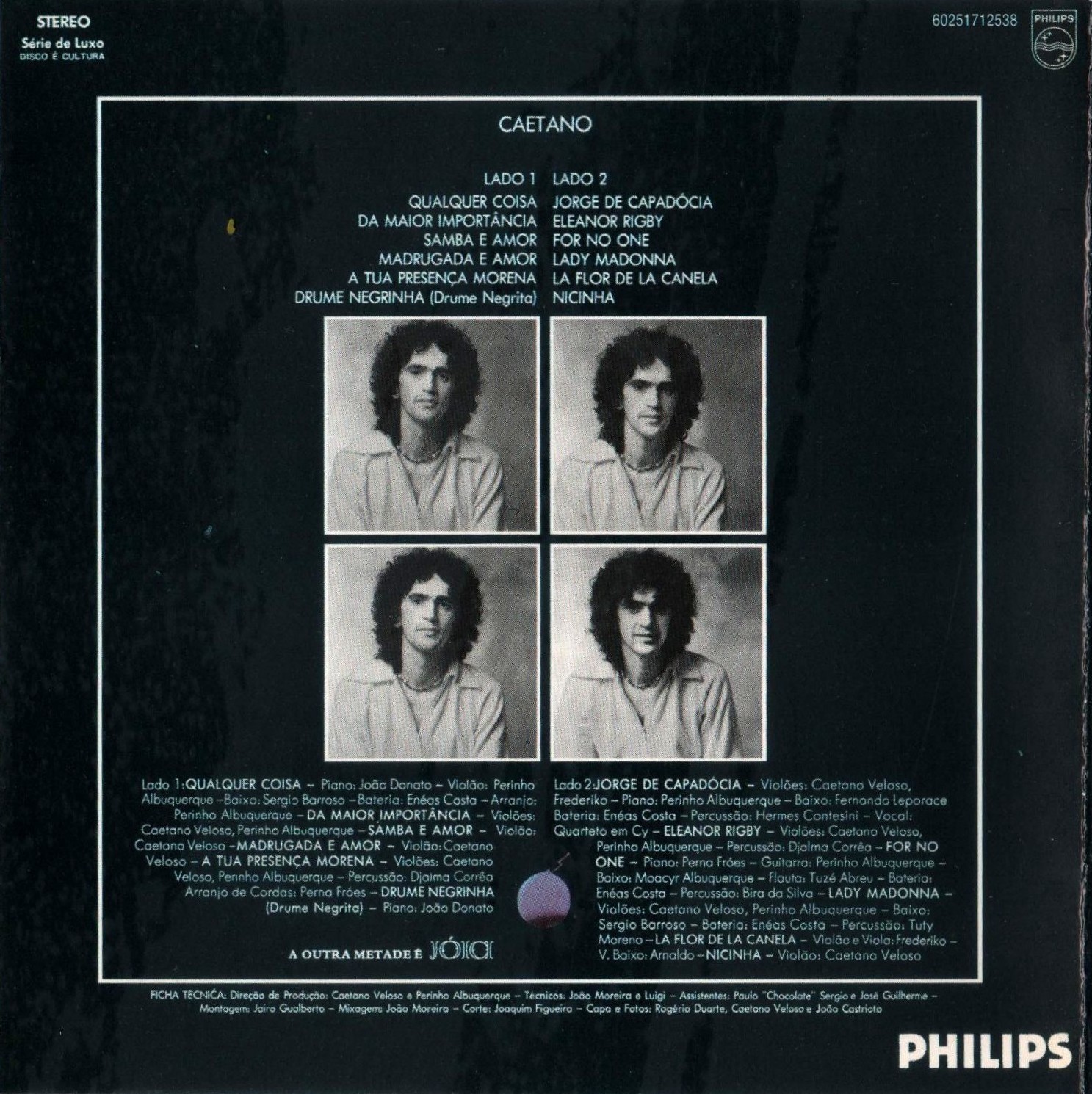
Qualquer coisa  - 3:15
Da maior importância  - 4:34
Samba e amor (Chico Buarque) - 2:54
Madrugada e amor (José Messias) - 3:39
A tua presença morena  - 2:04
Drume negrinha (Drume negrita) (Eliseo Grenet, Caetano Veloso) - 3:53
Jorge de Capadócia (Jorge Ben) - 3:21
Eleanor Rigby (Lennon, McCartney) - 5:33
For No One (Lennon, McCartney) - 5:02
Lady Madonna (Lennon, McCartney) - 2:49
La flor de la canela (Chabuca Granda) - 3:12
Nicinha  - 0:46


Friday, March 21, 2014

cinema transcendental


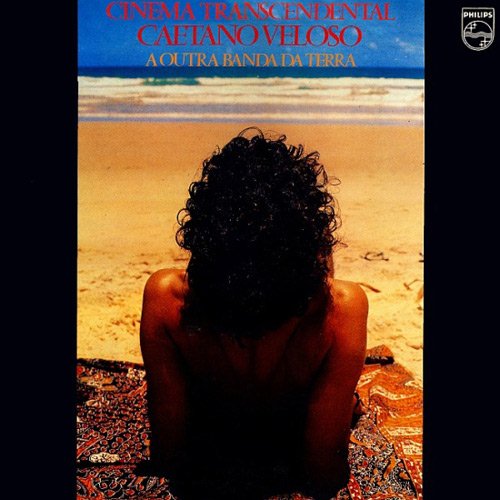
Caetano Veloso found his bliss in the organic acoustic grooves of this soothing and sensual mystical meditation.  'Cinema Transcendental' shows Velose and A Outra Banda da Terra cooling the afro-jazz rhythms of 'Bicho' and the sultry samba of 'Muito (dentro da estrela azulada)' into a more subtle sound while still experimenting with different genres and forms.  

The sessions were produced and engineered by Paulo Chocolate and Luis Claudio Coutinho with Caetano Veloso on production, acoustic guitar, whistle, palmas, percussion, and vocals;  Tony Costa and Perinho Santana on guitar;  Tomás Improta on keyboards, arrangements, claves, bamboo flute, palmas, percussion, and vocals;  Arnaldo Brandão on bass, palmas, percussion, and vocals;  Vinícius Cantuária on drums and steel guitar;  Bolão on percussion, palmas, and vocals;  and Dominguinhos on accordion;  with Lúcia Turnbull and Marizinha on choir.   


Veloso would expound at the time:   "The sung word is, in sum, another type of raw material that is related to the written word and the spoken word, but that cannot be reduced to either. The sung word works, perhaps, as a synthesis of the other two; it has performed at least that function. Enjoying the word in a state of poetry has always been more intense in the arena of popular music that in the others.   Perhaps this phenomenon has to do a bit with fatigue, fatigue of the visual, of visual communication, of reading. At the end of the 1960s, McLuhan’s talk about that stuff was perhaps an indication of such a fatigue. The visual failed. The ear is something much more absorbing, more participatory. Sound comes from everywhere; it penetrates every pore.  Perhaps such a fatigue is temporary. Things come and go. I don’t believe that things go forward, as if there could be a kind of progress. I don’t share the Western idea of linear progress...Brazilian popular music is, in all senses of the word, very abundant. It is the only artistic expression in Brazil that is not poor. In reality, it is an aberration in Brazilian society: it’s different. Nowhere in the world does popular music matter as much as it matters here.   Popular music always manages to support itself, always manages to get enough resources to stay strong, something that doesn’t happen with written poetry, with film, with theater. It generates push, national pride. It has the mission of expressing the country.   A generation like mine, with Jorge Ben, Gilberto Gil, Chico Buarque, Paulinho da Viola, only managed to succeed because other good people were there before.   Not even in the United States is popular music as strong as it is here, because Americans also have other things. 'There they have money, cars, lawns, food / all of that is cool,' to quote a verse from Paulo Leminski. Brazilians are very poor; they don’t manage to get together to get anything done. But in the midst of such chaos, popular music somehow works. Popular music is the philosophical expression of the country. It is much more important than all the college-educated people of all ages who already wrote about all the complicated things in the world. Popular music is a more totalizing expression of Brazil, a more direct one. It doesn’t mess with noble materials because Brazil is not a noble country.   I believe that the 'paper' poets are in a more general way linked to a European tradition, and popular music is something more linked to the Americas. When it appeared, the Americas were already around. In that way, it is somewhat like cinema, and, at the same time, it is music because it is a very old thing."


http://www.caetanoveloso.com.br/


 'Cinema Transcendental' 
full album:


00:00 Lua de São Jorge
03:57 Oração ao Tempo
07:24 Beleza Pura
10:54 Menino do Rio
13:22 Vampiro
17:26 Elegia [adaptado de poema de John Donne]
19:45 Trilhos Urbanos
22:31 Louco Por Você
30:10 Cajuína
32:30 Aracaju
34:54 Badauê,
36:27 Os Meninos Dançam


1. "Moon of St. George" 3:57
2. "Prayer at the Time" 3:25
3. "Pure Beauty" 3:30
4. "River Boy" 2:28
5. "Vampire" Jorge Mautner 4:03
6. "Elegy" Pericles Cavalcanti and Augusto de Campos 2:19
7. "Urban Trails" 2:46
8. "Crazy for You" 7:40
9. "Cajuína" 2:20
10. "Aracaju" Thomas Improta, Canterbury Vinicius Caetano Veloso and 2:23
11. "Badauê" Môa the Catende 1:32
12. "The Dancing Boys" 3:14


Wednesday, August 7, 2013

caetano veloso (tropicália)


Caetano Veloso spearheaded a cultural and musical revolution with the inverted bossa nova and electrified psychedelic rock hybridizations of his spectacular solo debut.  Abandoning the traditionalist approach of his collaboration with Gal Costa 'Domingo',  he continues to work with international influences that characterized the seminal collection 'Tropicália: ou Panis et Circencis'.  

Veloso reflects on the origins of this new Brazilian National Music:     "We were already talking about it in 66. In the inner cover of the album 'Domingo' it’s written: I’ll sing these songs that I wrote at ease some time ago because now I’m thinking about completely different things and projects. Gil had already had some meetings with other composers and musicians in Rio to try to spread the new way of seeing things. Gil wanted everyone to participate but they didn’t understand it. I’d been talking a lot with Rogério Duarte about the fact that the popular music composers in Brazil lacked the capacity to risk and were confined into the good-taste and politically correct world of the time. About the prejudice against rock and iê-iê-iê, which, in spite of not interesting us very much in the beginning, had a vitality that we discovered little by little...Tropicália sounds like something alive, in progress. Tropicalismo sounds academic, a movement in the conventional sense of it. I was not so much attracted to the idea of Tropicalismo, because this name conveyed the impression that we wanted to make tropical business in Brazil, from Brazil. I didn’t want the movement to be characterized like that, it intended to be internationalist and anti-nationalist. It had more to do with the universal sound, another designation that we heard and adopted for a period, related to Marshall MacLuhan’s idea of a global village, highly in vogue at the time. We were very interested in space conquests, rock’n’roll, electronic music, that is, in the avant-gardes and entertainment industry. It was all experienced as an international novelty that we wanted to address sort of unabashedly. Nowadays, though, I think the name couldn’t have been more correct...I’d say it resulted from the encounter between Gilberto Gil and Caetano Veloso’s personalities. Without him, I wouldn’t make music, let alone this whole thing inside music. Still, once I was inside music – specially because of Gil – I ignited a movement so responsible for the popular music issue in Brazil only because Gil himself was very excited for something like that to happen...I have the ability to finish articulating the elements. Many of them were brought by myself, but many weren’t. I brought many things from my conversations with Bethânia, with Rogério, which only happened because I am who I am, with my own thoughts, with what I observed and felt. But the final organization of these elements into a project sprang from Gil’s intuition. Gil suggested that we talk about the Beatles and mass culture...The popular art from Pernambuco and Brazil’s social and political situation at that time. The mixture of the will to act in History with the hearing of “Banda de Pífaros de Caruaru” and the consciousness of the Beatles role in mass culture, this conjunction set Gil’s mind on fire."


'Caetano Veloso' was a hugely successful artistic achievement; but the social implications of the Tropicália movement made Veloso a dangerous man to the repressive military goverment in Brazil at the time.  He and Gil were arrested a year later and exiled for their counter-cultural attitudes.  


http://www.caetanoveloso.com.br/


"Tropicália"   "The album was almost ready and the song had already been recorded, but had no title yet. Luiz Carlos asked me to sing new songs. When I sang this one he was marveled. He found it similar to the film Terra em Transe and to the work by an artist from Rio, Hélio Oiticica, called “Tropicália”. He said I should give this title to the song. I told him that I knew neither the person nor the work of art and that I would not give someone else’s work title to my song. The person might not like it. Manoel Barenbein, the producer of the album, loved it and immediately wrote: Tropicália. It was meant to be temporary, but it stayed there."


"Alegria, Alegria"  


"Superbacana"  


"Clara (feat. Gal Costa)" 


"Soy Loco por Tí, América"


'Caetano Veloso' 
full album:


All songs written and composed by Caetano Veloso except where noted. 

Side one
1. "Tropicália"   3:40
2. "Clarice" (Caetano Veloso, José Carlos Capinam) 5:31
3. "No Dia em que Eu Vim-Me Embora" (Caetano Veloso, Gilberto Gil) 2:26
4. "Alegria, Alegria"   2:43
5. "Onde Andarás?" (Caetano Veloso, Ferreira Gullar) 1:55
6. "Anunciação" (Caetano Veloso, Rogério Duarte) 2:01
Side two
7. "Superbacana"   1:28
8. "Paisagem Útil"   2:35
9. "Clara (feat. Gal Costa)" (Caetano Veloso, Perinho Albuquerque) 2:43
10. "Soy Loco por Tí, América" (Gilberto Gil, José Carlos Capinam) 3:40
11. "Ave Maria"   2:06

12. "Eles" (Caetano Veloso, Gilberto Gil) 4:40

Sunday, December 23, 2012

domingo


Caetano Veloso and Gal Costa both made their debut with the mesmerizing acoustic grace of this throwback to classic bossa nova. Both singers came from the Bahia region of Brazil where they developed a friendship. Veloso had won a contract with Philips Records in a lyrics contest and Costa had already recorded some of his songs by the time they got together to make 'Domingo'. The sessions took place at Philips Studios with producer Dori Caymmi. It features the sultry vocals of Costa and Veloso, with Caymmi on acoustic guitar and arrangements by Roberto Menescal, Francis Hime, and Caymmi. Most of the songs were written by Veloso in addition to a Mcollaboration with poet and journalist Torquato Neto who co-wrote two other songs with Veloso's musical hero Gilberto Gil. 


'Domingo' was released through Philips Records and the single 'Coração Vagabundo' became a massive success. In the liner notes Veloso expressed: “I no longer desire to thrive on nostalgia for other times and places; on the contrary, I wish to incorporate that nostalgia into a future project.” The traditional samba sound suits the young singers with mesmerizing melodies and faint traces of the pop hybrid of Música Popular Brasileira that was to come. Veloso confesses:
"We were already talking about it in 66. In the inner cover of the album 'Domingo' it’s written: I’ll sing these songs that I wrote at ease some time ago because now I’m thinking about completely different things and projects. Gil had already had some meetings with other composers and musicians in Rio to try to spread the new way of seeing things. Gil wanted everyone to participate but they didn’t understand it. I’d been talking a lot with Rogério Duarte about the fact that the popular music composers in Brazil lacked the capacity to risk and were confined into the good-taste and politically correct world of the time. About the prejudice against rock and iê-iê-iê, which, in spite of not interesting us very much in the beginning, had a vitality that we discovered little by little."


http://www.caetanoveloso.com.br/


http://www.galcosta.com.br/


"Coração Vagabundo" 
This duet between Veloso and Costa became a massive hit.


"Avarandado"


 "Domingo" 


 "Nenhuma Dor"


"Zabelê" 


'Domingo'
full album:


All tracks written by Caetano Veloso except where noted. Lead vocals listed.

Side one
1. "Coração Vagabundo"   Caetano; Gal 2:25
2. "Onde Eu Nasci Passa um Rio"   Caetano 1:59
3. "Avarandado"   Gal 2:45
4. "Um Dia"   Caetano 3:31
5. "Domingo"   Caetano; Gal 1:25
6. "Nenhuma Dor" (Caetano Veloso, Torquato Neto) Gal 1:33
Side two
7. "Candeias" (Edu Lobo) Gal 3:11
8. "Remelexo"   Caetano 1:54
9. "Minha Senhora" (Gilberto Gil, Torquato Neto) Gal 4:14
10. "Quem Me Dera"   Caetano 3:24
11. "Maria Joana" (Sidney Miller) Gal 1:42
12. "Zabelê" (Gilberto Gil, Torquato Neto) Caetano; Gal 2:49


Saturday, June 9, 2012

transa


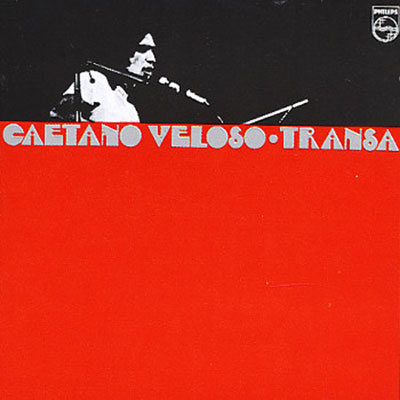
Caetano Veloso recorded this sexy and sensitive improvisational mix of politics and passion while still in exile from Brazil. He and Gilberto Gil spent two years in London after being arrested and then deported.  Veloso remembers how the repressive Brazilian goverment felt threatened by the metaphorical implications of their music. "They didn't imprison us for any song or any particular thing that we said.   It was a difficult atmosphere for them to understand, so they thought, 'We might as well put them in prison.' " 'Transa' is the second album that he made while in London; but unlike the somber orchestrated first, this nostalgic set is acoustic and sounds more joyful even if the lyrics still betray his melancholy.  Veloso remembers: "London felt dark, and I felt far away from myself."  Ralph Mace produced the jam style sessions that had Veloso singing in both English and Portuguese and playing guitar accompanied by Brazilian friends Gal Costa on vocals, Macalé on guitar and musical direction, Jards Macale on guitar, Moacir Albuquerque on bass; and Tuti Moreno and Áureo de Sousa on percussion.  Drawing from Bahian folk music, as well as bossa nova, jazz, reggae, and rock and roll; 'Transa' marks the beginning of something new for Veloso.  Shortly after it was released, he was allowed back to his beloved Brazil.  


http://www.caetanoveloso.com.br/


'You Don't Know Me' speaks to his sense of alienation in London.  


"Feel so lonely 

The world is spinning round slowly 
There’s nothing you can show me 
From behind the wall"


'Nine Out of Ten' dabbles in reggae and rock.  


"I walk down Portobello road to the sound of reggae 

I’m alive 
The age of gold, yes the age of old 
The age of gold 
The age of music is past 
I hear them talk as I walk yes I hear them talk 
I hear they say 
Expect the final blast; 
I walk down Portobello road to the sound of reggae 
I’m alive 
I’m alive, vivo muito vivo vivo vivo 
Feel the sound of music 
Banging in my belly belly belly
Know that one day I must die 
I’m alive 
And I know that one day I must die 
I’m alive 
Yes I know that one day I must die 
I’m alive vivo muito vivo vivo vivo 
In the eletric cinema or on the telly telly telly 
Nine out of ten movie stars make me cry 
I’m alive 
And nine out of ten movie stars make me cry 
I’m alive"


'Triste Bahia'  put a poem by Gregório de Matos Guerra to music.  


'It's a Long Way'


"Woke up this morning

Singing an old, old Beatles song
We’re not that strong, my lord
You know we ain’t that strong
I hear my voice among others
In the break of day
Hey, brothers
Say, brothers
It’s a long long long long way"


 'Mora na Filosofia' is a rock version of a classic samba by  Monsueto Menezes and Arnaldo Passos.


'Neolithic Man'

"If you look from your window at the morning star

You won’t see me
You’ll only see that you can’t see very far
God spoke to me
From inside the newstone one day
You’re my son"


'Nostalgia (That's What Rock'n Roll Is All About)'


"You sing about waking up in the morning

But you’re never up before noon
You look completely different from those straights
Who walked around on the moon
The clothes you wear
Would suit and old times baloons
You’re allways nowhere
But you’ll realize pretty soon
That’s all that you care
Isn’t worth a twelve bar tune
You won’t believe you’re just one more flower
Among so many flowers that sprout
You just feel faintly pround when you hear they shout
(Very loud) you’re not allowed in here, get out
That’s what rock’n’roll is all about
I mean, that’s what rock’n’roll was all about"


'Transa' 
full album:


1. "You Don't Know Me" 

2. "Nine Out of Ten" 
3. "Triste Bahia" (Caetano Veloso, Gregório de Mattos) 
4. "It's a Long Way" 
5. "Mora na Filosofia" (Monsueto, Arnaldo Passos) 
6. "Neolithic Man" 
7. "Nostalgia (That's What Rock'n Roll is All About)"