Einstürzende Neubauten renovated lies and let there be light in the explosive industrial confusion of this atavistic avante noise fusion. The Berlin musical art collective had disbanded twice after each of their previous two albums, the thunderous 'Halber Mensch' and the more understated 'Fünf auf der nach oben offenen Richterskala' . During both breaks, lead singer Blixa Bargeld worked with Nick Cave and the Bad Seeds . Sessions for their next album, 'Haus der Lüge' ("House of Lies") were produced by Einstürzende Neubauten at Hansa Studios and featured Blixa Bargeld ("Berlin Dandy of the Apocalypse") on lead vocals and guitars; Mark Chung ("Founder of Neubauten's Publishing Empire") on bass and vocals; Alexander Hacke ("Who Plays Guitar Like an Instrument of Chaos and Feedback") on guitar and vocals; with N.U. Unruh ("The Destructive Character is Cheerful") and F.M. Einheit ("Survivalist Electronics Expert and Overwhelming Physical Presence") on percussion and vocals. The Maifestspiele section of Fiat Lux contains recordings from a May Day demonstration in Kreuzberg, Berlin on May 1, 1987. The cover art is based on a woodcut by German Renaissance artist Hans Baldung Grien. They describe themselves in the liner notes: "Theirs is a completely dis/integrated vision compounded from the personal and the socio-political, past historical crimes and present holocausts, love and hate, passion and frigidity, arid desert heat and blasts of arctic cold. Rather than blandly homgenizing irreconcilable elements, they contruct towering 'musaics'. These endlessly forming and unforming dissonant tone clusters enrich the timbral/textural ranges of music. Einstürzende Neubauten are one of those very few groups who have shattered the blue gene code governing the sturcture of Anglo-American denim rock, irrevocably alterning its DNA."
http://www.neubauten.org/ http://www.neubauten.org/haus-der-luge Feurio!
https://www.youtube.com/watch?v=_oRQh-cqJmQ Prolog/Feurio!
https://www.youtube.com/watch?v=ZAoFkYaDImY Haus Der Luge/Epilog
https://www.youtube.com/watch?v=0Ve5ceF_BiI 'Haus der Lüge' full album:
VIDEO
Prolog - 1:50 Feurio! - 6:02 Ein Stuhl In Der Hölle (A Chair In Hell) - 2:09 Haus Der Lüge (House Of Lie) - 4:00 Epilog - 0:28
Fiat Lux - 12:24 a) Fiat Lux
b) Maifestspiele (May Festivals)
c) Hirnlego (Brain Lego)
Schwindel (Deception) - 3:58 Der Kuss (The Kiss) - 3:37 bonus:
Partymucke (Party Music) - 3:52
Chicago Transit Authority created a moving synthesis of jazz and rock and a serious social statement with the free form sonic experimentation, bluesy jams, and brassy pop of this liberating introduction. The group started from a group of students at Chicago's DePaul University. After playing in Chuck Madden's cover band The Missing Links; saxophonist Walter Parazaider, guitarist Terry Kath, and drummer Danny Seraphine left to form their own group The Big Thing with occasional trumpet player Lee Loughnane. They invited trombonist James Pankow (who had just transferred to DePaul University from Quincy College) into the fold and then keyboardist Robert Lamm who was leading Bobby Charles and the Wanderers at the time. Pankow remembers: "We had a get together in Walter's apartment on the north side of Chicago. It was Danny, Terry, Robert, Walter, Lee, and myself, and we agreed to devote our lives and our energies to making this project work...We figured that the only people with horn sections that were really making any noise were the soul acts; so we kind of became a soul band doing James Brown and Wilson Pickett stuff." While touring as a sextet, they met up with Parazaider's friend from DePaul Jimmy Guercio who had become a producer for CBS Records. He was very impressed and told them he would be in touch. In the meantime, they toured with another group The Exceptions and caught the attention of bass player Peter Cetera: "I had heard a lot about these guys. I was just floored 'cause they were doing songs that nobody else was doing, and in different ways. They were doing the Beatles' "Magical Mystery Tour" and "Got To Get You Into My Life" and different versions of rock songs with horns...At the end of the two-week stint, I was out of the Exceptions and into the Big Thing." According to Loughnane, it was the final piece of the puzzle: "We needed a bass player at the time. Robert was playing the bass pedals on the organ. He did a pretty good job, but there just wasn't enough bottom with the bass pedals. You needed a real bass in the band. And we needed a tenor voice. We had two baritones (Lamm and Kath), so we had midrange and lower notes covered. But we needed a high voice for the same reason that you have three horns. You have trumpet, tenors and trombone. You cover as much range harmonically as you can, and we wanted to do the same thing vocally. When Peter joined the band, that solidified our vocals. You could get more color, musically, and we started building from there."
When Guercio came back again he was blown away by their development and urged them to keep working on their original material. He agreed to become their manager, had them move out to Los Angeles, and came up with a new name: Chicago Transit Authority. Pankow recalls: "He got a little two-bedroom house near the Hollywood Freeway, and he told us that he was ready. We made the move in June of 1968. We threw all of our lives in U-haul trailers and drove across the country. The married guys left their wives at home at first because they couldn't afford to bring their families out. We got disturbance calls from the neighbors five times a day because all we did was practice day and night." The group spent seven months playing around small venues in L.A., building a following, honing their sound, and scraping by. They were given two opportunities to play for CBS executives and were turned down both times. At one point Guercio had to take a job producing another band. Parazaider reveals: "Jimmy called me up, and be asked me to ask the other guys, would it be okay if he did the Blood, Sweat & Tears second album. At first I was going, 'Well, jeez, man, that's horns, and what's going on?' and I voiced that opinion to him. He says, 'To tell you the truth, I really haven't recorded horns as a whole band situation. I've recorded horns that did sort of blaps here and there or little parts here and there. This would be a good way for me to learn how to record horns.' I don't think it was lip service, because he really hadn't recorded horns per se. We were basically a band with integrated horns in the band, not as backup horns. I hate to believe him on this because, if you think about it, what the horn section did, from the start, was a lot different from Blood, Sweat & Tears, and the sound was copied many times over after we got the Chicago horn sound. So, I think with Blood, Sweat & Tears the horns were recorded in a much different way than Chicago's horns were. Of course, if you look at the two bands, you would say that they were really a jazz-rock 'n' roll band, where we were different. They called us a jazz-rock band after Blood, Sweat and Tears faded away, but we were basically a rock 'n' roll band with horns." Guercio cut a demo and that started a buzz in the industry and led to CBS president Clive Davis making the call to sign them. They were flown to New York and given only ten days to record their debut album. Parazaider confesses: "We actually went in and started making 'Chicago Transit Authority' and found out we knew very little about what we were doing. I had done commercial jingles in Chicago, but this was a totally different thing for all of us. The first song was 'Does Anybody Really Know What Tine It Is?' We tried to record it as a band, live, all of us in the studio at once. How the hell do you get seven guys playing it right the first time? I just remember standing in the middle of that room. I didn't want to look at anybody else for fear I'd throw them off and myself, too. That's how crazy it got. I think that we actually realized after we didn't get anything going that it had to be rhythm section first, then the horns, and that's basically how we recorded a lot of the albums."
The sessions took place at Columbia Recording Studios with Peter Cetera on bass, vocals, and agogo bells; Terry Kath on guitar and vocals; Robert Lamm on keyboard, vocals, and maracas; Lee Loughnane on trumpet, vocals, and claves; James Pankow on trombone and cowbell; Walter Parazaider on woodwinds, vocals, and tambourine; and Danny Seraphine on drums. With three songwriters (Kath, Lamm, and Pankow) in their ranks, they had enough material for a double album; but Colombia would only go for it if they would take a cut in their royalties. It was agreed and 'Chicago Transit Authority' was released in April of 1969. It took a month for it to chart, with college students embracing the sound on FM album oriented radio stations. It would peak at number seventeen and spend over one hundred and seventy one weeks on the album chart, eventually going double platinum. When they went on tour, the group was sued by the actual Chicago Transit Authority over the their name and agreed to shorten it to Chicago.
Parazaider ponders: "Your life dream is to have a hit record. It was amazing because we were close friends, we had gone through all of this upheaval of leaving Chicago, moving to L.A. at a young age, leaving our families, just rolling the dice. We stuck real close together, kept everybody's ego in check. I think for some guys in the group it was harder to cope with the success than others. I don't think there were any of us that sat down around my kitchen table that day in February of '67 and said, 'Hey, our goal is to be famous.' The one good thing that seemed to help us is, we were the faceless band behind that logo." 'Chicago Transit Authority' went to number nine in the UK. Lamm says the response from the crowds during their first European tour gave them more confidence: "Even we were not aware of how edgy and different the first album was. We were just doing what we were doing, and we were hoping that it was different enough for people to notice it was different. But when international audiences heard the album, it just really stopped them cold. We played in clubs all over Europe, and the audience took to it much more readily than we had experienced anywhere in the States. When we came back, the album had gone gold, and we began headlining a little bit, but still the feeling was that American audiences didn't really get it. They got that the band was becoming popular, but we didn't have the sense that they were hearing the music for what it was. So, I think laying in Europe and being treated to a certain musical and artistic respect was eye-opening and really encouraging to the band. It made us realize that what we were doing was substantial, was artistic, and was respectable rather than just this pop commodity that we always felt like in the States, because of the audience, the press, and the way the record company regarded us. That success in Europe and the feeling that we got from the regard we were given as artists really told us in a way that has lasted to this day that this is more than just kid stuff." http://www.chicagotheband.com/ "Does Anybody Really Know What Time It Is?" went to number seven in 1970.
VIDEO "Beginnings" made it to number seven in 1971.
VIDEO "Questions 67 and 68"
only charted at number seventy-one in 1969; but would peak at number twenty-four when it was re-released two years later.
https://www.youtube.com/watch?v=qupeVLtXWLY https://www.youtube.com/watch?v=whMZ0Th9-4M "I'm a Man" hit number forty-nine in 1971.
https://www.youtube.com/watch?v=wYzxErU-UjY 'Chicago Transit Authority' full album:
https://www.youtube.com/watch?v=BHRJ5qFPfnQ https://www.youtube.com/playlist?list=ALBTKoXRg38BBkSKHx-O09hi5KK4G716vl VIDEO
Side One
1. "Introduction" Terry Kath l ead vocals: Kath 6:35 2. "Does Anybody Really Know What Time It Is?" Robert Lamm l ead vocals: Lamm 4:35 3. "Beginnings" Lamm l ead vocals: Lamm 7:54 Side Two
4. "Questions 67 and 68" Lamm l ead vocals: Peter Cetera/Lamm 5:03 5. "Listen" Lamm l ead vocals: Lamm 3:22 6. "Poem 58" Lamm l ead vocals: Lamm 8:35 Side Three
7. "Free Form Guitar" Kath 6:47 8. "South California Purples" Lamm l ead vocals: Lamm 6:11 9. "I'm a Man" Steve Winwood/Jimmy Miller l ead vocals: Kath/Cetera/Lamm 7:43 Side Four
10. "Prologue, August 29, 1968" James William Guercio 0:58 11. "Someday (August 29, 1968)" James Pankow/Lamm l ead vocals: Lamm/Cetera 4:11 12. "Liberation" Pankow l ead vocals: Kath 14:38 VIDEO
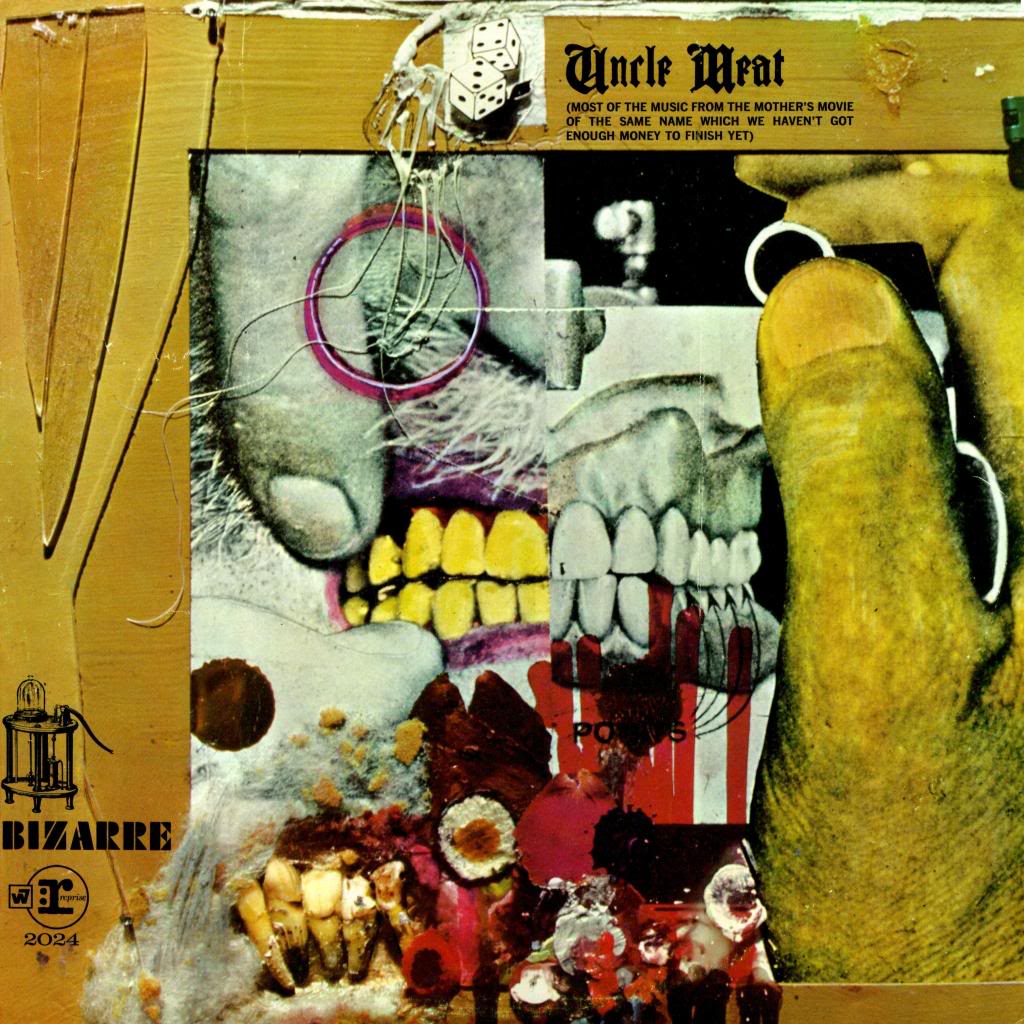
Frank Zappa and the Mothers of Invention laid out a bizarre smorgasbord of avante garde, neo-classical, spoken word, noise collage, and experimental jazz fusion with this soundtrack to an unfinished movie. The subtitle to the original release of 'Uncle Meat' was '(MOST OF THE MUSIC FROM THE MOTHER'S MOVIE OF THE SAME NAME WHICH WE HAVEN'T GOT ENOUGH MONEY TO FINISH YET)' . Zappa would explain: "We made a movie called ‘Uncle Meat’ ... It's all one album. All the material in the albums is organically related and if I had all the master tapes and I could take a razor blade and cut them apart and put it together again in a different order it still would make one piece of music you can listen to. Then I could take that razor blade and cut it apart and reassemble it a different way, and it still would make sense. I could do this twenty ways. The material is definitely related."
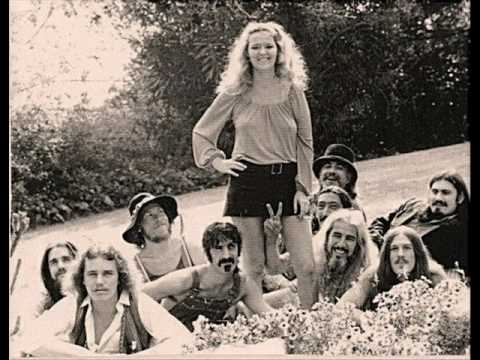
The sessions that produced 'Uncle Meat' took place at the same time as 'Cruising With Ruben and The Jets' . The Mothers were: Frank Zappa on guitar, low grade vocals, and percussion; Ray Collins, who left the group in May 1968, on swell vocals; Jimmy Carl Black on drums, droll humor, and poverty; Roy Estrada on electric bass and cheeseburgers; Don (Dom De Wild) Preston on electric piano, tarot cards, and brown rice; Billy (The Oozer) Mundi on drums on some pieces before he quit in December 1967 to join Rhinoceros; Bunk (Sweetpants) Gardner on piccolo, flute, clarinet, bass clarinet, soprano sax, alto sax, tenor sax, bassoon (all of these electric and/or no-electric depending); Ian Underwood on electric organ, piano, harpsichord, celeste, flute, clarinet, alto sax, baritone sax, special assistant, copyist, industrial relations, and teen appeal; Artie (With the Green Mustache) Tripp on drums, timpani, vibes, marimba, xylophone, wood blocks, bells, small chimes, cheerful outlook, and specific inquiries; Euclid James (Motorhead/Motorishi) Sherwood on pop star, frenetic tenor sax stylings, tambourine, choreography, obstinance & equipment setter-upper when he's not hustling local groupies; with special thanks to Ruth Komanoff who plays marimba and vibes with Artie on many of the tracks; and Nelcy Walker, the soprano voice with Ray & Roy on "Dog Breath" & "The Uncle Meat Variations." Also, Pamela Zarubica appears as Suzy Creamcheese. The sessions were produced by Zappa and engineered by Jerry Hansen, with Euclid James Sherwood as equipment technician and choreographer.
The liner notes reveal: "The music on this album was recorded over a period of about 5 months from October 1967 to February 1968. Things that sound like a full orchestra were carefully assembled, track by track through a procedure known as overdubing. The weird middle section of 'DOG BREATH' (after the line, "Ready to attack") has forty tracks built into it. Things that sound like trumpets are actually clarinets played through an electronic device made by Maestro with a setting labeled Oboe D'Amore and sped up a minor third with a V.S.O. (variable speed oscillator). Other peculiar sounds were made on a Kalamazoo electric organ. The only equipment at our disposal for the modification of these primary sounds was a pair of Pultec Filters, two Lang Equalizers, and three Melchor Compressors built into the board at Apostolic Studios in New York. The board itself is exceptionally quiet and efficient (the only thing that allowed us to pile up so many tracks) and is the product of Mr. Lou Lindauer's imagination & workmanship. The material was recorded on a prototype Scully 12 track maching at 30 ips. The whole project was engineered by Richard Kunc or Dynamite Dick, as he is known to the trade. Special Engineering credits go to Jerry Hansen for the percussion effects added later at Sunset Sound in L.A., and to our friend Mike in Copenhagen for the tapes he sent us. " 'Uncle Meat' reached number forty-three on the US album chart.
http://www.zappa.com/ "Dog Breath, in the Year of the Plague" https://www.youtube.com/watch?v=wMSQ1vCxZJU "The Uncle Meat Variations" https://www.youtube.com/watch?v=euNyMUrXKsE "Electric Aunt Jemima" https://www.youtube.com/watch?v=ge6j7uUCwQc "Mr. Green Genes" https://www.youtube.com/watch?v=szI0izZbhbc "Project X" https://www.youtube.com/watch?v=6uDy5sMtUlM "Cruising for Burgers" https://www.youtube.com/watch?v=D30r_MbIRVU "Tengo Na Minchia Tanta" was included in the re-issue of the album.
https://www.youtube.com/watch?v=rqQ8t6N9A0M 'King Kong' parts I-VI https://www.youtube.com/watch?v=FD5kTEf8Rd0 1. "King Kong Itself (as played by the Mothers in a studio)" 0:53 2. "King Kong (it's magnificence as interpreted by Dom DeWild)" 1:15 3. "King Kong (as Motorhead explains it)" 1:44 4. "King Kong (the Gardner Varieties)" 6:17 5. "King Kong (as played by 3 deranged Good Humor Trucks)" 0:29 6. "King Kong (live on a flat bed diesel in the middle of a race track at a Miami Pop Festival...the Underwood ramifications)" 7:22 'Uncle Meat' full album: https://myspace.com/frankzappa/music/album/uncle-meat-18706065 VIDEO All tracks written by Frank Zappa, except where noted.
Side one
1. "Uncle Meat: Main Title Theme" 1:54
2. "The Voice of Cheese" 0:27
3. "Nine Types of Industrial Pollution" ("400 Days of the Year") 5:56 4. "Zolar Czakl" 0:57
5. "Dog Breath, in the Year of the Plague" 5:51
6. "The Legend of the Golden Arches" 1:24
7. "Louie Louie" (At the Royal Albert Hall in London) Richard Berry 2:28 8. "The Dog Breath Variations" 1:36
Side two
1. "Sleeping in a Jar" 0:49
2. "Our Bizarre Relationship" 1:05
3. "The Uncle Meat Variations" 4:40
4. "Electric Aunt Jemima" 1:53
5. "Prelude to King Kong" 3:24
6. "God Bless America" (Live at the Whisky a Go Go) Irving Berlin 1:22 7. "A Pound for a Brown on the Bus" 1:29
8. "Ian Underwood Whips It Out" 5:08
Side three
1. "Mr. Green Genes" 3:10
2. "We Can Shoot You" 1:48
3. "'If We'd All Been Living in California...'" 1:29
4. "The Air" 2:57
5. "Project X" 4:47
6. "Cruising for Burgers" 2:19
Side four
1. "King Kong (As Played By The Mothers In A Studio)" 0:53
2. "King Kong (Its Magnificence As Interpreted By Dom DeWild)" 1:15
3. "King Kong (As Motorhead Explains It)" 1:44
4. "King Kong (The Gardner Varieties)" 6:17
5. "King Kong (As Played By 3 Deranged Good Humor Trucks)" 0:29
6. "King Kong (Live On A Flat Bed Diesel In The Middle Of A Race Track At A Miami Pop Festival...The Underwood Ramifications)" 7:22
VIDEO
William Shatner carved out a campy cult classic with these unique spoken word renditions of psychedelic songs, Shakespearean bombast, and Baroque romanticism. Shatner would recount in the album's liner notes: "The seed actually began to germinate when I met Cliff Ralke while working together on 'Star Trek'
Recorded at Gold Star Recording Studios in Hollywood during breaks from filming 'Star Trek' 'The Transformed Man' "Entertainment. If it makes you laugh or makes you cry, or somewhere in between, it would appeal to me. I had been in a Shakespeare company for three years and done a lot of Shakespeare. That was fun. That was interesting. It was a lot of work–anything other than Shakespeare was less work...'The Transformed Man' ... The songs have intrinsic meaning. I was trying to do the meaning while the music played...I see myself as an actor with a love of music. The spoken word is musical, the rhythm of the words and the musicality of the words is what makes music. The spoken word should not be any different than the extended notes of music. The fact that I don't extend the notes...my joshing line is that extending a note is highly overrated ... I was in the hands of relatively—I don’t want to say amateurish—but less complex musicians for 'The Transformed Man' ... ' The Transformed Man' http://williamshatner.com/ interview:
http://www.youtube.com/watch?v=o5lTlkWPsqo "Hamlet / It Was a Very Good Year"
http://www.youtube.com/watch?v=2mj5qKOP2tc 'The Transformed Man' full album:
VIDEO 1. "King Henry the Fifth / Elegy for the Brave" (Don Ralke · Frank Devenport) 6:16
2. "Theme from Cyrano / Mr. Tambourine Man" (Music by Don Ralke / Translation by Frank Devenport · Bob Dylan) 6:49
3. "Hamlet / It Was a Very Good Year" (Don Ralke · Ervin Drake) 7:45
4. "Romeo and Juliet / How Insensitive (Insensatez)" (Don Ralke · Antônio Carlos Jobim / Vinícius de Moraes / English Lyrics by Norman Gimbel) 6:46
5. "Spleen / Lucy in the Sky with Diamonds" (Music by Don Ralke / Words and Translation by Frank Devenport · John Lennon / Paul McCartney) 5:54
6. "The Transformed Man" (Frank Devenport / Don Ralke) 3:38
'Rocket Man' from 1978 Science Fiction Film Awards
http://www.youtube.com/watch?v=lul-Y8vSr0I