Showing posts with label specials. Show all posts

Sunday, October 4, 2015

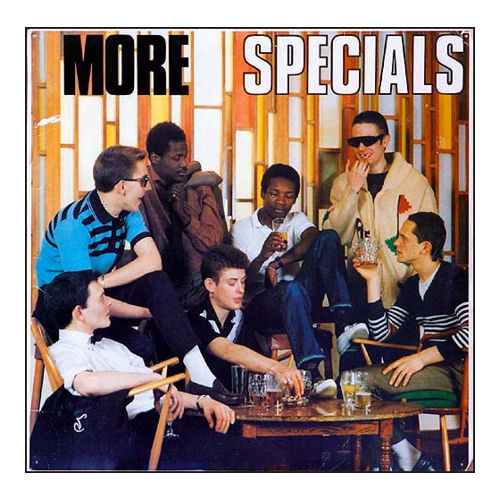
more specials


The Specials defied stereotypes with rat race resistance to extend jet set enjoyment with a soulful bosanova scratch.  The group had spearheaded the British ska revival with their gold selling socially conscious self-titled debut in late 1979; and in January of 1980, their EP Too Much Too Young was released as The Special A.K.A. and became a number one hit in the UK.   Both releases were put out on the 2 Tone label established by bandleader and producer Jerry Dammers.  After their first US tour in February, the band did another tour of the UK with The Bodysnatchers and The Go-Go's in June.   In the midst of all of the activity, they began recording their second album 'More Specials'.  


Dave Jordan was producer (along with Jerry Dammers and  John Bradbury) and engineer, assisted by engineer Jeremy (The Blade) Allom at Horizon Studios in Coventry.  The sessions included Terry Hall on vocals;   Lynval Golding on vocals and guitar;   Neville Staple on vocals and percussion;   Jerry Dammers on organ, piano, keyboards, and production;   Roddy Byers on guitar;   Sir Horace Gentleman on bass guitar;   John Bradbury on drums and production;   Rico Rodriguez on trombone;   Dick Cuthell on cornet, flugelhorn, and horn;   Lee Thompson and Paul Heskett  on saxophone;   with  Rhoda Dakar of the Bodysnatchers on vocals;   and Belinda Carlisle, Jane Wiedlin and Charlotte Caffey of the Go-Go's on background vocals


Byers:    "[When I joined the band] Jerry wanted a punk edged guitarist at the time and I fitted the bill. I had been listening to Bob Marley and a lot of Dub stuff at the time, so I was interested in the cross-over sound Jerry’s band was doing and I had become bored with punk scene. Concrete Jungle was a song I wrote while in the Wild Boys which I brought with me to the Automatics/ Specials. I sang it live early on and that’s my lead vocal on the first album...[With 'More Specials'] Jerry was all for changing our ska/punk sound a bit too early I thought, but I managed to write three songs that fit into his new master plan."


Hall:   "I enjoyed working on 'More Specials' more than I did on the first one. I thought we were getting into some interesting areas. But we recorded it at a time when personal relationships were frayed so its going to mess it up. There was a definite argument that we should have taken some time off and let the dust settle between records but we didn’t do that...I don’t trust bands who get on. You need a certain tension to make a good group...We’re still relevant, but it’s totally different now. We were one of the first mixed bands when we formed...I think our songs still hold a relevance...I just think the whole music business changed, really. The desire to make those sort of records just went. With the advent then of ‘talent TV,’ people want to be famous, really, and that was never a reason why we started a band...We just wanted to try and find a voice."


Dammers:   "I spent my time growing up in Coventry in the '60s and '70s seeing the working-class youth bashing each other up, whether it was bashing immigrants or bashing each other at football. It was only a minority, of course, but it did seem like most districts in Coventry had some sort of gang, and some of the pubs were notorious for people glassing each other. The media was winding this up all over the country, so some kids thought that was what they were supposed to do. Meanwhile, the establishment that was actually keeping them down just carried on getting richer like they always had. The hippies wanted to form a better "alternative" society, but that just alienated some people. I wanted to change all of society from within, which was a much harder and more risky thing to try and do. The amazing thing is that it worked at all, even to the small extent that some people say it did. I often meet people who tell me that if it wasn't for The Specials they would have been racists or whatever, and that they turned to more socialist ideas because of The Specials ... The general idea that children are still starving, or dying of preventable diseases, or getting blown to pieces, is not a good thing. Even if there was such a thing as "trickle down" from capitalism, which there never has been, and never will be, what an absolutely horrible idea, that some people are only worthy of what might happen to "trickle down" from the rich."


'More Specials' went to number ninety-eight in the US, forty-nine in Canada, thirty in Sweden, twenty-eight in New Zealand, and number five in the UK, where it was certified gold.  Three singles on the album went to the top twenty in Ireland and the top ten in the UK.  


"Rat Race" ran to number ninety-eight on the US dance chart, seventeen in Ireland, and number five in the UK.  The single was not included on versions of the album released in the UK and the Netherlands.  


"Do Nothing" made it to number thirteen in Ireland and number four in the UK.  


"Stereotypes" reached forty-one in the Netherlands, twelve in Ireland, and number six in the UK.  


"Hey, Little Rich Girl" live


"Enjoy Yourself" live


'More Specials'
full album:


Side one
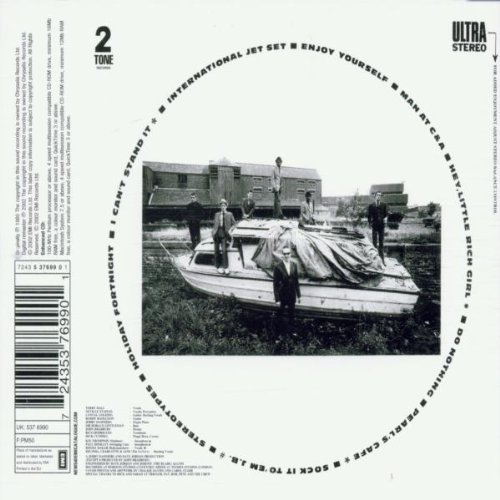
"Enjoy Yourself" (Herb Magidson, Carl Sigman) – 3:39
"Man at C & A" (Dammers, Hall) – 3:36
"Hey, Little Rich Girl" (Roddy Byers) – 3:35 - featuring Lee Thompson
"Do Nothing" (Golding) – 3:43
"Pearl's Cafe" (Dammers) – 3:07
"Sock It to 'Em J.B." (Dunn, Garvin, Holman) – 2:56
Side two
"Stereotype/Stereotype Pt. 2" (Dammers, Staple) – 7:24
"Holiday Fortnight" (Byers) – 2:45
"I Can't Stand It" (Dammers) – 4:01 - featuring Rhoda Dakar
"International Jet Set" (Dammers) – 5:37
"Enjoy Yourself (Reprise)" (Magidson, Sigman) – 1:46


"Rat Race" (Byers) – 3:07 was not on the UK release nor Dutch LP


Early copies of the album included a free 7" single:

"Braggin' & Tryin' Not to Lie" by Roddy Radiation and The Specials


"Rude Boys Outa Jail (version)" featuring Neville Staple AKA Judge Roughneck


"Montreux Jazz Festival" (Switzerland 1980)


0:13 Monkey Man
2:52 Blank Expression
4:58 Concrete Jungle
8:27 Stupid Marriage
12:15 Raquel
14:22 Guns Of Navarone
16:54 Do Nothing
20:36 Rat Race
23:49 A Message To You Rudy
26:44 Man At C & A
29:58 Do The Dog
32:10 Too Much Too Young
34:21 Gangsters
38:53 Skinhead Moonstomp
40:38 Enjoy Yourself


Monday, November 3, 2014

specials


The Specials spearheaded a British ska revival with their multi-cultural blend of serious themes and infectious grooves.  Jerry Dammers assembled the group in 1977 from various local punk, rock, soul, and reggae bands. They started as The Automatics, which morphed into The Coventry Automatics and then The Special AKA.  They opened for The Clash on their "On Parole" UK tour and eventually shortened their name to The Specials.  Dammers arranged with Chrysalis Records to start a new label 2 Tone Records and the group released their first single "Gangsters" soon after.  Their eponymous debut was recorded at TW Studios in Fulham, London with Elvis Costello co-producing with the band.  The album features Terry Hall and Neville Staple on vocals;   Lynval Golding on rhythm guitar and vocals;  Roddy Byers (Roddy Radiation) on lead guitar and vocals;  Jerry Dammers on keyboards;  Horace Panter (Sir Horace Gentleman) on bass guitar;  John Bradbury on drums;  with guest musicians Chrissie Hynde on vocals;  Rico Rodriguez on trombone;  and Dick Cuthell on horns.   


Dammers:  "The instrumental side of ska was pretty much Jamaican jazz over a popular street rhythm.  So we're joining a lot of dots and maybe for the rock fan it's giving a slightly alternative history of what became known as psychedelic music...The thing I've always done is mix elements of the past with the present and the future. I hope from seeing this people will maybe see the original Specials slightly differently – although it was a ska band, it was also what I might call a cutting-edge retro band...Ska was the thing we happened to revive, but it could have been anything in a way. This is all part of a progression. It's not supposed to be a battle with anybody."


Panter:  "I was a student from 1972-75 and came from a small market town.  From the off, we were worried that Coventry was a violent place; it had that reputation. I lived in a house in Bramble Street and from the back bedroom window we could see the hordes of away fans being frog-marched by the police from the train station to the Coventry City football ground on Highfield Road...During the punk era you could see a band almost every night of the week - I got swept up in that...By the time I got to Coventry, I was into Free, The Doors, Fleetwood Mac - blues/rock. I got into soul music - Tamla Motown and Booker T and the MGs. I didn’t play reggae before I joined The Specials and we didn’t start playing ska until Christmas 1978. Ska was like blues, but the guitar played the off-beat, so for me, it wasn’t that much of a challenge. Reggae was harder to play...Ska, along with soul, was the music of the mods and by the time The Specials rose to prominence there was something of a mod revival going on. Coventry, I have now realised, was a multicultural city before multiculturalism existed.  This worked for musicians as well. You got the gig because you were a good guitar player, not because you were the ‘right’ colour."


Hall:   "There was an incredible amount of violence, but we felt like the Magnificent Seven, we really did...I never liked that statement that 'everybody's the same under the skin', because I don't think they are: you should appreciate people's differences. We came from a place where there was a lot of racial tension - we could remember a day where there was a terrible fight in Coventry and people got stabbed and we were on separate sides...You were in separate gangs and it just so happened to be a white gang and a black gang...We never analysed the black and white side of it. I'd only think someone was different from me if they supported Leeds ... There was a huge political statement being made with the Specials.  You just had to look at a photo and you got it. That's exactly what we feel about this. If you have Arabic and Hebrew on the same record you've made a political statement. I've been through the whole standing-on-a-box thing and it's great, but it gets sort of dangerous. The idea of suggestion sometimes is good...With the Specials, there were seven people in that band. Are you going to tell me we all had exactly the same political beliefs? Well we didn't. Absolutely not. But we were walking on stage each night and saying, 'This is what we all believe.' If you're going to present yourself as a unified thing then you've got to be that. Otherwise, what are you doing?"

Golding:   "The more people on the stage with me, the more I felt like we'd broken down a barrier. I thought we were really integrating, we're all brothers now...I always thought: what is the point of having a person with a racist view and locking him outside? Bring him inside so I can talk to him, we can discuss each other's culture, we can end up understanding each other and shake hands."


Staple:   “It was a great time, I was just a working class lad from the street. I was originally a roadie but Jerry Dammers invited me on stage at a gig and I never looked back and I became a singer in the group. All of a sudden I was playing all over the country and flying off to places like America and Australia to perform, it was a dream come true for me...Jerry went to technical college but really The Specials were very much a working class band and we sang about life as we knew it and our experiences. We were never afraid to sing about the issues of the day, and we refused to shy away from a subject because it was controversial...We sang about issues people could relate to, particularly working class people who were actually living and experiencing the things we were singing about. It’s quite strange really as many of the social issues in the early 80s are very much the same now and perhaps that is one of the reasons why our music has had a massive revival in recent years...One aspect of being involved with the 2Tone scene I am particularly proud of is the bridges it built between black and white communities. There is no doubting there was a lot of racial tension in the late 70s and early 80s, but through this music we were brought together. You had bands made up of a mixture of black and white musicians, which was rare. It was the same with the crowds as you had black youths dancing alongside white youths without a hint of trouble, which was really a first and it is a legacy which has lasted. Jerry was the driving force behind both The Specials and the 2Tone label, he was determined to show black and white people together in harmony, even the famous 2Tone logo was made in black and white to depict racial unity. All of what happed with the 2Tone scene was the foresight of Jerry Dammers and he should be given a lot of credit for the positive social impact he created.”


'Specials' reached eighty-four in the US, thirty-four in Sweden, twenty-one in Canada, five in New Zealand, and four in the UK.  


http://www.thespecials.com/


"Gangsters" reached twenty-seven in Ireland, twenty in New Zealand, eleven in the Netherlands, and six in the UK.  It was originally a non-album single that was added to later pressings of  'Specials'.  
https://www.youtube.com/watch?v=lgCZN1rU5co

https://www.youtube.com/watch?v=QgIr7E5LvpA


"A Message to You, Rudy" made it to thirty-five in the Netherlands, twenty-nine in New Zealand, nineteen in Ireland, ten in the UK, and seven in Austria.  
https://www.youtube.com/watch?v=IbqiCxEIeEo


"Too Much Too Young" hit number fifteen in the Netherlands, three in Ireland, and number one in the UK.  
https://www.youtube.com/watch?v=nxHcx7FO8nI


"It's Up to You"
https://www.youtube.com/watch?v=agU3q7ek1NE


"Concrete Jungle"
https://www.youtube.com/watch?v=pHFQ9zH36JI


"You're Wondering Now"
https://www.youtube.com/watch?v=bBWrbEUu3nk


live 1980


'Specials'
full album:
https://myspace.com/thespecials/music/album/the-specials-18974322


Side one
"A Message to You, Rudy" (Dandy Livingstone) – 2:53
"Do the Dog" (Rufus Thomas, arr. by Jerry Dammers) – 2:09
"It's Up to You" (Dammers, The Specials) – 3:25
"Nite Klub" (Dammers, The Specials) – 3:22
"Doesn't Make It Alright" (Dammers, Dave Goldberg) – 3:26
"Concrete Jungle" (Byers) – 3:18
"Too Hot" (Cecil Campbell) – 3:09
Side two
"Monkey Man" (Toots Hibbert) – 2:45
"(Dawning of A) New Era" (Dammers) – 2:24
"Blank Expression" (Dammers, The Specials) – 2:43
"Stupid Marriage" (Dammers, Mark Harrison, Neville Staple) – 3:49
"Too Much Too Young" (Dammers, acknowledgment to Lloyd Charmers) – 6:06
"Little Bitch" (Dammers) – 2:31
"You're Wondering Now" (Seymour) – 2:36


Wednesday, July 13, 2011

ghost town


The Specials AKA The Coventry Automatics spoke to the discontent of the masses with this haunted groover that was inspired by the economic decline of their hometown and provided the soundtrack to the band's own demise. Keyboardist Jerry Dammers wrote 'Ghost Town' about the scenes of despair and decline he saw all over the United Kingdom: "In Liverpool, all the shops were shuttered up, everything was closing down. In Glasgow, there were these little old ladies on the streets selling all their household goods, their cups and saucers. It was unbelievable. It was clear that something was very, very wrong...There was a riot in Brixton about a year before the record came out. I was writing the song partly about that. Also, Britain was falling apart. The car industry was closing down in Coventry. We were touring, so we saw a lot of it. Liverpool and Glasgow were particularly bad. The overall sense I wanted to convey was impending doom. There were weird, diminished chords: certain members of the band resented the song and wanted the simple chords they were used to playing on the first album. It's hard to explain how powerful it sounded. We had almost been written off and then 'Ghost Town' came out of the blue."

The recording of the song took place in a small basement studio in Warwickshire on an eight track with considerable disagreement among the band. Dammers recalls: "'Ghost Town' wasn't a free-for-all jam session. Every little bit was worked out and composed, all the different parts, I'd been working on it for at least a year, trying out every conceivable chord. It was a combination of the first album and the second album, the complete history of the band gelled in one song. I can remember walking out of a rehearsal in total despair because Neville would not try the ideas. You know the brass bit is kind of jazzy, it has a dischord? I remember Lynval rushing into the control room while they were doing it going, 'No, no, no, it sounds wrong! Wrong! Wrong!' In the meantime, Roddy's trying to kick a hole through the wall from the control room to the studio room. It was only a little studio in Leamington and the engineer was going, 'If that doesn't stop, you're going to have to leave!' I was saying, 'No! No! This is the greatest record that's ever been made in the history of anything! You can't stop now!'"


This town, is coming like a ghost town
All the clubs have been closed down
This place, is coming like a ghost town
Bands won't play no more
too much fighting on the dance floor

Do you remember the good old days before the ghost town?
We danced and sang, and the music played in a de boomtown

This town, is coming like a ghost town
Why must the youth fight against themselves?
Government leaving the youth on the shelf
This place, is coming like a ghost town
No job to be found in this country
Can't go on no more
The people getting angry

This town, is coming like a ghost town


The song hit the top of the charts amidst large scale riots all over Britain. This performance on 'Top Of The Pops' was the swansong for the original band. Terry Hall, Lynval Golding and Neville Staple quit the band soon thereafter to form Fun Boy Three.