Nikolai Andreievich Rimsky-Korsakoff (March 18, 1844 - June 21, 1908) This Russian Romantic composer worked to bring elements of folksongs and folklore into classical music to create a new Nationalistic form. Born to aristocratic parents, Nikolai showed natural talent for music; but was more interested in books. At the age of twelve his father sent him to the the Sea Cadet Corps (Naval College) where his musical skills flourished as he became influenced by different teachers, most notably Mily Balakirev, the leader of a movement to create a new Russian form of music that was distinct from European traditional classical forms. Rimsky-Korsakoff became a part of a group called The Five, also known as The Mighty Handful, The Balakirev Circle, and The New Russian School; which included Balakirev, César Cui, Modest Mussorgsky, and Alexander Borodin. After his graduation in 1862, Nikolai became a navel officer and travelled the world on a three year cruise. During that time he completed his First Symphony. He continued to develop his own sound, incorporating Eastern fairytales and themes. The popularity of his works led to a position as professor of harmony and orchestration at the St. Petersburg Conservatory. During this time he began studying Western methods and incorporated them into his own art. His support of the students during revolts during the Revolution of 1905-1907 led to the end of his professorship and his works being banned by the police. The outcry from students and professors was so great that he was reinstated months later. Due to his influence on his many students, he is considered to be the primary architect of the Russian school of composition. He died from complications of his angina pectoris that had worsened during the Revolution. "Flight of the Bumblebee" is his most famous piece. It is an orchestral interlude from his opera 'The Tale of Tsar Saltan' during which the magic Swan-Bird changes the Tsar's son Prince Gvidon Saltanovich into an insect so that he can fly away to visit his father. http://www.youtube.com/watch?v=aYAJopwEYv8
Russian Easter Festival Overture: Overture on Liturgical Themes, Op. 36 was dedicated to the memories of Modest Mussorgsky and Alexander Borodin. http://www.youtube.com/watch?v=7FHFJ0lU9Us
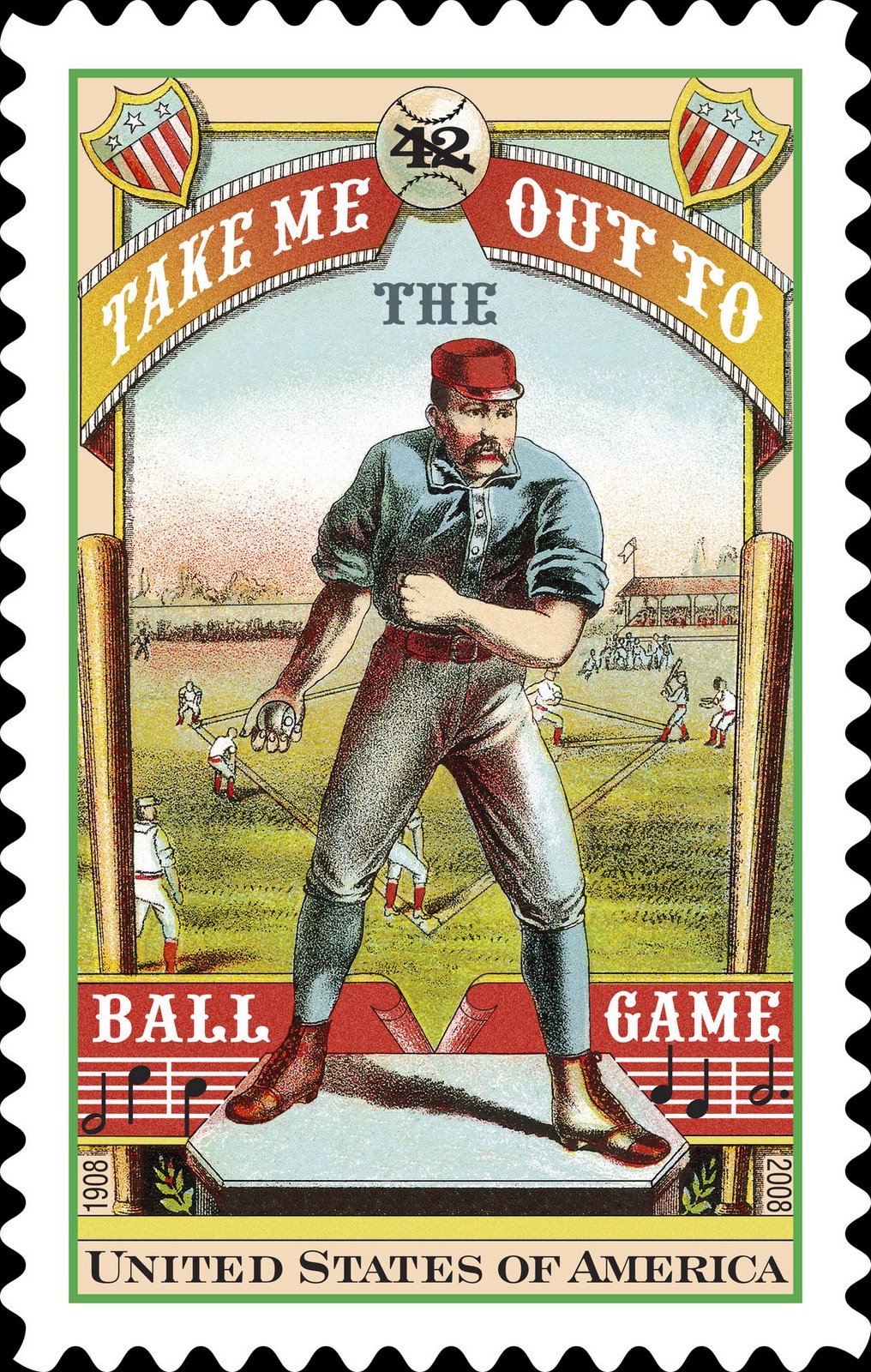
Jack Norworth and Albert Von Tilzer had never seen a baseball game when they wrote this classic celebration of the sport. Norworth saw a sign on the subway advertising "Baseball Today — Polo Grounds" and was inspired to write the words to the song. Von Tilzer later set them to music. The song became an instant hit, with sheet music flying off the shelves. It was first recorded in September of that year and innumerable times since. Norworth wrote new lyrics in 1927. It is sung at baseball games all over the country every year and remains one of the most well known and popular songs of all time. The National Endowment for the Arts and the Recording Industry Association of America selected 'Take Me Out to the Ballgame' as one of the "Songs of the Century". Edward Meeker http://www.youtube.com/watch?v=q4-gsdLSSQ0
1908 version: Katie Casey was baseball mad, Had the fever and had it bad. Just to root for the home town crew, Ev'ry sou Katie blew. On a Saturday her young beau Called to see if she'd like to go To see a show, but Miss Kate said "No, I'll tell you what you can do:" Take me out to the ball game, Take me out with the crowd; Buy me some peanuts and Cracker Jacks, I don't care if I never get back. Let me root, root, root for the home team, If they don't win, it's a shame. For it's one, two, three strikes, you're out, At the old ball game. Katie Casey saw all the games, Knew the players by their first names. Told the umpire he was wrong, All along, Good and strong. When the score was just two to two, Katie Casey knew what to do, Just to cheer up the boys she knew, She made the gang sing this song: Take me out with the crowd; Buy me some peanuts and Cracker Jacks, I don't care if I never get back. Let me root, root, root for the home team, If they don't win, it's a shame. For it's one, two, three strikes, you're out, At the old ball game. 1927 version: Nelly Kelly loved baseball games, Knew the players, knew all their names. You could see her there ev'ry day, Shout "Hurray" When they'd play. Her boyfriend by the name of Joe Said, "To Coney Isle, dear, let's go", Then Nelly started to fret and pout, And to him, I heard her shout: Take me out with the crowd; Buy me some peanuts and Cracker Jacks, I don't care if I never get back. Let me root, root, root for the home team, If they don't win, it's a shame. For it's one, two, three strikes, you're out, At the old ball game. Nelly Kelly was sure some fan, She would root just like any man, Told the umpire he was wrong, All along, Good and strong. When the score was just two to two, Nelly Kelly knew what to do, Just to cheer up the boys she knew, She made the gang sing this song: Take me out with the crowd; Buy me some peanuts and Cracker Jacks, I don't care if I never get back. Let me root, root, root for the home team, If they don't win, it's a shame. For it's one, two, three strikes, you're out, At the old ball game.